Infant of Prague novena
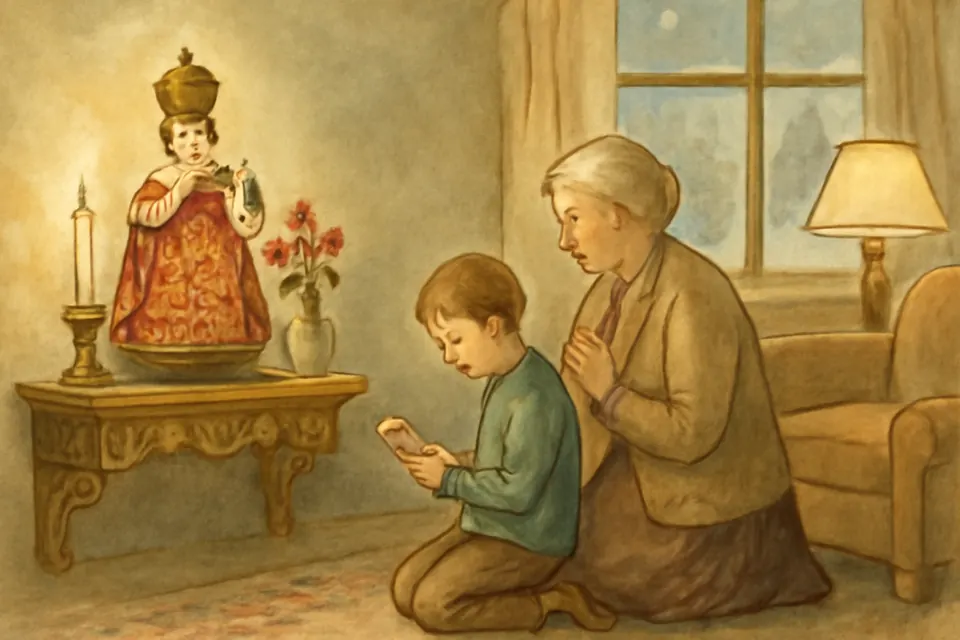
The Infant of Prague novena is nine days of prayer to Jesus Christ, honored as a child before the famous statue in Prague, for one intention. The traditional form repeats Venerable Fr. Cyril's prayer, "O holy Infant Jesus, I have recourse to you," every day, while each day dwells on one mystery of Christ's childhood, from Bethlehem to his obedience at Nazareth.
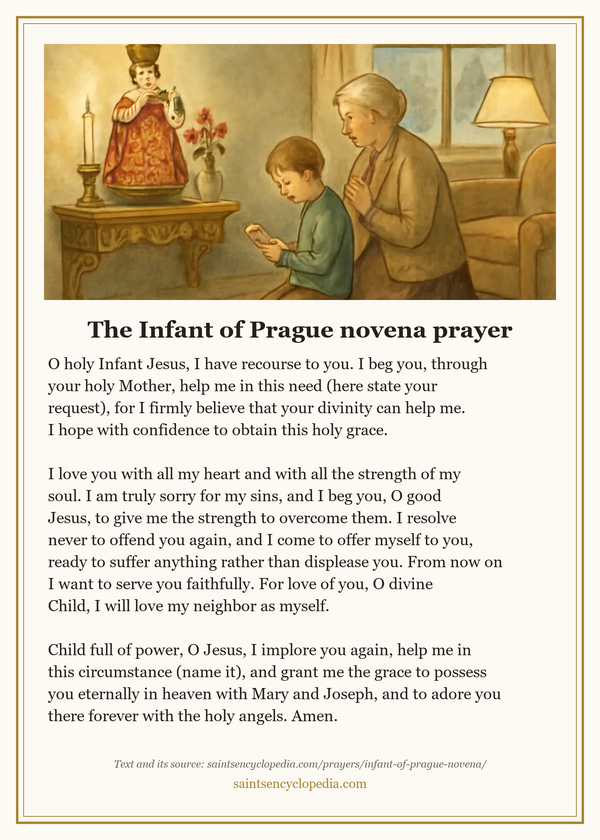 Free printable prayer card 5 × 7 inch PDF, ready to print, frame or tuck in a missal.
A novena to the Infant of Prague is nine days spent with Jesus as a child. We bring him a need, sometimes an urgent one, and for nine days we look at the mysteries of his childhood: the stable, the flight into Egypt, the hidden years at Nazareth. The novena below follows a French-Canadian booklet printed in Montreal in the 1890s, which drew its stories from a history of the statue published by the Discalced Carmelites in 1894, and it is built around the prayer of Venerable Fr. Cyril of the Mother of God, the Carmelite who rescued the statue in 1637.
The Infant of Prague novena prayer
This is the "Prayer to the Holy Infant Jesus of Prague, by Fr. Cyril, his devout servant," as the booklet prints it. Pray it every day of the novena. The booklet is in French and in the public domain; the English below is our own close translation, not a traditional one, so the original follows it.
O holy Infant Jesus, I have recourse to you. I beg you, through your holy Mother, help me in this need (here state your request), for I firmly believe that your divinity can help me. I hope with confidence to obtain this holy grace.
I love you with all my heart and with all the strength of my soul. I am truly sorry for my sins, and I beg you, O good Jesus, to give me the strength to overcome them. I resolve never to offend you again, and I come to offer myself to you, ready to suffer anything rather than displease you. From now on I want to serve you faithfully. For love of you, O divine Child, I will love my neighbor as myself.
Child full of power, O Jesus, I implore you again, help me in this circumstance (name it), and grant me the grace to possess you eternally in heaven with Mary and Joseph, and to adore you there forever with the holy angels. Amen.
The French original, word for word:
O saint Enfant Jésus, j'ai recours à vous. Je vous en prie par votre sainte Mère, assistez-moi dans cette nécessité (on expose ici l'objet de sa demande), car je crois fermement que votre divinité peut me secourir. J'espère avec confiance obtenir cette sainte grâce. Je vous aime de tout mon cœur et de toutes les forces de mon âme. Je me repens sincèrement de mes péchés, et je vous supplie, ô bon Jésus, de me donner la force d'en triompher. Je prends la résolution de ne plus jamais vous offenser et je viens m'offrir à vous dans la disposition de tout souffrir plutôt que de vous déplaire. Désormais je veux vous servir avec fidélité. Pour l'amour de vous, ô divin Enfant, j'aimerai mon prochain comme moi-même. Enfant plein de puissance, ô Jésus, je vous en conjure de nouveau, assistez-moi dans cette circonstance (nommez-la), et faites-moi la grâce de vous posséder éternellement dans le ciel avec Marie et Joseph, et de vous y adorer à jamais avec les saints Anges. Ainsi soit-il.
The many English versions on holy cards, beginning "O Infant Jesus, I have recourse to Thee," are translations of this same prayer. The words differ from card to card, but the shape is always the same: a request made through Our Lady, an act of faith, love and sorrow, a promise to love our neighbor, and the request made again.
Prayers to add each day
The booklet suggests adding, "first of all, the Litany of the Holy Name of Jesus," which is on our page Litany of the Holy Name. It also prints this prayer, which Leo XIII indulgenced on January 18, 1894. Here it is in the English of the 1910 Raccolta (no. 78):
Most dear Lord Jesus Christ, who, being made an infant for us, wast willing to be born in a cave, to free us from the darkness of sin, to draw us to thyself, and to inflame us with thy holy love; we adore Thee as our Creator and Redeemer, we accept and choose Thee for our King and Lord, and for tribute we offer Thee all the affections of our poor hearts. Dear Jesus, our Lord and God, deign to accept this offering, and that it may be worthy of thine acceptance, pardon us our faults, enlighten us, and inflame us with that holy fire which Thou camest to bring into the world and enkindle in men's hearts. May our souls thus become a perpetual sacrifice in thy honour. Grant that we may ever seek thy greater glory here on earth, so that we may one day come to rejoice in thy infinite loveliness in Heaven. Amen.
The nine days
Each day of the booklet opens with a scene from the Gospels, which it asks us to picture ("I will see..."), followed by acts of faith, hope and love, a story of a favor reported at the statue, and a piece of advice. Here are the nine mysteries, with the advice the booklet gives on some of the days.
- The birth of Jesus. See the Child in the cave at Bethlehem, "so poor, so small, so weak," and believe that he is our Creator. After telling how the Prague friars prospered whenever they kept up their devotion to the statue, the booklet tells the reader: "Honor this Child Jesus well, and you will lack nothing."
- The Name of Jesus. On the eighth day he receives the Name above every name. Advice: in trouble, call on his holy Name.
- The visit of the shepherds. Come to the manger as the shepherds did, simply and in haste.
- The gifts of the Magi. We bring him our own gifts. Advice: give, or promise to give, alms in honor of the Child Jesus.
- The Presentation in the Temple. Mary and Joseph offer him to the Father, and we offer ourselves with him. Advice: on at least one day, hear Mass, or have a Mass said, at an altar of the Child Jesus, since the time of the Holy Sacrifice is the best of all for bringing a request to heaven.
- The flight into Egypt. The Child is a refugee, carried by night to a foreign land.
- The house of Nazareth. The quiet years of work and prayer with Mary and Joseph.
- The Child lost and found in the Temple. Advice: go to Confession and Holy Communion on one day of the novena, or at least promise to do so if your prayer is heard.
- The obedience of the Child Jesus. He went down to Nazareth "and was subject to them" (Luke 2:51, Douay-Rheims). We ask for the grace to obey God as he did.
The booklet summarizes each day's advice in one sentence; the wording above is our summary of the French.
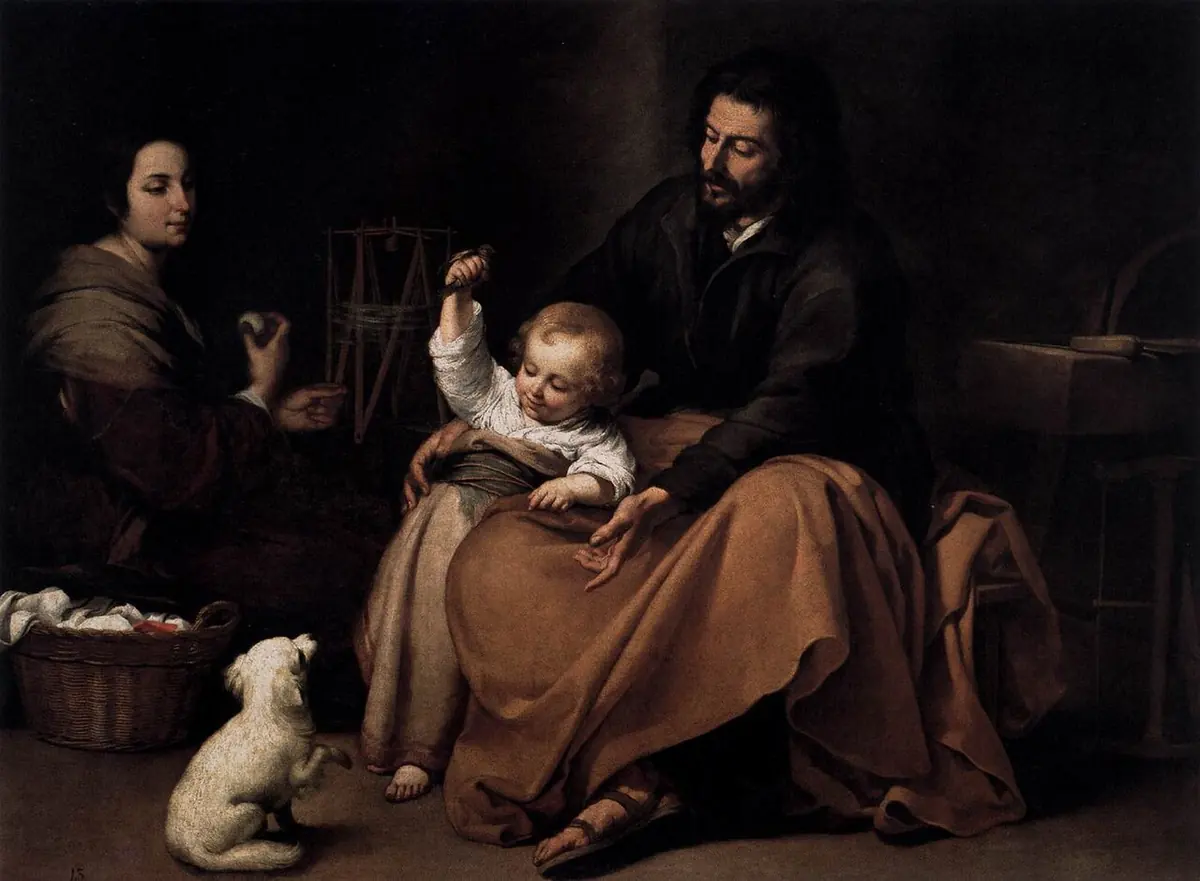
How to pray the Infant of Prague novena
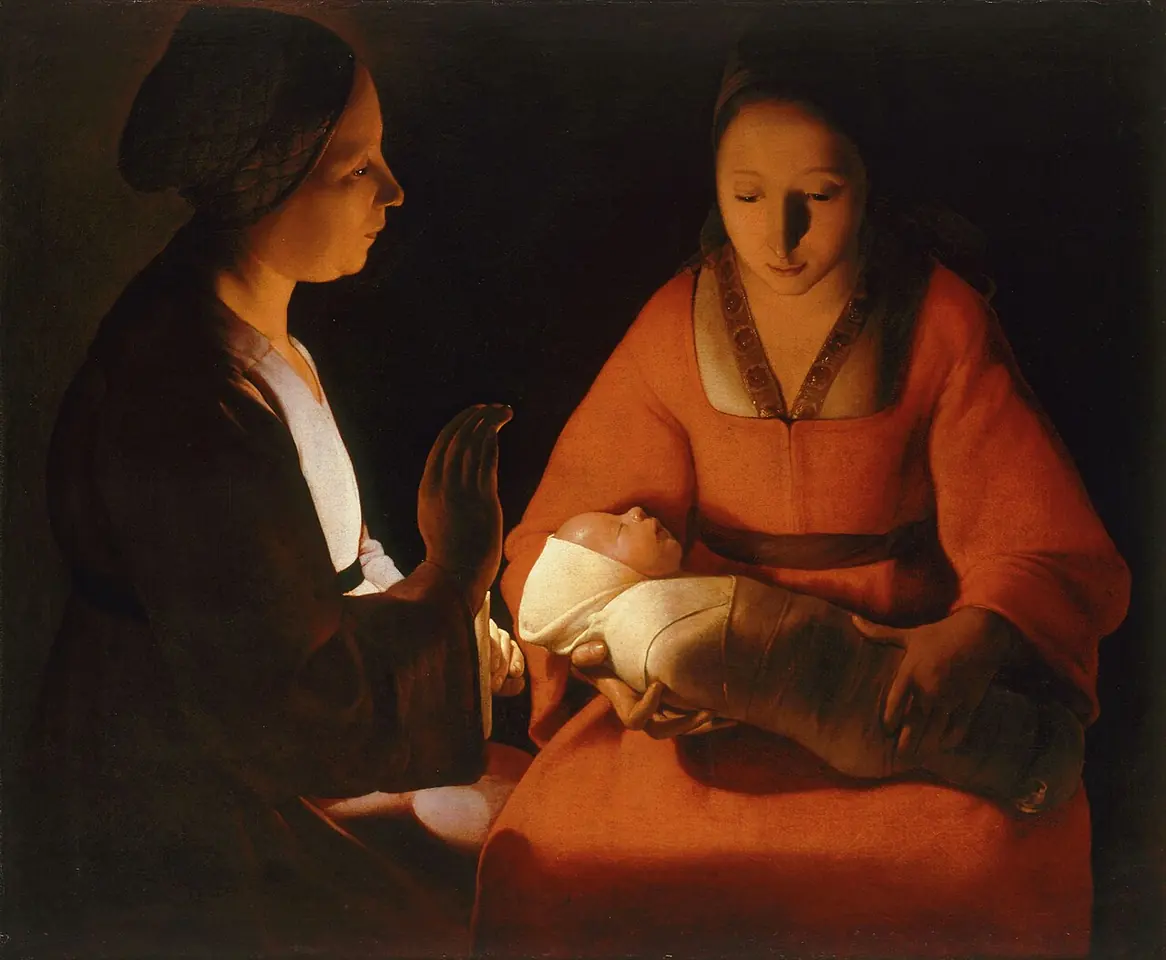
- Choose one intention. People bring the Infant of Prague every kind of need. The old booklet names the sick, children, families in conflict, couples longing for a child, students facing exams and people looking for work.
- Pray for nine days in a row. Each day, read the day's mystery and spend a minute picturing it.
- Pray Fr. Cyril's prayer, naming your request in the two places marked.
- Add the Litany of the Holy Name or the prayer above if you have time, and an Our Father, Hail Mary and Glory Be.
- Follow the booklet's advice where you can: an alms, a Mass, Confession and Holy Communion.
- Give thanks when the novena ends, however God has answered.
If you miss a day, take it up again and finish. The Child Jesus is not keeping an account of our mistakes.
Other novenas to the Child Jesus
The novena of the 25th of the month
The Church has long kept the 25th of every month, the date of Christmas, as a little feast of the Child Jesus. On September 23, 1846, Pius IX indulgenced a novena on "nine days previous to the 25th day of any and each month," made in public or in private (Raccolta, 1910, no. 76). It is short, and it suits an Infant of Prague novena well, prayed from the 16th to the 24th of any month. These are its five offerings, word for word:
Eternal Father, I offer to thy honour and glory, and for my own salvation, and for the salvation of all the world, the mystery of the Birth of our Divine Saviour. Gloria Patri.
Eternal Father, I offer to thy honour and glory, and for my eternal salvation, the sufferings of the most holy Virgin and of St Joseph in that long and weary journey from Nazareth to Bethlehem; I offer Thee their pain in finding no place wherein to shelter themselves, when the Saviour of the world was to be born. Gloria Patri.
Eternal Father, I offer to thy honour and glory, and for my eternal salvation, the stable where Jesus was born, the hard straw which served Him for a bed, the cold He suffered, the swaddling-clothes which bound Him, the tears He shed, and his tender infant cries. Gloria Patri.
Eternal Father, I offer to thy honour and glory, and for my eternal salvation, the pain which the divine Child Jesus felt in his tender infant body when He submitted it to the keen knife of circumcision; I offer Thee that Precious Blood which then first He shed for the salvation of the whole race of man. Gloria Patri.
Eternal Father, I offer to thy honour and glory, and for my eternal salvation, the humility, mortification, patience, charity and all the virtues of the Child Jesus; I thank Thee, and I love Thee, and I bless Thee without end, for this ineffable mystery of the Incarnation of the divine Word. Gloria Patri.
V. The Word was made flesh. R. And dwelt amongst us.
Let us pray. O God, whose only-begotten Son was made manifest to us in the substance of our flesh; grant, we beseech Thee, that our souls may be inwardly renewed through Him, whom our eyes have seen externally like unto ourselves. Who liveth and reigneth with Thee for ever and ever. Amen.
The chaplet of the Holy Infancy
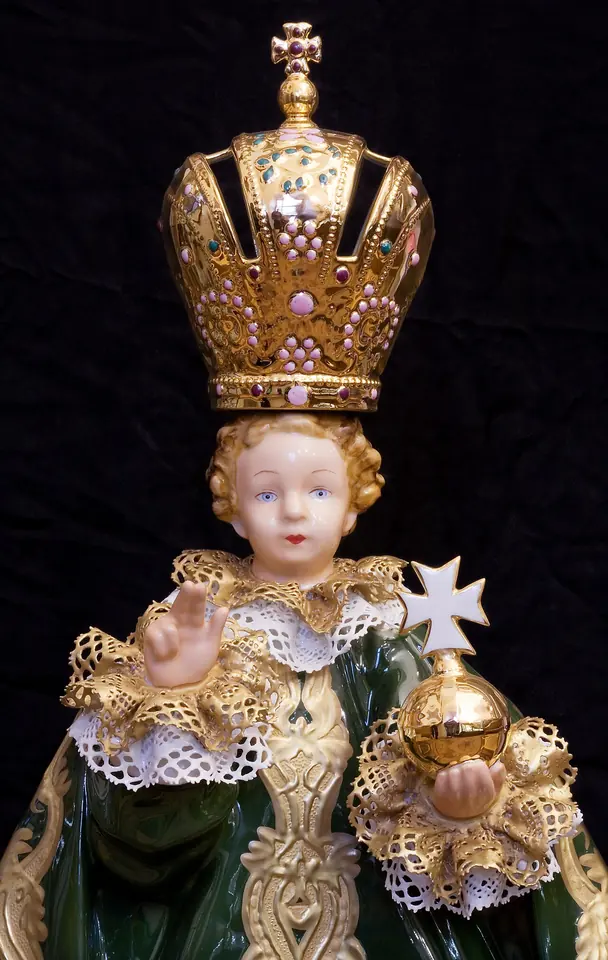
The Montreal booklet closes with the "Little Crown" of the Child Jesus, which it traces to Venerable Margaret of the Blessed Sacrament, a Carmelite of Beaune in France who died in 1648. It honors twelve mysteries: the Incarnation, the Visitation, the Nativity, the adoration of the shepherds, the Circumcision, the adoration of the Magi, the Presentation, the flight into Egypt, the stay in Egypt, the return from Egypt, the life at Nazareth, and Jesus among the doctors in the Temple. The 1910 Raccolta (no. 75) gives a form of it under the title "Mysteries of the Holy Childhood," indulgenced by Pius VII in 1819, in which each mystery ends: "Have mercy on us, Infant Jesus, have mercy on us." The Prague shrine publishes its own chaplet of twelve mysteries, and many people pray it on one of the novena's days.
The nine-hour novena
Holy cards in many languages carry a short "novena" meant for an urgent need: a few lines built on Christ's words "Ask, and you shall receive," said once every hour for nine hours in a single day. We have not been able to trace it to a named author or an early prayer book, and the Church has attached no promise to it. Prayed with faith it is a good prayer, and God hears the cry of a frightened heart in any words. For a need that can wait nine days, the full novena above is the traditional form.
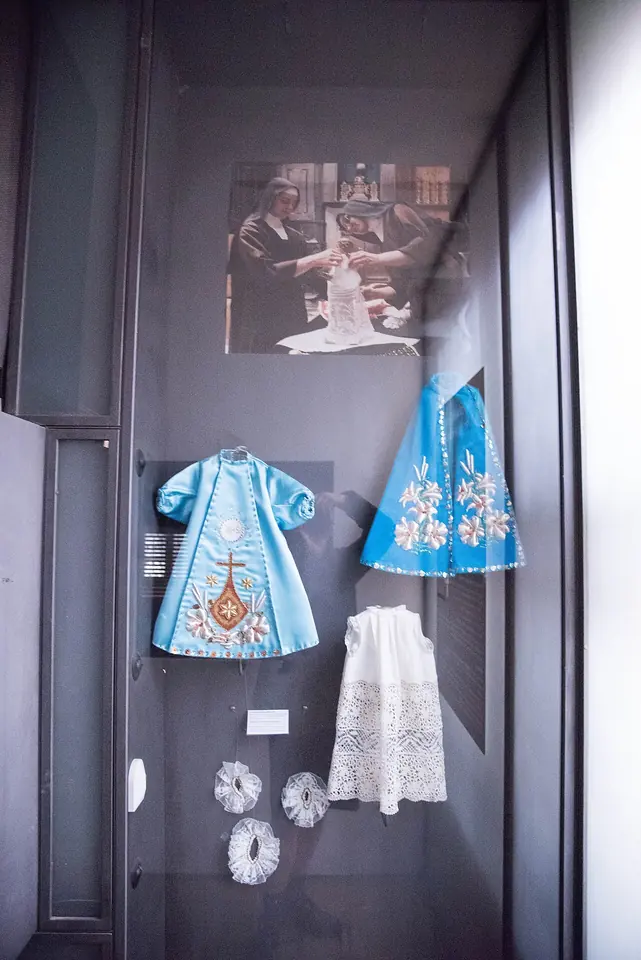
When to pray it
- Any time of year. A need doesn't wait for a feast.
- In the Christmas season, and on to Candlemas on February 2, the old close of the Christmas cycle, when the whole Church contemplates the Child.
- Before the 25th of any month, with the novena of Pius IX above.
- Before the coronation feast. The Prague shrine keeps the feast of the statue's crowning of 1655 on the first Sunday of May, and pilgrims bring it roses. A novena ending the day before joins them in spirit.
The Prague Carmelites also publish their own modern nine-day novena on their website, with a short reflection each day on a trait of childhood such as smallness, frailty, trust and growth. It is a good companion to the older form here.
Why we pray before the Infant of Prague
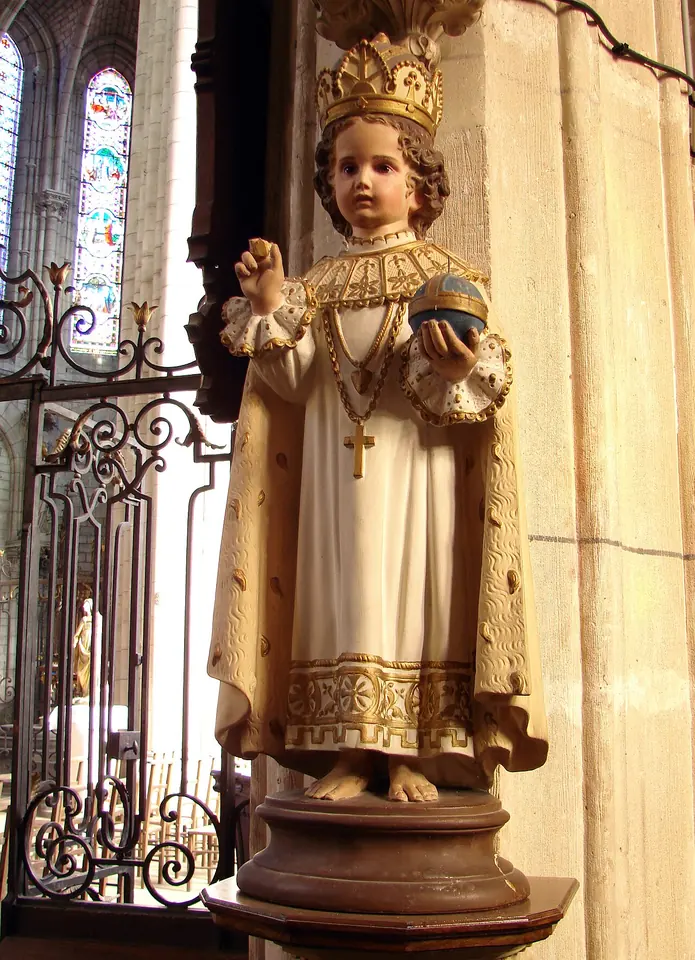
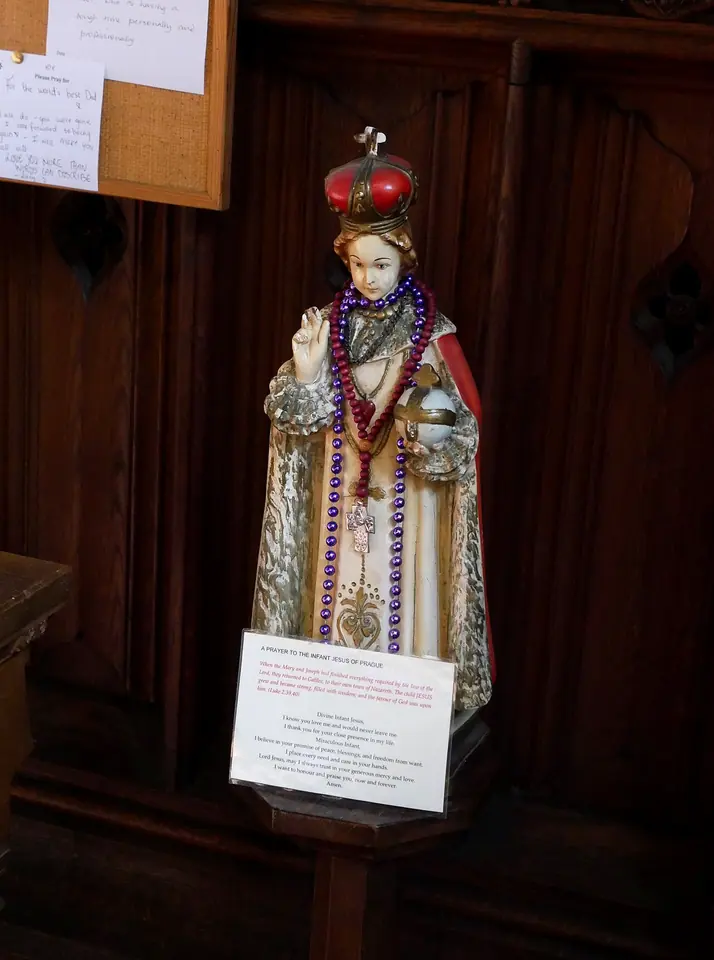
The Infant of Prague is not a saint. The statue, about eighteen inches tall, shows Jesus as a small king, crowned, holding the world in his left hand and blessing with his right. It came to Prague from Spain, and in 1628 Princess Polyxena of Lobkowicz gave it to the Discalced Carmelites, a devotion rooted in St. Teresa of Ávila's love for the childhood of Jesus. Its full history, the colors of its robes and its customs are in our entry on the Infant Jesus of Prague.
When Pope Benedict XVI visited the statue in 2009 he said that "the figure of the Child Jesus, the tender infant, brings home to us God's closeness and his love." That is the heart of this novena. A child can't frighten anyone, and the Son of God chose to come to us that way so that we would not be afraid to ask.
The promise Carmelite tradition says Fr. Cyril heard, which the Montreal booklet prints on its title page as Plus vous m'honorerez, plus je vous favoriserai, "The more you honor me, the more I will bless you," is traditional. The Church approved the devotion in the 17th century but has never ruled on the words themselves. They say what every Christian already knows: God will not be outdone in generosity.
Related prayers
- The Infant Jesus of Prague: history, vestment colors, feast and another form of Fr. Cyril's prayer published by the shrine.
- Litany of the Holy Name, which the old booklet adds to each day.
- St. Andrew Christmas novena, another prayer of Advent and the Christ Child.
- Our novenas page and the feast days calendar.
Divine Infant Jesus, have mercy on us.
Frequently asked questions
How do you pray the Infant of Prague novena?
Choose one intention and pray for nine days in a row. Each day, read or think about one mystery of Christ's childhood, then pray Fr. Cyril's prayer, naming your request where the prayer says to. The 1890s booklet suggests adding the Litany of the Holy Name of Jesus, and many people add an Our Father, Hail Mary and Glory Be.
What is the nine-hour Infant of Prague novena?
It is a popular short form for urgent needs: a brief prayer, built on Jesus' words "Ask and you shall receive," said once an hour for nine hours in a single day. It has been printed on holy cards for decades, but we could not trace it to a named author or an early source, and it carries no special Church approval or promise. Prayed with faith it is a good prayer; the full nine-day novena is the traditional form.
When is the best time to pray the Infant of Prague novena?
Any time. Good times are the Christmas season, the nine days before the 25th of any month (a novena the Church indulgenced in 1846), and the days before the first Sunday of May, when the Prague shrine keeps the feast of the statue's coronation.
Are we praying to a statue?
No. The Infant of Prague is an image of Jesus Christ himself, honored in his childhood. We pray to Jesus, and the statue helps us picture the Child who became poor and small for us, as a crucifix helps us picture his Passion.
What does \"The more you honor me, the more I will bless you\" mean?
It is the promise Carmelite tradition says Fr. Cyril heard in prayer before the statue in the 1630s. The 1890s booklet prints it on its title page. These words are traditional: the Church has approved the devotion but has never judged the private revelation itself. Their meaning is simple, and true of all prayer: God is never outdone in generosity.
Sources
- Neuvaine au saint Enfant Jésus miraculeux de Prague (Montreal: Imprimerie de l'Institution des Sourds-Muets, about 1894; imprimatur), Canadiana microfiche, Internet Archive. French text of Fr. Cyril's prayer, the nine days and their mysteries, the Leo XIII prayer and the chaplet of the Holy Infancy; the English translation of Fr. Cyril's prayer on this page is ours
- Ambrose St. John, trans., The Raccolta, 1910 edition (London: Burns & Oates), nos. 75, 76 and 78, Internet Archive. English texts of the Mysteries of the Holy Childhood, the novena for the 25th of the month and the prayer indulgenced by Leo XIII
- Infant Jesus of Prague (Discalced Carmelites, Church of Our Lady Victorious): Prayers
- Infant Jesus of Prague: The story of the statue
- Infant Jesus of Prague: Coronation celebration
- Benedict XVI, Address at the Church of Our Lady Victorious, Prague (September 26, 2009) (Vatican)