Prayer to St. Rita
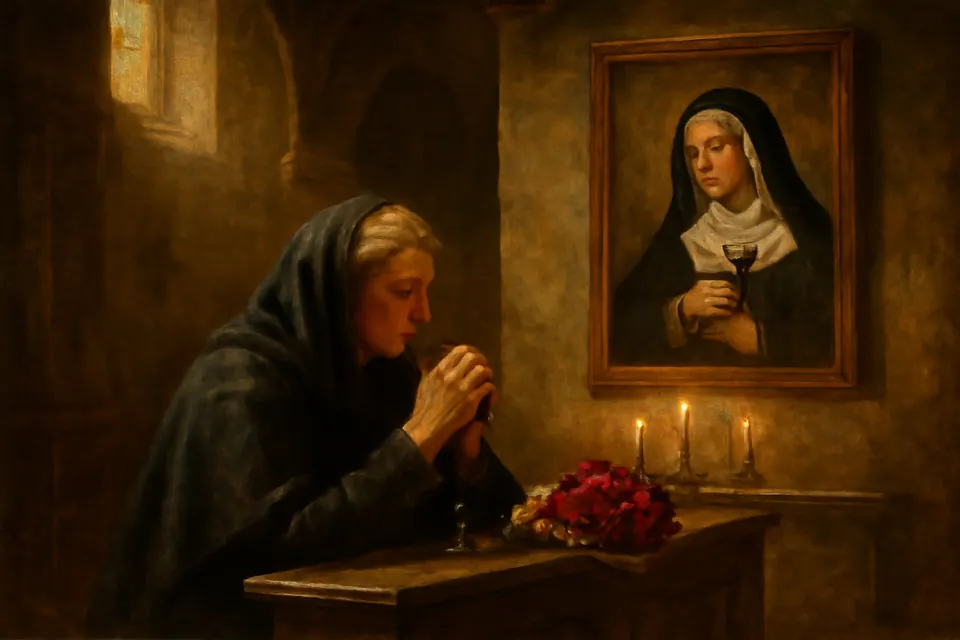
The traditional prayer to St. Rita begins "O holy protectress of those who are in utmost need..." and asks her to obtain our petition "provided it be for the greater glory of God." It comes from a 1914 Augustinian prayer book. We pray it in desperate cases, above all before her feast on May 22.
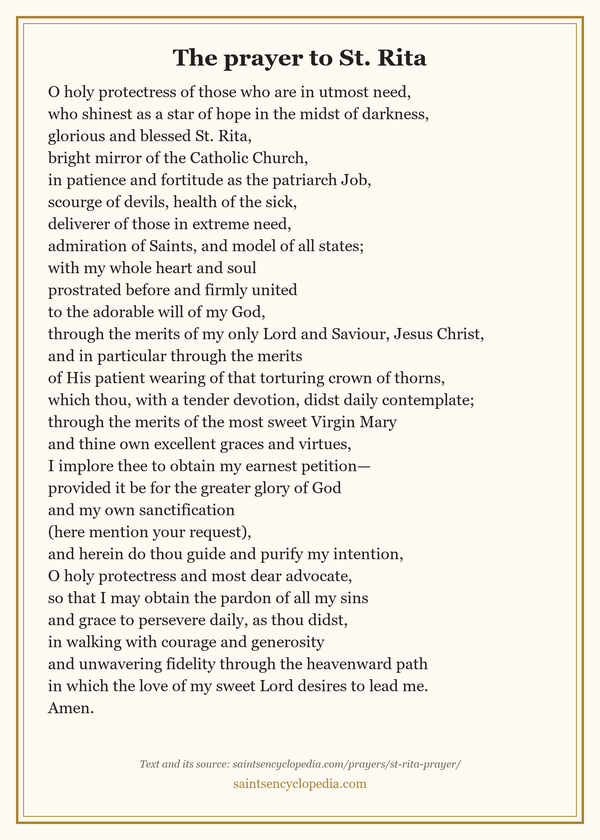 Free printable prayer card 5 × 7 inch PDF, ready to print, frame or tuck in a missal.
When a marriage is breaking, a child has gone astray, a diagnosis is grim or a debt cannot be paid, the faithful turn to St. Rita of Cascia, "the saint of the impossible." She knew violence, grief and long suffering, and she answered all of it with forgiveness. Here is the traditional prayer to her in full, with the other prayers that have gathered around her and how to pray her novena.
The prayer to St. Rita
This is the "Prayer to St. Rita" as printed in Devotions to St. Rita, published by the Augustinians in Chicago in 1914 with the imprimatur of Archbishop James Quigley:
O holy protectress of those who are in utmost need, who shinest as a star of hope in the midst of darkness, glorious and blessed St. Rita, bright mirror of the Catholic Church, in patience and fortitude as the patriarch Job, scourge of devils, health of the sick, deliverer of those in extreme need, admiration of Saints, and model of all states; with my whole heart and soul prostrated before and firmly united to the adorable will of my God, through the merits of my only Lord and Saviour, Jesus Christ, and in particular through the merits of His patient wearing of that torturing crown of thorns, which thou, with a tender devotion, didst daily contemplate; through the merits of the most sweet Virgin Mary and thine own excellent graces and virtues, I implore thee to obtain my earnest petition— provided it be for the greater glory of God and my own sanctification (here mention your request), and herein do thou guide and purify my intention, O holy protectress and most dear advocate, so that I may obtain the pardon of all my sins and grace to persevere daily, as thou didst, in walking with courage and generosity and unwavering fidelity through the heavenward path in which the love of my sweet Lord desires to lead me. Amen.
The book follows it with two short invocations, "St. Rita, Advocate of the Hopeless, pray for us. St. Rita, Advocate of the Impossible, pray for us," then three Our Fathers, Hail Marys and Glory Bes, and this closing blessing:
Blessed be God, the Father of our Lord Jesus Christ, Father of Mercy and God of all Consolation, who, through the intercession of St. Rita, comforts us in all our tribulations. Amen.
What the prayer asks, and why it works the way it does
Notice what the prayer does before it asks for anything. It unites the one praying "to the adorable will of my God." It pleads through the merits of Christ and his crown of thorns, then through the Virgin Mary, and only then through Rita's own virtues. And it asks for the petition only "provided it be for the greater glory of God and my own sanctification."
That is sound Catholic prayer. Rita doesn't grant favors by her own power. She prays for us before God, as she prayed in life. The prayer also asks for more than the favor: it asks her to "guide and purify my intention," and for the pardon of sins and the grace to persevere. Whatever God's answer to the request, those graces are always his will.
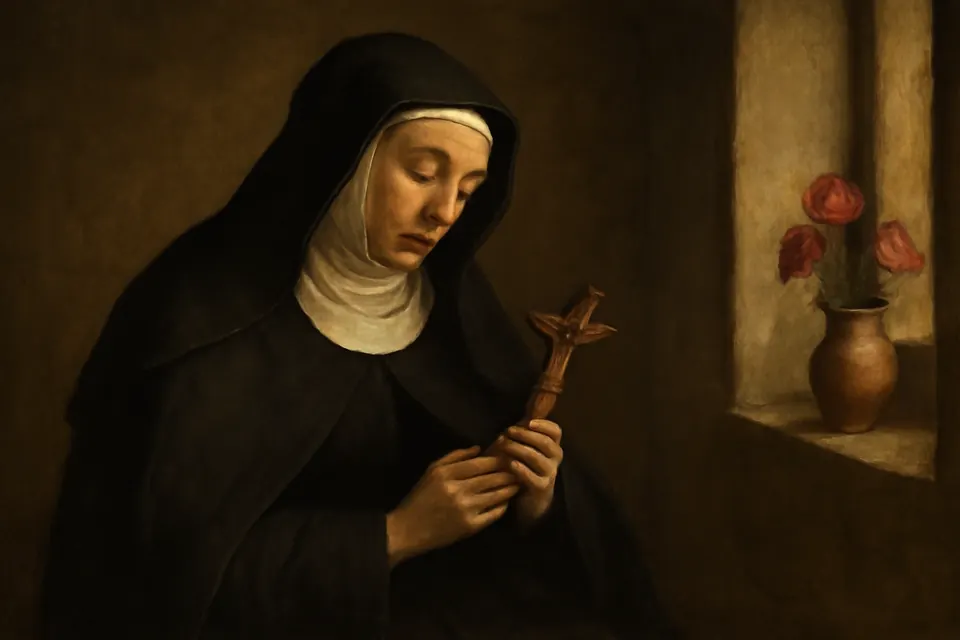
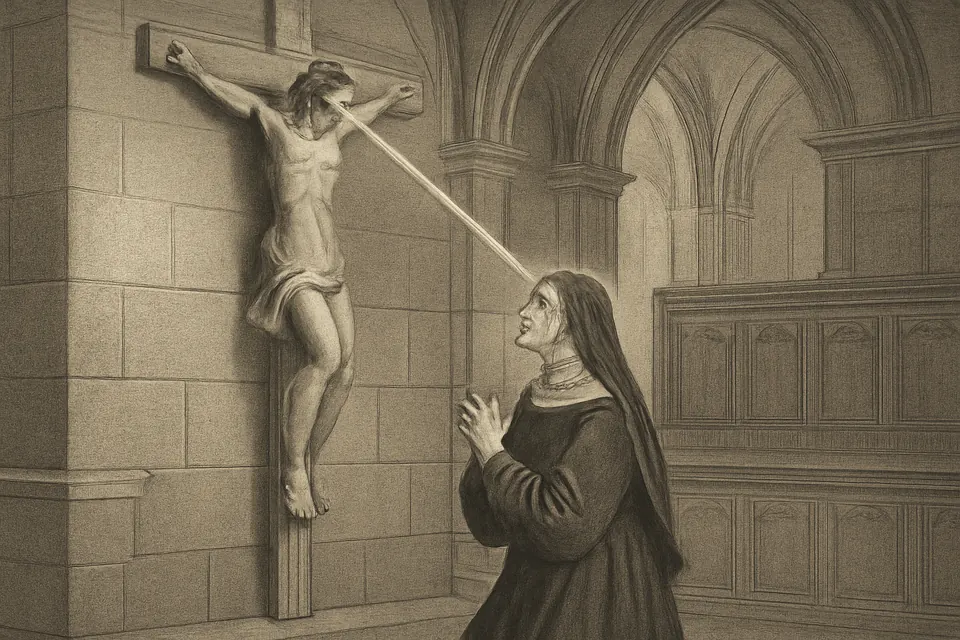
The titles are a portrait of her life. "Patience and fortitude as the patriarch Job" recalls a wife who bore a violent husband for years, then lost him to murder and both her sons to illness. The "crown of thorns, which thou … didst daily contemplate" recalls the thorn wound she bore on her forehead for fifteen years, after praying before a crucifix to share Christ's suffering. And "model of all states" is said of few saints: Rita was a daughter, wife, mother, widow and nun.
The indulgenced prayer of 1906
The same book prints a short prayer that the faithful could say once a day. It notes that a decree of August 11, 1906, granted an indulgence of 300 days to all who said it devoutly:
O glorious St. Rita, who didst miraculously participate in the sorrowful Passion of our Lord Jesus Christ, obtain for me the grace to suffer with resignation the troubles of this life, and protect me in all my needs. Amen.
Indulgences have not been counted in days since St. Paul VI reformed them in 1967 (our page on indulgences explains the change), and this grant is not in the Church's current handbook. The prayer is as good as ever. It is short enough to learn by heart and say in a hospital corridor.
The Memorare to St. Rita
Modeled on the Memorare to Our Lady, this little prayer is printed in the 1914 book among the "occasional prayers in honor of St. Rita":
Remember, O holy protectress of those in extreme need, that no one ever turned to thee in affliction, besought thy assistance, or implored thy intercession and was left unaided. With a firm reliance upon thy favor at the Throne of Grace, I, a suppliant, come to thee, Blessed Rita, bright Saint of the Impossible! Hearken thou to my petitions. Amen.
A prayer in any necessity
From the same page of the book, for any trouble at all:
O holy Rita, upon whom God did confer such singular favors during thy stay on this earth; pray for me and obtain the grace, first to know and detest my sins, and to increase in virtue; and particularly that I may be freed from my present affliction (here mention request), provided such liberation be not contrary to the Divine Will nor detrimental to my salvation. In this desire and in all other things I commit and subject myself to the Disposition and Will of the Most High God, and to thy maternal judgment, O holy Rita. Amen.
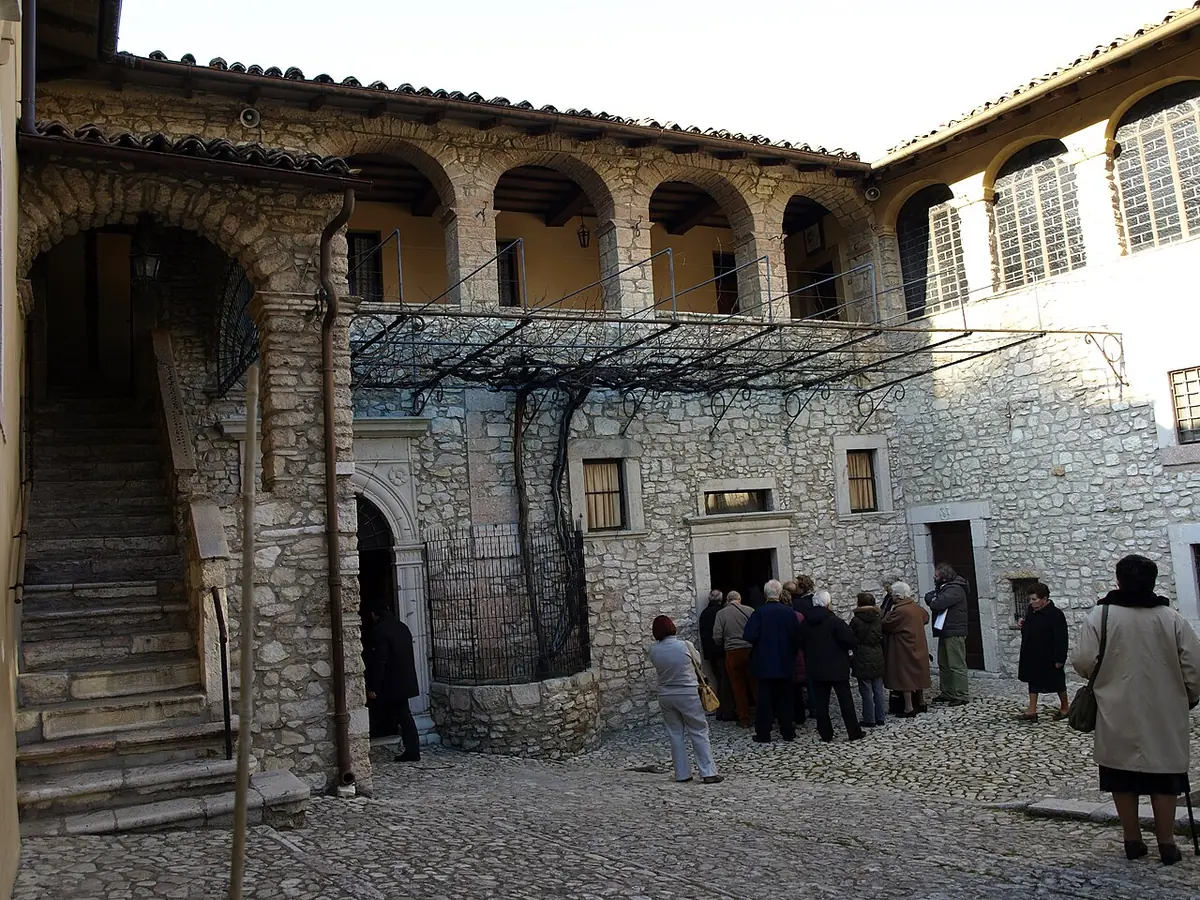
The Church's prayer for her feast
Rita was canonized by Pope Leo XIII on May 24, 1900, and the Office and Mass of her feast followed. The 1914 book prints the hymn of Lauds from that Office, approved by the Congregation of Sacred Rites on November 24, 1900, followed by the Church's prayer, the collect:
O God, who didst deign to confer on St. Rita, for imitating Thee in love of her enemies, the favor of bearing in her heart and brow the marks of Thy Love and Passion, grant, we beseech Thee, that through her intercession and merit, we may, pierced by the thorns of compunction, ever contemplate the sufferings of Thy Passion, who liveth and reigneth forever and ever. Amen.
The collect goes straight to the heart of her holiness. Rita is honored first not for her wonders but for loving her enemies. She forgave the men who killed her husband, and she worked to end the feud between the families. That is the grace the Church asks for in her name.
The same book also gives a Litany of St. Rita that ends with a prayer to God, "who in Thine infinite tenderness hast vouchsafed to regard the prayer of Thy servant, Blessed Rita, and dost grant to her supplication that which is impossible to human foresight, skill and efforts." The litany was printed for private devotion; it is not one of the litanies approved for public use in the liturgy.
How to pray a St. Rita novena
A novena is nine days of prayer for one intention. The National Shrine of St. Rita in Philadelphia prays its solemn novena each year from May 13 to 21, ending on the eve of her feast, with a litany and a prayer of petition each day. You can make one at any time:
- Choose one intention and offer it to God at the start.
- Each day, pray the prayer to St. Rita above, naming your request.
- Add the two invocations, three Our Fathers, Hail Marys and Glory Bes, and the closing "Blessed be God."
- If you can, go to Mass during the nine days, and to confession.
- On the ninth day, thank God, whatever the answer has been so far.
In Cascia the faithful also keep the Fifteen Thursdays before her feast, with Mass and prayer each week, one Thursday for each year she bore the thorn. The 1914 book adds a triduum that may be prayed on three days in a row or on three Thursdays.
St. Rita's feast and the roses
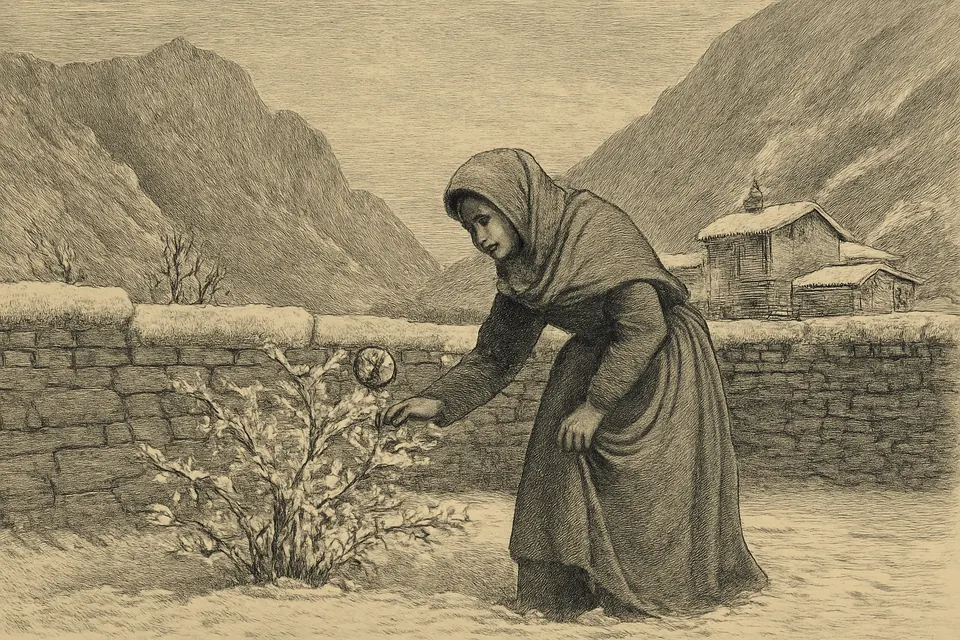
Her feast is May 22. In Augustinian churches and many parishes, roses are blessed that day. Tradition holds that in her last winter, bedridden months before her death in May 1457, Rita asked a cousin visiting from Roccaporena to bring her a rose from her old garden. It was January, but the cousin found one red rose blooming in the snow. This is a traditional story; the Cascia monastery says witnesses told it at the beatification inquiry of 1626, and the hymn of her feast sings of "the crimson rose in winter blown." People take the blessed roses to the sick, keep them in a prayer book, or lay them before her image.
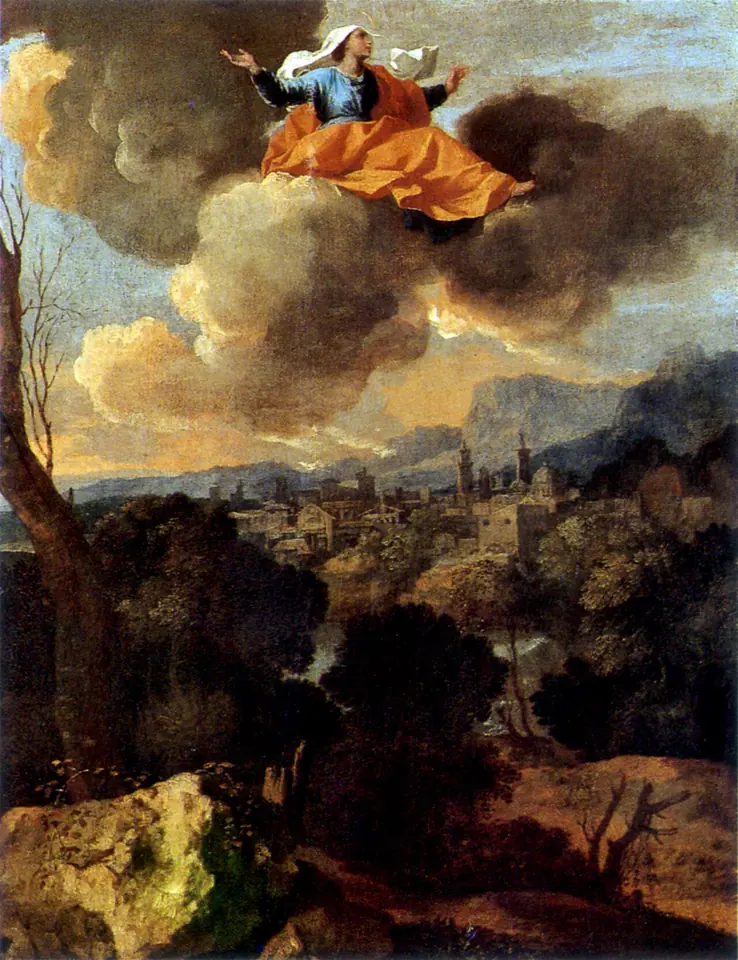
Nicolas Poussin painted another legend in the 1630s. After the convent of Cascia had turned her away three times, tradition says, she was carried into it by night through locked doors.
When we turn to St. Rita
We ask her prayers in the hardest family troubles: an abusive marriage, a husband or child far from God, a feud that won't end. We ask in sickness, in loneliness, in grief, and in any situation that no one can fix. Her life says that God can bring peace out of violence and holiness out of loss. Let us ask: St. Rita, advocate of the impossible, pray for us.
For more, see our full entry on St. Rita of Cascia, the saints of lost causes, the prayer to St. Jude, the prayer for a miracle and all our novenas.
Frequently asked questions
What is the prayer to St. Rita for impossible cases?
The traditional prayer begins, "O holy protectress of those who are in utmost need, who shinest as a star of hope in the midst of darkness, glorious and blessed St. Rita..." It asks her to obtain our petition, "provided it be for the greater glory of God and my own sanctification." The full text is above, from the 1914 Devotions to St. Rita.
Why is St. Rita the saint of the impossible?
Because so many prayers made through her were answered when every human hope was gone, from the day she died in 1457. Her life looked impossible too: a widow who forgave her husband's killers, refused three times by the convent in Cascia, who entered it anyway. Italians call her la santa degli impossibili.
When should I pray a St. Rita novena?
Any time a need is urgent. The traditional time is May 13 to 21, ending the day before her feast on May 22. Cascia also keeps the Fifteen Thursdays before her feast, one for each year she bore the thorn wound on her forehead.
Is there an indulgence for the prayer to St. Rita?
In 1906 the Church attached an indulgence of 300 days to a short daily prayer to St. Rita, printed above. Since 1967 indulgences are no longer counted in days, and that grant is not in the current handbook. The prayer itself is as good to pray as ever.
Why are roses blessed on St. Rita's feast?
Tradition holds that in her last winter she asked a cousin to bring her a rose from her old garden in Roccaporena, and a single rose was found blooming in the snow. On May 22 roses are blessed in Augustinian churches and many parishes, and the faithful take them home to the sick.
Did St. Rita write any prayers?
No. Rita left no writings. Every prayer to her was composed later by the Augustinians, by her shrines or by devout writers, which is why each prayer on this page is given with the book it comes from.
Sources
- Augustinians, Devotions to St. Rita: A Compendium Life of St. Rita, Devotional Exercises, Novena and Triduum (Chicago: D. B. Hansen & Sons, 1914; imprimatur of Archbishop James E. Quigley), Internet Archive
- José Sicardo, Life of Sister St. Rita of Cascia, Advocate of the Impossible, translated by Dan J. Murphy (Chicago, 1916), Internet Archive
- Catholic Encyclopedia (1912): St. Rita of Cascia
- Monastery of Saint Rita of Cascia: Fifteen Thursdays of Saint Rita
- National Shrine of Saint Rita of Cascia, Philadelphia: Novena Prayers