St. Jude prayer

The St. Jude prayer most Catholics know begins "Most holy apostle, St. Jude, faithful servant and friend of Jesus" and asks his help "where help is almost despaired of." Its author is unknown. It was already printed in Chicago in 1929, the year two shrines there began spreading devotion to St. Jude as the patron of hopeless cases.
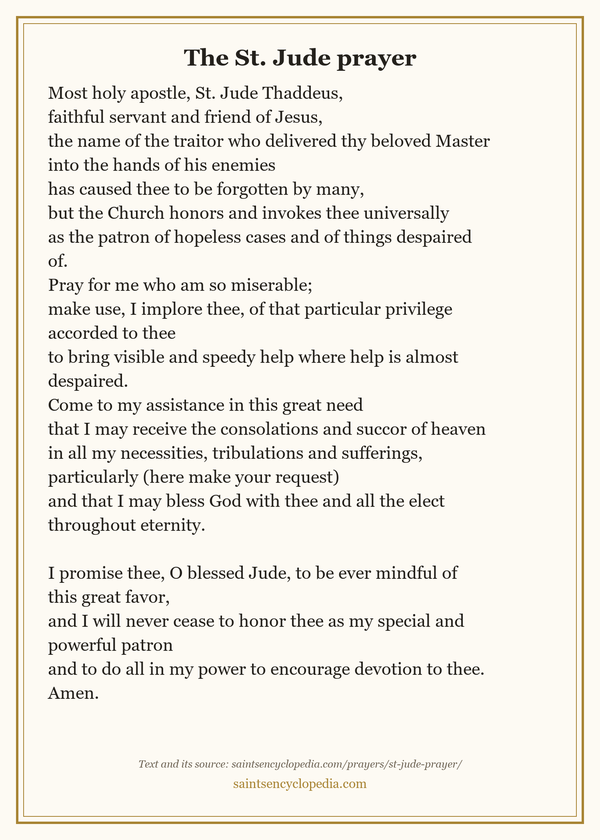 Free printable prayer card 5 × 7 inch PDF, ready to print, frame or tuck in a missal.
People usually come to this prayer in a bad week: a diagnosis, a layoff, a child who has stopped calling. It has been said in exactly those weeks for about a century. The text below is printed word for word from a Chicago prayer booklet of 1929, followed by what is known about where it came from and the customs that grew up around it.
The St. Jude prayer
This is the prayer as printed in Life of St. Jude Thaddeus, "Helper in Despaired of Cases" by the Dominican Fr. William A. Marchant, published in 1929 by the Shrine of St. Jude Thaddeus at St. Pius V Church in Chicago, with the imprimatur of George Cardinal Mundelein. The booklet is now in the public domain.
Most holy apostle, St. Jude Thaddeus, faithful servant and friend of Jesus, the name of the traitor who delivered thy beloved Master into the hands of his enemies has caused thee to be forgotten by many, but the Church honors and invokes thee universally as the patron of hopeless cases and of things despaired of. Pray for me who am so miserable; make use, I implore thee, of that particular privilege accorded to thee to bring visible and speedy help where help is almost despaired. Come to my assistance in this great need that I may receive the consolations and succor of heaven in all my necessities, tribulations and sufferings, particularly (here make your request) and that I may bless God with thee and all the elect throughout eternity.
I promise thee, O blessed Jude, to be ever mindful of this great favor, and I will never cease to honor thee as my special and powerful patron and to do all in my power to encourage devotion to thee. Amen.
The booklet adds: "Our Father, Hail Mary, Glory be to the Father, etc., three times," and the closing versicle, "St. Jude Thaddeus, pray for us. And for all who invoke thy aid."
A shorter prayer from the same booklet
The 1929 booklet opens its novena with this prayer, which the Claretian shrine's 1954 book also prints:
O glorious apostle, St. Jude Thaddeus, true relative of Jesus and Mary, I salute thee through the most Sacred Heart of Jesus! Through this Heart I praise and thank God for all the graces He has bestowed upon thee. Humbly prostrate before thee, I implore thee through this Heart to look down upon me with compassion. Oh, despise not my poor prayer; let not my trust be confounded! To thee God has granted the privilege of aiding mankind in the most desperate cases. Oh, come to my aid, that I may praise the mercies of God! All my life I will be grateful to thee and will be thy faithful client until I can thank thee in heaven. Amen.
A one-line prayer
The litany of St. Jude in both booklets has a line that many people use on its own, at a bus stop or in a hospital corridor:
St. Jude, help of the hopeless, aid me in my distress!
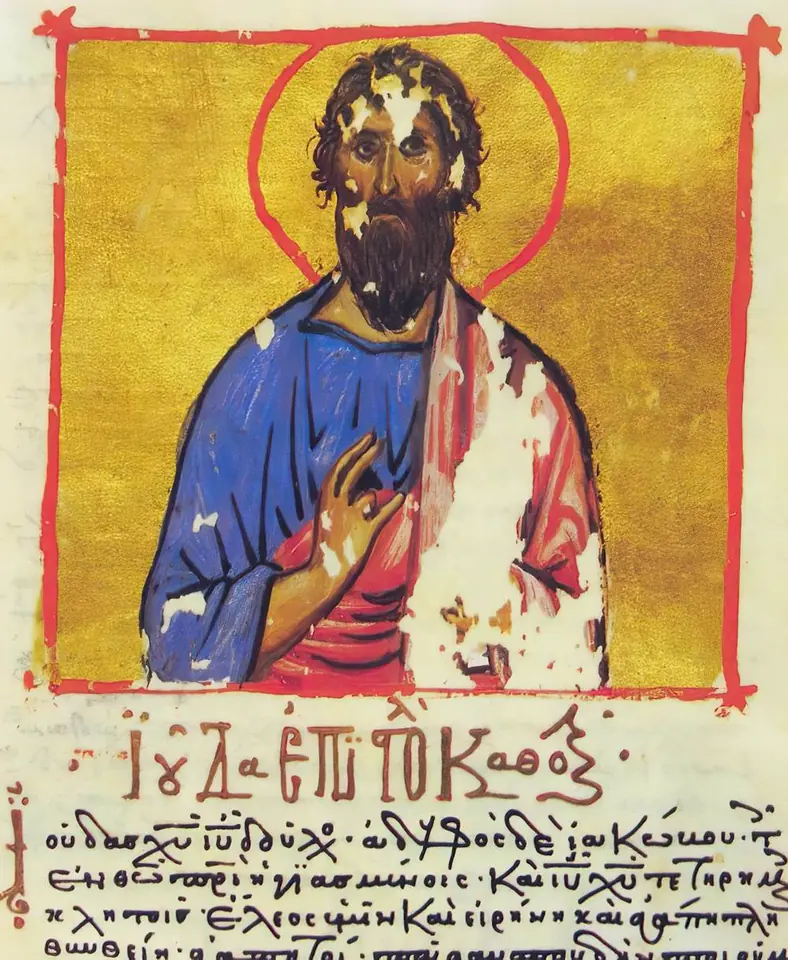
Where the St. Jude prayer comes from
The prayer has no known author. No saint wrote it, and no booklet claims one did. What can be traced is how close its wording stayed across the shrines that printed it.
The Claretian St. Jude Novena Prayer Book of the National Shrine of St. Jude, printed in 1954 with the imprimatur of Samuel Cardinal Stritch, gives the same prayer under the heading "Prayer in Trials," with the instruction "To be said in great affliction, or when one seems to be deprived of all visible help, and for cases despaired of." Its differences from 1929 are small: "St. Jude" for "St. Jude Thaddeus," "forever" for "throughout eternity," "O blessed St. Jude." The same Claretian book says the order had promoted devotion to St. Jude since 1911, when it set up a shrine to him in its basilica in Santiago, Chile. That basilica, the Heart of Mary, still has a much-loved statue of the apostle.
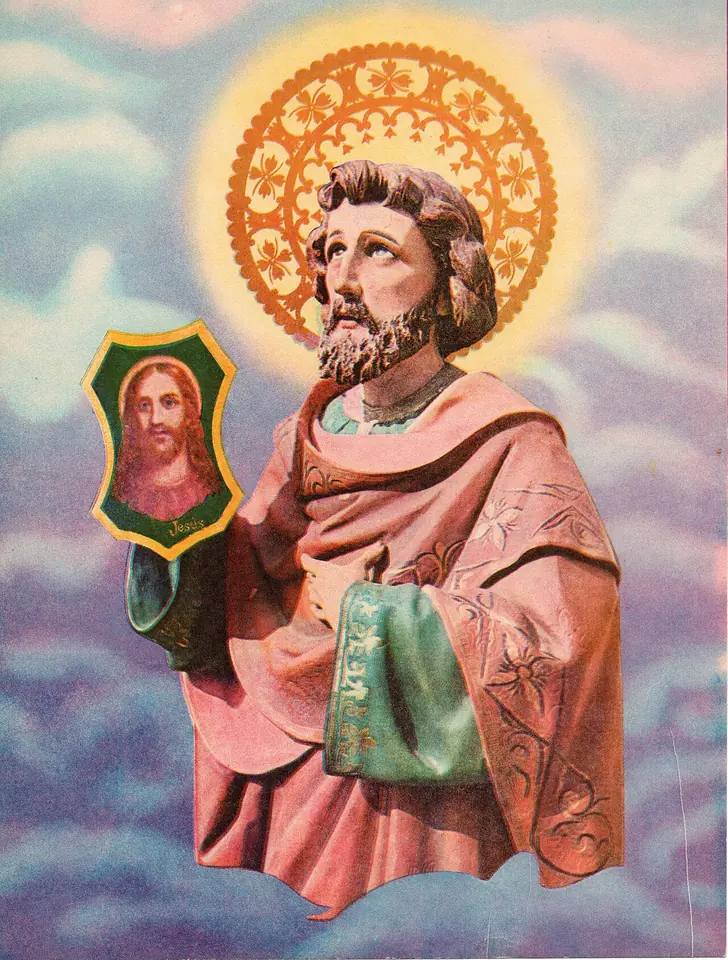
The National Shrine now uses its own modern-English version, which drops the line about the traitor and calls Jude "the patron of hope." Its wording belongs to the shrine, so this page prints the 1929 text instead.
Why St. Jude is the patron saint of hopeless causes
No document records the moment Jude became the patron of desperate cases. The Claretian booklet of 1954 admits that the origins "are nearly as obscure as details of the life of the great Apostle." These are the explanations handed down among the faithful, labeled for what they are.
- The forgotten name (the most common explanation). In Latin and most European languages Jude was "Judas," like the betrayer, and people avoided praying to him. A saint so seldom asked for anything, the reasoning goes, would be eager to help those who came to him last. The prayer says this itself: the traitor's name "has caused thee to be forgotten by many." The 1929 booklet calls him "The Forgotten Saint."
- A vision of St. Bridget (devotional tradition, unverified). The 1954 booklet says Christ told St. Bridget of Sweden to turn to Jude with confidence: "In accordance with his surname, 'Thaddeus,' the amiable, loving, he will show himself most willing to give help." We could not find the passage in published editions of her Revelations.
- St. Bernard and a papal indulgence (claims, unverified). The 1929 booklet says St. Bernard of Clairvaux invoked Jude all his life and used a relic of him, and that Pope Paul III granted a plenary indulgence in 1548 for visiting his tomb on his feast. It gives no source for either claim.
- Chicago in the Depression (documented history). What made the title famous in America were two shrines founded in Chicago in 1929, described below, whose crowded novenas through the Great Depression and World War II carried the "patron of hopeless cases" across the country.
St. Jude shares the title with St. Rita of Cascia, the saint of the impossible. His life, letter and symbols are in his own entry: St. Jude.

The "Thank you, St. Jude" newspaper custom
The prayer ends with a promise: "to do all in my power to encourage devotion to thee." For many people, keeping that promise meant a few lines in the newspaper. The National Shrine notes that the faithful often thanked St. Jude in the classified sections of American newspapers to say a prayer had been answered. The Carmelites at the National Shrine of Saint Jude in Faversham, England, describe the same thing there: he is "frequently thanked in the personals column of many daily newspapers, both secular and religious, usually anonymously, in a phrase such as 'Thank you Saint Jude for favours granted.'"
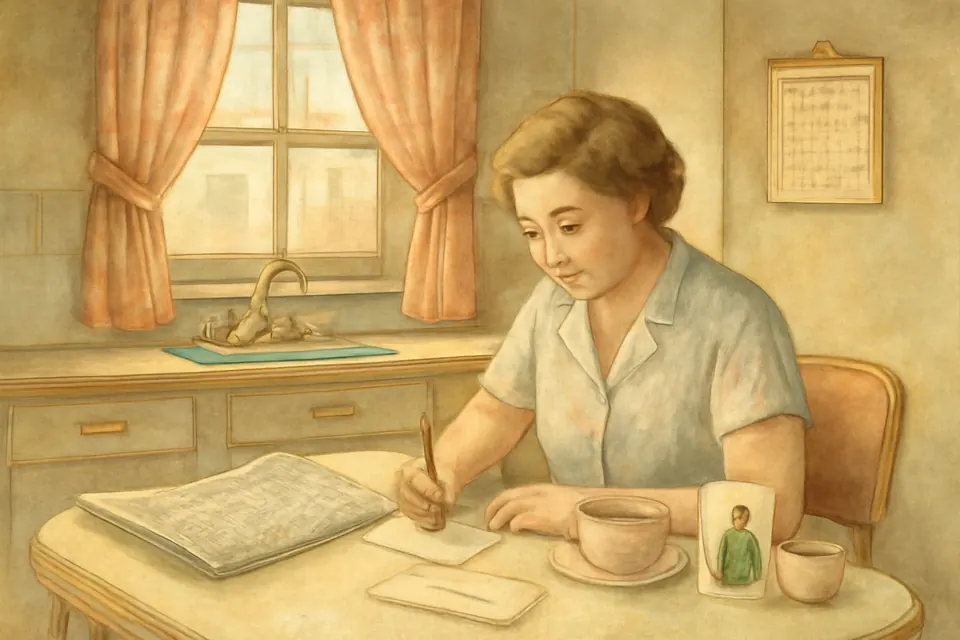
The notices are a popular custom. The Church has never required them, and no promise attaches to them. Some cards add a short prayer to the Sacred Heart and St. Jude, to be said nine times a day for nine days, with a promise that it has "never been known to fail" and an instruction to publish thanks. That promise has no Church approval, and no prayer comes with a guaranteed result.
The Chicago shrines of St. Jude
In 1929 St. Jude got not one Chicago shrine but two.
The National Shrine at Our Lady of Guadalupe (Claretians)
The Claretian Fr. James Tort, pastor of Our Lady of Guadalupe Church in South Chicago, a parish of steelworkers' families, founded the National Shrine of St. Jude in 1929. The shrine records that the first solemn novena began on February 17, 1929, and that on the feast of St. Jude, October 28, more than 1,000 people stood outside the overflowing church to hear the closing service. Thousands came to its novenas through the Depression and the war. The Claretians still run it, and it receives thousands of petitions every year.
The Dominican shrine at St. Pius V
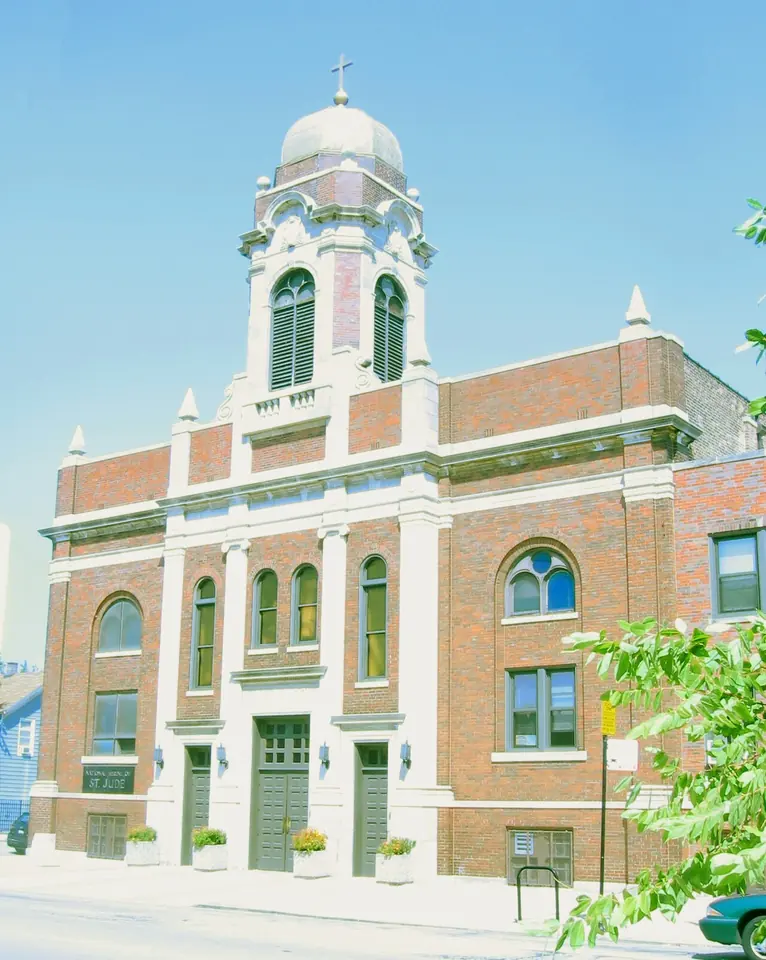
Across town in Pilsen, the Dominicans at St. Pius V Church opened their own Shrine of St. Jude Thaddeus under the pastor, Fr. William Marchant, author of the 1929 booklet quoted above. It held its first public devotions on Sunday, October 20, 1929; the shrine says the crowd was so large that police and firemen were called. Nine days later came Black Tuesday. In 1949 the Dominicans of Turin gave the shrine an arm relic of St. Jude, and it still draws pilgrims at 1901 S. Ashland Avenue.
Danny Thomas and St. Jude Children's Research Hospital
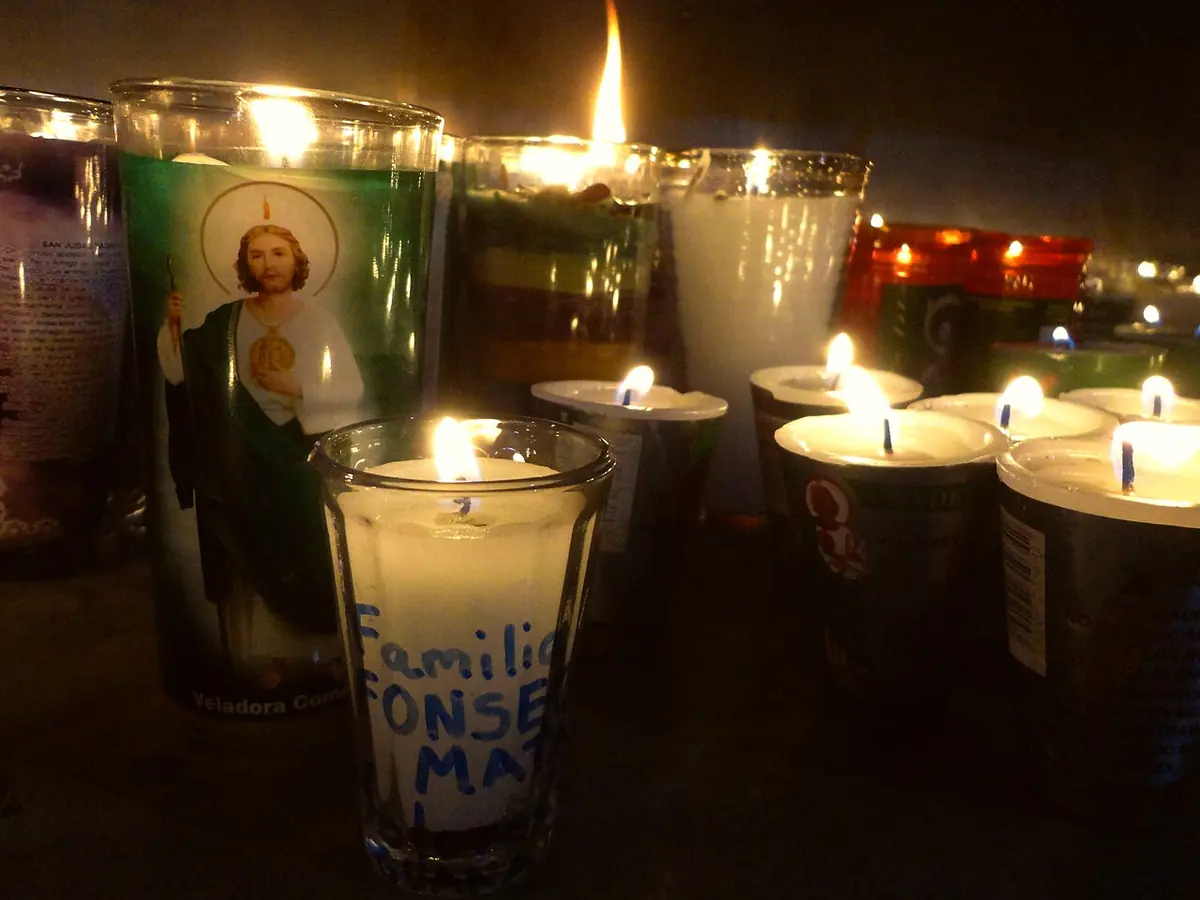
The best-known answered prayer to St. Jude belongs to the comedian Danny Thomas. According to the National Shrine, he first heard of St. Jude in the spring of 1940 from a stagehand in Detroit, when he was out of money with a new baby. He asked the saint to "show me my way in life" and promised to "do something big" in his name. St. Jude Children's Research Hospital gives his vow as "Show me my way in life, and I will build you a shrine." Later, in Chicago, a leaflet at St. Clement Church led him to the National Shrine at Our Lady of Guadalupe, which he supported for the rest of his life.
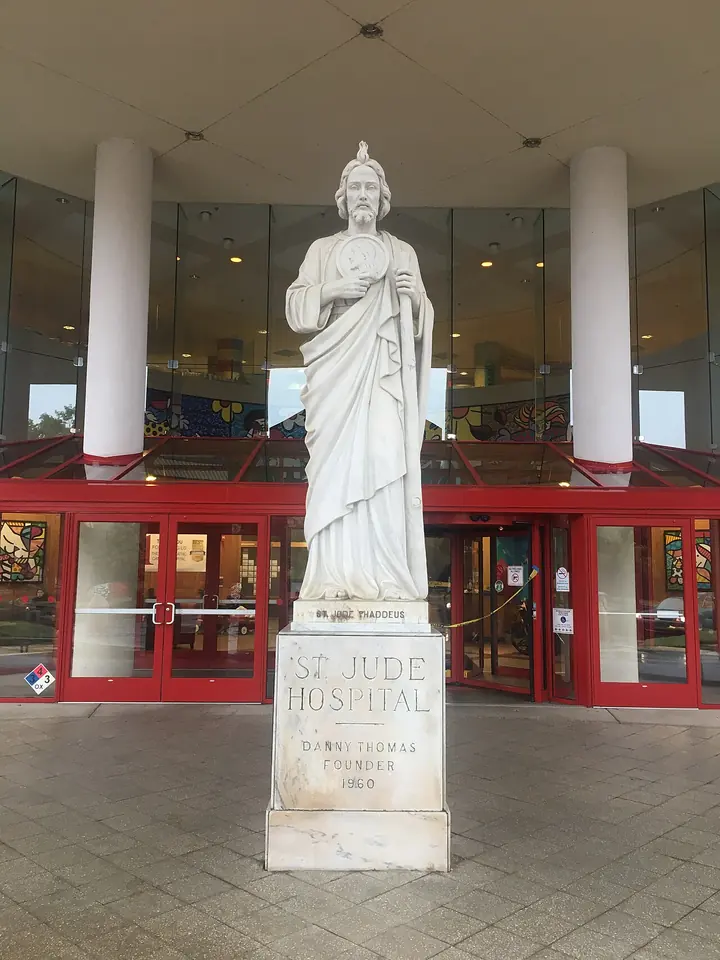
His career took off, and he kept the promise. St. Jude Children's Research Hospital opened in Memphis, Tennessee, on February 4, 1962, with a statue of the apostle at its entrance.
How to pray to St. Jude
We ask St. Jude to pray for us, as we would ask a friend, when a situation seems to have no way out. A simple way:
- Name the one thing you are asking for.
- Pray the St. Jude prayer above, saying your request at "(here make your request)."
- Add an Our Father, a Hail Mary and a Glory Be, as the 1929 booklet directs (it says three times each).
- When the prayer is answered, or when God answers it in a way you did not expect, give thanks. Both booklets include a prayer of thanksgiving.
Many people pray it as a novena on nine days in a row, especially from October 20 to his feast on October 28. Full instructions are on the St. Jude novena page. For the feasts of other saints, see the feast day calendar.
Frequently asked questions
What is the prayer to St. Jude for hopeless cases?
The best-known one begins "Most holy apostle, St. Jude, faithful servant and friend of Jesus" and calls him "the patron of hopeless cases and of things despaired of." It asks him to bring "visible and speedy help where help is almost despaired," leaves a space to name your request, and ends with a promise to honor him and spread devotion to him. The full text is at the top of this page.
Who wrote the St. Jude prayer?
No one knows. It is a traditional prayer that appears without an author's name in Chicago prayer booklets by 1929, both from the Dominican shrine at St. Pius V Church and, in nearly the same words, in the Claretian National Shrine's novena book (1954 edition). Neither booklet claims a saint wrote it.
Why do people put "Thank you, St. Jude" in the newspaper?
Because the prayer itself ends with a promise to "encourage devotion" to St. Jude, and a short public thank-you is a simple way to keep it. Notices in the personal or classified columns, often signed only with initials, became common in American and British papers in the 20th century. The Church has never required them, and no promise depends on them.
Does the St. Jude prayer never fail?
No prayer comes with a guarantee. The phrase "never known to fail" belongs to a chain-style card that tells people to say a short prayer nine times a day and publish a notice. That promise has no Church approval. We pray to St. Jude asking him to intercede for us, trusting God to answer in the way that is best.
How do I pray a St. Jude novena?
Pray a St. Jude prayer, such as the one on this page, once a day for nine days in a row for the same intention, often adding an Our Father, a Hail Mary and a Glory Be. Many people time it to end on his feast, October 28, by starting on October 20. Full instructions are on the St. Jude novena page.
Sources
- Wm. A. Marchant, O.P., Life of St. Jude Thaddeus, "Helper in Despaired of Cases": Devotional Exercises and Novena Prayers (Chicago: Shrine of St. Jude Thaddeus, Dominican Fathers, 1929; imprimatur George Cardinal Mundelein), Internet Archive
- St. Jude Novena Prayer Book, National Shrine of St. Jude, Chicago (imprimatur Samuel Cardinal Stritch, 1954)
- National Shrine of St. Jude: History of the Shrine
- National Shrine of St. Jude: St. Jude and Danny Thomas
- Shrine of St. Jude Thaddeus, St. Pius V Church, Chicago: History of our Shrine
- St. Jude Children's Research Hospital: St. Jude history
- National Shrine of Saint Jude, Faversham (Carmelites): Thank you Saint Jude