First class, second class and third class relics
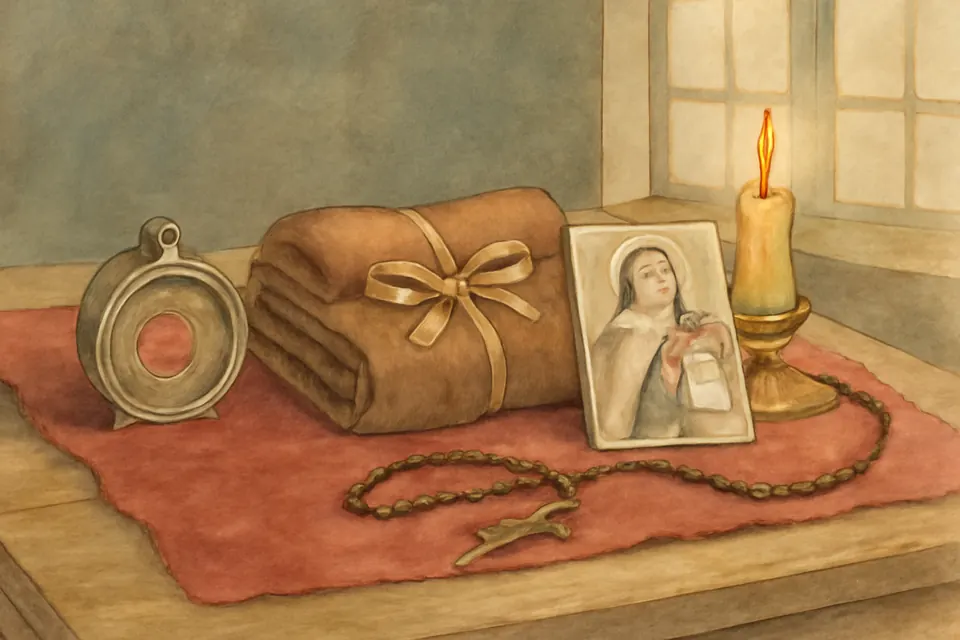
A first class relic is part of a saint's body, such as a fragment of bone, hair or flesh. A second class relic is something the saint owned or used, like clothing or a rosary. A third class relic is an object, usually a piece of cloth, touched to a first class relic or to a saint's tomb. Relics are honored, never sold.
If you have ever been handed a holy card with a tiny square of cloth on it, or seen a small round case with a label in Latin, you have met the classes of relics. Catholics sort relics into three classes: a first class relic is part of the saint's body, a second class relic is something the saint used, and a third class relic is something touched to a relic of the first class. Here is what each one means, where the custom comes from and how the Church asks us to honor them.
First class relics
A first class relic is part of the body of a saint or blessed. Whole bodies rest beneath many altars, and a few are kept in glass reliquaries, but most first class relics the faithful ever see are tiny fragments of bone, sealed in a small round metal case called a theca, often behind glass with a wax seal on the back. The label tells you what is inside:
- ex ossibus: from the bones
- ex carne: from the flesh
- ex capillis: from the hair
- ex praecordiis: from the heart or inner organs

The honor paid to a saint's body is as old as the Church. After St. Polycarp was martyred at Smyrna in the second century, his people wrote that they "took up his bones, as being more precious than the most exquisite jewels," and laid them where they could gather each year on the anniversary of his death. Scripture itself tells of a dead man who came back to life when his body "touched the bones of Eliseus" (4 Kings 13:21, Douay-Rheims). To this day canon law asks that "the ancient tradition of placing relics of martyrs or other saints under a fixed altar" be kept (canon 1237).

Second class relics
A second class relic is something the saint owned or used: a habit or piece of clothing (labeled ex indumentis), a rosary, a breviary, a letter in the saint's hand, a chair, a bed. The instruments of a martyr's suffering, such as chains, belong here as well. Many shrines keep a saint's room just as it was, so that the faithful can pray among second class relics: St. Thérèse's cell at Lisieux, the room of St. Padre Pio at San Giovanni Rotondo.
The Gospels show us why these matter. A woman was healed when she touched the hem of Christ's cloak, and the Acts of the Apostles records that "even there were brought from [Paul's] body to the sick, handkerchiefs and aprons, and the diseases departed from them" (Acts 19:12, Douay-Rheims).

Third class relics
A third class relic is an object touched to a first class relic or to a saint's tomb. Most often it is a small piece of cloth fixed to a holy card, which shrines give away by the thousands. Many pilgrims also touch their own rosaries, medals and prayer cards to a saint's tomb.
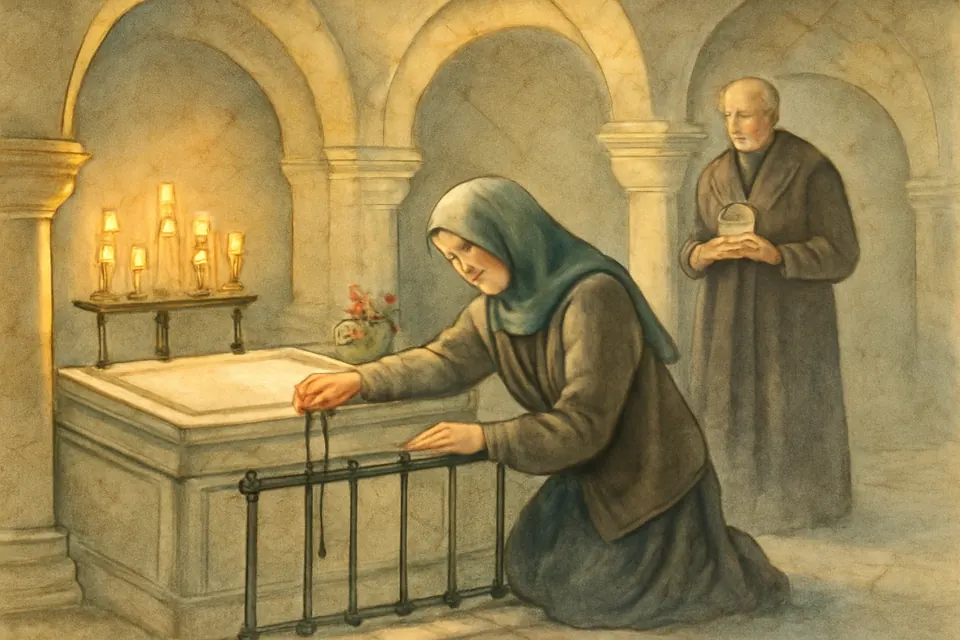
This is the oldest kind of relic sharing in Rome. In 594 the Empress Constantina asked Pope St. Gregory the Great for the head of St. Paul. He refused, explaining the Roman custom:
... let my most tranquil lady know that it is not the custom of the Romans, when they give relics of saints, to presume to touch any part of the body; but only a cloth (brandeum) is put into a box (pyxide), and placed near the most sacred bodies of the saints: and when it is taken up it is deposited with due reverence in the Church that is to be dedicated.
St. Gregory the Great, Letters, Book IV, Letter 30
Instead, Gregory offered her filings from the chains St. Paul had worn. Those cloths, the brandea, were the third class relics of the early Middle Ages, and the holy card in your missal continues the same custom.
What the Church's own rules say
The three classes are a popular way of speaking, not a term of canon law. The Church's 2017 instruction Relics in the Church uses two categories instead. The body of a saint, "notable parts of the bodies themselves or the sum total of the ashes" are significant relics, kept in sealed urns under the bishop's care. "Little fragments of the body" and "objects that have come in direct contact with their person" are non-significant relics, to be kept in sealed cases where possible and honored "avoiding every type of superstition and illicit trade."
Two rules matter most for the faithful:
- Relics are never sold. Canon 1190 says simply, "It is absolutely forbidden to sell sacred relics," and the 2017 instruction forbids any trade or exchange of them as well.
- Authenticity matters. A first class relic should come with a certificate from Church authority. A relic of uncertain origin should be taken to the parish priest, not displayed.
How to honor a relic
Honoring a relic is simple. We may kneel before it, kiss the reliquary when it is offered, light a candle, and above all pray: thank God for the saint, and ask the saint to pray for us. The Catholic Encyclopedia is careful to say that "there is nothing... in Catholic teaching to justify the statement that the Church encourages belief in a magical virtue" in relics. God works through them as he worked through the handkerchiefs of St. Paul, out of love for his saints and for us.
For famous relics, incorrupt saints and the history of reliquaries, see our page on relics and incorruptible saints and our guide to incorruptible saints. Let us honor the saints' relics with faith and ask their prayers, that we too may one day share the resurrection of the body they await.
Frequently asked questions
What is a first class relic?
A first class relic is part of a saint's body, most often a tiny fragment of bone, sometimes hair, flesh or blood, kept in a sealed case called a theca. The label usually says ex ossibus (from the bones), ex carne (from the flesh) or ex capillis (from the hair).
What is a second class relic?
Something the saint owned or used in life, such as a piece of clothing (ex indumentis), a rosary, a book or a letter. The instruments of a martyr's death are counted here too.
What is a third class relic?
An object touched to a first class relic or to the saint's tomb, usually a small square of cloth fixed to a holy card. Pilgrims also touch their own rosaries and medals to a saint's tomb or relic, and that custom is very old.
Can you buy a first class relic?
No. Canon law says, "It is absolutely forbidden to sell sacred relics" (canon 1190), and the Church's 2017 instruction forbids both selling and trading them. Relics offered for sale online should be reported to the diocese, not bought. Parishes and religious communities may receive relics as gifts, with a certificate of authenticity.
Do Catholics worship relics?
No. Worship belongs to God alone. We venerate relics because they belonged to the saints, whose bodies were temples of the Holy Spirit and will rise again, and we ask the saints to pray for us. Any grace comes from God, not from the object.
Sources
- Gregory the Great, Registrum Epistolarum, Book IV, Letter 30, to the Empress Constantina (New Advent)
- Catholic Encyclopedia (1911): Relics
- Congregation for the Causes of Saints: Instruction, Relics in the Church: Authenticity and Preservation (2017)
- Code of Canon Law, Book IV, canons 1166–1190 (canon 1190 on relics)
- Code of Canon Law, Book IV, canons 1205–1243 (canon 1237, relics under altars)
- The Martyrdom of Polycarp, chapter 18 (New Advent)
- Douay-Rheims Bible: Acts 19