First Saturday devotion
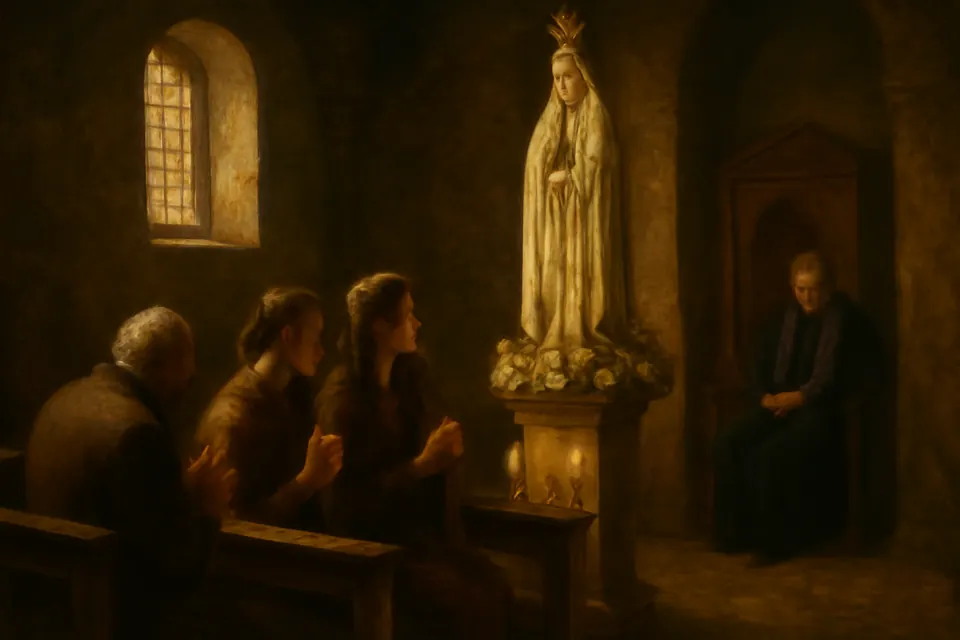
The First Saturday devotion is the Fátima devotion of reparation to the Immaculate Heart of Mary. On the first Saturday of five consecutive months, we go to confession, receive Holy Communion, pray five decades of the rosary and keep Our Lady company for fifteen minutes in meditation. She promised Sister Lúcia at Pontevedra in 1925 to help those who do so at the hour of death.
The First Saturday devotion is Our Lady of Fátima's own request: a small act of love, repeated for five months, to console her Immaculate Heart. Here is how to make the Five First Saturdays, where the devotion comes from, and why there are five.
What is the First Saturday devotion?
The First Saturday devotion is a Communion of reparation to the Immaculate Heart of Mary. "Reparation" means making amends: offering God love and prayer in place of the coldness and insults that Mary's heart receives, and consoling her as a child consoles a mother who has been hurt.
Saturday has long been Our Lady's day in the Church's calendar. The first Saturday of the month gives the devotion a monthly rhythm, and the fact that it so often falls the day after the First Friday joins the two Hearts, the Sacred Heart of Jesus and the Immaculate Heart of his Mother.
How to make the Five First Saturdays
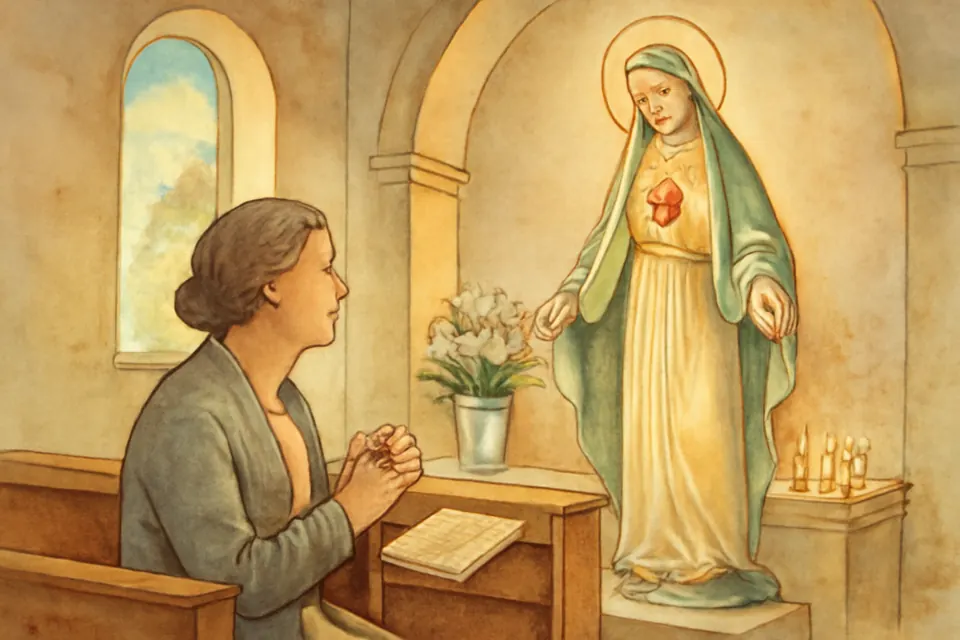
On the first Saturday of five consecutive months, with the intention of making reparation to the Immaculate Heart of Mary:
- Go to confession. It doesn't have to be on the Saturday itself. The Priestly Fraternity of St. Peter, summarizing what Sister Lúcia reported, says it "can be made within several days before or after the Saturday."
- Receive Holy Communion on the first Saturday, in a state of grace.
- Pray five decades of the rosary. Our guide on how to pray the rosary walks through the prayers and the mysteries.
- Keep Our Lady company for fifteen minutes, meditating on one or more of the mysteries of the rosary. This is separate from the rosary itself: a quiet quarter hour with her.
Make each of the four with the intention of reparation. A simple way is to say it in your own words before you begin: "Mother, I offer this in reparation for the offenses against your Immaculate Heart."
Practical notes
- The fifteen minutes. The Priestly Fraternity of St. Peter notes that the meditation "does not necessarily need to encompass all fifteen decades." Many people take one mystery each month, or read the Gospel passage for a mystery slowly and stay with it.
- If you miss a month, begin again. The promise speaks of five consecutive months.
- Where to do it. Anywhere you can go to Mass. Many parishes now offer a First Saturday Mass with confessions, a rosary and a period of meditation together, which covers all four conditions in one morning.
Fátima, 1917: the first request
The devotion begins at the Cova da Iria. On July 13, 1917, Our Lady showed the three shepherd children a vision of hell and told them what God wanted. In the text Sister Lúcia later wrote down, published by the Holy See in 2000, she said:
To save them, God wishes to establish in the world devotion to my Immaculate Heart. ... To prevent this, I shall come to ask for the consecration of Russia to my Immaculate Heart, and the Communion of reparation on the First Saturdays.
"I shall come to ask." The request was promised in 1917 and given eight years later. The whole story of the apparitions, the three secrets and the Miracle of the Sun is on our page for Our Lady of Fátima.
Pontevedra, 1925: the promise
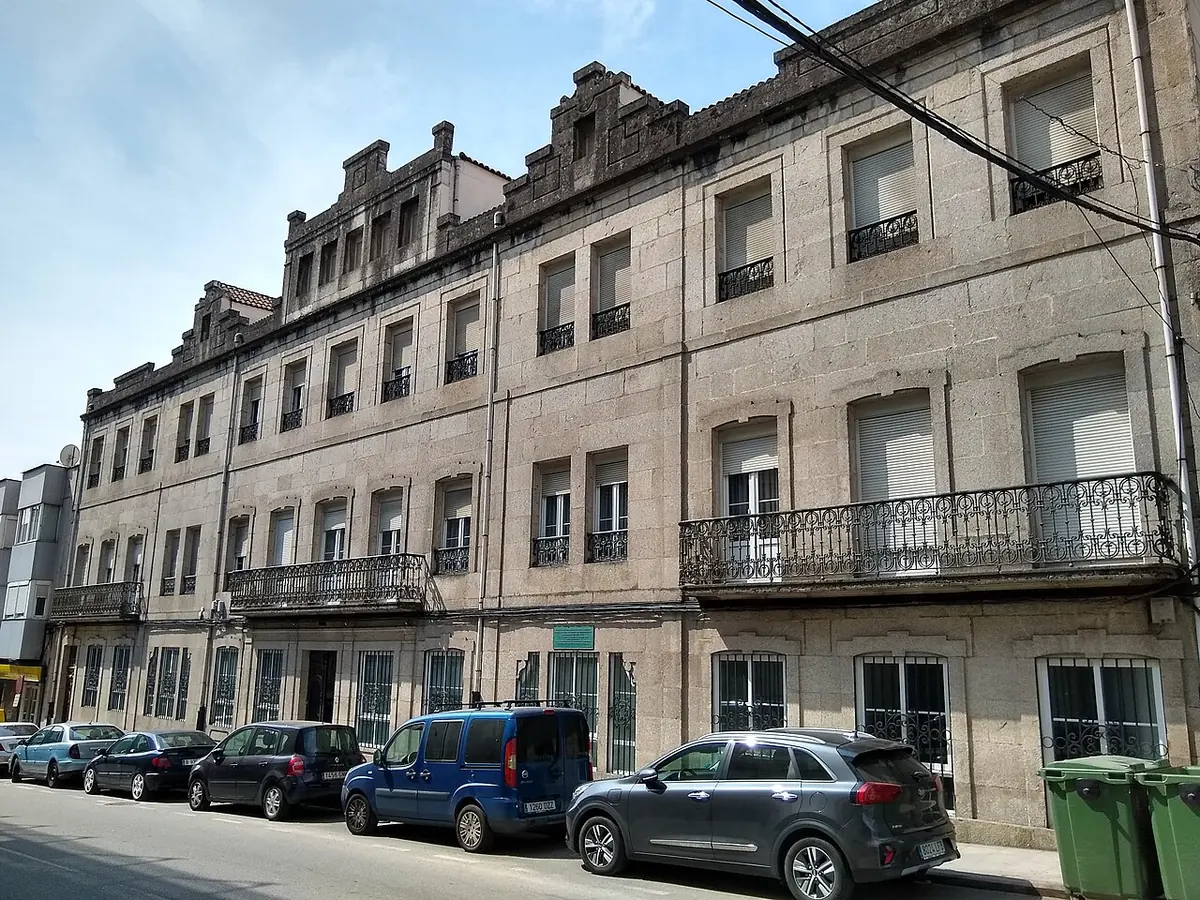
By 1925 Lúcia dos Santos, the eldest of the three seers, was eighteen. On October 25 she entered the postulancy of the Sisters of St. Dorothy in Pontevedra, in Galicia, Spain. On December 10, 1925, according to the Shrine of Fátima's chronology, Our Lady and the Child Jesus appeared to her there.

Lúcia's own account, which the Shrine of Fátima quotes from Fatima in Lucia's Own Words, records Mary's words:
Look, my daughter, at my heart, surrounded with thorns with which ungrateful men pierce me every moment by their blasphemies and ingratitude. You at least try to console me and say that I promise to assist at the hour of death, with graces necessary for salvation, all those who, on the first Saturday of five consecutive months, shall confess, receive Holy Communion, recite five decade of the Rosary, and keep me company for fifteen minutes while meditating the fifteen mysteries of the Rosary, with the intention of making reparation to me.
"You at least try to console me." That is the spirit of the whole devotion.
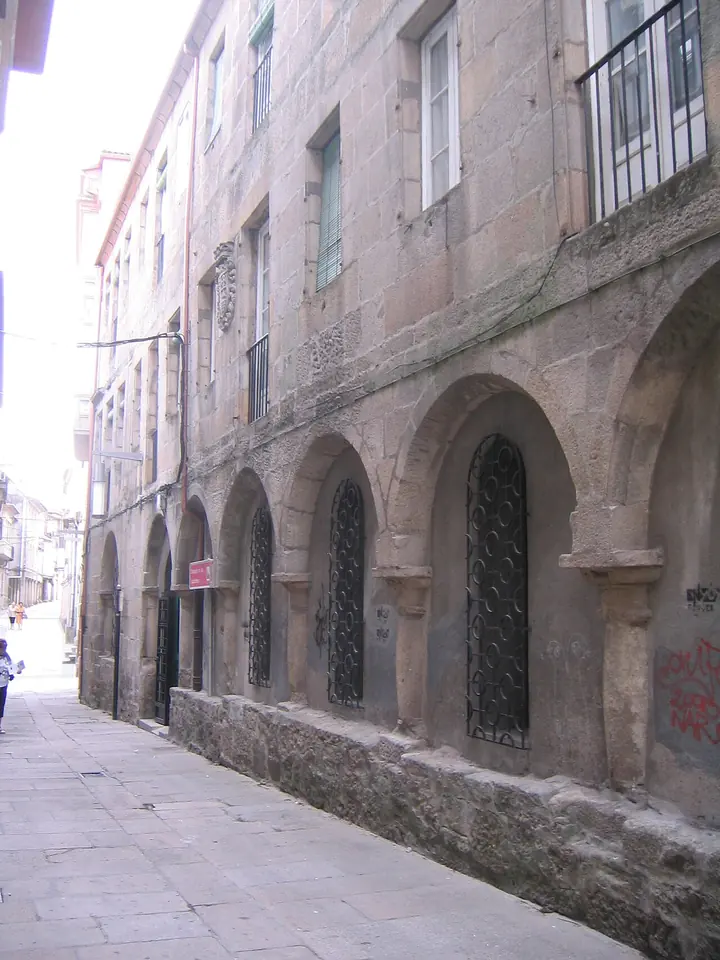
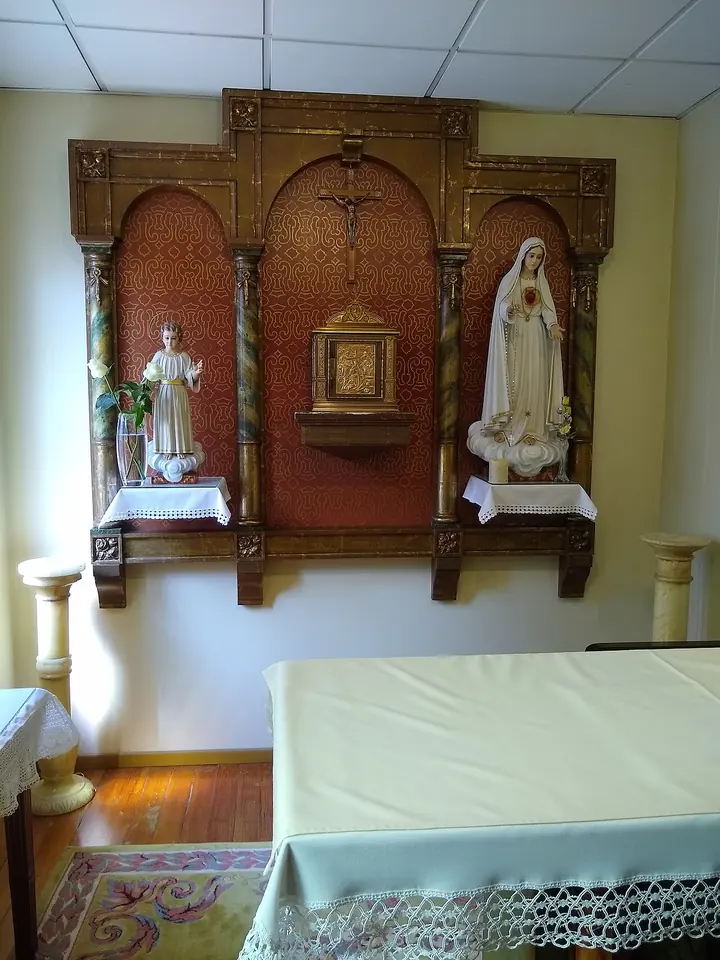
Two months later, on February 15, 1926, the Child Jesus appeared to her again and, in the chronology's words, "asked her if she already had spread the devotion to His Most Holy Mother." In 1927 Lúcia wrote an account of the devotion at the request of her confessor. The room where she lived is now a small chapel, with statues of the Child Jesus and of Our Lady showing her heart surrounded by thorns.
Why five Saturdays? The five offenses
Lúcia's confessor once asked her why the devotion asked for five Saturdays and not seven or nine. In 1930, she reported, Our Lord gave her the answer: there are five kinds of offenses and blasphemies against the Immaculate Heart of Mary. As the Priestly Fraternity of St. Peter lists them:
- Blasphemies against her Immaculate Conception.
- Blasphemies against her perpetual virginity.
- Blasphemies against her divine motherhood, refusing to accept her as the Mother of God and the Mother of all mankind.
- The offenses of those who try publicly to implant in children's hearts indifference, contempt and even hatred for this Immaculate Mother.
- The offenses of those who insult her directly in her sacred images.
Each Saturday can be offered for one of them. Each also points to a truth of our faith: that Mary was conceived without sin, that she remained a virgin, that she is truly the Mother of God and our mother, that children deserve to know and love her, and that her images, like a family's photographs of a mother, are honored for her sake.

In 1926 Lúcia moved to the Dorothean house at Tui, just across the river from Portugal, where she made her novitiate and took her vows. She later received the vision of the Holy Trinity there in 1929.
What the Church says
Here is the honest status of each piece:
- The 1917 apparitions were declared worthy of belief by the Bishop of Leiria on October 13, 1930, after a canonical inquiry. The Holy See published the full text of the secret in 2000, including the words about "the Communion of reparation on the First Saturdays."
- The Pontevedra apparitions of 1925 and 1926 are Lúcia's later private revelations. They have not been made a matter of faith, and no Catholic is bound to believe them. The devotion that came from them is fully part of Catholic life: the Shrine of Fátima keeps it every month, and countless parishes do the same.
- Sister Lúcia died in 2005 as a Discalced Carmelite in Coimbra. On June 22, 2023, Pope Francis recognized her heroic virtues, so she is now Venerable Lúcia.
- The promise is a promise of grace at the hour of death, not a guarantee that dispenses us from a Christian life. Like the Great Promise of the First Fridays, it invites us to come back to the sacraments and stay close to them.
How Fátima keeps the First Saturdays
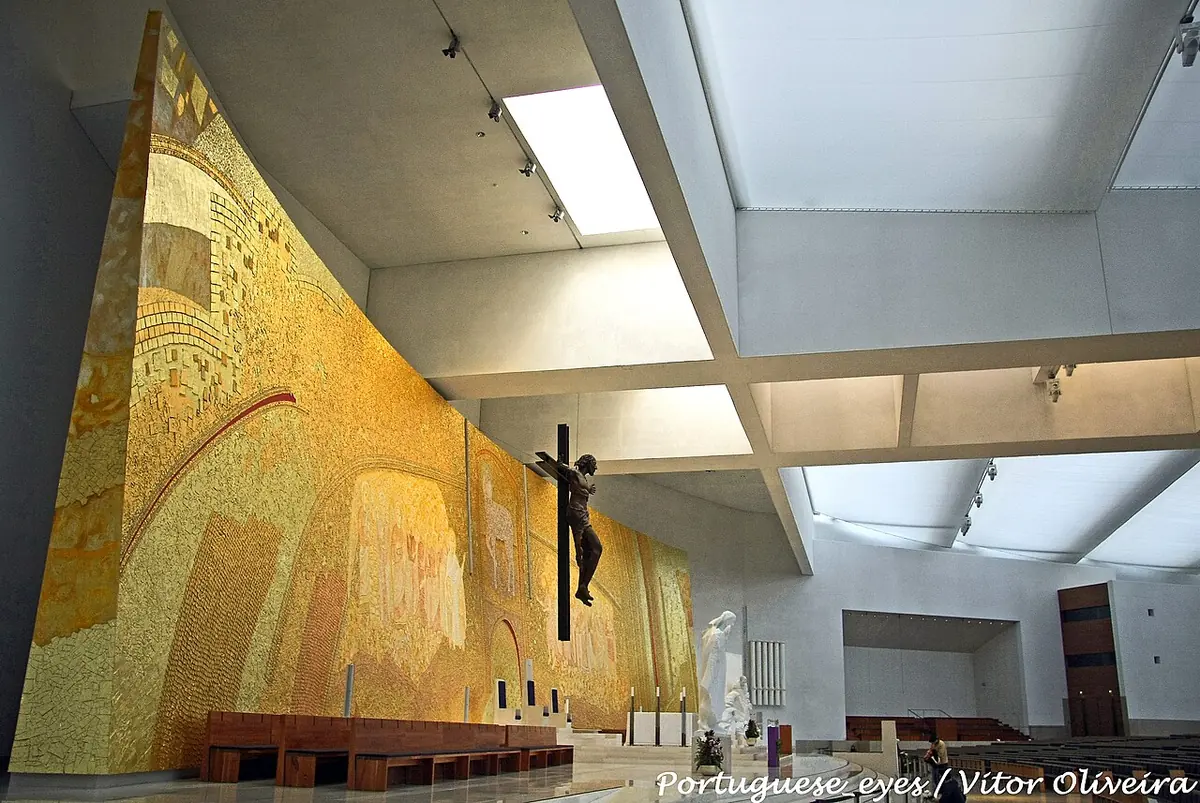
The Shrine of Fátima follows the same program every first Saturday of the year. In the afternoon it holds an Hour of Reparation to the Immaculate Heart of Mary in the Chapel of the Apparitions, "followed by 15 minutes of company to Our Lady," then meditation and Eucharistic adoration in the Basilica of the Most Holy Trinity, and later the rosary in the Chapel of the Apparitions with a candlelight procession.
Prayers for the First Saturday
The rosary is the center of the day. After each decade, add the prayer Our Lady taught at Fátima, "O my Jesus, forgive us"; its full text and history are on our page for the Fátima prayer.
The Church's handbook of indulgences, the Enchiridion Indulgentiarum, lists among its approved invocations a short prayer to Mary's heart:
Dulce cor Mariae, esto salus mea.
"Sweet Heart of Mary, be my salvation." It is a good prayer for the walk home, and for every day between the Saturdays.

The two Hearts
The First Friday honors the Sacred Heart of Jesus; the First Saturday consoles the Immaculate Heart of his Mother. Pope Benedict XVI, as Cardinal Ratzinger, explained in his commentary on Fátima that to be devoted to the Immaculate Heart means to embrace Mary's own attitude of heart, "which makes the fiat - 'your will be done' - the defining centre of one's whole life." Learn more about her heart on our page for the Immaculate Heart of Mary.
Let us begin on the next first Saturday. Our Lady asked only for five mornings, and in return she promised to be with us at the hour we will need her most. Immaculate Heart of Mary, pray for us.
Frequently asked questions
What is the First Saturday devotion?
It is a devotion of reparation to the Immaculate Heart of Mary, asked for at Fátima. On the first Saturday of five consecutive months, we go to confession, receive Holy Communion, pray five decades of the rosary and spend fifteen minutes meditating on its mysteries, all to console Mary's heart for the offenses against her.
What are the four conditions of the Five First Saturdays?
Confession, Holy Communion, five decades of the rosary, and fifteen minutes of meditation on the mysteries of the rosary, all made with the intention of making reparation to the Immaculate Heart of Mary, on the first Saturday of five months in a row.
Does confession have to be on the first Saturday?
No. Sister Lúcia reported that it could be made on another day. The Priestly Fraternity of St. Peter summarizes the common practice: the confession can be made within several days before or after the Saturday, as long as Communion is received in a state of grace.
Why five Saturdays?
Sister Lúcia reported in 1930 that Our Lord explained the number: there are five kinds of offenses against the Immaculate Heart of Mary. They are blasphemies against her Immaculate Conception, her perpetual virginity and her divine motherhood, the effort to turn children against her, and insults to her holy images.
What is the promise of the First Saturdays?
In the Pontevedra apparition of December 10, 1925, Sister Lúcia reported that Our Lady said: "I promise to assist at the hour of death, with graces necessary for salvation, all those who" make the Five First Saturdays with the intention of making reparation to her.
Is the First Saturday devotion approved by the Church?
The Fátima apparitions of 1917 were declared worthy of belief in 1930, and Our Lady's request for "the Communion of reparation on the First Saturdays" is part of the 1917 message the Holy See published in 2000. The Shrine of Fátima keeps the devotion every month. The later apparitions at Pontevedra are private revelations; no one is obliged to believe them, but the devotion is freely practiced throughout the Church.
Do I have to meditate on all fifteen mysteries?
No. The fifteen minutes can be spent on one or several mysteries of the rosary. Many people take one mystery each month.
Sources
- Shrine of Fátima: First Saturdays (quoting Fatima in Lucia's Own Words, vol. I, p. 194)
- Shrine of Fátima: Chronology of the seers
- Congregation for the Doctrine of the Faith: The Message of Fatima (June 26, 2000)
- Priestly Fraternity of St. Peter: A Short History of the First Saturday Devotions. the five offenses, the confession window
- Holy See Press Office: Promulgation of Decrees of the Dicastery for the Causes of Saints, June 22, 2023 (Sister Lúcia)
- Apostolic Penitentiary, Enchiridion Indulgentiarum, 4th edition (2004)