Patron saint of sleep
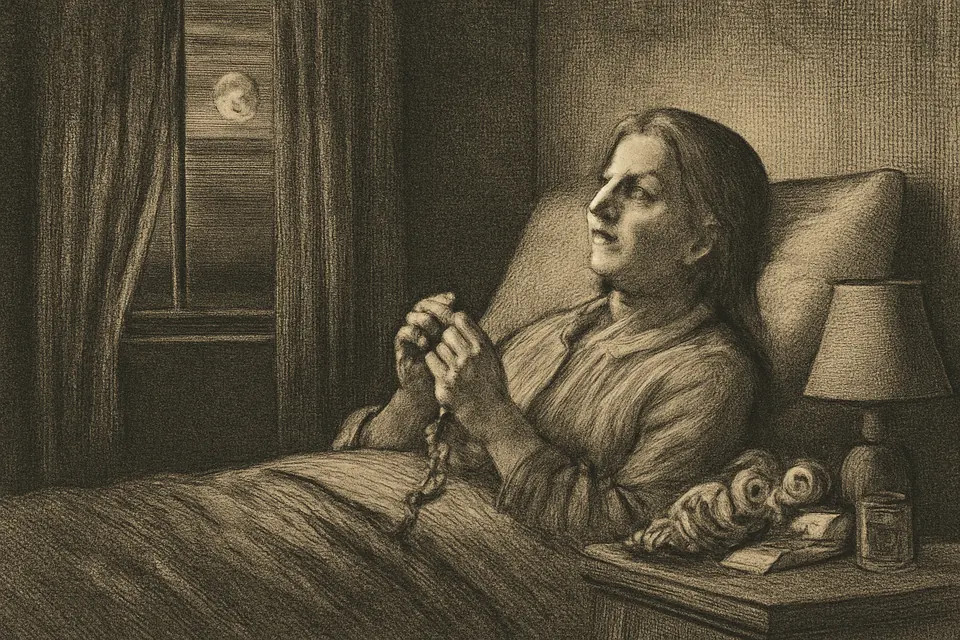
The patron saint of sleep, for most Catholics, is St. Joseph, who four times received God's word in a dream. The Seven Sleepers of Ephesus are honored in legend for a sleep of centuries, people with insomnia and anxious nights ask St. Dymphna to pray for them, and St. Vitus is invoked against oversleeping.
Patron saints of sleep
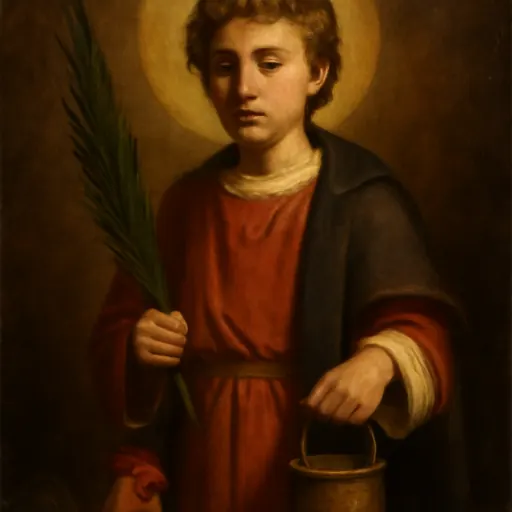 St. Vitus
Night is when worries grow largest. The bills, the diagnosis, the child who hasn't called: at three in the morning everything weighs more. The Church has never left us alone in the dark. She ends every day with a prayer for a quiet night, and she gives us saints who slept in peace because they trusted God, and one who heard God best while he was asleep.
St. Joseph, the patron saint of sleep
The Church has never formally named a patron of sleep, but for most Catholics the answer is St. Joseph. He speaks no words in the Gospels. Instead, four times in St. Matthew, God speaks to him in a dream, and four times he gets up and obeys. The first time, when he had resolved to send Mary away quietly, "the angel of the Lord appeared to him in his sleep," telling him to take her as his wife; and "Joseph rising up from sleep, did as the angel of the Lord had commanded him." Later dreams sent him into Egypt with the Child, called him home, and steered him to Nazareth.
So Joseph is the saint of a sleep that is not wasted. He did not lie awake working out every danger. He did what he could, lay down, and let God speak.
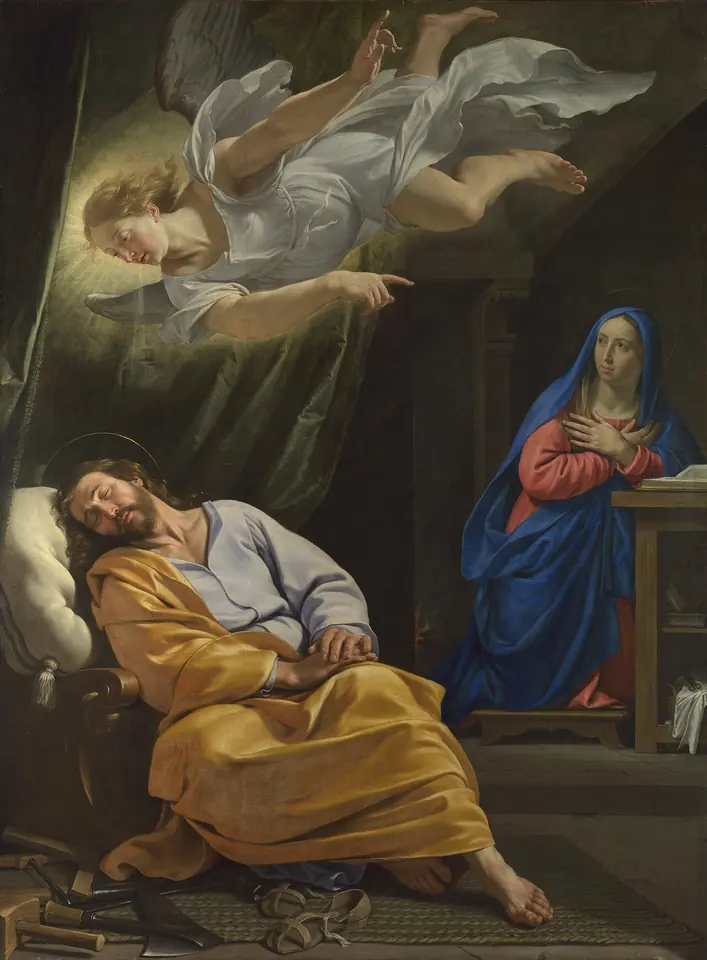
The sleeping St. Joseph
Pope Francis made the sleeping Joseph famous. Speaking to families in Manila on January 16, 2015, he said, "On my table I have an image of Saint Joseph sleeping." When he has a problem, he went on, "I write a little note and I put it underneath Saint Joseph, so that he can dream about it!" He told the families, "Do not forget Saint Joseph who sleeps!" and reminded them that "Jesus slept with the protection of Joseph."
Since then, statues of St. Joseph sleeping have found their way onto nightstands and kitchen counters all over the world. They are not charms. They are a way of handing a worry to the saint who protected the Holy Family, and then going to sleep.
The Seven Sleepers of Ephesus: a legend of sleep
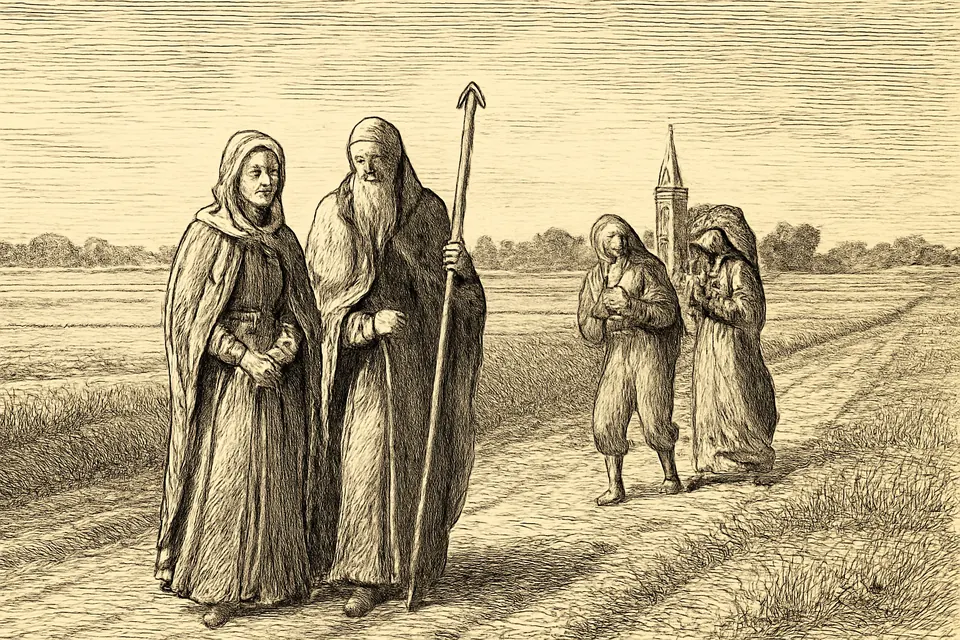
The Seven Sleepers are the most famous sleepers in Christian tradition, and their story is a legend. As the Catholic Encyclopedia tells it, seven young Christian men of Ephesus refused to sacrifice to idols during the persecution of the emperor Decius, around 250. They hid in a cave on the hillside to "pray and prepare for death," and fell asleep. The emperor had the cave sealed. Many years later, under the Christian emperor Theodosius, a landowner opened it, and the young men woke, thinking they had slept one night. One went into town to buy bread and found the whole city changed, and Christian. The bishop came, heard their story, and the sleepers died soon after, praising God.
The story was told in Syriac by James of Sarug, who died in 521, and in Latin by Gregory of Tours. The older Roman Martyrology commemorated the Sleepers on July 27. The great Church historian Cardinal Baronius was the first to doubt it, and today it is read as a holy tale about the resurrection: death for the faithful is a sleep, and they will wake.
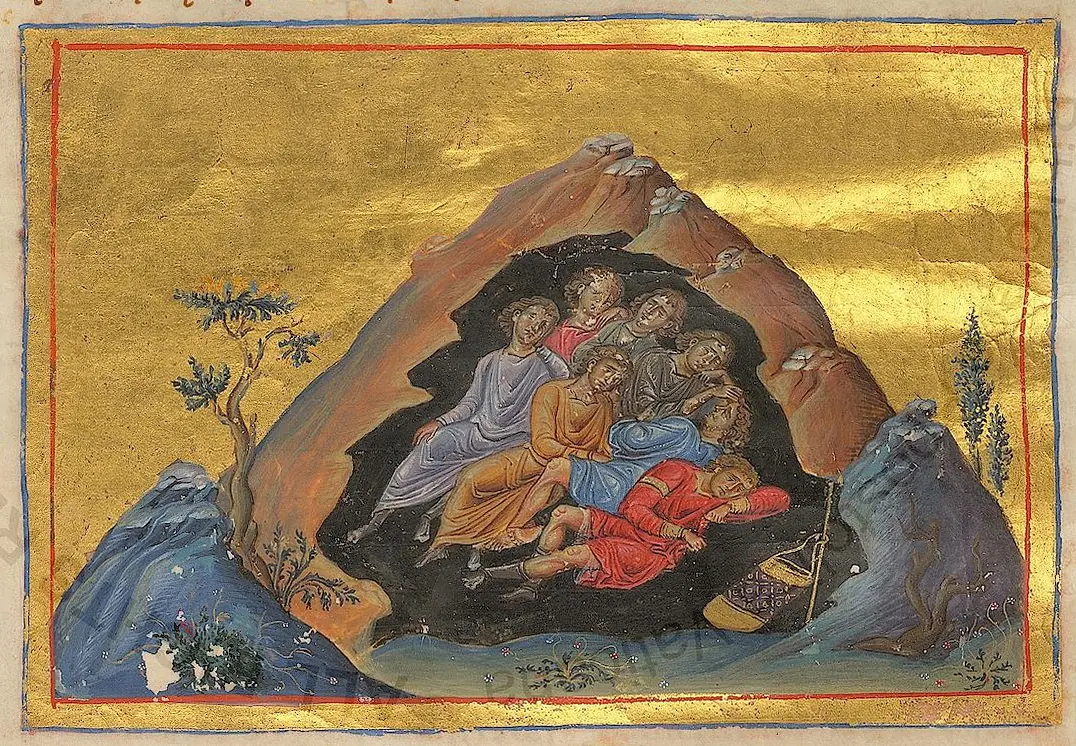
The East loved the story even more than the West. The Orthodox Church still keeps the Seven Youths of Ephesus in its calendar, and icon painters show them curled up together in the cave like brothers in one bed.
St. Dymphna, for troubled minds and anxious nights
Many sleepless nights have more to do with the mind than the body. For anxiety, depression and fear, the faithful turn to St. Dymphna, the young martyr venerated at Geel in Belgium, where for centuries families have taken the mentally ill into their homes. The litany of the National Shrine of St. Dymphna calls on her as "Protectress against all nervous disorders." She is not a patron of sleep as such, but when worry is what keeps us awake, she is a good friend to call on. Her prayers are on our St. Dymphna prayer page and our patron saint of anxiety page.
St. Vitus, against oversleeping
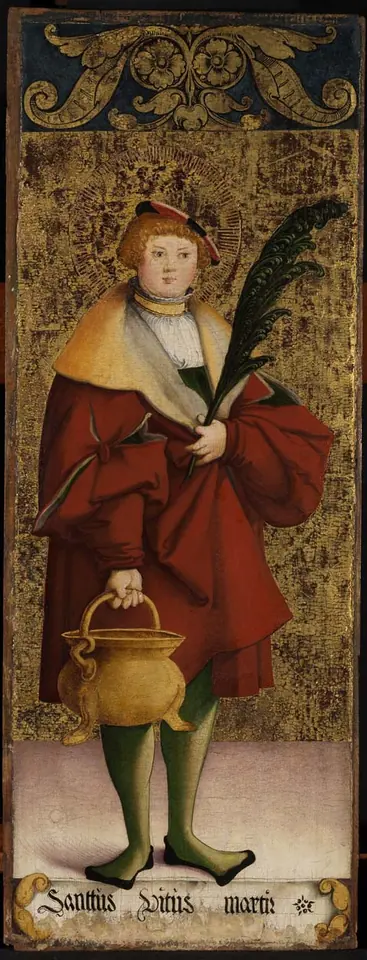
At the other end of the night is the snooze button. St. Vitus, a young martyr of the early 4th century, is often painted with a rooster, which the Jesuit writer Francis X. Weiser linked to the custom of offering roosters at his shrines. Since the rooster wakes the house, Vitus became, half in fun, the saint invoked against oversleeping. He is better known as the patron of dancers and of people with epilepsy.
A saint who fell asleep at prayer
If you have ever dozed off during your prayers and felt ashamed, St. Thérèse of Lisieux has a word for you. In The Story of a Soul she admits that she fell asleep "so often during meditation, and thanksgiving after Communion," and refused to be distressed by it:
I reflect that little children are equally dear to their parents whether they are asleep or awake; that, in order to perform operations, doctors put their patients to sleep; and finally that "The Lord knoweth our frame, He remembereth that we are but dust."
Night prayer for sleep
The Church's own bedtime prayer is Compline, the last hour of the Divine Office. Its psalms begin with Psalm 4, which ends, in the Douay-Rheims: "In peace in the selfsame I will sleep, and I will rest: For thou, O Lord, singularly hast settled me in hope." Its antiphon at the Canticle of Simeon, as translated in the Divinum Officium edition of the Roman Breviary, is a whole prayer in itself:
Protect us, Lord, while we are awake and safeguard us while we sleep; that we may keep watch with Christ, and rest in peace.
The closing prayer of Compline in the same edition asks God to send his angels to guard the house:
Visit, we beseech thee, O Lord, this dwelling, and drive far from it the snares of the enemy; let thy holy angels dwell herein to preserve us in peace, and let thy blessing be always upon us. Through Jesus Christ, thy Son our Lord, Who liveth and reigneth with thee, in the unity of the Holy Ghost, God, world without end. Amen.
Add the Guardian Angel prayer, slip your worries under St. Joseph, and rest. St. Joseph, pray for us tonight. See also the patron saints of anxiety and healing, and our full list of patron saints.
Frequently asked questions
Who is the patron saint of sleep?
No saint has been formally named patron of sleep, but most Catholics turn to St. Joseph, who received God's guidance in his dreams four times in the Gospel of Matthew. The Seven Sleepers of Ephesus are linked to sleep by their legend, and St. Vitus is invoked against oversleeping.
Who is the patron saint of insomnia?
There is no official one. People who can't sleep often ask St. Joseph and St. Dymphna to pray for them, St. Dymphna especially when worry, anxiety or depression keeps them awake. If sleeplessness goes on, see a doctor too; asking the saints' prayers and getting good care go together.
What is the sleeping St. Joseph statue?
A statue of Joseph lying asleep, recalling his dreams in Matthew's Gospel. Pope Francis told families in Manila in 2015 that he keeps one on his desk and puts notes with his problems under it "so that he can dream about it!" Many Catholics now do the same.
Who were the Seven Sleepers of Ephesus?
According to a legend told from the 5th and 6th centuries, seven young Christians of Ephesus hid in a cave during the persecution of the emperor Decius, fell asleep, and woke under the Christian emperor Theodosius, centuries later. The older Roman Martyrology commemorated them on July 27. The story is a legend, not history.
Is there a Catholic prayer before sleep?
Yes. The Church's night prayer, Compline, ends the day with the antiphon "Protect us, Lord, while we are awake and safeguard us while we sleep" and a prayer asking God to let his holy angels dwell in our home. Many people also pray the Guardian Angel prayer at bedtime.
Why is St. Vitus invoked against oversleeping?
Because of the rooster often shown with him in art, the bird that wakes the house. It is a playful folk patronage, not an official one; he is better known as the patron of dancers and of people with epilepsy.
Sources
- Holy See: Meeting with families at the Mall of Asia Arena, Manila (16 January 2015), address of Pope Francis
- Matthew 1:20-24, Douay-Rheims (Bible Gateway)
- Catholic Encyclopedia (1909): The Seven Sleepers of Ephesus
- St. Thérèse of Lisieux, The Story of a Soul, trans. Thomas N. Taylor, chapter 8 (Project Gutenberg)
- National Shrine of St. Dymphna: Novena booklet (Litany and Novena in Honor of St. Dymphna)
- Divinum Officium: Compline (Completorium) of the Roman Breviary, Latin and English
- Psalm 4:9-10, Douay-Rheims (Bible Gateway)