St. Bridget prayers
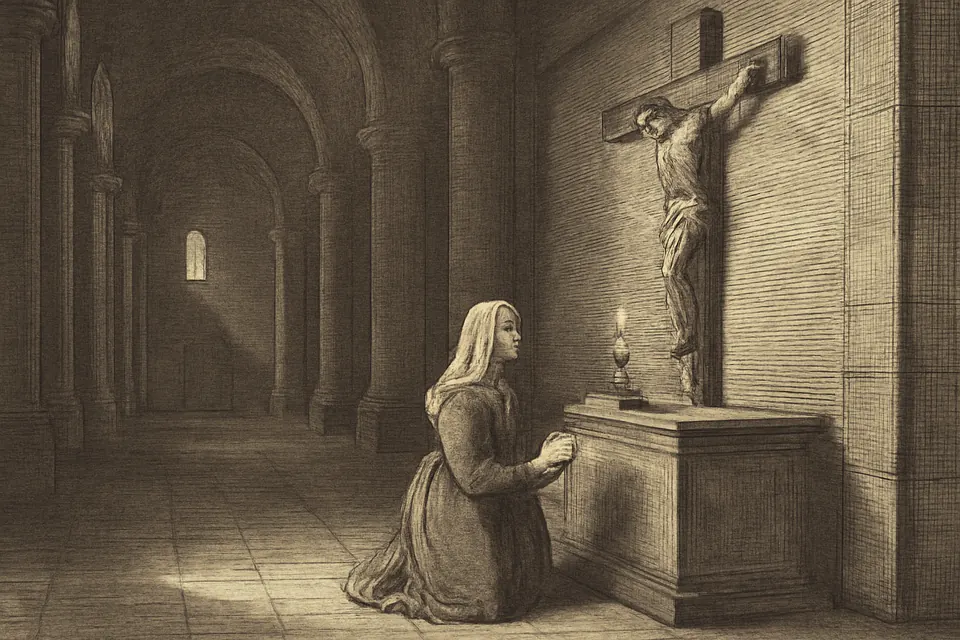
The St. Bridget prayers are fifteen prayers on the Passion of Christ, also called the Fifteen O's. They were written in the 15th century, probably in England, and attributed to St. Bridget of Sweden. The prayers are good; the promises later attached to them were never approved, and the Holy Office warned against them in 1954.
 Free printable prayer card 5 × 7 inch PDF, ready to print, frame or tuck in a missal.
For five hundred years, people have prayed these fifteen prayers slowly, often one by one before a crucifix, to stay close to Jesus in his Passion. They are long and full of feeling, written in the old language of "thee" and "thou." Below they are given in full from a Catholic prayer book printed in New York in 1874, followed by their real history and an honest word about the promises that came to surround them.
The 15 prayers of St. Bridget
This text is from St. Bridget's Manual, published by Thomas Kelly of New York in 1874, where the prayers appear under the heading "The Prayers of St. Bridget. To be said in honor of the Blessed Wounds of our Divine Saviour." After each prayer the manual adds a short response, "O most gracious Lord Jesus Christ, be propitious to me, a sinner," followed by an Our Father and a Hail Mary. The prayers are printed here word for word, with the repeated response left out.
The first prayer
O most sweet Lord Jesus Christ, eternal sweetness of those who love thee, and joy, desire, and firm hope of the hopeless; solace of the sorrowful, and most merciful lover of all penitent sinners, who hast said, thy delight is to be with the children of men, for the love of whom thou didst assume human nature in the fullness of time; remember, most sweet Lord Jesus, all those sharp sorrows which did pierce thy sacred soul, from the first instant of thy incarnation, until the time of thy sorrowful passion, preordained from all eternity; remember, O most amiable Saviour, all that bitter anguish thou didst suffer, when at thy last supper thou didst wash the feet of thy disciples, and didst feed them with thy precious Body and Blood, and most sweetly comforting them, didst foretell them thy ensuing Passion. Thou saidst: My soul is sorrowful even unto death. Remember, I beseech thee, O most sweet Saviour, that bitter grief and anguish which thy sacred soul didst suffer, when, praying three several times to thy heavenly Father, thou didst sweat water and blood; thou wast betrayed by thy own disciple, apprehended by thy chosen people, accused by false witnesses, unjustly arraigned before three judges, and in thy chosen city, in the paschal solemnity, in the flourishing age of thy youth, wrongfully condemned, bound, beaten, spurned, spit upon, despoiled of thy garments, clothed with others in scorn; wast blindfolded, buffeted, spit upon again, bound naked to a pillar, most cruelly scourged, crowned with thorns, struck with a reed, and afflicted with innumerable other torments, pains, and injuries. O my Lord Jesus, by the memory and merit of all that bitter pain and anguish before thou breathedst thy last upon the Cross, vouchsafe to grant me, before my death, true contrition, entire confession, a flowing fountain of tears, full satisfaction, and plenary remission of all my sins. Amen.
The second prayer
O most sweet Lord Jesus, overflowing fountain of heavenly delights, remember, I beseech thee, that grief and sorrow which thou didst suffer, when thy cruel enemies, like fierce lions with furious and dreadful looks, compassing thee round about, did pluck out thy hair, spit upon thy sacred face, lacerate, buffet thee; and with all manner of unheard-of injuries, outrages, and torments, did most cruelly and basely blaspheme, scorn, and affront thee. O most sweet Lord Jesus, by all those most barbarous and inhuman outrages thou didst suffer, vouchsafe to deliver me from all my enemies, visible and invisible, that, protected under the shadow of thy wings, I may safely arrive at the port of eternal glory. Amen.
The third prayer
O most sweet Lord Jesus, Almighty Creator and fabricator of the world, and repairer of mankind, who containest both heaven and earth in thy hand, and whose immensity no bound can limit; remember, I beseech thee, that bitter pain and anguish which thou didst endure when the perfidious Jews pierced thy delicate and tender hands and feet with most rough and blunt nails, stretching them forth violently with cords to the holes which they had made in the Cross. Thus they heaped pain upon pain, most cruelly disjointing all thy bones, breaking all thy veins, and renewing all thy sacred wounds. O most sweet Jesus, by the memory of all these pains and torments on the Cross, vouchsafe to give me thy fear and love, with perfect charity towards my neighbor. Amen.
The fourth prayer
O most sweet Lord Jesus, heavenly physician of human nature, and eternal King, remember, I beseech thee, all those bitter pains which thou didst endure in thy sacred members, when, being hoisted upon the Cross, with all thy precious body rent and torn, all thy bones being so disjointed that not one remained in its right place; not having from the crown of thy head unto the soles of thy feet any part left whole; so that no anguish could be compared to thine; at which time, being unmindful of thy own torments, thou didst mercifully pray to thy heavenly Father for thy cruel enemies, saying: "Father, forgive them; for they know not what they do." O most meek and merciful Lord Jesus, by this, thy admirable benignity, goodness, love, and mercy, and by all thy bitter pains and torments, grant that the memory of thy dolorous passion may be to me a most powerful protection of my soul and body against all the deceits, temptations, and molestations of the devils, my cruel enemies. Amen.
The fifth prayer
O most sweet Lord Jesus Christ, mirror of eternal brightness, and wisdom of the Almighty Father; remember the bitter grief and sorrow thy sacred soul did feel, when beholding, in the clear mirror of thy divine presence, the predestination of the elect, who, through the merits of thy most wholesome passion, were to be saved; and the reprobation of the wicked, who were, for their ingratitude, to be damned; and the abyss of thy immense mercy, by which thou didst commiserate and shed tears for us, miserable, lost, forlorn sinners; and chiefly by that mercy thou didst show to the thief upon the cross, saying to him: "This day thou shalt be with me in Paradise;" I beseech thee, O most sweet Lord Jesus, my Lord and my God, to show the like mercy to me, now and at the hour of my death. Amen.
The sixth prayer
O most sweet Lord Jesus, Almighty King and most amiable friend, remember the bitter grief and sorrow thy sacred soul did suffer, when, being forsaken by all thy friends and acquaintance, thou didst hang naked, rent, and torn upon the Cross, having none to comfort or compassionate thee, but only the blessed Virgin Mary, thy Mother, who, standing under the Cross, in the bitterness of her soul, accompanied thee in all thy torments; unto whom thou didst commend thy beloved disciple, St. John, in thy place, saying unto her: "Woman, behold thy son!" and after, to thy disciple: "Behold thy mother!" O most sweet Lord Jesus, by that sword which did then transpierce her sacred soul; and by that tender love and compassion wherewith thou didst behold the sad distress of thy sorrowful Mother, have pity and compassion on me, I beseech thee, my dearest Lord, and mercifully help, comfort, succor, and assist me in all my tribulations, adversities, necessities, sorrows, and sufferings, both spiritual and corporal. Amen.
The seventh prayer
O most sweet and blessed Lord Jesus, crown of joy, treasure of felicity, sweet source of consolation, and unexhausted fountain of mercy; who, hanging on the Cross, out of the most inflamed desire thou hadst for the salvation of souls, saidst, "I thirst" for the redemption of mankind. O dearest Lord, by this thy ardent charity, inflame our hearts with thy holy love, enkindle our desires to accomplish diligently all good works, and wholly extinguish in me the heat of all evil concupiscence, and worldly affections. Amen.
The eighth prayer
O most sweet Lord Jesus, the true light of those who believe in thee; sweetness of our hearts, and sovereign solace of all faithful souls, by that bitter gall and vinegar thou didst taste upon the Cross at the hour of thy death, grant us, miserable sinners, grace worthily to receive at all times (and particularly at the hour of death) thy most precious Body and Blood; that by virtue of this divine banquet and all other salutary sacraments, we may be preserved from all evils, sins, and punishments; and being replenished with all joy, we may securely appear in thy divine presence. Amen.
The ninth prayer
O most sweet Lord Jesus, king of virtues, and source of all delights, remember, I beseech thee, that excessive pain and anguish thou didst endure for us sinners on the Cross, when through the bitterness of death, and the impious blasphemies, derisions, scorns, and reproaches of the Jews, with a loud voice and weeping eyes, thou didst cry to thy heavenly Father, with this sad complaint: "My God, my God, why hast thou forsaken me?" O most sweet Lord Jesus, by this, thy bitter torment, sorrow, grief, and anguish, vouchsafe, I beseech thee, to have pity on me, and succor me in all my sorrows, sufferings, and tribulations, and particularly at the hour of my death; O then, my dear Lord and my God, vouchsafe to assist and succor me, and do not forsake me, I beseech thee. Amen.
The tenth prayer
O most sacred Lord Jesus, Alpha and Omega, the beginning and end of all things, and mirror of all virtues; remember how, from the crown of thy head to thy feet, thou wast immerged in the deluge of thy dolorous Passion, for the love of us vile sinners. O most sweet Lord Jesus, by the length, breadth, greatness, and multitude of thy most sacred wounds, take from me the love of the world; and teach me, by true and perfect charity, always to keep thy holy laws and commandments. Amen.
The eleventh prayer
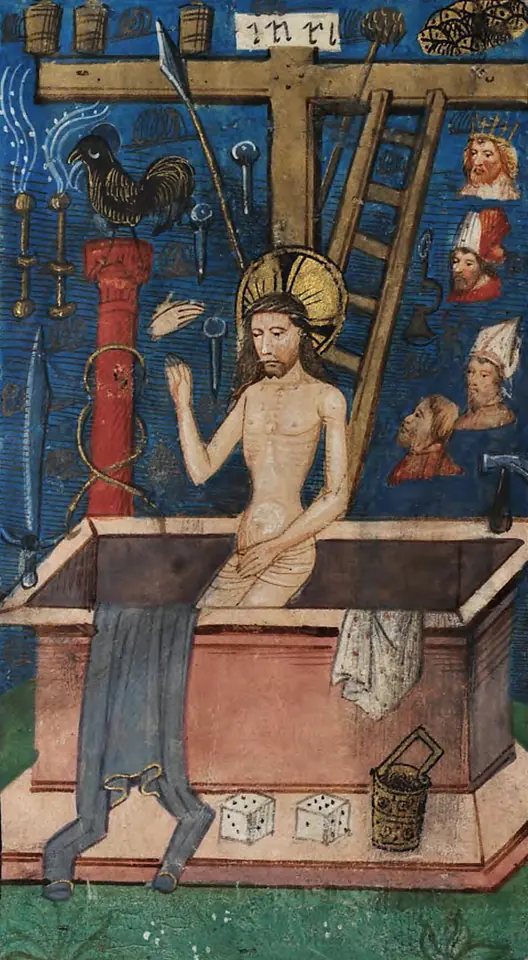
O most sweet Lord Jesus, sovereign goodness, eternal beatitude of thy saints, and most profound abyss of mercy! by the deep and painful wounds, which did not only transpierce thy sacred flesh, but even thy bowels, and the marrow of thy bones, be merciful to me a sinner, who now am drowned in my sins and iniquities, and hide me in thy sacred wounds from the face of thy wrath, until thy indignation be passed away and appeased. Amen.
The twelfth prayer
O most sweet Lord Jesus, mirror of truth, pledge of union, bond of charity, remember the innumerable multitude of all those painful wounds wherewith thou wast covered from head to foot; all thy holy Body most cruelly rent and torn by the impious, and dyed with thy most precious Blood; all which most dreadful dolors thou didst endure for us vile sinners. O most gracious Lord, engrave these thy dolors deeply in my heart, and write them there with thy precious Blood, that in them I may always read thy love and dolors: so that the memory of thy painful passion may daily be renewed in me, and my love increased towards thee, and I remain perpetually thankful for thy immense charity to the last period of my life, until I come to enjoy thee, my only dear Lord and most desired treasure, abounding with all joy and felicity; which through thy goodness be pleased to grant, O most sweet Lord Jesus. Amen.
The thirteenth prayer
O most sweet Lord Jesus, most victorious lion, invincible, triumphant, and immortal king; remember, I beseech thee, all that bitter pain and anguish thou didst endure when, all the forces of thy soul and body failing, bowing down thy sacred head, thou saidst: "It is consummated." O dearest Lord, by these thy deadly dolors, have mercy on me at my last passage, when my heart and soul shall be in anguish and anxiety. Amen.
The fourteenth prayer
O most sweet Lord Jesus, only-begotten Son of the eternal Father, figure of his substance, splendor of his glory; remember that most earnest recommendation, wherewith thou didst commend thy sacred soul to thy Almighty Father upon the Cross, saying: "Father, unto thy hands I commend my spirit;" at which time thou didst hang naked upon the Cross, with thy holy Body all wounded, rent, and torn, pouring forth streams of most precious Blood; with thy face pale and wan, thy head crowned with thorns, thy arms extended, thy hands nailed, thy veins broken, thy bones disjointed, thy bowels of mercy opened, thy eyes weeping and obscured, thy voice failing, thy palate thirsting, and thy whole heart broken. O my most merciful Lord, unto all those cruel pains and torments didst thou deliver thy most sacred, innocent, tender, pure, and precious Body, for the redemption of us, most wretched, vile, and miserable sinners, and in this manner renderedst thy sweet Soul to thy heavenly Father, by which most precious and innocent death of thine, and by virtue of the holy Cross, I beseech thee, O Father of mercy, and omnipotent King of Saints, to give me grace to resist the world, the flesh, and the devil; that being dead to all terrestrial things, I may live to thee alone, and have happiness to be received by thee at my last passage, when this my miserable exile shall be ended. Amen.
The fifteenth prayer
O most sweet Lord Jesus, most flourishing, true, and faithful vine; remember the super-abundant effusion of thy precious Blood which thou didst pour forth so plenteously from all parts of thy holy Body, like a cluster of pressed grapes, when thou thyself didst tread the wine-press, not leaving so much as one drop unspilled. O sweet Lord Jesus, by this effusion of thy Blood, by thy bitter death and passion, and by all thy sacred wounds, vouchsafe to pierce my heart with that tender love wherewith the heart of thy Blessed Mother was wounded under the Cross, that tears and penance may be my bread day and night; convert me wholly to thee, that my heart may be thy perpetual habitation, that the remainder of my life may be acceptable to thee, and that I may at length be admitted into immortal glory, to praise thee, my sovereign Lord, in the society of thy Saints for all eternity. Amen.
A note on the third and ninth prayers
Like many devotional books of its century, the 1874 text speaks of "the perfidious Jews" and "the Jews" as those who crucified Christ. We print it unchanged because quotations must stay word for word, but we pray these lines with the mind of the Church. The Second Vatican Council taught in Nostra Aetate (no. 4) that "what happened in His passion cannot be charged against all the Jews, without distinction, then alive, nor against the Jews of today." Each of us, by our sins, had a part in the sufferings these prayers remember.
Where the St. Bridget prayers come from
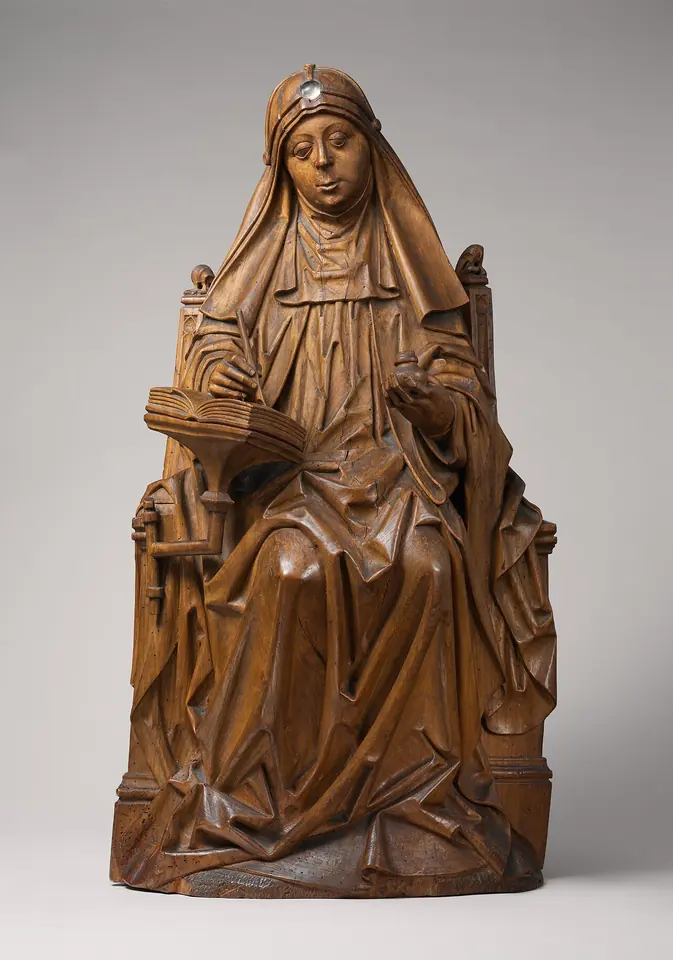
St. Bridget of Sweden (1303–1373) was a widow, mother of eight and founder of the Order of the Most Holy Savior, and her Revelations contain long, vivid meditations on the Passion. It is easy to see why fifteen prayers in the same spirit were put under her name. But the prayers are not in her Revelations, and no early life of her mentions them.
The historian Brian Richardson, in a 2023 study of Bridget's legacy published by Brill, counts the Fifteen Prayers among texts "composed mainly in the 15th century and falsely attributed to her." Eamon Duffy, the leading historian of late medieval English religion, goes further: "They are English in origin, probably composed either in the devotional world of the Yorkshire hermitages associated with figures like Richard Rolle and his disciples, or in the circle of the English Brigittines." The English called them the Fifteen O's, because in Latin and Middle English each prayer begins "O Jesu."

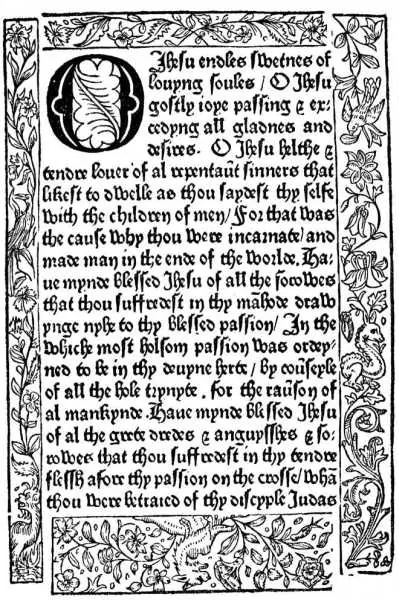
They spread quickly. In England they filled the margins and back pages of Books of Hours, and William Caxton printed them as a little book around 1491, at the request of Queen Elizabeth of York and Lady Margaret Beaufort, mother of King Henry VII. Henry Plomer's history of English printing notes it was Caxton's "only extant book printed with borders." In Italy they were printed in Rome from about 1495 on, often in tiny booklets with a woodcut on the cover.
The legend that grew with them says Bridget had long wished to know how many blows Christ suffered, and that he answered her before the crucifix in the Basilica of St. Paul Outside the Walls in Rome, teaching her these prayers. That story is traditional, and late; it appears in the booklets, not in her Revelations.

The promises: what the Church actually said
Over the centuries, printed editions added a prologue that promised extraordinary rewards to anyone who prayed the fifteen prayers every day for a year. Versions differ, but the promises typically include freeing fifteen souls of one's family from purgatory, keeping fifteen relatives in grace, and converting fifteen sinners, along with graces at the hour of death. Some booklets also claim the year of prayers adds up to one Our Father and Hail Mary for each of Christ's wounds.
The Church has been cautious about these promises for a long time.
- 1671: A decree of the Congregation of the Index ordered the prologue deleted from a sheet circulating as "The fifteen prayers of St. Bridget." The 1704 Index repeated the order. The prayers themselves were not banned.
- 1954: On January 28, 1954, the Holy Office (today the Dicastery for the Doctrine of the Faith) published a warning, a monitum, in the Holy See's official journal, the Acta Apostolicae Sedis. It concerned a booklet titled "The Secret of Happiness: Fifteen prayers revealed by the Lord to St. Bridget in the church of St. Paul, Rome," printed at Nice and elsewhere in several languages. Since the booklet claims that God made certain promises to St. Bridget whose supernatural origin "is in no way established" (de quarum origine supernaturali nullo modo constat), the Holy Office told bishops not to give permission to publish or reprint any booklet or writing containing those promises.
So the honest answer is clear. The prayers are good, and Catholics have prayed them with the Church's blessing for centuries. The promises have no approval. Indulgences and graces are given by God through the Church, never by a formula, and no devotion can guarantee a soul's salvation or the release of others from purgatory by arithmetic. If a booklet in your parish still prints the promises, pray the prayers and set the promises aside.
How to pray the 15 prayers of St. Bridget
The traditional way is to pray all fifteen every day for a year, with an Our Father and a Hail Mary after each one. That is a real commitment of about twenty minutes a day, and many people who keep it say the long familiarity with the Passion changed how they pray. But nothing obliges a year.
- Daily, for a year. Choose a starting day, perhaps Ash Wednesday or the feast of St. Bridget on July 23, and pray all fifteen each day.
- One a day. Pray one prayer each day, completing the cycle every fifteen days, so that each wound of the Passion has its turn.
- Fridays and Lent. Pray the whole set on Fridays, the day of the Crucifixion, or each day of Holy Week.
- Before a crucifix. Wherever you pray, keep a crucifix in front of you. The prayers were written to be said with eyes on the cross.
Pray them for love of Jesus crucified and in reparation for sin, offering the graces, if you wish, for the souls in purgatory. Our page of prayers for the dead has more for that intention.

Related prayers and saints
The fifteen prayers belong to the same family as the Seven Sorrows Rosary, which follows Mary's sorrows, including her place beneath the cross, and the Passion devotion of St. Gertrude the Great, whose prayer for the souls in purgatory is on the St. Gertrude prayer page. St. Bridget's own life, visions and shrine at Vadstena are in her entry, St. Bridget of Sweden, and her feast is on the feast day calendar.
St. Bridget of Sweden, pray for us.
Frequently asked questions
What are the 15 prayers of St. Bridget?
Fifteen prayers on the Passion of Jesus, each recalling one of his sufferings, from his agony in the garden to his death on the cross, and asking a grace through it. In English they are called the Fifteen O's because in the medieval versions each one begins "O Jesu." The full text is at the top of this page.
Did St. Bridget of Sweden write the 15 prayers?
Almost certainly not. They do not appear in her Revelations, and historians date them to the 15th century. The historian Eamon Duffy believes they are English in origin, composed either among the Yorkshire hermits around Richard Rolle or among the English Bridgettines. They were attached to her name because they read like her meditations on the Passion.
Are the promises of the 15 prayers of St. Bridget approved by the Church?
No. On January 28, 1954, the Holy Office published a warning about the booklet that carried them, saying that the supernatural origin of the promises "is in no way established" and telling bishops not to allow them to be printed. The Church never condemned the prayers themselves, which remain a good way to meditate on the Passion.
How do you pray the 15 prayers of St. Bridget for a year?
The custom is to pray all fifteen every day for a full year, adding an Our Father and a Hail Mary after each one. Old booklets explain the number as honoring the wounds of Christ, but that count, like the promises, comes from the booklets, not from the Church. You may also pray one prayer a day, or the whole set on Fridays and in Lent.
Can Catholics still pray the 15 prayers of St. Bridget?
Yes. The prayers are orthodox meditations on Christ's sufferings and were printed for centuries in approved Catholic prayer books. What the Church warned against was the list of guaranteed rewards. Pray them for love of Christ crucified, not to secure a result.
Sources
- Holy Office, Monitum of January 28, 1954, on the booklet "Secretum felicitatis" (Acta Apostolicae Sedis 46, 1954, p. 64)
- St. Bridget's Manual: A Book of Approved Catholic Prayers and Devotions (New York: Thomas Kelly, 1874), pp. 514–528, Internet Archive
- Unn Falkeid and Anna Wainwright, eds., The Legacy of Birgitta of Sweden: Women, Politics, and Reform in Renaissance Italy (Brill, 2023; open access, OAPEN copy at the Internet Archive), chapters by Brian Richardson and Marco Faini
- Eamon Duffy, The Stripping of the Altars: Traditional Religion in England 1400–1580, 2nd ed. (Yale, 2005), p. 249
- Henry R. Plomer, A Short History of English Printing, 1476–1898 (1900), Project Gutenberg
- Second Vatican Council, Nostra Aetate (October 28, 1965), no. 4