Glory Be prayer
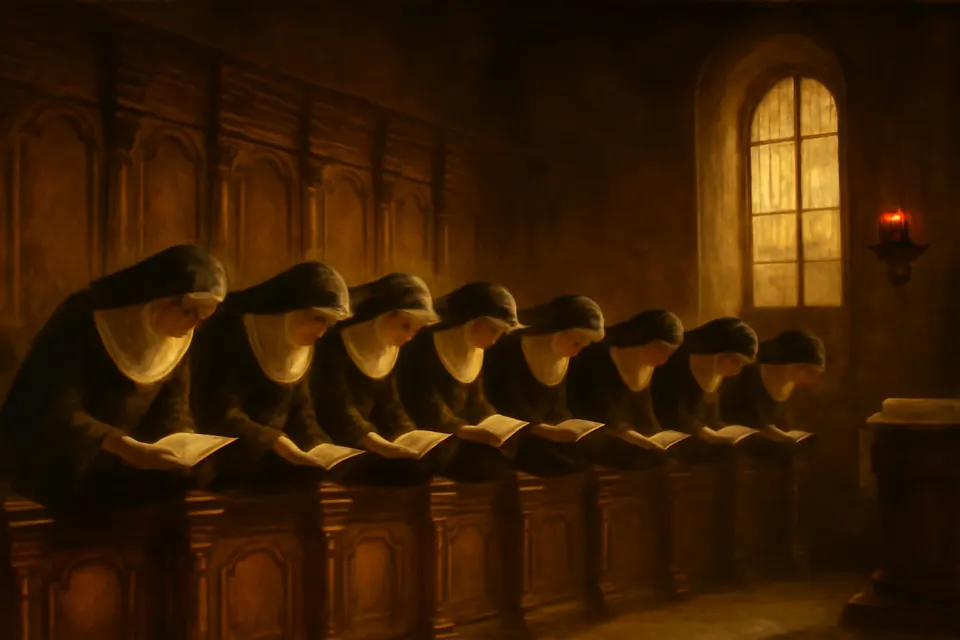
The Glory Be prayer is the Church's short hymn of praise to the Holy Trinity: "Glory be to the Father, and to the Son, and to the Holy Ghost. As it was in the beginning, is now, and ever shall be, world without end. Amen." Its Latin name is the Gloria Patri, and it closes every decade of the rosary.
 Free printable prayer card 5 × 7 inch PDF, ready to print, frame or tuck in a missal.
The Glory Be is the shortest prayer in the rosary and one of the oldest prayers of the Church. In two lines it does what all Christian prayer finally does: it gives glory to the Father, the Son and the Holy Spirit, one God, for ever. The Baltimore Catechism calls it the Doxology, from the Greek doxa, "glory," and says it "has come down to us almost from the time of the Apostles."
The Glory Be prayer
This is the traditional English text as given in the Baltimore Catechism No. 3 (1891):
Glory be to the Father, and to the Son, and to the Holy Ghost. As it was in the beginning, is now, and ever shall be, world without end. Amen.
Most English-speaking Catholics today say "Holy Spirit." The two names mean the same divine Person.
The Glory Be in Latin (Gloria Patri)
This is the Latin as printed in the Compendium of the Catechism of the Catholic Church (2005), without its reading accents:
Gloria Patri et Filio et Spiritui Sancto. Sicut erat in principio, et nunc et semper, et in saecula saeculorum. Amen.
"World without end" is the old English way of saying in saecula saeculorum, "unto ages of ages," a Hebrew turn of phrase that simply means "for ever." See Latin prayers for pronunciation.
Where the Glory Be comes from
Ending a prayer with praise is older than the Church. Adrian Fortescue, writing in the Catholic Encyclopedia in 1909, traces the custom to the synagogue, and St. Paul uses it again and again: "to whom be glory for ever and ever. Amen" (Galatians 1:5). The earliest Christian doxologies give glory to the Father through the Son and in the Holy Spirit.
In the 4th century that wording became a battleground. The Arians, who denied that the Son is equal to the Father, pointed to those little words "through" and "in." St. Basil the Great defended the faith in his book On the Holy Spirit, and the form that names the three Persons side by side, "Glory to the Father, and to the Son, and to the Holy Ghost," became, in Fortescue's words, "universal among Catholics." It follows the pattern of the baptismal command in Matthew 28:19.
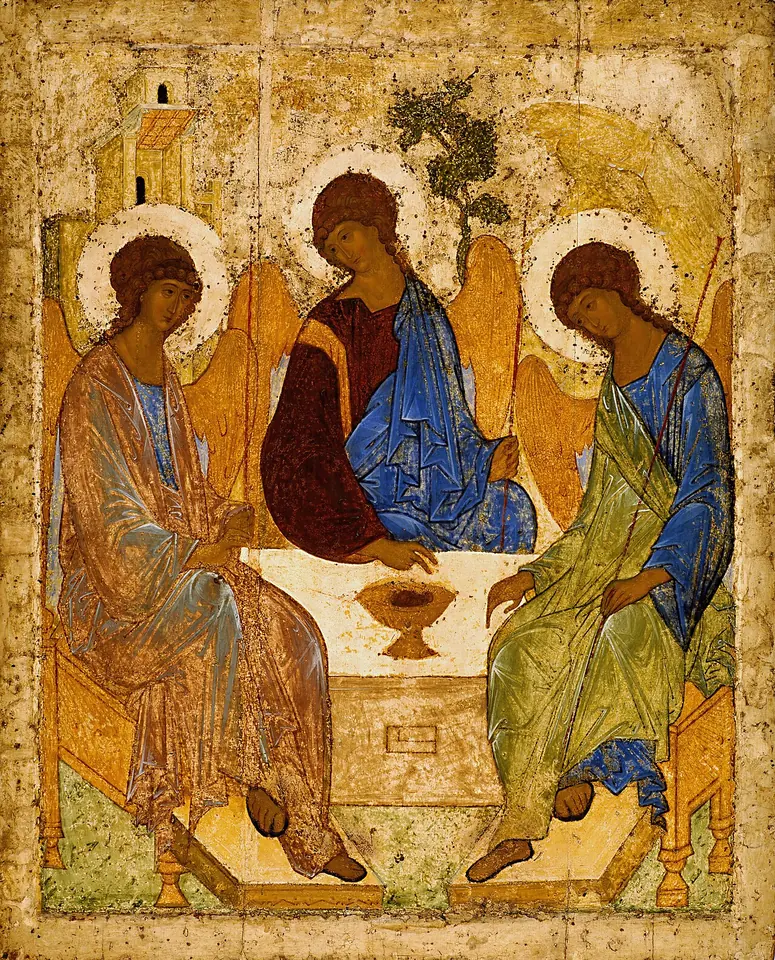
The second line came later in the West. In 529 the Second Synod of Vaison in Gaul ordered the words Sicut erat in principio, "As it was in the beginning," to be added there as they were in Rome, again as a profession against Arianism. Fortescue notes that the Eastern churches never adopted that phrase; they pray the same doxology ending "now and ever and unto ages of ages." He adds a surprising detail: the line may first have meant "As He was in the beginning," pointing to the Son, the Word who was "in the beginning" with God (John 1:1).
How we pray the Glory Be
- In the rosary, after the ten Hail Marys of every decade, and once at the beginning after the three Hail Marys. St. John Paul II called it "the high-point of contemplation" in the rosary and asked that it be given "due prominence," even sung in public recitation (Rosarium Virginis Mariae, 34). See how to pray the rosary.
- At the end of every psalm in the Liturgy of the Hours, as monks, nuns and priests have prayed it for centuries. Fortescue notes that the Church leaves it out in the last three days of Holy Week and in the Office for the Dead, because it is a joyful hymn.
- On its own, at any time. It is the simplest way to turn a moment of gratitude into adoration.
Old devotions of the Glory Be
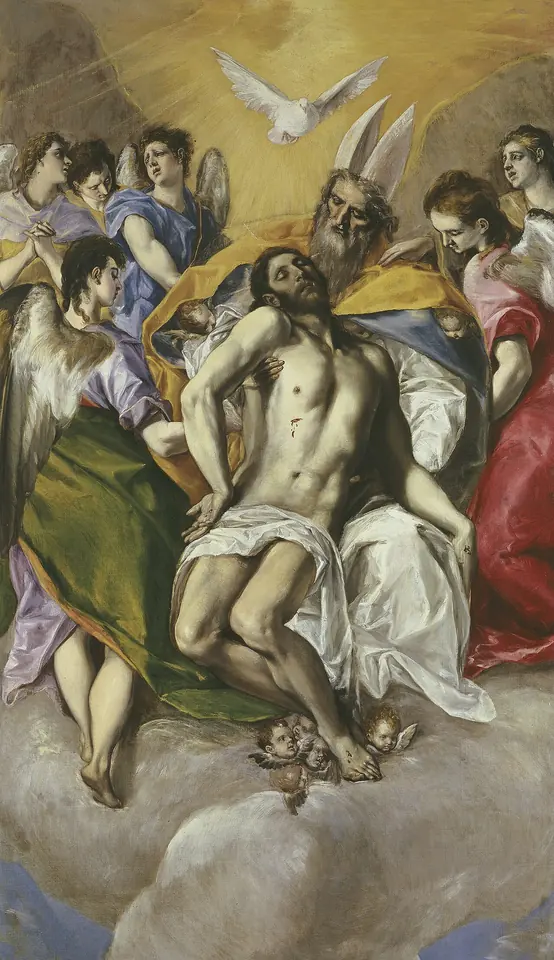
The 1878 Raccolta, the Holy See's collection of indulgenced prayers, records two practices worth reviving. In 1784 Pope Pius VI indulgenced the custom of saying the Glory Be seven times and the Hail Mary once, in the morning, afternoon and evening, in honor of the Holy Trinity; it was kept by groups of three people who agreed to say these prayers, together or apart, and who found someone to take the place of any member who died. In 1815 Pope Pius VII indulgenced three Glory Bes said morning, noon and night "in thanksgiving to the Holy Trinity for the privileges granted to the most holy Virgin, especially in her glorious Assumption into heaven." Those indulgences belong to the older Raccolta; the Church's current handbook was reorganized in 1968, but the practices themselves remain good and simple prayer.

Let us pray it now, bowing the head as the Church has always done at the names of the three divine Persons: Glory be to the Father, and to the Son, and to the Holy Spirit.
The other prayers of the rosary have their own pages: the Our Father, the Hail Mary, the Fatima prayer and the Hail Holy Queen. For the feast of the Holy Trinity, see Trinity Sunday 2027.
Frequently asked questions
What are the words of the Glory Be?
"Glory be to the Father, and to the Son, and to the Holy Ghost. As it was in the beginning, is now, and ever shall be, world without end. Amen." This is the Baltimore Catechism text (No. 3, 1891). Most Catholics today say "Holy Spirit" in place of "Holy Ghost"; both are correct.
What is the Glory Be in Latin?
Gloria Patri et Filio et Spiritui Sancto. Sicut erat in principio, et nunc et semper, et in saecula saeculorum. Amen.
Is the Glory Be in the Bible?
Not word for word, but its pattern is. St. Paul often ends a passage with a doxology, such as "to whom be glory for ever and ever. Amen" (Galatians 1:5), and Jesus sends the apostles to baptize "in the name of the Father, and of the Son, and of the Holy Ghost" (Matthew 28:19). The Glory Be joins the two.
Why do we bow during the Glory Be?
Because it is an act of adoration of the Holy Trinity. Bowing the head at the words "Glory be to the Father, and to the Son, and to the Holy Ghost" is an old custom in choir and at the rosary; the Catholic Encyclopedia notes that in Germany people also made the Sign of the Cross at the first half.
Sources
- Adrian Fortescue, Doxology, Catholic Encyclopedia, vol. 5 (1909)
- A Catechism of Christian Doctrine, No. 3 (Baltimore Catechism, 1885/1891), Q. 203–205, the Doxology, Project Gutenberg
- The Raccolta, or Collection of Prayers and Good Works (1878 English edition), The Most Holy Trinity, nos. 2 and 8
- John Paul II, Rosarium Virginis Mariae (2002), no. 34
- Compendium of the Catechism of the Catholic Church (2005), Appendix A: Common Prayers (Latin text)