Litany of the Sacred Heart of Jesus
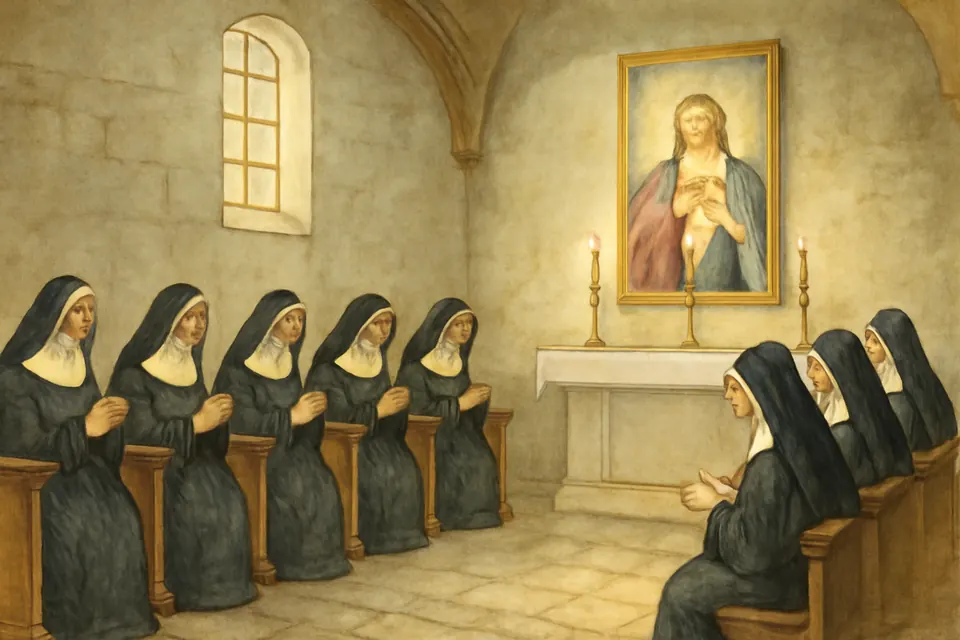
The Litany of the Sacred Heart is a prayer of thirty-three invocations to the Heart of Jesus, from "Son of the Eternal Father" to "delight of all the saints," each answered "have mercy on us." It grew from litanies written in French convents after St. Margaret Mary's visions and was approved for public use by Pope Leo XIII in 1899.
"One of the soldiers with a spear opened his side, and immediately there came out blood and water" (John 19:34, Douay-Rheims). The Litany of the Sacred Heart is the Church standing beneath the cross, looking at that opened side and naming what she sees. Thirty-three times we say "Heart of Jesus," and thirty-three times we ask for mercy. Here is the full text, then its story and the Scripture behind its lines.
The Litany of the Sacred Heart of Jesus
This is the text as printed in F. X. Lasance's My Prayer Book (Benziger, 1908); the prayer book Blessed Be God (1925) gives the same words. After each invocation from "God, the Father of heaven" through "Heart of Jesus, delight of all the saints," we answer have mercy on us.
Lord, have mercy on us. Christ, have mercy on us. Lord, have mercy on us. Christ, hear us. Christ, graciously hear us. God, the Father of heaven, have mercy on us. God, the Son, Redeemer of the world, God, the Holy Ghost, Holy Trinity, one God, Heart of Jesus, Son of the Eternal Father, Heart of Jesus, formed by the Holy Ghost in the womb of the Virgin Mother, Heart of Jesus, substantially united to the Word of God, Heart of Jesus, of infinite majesty, Heart of Jesus, sacred temple of God, Heart of Jesus, tabernacle of the Most High, Heart of Jesus, house of God and gate of heaven, Heart of Jesus, burning furnace of charity, Heart of Jesus, abode of justice and love, Heart of Jesus, full of goodness and love, Heart of Jesus, abyss of all virtues, Heart of Jesus, most worthy of all praise, Heart of Jesus, king and center of all hearts, Heart of Jesus, in Whom are all the treasures of wisdom and knowledge, Heart of Jesus, in Whom dwells the fulness of divinity, Heart of Jesus, in Whom the Father was well pleased, Heart of Jesus, of Whose fulness we have all received, Heart of Jesus, desire of the everlasting hills, Heart of Jesus, patient and most merciful, Heart of Jesus, enriching all who invoke Thee, Heart of Jesus, fountain of life and holiness, Heart of Jesus, propitiation for our sins, Heart of Jesus, loaded down with opprobrium, Heart of Jesus, bruised for our offences, Heart of Jesus, obedient unto death, Heart of Jesus, pierced with a lance, Heart of Jesus, source of all consolation, Heart of Jesus, our life and resurrection, Heart of Jesus, our peace and reconciliation, Heart of Jesus, victim for sin, Heart of Jesus, salvation of those who trust in Thee, Heart of Jesus, hope of those who die in Thee, Heart of Jesus, delight of all the saints, Lamb of God, Who takest away the sins of the world, spare us, O Lord. Lamb of God, Who takest away the sins of the world, graciously hear us, O Lord. Lamb of God, Who takest away the sins of the world, have mercy on us. V. Jesus, meek and humble of heart, R. Make our hearts like unto Thine. Let us pray. O almighty and eternal God, look upon the heart of Thy dearly beloved Son, and upon the praise and satisfaction He offers Thee in the name of sinners and for those who seek Thy mercy, be Thou appeased and grant us pardon in the name of the same Jesus Christ, Thy Son, Who liveth and reigneth with Thee in the unity of the Holy Ghost, world without end. Amen.
Lasance records an indulgence granted by Leo XIII on April 2, 1899.
Where the Litany of the Sacred Heart comes from
Love for the wounded side of Christ is as old as the Church's meditation on the cross, and medieval mystics such as St. Gertrude the Great spoke of the Heart of Jesus with great tenderness. The Catholic Encyclopedia credits St. John Eudes with making the devotion public, writing an Office for it and holding the first feast of the Sacred Heart at the seminary of Rennes on August 31, 1670.
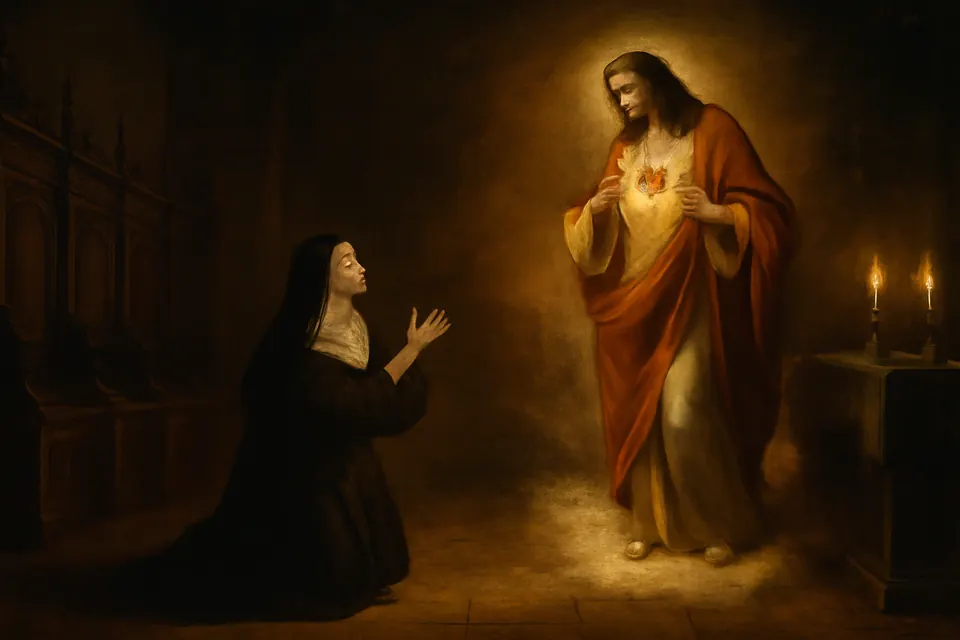
Then, between 1673 and 1675, our Lord showed his Heart to a young Visitation nun at Paray-le-Monial in Burgundy, St. Margaret Mary Alacoque. He asked for a feast of reparation and entrusted the spread of the devotion to her sisters of the Visitation and to the Jesuits, especially her confessor, St. Claude de la Colombière. Those two families shaped the litany we pray.
Three authors and a pope
The litany was not written at one sitting. The history given in EWTN's library runs like this:
- In 1686, Sister Madeleine Joly, a Visitation nun of Dijon, wrote invocations to the Sacred Heart.
- In 1691, the Jesuit Jean Croiset, one of the first writers on the devotion, composed a litany.
- In 1718, at Marseille, the Visitation nun Anne-Madeleine Rémuzat, now Venerable, took seventeen of Croiset's invocations, added ten of her own and made a litany of twenty-seven.
- In 1899, when the Holy See approved the litany for public use, the Congregation of Rites added six of Sister Joly's invocations, for thirty-three in all.
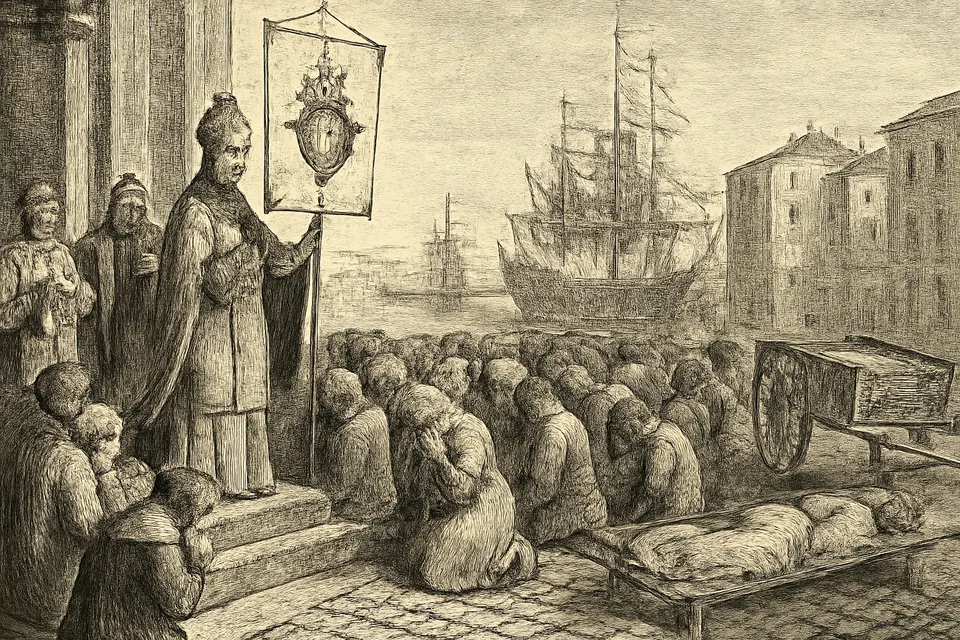
Marseille has a special place in this story. When plague struck in 1720, the city was solemnly consecrated to the Sacred Heart, which the Catholic Encyclopedia calls perhaps the first public act of the kind outside the religious communities. Sister Rémuzat, whose litany was then two years old, was living in a convent of that suffering city.
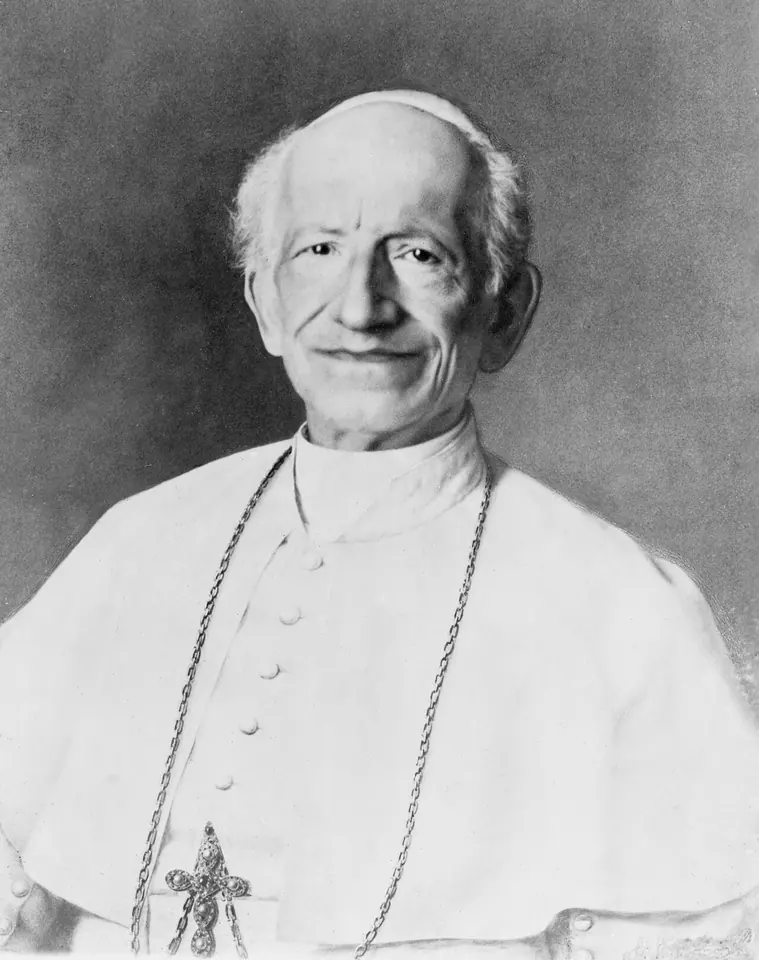
Rome moved slowly. It refused a feast for the whole Church in 1697 and again in 1729, finally yielded in 1765, when the bishops of France received the feast, and Pius IX extended it to the whole Church only in 1856. The year 1899 crowned it all. On April 2 Leo XIII attached an indulgence to the litany, on May 25 he issued the encyclical Annum Sacrum, and on June 11 he consecrated the whole human race to the Sacred Heart. In Annum Sacrum he wrote that "there is in the Sacred Heart a symbol and a sensible image of the infinite love of Jesus Christ which moves us to love one another."
What the invocations mean
The Holy See's Directory on Popular Piety (2001) calls this litany "evidently biblical in character." Nearly every line opens a window onto a verse of Scripture:
- House of God and gate of heaven are Jacob's words at Bethel: "this is no other but the house of God, and the gate of heaven" (Genesis 28:17).
- In Whom are all the treasures of wisdom and knowledge and in Whom dwells the fulness of divinity come from St. Paul's Letter to the Colossians (2:3 and 2:9).
- In Whom the Father was well pleased is the voice from heaven at our Lord's baptism (Matthew 3:17).
- Of Whose fulness we have all received is from the prologue of St. John: "of his fulness we all have received, and grace for grace" (John 1:16).
- Desire of the everlasting hills is from Jacob's blessing of his sons (Genesis 49:26), read by the Church as all creation longing for Christ.
- Propitiation for our sins is from the First Letter of St. John (2:2).
- Bruised for our offences echoes Isaiah's Suffering Servant: "he was bruised for our sins" (Isaiah 53:5).
- Obedient unto death is St. Paul's hymn in Philippians (2:8), and pierced with a lance is the scene at the cross in John 19:34.
- Our life and resurrection recalls "I am the resurrection and the life" (John 11:25), and our peace and reconciliation recalls "he is our peace" (Ephesians 2:14).
The closing versicle, "Jesus, meek and humble of heart," is our Lord's own invitation: "learn of me, because I am meek, and humble of heart: and you shall find rest to your souls" (Matthew 11:29).
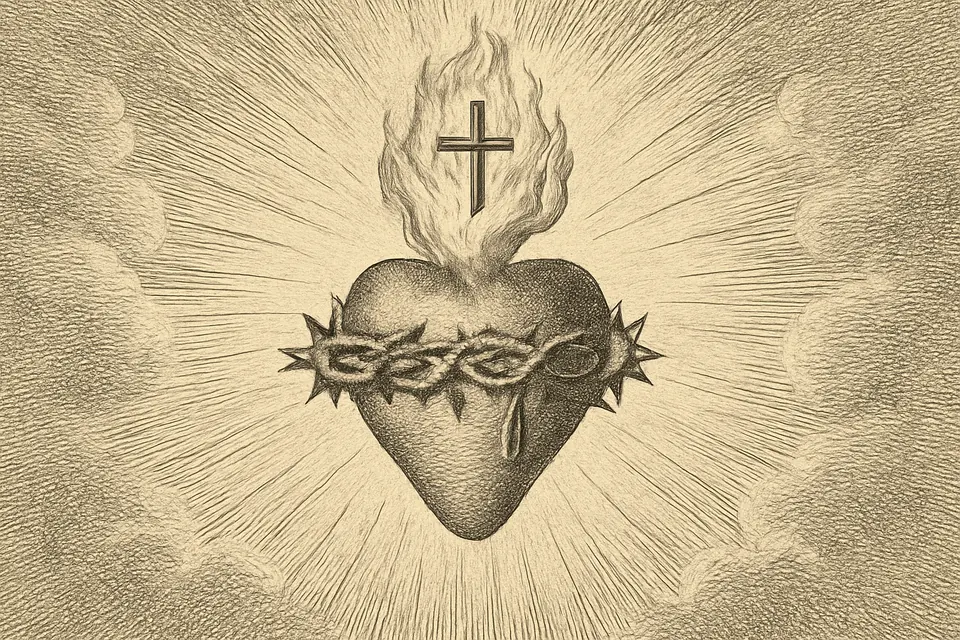
Look at how the litany moves. It begins in eternity, with the Heart of the Son of the Eternal Father, formed in the womb of the Virgin by the Holy Ghost. It passes through the treasures hidden in that Heart, then down into the Passion, "loaded down with opprobrium," pierced, obedient unto death. It ends with us: salvation of those who trust, hope of those who die, delight of all the saints. In thirty-three lines it tells the whole Gospel.
When and how we pray the Litany of the Sacred Heart
The litany belongs with the other Sacred Heart devotions the Directory on Popular Piety lists: personal and family consecration, the act of reparation and the First Friday devotion. Natural times to pray it:
- On First Fridays, after Mass and Holy Communion.
- Through June, the month of the Sacred Heart.
- On the Solemnity of the Sacred Heart, the Friday after the second Sunday after Pentecost. In 2027 it falls on Friday, June 4. See Sacred Heart 2027.
- At the enthronement of the Sacred Heart in a home, and on its anniversary.
- At a Holy Hour before the Blessed Sacrament.

In a family, one person reads each invocation and the rest answer "have mercy on us." Children learn it quickly, because the answer never changes. Prayed alone and slowly, any one line can carry a whole day. "Heart of Jesus, patient and most merciful" is a good line to carry into a hard conversation; "hope of those who die in Thee" belongs at a deathbed. The Church grants a partial indulgence to those who pray it devoutly.
Let us end where the litany ends: "Jesus, meek and humble of heart, make our hearts like unto Thine." For Leo XIII's act of consecration, short prayers and the story of the enthronement, see our Sacred Heart prayer page. For other approved litanies, see the Litany of the Holy Name, the Litany of St. Joseph, the Litany of the Saints and the Litany of Loreto. For Our Lady's heart, see the Immaculate Heart of Mary.
Frequently asked questions
How many invocations are in the Litany of the Sacred Heart?
Thirty-three, each beginning "Heart of Jesus." The number is often linked to the thirty-three years of our Lord's life on earth.
Who wrote the Litany of the Sacred Heart?
It was put together over time. According to the account published by EWTN's library, the Jesuit Jean Croiset wrote a litany in 1691; the Visitation nun Anne-Madeleine Rémuzat used seventeen of its invocations in her own litany of twenty-seven, written at Marseille in 1718; and six more, written in 1686 by Sister Madeleine Joly of Dijon, were added when Rome approved the text in 1899.
When should I pray the Litany of the Sacred Heart?
It is especially fitting on First Fridays, through the month of June, on the Solemnity of the Sacred Heart (Friday, June 4, 2027), at a family enthronement of the Sacred Heart, and at a Holy Hour. It can be prayed any day.
Is there an indulgence for the Litany of the Sacred Heart?
Yes. The Enchiridion Indulgentiarum (2004, concession 22) grants a partial indulgence for devoutly praying the approved litanies and names the Litany of the Sacred Heart of Jesus among them.
What does \"desire of the everlasting hills\" mean?
It comes from Jacob's blessing in Genesis 49:26, "until the desire of the everlasting hills should come." The Church has long read it as the longing of all creation, from the beginning, for the coming of Christ.
Sources
- F. X. Lasance, My Prayer Book: Happiness in Goodness (Benziger, copyright 1908), Litany of the Sacred Heart of Jesus, pp. 463–465 (Internet Archive)
- EWTN Library: Litaniae Cordis Sanctae Iesu (Litany of the Sacred Heart of Jesus), with a note on its history
- Catholic Encyclopedia (1910): Devotion to the Sacred Heart of Jesus
- Leo XIII, Annum Sacrum: On Consecration to the Sacred Heart (May 25, 1899)
- Congregation for Divine Worship, Directory on Popular Piety and the Liturgy (2001), nos. 166–173
- Apostolic Penitentiary, Enchiridion Indulgentiarum, 4th edition (2004), concession 22