Litany of St. Joseph
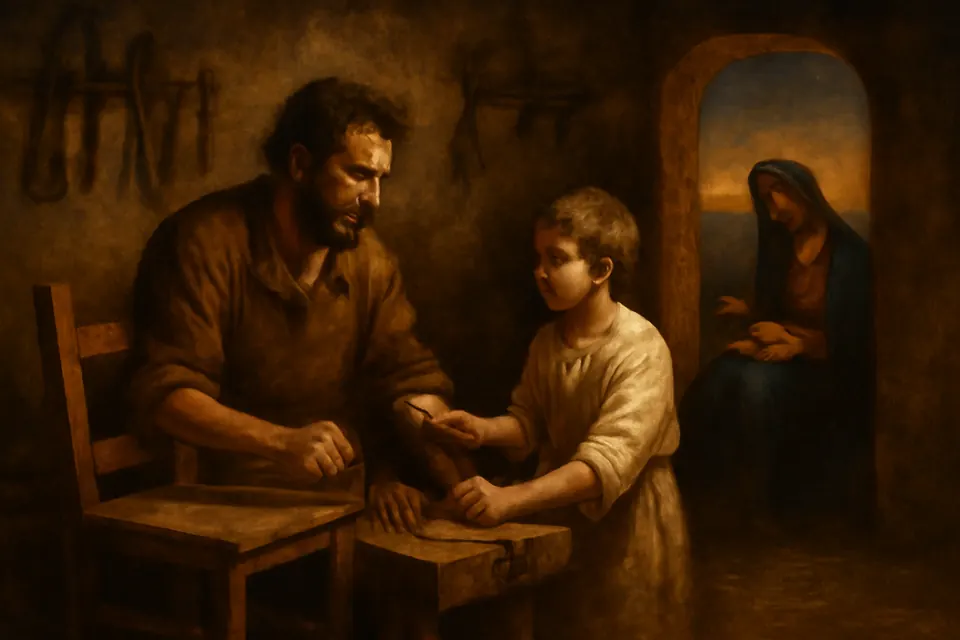
The Litany of St. Joseph is the Church's approved litany in honor of the foster father of Jesus, calling on him by titles such as "Head of the Holy Family," "Pillar of families" and "Patron of the dying," each answered "pray for us." Pope St. Pius X approved it in 1909, and in 2021 Pope Francis approved seven new invocations.
St. Joseph never says a word in the Gospels, yet the Church has found a great many words to say about him. The Litany of St. Joseph gathers them into one prayer: son of David, guardian of the Virgin, head of the Holy Family, model of workers, patron of the dying. Here is the full litany as the Church first approved it, the seven invocations added in 2021, and what each title tells us about the man God chose to protect his Son.
The Litany of St. Joseph
This is the text as printed in the prayer book Blessed Be God (1925), compiled by two Dominican priests, Charles Callan and John McHugh. After "Holy Mary" and each invocation that follows, down to "Protector of holy Church," we answer pray for us.
Lord, have mercy on us. Christ, have mercy on us. Lord, have mercy on us. Christ, hear us. Christ, graciously hear us. God, the Father of heaven, have mercy on us. God, the Son, Redeemer of the world, have mercy on us. God, the Holy Ghost, have mercy on us. Holy Trinity, one God, have mercy on us. Holy Mary, pray for us. Holy Joseph, Noble scion of David, Light of the patriarchs, Spouse of the Mother of God, Chaste guardian of the Virgin, Foster-father of the Son of God, Sedulous defender of Christ, Head of the Holy Family, Joseph most just, Joseph most chaste, Joseph most prudent, Joseph most valiant, Joseph most obedient, Joseph most faithful, Mirror of patience, Lover of poverty, Model of workers, Ornament of domestic life, Protector of virgins, Pillar of families, Consolation of the afflicted, Hope of the sick, Patron of the dying, Terror of the demons, Protector of holy Church, Lamb of God, Who takest away the sins of the world, spare us, O Lord! Lamb of God, Who takest away the sins of the world, graciously hear us, O Lord! Lamb of God, Who takest away the sins of the world, have mercy on us. V. He made him master of his house. R. And ruler of all his possessions. Let us pray. O God, Who in Thy ineffable providence didst vouchsafe to choose blessed Joseph to be the spouse of Thy most holy Mother; grant, we beseech Thee, that we may have him whom we venerate as our protector on earth, as our intercessor in heaven. Who livest and reignest forever and ever. Amen.
Blessed Be God notes the indulgence granted by Pius X on March 18, 1909, "applicable to the souls in Purgatory." Other prayer books of the same years print small variants; F. X. Lasance's My Prayer Book has "Model of laborers" and notes "Model of artisans" as an alternative.

The seven invocations added in 2021
On May 1, 2021, the feast of St. Joseph the Worker, the Congregation for Divine Worship wrote to the bishops of the world. The year before, Pope Francis had marked the 150th anniversary of Joseph's proclamation as Patron of the Universal Church with the apostolic letter Patris corde and a Year of St. Joseph. In that light, the letter said, "it appeared opportune to update the Litany in honour of Saint Joseph, approved by the Apostolic See in 1909." The Congregation presented seven new invocations to the Pope, "who approved their integration into the Litany of Saint Joseph."
The Holy See gave the new invocations in Latin, each with its source, and Vatican News rendered them in English:
- Custos Redemptoris, "Guardian of the Redeemer," from St. John Paul II's apostolic exhortation Redemptoris custos (1989).
- Serve Christi, "Servant of Christ," from a homily of St. Paul VI of March 19, 1966.
- Minister salutis, "Minister of salvation," from St. John Chrysostom, as quoted in Redemptoris custos.
- Fulcimen in difficultatibus, "Support in difficulties," from the opening of Patris corde.
- Patrone exsulum, Patrone afflictorum, Patrone pauperum, "Patron of exiles," "Patron of the afflicted" and "Patron of the poor," from Patris corde, no. 5.
The Latin text the Holy See published that day shows where each one belongs. "Guardian of the Redeemer" follows "Spouse of the Mother of God." "Servant of Christ" and "Minister of salvation" follow "Sedulous defender of Christ." "Support in difficulties" follows "Pillar of families." The three new patronages come after "Hope of the sick," just before "Patron of the dying." With these, Vatican News counted 31 invocations of St. Joseph. The same Latin text, titled Litaniae in honorem S. Ioseph sponsi B. Mariae V., shows the originals behind the familiar English: Proles David inclyta is "Noble scion of David," Almae Familiae praeses is "Head of the Holy Family," Exemplar opificum is "Model of workers," and Terror daemonum is "Terror of the demons."
The Congregation left the translation to each bishops' conference and said those translations "do not require the confirmation of the Apostolic See." It also allowed conferences to add other titles under which Joseph is honored in their countries, as long as they "preserve the literary genre of the Litany." That is why the updated litany reads a little differently from one country's booklet to another. The 1925 text above is the litany as our grandparents prayed it; when praying with others, we can add the new invocations where the Holy See placed them.

Where the Litany of St. Joseph comes from
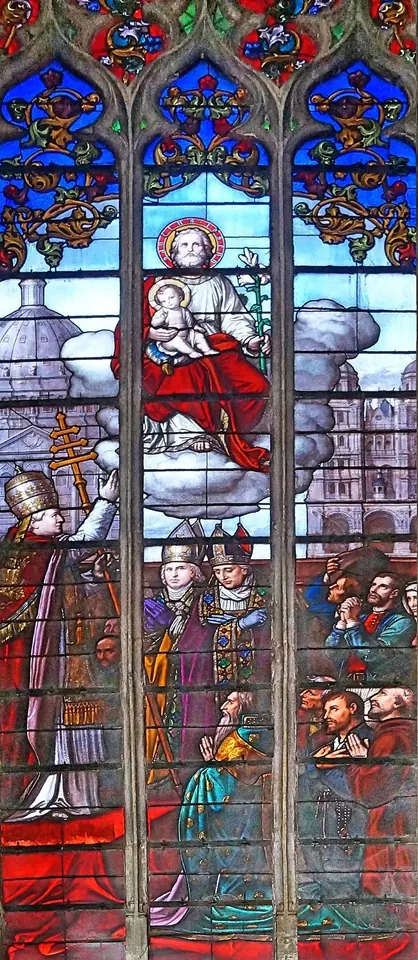
Devotion to St. Joseph grew slowly in the West and then all at once. Medieval preachers such as St. Bernardine of Siena praised him, St. Teresa of Avila wrote in her Life that she could not remember ever asking him for anything he did not obtain for her, and his feast of March 19 spread through the Church. On December 8, 1870, Blessed Pius IX declared him Patron of the Universal Church. In 1889 Leo XIII sent the whole Church a prayer to him with the encyclical Quamquam pluries.
Litanies to St. Joseph circulated privately for a long time. But since Clement VIII's decree of 1601, no new litany could be used in public worship without the Holy See's approval, and for three centuries the only approved litanies were the Litany of the Saints and the Litany of Loreto, joined in the 1800s by those of the Holy Name and the Sacred Heart.
St. Joseph's turn came under a pope who carried his name. Pope St. Pius X was born Giuseppe Sarto. The Holy See's Directory on Popular Piety (2001) names the litany among the chief devotions to St. Joseph, "approved by St. Pope Pius X." The 2021 letter gives the place it was published: the first volume of the Acta Apostolicae Sedis, 1909, pages 290 to 292. The prayer books of the time date the indulgence March 18, 1909, the eve of Joseph's feast.

What the titles of the litany mean
The litany is a portrait drawn in short strokes. Read slowly, it walks through Joseph's whole life.
His family and his calling
- Noble scion of David. A scion is a shoot or descendant. The angel greeted him as "Joseph, son of David" (Matthew 1:20), and through Joseph, Jesus was legally of David's royal line, as the prophets foretold.
- Light of the patriarchs. Joseph stands at the end of the line of Abraham, Isaac and Jacob, and he received what they only hoped for: he held the Promised One in his arms.
- Spouse of the Mother of God and Chaste guardian of the Virgin. He was truly Mary's husband, and he guarded her virginity with reverence.
- Foster-father of the Son of God. He gave Jesus a name, a home, a trade and a father's love.
- Sedulous defender of Christ. "Sedulous" means diligent, careful, untiring. He rose in the night and fled with the Child when Herod sought his life.
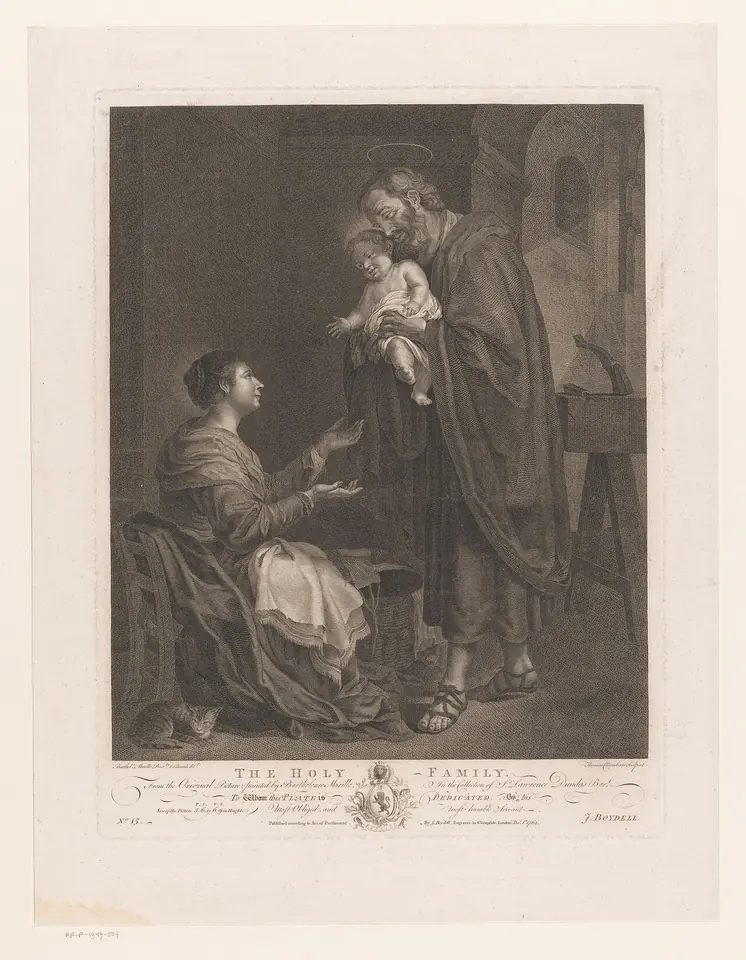
- Head of the Holy Family. God spoke to the family through him, in dreams, and he obeyed at once.
His virtues
The six "Joseph most..." invocations name his virtues one by one: just, chaste, prudent, valiant, obedient, faithful. The first comes straight from the Gospel: "Joseph her husband, being a just man" (Matthew 1:19). The others are what the Gospel shows him doing. He protected Mary's good name, he kept her and the Child safe, he went where he was sent, and he stayed faithful through poverty and exile.
Then come the titles that turn him toward us: Mirror of patience, Lover of poverty, Model of workers and Ornament of domestic life. A carpenter who lived by his hands in a small town, Joseph shows that ordinary work and ordinary family life can be holy. Pius XII made the point in 1955 when he gave the Church the feast of St. Joseph the Worker on May 1.
His protection
- Protector of virgins and Pillar of families: he guarded the purest of virgins and held up the holiest of families.
- Consolation of the afflicted and Hope of the sick: we bring him our troubles as Mary and Jesus once did.
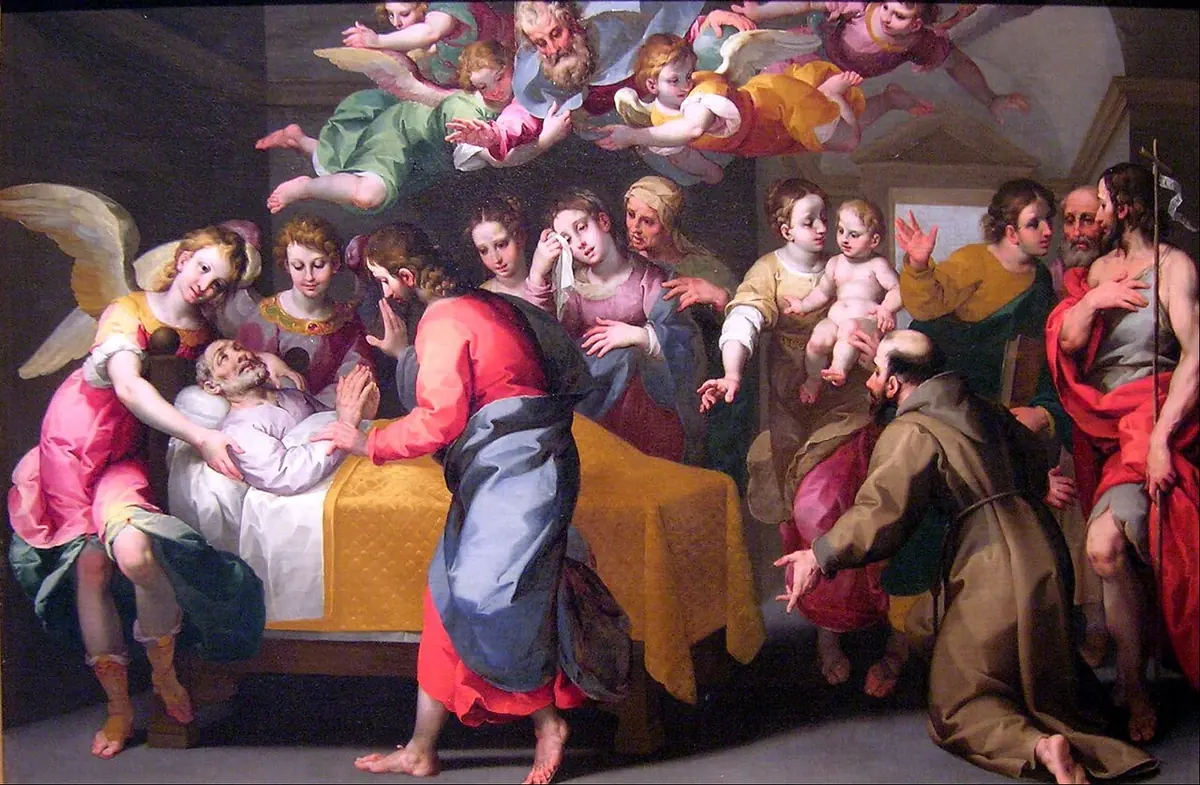
- Patron of the dying: tradition holds that Joseph died before our Lord's public life began, with Jesus and Mary beside him. For that reason Christians have long asked him to stand by them at the hour of death.
- Terror of the demons: he kept the Child safe from Herod's soldiers, and the faithful ask him to keep us safe from every evil that seeks to harm the soul.
- Protector of holy Church: as he protected the body of Christ in Nazareth, he protects the Body of Christ, the Church, today. This is the title Pius IX gave him in 1870.
"He made him master of his house"
The closing versicle and response come from Psalm 104 (105 in modern Bibles), which tells of the patriarch Joseph of Egypt: "He made him master of his house, and ruler of all his possession" (Psalm 104:21, Douay-Rheims). The Church has long seen the first Joseph as a figure of the second. When famine struck Egypt, Pharaoh told the hungry people, "Go to Joseph" (Genesis 41:55), and Ite ad Ioseph became a motto of devotion to St. Joseph. God set Joseph of Nazareth over his own house, the Holy Family, and over his greatest treasures, Jesus and Mary.
The closing prayer then asks for one simple thing: that the one "whom we venerate as our protector on earth" may be "our intercessor in heaven."
When and how we pray the Litany of St. Joseph
The Church gives several natural times for this litany:
- Wednesdays, the weekday traditionally given to St. Joseph.
- March, the month of St. Joseph, and above all the Solemnity of St. Joseph on March 19. The Directory on Popular Piety asks that the "month of St. Joseph" be kept in harmony with Lent, in which it falls.
- May 1, the memorial of St. Joseph the Worker, and on Labor Day for those who work or need work.
- During a St. Joseph novena, especially the nine days from March 10 to 18.
- At the bedside of the dying, when we ask the Patron of the dying to stand with someone we love.

In a group, a leader reads each title and everyone answers "pray for us." Families can divide it, with a child reading the titles and everyone answering. Prayed alone, it can be read slowly, stopping on the one title that fits the day. A father out of work can pray "Model of workers." A family that has moved far from home can pray "Patron of exiles." Parents with a child in the hospital can pray "Hope of the sick." The Church grants a partial indulgence for praying it devoutly, as it does for each of the approved litanies.
Praying it for a happy death
Many families keep the old custom of praying the Litany of St. Joseph when a loved one is dying. Joseph knows the way: he crossed that threshold with Jesus holding one hand and Mary the other. When we pray "Patron of the dying, pray for us" beside a bed, we ask him to bring that same peace into the room. The litany pairs well with the prayer for the dying and with the Litany of the Saints, which the Church has long used in commending a soul to God.

Related prayers and pages
Let us take the litany as Joseph's own family took his care: trusting, without needing to understand every step. For Leo XIII's prayer "To thee, O blessed Joseph," the prayer for work and the Memorare to St. Joseph, see our St. Joseph prayer page. For his life, legends and patronages, see St. Joseph. For his feast-day customs, see the St. Joseph Table. For the other approved litanies, see the Litany of the Holy Name, the Litany of the Sacred Heart, the Litany of the Saints and the Litany of Loreto.
Frequently asked questions
Who approved the Litany of St. Joseph?
Pope St. Pius X approved it for public use on March 18, 1909, the eve of St. Joseph's feast, and it was published in the Acta Apostolicae Sedis that year. Prayer books of the time record an indulgence of 300 days, applicable to the souls in purgatory.
What invocations were added to the Litany of St. Joseph in 2021?
On May 1, 2021, the Congregation for Divine Worship announced seven new invocations approved by Pope Francis: Custos Redemptoris, Serve Christi, Minister salutis, Fulcimen in difficultatibus, Patrone exsulum, Patrone afflictorum and Patrone pauperum. Vatican News rendered them as Guardian of the Redeemer, Servant of Christ, Minister of salvation, Support in difficulties, Patron of exiles, Patron of the afflicted and Patron of the poor.
How many invocations does the Litany of St. Joseph have?
With the 2021 additions, Vatican News counts 31 invocations to St. Joseph, from "Holy Joseph" through "Protector of holy Church." The litany also opens with the Kyrie, the Holy Trinity and "Holy Mary."
When should I pray the Litany of St. Joseph?
It is especially fitting on Wednesdays, the weekday traditionally given to St. Joseph, through March, on his feasts of March 19 and May 1, during a St. Joseph novena, and at the bedside of the dying. It can be prayed any day.
Why is St. Joseph called Terror of demons?
Because he guarded the Child Jesus from Herod and led the Holy Family safely into Egypt, the Church sees him as a protector against every power that seeks to harm Christ and his Body. The title asks him to defend us as he defended his family.
Is there an indulgence for the Litany of St. Joseph?
Yes. The Enchiridion Indulgentiarum (2004, concession 22) grants a partial indulgence to the faithful who devoutly pray the approved litanies, and it names the Litany of St. Joseph among them.
Why is St. Joseph the patron of a happy death?
Joseph is not mentioned during our Lord's public ministry, and a long tradition holds that he died before it began, with Jesus and Mary at his side. No one could ask for a holier death, so the faithful ask him to stand by them at theirs. The litany calls him Patron of the dying.
Sources
- Charles J. Callan, O.P., and John A. McHugh, O.P., Blessed Be God: A Complete Catholic Prayer Book (New York: P. J. Kenedy, 1925), Litany of St. Joseph, pp. 427–428 (Internet Archive)
- Congregation for Divine Worship: Letter to the Presidents of the Bishops' Conferences on some new invocations in the Litany in honour of Saint Joseph (May 1, 2021)
- Holy See Press Office: Litaniae in honorem S. Ioseph (Latin text with the 2021 invocations, May 1, 2021)
- Vatican News: Pope approves 7 new invocations to Litany of St. Joseph (Robin Gomes, May 1, 2021)
- Congregation for Divine Worship, Directory on Popular Piety and the Liturgy (2001), nos. 218–223
- Apostolic Penitentiary, Enchiridion Indulgentiarum, 4th edition (2004), concession 22