Padre Pio prayer

The Padre Pio prayer he said most faithfully was the Efficacious Novena to the Sacred Heart, which he prayed every day for everyone who asked for his prayers. He is also known for "Stay with me, Lord," a prayer of thanksgiving after Holy Communion, and for the counsel "Pray, hope and don't worry."
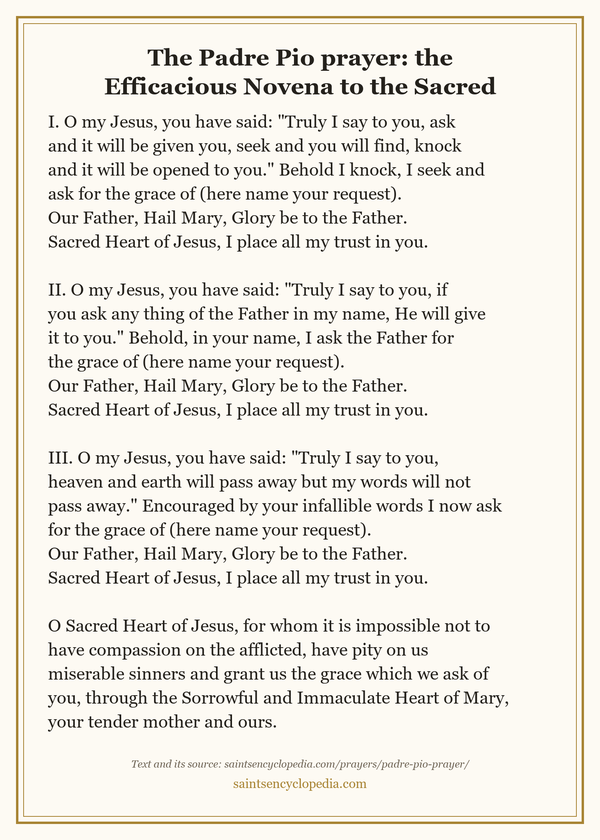 Free printable prayer card 5 × 7 inch PDF, ready to print, frame or tuck in a missal.
Thousands of people wrote to Padre Pio asking him to pray for them: for a sick child, a husband out of work, a son at war. He could not answer every letter, but he promised to pray, and he kept that promise with one prayer said every day. Here it is, followed by the prayer after Communion that bears his name and the prayers the Church now offers to him.
The Padre Pio prayer: the Efficacious Novena to the Sacred Heart
The Padre Pio shrine in Barto, Pennsylvania, prints the novena with this note: "This novena prayer was recited every day by Padre Pio for all those who asked for prayers." It invites us to pray it daily too, "so as to be spiritually united with the prayer of Padre Pio." The text below is as the shrine gives it.
I. O my Jesus, you have said: "Truly I say to you, ask and it will be given you, seek and you will find, knock and it will be opened to you." Behold I knock, I seek and ask for the grace of (here name your request). Our Father, Hail Mary, Glory be to the Father. Sacred Heart of Jesus, I place all my trust in you.
II. O my Jesus, you have said: "Truly I say to you, if you ask any thing of the Father in my name, He will give it to you." Behold, in your name, I ask the Father for the grace of (here name your request). Our Father, Hail Mary, Glory be to the Father. Sacred Heart of Jesus, I place all my trust in you.
III. O my Jesus, you have said: "Truly I say to you, heaven and earth will pass away but my words will not pass away." Encouraged by your infallible words I now ask for the grace of (here name your request). Our Father, Hail Mary, Glory be to the Father. Sacred Heart of Jesus, I place all my trust in you.
O Sacred Heart of Jesus, for whom it is impossible not to have compassion on the afflicted, have pity on us miserable sinners and grant us the grace which we ask of you, through the Sorrowful and Immaculate Heart of Mary, your tender mother and ours.
Then say the Hail, Holy Queen and add: "St. Joseph, foster father of Jesus, pray for us." The full Hail, Holy Queen is on its own page: the Hail, Holy Queen.

Why it works the way it does
The novena does not argue or bargain. Each petition simply holds up a promise Jesus made and asks him to keep it. In the Douay-Rheims Bible the three promises read: "Ask, and it shall be given you: seek, and you shall find: knock, and it shall be opened to you" (Matthew 7:7); "Amen, amen I say to you: if you ask the Father any thing in my name, he will give it you" (John 16:23); and "Heaven and earth shall pass, but my words shall not pass" (Matthew 24:35).
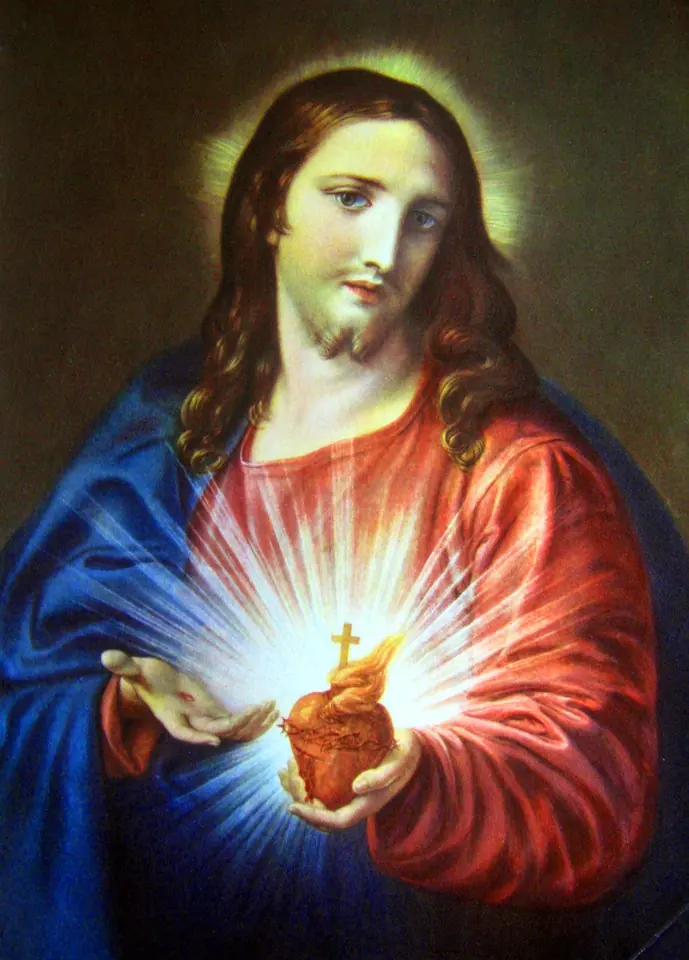
The closing prayer turns to the Heart of Jesus, "for whom it is impossible not to have compassion on the afflicted," and asks through the Sorrowful and Immaculate Heart of Mary. The novena is usually linked with St. Margaret Mary Alacoque, the 17th-century Visitation nun of Paray-le-Monial to whom Jesus showed his Heart, but that attribution is traditional, and no early text of hers has been found to confirm it. Its author is unknown. What we can say for certain is whose prayer made it famous.
How to pray it
Although it is called a novena, Padre Pio did not stop after nine days. He said it every day. We can pray it either way:
- Choose your intention, or several, and name it at each "(here name your request)."
- After each petition say one Our Father, one Hail Mary, one Glory Be and the line "Sacred Heart of Jesus, I place all my trust in you."
- Finish with the closing prayer, the Hail, Holy Queen and the invocation of St. Joseph.
- Repeat for nine days in a row, or make it part of your daily prayer as Padre Pio did.
Many people pray it for the intentions of others, the way he did: a list of names kept in a missal, said once a day.
"Stay with me, Lord": Padre Pio's prayer after Communion
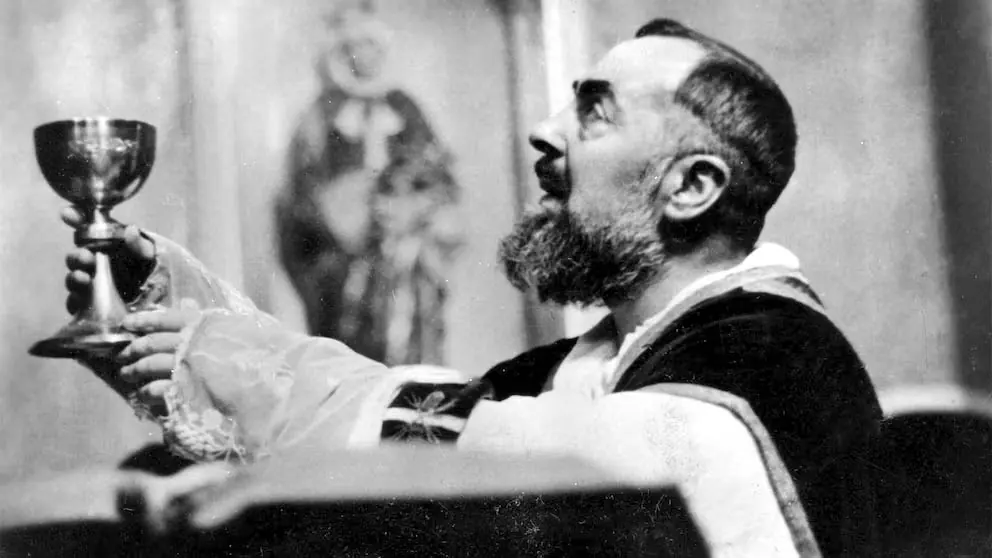
Padre Pio's Mass could last more than an hour, and he made a long thanksgiving afterward. The prayer known as "Stay with me, Lord" is printed in countless Catholic booklets as the prayer he said in that thanksgiving. It is built on the plea of the two disciples at Emmaus, "Stay with us, because it is towards evening" (Luke 24:29), and every line asks Jesus to remain, giving a reason. As Aleteia prints it, it opens:
Stay with me, Lord, because I am weak and I need Your strength, that I may not fall so often. Stay with me, Lord, for You are my life, and without You, I am without meaning and hope. Stay with me, Lord, for You are my light, and without You, I am in darkness.
It goes on through more than a dozen petitions. One recalls Emmaus directly: "Help me to recognize You as Your disciples did at the Breaking of the Bread." Another asks for nothing but his company: "I do not ask for divine consolations because I do not deserve them, but I only ask for the gift of Your Presence."
Where it comes from
We print only these opening lines because the prayer's origin is uncertain. The English versions in circulation differ in wording, none names a translator, and we have not found a published Italian original with a date. Catholic publishers and shrines credit it to Padre Pio, and composers have set it to music as his prayer after Communion. Until an Italian source is published, it is fair to call it the prayer attributed to Padre Pio. Its full text is easy to find in Catholic prayer books and on the Aleteia page listed in our sources.
Whatever its history, it is a beautiful way to spend the minutes after Holy Communion. Kneel, receive the Lord, and pray it slowly, a line at a time, as Padre Pio would have wanted: to the Jesus who is truly present, Body, Blood, Soul and Divinity.
Prayers to Padre Pio
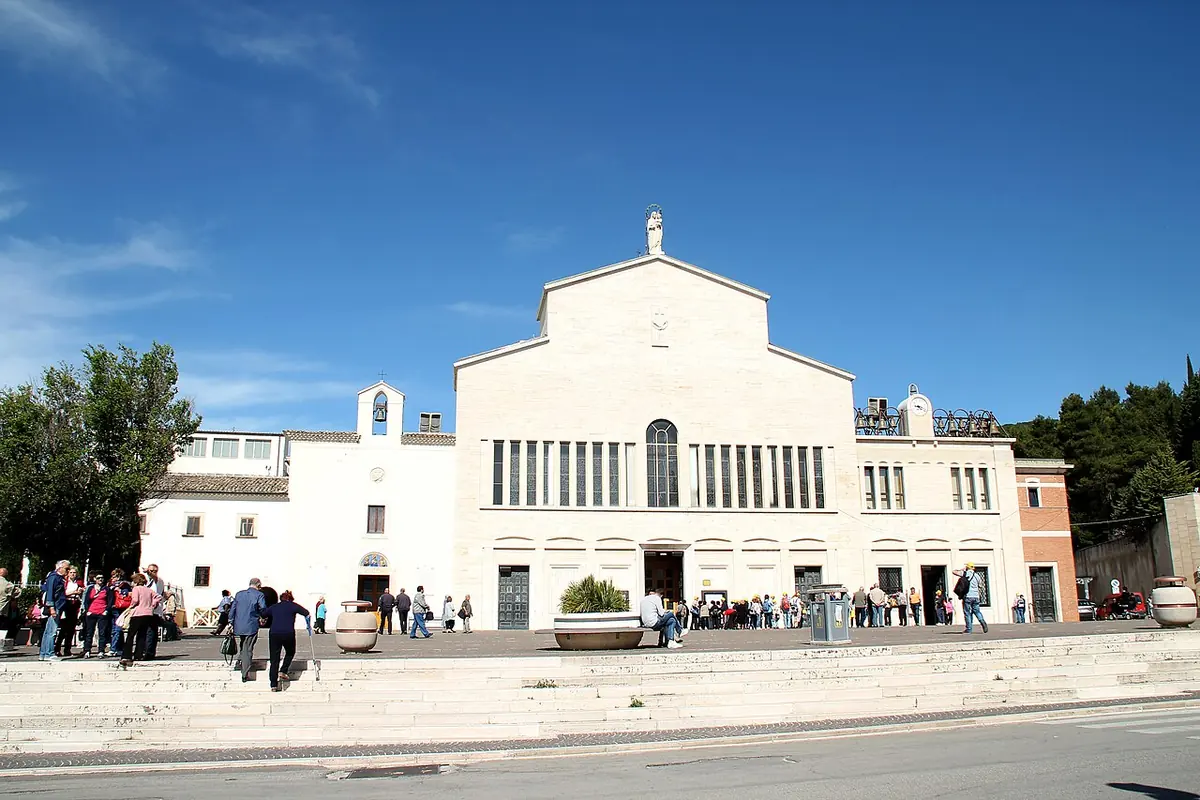
Since his canonization we also ask St. Pio to pray for us. These two prayers have a clear source.
Prayer to St. Pio
This is the prayer the Padre Pio shrine in Barto uses. It is also on the plaque under his statue at the National Shrine at Pantasaph, Wales.
O God, You gave Saint Pio of Pietrelcina, Capuchin priest, the great privilege of participating in a unique way in the passion of Your Son, grant me through his intercession the grace of (here make your request) which I ardently desire; and above all grant me the grace of living in conformity with the death of Jesus, to arrive at the glory of the resurrection.
It is followed by the Glory Be, said three times.
Pope John Paul II's prayer to St. Pio
Pope John Paul II knew Padre Pio personally and went to confession to him as a young priest in 1947. He canonized him in St. Peter's Square on June 16, 2002, and ended his homily with this prayer, in the Vatican's English text:
Teach us, we ask you, humility of heart so we may be counted among the little ones of the Gospel, to whom the Father promised to reveal the mysteries of his Kingdom. Help us to pray without ceasing, certain that God knows what we need even before we ask him. Obtain for us the eyes of faith that will be able to recognize right away in the poor and suffering the face of Jesus. Sustain us in the hour of the combat and of the trial and, if we fall, make us experience the joy of the sacrament of forgiveness. Grant us your tender devotion to Mary, the Mother of Jesus and our Mother. Accompany us on our earthly pilgrimage toward the blessed homeland, where we hope to arrive in order to contemplate forever the glory of the Father, the Son and the Holy Spirit. Amen.
In the same homily he summed up the saint's teaching in two words: "Prayer and charity, this is the most concrete synthesis of Padre Pio's teaching, which today is offered to everyone."

"Pray, hope and don't worry"
Padre Pio's most quoted words are three short commands: Prega, spera e non preoccuparti, "Pray, hope and don't worry." A longer form often printed with it adds: "Worry is useless. God is merciful and will hear your prayer." It is the advice he gave over and over to anxious penitents and in his letters of spiritual direction, though the exact letter where the phrase first appears has not been identified.
It is not a slogan for ignoring trouble. For Padre Pio, worry was a sign that we had stopped trusting, and prayer was the way back. Pope Francis, speaking to the Padre Pio Prayer Groups in 2016, recalled that the saint called prayer a "force that moves the world" and "the greatest weapon we have, a key that opens the heart of God."
The Padre Pio Prayer Groups keep that teaching alive. They began during World War II, when Padre Pio urged his spiritual children to answer Pope Pius XII's call to pray for peace, and today they meet in parishes on every continent, each under the direction of a priest, to pray for the Church, the Pope and the sick.

Related prayers and saints
Padre Pio prayed the Rosary constantly and called it his weapon. Pray it with the steps on our How to pray the Rosary page. For the Sacred Heart devotion behind the novena, read about St. Margaret Mary Alacoque. His own life, stigmata, miracles and shrines are in his entry: Padre Pio. Other prayers for hard times are on the St. Jude prayer and Memorare pages, and his feast, September 23, is on the feast day calendar.
St. Pio of Pietrelcina, pray for us.
Frequently asked questions
What prayer did Padre Pio say every day?
The Efficacious Novena to the Sacred Heart of Jesus. According to the Padre Pio shrine in Barto, Pennsylvania, he recited it every day for all those who asked for his prayers. It has three petitions, each built on a promise Jesus made in the Gospels, and ends with the Hail, Holy Queen. The full text is at the top of this page.
What is the "Stay with me, Lord" prayer?
A long prayer of thanksgiving after Holy Communion, widely printed as Padre Pio's. Each line asks Jesus to stay, for a reason: "because I am weak," "for You are my life," "for it is getting late." Catholic publishers credit it to him, but no one has published a dated Italian original, so it is best called attributed to Padre Pio.
Did Padre Pio really say "Pray, hope and don't worry"?
Yes, it is his best-known counsel, usually given in Italian as "Prega, spera e non preoccuparti." It sums up advice he gave in letters and in person. The exact letter where the words first appear has not been pinned down, so it is safest to quote it as one of his sayings.
How do I pray to Padre Pio for healing?
Bring the sick person to God through his intercession. Many of the faithful pray the Prayer to St. Pio on this page with the sick person's name at "(here make your request)," add three Glory Bes, and pray the Efficacious Novena with him, as he did for the sick who wrote to him. Padre Pio himself always pointed people to Confession, the Mass and the Rosary.
When is the feast of St. Padre Pio?
September 23, the day he died in 1968 at San Giovanni Rotondo. Pope John Paul II canonized him on June 16, 2002, as St. Pio of Pietrelcina.
Sources
- National Centre for Padre Pio, Barto, Pennsylvania: Efficacious Novena to the Sacred Heart of Jesus
- National Centre for Padre Pio, Barto, Pennsylvania: Prayer to Saint Pio
- John Paul II, Homily for the Canonization of St. Pio of Pietrelcina, June 16, 2002
- Pope Francis, Address to the Padre Pio Prayer Groups, February 6, 2016
- Aleteia: Padre Pio prayed this prayer after receiving Holy Communion (2018)
- Vatican: Padre Pio da Pietrelcina (1887–1968), biography