Holy Water

Holy water is water blessed by a priest or deacon with the Church's prayer. It is a sacramental that recalls our Baptism: we bless ourselves with it entering church, sprinkle our homes and the sick with it, and use it in blessings. Its power comes from God through the Church's prayer and our faith, not from the water itself.
Dip your fingers in the font at the church door, touch your forehead, your chest and your shoulders, and you have already prayed. Holy water is the most familiar sacramental in Catholic life, so familiar that we can forget what it means. This page explains what holy water is, how the Church blesses it, its many uses in church and at home, the difference between holy water and Lourdes water, and how to get water blessed for your own home.
What is holy water?
Holy water is water blessed by a priest or deacon with the prayer of the Church. It is a sacramental, one of the "sacred signs which bear a resemblance to the sacraments" (Catechism 1667). The Catechism names it directly: sacramentals "always include a prayer, often accompanied by a specific sign, such as the laying on of hands, the sign of the cross, or the sprinkling of holy water (which recalls Baptism)" (Catechism 1668).
That last phrase is the key. Holy water is a reminder of Baptism, the water through which we were washed of sin and born again as children of God. Every time we bless ourselves with it, we renew in a small way the promises of our Baptism and turn away from sin and the Evil One.
Holy water is not magic, and the water is not changed in itself. Sacramentals, the Catechism teaches, "do not confer the grace of the Holy Spirit in the way that the sacraments do, but by the Church's prayer, they prepare us to receive grace and dispose us to cooperate with it" (Catechism 1670). Its power comes from God, through the prayer the Church has offered over it, and is received through the faith of the one who uses it. To treat it as a charm that works by itself, apart from faith and a turning of the heart to God, would be superstition (Catechism 2111).
A short history of holy water
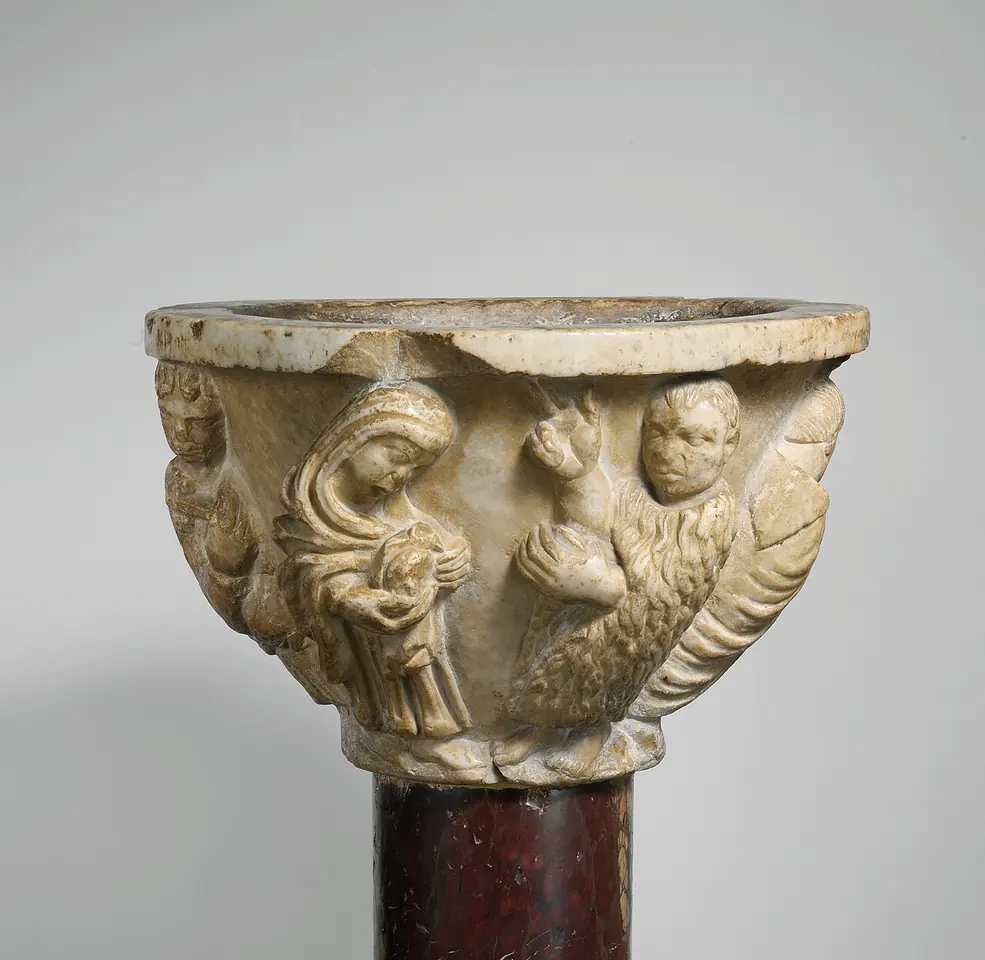
The Church's use of blessed water is very old. The Catholic Encyclopedia (1910) points to the fourth-century prayer book of Bishop Serapion of Thmuis in Egypt, which contains a blessing of water and oil during Mass, asking God to "grant unto these creatures the power to heal." Writers of the same century tell of holy men and bishops blessing water with the sign of the cross.
In the West, Pope Leo IV in the ninth century told every priest to bless water each Sunday before Mass and sprinkle the people with it. Archbishop Hincmar of Reims added that the faithful could carry some home "so as to sprinkle their houses, fields, vineyards, and cattle." Fonts at the doors of churches grew from the fountains where early Christians washed before entering the basilica.
How the Church blesses holy water
The old rite with salt
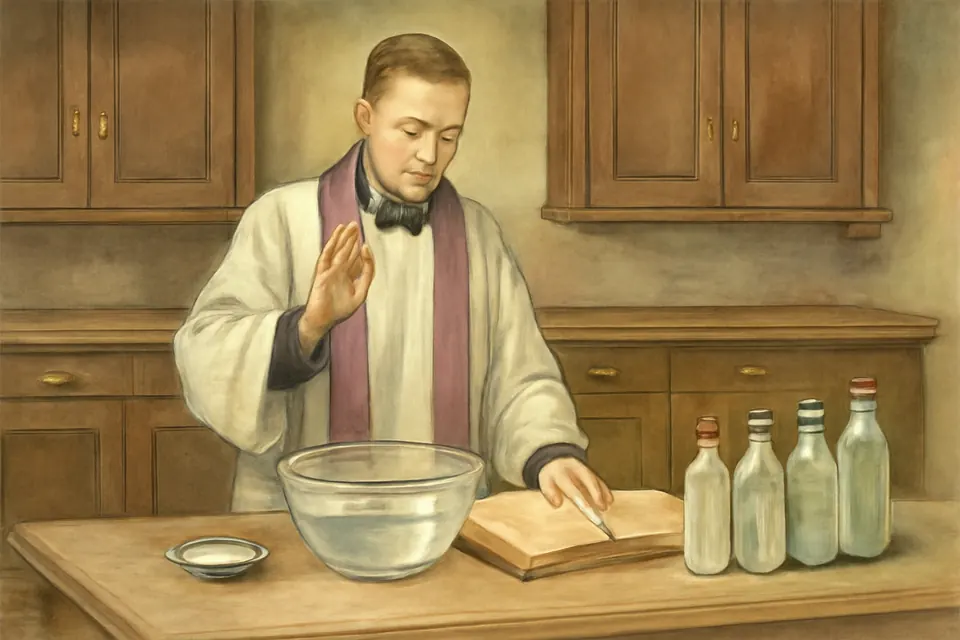
In the traditional Roman Ritual, the priest first exorcises and blesses salt, then exorcises and blesses the water, and finally pours the salt into the water in the form of a cross with a last prayer. The Catholic Encyclopedia notes that the formula of blessing salt comes from the ancient Gregorian Sacramentary. Salt recalls the prophet Elisha, who healed the bad waters of Jericho by throwing salt into the spring (2 Kings 2:19-22), and it is a sign of preservation from corruption. The prayers ask that wherever the water is sprinkled, evil may be driven away and the presence of the Holy Spirit be with us.
Today
The current Roman Missal includes a rite for blessing and sprinkling water at Sunday Mass, where the custom of adding salt may be kept, and the Book of Blessings has an order for blessing water outside Mass, which a priest or a deacon may lead. The Church's law says "any presbyter can impart blessings except those reserved to the Roman Pontiff or bishops" (canon 1169), and the blessing of water belongs to the ordained ministry.
Easter water and the Easter Vigil
At the Easter Vigil, the Church blesses the water of the baptismal font with the solemn prayer that recalls the waters of creation, the Flood, the Red Sea and the Jordan. The faithful are sprinkled with it as they renew their baptismal promises, and in many parishes people carry some home. The Catholic Encyclopedia notes that in the past no holy water was blessed on Easter Sunday and Pentecost, because the faithful took home the baptismal water blessed the night before. The Vatican's Directory on Popular Piety speaks of families blessing their Easter table "with Easter water which is brought by the faithful from the Easter Vigil."
In the Eastern Churches
The Byzantine Churches, Orthodox and Eastern Catholic, keep the Great Blessing of Waters on the feast of Theophany (January 6, which falls on January 19 for Churches that keep the Julian calendar), when they celebrate the Baptism of the Lord in the Jordan. The priest plunges a cross into the water three times, and the faithful take the water home. A lesser blessing of water is held on other days through the year.

Holy water uses
Entering and leaving church
We dip our fingers in the font and make the Sign of the Cross as we enter, and many do the same as they leave. It is a short act of faith: I am baptized, I belong to Christ, and I come to pray as one of his people.
At Mass
On Sundays, especially in the Easter season, the priest may bless water and sprinkle the people with it in place of the usual Act of Penitence, "to recall Baptism," as the General Instruction of the Roman Missal (no. 51) puts it. The old name for this rite is the Asperges, from the opening words of Psalm 50 (51) in Latin, Asperges me, "Thou shalt sprinkle me." In Eastertide the antiphon is Vidi aquam, "I saw water." The sprinkler is called an aspergillum.
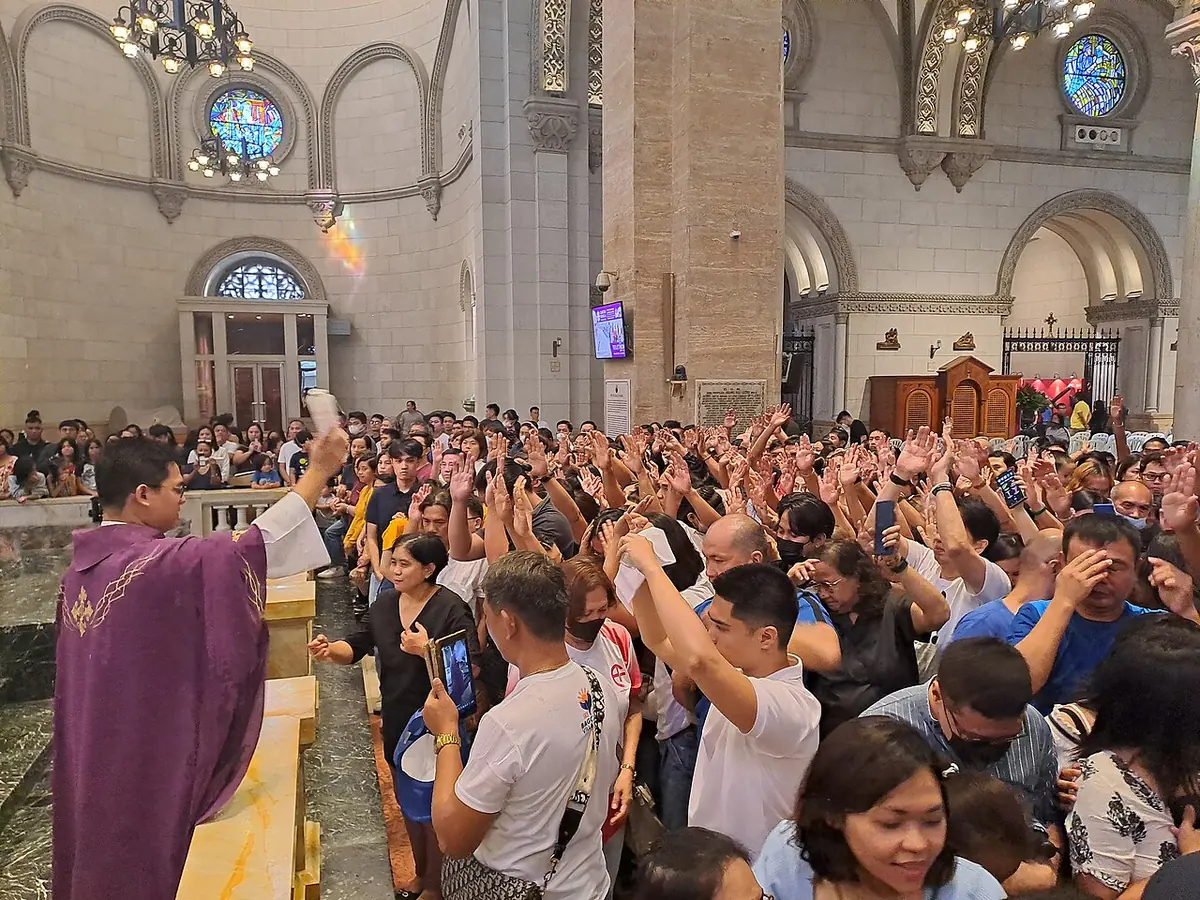
The water is carried in a small bucket, the aspersorium, and the priest walks through the church sprinkling the people as the choir sings.

At home
Holy water belongs in every Catholic home. We can bless ourselves with it when we get up and before we go to bed, trace a cross on our children's foreheads as we put them to sleep, and sprinkle each room when we pray for God's protection over the household. At Epiphany, families have their homes blessed with holy water and chalk (see our page on the Epiphany house blessing).
For the sick and the dying
We bless the sick with holy water and pray for them. A priest who comes to anoint or bring Communion to the sick often sprinkles the room first, and the Church uses holy water at funerals, sprinkling the coffin as a sign of the Baptism that began the person's journey to God.
In times of temptation
St. Teresa of Ávila, Doctor of the Church, wrote in her Life: "I know by frequent experience that there is nothing which puts the devils to flight like holy water." She was careful to say where its power comes from: "I have a joy in reflecting that the words of the Church are so mighty, that they endow water with power, so that there shall be so great a difference between holy water and water that has never been blessed."
Lourdes water is not holy water
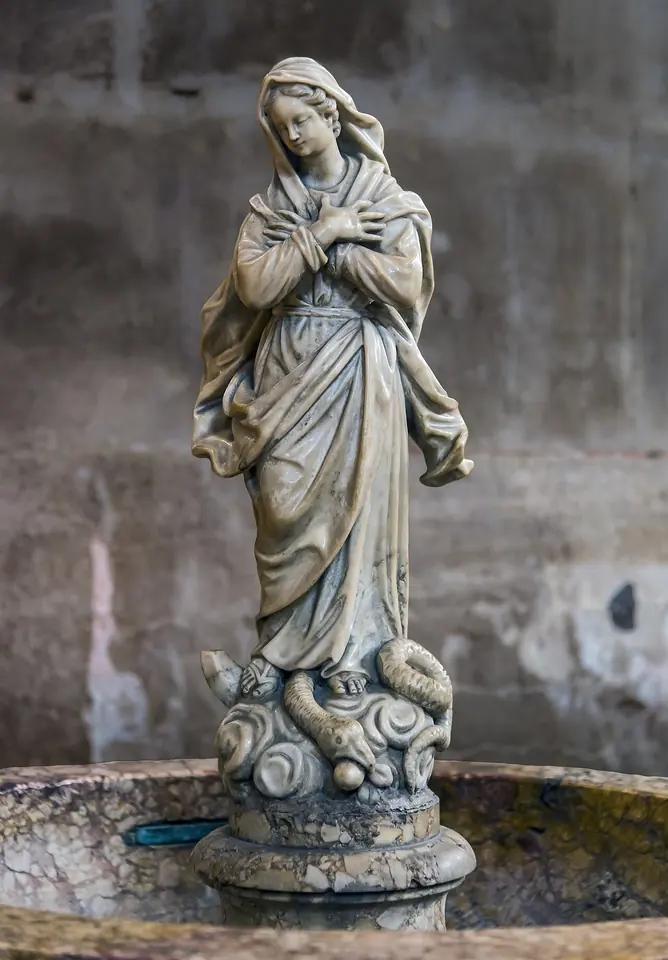
Many people keep water from Lourdes, and it is a precious thing. But it is not the same as holy water. The Sanctuary of Our Lady of Lourdes says plainly that the spring water "has no therapeutic properties or specific properties," and "it is not holy water: water from the Spring can only become holy through the action of a priest." Pilgrims drink and wash in it because Our Lady told St. Bernadette, "Go to the spring, drink of it and wash yourself there." Bernadette herself said, "We must have faith, we must pray: this water will have no virtue without faith!"
So Lourdes water is a sign of pilgrimage and of Our Lady's call to prayer and penance; holy water is water blessed by the Church. A priest can bless Lourdes water, and then it is both.

How to get holy water
Lay people cannot make holy water. The blessing belongs to the Church's ordained ministers, priests and deacons, because it is the Church's prayer, offered in the name of Christ, that makes the water holy. Saying a prayer over water at home is a good thing to do, but it does not make holy water.
Getting it is easy:
- Check your parish. Many churches have a holy water dispenser or tank near the entrance or in the vestibule. Bring a clean bottle and fill it.
- Ask a priest. Bring clean water in a clean container, glass or plastic, and ask him to bless it after Mass or by appointment. Most priests are glad to do it.
- Ask for blessed salt too, if you like. The old rite blesses salt with the water, and many priests will bless salt for the faithful.
- Keep it reverently. Label the bottle, keep it in a clean place, and never use it for cooking or cleaning.
Holy water fonts at home
A small holy water font by the front door or in a bedroom is an old Catholic custom. The Catholic Encyclopedia lists three kinds of fonts: fixed fonts at church doors, portable ones for blessings, and "private fonts, in which holy water is kept in private houses." Home fonts come in porcelain, ceramic, wood and metal, often with a crucifix, an angel or Our Lady above the basin. Hang one where you will pass it every day, keep it filled and clean, and bless yourself as you leave the house or go to bed.

A home font is also a good way to teach children the faith. Let them fill it, show them how to bless themselves, and explain that the water reminds us of the day we were baptized.

When you bless yourself, pray as the Church does at the Asperges, in the words of Psalm 50: "Thou shalt sprinkle me with hyssop, and I shall be cleansed: thou shalt wash me, and I shall be made whiter than snow" (Douay-Rheims).
Frequently asked questions
What is holy water?
Holy water is ordinary water that a priest or deacon has blessed with the Church's prayer. It is a sacramental, a sacred sign that recalls Baptism and asks God's protection and blessing on those who use it with faith.
How do you make holy water?
Only the Church can make holy water, through a blessing given by a priest or deacon. Lay people cannot bless water themselves. But you can bring clean water in a clean container to any priest and ask him to bless it; most are glad to, and many parishes keep a holy water dispenser near the door for the faithful to fill their bottles.
What are the uses of holy water?
We bless ourselves with it entering and leaving church, keep it at home to bless ourselves morning and night, sprinkle our homes, our children and the sick with it, and use it in the blessing of homes, objects and graves. It is also used at the sprinkling rite at Mass, at funerals and in many blessings.
Is Lourdes water holy water?
No. The Sanctuary of Lourdes says the spring water "is not holy water" and "has no therapeutic properties or specific properties," though a priest can bless it like any other water. Pilgrims drink it and wash in it as Our Lady asked St. Bernadette, in faith and prayer.
Can you drink holy water?
Yes, holy water may be drunk with faith and prayer, and some ancient blessings of water speak of the faithful drinking it. Most people use it for blessing themselves and others. It should not be used for ordinary cooking or cleaning, out of respect for the blessing.
How should I dispose of old holy water?
Holy water should never be poured down an ordinary drain. Pour it onto the ground, into a garden or flowerbed, or ask your parish to empty it into the sacrarium, the special sink in the sacristy that drains straight into the earth.
Sources
- Catechism of the Catholic Church, nos. 1667–1679: Sacramentals (no. 1668 on holy water and Baptism)
- Code of Canon Law, canons 1166–1172: Sacramentals
- Catholic Encyclopedia (1910): Holy Water
- Catholic Encyclopedia (1910): Holy Water Fonts
- Catholic Encyclopedia (1912): Salt
- General Instruction of the Roman Missal, no. 51 (blessing and sprinkling of water)
- Congregation for Divine Worship, Directory on Popular Piety and the Liturgy (2001), no. 150 (Easter water)
- St. Teresa of Jesus, The Life of St. Teresa, translated by David Lewis (1904), chapter 31 (Christian Classics Ethereal Library)
- Sanctuary of Our Lady of Lourdes: The water of Lourdes