Jacques Fesch

Jacques Fesch (1930–1957) was a young Frenchman who killed a Paris police officer, Jean-Baptiste Vergne, while fleeing a robbery in 1954. In La Santé prison he returned to the Catholic faith, wrote letters and a journal of deep prayer, and was guillotined on October 1, 1957, kissing the crucifix. A diocesan inquiry into his life opened in Paris in 1987, so he is a Servant of God, not a saint.
Jacques Fesch killed a man. He was twenty-three, idle, spoiled and without faith when he shot a Paris police officer while running from a robbery he had botched. Three and a half years later, at twenty-seven, he walked to the guillotine at La Santé prison, having made his confession and received Communion, asking for the crucifix. In between, alone in a cell, he met Christ, and the letters he wrote there have led many people back to God. The Church calls him Servant of God, and his cause for beatification was opened in Paris in 1987.
His story is not comfortable, and it should not be told as if it were. A man named Jean-Baptiste Vergne died, and a family was left to grieve him. We remember him first and pray for him. And then we look at what the grace of God did in the soul of the man who killed him.
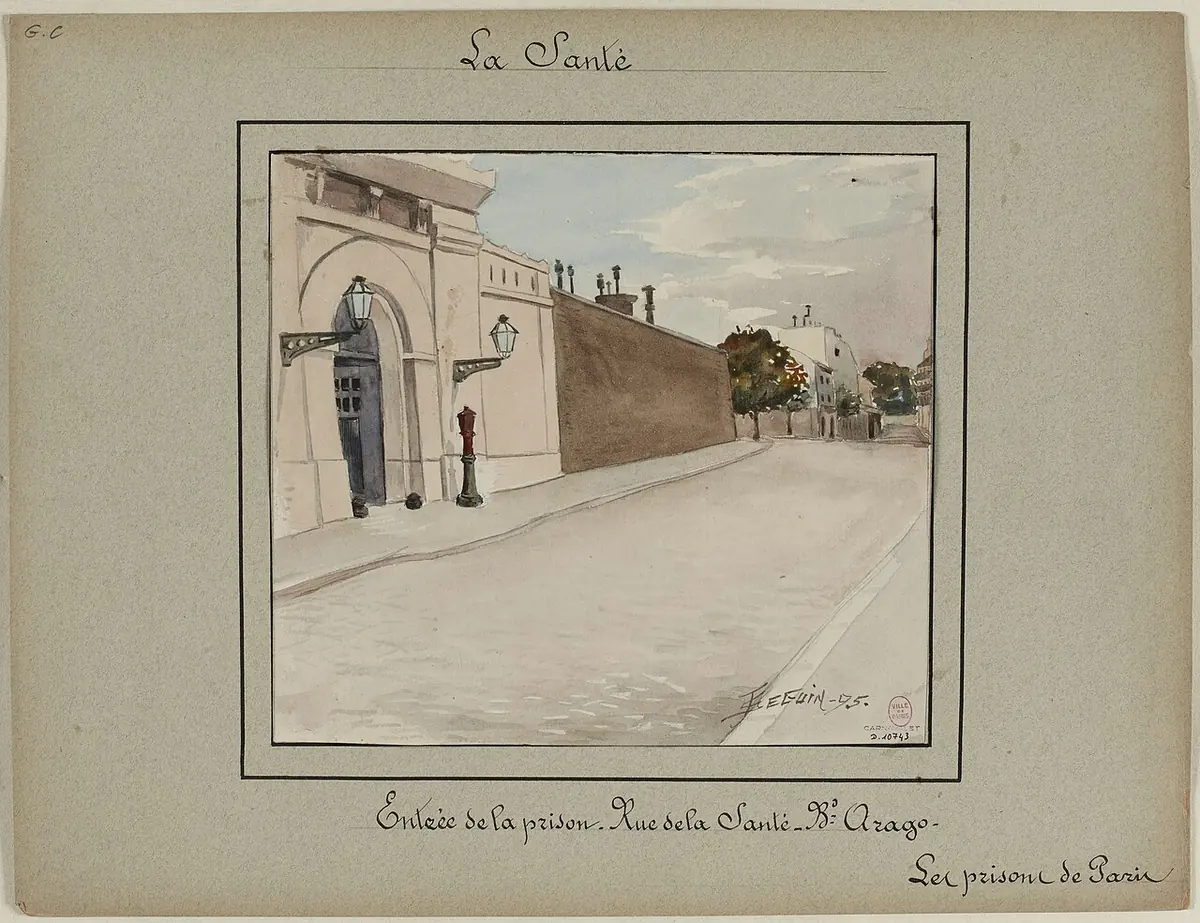
Who was Jacques Fesch?
Jacques Fesch was born on April 6, 1930, in Saint-Germain-en-Laye, west of Paris, the youngest of three children. His father, Georges, was a Belgian-born bank director, a gifted pianist and a firm atheist, cold toward his son. His mother, Marthe, was devout and indulged the boy. The marriage was unhappy and the home was tense. Jacques was baptized and raised Catholic, but he drifted from the faith early.
He was a poor student who left school without his diploma. He did his military service in Germany. In 1951 he married Pierrette Polack in a civil ceremony, and their daughter Véronique was born that July. He worked for a time in a bank and in his father-in-law's business, lost both jobs, and spent his mother's money on a sports car. He later had a son, Gérard, with another woman, a child he never knew.
He dreamed of escape. He read the books of the French yachtsman Alain Gerbault and ordered a sailboat to sail to the South Seas. When his father refused to pay for it, he decided to get the money another way.
February 25, 1954
On the evening of February 25, 1954, Jacques walked into a money changer's office on the Rue Vivienne, near the Paris stock exchange, with his father's revolver. He struck the owner, Alexandre Silberstein, with the gun and took the cash, but the alarm was raised. As he ran, a police officer, Jean-Baptiste Vergne, aged thirty-five, ordered him to stop. Fesch, who had lost his glasses, turned and fired. Vergne died on the spot. Fesch wounded a passerby as he fled into the Métro, where he was caught.
At first he showed no remorse, only regret at being caught. He was locked in solitary confinement at La Santé to wait for his trial.

His conversion in La Santé prison
Three people would not give up on him. His lawyer, Paul Baudet, a devout Catholic who went to Mass every day, visited him for hours each week and talked with him about suffering, punishment and redemption. Jacques called him, half mocking, "God's panther." The prison chaplain, Fr. Devoyod, a Dominican, kept coming back after being sent away and gave him books to read. And a young Benedictine monk, Brother Thomas, who had known Pierrette since childhood, began writing to him out of simple charity.
In October 1954 his mother sent him a popular book on the apparitions of Our Lady of Fatima. He read the Gospels and the lives of the saints. He began to pray, "ever so little," he admitted. And then, toward the end of his first year in prison, the night of February 28 to March 1, 1955, by the usual account, something broke open. He wrote:
Within the space of a few hours I came into possession of faith, with absolute certitude. I believed.... Grace had come to me. A great joy flooded my soul, and above all, a deep peace. In a few instants, everything had become clear.

A cell like a cloister
From then on he lived his cell almost as a monk lives in his cloister. He went to confession, received Communion more and more often until it was nearly daily, and read deeply. He came to love St. Thérèse of Lisieux, the young Carmelite who had prayed as a girl for the conversion of a condemned murderer, Henri Pranzini, and received as her sign that he kissed the crucifix before he died.
The conversion did not make prison easy. "Without God," he wrote to Brother Thomas, "the cell would be such a pit of darkness and despair that a person could easily rot away or else turn into a wild beast." He went through long dark nights of the soul, fear and temptation as well as joy. What changed was that he now saw his crime, and himself, in the light of Christ. "If I tremble at it," he wrote of his coming execution, "it is not out of physical fear but because I understand better now all the purity of Christ as contrasted with my meanness. In spite of all that is going to happen to me, I shall only be saved by grace, grace alone."

Reconciled with his family
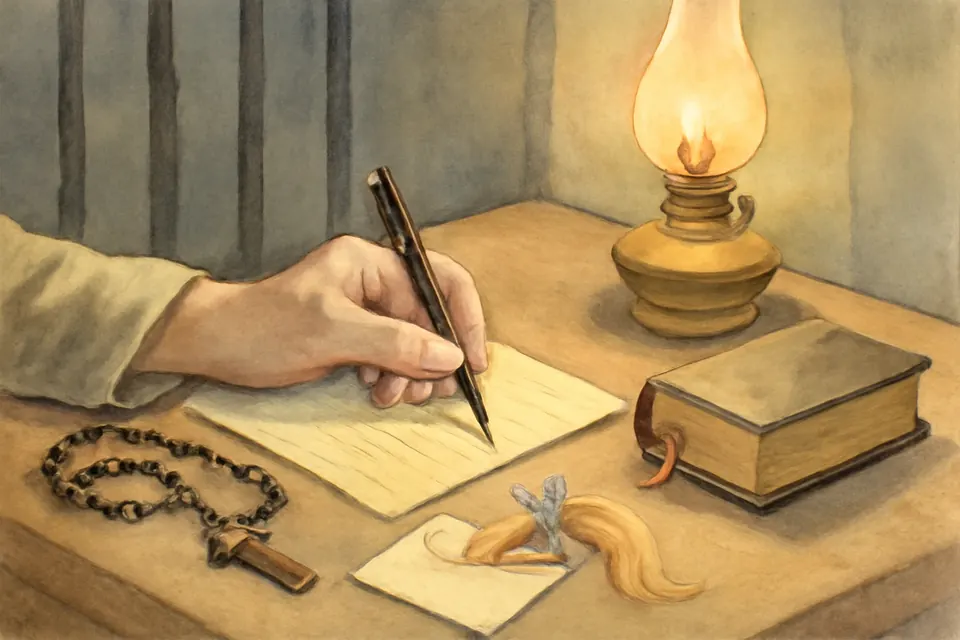
His love for the family he had neglected grew in prison. He wrote tenderly to his wife and to her mother, whom he called "Dear Mama." A month before his death he received a few locks of his little daughter's hair: "What beautiful hair she has! So fine, so blond, so soft to touch! I really feel as if I had my little girl in my cell." For Véronique he began a spiritual journal in the last two months of his life, so that she would one day know who her father had become. He also wrote of his son Gérard, whom the law did not recognize as his: let him know, he said, that he was his son by blood, and "his name is engraved in my heart."
On the eve of his execution he and Pierrette were married in the Church, completing the civil marriage of 1951.
The trial and the guillotine
His trial at the Paris assize court opened on April 3, 1957. On April 6, his twenty-seventh birthday, the jury sentenced him to death. His plea for clemency was refused. Two days before the end he wrote to Brother Thomas: "No harm shall come to me, and I shall be carried straight to paradise with all the gentleness bestowed upon a newborn child."
On his last night, Fr. Devoyod reported, Jacques slept, woke, asked for a light "because I have to get ready at once," made his bed and took up his missal. The chaplain heard his last confession and gave him Communion. He refused the customary glass of rum and cigarette. At the scaffold, early on the morning of October 1, 1957, Jacques said, "The crucifix, Father, the crucifix," and kissed it many times. "These were his last words," the chaplain wrote. "He died a great Christian."
October 1 is now the feast of St. Thérèse of Lisieux.
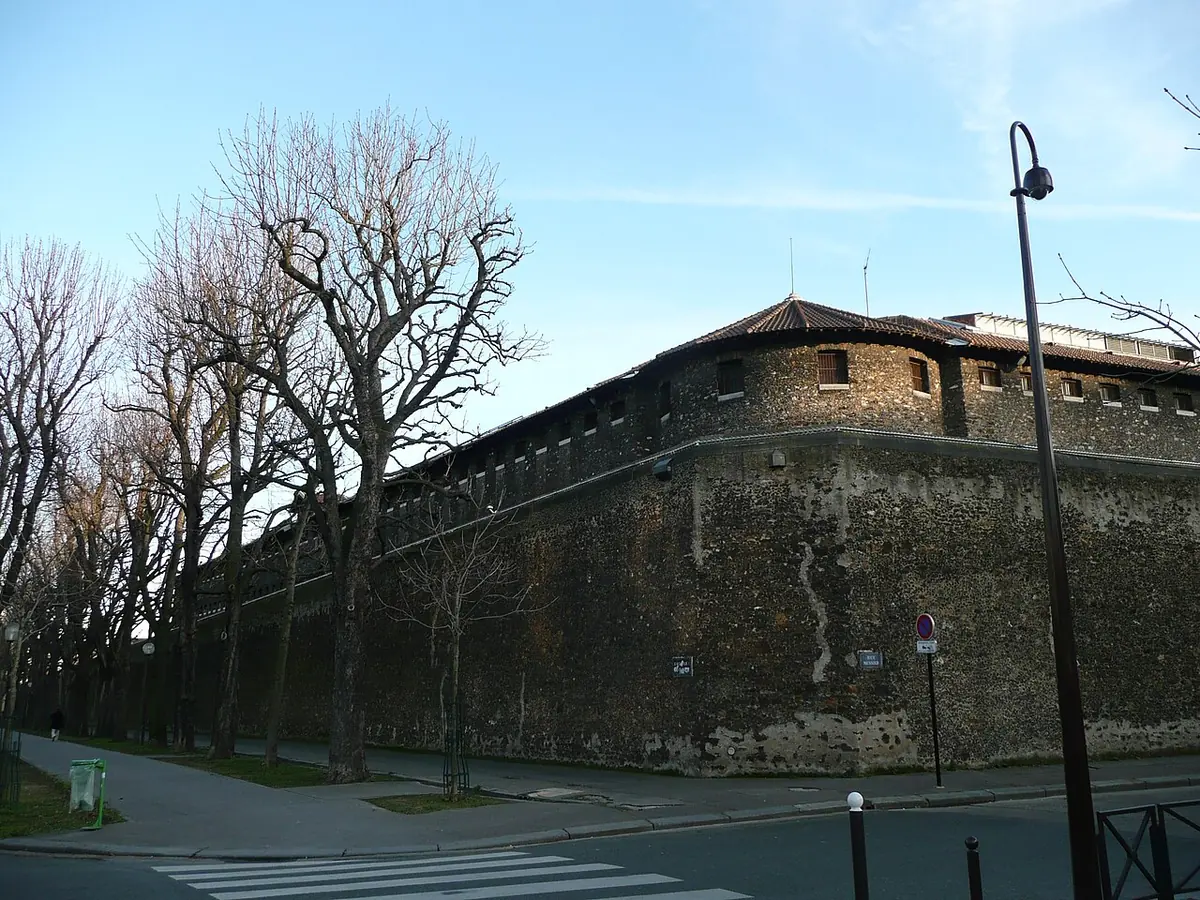
Is Jacques Fesch a saint? His cause
Not yet. Here is where things stand.
- His writings. His widow, Pierrette, and his daughter, Véronique, worked for years to have his letters published, helped by Fr. Augustin-Michel Lemonnier and a Carmelite nun, Sister Véronique. Lumière sur l'échafaud appeared in 1971, and the prison journal in 1989 as Dans cinq heures je verrai Jésus ("In five hours I will see Jesus"), named for its last line.
- 1987. On September 21, 1987, Cardinal Jean-Marie Lustiger, Archbishop of Paris, opened a diocesan inquiry into his life. Jacques Fesch has been called a Servant of God since then.
- Since then. In 2020 his son Gérard said that the documents had been gathered, but that the miracle canon law requires "has not been fulfilled to this day." We have found no later report of a decree of heroic virtue.
A cause does not excuse a crime, and the Church will judge Jacques Fesch's holiness, not his innocence. Many Catholics have called him a modern "good thief," after St. Dismas, who heard on his own cross, "This day thou shalt be with me in paradise." Read more about the steps of a cause on our pages on Venerable and Servant of God and how someone becomes a saint.
The French state has made its own, separate judgment. Gérard Fesch asked the courts to restore his father's honor. A law of 2020 made such a request possible for people executed under the old death penalty, but on October 15, 2024, the Court of Cassation rejected it, ruling that the signs of amendment were not sufficient. The decision is final.
Praying with Jacques Fesch
There is no feast day or public veneration of a Servant of God. But we may ask Jacques Fesch, privately, to pray for us, and his life gives us much to pray about.
Let us pray first for Jean-Baptiste Vergne and his family, and for all victims of violent crime and those who mourn them. Let us pray for prisoners, especially those who have done terrible things and think no one, not even God, could forgive them. Let us pray for prison chaplains, lawyers, and the faithful friends who write to people in prison and never give up on them. And let us ask Jacques to pray for parents and children estranged from one another, as he once was from his own.
His friends in heaven are the saints of mercy: St. Dismas, St. Thérèse, who taught him her "little way," St. Augustine, who knew what it was to be lost, and St. Faustina, the apostle of Divine Mercy. The Divine Mercy Chaplet and the Act of Contrition are fitting prayers to pray with him.
Frequently asked questions
Is Jacques Fesch a saint?
No. He is a Servant of God, the first title in a cause for canonization. Cardinal Jean-Marie Lustiger, Archbishop of Paris, opened an inquiry into his life on September 21, 1987. The Church has not declared him Venerable, and no miracle has been approved. His son Gérard said in 2020 that the documents had been gathered but that the miracle the Church requires had not been found.
What did Jacques Fesch do?
On February 25, 1954, he tried to rob a money changer, Alexandre Silberstein, near the Paris stock exchange to pay for a sailboat he hoped to take to the South Seas. As he fled, he shot and killed Jean-Baptiste Vergne, a 35-year-old police officer, and wounded a passerby. He was sentenced to death in April 1957 and executed on October 1, 1957, at La Santé prison.
How did Jacques Fesch convert?
Slowly, and then all at once. His lawyer, Paul Baudet, a daily communicant, the prison chaplain, Fr. Devoyod, a Dominican, and a young Benedictine monk, Brother Thomas, who wrote to him, all patiently helped him. His mother sent him a book on Our Lady of Fatima. Toward the end of his first year in prison, he wrote, "within the space of a few hours I came into possession of faith, with absolute certitude."
What were Jacques Fesch's last words?
According to Fr. Devoyod, the chaplain who stood beside him at the guillotine, his last words were "The crucifix, Father, the crucifix," and he kissed it many times. The last line of the journal he wrote for his daughter is usually given as "In five hours I will see Jesus."
What books did Jacques Fesch write?
He wrote no books, only letters and a prison journal. They were published after his death, first as Lumière sur l'échafaud (1971), in English Light Over the Scaffold, and later as Cellule 18 and the journal Dans cinq heures je verrai Jésus (1989). His complete works appeared in French in 2015.
Has France pardoned or rehabilitated Jacques Fesch?
No. His son Gérard asked the French courts to restore his father's honor. A 2020 law made such a request possible for people executed under the death penalty, but on October 15, 2024, the Court of Cassation rejected it, finding that his signs of amendment were not sufficient. The court's judgment is final and is a separate matter from the Church's cause.
Sources
- Sister Mary Thomas Noble, O.P., On Death Row, Peace and Light Came to Him (National Catholic Register, August 24, 1997). Fr. Devoyod's report of the execution and last words; quotations from the prison letters
- An unlikely saint: Jacques Fesch was a murderer; now he's up for beatification (Aleteia, July 14, 2021). The inquiry opened by Cardinal Lustiger on September 21, 1987; the publication of his writings
- Gérard Fesch : « Mon père montre que tout homme peut se racheter, se transformer » (Aleteia, February 27, 2020). The state of the cause in 2020 (no miracle yet) and Jacques's words about his son
- La Cour de cassation rejette la réhabilitation de Jacques Fesch, condamné à mort en 1957 (Le Club des Juristes, October 2024). The victim's name and age, and the court's ruling of October 15, 2024