Act of Contrition
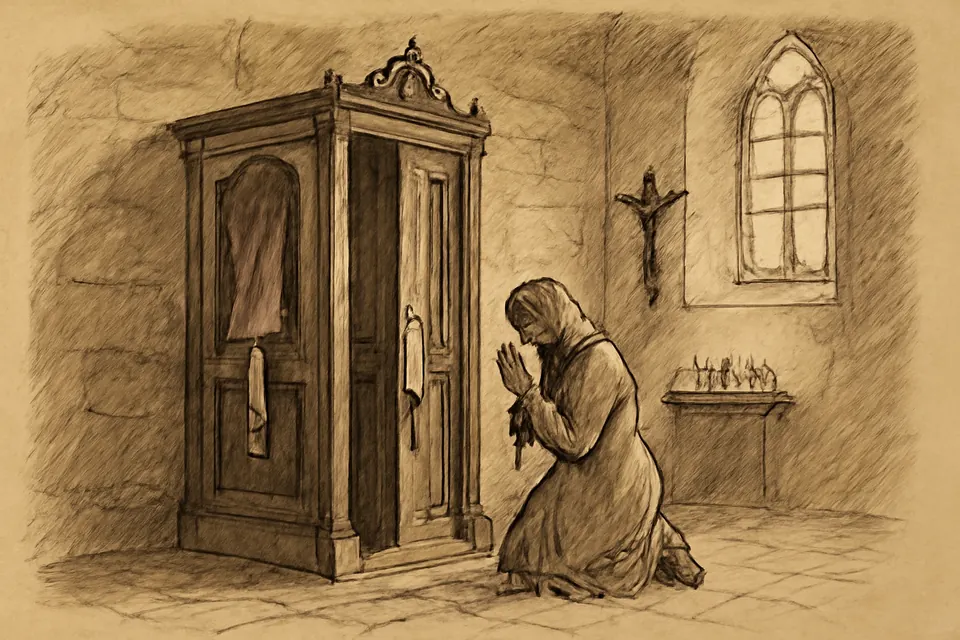
The Act of Contrition is the short Catholic prayer of sorrow for sin that we pray in confession, at night and whenever we fall: "O my God! I am heartily sorry for having offended Thee." It tells God we are sorry, names why (fear of losing heaven, and above all love of Him), and promises with His grace to confess, do penance and amend our lives.
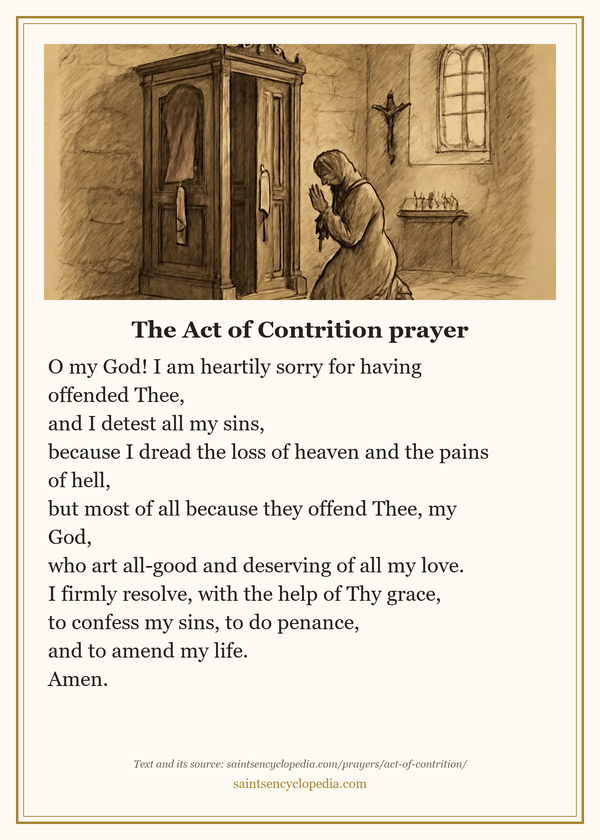 Free printable prayer card 5 × 7 inch PDF, ready to print, frame or tuck in a missal.
Most of us learned it as children, kneeling in a pew before our first confession, and many of us can still say it half asleep. The Act of Contrition is the Church's simplest prayer of sorrow: we tell God we are sorry, we say why, and we promise, leaning on His grace, to do better. Below is the traditional text word for word, then the older and shorter forms our grandparents prayed, the Latin, what perfect and imperfect contrition mean, when to pray it, and how to teach it to children.
The Act of Contrition prayer
This is the traditional Act of Contrition as the bishops of the United States gave it to the whole country in the Baltimore Catechism (1885). The Manual of Prayers that the same bishops ordered for the laity prints it word for word in its morning prayers (1888), adding the Amen:
O my God! I am heartily sorry for having offended Thee, and I detest all my sins, because I dread the loss of heaven and the pains of hell, but most of all because they offend Thee, my God, who art all-good and deserving of all my love. I firmly resolve, with the help of Thy grace, to confess my sins, to do penance, and to amend my life. Amen.
Let us pray it slowly now, once, as if for the first time. It takes about twenty seconds.
Many parishes and prayer cards print a second traditional wording that ends differently: "I detest all my sins because of Thy just punishments," and "I firmly resolve, with the help of Thy grace, to sin no more and to avoid the near occasion of sin." The Vatican's Compendium of the Catechism (2005) prints that form in its appendix of common prayers. Both are the same prayer in substance, and either one is right in the confessional.
What the Act of Contrition says, line by line
The prayer is short, but it is built with care. It follows the Church's own definition of contrition, which the Catechism of the Catholic Church (no. 1451) takes from the Council of Trent: "sorrow of the soul and detestation for the sin committed, together with the resolution not to sin again." Every part of that definition is in the prayer.
"O my God! I am heartily sorry for having offended Thee." We speak to God directly, and we speak from the heart. The Baltimore Catechism (no. 197) says our sorrow must be "interior," meaning "it should come from the heart, and not merely from the lips." We are sorry first of all because sin is an offense against a Person, not because a rule was broken.
"And I detest all my sins." Sorrow is not only a feeling. It is a turning of the will against what we did. "All" matters too: the old catechism calls true sorrow "universal," sorry for every mortal sin without exception, not just the ones we are embarrassed by.
"Because I dread the loss of heaven and the pains of hell." Here the prayer admits a plain and honest motive. Sin really does put heaven at risk. The Church never despises this fear; she calls it a gift.
"But most of all because they offend Thee, my God, who art all-good and deserving of all my love." This is the turn the whole prayer has been waiting for. We climb from fear to love. We are sorry most of all because God is good and we have treated Him as if He were not.
"I firmly resolve, with the help of Thy grace, to confess my sins, to do penance, and to amend my life." Contrition looks forward. The resolve has three parts: to bring our sins to the sacrament, to make satisfaction, and to change. "With the help of Thy grace" keeps the promise humble. We cannot promise God we will never fall again; we promise to try, and we ask Him to hold us up.
Pope Francis made the same point to a gathering of confessors in March 2024. The resolve, he said, expresses "an intention, not a promise," because "none of us can promise to God to sin no more"; what is required "is not a guarantee of impeccability, but a current resolve, made with a righteous intention at the moment of confession."
Perfect and imperfect contrition
The Act of Contrition holds two kinds of sorrow side by side, and the Church has names for both.
Perfect contrition is sorrow that "arises from a love by which God is loved above all else" (Catechism 1452). The Baltimore Catechism (no. 203) puts it simply: perfect contrition "fills us with sorrow and hatred for sin, because it offends God, who is infinitely good in Himself and worthy of all love." This is the "most of all" line of the prayer.
Imperfect contrition, also called attrition, is sorrow born "of the consideration of sin's ugliness or the fear of eternal damnation and the other penalties threatening the sinner" (Catechism 1453). This is the "dread the loss of heaven" line. The Catechism is clear that it too "is also a gift of God, a prompting of the Holy Spirit."
What each one does:
- Perfect contrition "remits venial sins; it also obtains forgiveness of mortal sins if it includes the firm resolution to have recourse to sacramental confession as soon as possible" (Catechism 1452).
- Imperfect contrition "cannot obtain the forgiveness of grave sins" by itself, "but it disposes one to obtain forgiveness in the sacrament of Penance" (Catechism 1453).
So the old catechism's answer still holds: "Imperfect contrition is sufficient for a worthy confession, but we should endeavor to have perfect contrition" (Baltimore Catechism no. 205). No one needs to wait for perfect feelings before going to confession. We come with the sorrow we have, and the sacrament completes it.
Feelings, in fact, are not the measure. Contrition is in the will. Someone can be dry-eyed and truly contrite, and someone else can weep and still have no intention of changing. If you are sorry because you have offended God and you mean to avoid the sin, you have what the prayer asks.
How to stir up contrition
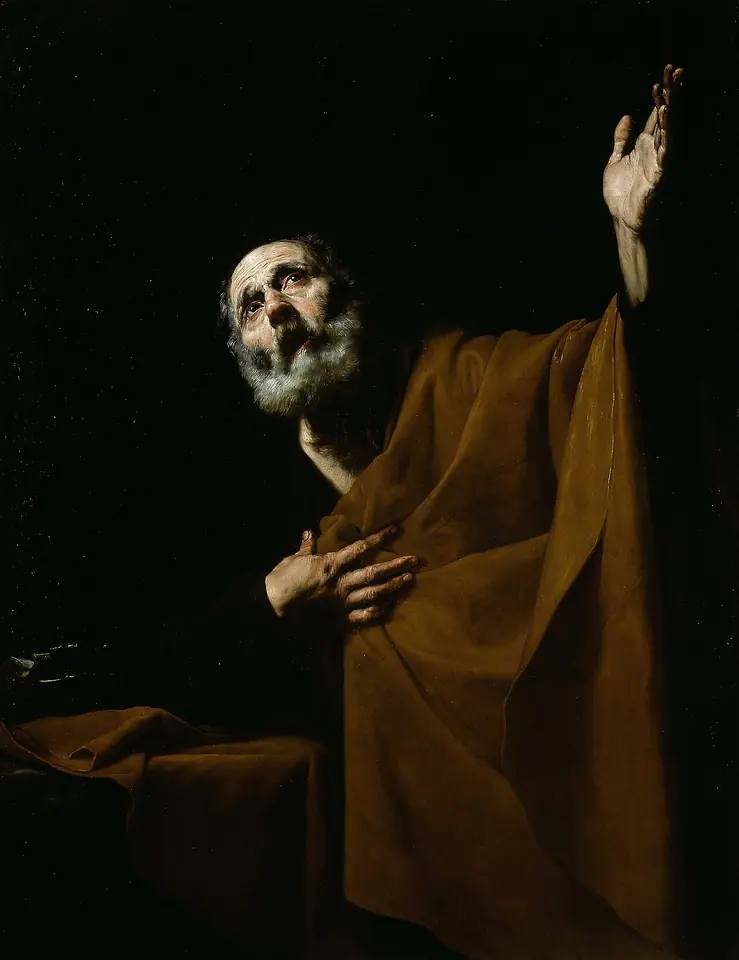
The 1888 Manual of Prayers gives a short set of "Considerations to Excite Contrition" for the moments before confession. Think of who God is, and how good He has been to you. Look at Christ on the cross and see what sin cost. Remember that one unrepented mortal sin would be enough to lose heaven. Its second consideration ends with a prayer we can borrow:
O most Loving God, O infinite Goodness, I repent of having offended Thee; behold me at Thy feet. O my Father, my Creator, my Benefactor, grant me the grace of a true repentance, and the blessing of a free pardon, for Thy dear Son's sake.
The same book also gives a one-line prayer to Our Lady for this grace: "O Mary Immaculate, Mother of Fair Love: obtain for me that love of God, which is so necessary for true contrition. Amen."
Where the Act of Contrition comes from
There is no single author of the English Act of Contrition, and no one knows who first put the exact words of the Baltimore form on paper. What we can trace is how it grew.
The idea is as old as the Psalms and the Gospel: David's "Have mercy on me, O God" after Nathan's rebuke, and the publican in the Temple who would not lift his eyes but struck his breast and said, "O God, be merciful to me a sinner" (Luke 18:13). The Council of Trent (1551) defined contrition in the words the Catechism still uses, and after Trent, Catholic prayer books began giving the faithful short, ready-made "acts" of faith, hope, charity and contrition to say each morning and evening.
In the English-speaking world the most influential of those books was The Garden of the Soul by Bishop Richard Challoner, first published in 1740, which English Catholics used for more than a century. Its preface (in the 1843 edition) says that "almost every prayer-book subsequently composed has more or less been an imitation of it." Challoner's own Act of Contrition is printed under "Other traditional forms" below.

The form most Americans know comes from the Third Plenary Council of Baltimore. The bishops met in 1884 and ordered a single catechism for the country, approved on April 6, 1885. It put the Act of Contrition among the prayers every Catholic should know, between the Confiteor and the grace before meals, and the Council's Manual of Prayers (1888) printed the same text. For generations of children in parish schools, this was simply "the" Act of Contrition, and the questions about contrition that went with it (nos. 195–207 in Catechism No. 2) were learned by heart.
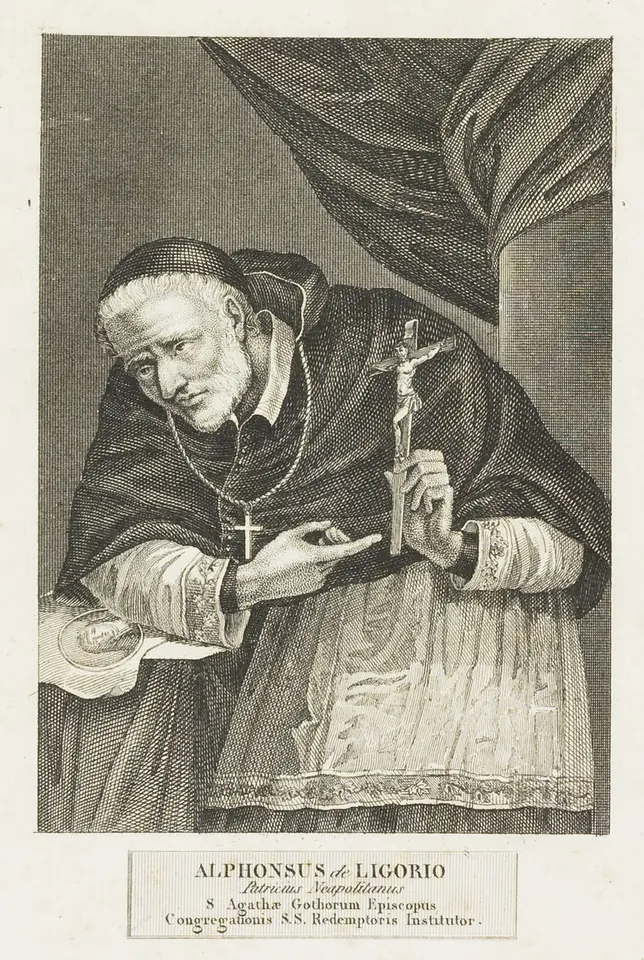
In Italy the Act of Contrition, the Atto di dolore, has a known author. Pope Francis, speaking to confessors in 2024, called it "a simple and rich prayer, which belongs to the heritage of the holy faithful People of God," and added: "its author is the great Saint Alphonsus Maria de' Liguori, master of moral theology." The English form that says "because of Thy just punishments" and "to avoid the near occasion of sin" follows the same pattern as the Italian and the Latin, and is the one quoted in the English text of the Pope's address. St. Alphonsus Liguori, who spent his life preaching parish missions and hearing confessions in the villages around Naples, is a fitting father for the prayer.
Other traditional forms of the Act of Contrition
The Church has never tied contrition to one set of words. Here are the forms Catholics prayed before the modern rite, each from a public-domain prayer book.
Bishop Challoner's Act of Contrition (The Garden of the Soul)
This is the act English Catholics said with the acts of faith, hope and charity, as printed in the 1843 edition of Challoner's Garden of the Soul:
O my God, for the sake of thy sovereign goodness, and infinite perfection, which I love above all things, I am exceedingly sorry from the bottom of my heart, and am grieved for having offended, by my sins, this thy infinite goodness; and I firmly resolve, by the assistance of thy grace, never more to offend thee for the time to come, and carefully to avoid the occasions of sin.
Notice that it speaks only of love. There is no mention of hell; it is an act of perfect contrition from start to finish.
The evening Act of Contrition (Manual of Prayers, 1888)
The Manual's evening prayers follow the examination of conscience with a second, gentler form:
O my God, I heartily repent, and am grieved that I have offended Thee, because Thou art infinitely good, and sin is infinitely displeasing to Thee. I humbly ask of Thee mercy and pardon, through the infinite merits of Jesus Christ. I resolve, by the assistance of Thy grace, to do penance for my sins, and I will endeavor never more to offend Thee.
A longer act of contrition (the Rosary of the Seven Dolours)
The Raccolta of 1910 opens the Servite Rosary of the Seven Dolours of Our Lady with a longer act of sorrow. It begins:
My Lord, Thou who alone art most worthy of my love, behold me standing before thy Divine Presence utterly overwhelmed by the thought of the many grievous injuries I have done Thee. I ask thy pardon for them with my whole heart, repenting of them purely for love of Thee, and at the thought of thy great goodness hating and loathing them above every evil of this life. As I would rather have died a thousand times than have offended Thee, so now I am most firmly resolved to die a thousand deaths rather than offend Thee again.
It goes on to ask Our Lady, "Mother of mercy and Refuge of sinners," to obtain pardon, and leads into the first sorrow.

A short Act of Contrition
The shortest traditional form in the Raccolta (1910) comes at the start of the Chaplet of the Holy Ghost. It is easy to memorize and good for any moment of the day:
I grieve, O my God, for having sinned against Thee, because Thou art so good; and with the assistance of thy grace I will never sin again.
Fr. Thomas Kinkead's Explanation of the Baltimore Catechism (1891) reduces the long prayer to its "substance" and recommends using it as an aspiration during the day, "when we probably would not think of saying the long forms":
O my God! I am very sorry for all my sins, because by them I have offended Thee, and with Thy help, I will never sin again.
And the shortest of all is the publican's prayer from the Gospel: "O God, be merciful to me a sinner."
The modern Act of Contrition
After the Second Vatican Council, Rome issued a revised rite for the sacrament, the Ordo Paenitentiae (1973), and its English translation, the Rite of Penance, followed in 1974. It offers the penitent a choice of prayers of sorrow, many drawn from Scripture. The best known begins, "My God, I am sorry for my sins with all my heart," and goes on to confess our sins of doing wrong and failing to do good, to resolve to do penance and avoid what leads us to sin, and to ask mercy in the name of Jesus, who suffered and died for us. Today the U.S. bishops' prayer page offers the traditional prayer in modern English ("O my God, I am heartily sorry for having offended you"), a longer form from the newer English translation of the rite, the Order of Penance, and the Jesus Prayer: "Lord Jesus, Son of God, have mercy on me, a sinner."
The modern English texts belong to the International Commission on English in the Liturgy (ICEL) and are still under copyright, so we quote only a line here. You will find them on the cards in most confessionals. All of them are approved, and none is better than the others. Pray the one you know.
The Act of Contrition in Latin
The Latin prayer, Actus contritionis, matches the second traditional form ("Thy just punishments... the near occasion of sin"). It begins:
Deus meus, ex toto corde paenitet me omnium meorum peccatorum...
"My God, I am sorry with all my heart for all my sins." The full Latin text is printed in the appendix of common prayers in the Compendium of the Catechism of the Catholic Church (2005), on the Vatican website, next to the English. For the Our Father, Hail Mary and other prayers in the Church's own language, see our page of Latin prayers.
When to pray the Act of Contrition
In confession
After you have confessed your sins and the priest has given you counsel and a penance, he will ask you to pray an act of contrition. Say it aloud, simply. Then he gives absolution. The Baltimore Catechism (no. 230) adds a lovely instruction: "While the priest is giving us absolution we should from our heart renew the Act of Contrition." For the full steps, and a printable list of questions to prepare with, see our examination of conscience.

Every night
The Church's old evening prayers always end the day the same way: a short look back at the day, then the Act of Contrition. The 1888 Manual places it right after a prayer for light: "enlighten my mind, that I may know the sins which I have this day committed in thought, word, or deed, and give me the grace of true contrition." If the day's review turns up a serious sin, make an act of perfect contrition and plan to go to confession soon. Then sleep in peace. Our page of Catholic night prayers gives the whole traditional order.
Right after a fall
We do not need to wait until night. The moment we realize we have sinned, we can turn back with the short act: "I grieve, O my God, for having sinned against Thee, because Thou art so good." Many saints made this a habit, the way a child says "I'm sorry" right away instead of waiting for bedtime. For more prayers of this kind, see our Catholic prayer for forgiveness.
In danger of death
This is where the Act of Contrition matters most. If someone is dying and no priest can come, an act of perfect contrition, with the desire to confess if it were possible, reconciles the soul to God (Catechism 1452). Pope Francis said the same thing during the lockdowns of March 2020, to people who could not reach a priest before Easter: "Do what the Catechism says. It is very clear. If you don't find a priest to go to confession, speak to God. He is your Father," and "ask His forgiveness with all your heart with an Act of Contrition, and promise Him, 'afterward I will go to confession, but forgive me now.'"
So pray it with the dying. Say it slowly into their ear, even if they can no longer answer. The 1888 Manual's devotions for the sick give an act of contrition in words from Scripture, ending: "Lord, be merciful to me a sinner; Holy Jesus, Son of the Living God, have mercy upon me." Our page of prayers for the dying gives more.

The Good Thief is the patron of this moment. St. Dismas had nothing left to offer but sorrow and trust, and it was enough: "Lord, remember me when thou shalt come into thy kingdom."

Act of Contrition for kids
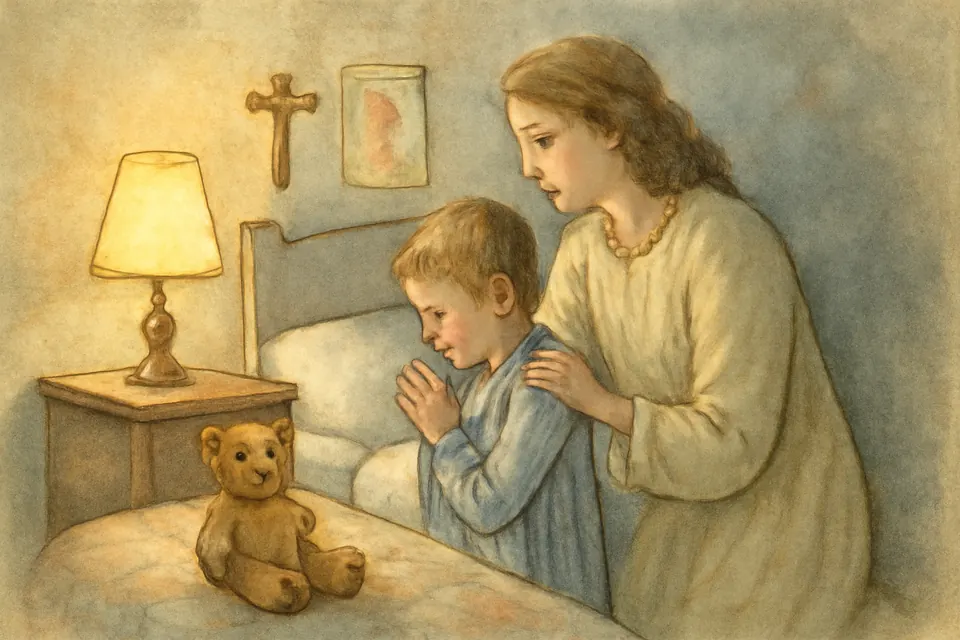
Children can learn the full prayer, and most parishes still teach it before First Confession, usually around the age of seven. But little ones do better starting small. Here are public-domain prayers that grow with them.
For the youngest, the short act from the Raccolta, or this prayer "before entering the confessional" from Father Finn's Prayer Book for Catholic Youth, which later printings of the Baltimore Catechism No. 1 included for First Communion classes:
O God, I am very sorry for all my sins. I promise that I will try to be good and never again to hurt You by sin. Dear Jesus, help me. Mother of God, pray that I may please Your Son by true sorrow for my sins.
Before examining their conscience, the same book gives a prayer to the Holy Spirit:
O Holy Spirit, help me to know all my sins. Help me to remember that Jesus died for me. Help me to make a good confession and I promise that I will try never to sin again.
At bedtime, the same First Communion catechism tells children: "Now think how you have acted during the day. Are there any big sins on your soul? Any little sins? Try to tell Jesus how sorry you are for all your sins, and say the Act of Contrition."
How to teach the Act of Contrition to children
- Explain it first. Tell them it is how we say "I'm sorry" to God, and that God always forgives when we are truly sorry.
- One line a night. Add a line at bedtime prayers until they have it all. Most children know it in two or three weeks.
- Explain the hard words. "Heartily" means with all my heart. "Detest" means I really don't want to do it again. "Amend my life" means to change and do better. "Penance" is something we do to make up for our sin.
- Pray it together, out loud, every night. Children copy what we do far more than what we tell them.
- Practice confession at home, so the words come easily on the day. Tell them that if they forget, the priest will gladly help. The old children's instructions say just that: "If there is something you don't know how to tell, just say, 'Please help me, Father,' and the priest will help you."

The saints who teach us contrition
The saints were not people who never sinned. They were people who kept turning back.
- St. Peter denied Our Lord three times, "and going forth, he wept bitterly." Tradition holds that he wept at the memory every time he heard a cock crow.
- St. Mary Magdalene, honored in the West as the great penitent, is the patron of all who are sorry for their sins.
- St. Augustine wrote his whole Confessions as one long act of contrition and praise.
- St. Mary of Egypt and St. Margaret of Cortona turned from lives of sin to lives of penance and prayer.
- St. John Vianney and St. Padre Pio heard confessions for hours every day, and both had a gift for moving hard hearts to sorrow.
- St. Ignatius of Loyola taught a daily examen that ends in sorrow and resolve, and St. Francis de Sales urged his readers never to skip it.
Let us ask them to pray for us, that our sorrow may be real and our love may grow.
A prayer to end with
Let us close the way the Church closes every day, with the old words, prayed slowly:
O my God! I am heartily sorry for having offended Thee, and I detest all my sins, because I dread the loss of heaven and the pains of hell, but most of all because they offend Thee, my God, who art all-good and deserving of all my love. I firmly resolve, with the help of Thy grace, to confess my sins, to do penance, and to amend my life. Amen.
For more prayers, browse all Catholic prayers and novenas, or prepare for your next confession with our examination of conscience.
Frequently asked questions
What is the Act of Contrition prayer?
The traditional text, from the Baltimore Catechism (1885), is: "O my God! I am heartily sorry for having offended Thee, and I detest all my sins, because I dread the loss of heaven and the pains of hell, but most of all because they offend Thee, my God, who art all-good and deserving of all my love. I firmly resolve, with the help of Thy grace, to confess my sins, to do penance, and to amend my life. Amen."
What is the short Act of Contrition?
The Raccolta (1910) gives this short act: "I grieve, O my God, for having sinned against Thee, because Thou art so good; and with the assistance of thy grace I will never sin again." Fr. Thomas Kinkead's Explanation of the Baltimore Catechism (1891) gives the substance of the long prayer in one line: "O my God! I am very sorry for all my sins, because by them I have offended Thee, and with Thy help, I will never sin again."
Is there an easy Act of Contrition for kids?
Yes. Young children can start with the short act above, or with this prayer from Father Finn's Prayer Book for Catholic Youth: "O God, I am very sorry for all my sins. I promise that I will try to be good and never again to hurt You by sin." Once they are ready, teach them the full traditional prayer, a line a night.
Do I have to say the Act of Contrition word for word in confession?
No. The Church approves several wordings, and the priest wants sincere sorrow, not a recitation test. What matters is that you are sorry, that you intend not to sin again, and that you say so. If you forget the words, tell the priest; he will lead you through it, or you may simply say, "Lord Jesus, Son of God, have mercy on me, a sinner."
What is the difference between perfect and imperfect contrition?
Perfect contrition is sorrow for sin because it offends God, whom we love above all. Imperfect contrition (attrition) is sorrow for other good reasons, such as sin's ugliness or the fear of hell. The Catechism (1452–1453) teaches that both are gifts of God; imperfect contrition is enough for confession, and perfect contrition obtains forgiveness even of mortal sins when it includes the resolve to confess as soon as possible.
Can an Act of Contrition forgive sins without confession?
An act of perfect contrition forgives venial sins, and also mortal sins if it includes the firm resolution to go to confession as soon as possible (Catechism 1452). It does not replace confession: we still confess any mortal sin before receiving Communion. This is why the Church urges us to pray it in danger of death and every night.
When should Catholics pray the Act of Contrition?
In confession, after the priest gives the penance (the Baltimore Catechism adds that we renew it in our hearts during the absolution); every night after a short examination of conscience; right after any sin; and in danger of death, when no priest can be reached.
What is the Act of Contrition in Latin?
The Latin Actus contritionis begins "Deus meus, ex toto corde paenitet me omnium meorum peccatorum" (My God, I am sorry with all my heart for all my sins). The full Latin text is printed in the appendix of common prayers of the Compendium of the Catechism (2005), on the Vatican website.
Sources
- A Catechism of Christian Doctrine No. 2 (the Baltimore Catechism, approved 1885), Project Gutenberg. the Act of Contrition; questions 195–207 on contrition and 230 on renewing it during absolution
- A Catechism of Christian Doctrine No. 1 (Baltimore Catechism for First Communion classes), with prayers from Father Finn's Prayer Book for Catholic Youth, Project Gutenberg. the children's prayers before examining conscience and before entering the confessional
- Thomas L. Kinkead, An Explanation of the Baltimore Catechism of Christian Doctrine (1891), Project Gutenberg. the "substance" of the Act of Contrition as a short form
- A Manual of Prayers for the Use of the Catholic Laity, prepared by order of the Third Plenary Council of Baltimore (1888), Internet Archive. the Act of Contrition in the morning prayers, the evening form, the Considerations to Excite Contrition, and the act for the sick
- Richard Challoner, The Garden of the Soul (Derby: Richardson and Son, 1843 edition), Internet Archive. Challoner's Act of Contrition among the acts of faith, hope and charity
- The Raccolta, or Collection of Indulgenced Prayers and Good Works (Burns & Oates, 1910), Internet Archive. the short act in the Chaplet of the Holy Ghost and the act of contrition of the Rosary of the Seven Dolours
- Catechism of the Catholic Church, nos. 1450–1460: the acts of the penitent (Vatican)
- Pope Francis, Address to participants in the Course on the Internal Forum, 8 March 2024 (Vatican). names St. Alphonsus Liguori as the author of the Act of Contrition prayed in Italy
- Pope Francis, homily at Santa Marta, 20 March 2020: Return to God and return to the embrace of the Father (Vatican). an act of contrition when no priest can be reached
- Compendium of the Catechism of the Catholic Church (2005), Appendix A: Common Prayers (Vatican). the Latin Actus contritionis