Lent prayers

The best-loved Lent prayers in the Catholic tradition are the Prayer of St. Ephrem, the Prayer before a Crucifix, Psalm 51 (the Miserere), the Stations of the Cross and the Act of Contrition. Below are the full traditional texts, each from a public-domain prayer book or the Douay-Rheims Bible, with where it comes from and how to pray it.
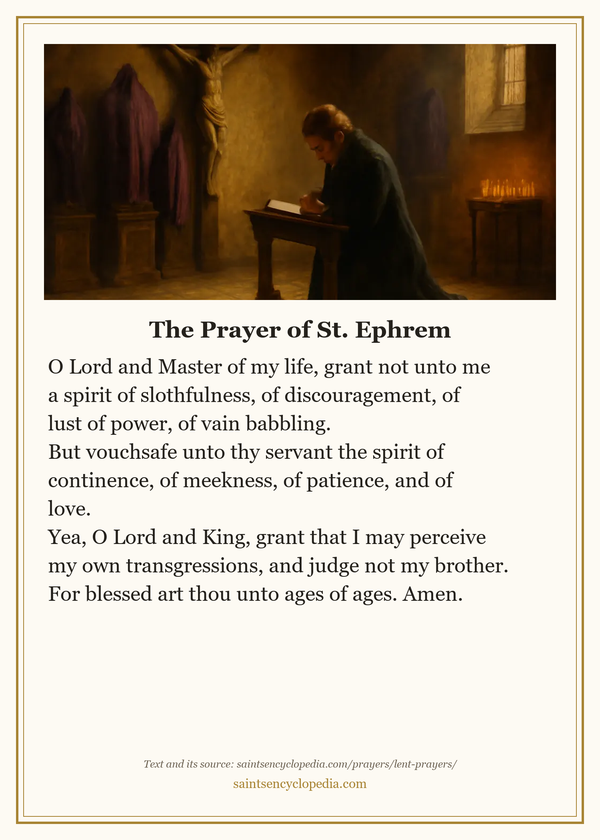 Free printable prayer card 5 × 7 inch PDF, ready to print, frame or tuck in a missal.
These Lent prayers have carried Christians through the forty days for centuries. Each one is printed in full, word for word, from an old prayer book or the Douay-Rheims Bible, with where it comes from and when to pray it. Choose one or two and pray them every day until Easter.
The Prayer of St. Ephrem
This is the Lenten prayer of the Christian East. Orthodox and Eastern Catholic Christians pray it at nearly every weekday service of Great Lent, with a full prostration after each part. This translation is from Isabel Hapgood's Service Book (1906):
O Lord and Master of my life, grant not unto me a spirit of slothfulness, of discouragement, of lust of power, of vain babbling. But vouchsafe unto thy servant the spirit of continence, of meekness, of patience, and of love. Yea, O Lord and King, grant that I may perceive my own transgressions, and judge not my brother. For blessed art thou unto ages of ages. Amen.
The Hapgood rubrics direct a reverence after each petition, then twelve lesser reverences with the words "O God, cleanse thou me, a sinner," then the whole prayer again with one great reverence. At home, a bow or a sign of the cross after each part works well.
Tradition gives the prayer to St. Ephrem the Syrian, the fourth-century deacon of Nisibis and Edessa whom the Church calls the "Harp of the Holy Spirit" and a Doctor of the Church. In three lines it names the sins Lent fights, asks for the virtues that replace them, and ends with the hardest request of all: to see our own sins and stop judging our neighbor's.

Prayer before a Crucifix (En ego)
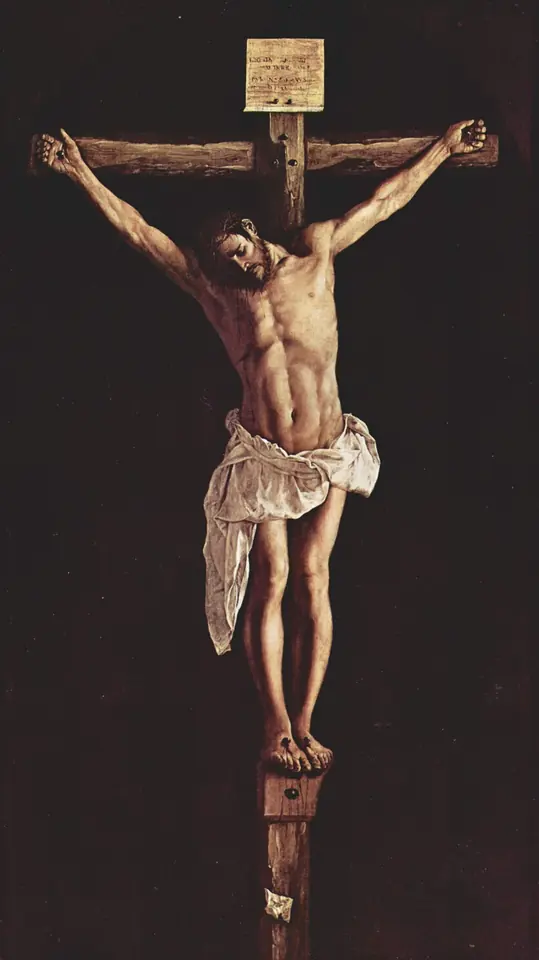
This is the great Lenten prayer of the Latin Church, prayed kneeling before a crucifix, traditionally after Holy Communion. The English is from the 1910 Raccolta (no. 127):
O good and sweetest Jesus, before thy face I humbly kneel, and with the greatest fervour of spirit I pray and beseech Thee to vouchsafe to fix deep in my heart lively sentiments of faith, hope and charity, true contrition for my sins, and a most firm purpose of amendment; whilst I contemplate with great sorrow and affection thy five wounds, and ponder them over in my mind, having before my eyes the words which, long ago, David the prophet spoke in his own person concerning Thee, my Jesus: They have pierced my hands and my feet; they have numbered all my bones.
The quotation at the end is Psalm 21 (22 in modern Bibles), the psalm Christ prayed from the Cross. The Latin begins En ego, O bone et dulcissime Iesu.
The indulgence. The Church's current handbook of indulgences, the Enchiridion Indulgentiarum, grants a plenary indulgence to the faithful who, on any Friday of Lent, devoutly pray this prayer after Communion before an image of Christ crucified (concession 8). The usual conditions apply: sacramental confession, Communion, prayer for the Holy Father's intentions, and freedom from attachment to sin. On other days the prayer carries a partial indulgence. An indulgence is the remission of temporal punishment due to sins already forgiven, which the Church grants from the treasury of Christ's merits; it can be applied to ourselves or to the souls in purgatory.
Psalm 51: the Miserere
No prayer of the Old Testament belongs to Lent more than this one. King David wrote it, the title tells us, after the prophet Nathan confronted him over his sin with Bathsheba. The Douay-Rheims, following the Latin Vulgate, numbers it Psalm 50; most modern Bibles number it 51. These are verses 3 to 19 in the Douay-Rheims:
Have mercy on me, O God, according to thy great mercy. And according to the multitude of thy tender mercies blot out my iniquity. Wash me yet more from my iniquity, and cleanse me from my sin. For I know my iniquity, and my sin is always before me. To thee only have I sinned, and have done evil before thee: that thou mayst be justified in thy words and mayst overcome when thou art judged. For behold I was conceived in iniquities; and in sins did my mother conceive me. For behold thou hast loved truth: the uncertain and hidden things of thy wisdom thou hast made manifest to me. Thou shalt sprinkle me with hyssop, and I shall be cleansed: thou shalt wash me, and I shall be made whiter than snow. To my hearing thou shalt give joy and gladness: and the bones that have been humbled shall rejoice. Turn away thy face from my sins, and blot out all my iniquities. Create a clean heart in me, O God: and renew a right spirit within my bowels. Cast me not away from thy face; and take not thy holy spirit from me. Restore unto me the joy of thy salvation, and strengthen me with a perfect spirit. I will teach the unjust thy ways: and the wicked shall be converted to thee. Deliver me from blood, O God, thou God of my salvation: and my tongue shall extol thy justice. O Lord, thou wilt open my lips: and my mouth shall declare thy praise. For if thou hadst desired sacrifice, I would indeed have given it: with burnt offerings thou wilt not be delighted. A sacrifice to God is an afflicted spirit: a contrite and humbled heart, O God, thou wilt not despise.
The Catholic Encyclopedia notes that in the old Breviary the Miserere was the first psalm at Lauds on every weekday of the year outside Eastertide, and the fourth of the seven penitential psalms. It was sung at Tenebrae in Holy Week, and Gregorio Allegri's setting for the papal chapel became so famous that the young Mozart wrote it down after a single hearing. Today it is prayed at Morning Prayer every Friday in the Liturgy of the Hours. Praying it slowly on the Fridays of Lent is a fine habit to start this year.

"Rend your hearts": the Ash Wednesday prayers
Lent opens with the words of the prophet Joel, read at Mass on Ash Wednesday. In the Douay-Rheims (Joel 2:12–13):
Now therefore saith the Lord: Be converted to me with all your heart, in fasting, and in weeping, and in mourning. And rend your hearts, and not your garments, and turn to the Lord your God: for he is gracious and merciful, patient and rich in mercy, and ready to repent of the evil.
A few verses later comes the prayer of the priests "between the porch and the altar," which became the Lenten chant Parce, Domine:
Spare, O Lord, spare thy people: and give not thy inheritance to reproach.
When the ashes are placed on our foreheads, one of the two formulas the priest may use is God's word to Adam in Genesis 3:19, in Latin Memento, homo, quia pulvis es, et in pulverem reverteris. The Douay-Rheims renders the verse's end: "for dust thou art, and into dust thou shalt return." It makes a short, sobering prayer to repeat through the day. More on the day itself is on our Ash Wednesday 2027 page.

A prayer on the Passion of Christ
This prayer from the Raccolta (no. 125, indulgenced by Pope Pius VII in 1820) walks through the whole Passion, step by step, and ends with the Good Thief, St. Dismas. It suits the Fridays of Lent. The text is from the 1910 English edition, where it is followed by the Our Father, Hail Mary and Glory Be five times:
O God, who to redeem the world didst vouchsafe to be born amongst men, to be circumcised, rejected by the Jews, betrayed by the traitor Judas with a kiss, to be bound with cords, and as an innocent lamb to be led to the slaughter; who didst suffer thyself to be shamelessly exposed to the gaze of Annas, Caiphas, Pilate and Herod; to be accused by false witnesses, tormented by scourges and insults, crowned with thorns, smitten with blows, defiled with spittings, to have thy divine countenance covered, to be struck with a reed, to be stripped of thy clothes, nailed to and raised high upon a Cross between two thieves, to be given gall and vinegar to drink, and then pierced with a lance; do Thou, O Lord, by these most sacred sufferings, which I, unworthy as I am, yet dare to contemplate, by thy holy Cross and by thy bitter Death, free me from the pains of hell, and vouchsafe to bring me to Paradise, whither Thou didst lead the thief who was crucified with Thee, my Jesus, who with the Father and the Holy Ghost livest and reignest God for ever and ever. Amen.

Other prayers for Lent
These have their own pages on our site, with full texts and sources:
- The Stations of the Cross. The Church's chief Friday devotion in Lent, with the versicle "We adore Thee, O Christ, and praise Thee, because by Thy holy cross Thou hast redeemed the world." See the Stations of the Cross.
- The Act of Contrition. The prayer of sorrow from the Baltimore Catechism, for night prayer and for confession. See the Act of Contrition, and prepare with an examination of conscience.
- The Anima Christi. "Soul of Christ, sanctify me... Passion of Christ, strengthen me." A 14th-century prayer after Communion that St. Ignatius of Loyola recommended in his Spiritual Exercises. See the Anima Christi.
- The Sorrowful Mysteries of the Rosary, traditionally prayed on Tuesdays and Fridays and, by many, every day of Lent. See the Sorrowful Mysteries.
- The Stabat Mater, the hymn of Our Lady at the foot of the Cross, sung between the Stations. The full text is on our Good Friday 2027 page.
A simple plan for praying through Lent
Lent goes better with a plan than with good intentions. Here is one that fits a busy life:
- Morning: the Prayer of St. Ephrem, with a bow or sign of the cross after each part.
- During the day: read the day's Mass readings, or one chapter of a Gospel. Offer one small act of self-denial for a person who needs prayer.
- Fridays: the Stations of the Cross with your parish or at home, keeping the abstinence from meat, and the Prayer before a Crucifix after Communion if you can get to Mass.
- Night: a short examination of conscience, Psalm 51 or the Act of Contrition, and a Hail Mary for a holy death.
- Once in Lent: go to confession, ideally before Holy Week.
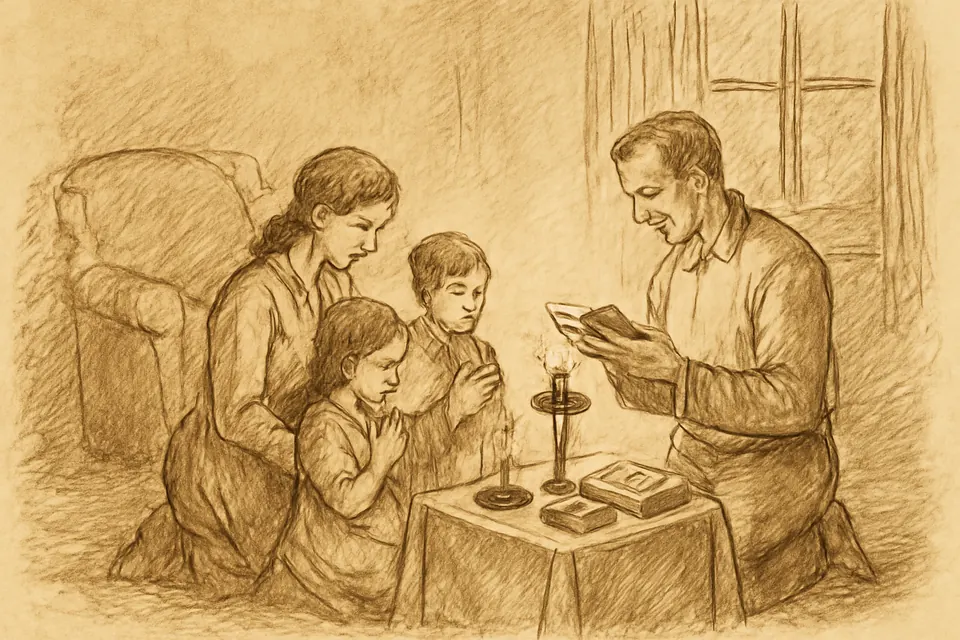
Families can set up a small prayer corner: a purple cloth, a crucifix, a candle, perhaps a bowl of stones or a jar of beans, one for each sacrifice offered, that turns into jelly beans on Easter morning.
Let us pray these prayers faithfully through the forty days, asking the Lord to give us, in St. Ephrem's words, the grace to see our own transgressions and not to judge our brother, so that we may come with clean hearts to Easter. The dates for the season are on our Lent 2027 page.
Frequently asked questions
What is a good prayer for Lent?
The Prayer of St. Ephrem is the classic Lenten prayer of the Christian East and can be prayed by anyone, in under a minute, every day of Lent. In the Latin tradition, Psalm 51 (the Miserere) and the Prayer before a Crucifix are the great Lenten prayers. All three are printed in full on this page.
What is the Lenten prayer of St. Ephrem?
It is a short prayer, prayed with prostrations at the weekday services of Great Lent in the Byzantine churches: "O Lord and Master of my life, grant not unto me a spirit of slothfulness, of discouragement, of lust of power, of vain babbling. But vouchsafe unto thy servant the spirit of continence, of meekness, of patience, and of love..." Tradition attributes it to St. Ephrem the Syrian, a fourth-century deacon and Doctor of the Church.
Is there an indulgence for praying in Lent?
Yes. The Church's handbook of indulgences grants a plenary indulgence, under the usual conditions, to the faithful who on any Friday of Lent devoutly pray the Prayer before a Crucifix (En ego, O bone et dulcissime Iesu) after Communion before an image of Christ crucified. Making the Stations of the Cross also carries a plenary indulgence.
What should I pray each day of Lent?
A simple plan is the Prayer of St. Ephrem in the morning, the day's Mass readings, a short act of self-denial offered for someone in need, and the Act of Contrition with an examination of conscience at night. On Fridays, add the Stations of the Cross.
Why is Psalm 51 prayed in Lent?
Psalm 51, numbered 50 in the Douay-Rheims and the Latin Vulgate, is King David's prayer of repentance after his sin with Bathsheba. Its opening, "Have mercy on me, O God," made it the Church's chief penitential psalm. It is prayed every Friday at Morning Prayer in the Liturgy of the Hours and often in Lent.
Sources
- Isabel Florence Hapgood, Service Book of the Holy Orthodox-Catholic Apostolic (Greco-Russian) Church (Boston, 1906), Prayer of St. Ephraim the Syrian, Internet Archive
- The Raccolta, or Collection of Indulgenced Prayers and Good Works (Burns & Oates, 1910), nos. 125 and 127, Internet Archive
- Apostolic Penitentiary, Enchiridion Indulgentiarum, 4th edition (1999), concession 8 § 1, 2°, Latin text
- Douay-Rheims Bible, Psalm 50 (the Miserere)
- Douay-Rheims Bible, Joel 2
- Douay-Rheims Bible, Genesis 3
- Catholic Encyclopedia (1911): Miserere