Catholic prayer for an addict

A Catholic prayer for an addict asks God to break the chain of habit and to protect the person "by no temptation to be separated from Thee," in the words of the Church's old collect for the tempted. Ask St. Monica, Venerable Matt Talbot and St. Maximilian Kolbe to intercede, and pair prayer with real help: SAMHSA's free helpline is 1-800-662-4357.
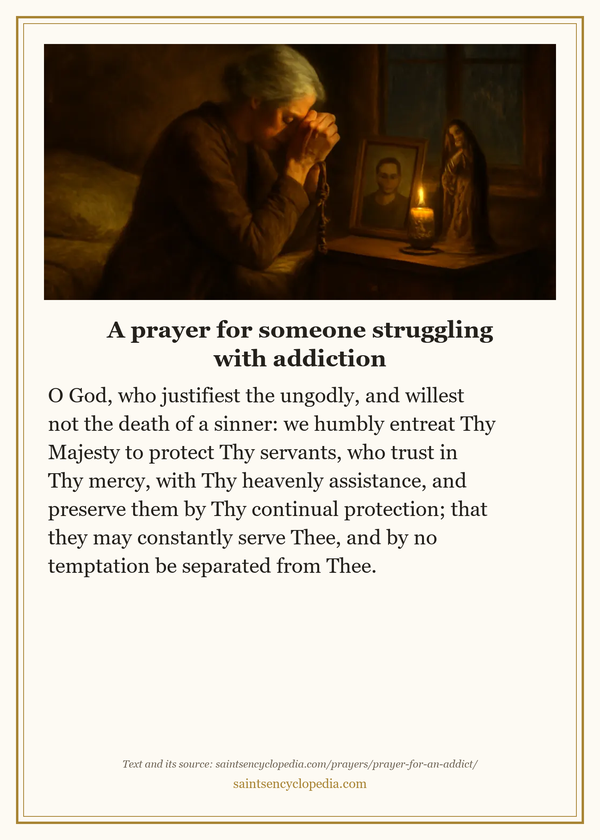 Free printable prayer card 5 × 7 inch PDF, ready to print, frame or tuck in a missal.
Addiction makes people feel alone: the one who is caught in it, and the family that loves him and can't fix it. If you are reading this for yourself, you are not beyond God's reach. If you are reading it for someone you love, your prayers are not wasted. The Church has prayed for the tempted and the enslaved since the beginning, and some of her greatest saints knew this fight from the inside. Here are traditional Catholic prayers for an addict, word for word and with their sources, the saints who walk this road with us, and where to find help today.
If you or someone you love needs help now: in the United States, SAMHSA's National Helpline, 1-800-662-HELP (4357), is free, confidential and open 24 hours a day, every day of the year, in English and Spanish. If anyone is in danger of harming themselves, call or text 988. Stopping alcohol or some drugs suddenly can be dangerous, so talk to a doctor.
A prayer for someone struggling with addiction
The 1888 Manual of Prayers, "prepared and published by order of the Third Plenary Council of Baltimore," has a collect "For the Tempted and Afflicted." Pray it for the person you love, putting in their name:
O God, who justifiest the ungodly, and willest not the death of a sinner: we humbly entreat Thy Majesty to protect Thy servants, who trust in Thy mercy, with Thy heavenly assistance, and preserve them by Thy continual protection; that they may constantly serve Thee, and by no temptation be separated from Thee.
God "willest not the death of a sinner." That line echoes Ezechiel 33:11, "I desire not the death of the wicked, but that the wicked turn from his way, and live," and it is the ground of every prayer for an addict. God wants this person alive and free more than we do.
A prayer for sobriety
Among its prayers against the capital sins, the same Manual gives this one against gluttony, which names drunkenness outright. Anyone in recovery can make it his own:
O Lord Jesus Christ, Mirror of abstinence, who, to teach us the virtue of abstinence, didst fast forty days and forty nights, grant that, serving Thee and not our own appetites, we may live soberly and piously with contentment, without greediness, gluttony, or drunkenness, that Thy will being our meat and drink, we may hunger and thirst after justice, and finally obtain from Thee that food which endureth unto life eternal. Amen.
"Serving Thee and not our own appetites." That is recovery in a single phrase.
St. Augustine's prayer for freedom from the chain of habit
No saint described addiction better than St. Augustine, though his bondage was to lust rather than to a drink or a drug. In Book VIII of his Confessions (E. B. Pusey's translation) he explains how a habit becomes a prison:
My will the enemy held, and thence had made a chain for me, and bound me. For of a forward will, was a lust made; and a lust served, became custom; and custom not resisted, became necessity. By which links, as it were, joined together (whence I called it a chain) a hard bondage held me enthralled.
Will, then craving, then habit, then necessity. Anyone who has lived with an addiction knows each link. Augustine wanted to be free and couldn't make himself free. In a garden in Milan in 386 he threw himself down under a fig tree, weeping, and prayed:
How long, how long, "tomorrow, and tomorrow?" Why not now? why not is there this hour an end to my uncleanness?
That same hour he heard a child's voice say "take up and read," opened St. Paul, and found the strength he had never had. When you can't pray anything else, pray his words. "Why not now?" is a prayer God loves to answer.

Augustine also wrote the line that explains why no drink or drug can ever be enough: "Thou madest us for Thyself, and our heart is restless, until it repose in Thee" (Confessions, Book I).
Prayers to Our Lady in temptation
When cravings hit, short prayers work best. The Raccolta of 1910 (no. 201) prints a Hail Mary followed by this offering, indulgenced by Pius IX in 1851 "for victory in temptations":
My Queen! my Mother! I give thee all myself, and, to show my devotion to thee, I consecrate to thee this day my eyes, ears, mouth, heart, my entire self. Wherefore, O loving Mother, as I am thy own, keep me, defend me, as thy property and possession.
And from a longer prayer of St. Alphonsus Liguori in the same book (no. 203), a line to say a hundred times a day if needed:
And since thou art so powerful with God, free me from all temptations, or obtain for me strength to overcome them as long as I live.
St. Maximilian Kolbe made the Miraculous Medal the badge of the Militia of the Immaculata he founded, and its prayer is short enough for any craving: "O Mary, conceived without sin, pray for us who have recourse to thee."
The Heroic Offering of the Pioneers
In 1898 an Irish Jesuit, Fr. James Cullen, founded the Pioneer Total Abstinence Association in Dublin, whose members give up alcohol for life and offer the sacrifice for those who drink too much. Pioneers pray this Heroic Offering every morning and evening:
For Thy greater glory and consolation, O Sacred Heart of Jesus, for Thy sake to give good example, to practice self-denial, to make reparation to Thee for the sins of intemperance, and for the conversion of excessive drinkers, I will abstain for life from all intoxicating drinks. Amen.
A person in recovery can pray it for himself, and a family member can pray it as an offering for someone else. See also our Sacred Heart prayer.
The saints to ask for an addict
We ask the saints to pray for us because they know the way out. For more on each of them, see our page on the patron saint of alcoholics.
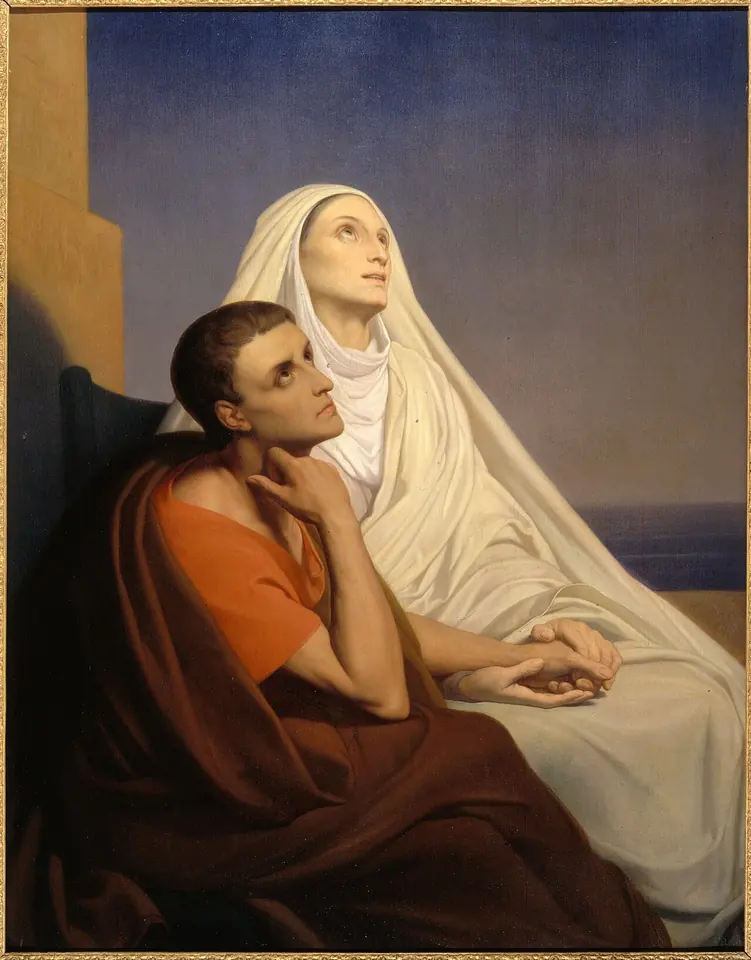
- St. Monica, the patron most often named for alcoholics. Augustine tells us she slipped into a habit of sipping wine as a girl and gave it up when a servant mocked her as "a wine-bibber." She is also the patron of every mother praying for a lost child. When she begged a bishop to talk sense into her son, he told her, "Go thy ways and God bless thee, for it is not possible that the son of these tears should perish" (Confessions, Book III).
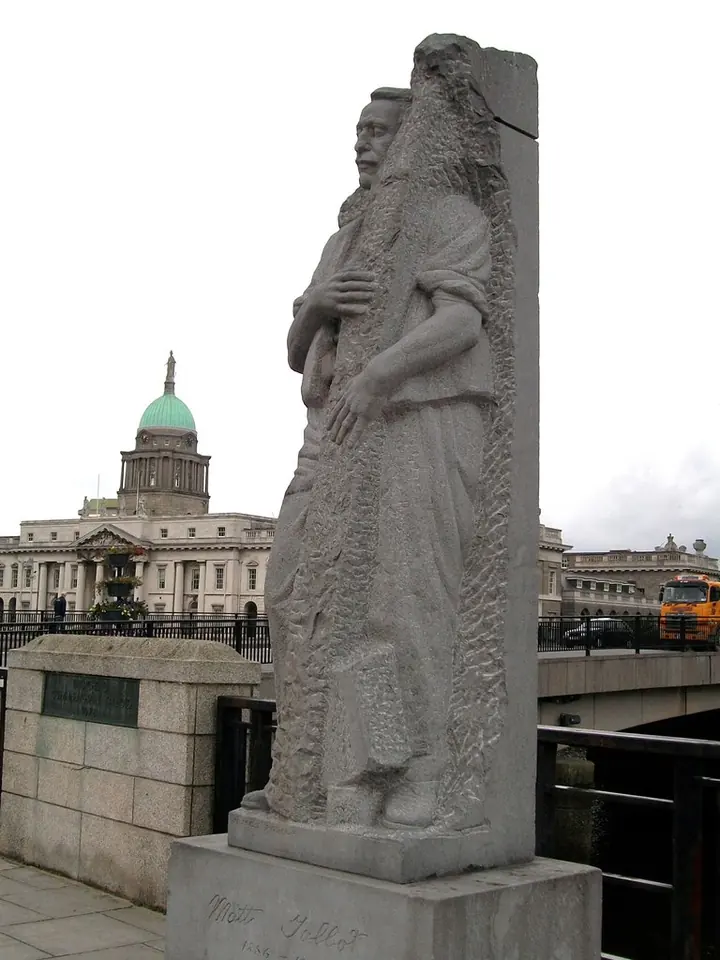
- Venerable Matt Talbot (1856–1925), a Dublin laborer who drank heavily from boyhood. In 1884, at 28, he took the pledge, and he stayed sober for the next 41 years through daily Mass, prayer and hard work. Pope Paul VI declared him Venerable in 1975. Many in recovery ask his prayers.
- St. Maximilian Kolbe, the Franciscan who gave his life for another prisoner at Auschwitz in 1941. He was killed by a lethal injection, and many people fighting drug addiction ask his help.
- St. Mark Ji Tianxiang, a Chinese doctor who became addicted to opium after treating his own illness with it. Unable to break the habit, he could not receive the sacraments for some thirty years, yet he kept coming to Mass. He died a martyr in 1900 and was canonized in 2000. He is proof that God doesn't abandon anyone who keeps showing up.
- St. John of God, who took in the people no one else would.
What Scripture says
St. Paul knew the war inside a person who wants to do right and can't (Romans 7:19, 24–25, Douay-Rheims):
For the good which I will, I do not; but the evil which I will not, that I do. ... Unhappy man that I am, who shall deliver me from the body of this death? The grace of God, by Jesus Christ our Lord.
And he promised that no temptation is stronger than God's help (1 Corinthians 10:13):
Let no temptation take hold on you, but such as is human. And God is faithful, who will not suffer you to be tempted above that which you are able: but will make also with temptation issue, that you may be able to bear it.
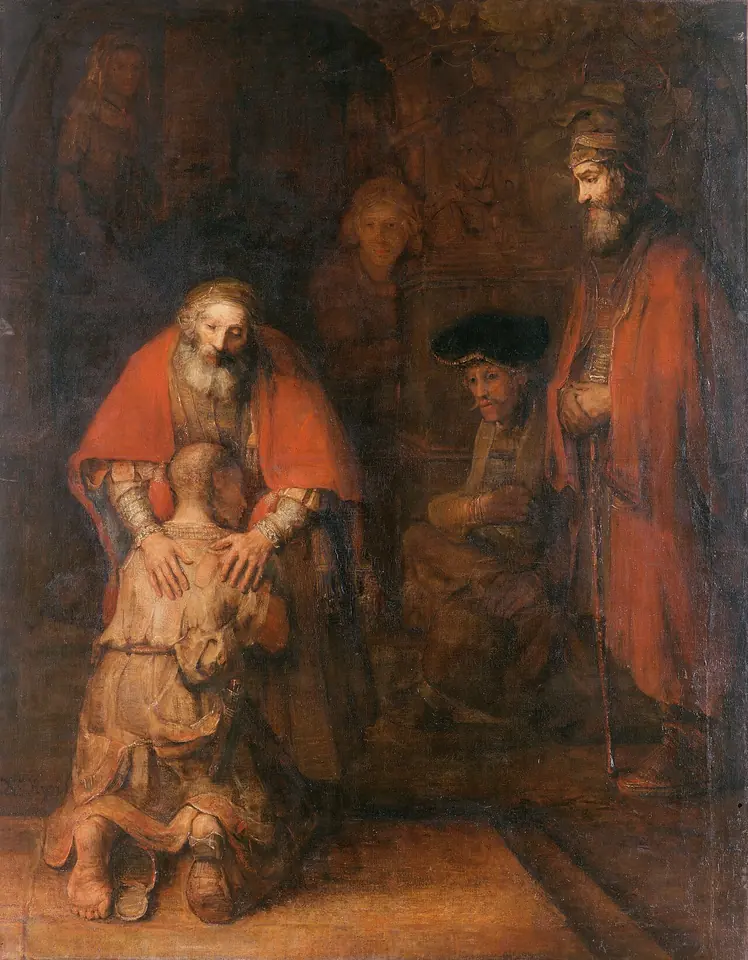
For the family waiting at home, there is the father of the prodigal son: "when he was yet a great way off, his father saw him, and was moved with compassion, and running to him fell upon his neck, and kissed him" (Luke 15:20).

Prayer and real help go together
Grace works through people. Pray, and also:
- Call for help. SAMHSA's helpline (1-800-662-4357) can point you to treatment and support groups near you. A doctor should guide withdrawal from alcohol, benzodiazepines or opioids.
- Find a meeting. Alcoholics Anonymous and Narcotics Anonymous meet in many parish halls. The Calix Society, founded in 1947, gathers Catholics in recovery for Mass and fellowship alongside AA.
- Go to confession. The sacrament forgives, and it gives grace for the next fight. Our examination of conscience can help you prepare.
- Receive the Eucharist as often as you can, the "food which endureth unto life eternal."
- Families, get support too. Al-Anon and Nar-Anon are for those who love an addict. Love without enabling; pray without giving up.

Let us pray tonight for every person caught in addiction, by name, and for every mother and father keeping watch. For the days that feel hopeless, see our St. Jude prayer, our prayer for strength and our prayer for anxiety. Browse all our Catholic prayers and novenas.
Frequently asked questions
What is a good Catholic prayer for someone struggling with addiction?
The Church's old collect "For the Tempted and Afflicted," printed in the 1888 Manual of Prayers, asks God to protect His servants "with Thy heavenly assistance, and preserve them by Thy continual protection; that they may constantly serve Thee, and by no temptation be separated from Thee." Say it with the person's name. A Hail Mary said every time they come to mind is a good prayer too.
Who is the patron saint of addicts?
St. Maximilian Kolbe is the saint most often asked for drug addiction, and St. Monica for alcoholism. Many people in recovery also ask the prayers of Venerable Matt Talbot, a Dublin laborer who stayed sober for 41 years, and of St. Mark Ji Tianxiang, a Chinese doctor who could never overcome his opium addiction and died a martyr in 1900.
Is addiction a sin?
The Church distinguishes the sin from the sickness. Choosing to abuse alcohol or drugs is a sin, and the Catechism (no. 2291) calls drug use "a grave offense" except on strictly therapeutic grounds. But addiction also weakens freedom, and the Catechism (no. 1735) teaches that habit and other psychological factors can lessen guilt. God judges the heart, and He never stops offering mercy.
Can prayer cure addiction?
God can heal anyone, and some people do find freedom suddenly. Most find it slowly, through grace working with doctors, counselors, support groups and honest friends. Pray, and also get help: call SAMHSA's National Helpline at 1-800-662-HELP (4357), see a doctor before stopping alcohol or some drugs, and find a meeting.
How do I pray for an addicted son or daughter?
Pray like St. Monica, who wept for her son for years and never gave up. Name your child to God every day, have a Mass offered, ask Our Lady to hold them, and get support for yourself too, through Al-Anon, Nar-Anon or your parish. Love them without enabling them. A bishop once told Monica, "it is not possible that the son of these tears should perish."
Is there a Catholic group for recovering alcoholics?
Yes. The Calix Society, founded in Minneapolis in 1947, is a fellowship of Catholics in recovery who also take part in Alcoholics Anonymous and add Mass, the sacraments and prayer. Ireland's Pioneer Total Abstinence Association, founded in 1898, asks members to give up alcohol for life as an offering for those who drink to excess.
Sources
- A Manual of Prayers for the Use of the Catholic Laity (1888): For the Tempted and Afflicted; Against Gluttony, Internet Archive
- The Raccolta, or Collection of Indulgenced Prayers and Good Works (Burns & Oates, 1910), nos. 201 and 203, Internet Archive
- St. Augustine, Confessions, Books III and VIII, translated by E. B. Pusey (Project Gutenberg)
- Pioneer Total Abstinence Association: the Heroic Offering (archived home page, June 2024)
- Saint Saviour's Church, Dublin: Matt Talbot
- National Catholic Register: St. Mark Ji Tianxiang, the Opium Addict Who Became a Saint
- CatholicPhilly: The Calix Society, enhancing our 12-step programs with Christ and his Church
- Catechism of the Catholic Church, no. 1735: freedom and responsibility
- Catechism of the Catholic Church, no. 2291: respect for health and the use of drugs
- SAMHSA's National Helpline