Catholic prayer for anxiety
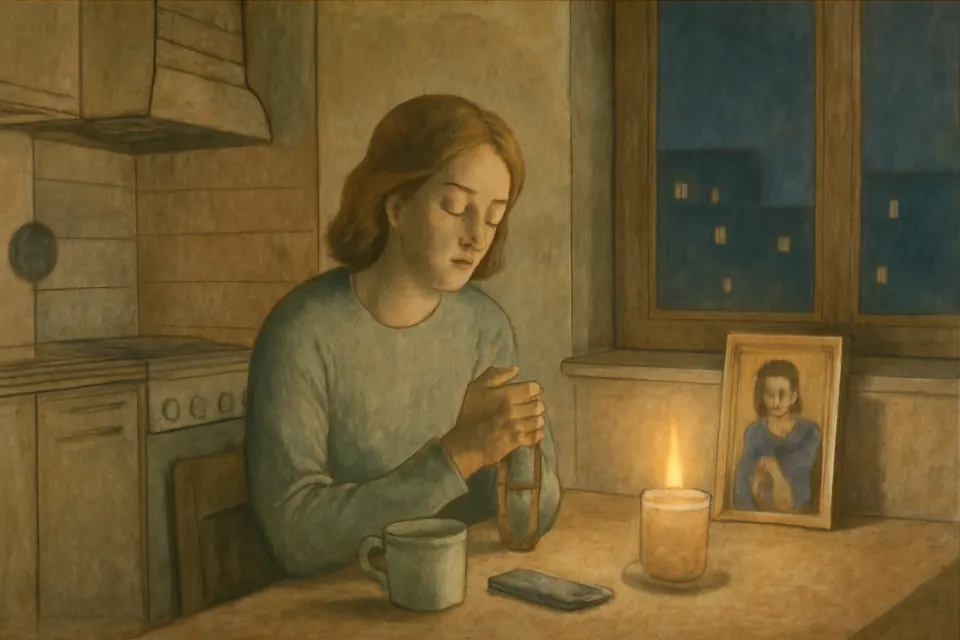
A Catholic prayer for anxiety begins with St. Paul's words: "Be nothing solicitous; but in every thing, by prayer and supplication, with thanksgiving, let your petitions be made known to God" (Philippians 4:6). We also pray St. Teresa's "Let nothing disturb thee" and the Memorare, and ask St. Dymphna's prayers.
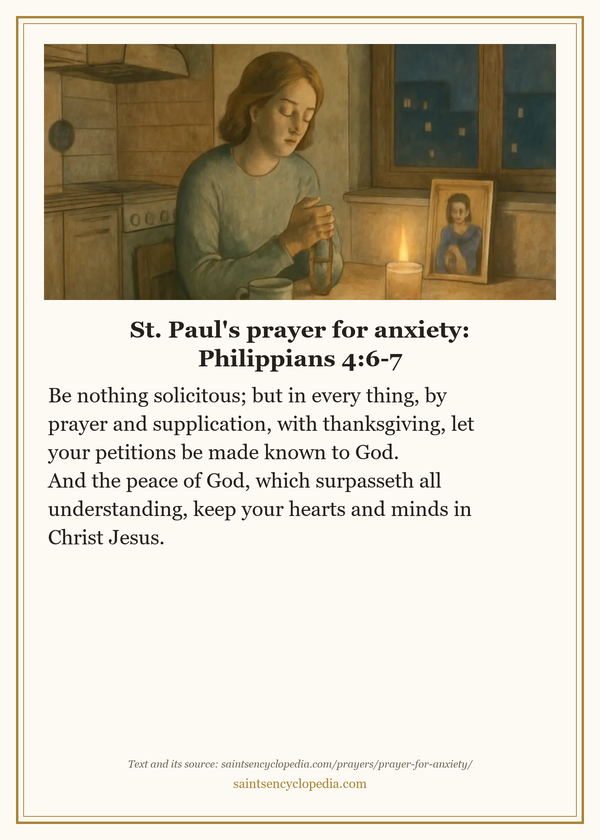 Free printable prayer card 5 × 7 inch PDF, ready to print, frame or tuck in a missal.
If you are reading this with a tight chest or a racing mind, stop for a moment and breathe. You don't have to pray well right now. You only have to turn toward God, who already knows what you are afraid of. The prayers below are old ones, printed word for word from Scripture and the Catholic prayer books where we found them. Read one slowly. If a line catches you, stay with it.
St. Paul's prayer for anxiety: Philippians 4:6-7
St. Paul wrote these words from prison, not knowing whether he would be released or executed. They are the Church's first answer to anxiety. This is the Douay-Rheims translation:
Be nothing solicitous; but in every thing, by prayer and supplication, with thanksgiving, let your petitions be made known to God. And the peace of God, which surpasseth all understanding, keep your hearts and minds in Christ Jesus.
"Be nothing solicitous" is the old way of saying "don't be anxious about anything." Paul does not tell us to stop feeling worried by willpower. He tells us what to do with the worry: turn every bit of it into a request to God, and thank him while we ask. Then comes a promise, not a command. God's peace will "keep" our hearts and minds, a soldier's word in Greek, meaning to stand guard.
Pray it like this: name each worry, one at a time, out loud if you can. After each one say, "Lord, I give this to you." Then thank him for one thing, however small.
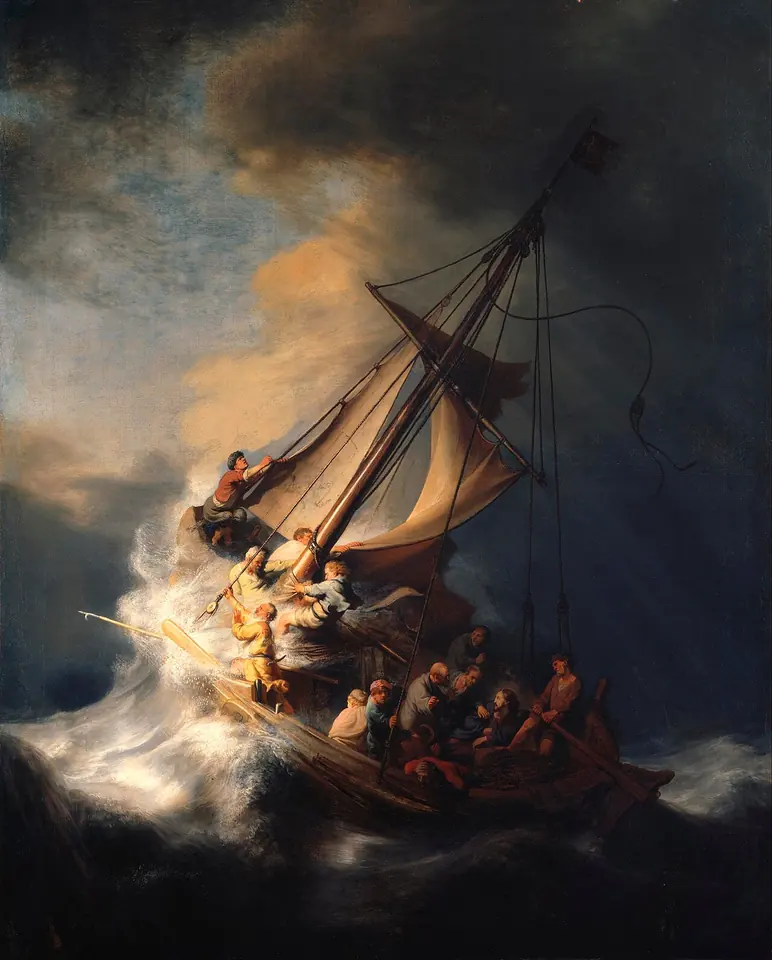
Let nothing disturb thee: St. Teresa's bookmark
St. Teresa of Avila, the great Carmelite reformer and Doctor of the Church, kept a short Spanish verse in her breviary as a bookmark. It begins Nada te turbe. The American poet Henry Wadsworth Longfellow translated it as "Santa Teresa's Book-Mark":
Let nothing disturb thee, Nothing affright thee; All things are passing; God never changeth; Patient endurance Attaineth to all things; Who God possesseth In nothing is wanting; Alone God sufficeth.
Teresa knew anxiety from the inside. She suffered years of illness, opposition from her own order, and investigations by the Inquisition. Her answer to all of it fits in nine short lines. "All things are passing" is not cold comfort. It means this moment, this fear, this crisis will pass, and God will still be there when it does.
Many people pray the bookmark when they wake at three in the morning with their thoughts spinning. It is short enough to memorize in one night.

A prayer to Our Lady: "to thee I commit all my anxieties"
This prayer to Mary is printed in the 1910 English Raccolta as the "Prayer of St. Aloysius Gonzaga," the young Jesuit who died in 1591 while nursing plague victims in Rome. It is the most direct Catholic prayer for anxiety we know, because it uses the word itself:
Holy Mary, my mistress, into thy blessed trust and special custody, and into the bosom of thy mercy I this day, every day, and in the hour of my death, commend my soul and my body: to thee I commit all my anxieties and miseries, my life and the end of my life, that by thy most holy intercession and by thy merits all my actions may be directed and disposed according to thy will and that of thy Son. Amen.
"Into thy blessed trust and special custody." We hand ourselves over to our Mother, as a child hands a heavy bag to a parent. She brings everything to her Son.

The Memorare
When anxiety turns to panic, the Memorare is the prayer many Catholics reach for first. It is an appeal to Mary's track record: no one who ever asked her help was turned away. This is the English of the 1910 Raccolta, number 196:
Remember, O most gracious Virgin Mary, that never was it known that any one who fled to thy protection, implored thy help, or sought thy intercession, was left unaided. Inspired with this confidence, I fly unto thee, O Virgin of virgins, my mother; to thee I come, before thee I stand, sinful and sorrowful; O Mother of the Word Incarnate, despise not my petitions; but in thy clemency hear and answer me. Amen.
The history of the prayer and St. Teresa of Calcutta's "flying novena" of nine Memorares are on our Memorare page.
A short recommendation to God
This prayer appears among the occasional prayers of the 1889 Manual of Prayers, published by order of the American bishops. It is a prayer of handing over, line by line, everything we tend to worry about:
Into the hands of Thy unspeakable mercy, O Lord, I commend my soul and body; my senses, my words, my thoughts, and all my actions, with all the necessities of my body and soul; my going forth and my coming in; my faith and conversation; the course and end of my life; the day and hour of my death; my rest and resurrection with the Saints and Elect.
"My going forth and my coming in" comes from Psalm 120 (121 in modern Bibles). The whole prayer is a bit like the Surrender Novena's refrain, "O Jesus, I surrender myself to you, take care of everything," in older words. You can find that novena on our Surrender Novena page.
More Scripture for an anxious heart
Jesus spoke about worry more than once. These are his words, and the apostles', in the Douay-Rheims:
Come to me, all you that labour, and are burdened, and I will refresh you. (Matthew 11:28)
Be not therefore solicitous for tomorrow; for the morrow will be solicitous for itself. Sufficient for the day is the evil thereof. (Matthew 6:34)
Casting all your care upon him, for he hath care of you. (1 Peter 5:7)
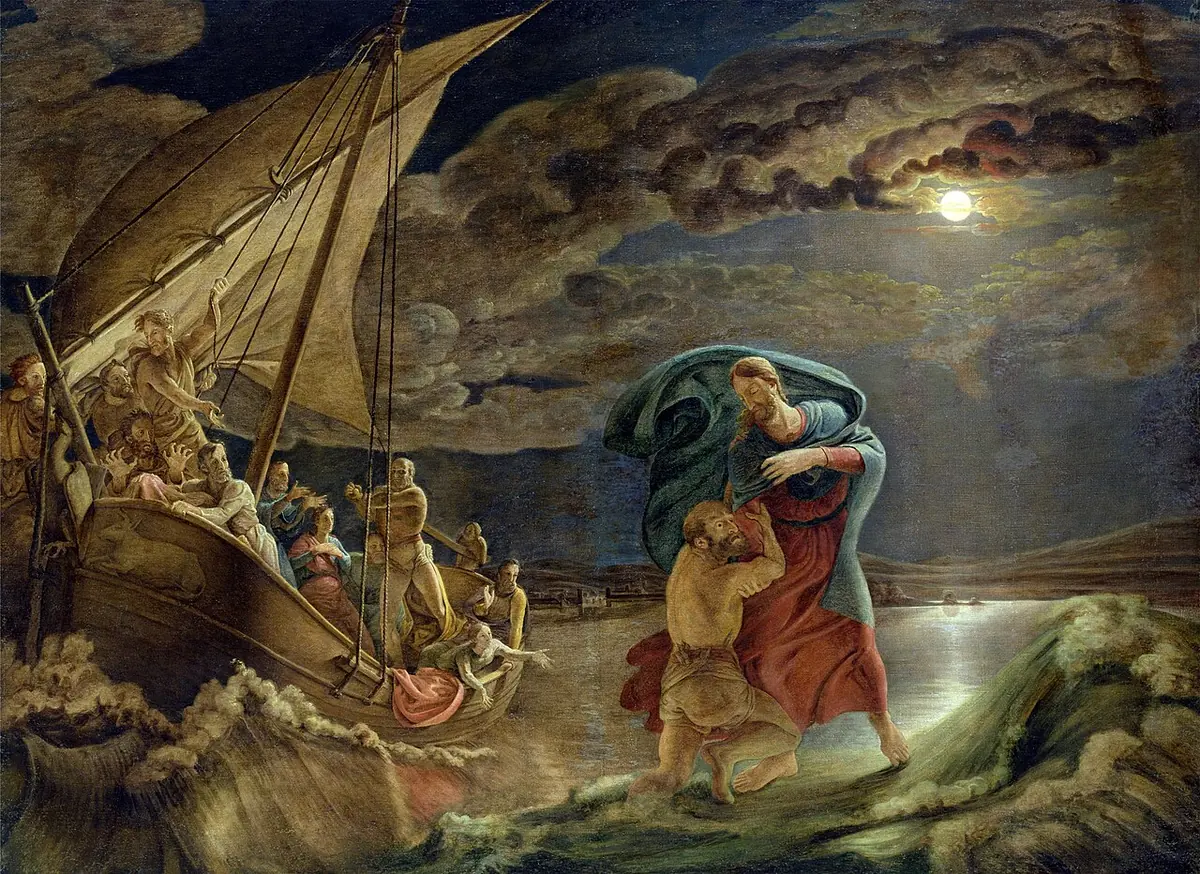
And when the fear is sudden and overwhelming, there is St. Peter's prayer as he sank beneath the waves: "Lord, save me." St. Matthew tells us what happened next: "And immediately Jesus stretching forth his hand took hold of him" (Matthew 14:30-31). Immediately.
The saints to ask
- St. Dymphna is the Church's patron of mental illness, nervous disorders and anxiety. Families have brought their sick to her shrine at Geel in Belgium since the Middle Ages. An 1872 book of saints' lives preserves this short prayer: "Oh God! thou lover of purity, grant that we who invoke the intercession of Thy holy martyr Dympna, may obtain the assistance of her merits and suffrages through Christ our Lord. Amen." More on our St. Dymphna prayer page and our patron saint of anxiety page.
- St. Padre Pio gave anxious people the same counsel for decades: Prega, spera e non preoccuparti, "Pray, hope and don't worry." It is his best-known saying, though the exact letter where it first appears has not been identified. See the Padre Pio prayer.
- St. Teresa of Avila, whose bookmark prayer is above.
- St. John of God, who was himself locked up as a madman in Granada before founding the Brothers Hospitallers, who still care for people with mental illness.
- St. Raphael the Archangel, whose name means "God heals." See the St. Raphael prayer.
- St. Joseph, who received his instructions in dreams and acted on them calmly, through the flight into Egypt and the return to Nazareth.
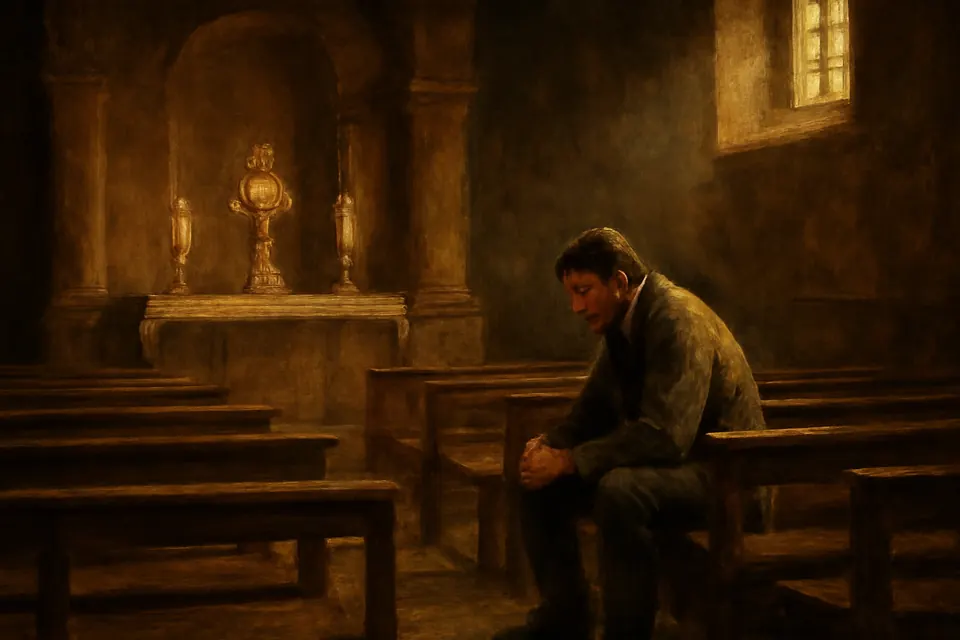
Prayer and getting help go together
Anxiety can be ordinary worry, and it can also be an illness. If your anxiety is constant, keeps you from sleeping or working, or comes with panic attacks, please see a doctor or a counselor. That is not a failure of faith. Scripture itself says so, in the Douay-Rheims of Sirach 38:
Honour the physician for the need thou hast of him: for the most High hath created him.
The most High hath created medicines out of the earth, and a wise man will not abhor them.
Talk to a priest as well, especially if your worries are about sin or God's forgiveness. The sacrament of confession can lift burdens that no amount of reassurance touches. And if you are in the United States and ever think about harming yourself, call or text 988 at any hour, or your local emergency number elsewhere.
A simple way to pray when anxiety hits
- Make the Sign of the Cross, slowly.
- Breathe in and say, "Jesus," then breathe out and say, "I trust in you."
- Pray Philippians 4:6-7 once, naming what you are afraid of.
- Pray one Hail Mary or the Memorare.
- End with "St. Dymphna, pray for me."
Do it again in an hour if you need to. God never tires of hearing it.
Related prayers
- Prayer for strength, for when anxiety has worn you out.
- Prayer for peace, for peace in the heart and in the world.
- Prayer for protection, when the fear is for someone you love.
- Night prayer, for the sleepless hours.
- The Divine Mercy Chaplet and its prayer "Jesus, I trust in you."
Let nothing disturb thee, nothing affright thee. St. Dymphna and St. Teresa, pray for us. Amen.
Frequently asked questions
What does the Catholic Church say about anxiety?
Anxiety as an illness is a medical condition, and the Church encourages the sick to seek treatment; the Book of Sirach tells us to honor the physician, "for the most High hath created him." Worry as a spiritual struggle is something Jesus speaks to directly: "Be not therefore solicitous for tomorrow" (Matthew 6:34). The Church's answer to both is trust in God's providence, prayer, the sacraments, and real help from others.
Who is the patron saint of anxiety?
St. Dymphna, the 7th-century Irish princess honored at Geel in Belgium, is the patron of mental illness, nervous disorders and anxiety. Many people also ask the prayers of St. Padre Pio, whose advice was "Pray, hope and don't worry," and of St. Teresa of Avila, whose bookmark prayer begins "Let nothing disturb thee."
What is a short prayer for anxiety?
"Jesus, I trust in you," from the Divine Mercy devotion, is one of the most loved. Others are St. Peter's cry as he sank in the waves, "Lord, save me" (Matthew 14:30), and the line from 1 Peter 5:7, "Casting all your care upon him, for he hath care of you."
What Bible verse helps with anxiety?
Philippians 4:6-7 is the best known: "Be nothing solicitous; but in every thing, by prayer and supplication, with thanksgiving, let your petitions be made known to God." Others are Matthew 6:25-34 ("Be not therefore solicitous for tomorrow"), Matthew 11:28 ("Come to me, all you that labour, and are burdened, and I will refresh you"), and Psalm 54:23 (55:22 in modern Bibles), "Cast thy care upon the Lord, and he shall sustain thee."
Did Padre Pio really say "Pray, hope and don't worry"?
Yes, it is his best-known counsel, in Italian Prega, spera e non preoccuparti, and it sums up the advice he gave penitents for decades. The exact letter or occasion where it first appears has not been pinned down, so it is a saying of his rather than a quotation from one document.
Is it a lack of faith to take medication for anxiety?
No. God works through doctors and medicine as well as through prayer. Sirach 38 says, "The most High hath created medicines out of the earth, and a wise man will not abhor them." Taking care of your health is part of caring for the life God gave you.
Sources
- Douay-Rheims Bible: Philippians 4
- Henry Wadsworth Longfellow, Santa Teresa's Book-Mark, in The Complete Poetical Works (Project Gutenberg). Source of the English text of "Let nothing disturb thee"
- The Raccolta, or Collection of Indulgenced Prayers and Good Works (London: Burns & Oates, 1910), no. 196, the Memorare, and no. 216, Prayer of St. Aloysius Gonzaga, Internet Archive
- A Manual of Prayers for the Use of the Catholic Laity, prepared by order of the Third Plenary Council of Baltimore (New York, 1889), Occasional Prayers: A Short Recommendation to God, Internet Archive
- The Life of Saint Margaret, with lives of Saint Cecilia, Saint Catherine, Saint Agnes, Saint Angela, Saint Elizabeth, Saint Dympna, and Saint Wenefride (New York: J. A. McGee, 1872), Internet Archive. Source of the St. Dymphna prayer
- Douay-Rheims Bible: Ecclesiasticus (Sirach) 38
- 988 Suicide and Crisis Lifeline