Holy Grail

The Holy Grail is, in medieval legend, the cup Jesus used at the Last Supper. The Gospels say nothing about what became of that cup. Valencia Cathedral venerates an ancient agate cup, the Holy Chalice, as the Last Supper cup by tradition; St. John Paul II and Benedict XVI both said Mass with it. The Grail quests of Arthurian romance are literature, not history.
On the night before he suffered, Jesus took a cup. "And taking the chalice, he gave thanks, and gave to them, saying: Drink ye all of this. For this is my blood of the new testament, which shall be shed for many unto remission of sins" (Matthew 26:27–28, Douay-Rheims). Every Mass returns to that moment, and every chalice on every altar holds what that first cup held. Yet the Gospels never tell us what happened to the cup itself. Out of that silence grew two very different things: a relic venerated for centuries in Valencia, and the Holy Grail of medieval romance. This page keeps the two apart and tells what the Church actually holds about each.
The cup of the Last Supper in Scripture
All three Synoptic Gospels and St. Paul describe the cup. St. Luke records the words of institution: "This is the chalice, the new testament in my blood, which shall be shed for you" (Luke 22:20). St. Paul, writing to Corinth around the year 55, calls it "the chalice of benediction, which we bless" and asks, "is it not the communion of the blood of Christ?" (1 Corinthians 10:16).
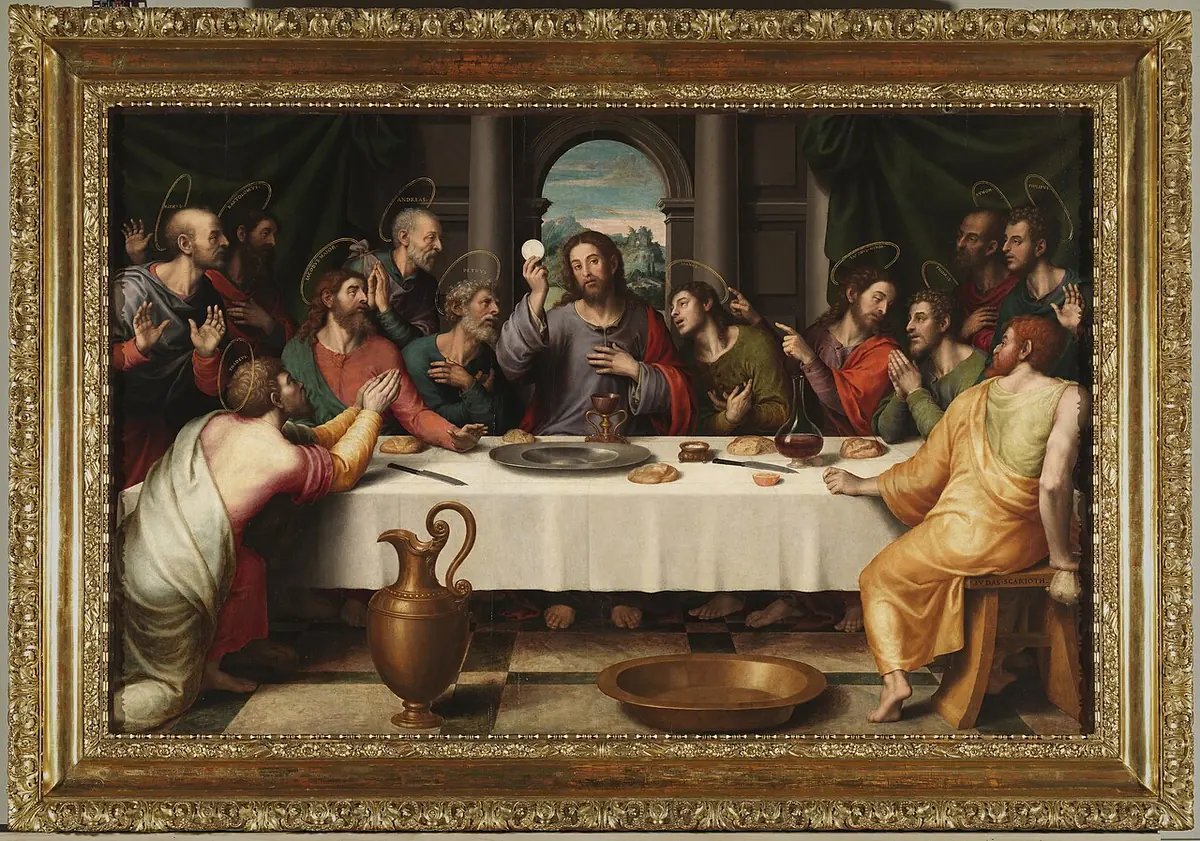
Scripture says nothing more. The Catholic Encyclopedia states the matter plainly: "No reliable tradition has been preserved to us regarding the vessel used by Christ at the Last Supper." Pilgrims to Jerusalem in the 500s and 600s were shown a chalice in the church of the Holy Sepulchre, but their descriptions disagree; one called it onyx, another, less than a century later, a two-handled silver cup. St. John Chrysostom, preaching in the late 300s, did not seem to mind the uncertainty: "The table was not of silver, the chalice was not of gold in which Christ gave His blood to His disciples to drink, and yet everything there was precious and truly fit to inspire awe."
The Holy Chalice of Valencia
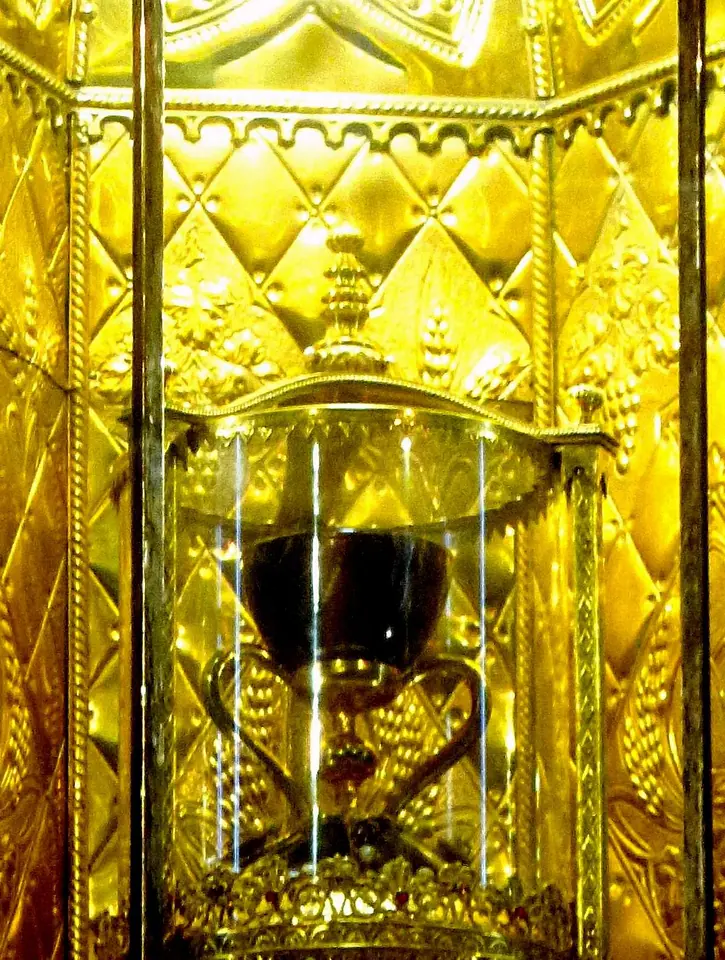
In a side chapel of Valencia Cathedral, in a Gothic room that was once the chapter house, stands a small cup of dark red agate on a gold stem with two curved handles. The faithful of Valencia call it the Santo Cáliz, the Holy Chalice, and venerate it as the cup of the Last Supper. The relic proper is the cup itself, finely turned from carnelian agate. The cathedral, following archaeologists, describes it as Eastern work of about the first century. The gold handles, stem and jeweled base were added in the Middle Ages.
The tradition
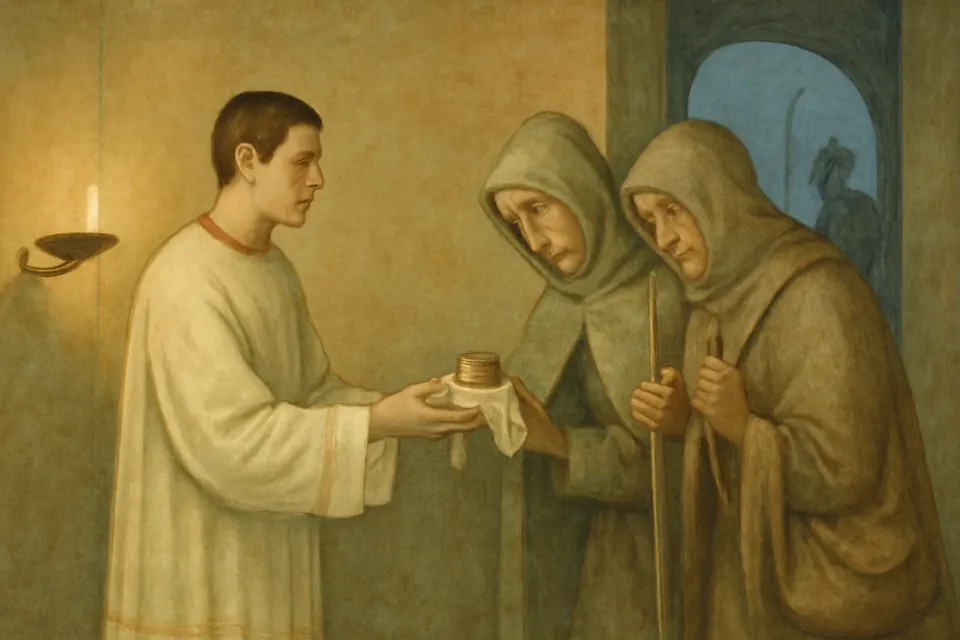
The cathedral tells the cup's earlier history as tradition, and it is labeled traditional here. St. Peter brought the cup to Rome, and the popes kept it until the persecution of Emperor Valerian in 258. Then Pope St. Sixtus II, through his deacon St. Lawrence, a native of Spain, sent it to Lawrence's home city of Huesca for safety. When the Muslim conquest reached the region after 713, the cup was hidden in the Pyrenees and moved from place to place, finally reaching the monastery of San Juan de la Peña. The cathedral points to the Roman Canon of the Mass, which alone among the ancient Eucharistic prayers calls the cup "this precious chalice," hunc praeclarum calicem, as a sign of a cup long honored in Rome.
The documented history
The written record begins in Aragon. A document of 1071 from San Juan de la Peña mentions a precious stone chalice, which may refer to it. In 1399 the monks gave the cup to King Martin the Humane of Aragon, who kept it in the Aljafería palace in Zaragoza and later in Barcelona; it appears in the inventory of his possessions at his death in 1410. Around 1424 King Alfonso V the Magnanimous brought the royal reliquary to his palace in Valencia, and in 1437, while he was away in Naples, it was handed over to Valencia Cathedral with the other royal relics. It has been there ever since.
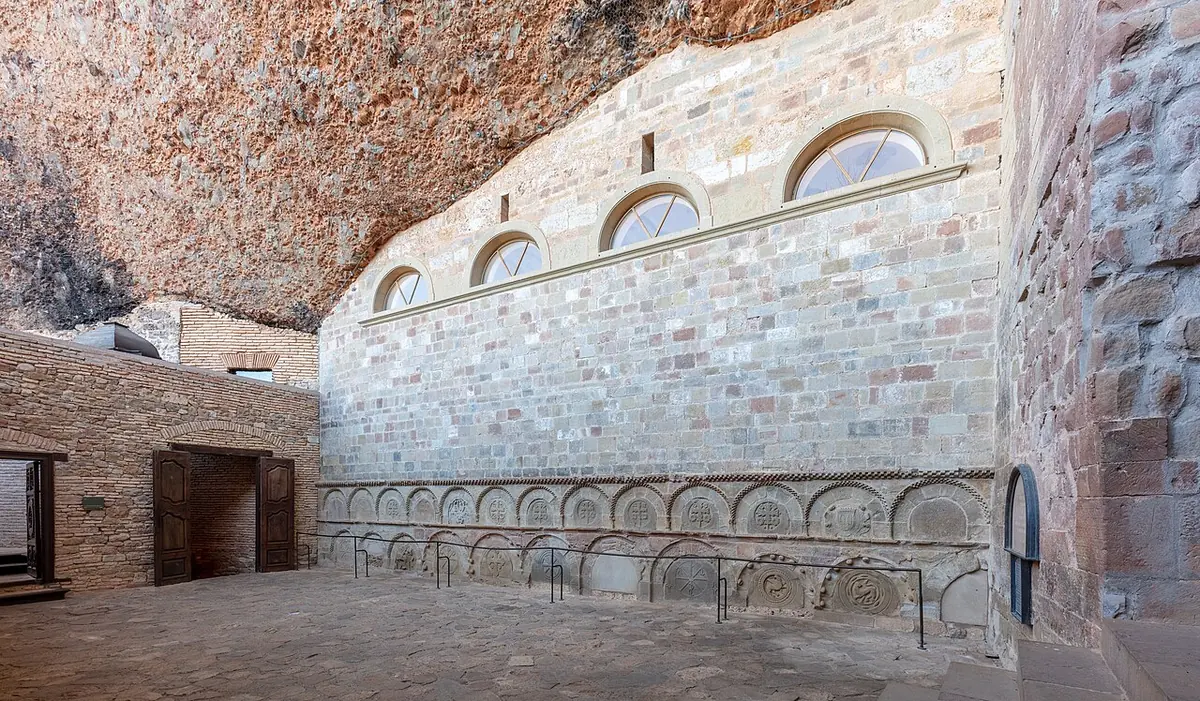
For centuries the chalice was kept among the cathedral's relics, and until the 1700s it was used on Holy Thursday to hold the consecrated Host in the altar of repose. In 1916 it was enshrined in the old chapter house, which became the Chapel of the Holy Chalice. Twice it went into hiding: during the Napoleonic war, from 1809 to 1813, it traveled by way of Alicante and Ibiza to Palma de Mallorca, and during the Spanish Civil War it was concealed in the village of Carlet. It returned to the cathedral on March 30, 1939.

Two popes and a jubilee
St. John XXIII granted a plenary indulgence on the chalice's annual feast. When St. John Paul II came to Valencia on November 8, 1982, he kissed the chalice on the cathedral's high altar and then used it at the Mass in which he ordained 150 priests. Benedict XVI venerated it in its chapel on July 8, 2006, and the next day used it at the closing Mass of the Fifth World Meeting of Families. Pope Francis granted Valencia a Eucharistic Jubilee Year in honor of the Holy Chalice every five years, beginning in 2015. The third opened on October 30, 2025.
The annual feast of the Holy Chalice falls on the last Thursday of October, and Mass is offered before it on Thursdays through most of the year.

What can be said
The Valencia cup is a genuine ancient vessel with a documented history in Aragon going back to 1399, and possibly to 1071. Its earlier history is tradition. The Catholic Encyclopedia, writing in 1908, judged the whole tradition of Last Supper cups "untrustworthy and of late date." The popes who used it honored a venerable relic of the Church in Spain; they did not pronounce on its origin. The faithful who pray before it pray before a cup that has served the Eucharist, and that is reason enough for reverence.
The Grail of the romances
The Holy Grail most people know comes from a different source altogether: a cycle of French, German and English romances written, as the Catholic Encyclopedia notes, between about 1180 and 1240.
- Chrétien de Troyes, in his Perceval, or the Story of the Grail (Le Conte du Graal), from the 1180s, tells how the young knight Perceval sees at the castle of the Fisher King a damsel carrying a "graal," a jeweled vessel, with a bleeding lance and a silver plate. Perceval fails to ask what it means. Chrétien died before finishing the poem, and in his version the grail "has no pronounced religious character."
- Robert de Boron, in his Joseph of Arimathea, written around 1200, made the grail the vessel of the Last Supper, given to St. Joseph of Arimathea, who caught in it the blood of Christ when the body was taken down from the Cross. The bleeding lance became the lance of Longinus.
- Later romances added the pure knight Galahad, the quest of the Round Table, and the bringing of the Grail to Britain. Wolfram von Eschenbach's German Parzival made the Grail a miraculous stone. Malory's Morte d'Arthur, Tennyson's Holy Grail (1869) and Wagner's Parsifal (1882) carried the story into modern times.

The word itself means a dish. The Catholic Encyclopedia quotes the Cistercian chronicler Helinand, who wrote in the early 1200s that a gradale was "a dish, wide and somewhat deep" in which costly food was served one course after another. The reading "San Greal" as sang real, "royal blood," was not current until the later Middle Ages, and modern theories built on it have no historical basis.
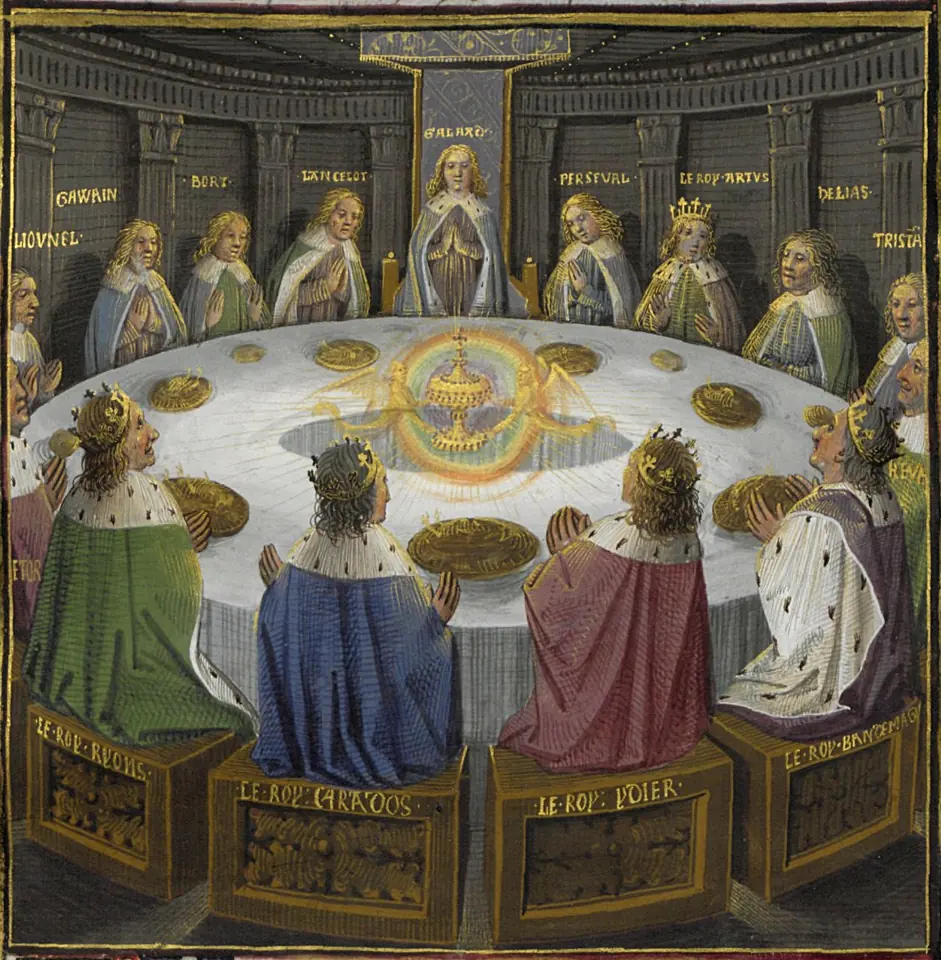
These romances are literature. They drew on the apocryphal Gospel of Nicodemus, on Celtic tales of wonderful vessels, and on medieval devotion to the Eucharist, and they shaped a great deal of European art. Edward Burne-Jones's tapestries of the 1890s are among the most beautiful.

Other cups and dishes
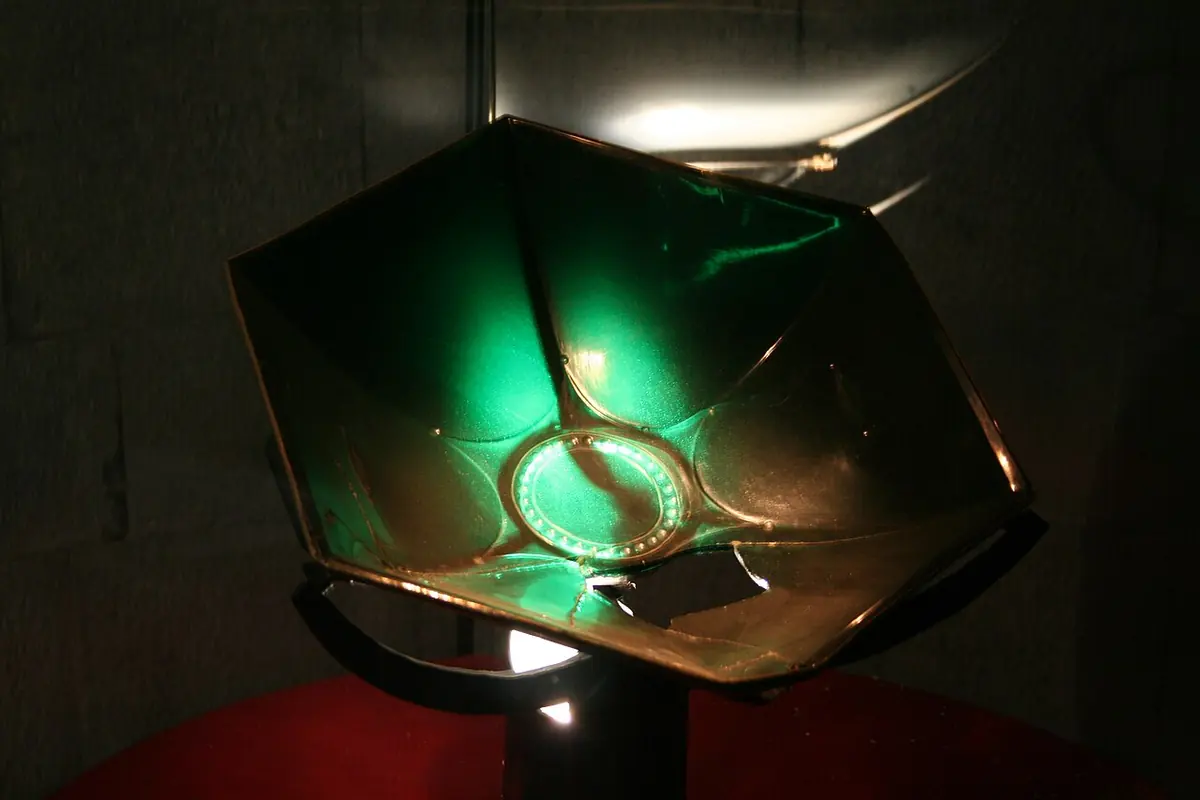
Valencia's is not the only claim. The cathedral of San Lorenzo in Genoa keeps the Sacro Catino, a hexagonal dish long believed to be carved from a single emerald; it is in fact green glass. The Catholic Encyclopedia notes that it "is rather a dish than a cup."
What the Church says about the Holy Grail
The Church has never declared any cup to be the chalice of the Last Supper. She allows the Holy Chalice of Valencia to be venerated as a relic, and two popes have honored it by using it at Mass. The legend of the Grail quest is another matter. The Catholic Encyclopedia observes that apart from Helinand, "clerical writers do not mention the Grail, and the Church ignored the legend completely," since its sources were apocryphal and its claims extravagant.
For us the deepest meaning of the Grail is not far away in a castle or a cave. At every Mass the priest takes the chalice, as Christ did, and the wine becomes the Precious Blood. What the knights of the romances sought is placed on our altars each day. To pray with that mystery, see our pages on the Eucharistic miracles and the Anima Christi; for other relics of the Passion, see the True Cross, the Holy Lance and the Shroud of Turin.
Frequently asked questions
Where is the Holy Grail?
No one knows what became of the cup of the Last Supper. The most famous claim is the Holy Chalice (Santo Cáliz) of Valencia Cathedral in Spain, an agate cup that tradition says passed from St. Peter to the popes, to St. Lawrence and to Aragon, and that has been in the cathedral since 1437. Genoa Cathedral keeps a green glass dish, the Sacro Catino, also once claimed. The Church has not declared either to be the cup of the Last Supper.
Did the Pope use the Holy Grail?
St. John Paul II celebrated Mass with the Holy Chalice of Valencia on November 8, 1982, when he ordained 150 priests in the city. Benedict XVI used it at the closing Mass of the Fifth World Meeting of Families in Valencia on July 9, 2006. Using the cup honored a venerable relic; it was not a ruling that it is the cup of the Last Supper.
Is the Holy Grail real?
The cup Jesus used at the Last Supper was certainly real; St. Paul calls it "the chalice of benediction." The magical Grail of the romances, guarded in a hidden castle and sought by knights, is a creation of medieval storytellers between about 1180 and 1240. The Catholic Encyclopedia says the Church "ignored the legend completely."
What does the word Grail mean?
The Old French graal meant a wide, somewhat deep dish. The Cistercian chronicler Helinand, writing in the early 1200s, explained the Latin gradale as a dish in which fine food was served course by course. The idea that "San Greal" meant "sang real," royal blood, came only in the later Middle Ages.
When is the feast of the Holy Chalice?
Valencia Cathedral keeps the annual feast of the Holy Chalice on the last Thursday of October, and Mass is said before the relic every Thursday of the year except at certain seasons. Pope Francis granted Valencia a Eucharistic Jubilee Year of the Holy Chalice every five years beginning in 2015; the third opened on October 30, 2025.
Sources
- Catholic Encyclopedia (1909): The Holy Grail
- Catholic Encyclopedia (1908): Chalice
- Valencia Cathedral: La Historia del Santo Cáliz
- Valencia Cathedral: El Santo Cáliz de la Cena del Señor
- Valencia Cathedral: Juan Pablo II en la Catedral
- Valencia Cathedral: Benedicto XVI en la Catedral
- Valencia Cathedral: El Santo Cáliz (feast and jubilee)