Holy Lance
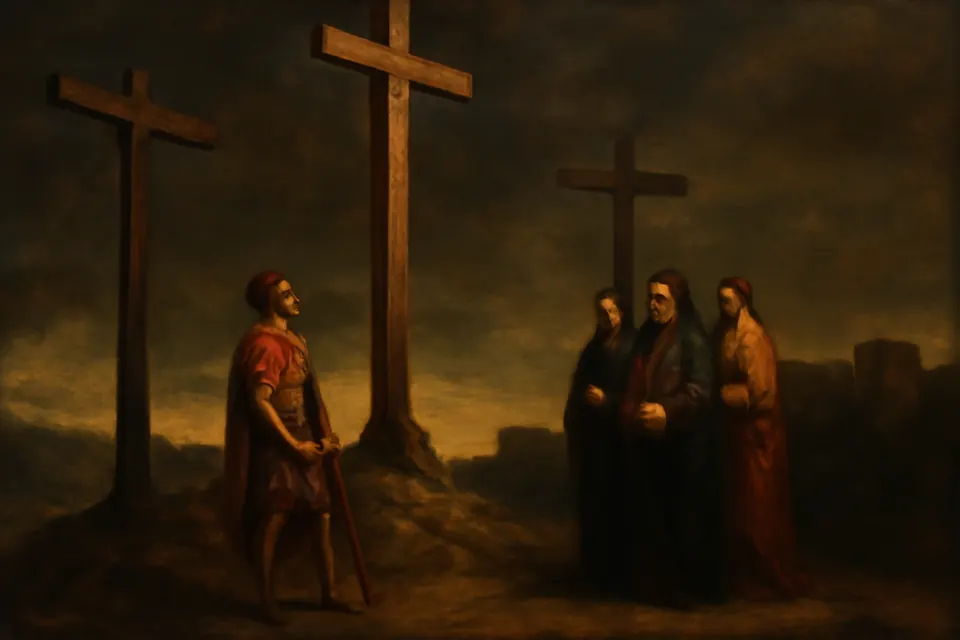
The Holy Lance is the spear with which a Roman soldier opened the side of Jesus on the Cross (John 19:34); tradition names him St. Longinus. Four lances have claimed to be it, in St. Peter's in Rome, Vienna, Kraków and Etchmiadzin, Armenia, and none is proven. The "Spear of Destiny" legend of world-ruling power is a 20th-century invention.
When Jesus had died on the Cross, the soldiers came to break the legs of the men crucified with him. "But after they were come to Jesus, when they saw that he was already dead, they did not break his legs. But one of the soldiers with a spear opened his side, and immediately there came out blood and water" (John 19:33–34, Douay-Rheims). St. John, who stood at the foot of the Cross, adds at once: "And he that saw it, hath given testimony; and his testimony is true." The spear in that verse became the Holy Lance, one of the great relics of the Passion. This page follows it from Calvary to the four churches and treasuries that have claimed it, tells the strange story of Antioch in 1098, and clears away the modern legend of the "Spear of Destiny."
The lance in the Gospel
St. John records the piercing because it fulfilled two Scriptures: "You shall not break a bone of him," said of the Passover lamb, and "They shall look on him whom they pierced" (John 19:36–37, citing Zechariah 12:10). The Fathers of the Church saw far more in it. St. Augustine noticed that John chose his verb carefully:
not saying pierced, or wounded His side, or anything else, but opened; that thereby, in a sense, the gate of life might be thrown open, from whence have flowed forth the sacraments of the Church
The blood, Augustine says, was shed for the remission of sins, and the water "supplies at once the laver of baptism and water for drinking." Devotion to the Sacred Heart of Jesus grew from the same wound, and we pray in the Anima Christi, "Water from the side of Christ, wash me."

The Gospel does not name the soldier. Tradition calls him St. Longinus, a name already written over the soldier with the lance in the Syriac Rabbula Gospels of 586, and tells that he was healed of failing sight by the blood from the wound, believed and died a martyr. That story is traditional; his life is told on his own page.
The history of the Holy Lance
The Catholic Encyclopedia's article on the Holy Lance, by the Jesuit historian Herbert Thurston, is still the most careful guide, and it begins with a frank admission: "Of the weapon thus sanctified nothing is known" until the late 500s.
- Jerusalem, about 570. A pilgrim from Piacenza saw in the basilica on Mount Sion "the crown of thorns with which Our Lord was crowned and the lance with which He was struck in the side." Cassiodorus and St. Gregory of Tours also knew of it.
- Constantinople, from 615. When the Persians took Jerusalem, the broken-off point of the lance was carried to Constantinople and set in an icon in Hagia Sophia. The larger part seems to have followed it there later.
- Paris, 1244. The Latin emperor Baldwin II gave the point to St. Louis IX, who enshrined it with the Crown of Thorns in the Sainte-Chapelle. During the French Revolution it disappeared; the Crown survived and is in Paris today.
- Rome, 1492. The larger part of the blade stayed in Constantinople until the city fell to the Turks. In 1492 Sultan Bayezid II sent it to Pope Innocent VIII as a gift, to keep the pope's goodwill while the sultan's brother was held in Rome. It has been in St. Peter's ever since.
Thurston notes that at the time "great doubts as to its authenticity were felt at Rome," because other lances were already venerated at Nuremberg, Paris and elsewhere. In the 1700s Pope Benedict XIV obtained an exact drawing of the Paris point and was satisfied that it and the Roman blade had once been a single weapon. Today the Roman lance is kept with the other relics of the Passion in the chapel above the statue of St. Veronica, and its niche below holds Bernini's marble Longinus. The relics are shown to the faithful in Holy Week.
The "discovery" at Antioch, 1098
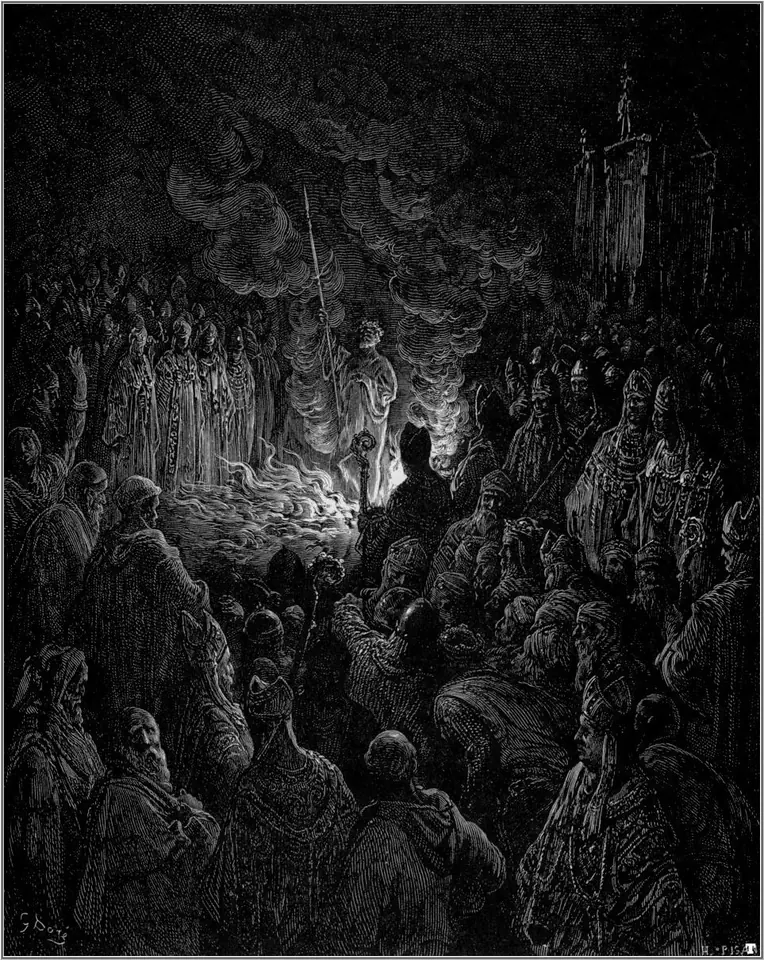
The strangest chapter belongs to the First Crusade. In June 1098 the crusaders had just taken Antioch and were themselves besieged inside it by a vast Turkish army under Kerbogha. They were starving and close to despair. A poor Provençal pilgrim named Peter Bartholomew came forward and said that St. Andrew had appeared to him in visions and shown him where the lance that pierced Christ lay buried, in the city's church of St. Peter.
Twelve men dug there all day. When they had nearly given up, Peter himself climbed into the pit in his shirt, barefoot, and a piece of iron was found. Raymond d'Aguilers, chaplain to Count Raymond of Toulouse, was among the diggers, and wrote: "I, who have written this, kissed it when the point alone had as yet appeared above ground." The date was June 14, 1098. Two weeks later the crusaders marched out behind the relic and routed Kerbogha's army.

Doubts never went away. Many in the army thought the find was staged. The next spring, to silence his critics, Peter Bartholomew offered to prove his visions by walking through fire. He came out terribly burned and died some days later, and the relic's reputation died with him. This encyclopedia labels the Antioch lance a reported discovery that was never confirmed. Thurston thought it probably the same object now kept by the Armenian Church at Etchmiadzin, which he described as "never in any proper sense a lance, but rather the head of a standard."
The Vienna lance
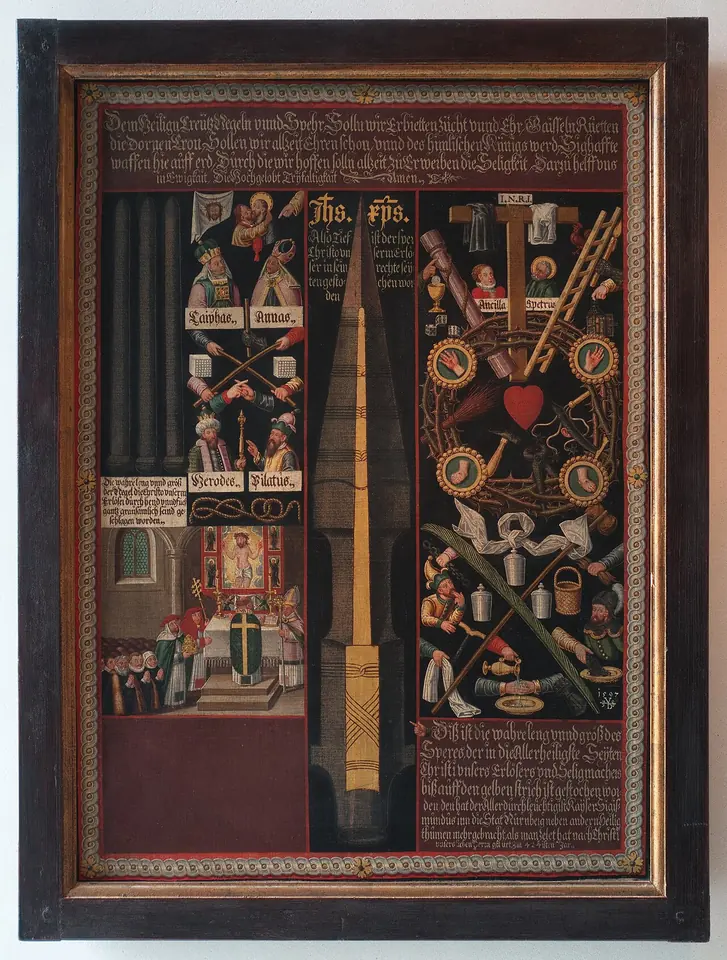
The best-known Holy Lance today is kept in the Imperial Treasury in the Hofburg palace in Vienna, among the crown jewels of the Holy Roman Empire. The Kunsthistorisches Museum, which cares for it, describes it as a Carolingian winged lance of the 8th century. An iron pin set in an opening in the blade came to be venerated as one of the nails of the Crucifixion. A silver sleeve from the 11th century names Emperor Henry III and speaks of the nail and the lance of St. Maurice. A gold sleeve added under Emperor Charles IV in the 14th century bears the words LANCEA ET CLAVVS DOMINI, "the lance and nail of the Lord," and Charles had the pope establish a feast in honor of the Lance and the Nail.
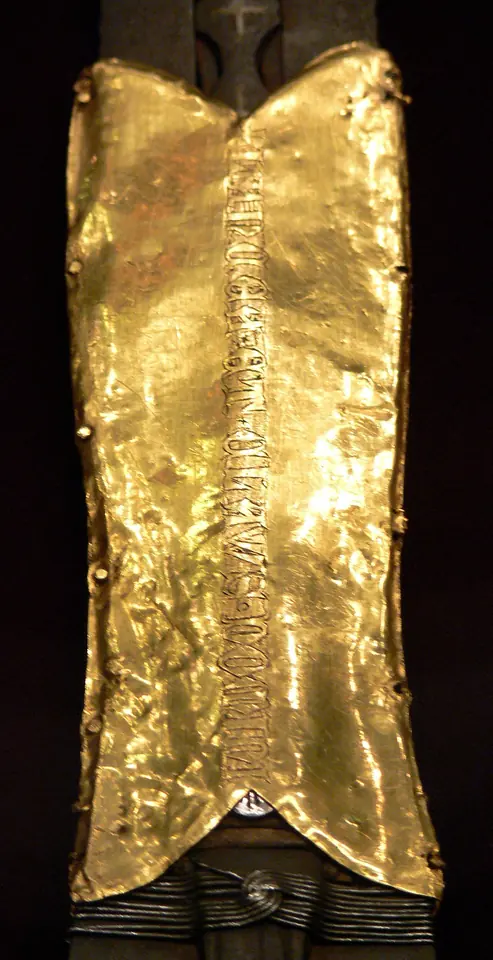
Over the centuries the lance was linked with Constantine, with the soldier-martyr St. Maurice and, by the 1200s, with Longinus. It was carried at imperial coronations by 1273 and was the most honored of the imperial insignia. From the early 11th century it was kept inside the great jeweled Imperial Cross.
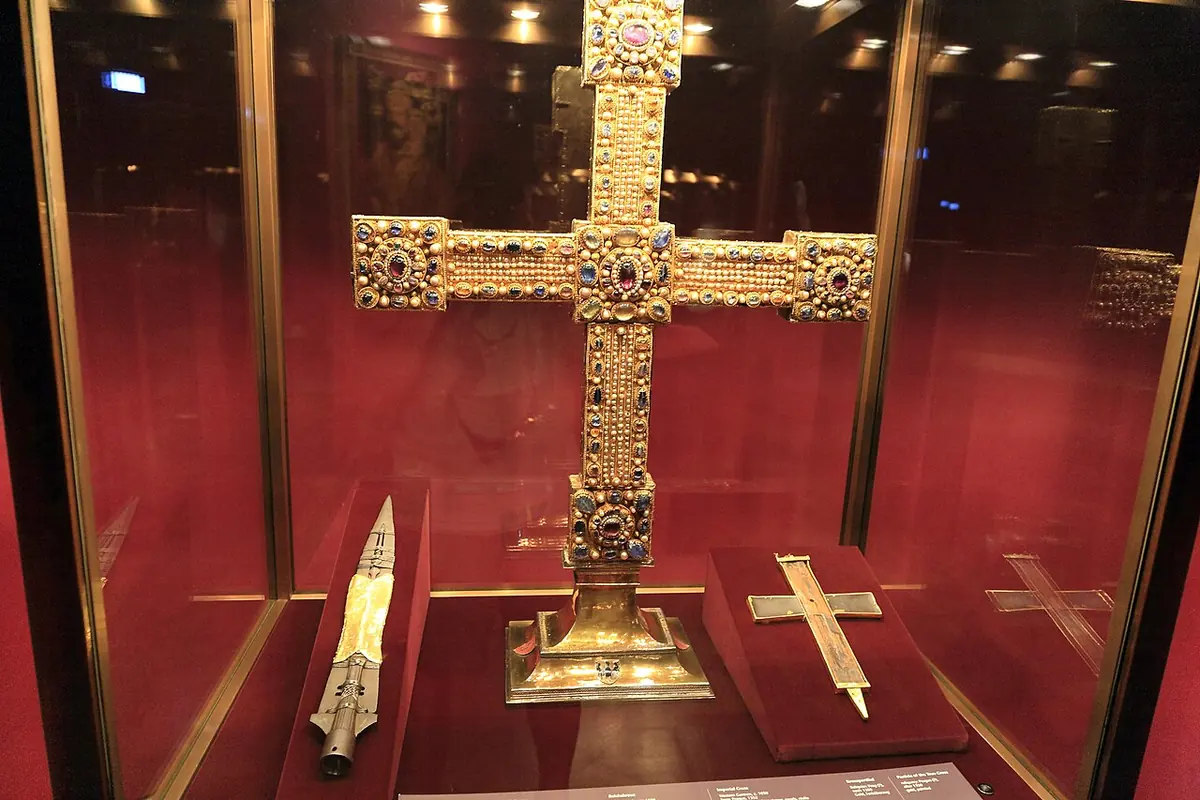
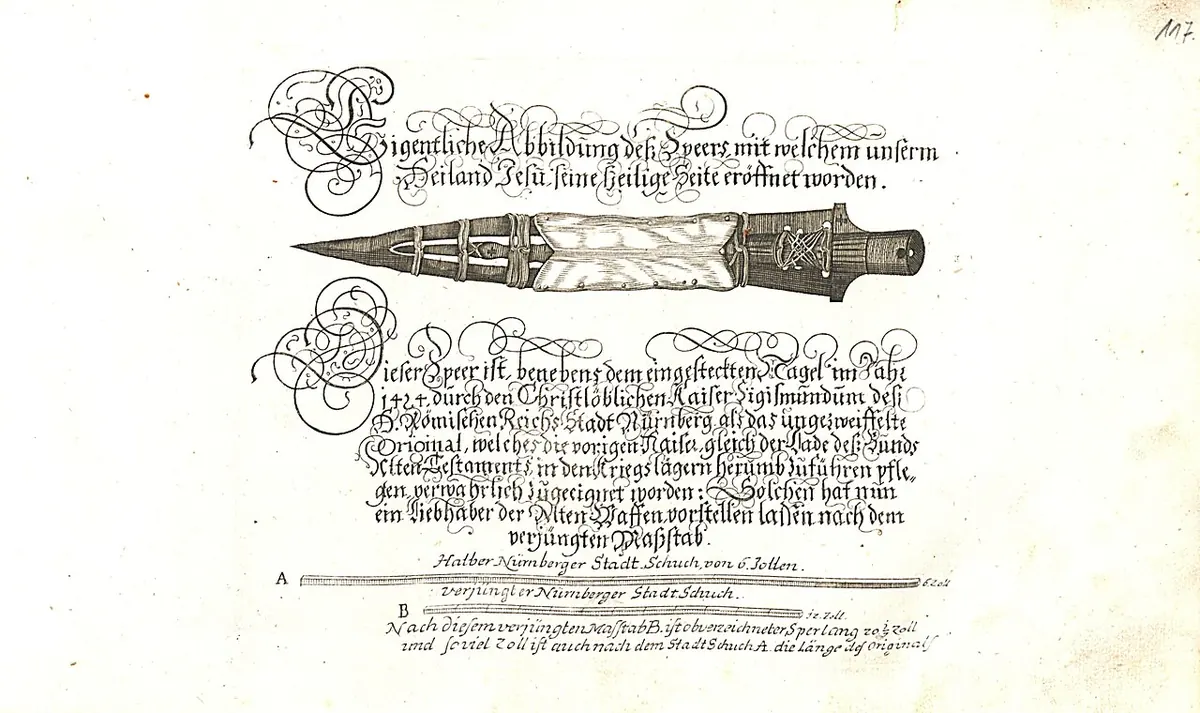
From 1424 the regalia were kept in Nuremberg, where the city showed its relics publicly. They went to Vienna to escape Napoleon's armies. In 1938, after Austria was annexed, Hitler had them taken back to Nuremberg; American soldiers recovered them in 1945, and they were returned to Vienna in 1946.
Kraków and Etchmiadzin
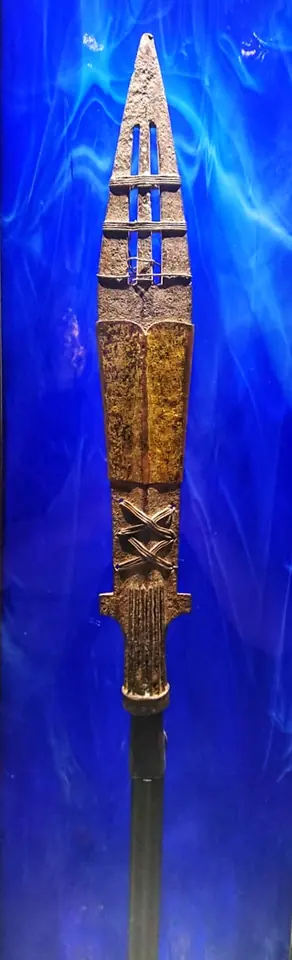
In Kraków, the treasury of Wawel Cathedral keeps a lance of St. Maurice. Polish tradition holds that it is the copy of the imperial lance that Emperor Otto III gave to Bolesław the Brave at Gniezno in the year 1000. Thurston wrote that "it is impossible to trace its earlier history."
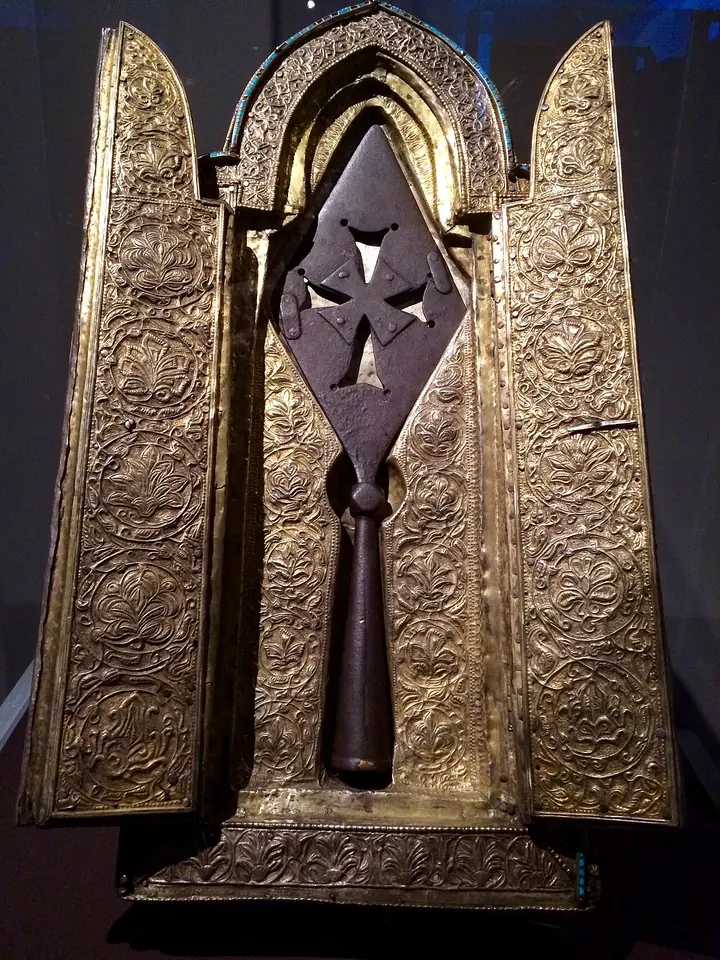
The Armenian Apostolic Church keeps its Holy Lance, the Geghard, at the Mother See of Holy Etchmiadzin. By Armenian tradition the Apostle Thaddeus brought it to Armenia in the first century. From the 13th century it was kept at the cave monastery of Ayrivank, which was renamed Geghardavank, "Monastery of the Spear," in its honor; it came to Etchmiadzin in the second half of the 1700s. The Armenian Church uses it to bless the holy chrism (Muron), and it is brought out for veneration on the feast of Sts. Thaddeus and Bartholomew.
The "Spear of Destiny" legend
Search for the Holy Lance and you will soon meet the "Spear of Destiny." The phrase comes from Trevor Ravenscroft's 1973 book of that name, which claimed that whoever held the lance would hold the destiny of the world, that a chain of conquerors had sought it, and that Hitler plotted for years to possess it. Novels, films and websites have added layers of occult lore ever since.
None of it has any basis in history. The real story of the Vienna lance is told above: a Carolingian spearhead, prized by medieval emperors as a relic and a sign of their office, moved by Hitler in 1938 along with the rest of the crown jewels, and given back after the war. The medieval belief that the lance brought victory in battle was a hope placed in God's help, as the crusaders at Antioch understood it, not a belief in a talisman.
It is worth saying plainly, and kindly, because the legend can mislead. The Church teaches that no relic has power of its own. Relics are honored because of the holy person or event they recall, and any grace that comes to us through them comes from God, through faith and prayer.
What the Church says about the Holy Lance
The Church has never declared any of the four lances to be the spear of Calvary. St. Peter's keeps and venerates its relic of the lance with the other relics of the Passion, as a memorial of Christ's death. Pope Benedict XIV's comparison and Thurston's careful study show how seriously the Church has taken the historical question, and also how uncertain the answer remains.
What is certain is the Gospel itself. A soldier's spear opened the side of the Lord, and from it flowed the blood and water by which the Church lives. When we venerate the Holy Lance, or simply pray before a crucifix, that is the mystery we honor. For the other relics of the Passion, see the True Cross, the Veil of Veronica and the Shroud of Turin, and read how the Church treats relics.
Frequently asked questions
Where is the Holy Lance today?
Four relics have claimed the title. A blade sent from Constantinople in 1492 is kept in St. Peter's Basilica. The lance of the Holy Roman emperors is in the Imperial Treasury in Vienna. Wawel Cathedral in Kraków has a copy of the Vienna lance, by tradition given to the Polish ruler Bolesław the Brave in the year 1000. The Armenian Church keeps the Geghard lance at Etchmiadzin. The Catholic Encyclopedia reviews all of them and treats none as proven.
What is the Spear of Destiny?
It is a modern name for the Vienna lance, made famous by Trevor Ravenscroft's 1973 book The Spear of Destiny, which claimed that whoever held the lance held the fate of the world and that Hitler was obsessed with it. No historical source supports those claims. The lance is a Carolingian iron spearhead of the 8th century, venerated in the Middle Ages as a relic, and it has no power of its own.
Who was the soldier who pierced Jesus with a spear?
St. John's Gospel calls him only "one of the soldiers." Christian tradition named him Longinus, a name found over the soldier with the lance in the Syriac Rabbula Gospels of 586, and honored him as a convert and martyr. The Church keeps his memory on October 16 in the Roman Martyrology.
Was the Holy Lance really found at Antioch in 1098?
During the First Crusade a poor pilgrim named Peter Bartholomew said St. Andrew had shown him in visions where the lance lay buried, and on June 14, 1098, a spearhead was dug up in the church of St. Peter at Antioch. Many crusaders doubted it even then. The Church never confirmed it, and the Catholic Encyclopedia speaks of its "very questionable circumstances."
Why is the Holy Lance important to Christians?
Because of what it did. St. John saw blood and water flow from Christ's opened side, and St. Augustine taught that in that moment "the gate of life" was opened, "from whence have flowed forth the sacraments of the Church." The lance matters as a witness to that moment, not as an object of power.
Sources
- Catholic Encyclopedia (1910): The Holy Lance
- St. Augustine, Tractate 120 on the Gospel of John (New Advent)
- Raymond d'Aguilers, Historia francorum (excerpts), Internet Medieval Sourcebook
- Kunsthistorisches Museum Vienna: Die Heilige Lanze
- Austria-Forum: Reichsinsignien (Imperial Regalia)
- Mother See of Holy Etchmiadzin: Holy Lance 'Geghard' will be brought to the Mother Cathedral (2017)
- Giovanni Giuliani, Guide to Saint Peter's Basilica: The Four Relics