Brown Scapular
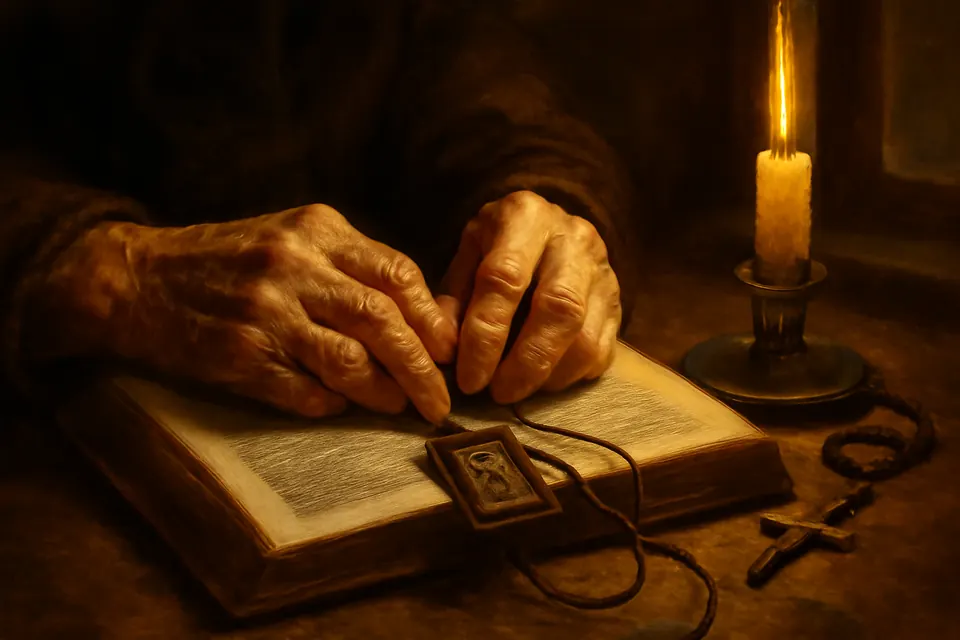
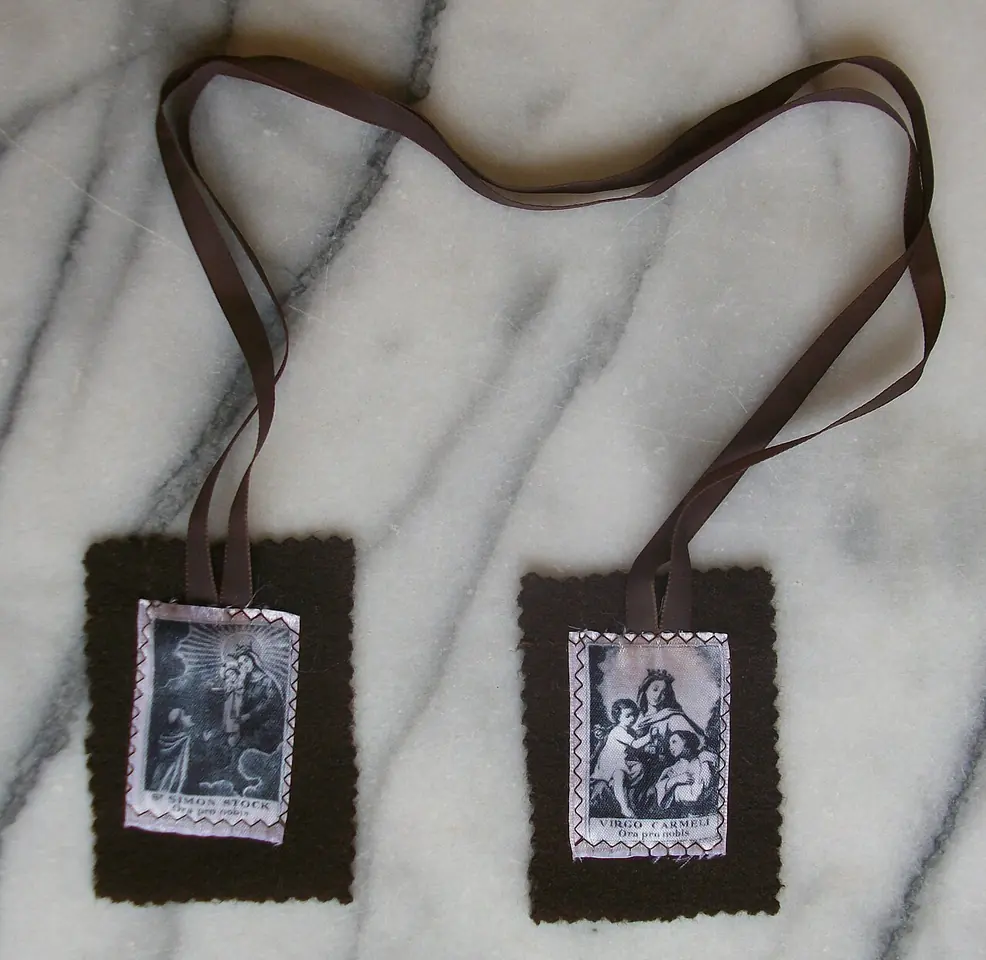
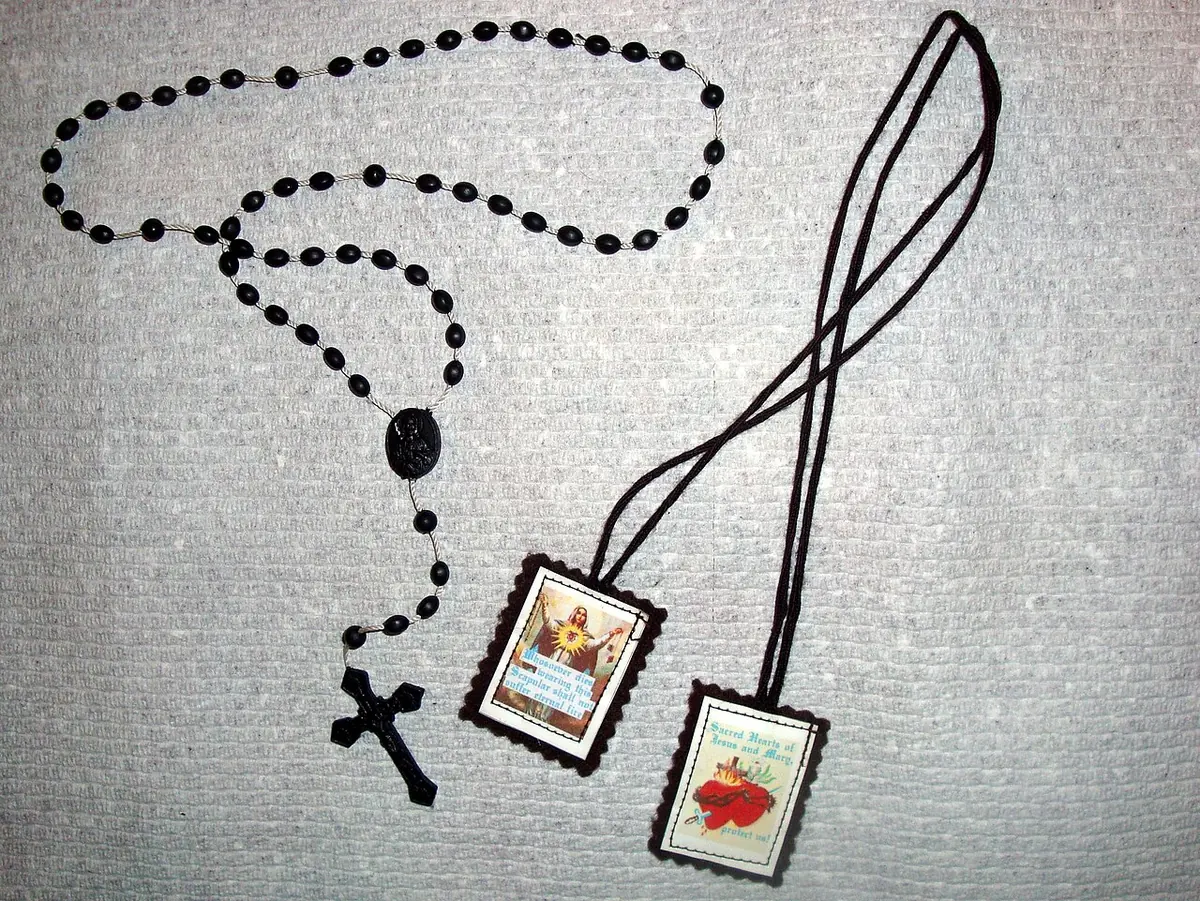
The brown scapular is two small pieces of brown wool joined by cords and worn over the shoulders, a miniature of the habit of the Carmelite order. The Church blesses it as a sacramental: a sign that the wearer belongs to Mary and has promised to live as her child. A priest enrolls you in it once, and it may later be replaced by a blessed scapular medal.
Millions of Catholics wear it under their clothes every day, and many could not tell you exactly what it is. The brown scapular is small enough to forget, two squares of brown wool on a pair of cords, yet it carries one of the best-loved promises in Marian devotion. This page explains what the brown scapular is, where it came from, what the scapular promise really means, how to be enrolled, and how to wear it and care for it.
What is a scapular?
The word comes from the Latin scapulae, the shoulders. In the Middle Ages a scapular was a long, plain apron that monks and friars wore over their habit, hanging down in front and behind. It was the working part of the habit, and in time it became its most distinctive part.
Lay people who loved a religious order wanted a share in its life and prayer, and the orders gave them a share in the habit itself. Over the centuries this gift shrank to two small pieces of wool joined by strings, so that the front piece rests on the chest and the back piece between the shoulders. The Catholic Encyclopedia (1912) describes the small scapular this way and notes that the cloth must be woven wool, while the cords may be any material.
The Church approves several scapulars: white for the Holy Trinity, black for the Seven Sorrows, red for the Passion, blue for the Immaculate Conception. But when people say "the scapular," they almost always mean the brown scapular of Our Lady of Mount Carmel, the oldest and most widespread of them.
The brown scapular meaning: wearing Mary's habit
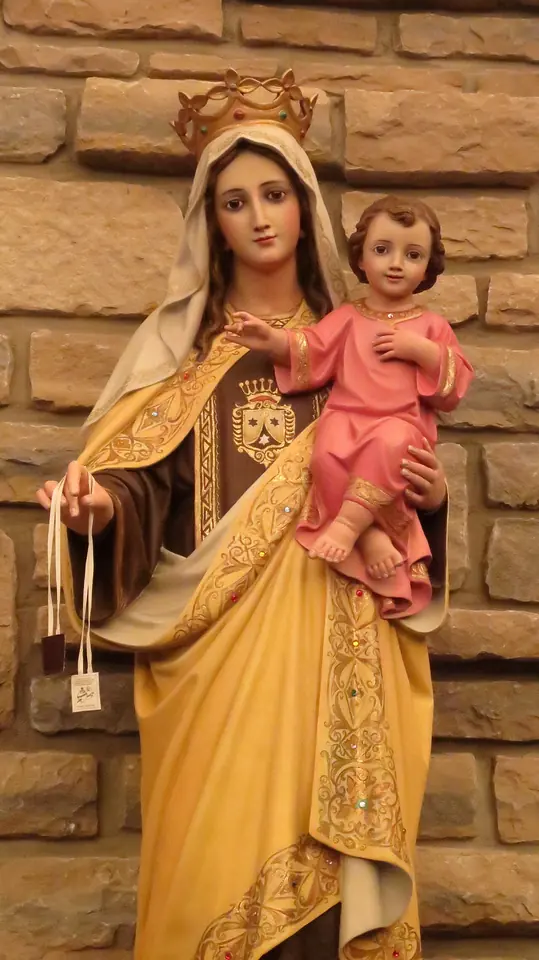
The brown scapular is a small form of the habit of the Carmelites, the order that began with hermits on Mount Carmel in the Holy Land and took Mary as its patroness. To wear it is to be clothed, in a small way, as her friars and nuns are clothed. The Vatican's 2001 Directory on Popular Piety and the Liturgy calls it "an external sign of the filial relationship established between the Blessed Virgin Mary, Mother and Queen of Mount Carmel, and the faithful who entrust themselves totally to her protection."
The rite of enrollment adds a second meaning that takes us back to Baptism. The Directory quotes it: the scapular is "a reminder that in Baptism we have been clothed in Christ." Mary's habit points beyond Mary, to her Son.
Pope John Paul II, writing to the Carmelites for the 750th anniversary of the scapular in 2001, said it "is essentially a 'habit'" and drew out two truths it signifies: "the constant protection of the Blessed Virgin, not only on life's journey, but also at the moment of passing into the fullness of eternal glory," and the awareness that devotion to her "must become a 'habit', that is, a permanent orientation of one's own Christian conduct, woven of prayer and interior life, through frequent reception of the sacraments and the concrete practice of the spiritual and corporal works of mercy."
St. Simon Stock and the vision of 1251
What history can say
St. Simon Stock was an Englishman who became prior general of the Carmelites in 1247 and died at Bordeaux in 1265. The order had recently come to Europe from the Holy Land and was struggling to survive. Those facts are well documented.
The vision: traditional
The famous story says that on July 16, 1251, at Cambridge, Our Lady appeared to Simon with the scapular in her hand and said: "Take, beloved son this scapular of thy order as a badge of my confraternity and for thee and all Carmelites a special sign of grace; whoever dies in this garment, will not suffer everlasting fire. It is the sign of salvation, a safeguard in dangers, a pledge of peace and of the covenant."
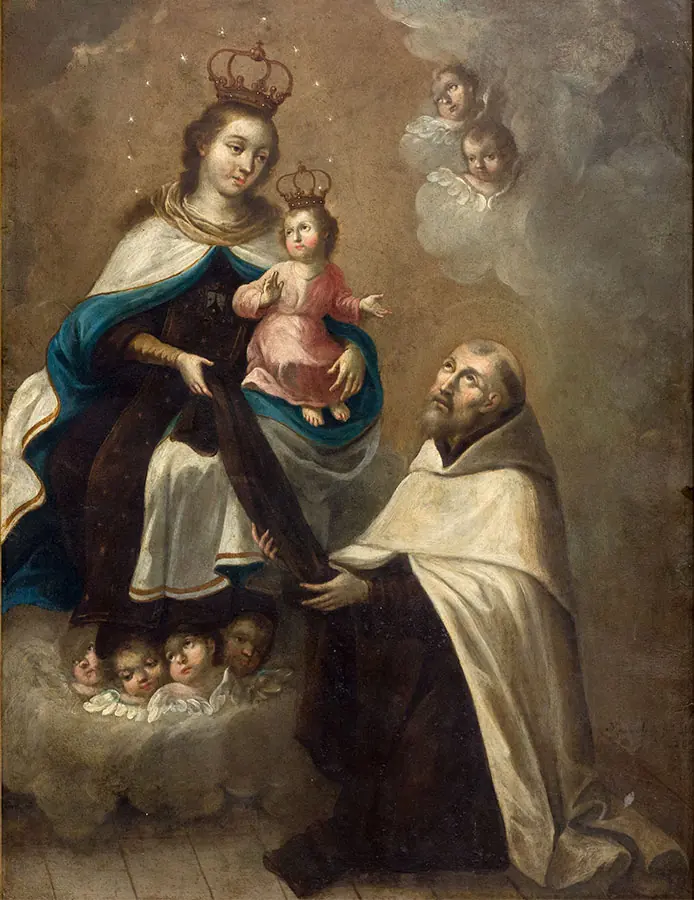
We should be honest about the sources. Shorter forms of the story appear in Carmelite writings of the late 14th and 15th centuries, more than a century after Simon's death. The full wording quoted above first appears in 1642. The Catholic Encyclopedia (1912) grants that this testimony "cannot be supported by historical documents," yet calls its general content "a reliable pious tradition." This encyclopedia labels the vision traditional. The Church has never needed to rule on the vision, because what it approves is the scapular itself and the devotion it expresses, which have been blessed and recommended by popes for centuries.
The brown scapular promise, understood rightly
The promise that those who die wearing the scapular "will not suffer everlasting fire" is the heart of the devotion and also the part most often misunderstood.
The Church teaches that sacramentals "do not confer the grace of the Holy Spirit in the way that the sacraments do, but by the Church's prayer, they prepare us to receive grace and dispose us to cooperate with it" (Catechism 1670). Their power comes from God, through the prayer of the Church, received with faith. So the scapular is not a charm. The Catechism names the danger plainly: "To attribute the efficacy of prayers or of sacramental signs to their mere external performance, apart from the interior dispositions that they demand, is to fall into superstition" (Catechism 2111).
The Catholic Encyclopedia explains the promise in the same spirit. Whoever wears the scapular faithfully, "not presumptuously relying on the scapular as on a miraculous amulet, but trustfully confiding in the power and goodness of Mary, may securely hope that Mary will through her powerful and motherly intercession procure for him all the necessary graces for true conversion and for perseverance in good." That is the promise: a mother's help to bring her children home, even a sinner who keeps reaching for her.
The Carmelite order puts the limits in three lines. The brown scapular is not "a magical charm to protect you," not "an automatic guarantee of salvation," and not "an excuse for not living up to the demands of the Christian life."

The Sabbatine privilege and the 1613 decree
A second promise has long been attached to the scapular. The Sabbatine (Saturday) privilege is the belief that Mary will free faithful scapular wearers from purgatory soon after death, especially on the Saturday after they die. It comes from a bull said to have been issued by Pope John XXII in 1322, after Mary appeared to him. Scholars, including the Carmelite historian Benedict Zimmerman, agree that this bull is not authentic.
What the Church did say came in a decree of the Holy Office (the Roman Inquisition) under Pope Paul V on January 20, 1613. It did not rule on the bull. It only set what the Carmelites might preach: that the faithful "may piously believe" in Mary's help after death for souls who died in charity, wore the scapular, kept chastity according to their state of life, and prayed the Little Office of Our Lady (or, if they could not read, kept the Church's fasts and abstained from meat on Wednesdays and Saturdays), "especially on Saturdays, the day consecrated by the Church to the Blessed Virgin." The same decree forbade pictures of Mary descending into purgatory to free souls.
So we may hope for Mary's help for the holy souls, as the Church allows. Purgatory is the purification of those who die in God's friendship, and Mary's prayers for her children do not stop at death. What the decree does not teach is a fixed release on the first Saturday, and it says nothing of the forged bull's details. The conditions it names, chastity and daily prayer, show what the privilege was always about: a life given to Mary, not a cloth worn by itself.
Enrollment in the brown scapular
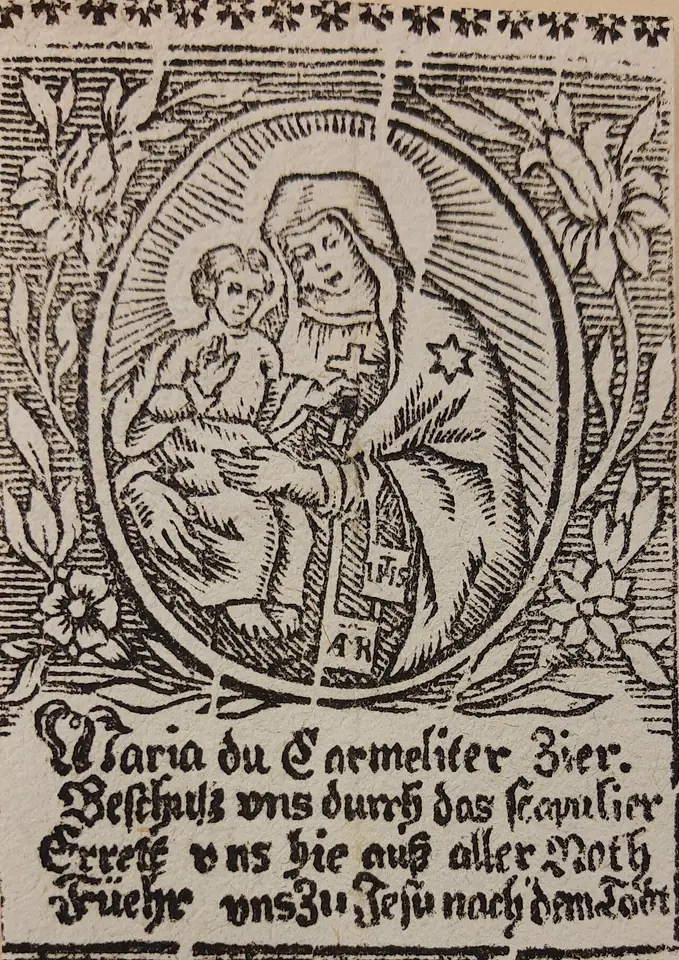
A person is enrolled in the brown scapular once, by a priest or another person authorized by the Church, using the Church's rite of blessing and enrollment. The enrollment joins you to the spiritual family of Carmel. The Directory on Popular Piety asks that it be celebrated with "the seriousness of its origins" and "not be improvised," after a period of preparation in which the faithful learn what they are taking on.
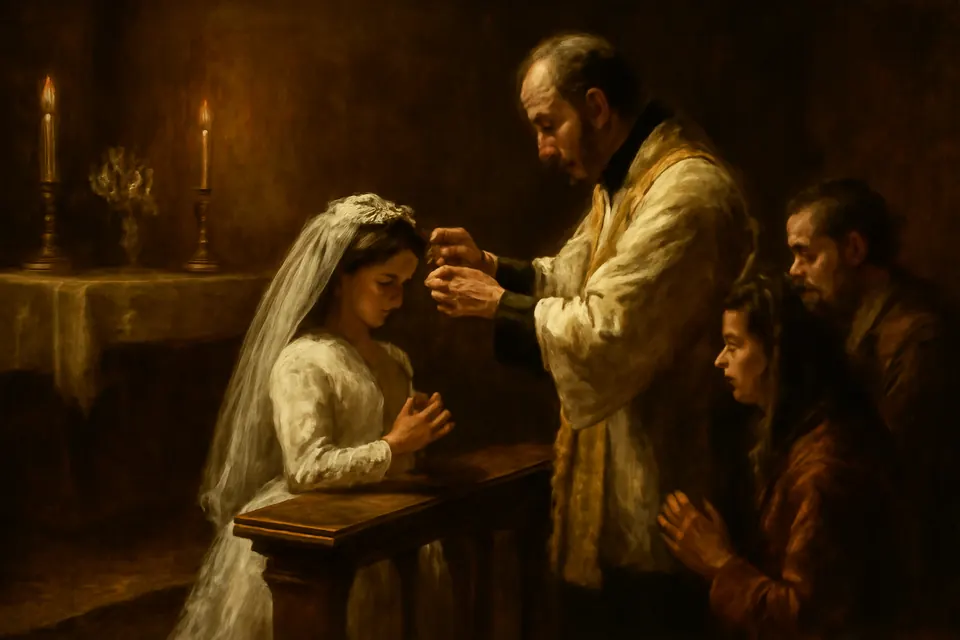
In many parishes children are enrolled on the day of their First Holy Communion. Adults can ask any priest. The short form of enrollment given by the Order of Carmelites begins, "Receive this Scapular, a sign of your special relationship with Mary, the Mother of Jesus, whom you pledge to imitate."
What does the scapular ask of you? The Carmelites answer simply: to live as an authentic Christian, to receive the sacraments, and to show devotion to Mary every day, for example by praying the Hail Mary, reading Scripture prayerfully, or serving someone in need. Many people also pray the Rosary, which pairs naturally with the scapular.
The scapular medal
By a decree of the Holy Office of December 16, 1910, under St. Pius X, anyone already enrolled in a cloth scapular may wear instead a blessed metal medal with the Sacred Heart of Jesus on one side and an image of Mary on the other.
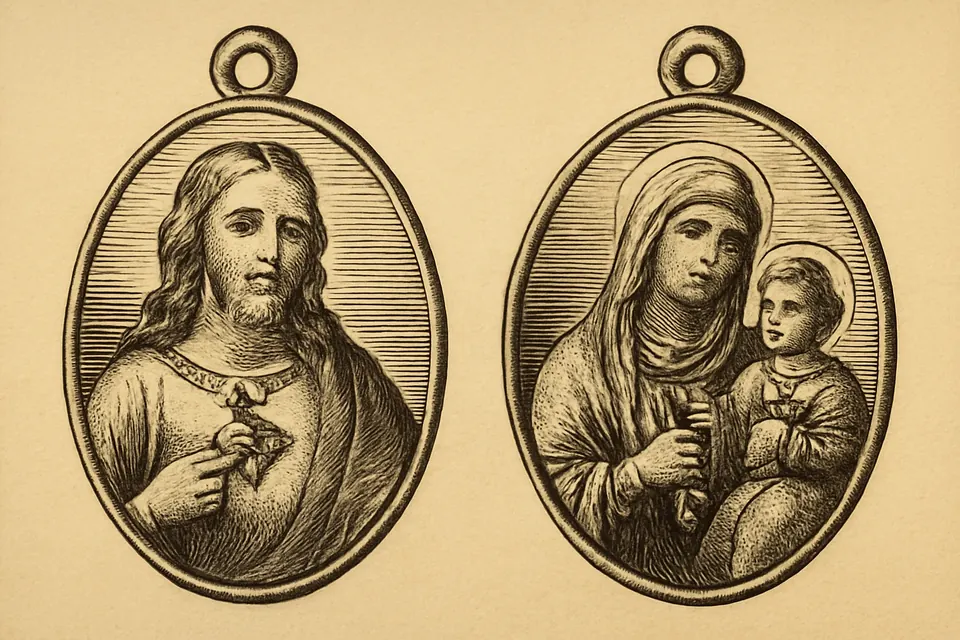
The medal must be blessed by a priest, and it carries the same meaning and privileges as the scapular it replaces, but only for someone already enrolled in the cloth scapular. Many Carmelites still encourage the cloth where possible, because it keeps the sign of a habit.
How to wear and care for the brown scapular
- Wear it day and night. One square rests on the chest and the other on the back, with the cords over the shoulders. It may be worn under or over clothing. You may take it off briefly, to bathe or for medical reasons.
- Replace it when it wears out. A new scapular does not need a new blessing after your enrollment, though many people like to have it blessed.
- Images are optional. Most brown scapulars carry a picture of Our Lady of Mount Carmel and often the Sacred Heart, but no image is required. The cloth should be wool, brown or black.
- Dispose of an old one reverently. Burn it or bury it, as with any blessed object.
- If you stop wearing it, you have not lost your enrollment. Simply put it on again.
Saints and the brown scapular
The scapular belongs to the whole Carmelite family of saints: St. Teresa of Ávila, St. John of the Cross, St. Thérèse of Lisieux and the martyr St. Titus Brandsma. St. John Paul II wrote in 2001, "I too have worn the Scapular of Carmel over my heart for a long time!" The feast of Our Lady of Mount Carmel, the "feast of the scapular," falls on July 16 (see our feast days calendar).
Let us wear it as the Church means it to be worn: as a small habit, put on each morning as a promise to belong to Mary and, through her, to Jesus. Our Lady of Mount Carmel, pray for us.
Frequently asked questions
What is a scapular?
Originally a scapular was the long apron of cloth worn over a monk's or friar's habit, hanging from the shoulders (Latin scapulae) in front and behind. The small scapulars worn by lay people are miniatures of it, two pieces of wool joined by cords. The brown scapular of Our Lady of Mount Carmel is the best known, but the Church also approves others, such as the white scapular of the Holy Trinity and the red scapular of the Passion.
What is the brown scapular promise?
Carmelite tradition says Mary told St. Simon Stock, "whoever dies in this garment, will not suffer everlasting fire." The Church understands it as a promise of Mary's motherly help toward conversion and perseverance for those who wear the scapular faithfully, live as Christians and trust in her intercession. It is not a guarantee of salvation apart from faith, the sacraments and a Christian life.
Who can enroll you in the brown scapular?
A priest, or another person authorized by the Church, enrolls you once with the Church's blessing and rite. After that you never need to be enrolled again. When a scapular wears out, you simply put on a new one, which does not need a new blessing, though many people like to have it blessed.
Can a non-Catholic wear a brown scapular?
The scapular is a sign of consecration to Mary within the Catholic faith, and the Church asks that enrollment follow a period of preparation. Anyone drawn to it is welcome to speak with a priest, who can explain what it means and how to receive it.
Can I wear a scapular medal instead of the cloth scapular?
Yes. Since a decree of the Holy Office of December 16, 1910, a person already enrolled in the cloth scapular may wear a blessed medal with the Sacred Heart of Jesus on one side and an image of Mary on the other instead. The Carmelite order still encourages the cloth scapular where possible.
What do you do with an old or worn-out scapular?
Because it is a blessed object, it should not be thrown in the trash. The customary ways are to burn it or bury it.
Sources
- Catechism of the Catholic Church, nos. 1667–1679: Sacramentals
- Catechism of the Catholic Church, no. 2111: Superstition
- Catholic Encyclopedia (1912): Scapular (on the small scapulars and the 1910 scapular medal decree)
- Catholic Encyclopedia (1912): Sabbatine Privilege
- Congregation for Divine Worship, Directory on Popular Piety and the Liturgy (2001), no. 205
- Pope John Paul II, Message to the Carmelite Order on the 750th anniversary of the scapular (March 25, 2001)
- Order of Carmelites (O.Carm.): The Brown Scapular