Venerable Matt Talbot
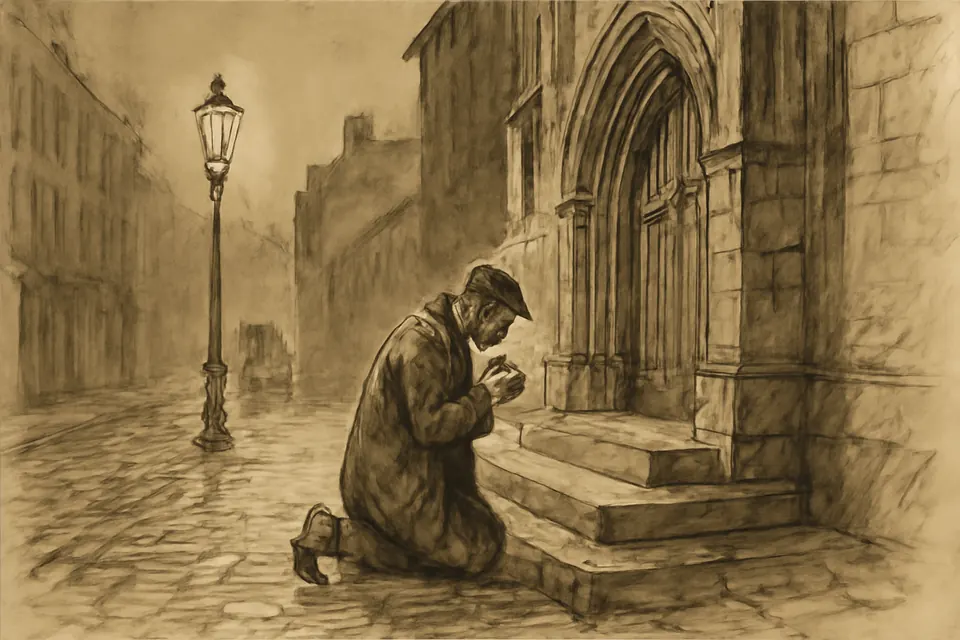
Matt Talbot (1856–1925) was a Dublin laborer who drank heavily from boyhood, took the pledge in 1884 at age 28, and stayed sober for the remaining 41 years of his life through daily Mass, prayer and hidden penance. Pope Paul VI declared him Venerable on October 3, 1975. He is not yet a saint, and people in recovery ask his prayers.
Venerable Matt Talbot was a Dublin laborer and a hopeless drunk by the age of sixteen. At twenty-eight he took the pledge, and for the next forty-one years, until he collapsed on a Dublin lane on his way to Mass, he never drank again. He did it, he said, with the help of God and Our Lady. Today his tomb in Dublin draws people from all over the world who are fighting the same fight, and the Church has declared him Venerable. Here is his life, the cause for his canonization, and the prayer we pray for it.
Who was Matt Talbot?
Matthew Talbot was born in Dublin on May 2, 1856, in the North Strand area of the city's inner north side. The Dominican friars of Dominick Street, whose church he attended for years, describe him as one of twelve children in a poor family. His father, Charles, drank heavily; so, in time, did most of his sons.
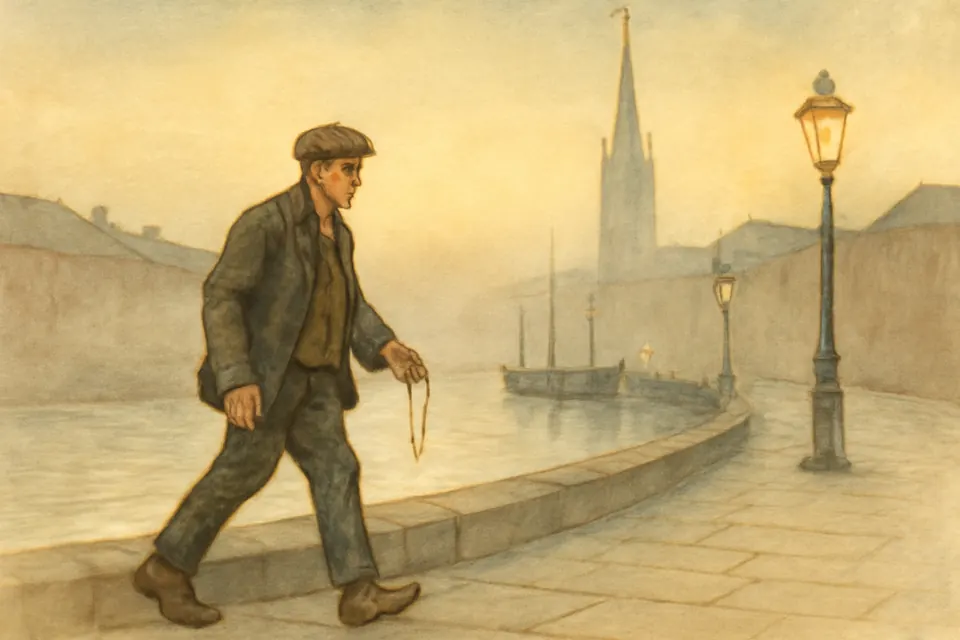
He went to school only briefly. The Columban Missionaries, who hold one of his letters, report that the roll book of O'Connell's school recorded him as a "mitcher," a Dublin word for a truant. He left school barely able to read and went to work as a boy in a wine and spirits bottling store, where the drink was close at hand. By about sixteen he was an alcoholic.
Sixteen years of drink
For the next dozen years almost everything he earned went across the bar. He pawned his clothes and even his boots for drink. Archbishop Dermot Farrell of Dublin, preaching at the centenary of his death, put it plainly: he "began drinking at twelve years of age" and became a chronic alcoholic.
Yet he never quite let go of God. The Columbans write that even in those years he went to Mass on Sundays and said a Hail Mary every day, though he had long stopped going to confession and Communion.
The pledge of 1884
The turn came in September 1884. Matt was out of work and out of money, and he waited outside a pub expecting his friends to stand him a drink, as he had so often done for them. They walked past him. The Columbans record that the refusal went "like a knife through Matt's heart."
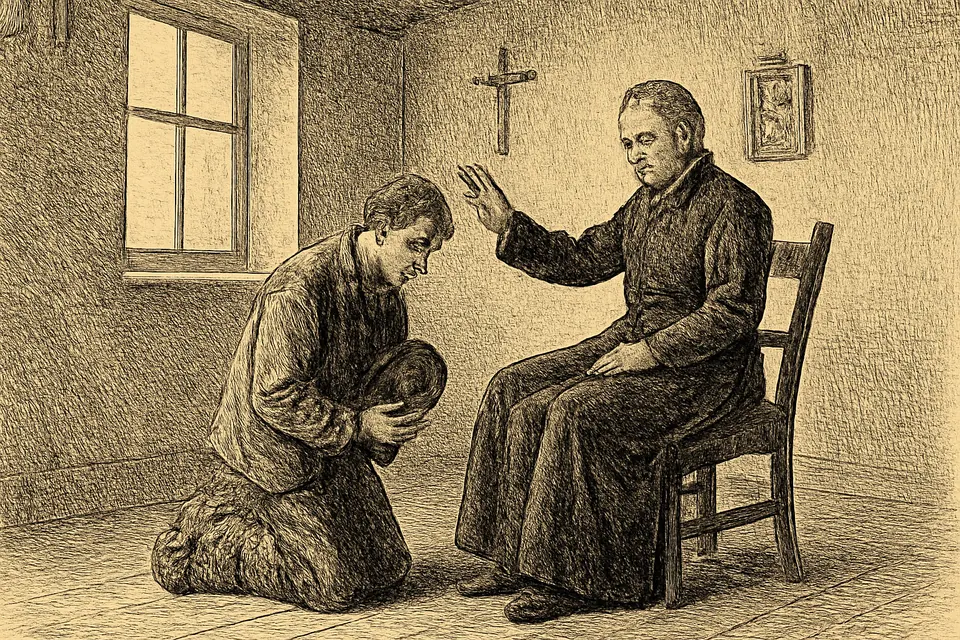
He went home sober and told his mother he would "take the pledge." He walked to Holy Cross College, the diocesan seminary at Clonliffe, made his confession to a priest there, and promised God he would not drink for three months. He kept it, renewed it, and then took the pledge for life.
The first months were very hard. He had no program or sponsor in the modern sense; he had the Mass, the Rosary and the friends he no longer drank with. He began going to Mass every morning before work, and he stayed away from the pubs by staying in church. He said later that it was easier to get out of hell than to give up the drink, and he spoke of his victory as a gift: "For me, it was only possible with the help of God and our Blessed Mother."
A laborer's life of prayer
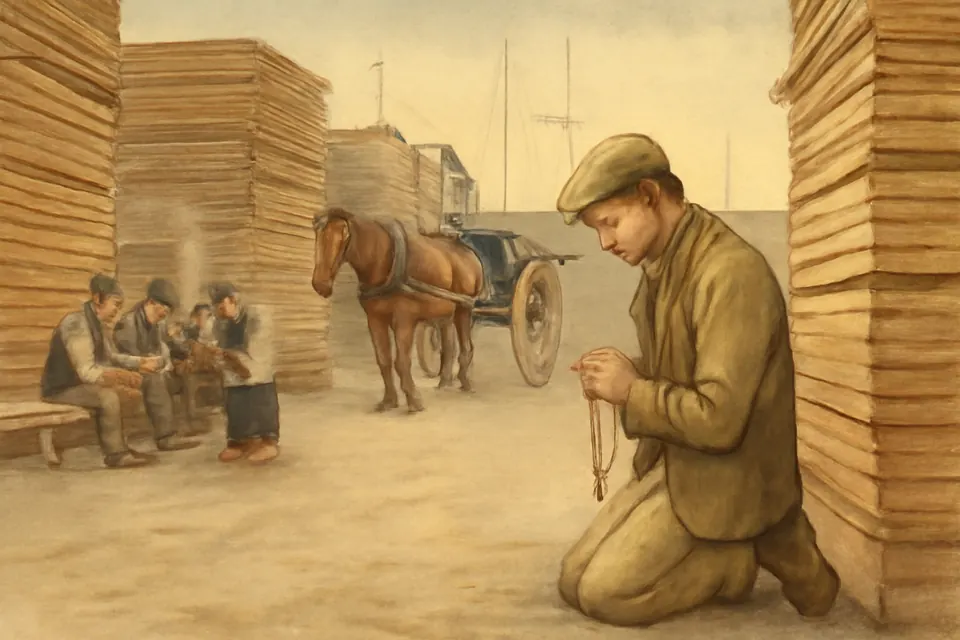
Matt Talbot worked for most of his life as a laborer, and for many years at T. & C. Martin's timber yard on the Dublin docks, carrying planks. His workmates knew his habits and respected them: he rose about five, heard Mass before the yard opened, and at break times he slipped away to pray in some quiet corner. On Sundays he went to several Masses.
He found guides in the Church. Fr. Michael Hickey, a professor at Clonliffe, directed him for many years and urged him to read. Matt, who struggled with print, worked his way through Scripture, the lives of the saints, St. Augustine's Confessions, St. Francis de Sales and St. Catherine of Siena. The Columbans add that his favorite was St. Thérèse of Lisieux, canonized just weeks before his death. He became a Franciscan tertiary, a member of the Third Order of St. Francis.
Whatever money he didn't give his mother he gave away. Much of it went to the missions. In December 1924, six months before he died, he wrote to the Maynooth Mission to China, as the Columbans were then known in Ireland: "I have been sick and given over by priest and doctor." He enclosed a pound, more than a week's wages for an unskilled laborer. The letter is kept in the Columban archives at Dalgan Park.
Hidden penance
Matt Talbot's penances were severe, and he hid them well. After his mother's death in 1915 he lived alone in a single room at 18 Upper Rutland Street, where, by the record on the plaque that now marks the site, he spent the last twenty-five years of his life. He slept on a plank bed with a block of wood for a pillow. He spent most of his evenings on his knees.
They are not a pattern for anyone in early recovery, and no one should take them up without a confessor's guidance. What they show is a heart given entirely to God, and a man who had once given everything to drink now giving everything to Christ.

His death on Trinity Sunday, 1925
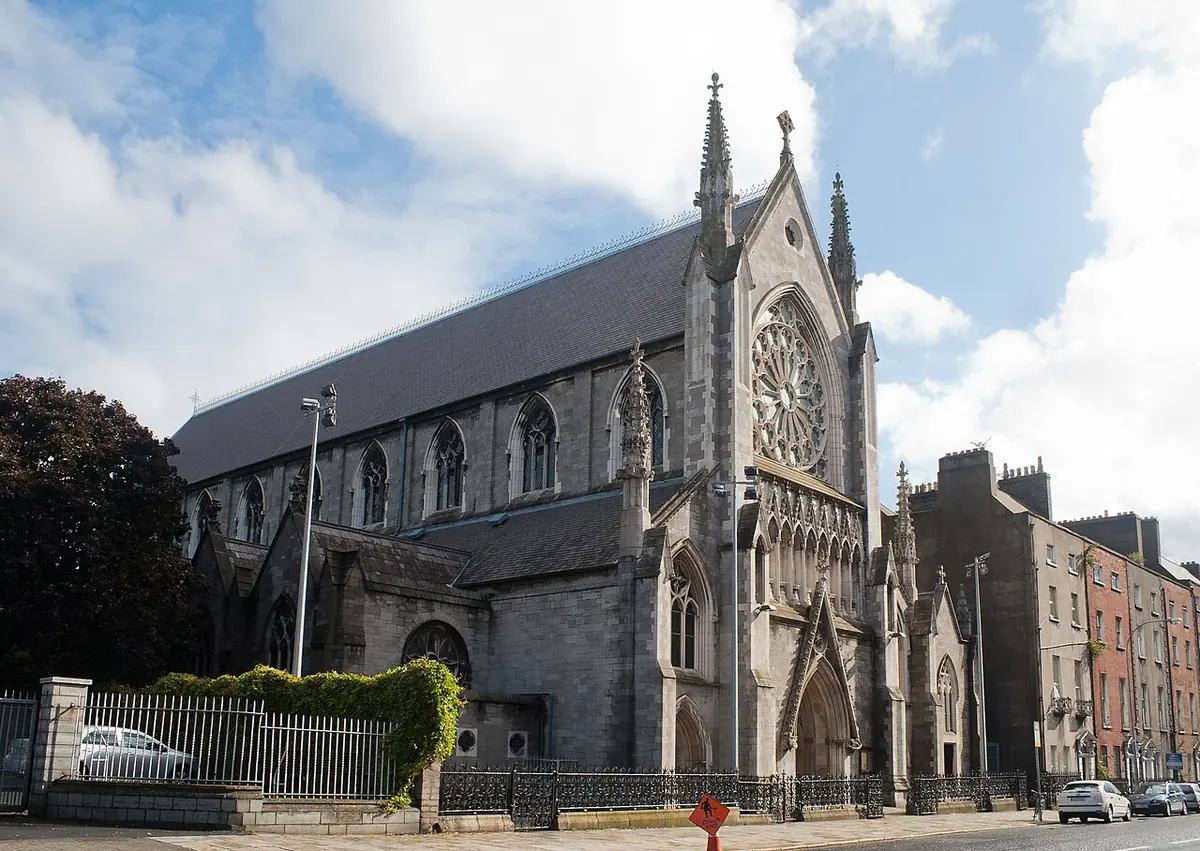
On Sunday, June 7, 1925, Trinity Sunday, Matt Talbot was walking to Mass at the Dominican church when he collapsed on Granby Lane. He died there of heart failure, aged sixty-nine. A Dominican friar from that priory came and attended his body. Because the death was sudden, he could not be given the last sacraments.
At the hospital they found penitential chains wrapped around his body. The Columbans explain that he wore them as a sign of devotion to Our Lady, after the teaching of St. Louis de Montfort on holy slavery to Jesus through Mary. Word of the chains spread through Dublin, and with it the stories of people who had known him. He had been buried quietly in Glasnevin Cemetery, but a devotion began to grow.

The cause for his canonization
In 1931 Archbishop Edward Byrne of Dublin opened the diocesan inquiry into Matt Talbot's life. In 1947 the cause went to Rome, and he received the title Servant of God. On October 3, 1975, Pope Paul VI declared him Venerable, the Church's recognition that he lived the Christian virtues to a heroic degree.
The next step, beatification, requires a miracle attributed to his intercession and approved by the Church. None has yet been approved. Until then we call him Venerable, never "Saint," and we may ask his prayers privately as often as we like.
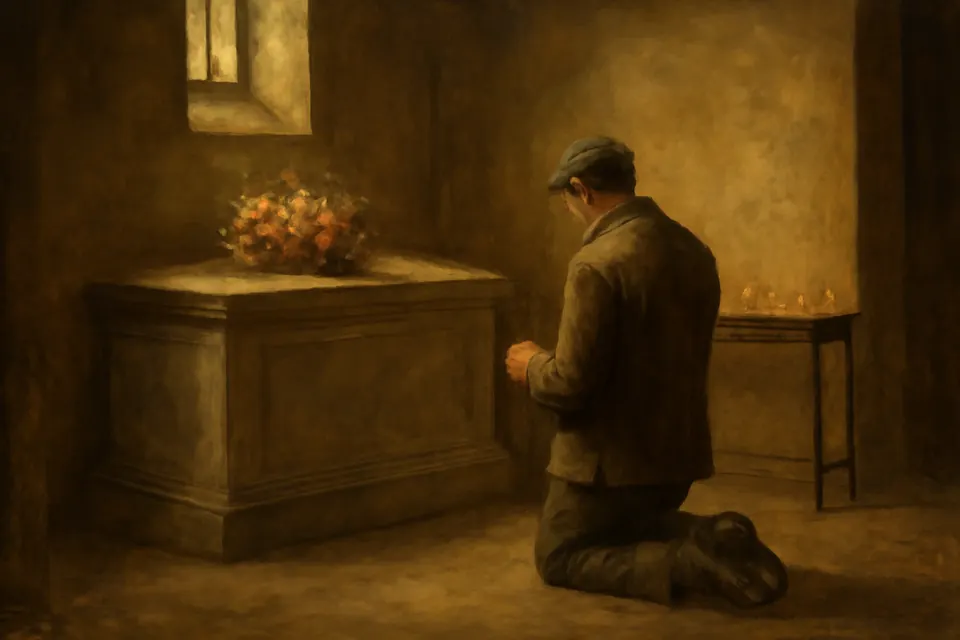
In 1972 his remains were moved from Glasnevin to the Church of Our Lady of Lourdes on Seán McDermott Street, close to where he lived. Archbishop John Charles McQuaid announced the move in August 1971, when he unveiled the plaque at Matt Talbot Court with President Éamon de Valera in attendance. On June 7, 2025, the hundredth anniversary of his death, Archbishop Farrell celebrated Mass for him at St. Mary's Pro-Cathedral and called him an "apostle of hope."
Matt Talbot and recovery
Matt Talbot found his sobriety half a century before Alcoholics Anonymous, but recovering alcoholics took to him at once. The Columbans record that in the early 1940s a small group of AA members in New Jersey began the Matt Talbot Retreat Movement for recovering alcoholics, which has spread across the United States and Canada. Catholic recovery fellowships, treatment houses, shelters and soup kitchens in many countries carry his name, and Dublin named a bridge over the Liffey for him.
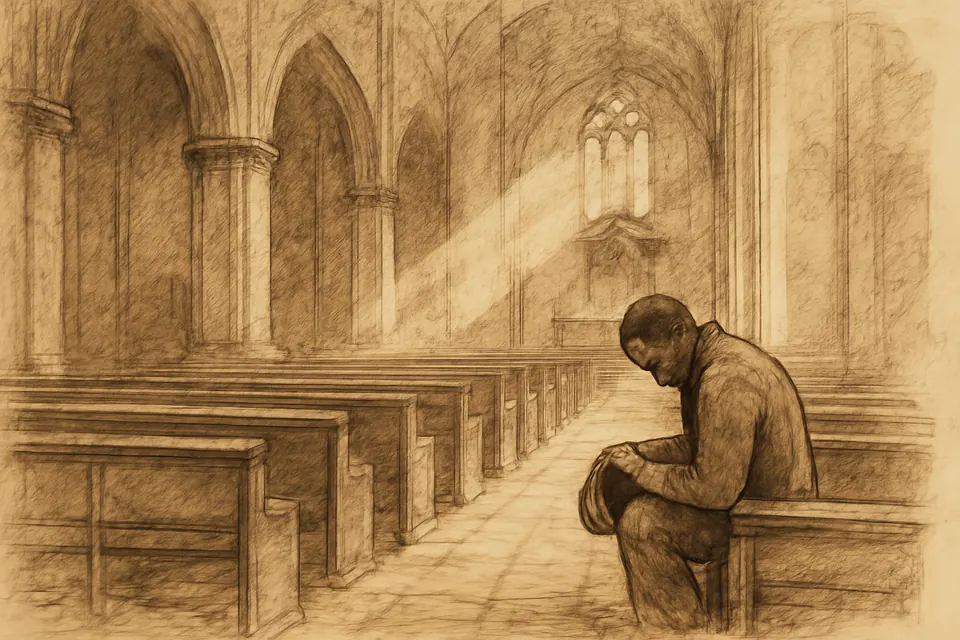
What draws people to him is that he is one of them. He was not a hero who never fell. He was a bad alcoholic for sixteen years, and he stayed sober one day at a time with no help but grace, the sacraments and the people God put in his path. Archbishop Farrell quoted a line often said of him: "Matt was a bad alcoholic, but he was not a hopeless alcoholic."
Two sayings of his are worth carrying in a pocket. To his sister Susan: "Never think harshly of a person because of the drink." And to anyone starting out, as the archbishop quoted him: "If I can do it, so can you, with the grace of God."
If you or someone you love is struggling, pray, and get help as well. Our prayer for an addict page lists prayers and practical first steps, and our patron saint of alcoholics page tells the stories of St. Monica, St. Maximilian Kolbe and the other saints of sobriety.
The Matt Talbot prayer
No prayer of Matt Talbot's own composing survives. The prayer the faithful pray is the prayer for his canonization. This is the prayer the Dominican priory in Dublin publishes for the faithful. It thanks God for Matt's example of triumph over addiction, devotion to duty and lifelong reverence for the Blessed Sacrament, asks that his life of prayer and penance give us courage to take up our crosses, and asks God to make known by heavenly favors, if he wills, the power Matt has in his sight.
Let us pray it for the cause, and add our own intention: for a husband, a daughter, a friend, ourselves.
Matt Talbot prayed the Rosary every day, and he would point anyone who asked him back to the Mass, the Blessed Sacrament and Our Lady. On the hard nights, the prayer to the Holy Spirit, the Comforter, is a good one to pray with him. The novenas he would have known are on our novenas page.
Let us close as Dublin does: Venerable Matt Talbot, pray for us, and for everyone fighting the drink tonight.
Frequently asked questions
Is Matt Talbot a saint?
Not yet. He is Venerable, the title Pope Paul VI gave him on October 3, 1975, after the Church judged that he lived the Christian virtues to a heroic degree. For him to be beatified, the Church would need to approve a miracle through his intercession. We may ask his prayers freely, but he has no feast in the liturgical calendar.
What is Matt Talbot the patron of?
He has no official patronage, because only the blessed and the saints are named patrons. But people struggling with alcohol and drug addiction, their families and recovery ministries look to him as their own, and many pray to him alongside St. Monica and St. Maximilian Kolbe.
How long was Matt Talbot sober?
Forty-one years. He took the pledge in 1884, at 28, after about sixteen years of heavy drinking, and he never drank again until his death on June 7, 1925.
Where is Matt Talbot buried?
In the Church of Our Lady of Lourdes on Seán McDermott Street in Dublin, where his remains were moved from Glasnevin Cemetery in 1972. The tomb has a glass panel through which visitors can see the coffin.
Is there a Matt Talbot prayer?
Yes. The prayer for his canonization asks God to make known the power Matt Talbot enjoys in His sight and to give us courage "to take up our crosses." Its full text is on this page. No prayer of Matt Talbot's own composing survives.
Sources
- St. Saviour's Priory, Dublin: Matt Talbot (with the Prayer for the Canonisation of Venerable Matt Talbot)
- Columban Missionaries: Matt Talbot, Columban benefactor
- Archdiocese of Dublin: Matt Talbot, Apostle of Hope, homily of Archbishop Dermot Farrell, June 7, 2025
- RTÉ Archives: Matt Talbot Court plaque (1971)