National Shrine of the Divine Mercy
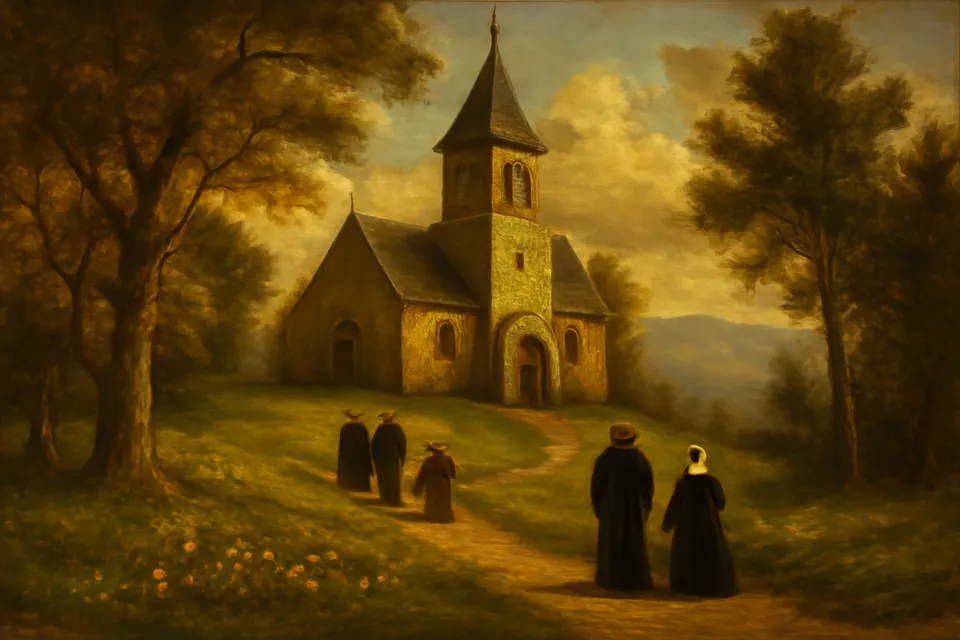
The National Shrine of the Divine Mercy is a Catholic church on Eden Hill in Stockbridge, Massachusetts, cared for by the Marian Fathers of the Immaculate Conception, the religious order that brought the Divine Mercy devotion of St. Faustina to America in 1941. Built without blueprints and dedicated in 1960, it received the title of National Shrine in 1996 and draws over 15,000 pilgrims on Divine Mercy Sunday.
What is the National Shrine of the Divine Mercy?
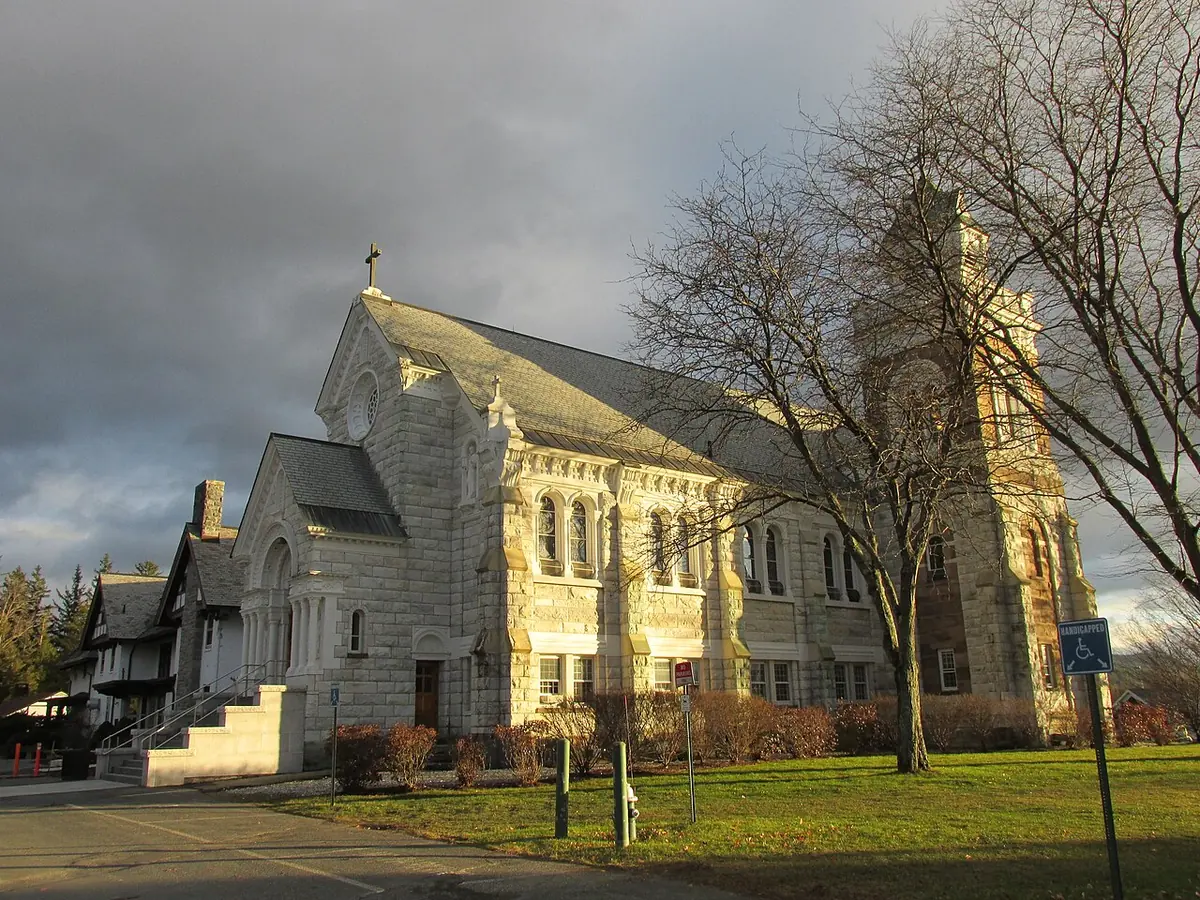
The National Shrine of the Divine Mercy is a stone church on Eden Hill in Stockbridge, Massachusetts, a small New England town in the Berkshire hills. It belongs to the Marian Fathers of the Immaculate Conception, the religious community that carried the message of Divine Mercy, revealed to St. Faustina Kowalska in Poland in the 1930s, to the United States.
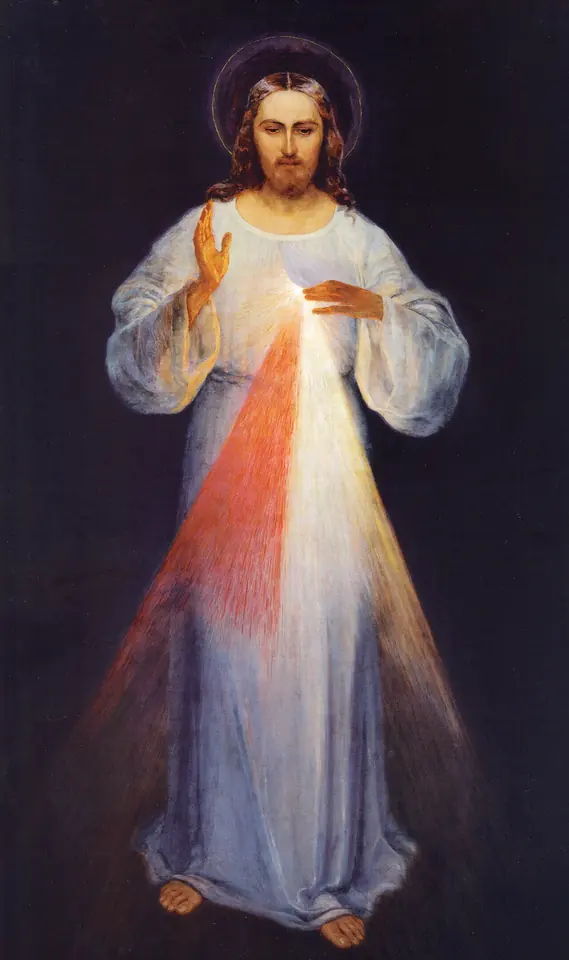
Above its altar hangs the image of the Merciful Jesus with the words "Jesus, I trust in You." Every afternoon at three o'clock the chaplet is prayed there, and every year on the Sunday after Easter, thousands of pilgrims fill the hillside for Divine Mercy Sunday. The church was built by an elderly woodcarver, a crew of novices and war refugees, with no blueprints at all. It was dedicated in 1960 and given the title of National Shrine in 1996.
How the Divine Mercy came to America
The Marians are a Polish order, founded in the 1670s by St. Stanislaus Papczyński and renewed in the early twentieth century by Blessed George Matulaitis. In the 1930s, St. Faustina's spiritual director in Vilnius, Blessed Michael Sopoćko, was spreading the devotion she had received. During the war years of 1939 to 1941, a Marian priest working in Lithuania, Fr. Joseph Jarzębowski, came to know him and first heard the story of the Divine Mercy.
By the Marians' account, Fr. Jarzębowski, hunted by the occupying armies, promised that if he reached his brothers in America, he would spend the rest of his life spreading devotion to the Divine Mercy. He escaped across Russia and Siberia to Japan, and on May 24, 1941, he arrived at the Marian house in Washington, D.C. With help from the Felician Sisters, the Marians began printing the chaplet and the image in Polish and English. Within a few years they needed a home for the work and for their young men in training.
Eden Hill
In the fall of 1943 the superior in Washington, Fr. Joseph Luniewski, sent a young priest named Fr. Walter Pelczynski, a native of nearby Adams, Massachusetts, to find a house for a novitiate. With help from his home parish and his family, the Marians bought Eden Hill on November 24, 1943, and moved in the following June.
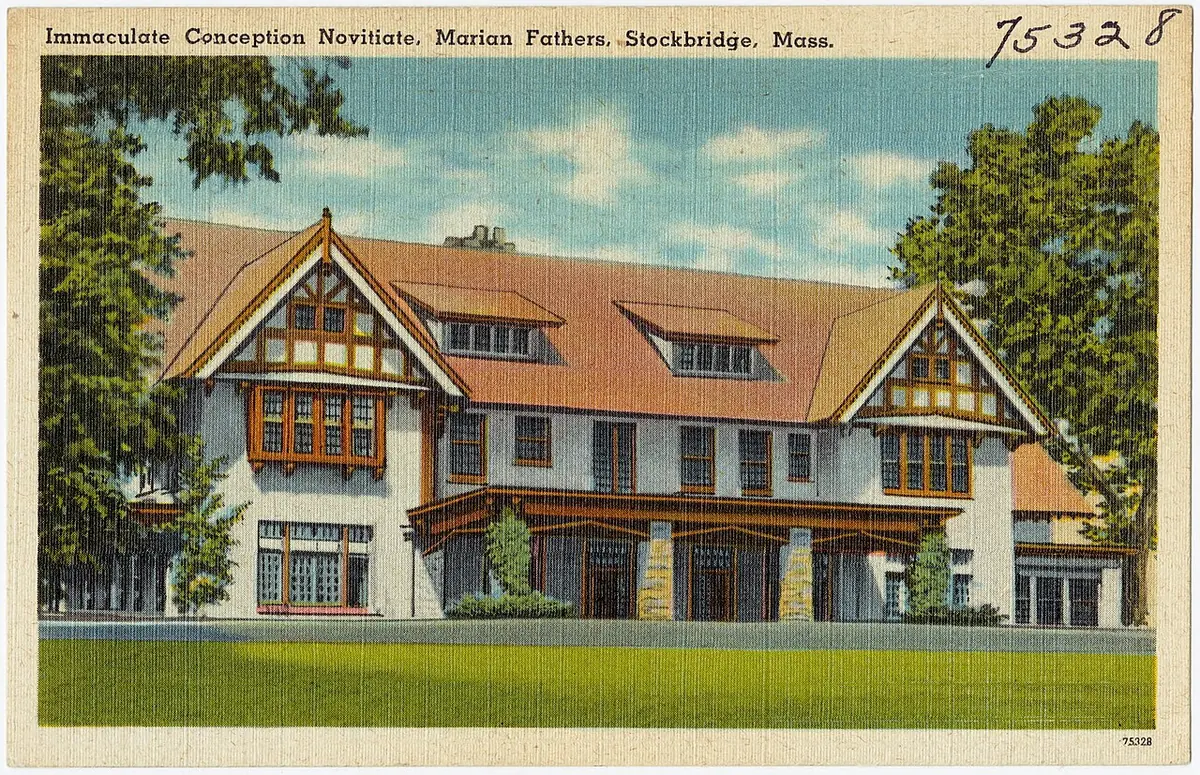
The hill already had a long history. In the eighteenth century it was the site of the mission to the Stockbridge Indians led by the Rev. John Sergeant; his Mission House now stands on Stockbridge's Main Street. In 1906 a Washington department-store owner, S. W. Woodward, built a large house on the hill called Eden Hall, and by 1938 it had become St. Edmund's School, a boys' preparatory school. That house is the one in old postcards of the "Immaculate Conception Novitiate."
The Marians set up a community chapel in the house with a side altar dedicated to the Divine Mercy. Families across the Berkshires gave furniture and money. Pilgrims began to come, more each year, until the chapel could no longer hold them.
A church built without blueprints
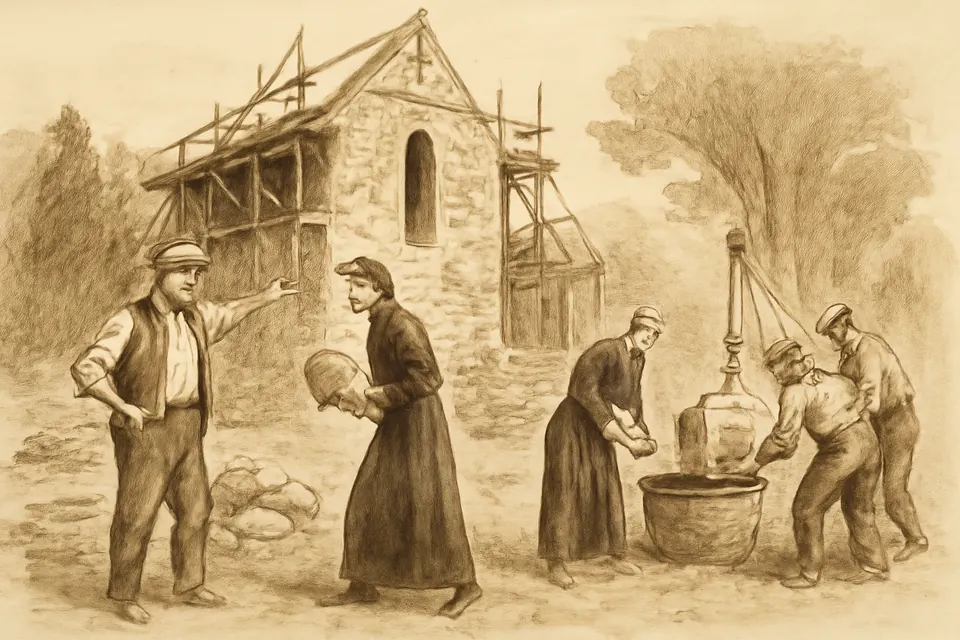
In 1950 the Marians asked Antonio Guerrieri, a 74-year-old Italian-born resident of Stockbridge, to build them a real shrine. He had trained in Italy as a furniture maker and woodcarver and had just restored St. Joseph's Church in town. According to the shrine's history, he used no architectural plans or blueprints at all: he carried the whole building in his head and handed out the work to his crew as it was needed.
The crew was unusual. Marian novices worked on the walls through their novitiate year, seminarians came to help in the summers, and many of the workmen were displaced persons, refugees of the Second World War. The stone came from the old Westinghouse estate in nearby Lenox and from Williston Academy in Easthampton. Ten years after the Marians broke ground, in 1960, the Bishop of Springfield dedicated the shrine, and it was dedicated debt free.
Inside the shrine
The church is small, with dark carved wood, much of it by Guerrieri's own hand, in the manner of many New England churches. Above the altar of Vermont marble, flanked by hand-carved figures of the twelve apostles, hangs the image of Jesus, the Divine Mercy. Above it stands a white Carrara marble statue of Mary as the Immaculate Conception, the Marians' patroness, and over her a mural shows the Holy Trinity crowning her Queen of Heaven and Earth. The shrine's history says the whole building honors "The Divine Mercy and Mary Immaculate."
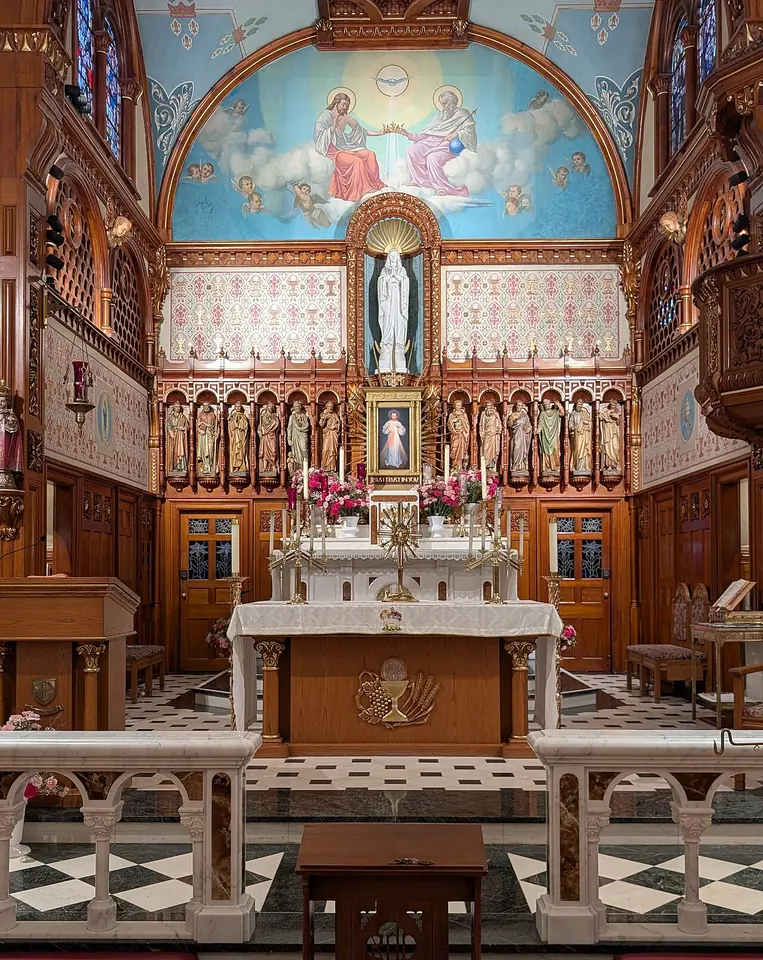
The 36 stained-glass windows and two mosaics, by the artist Fred Leuchs, show God's mercy as it runs through Scripture. The fourteen Stations of the Cross came from Spain. At the back, the rose window shows symbols of Our Lady from the Litany of Loreto.
The St. Faustina Chapel
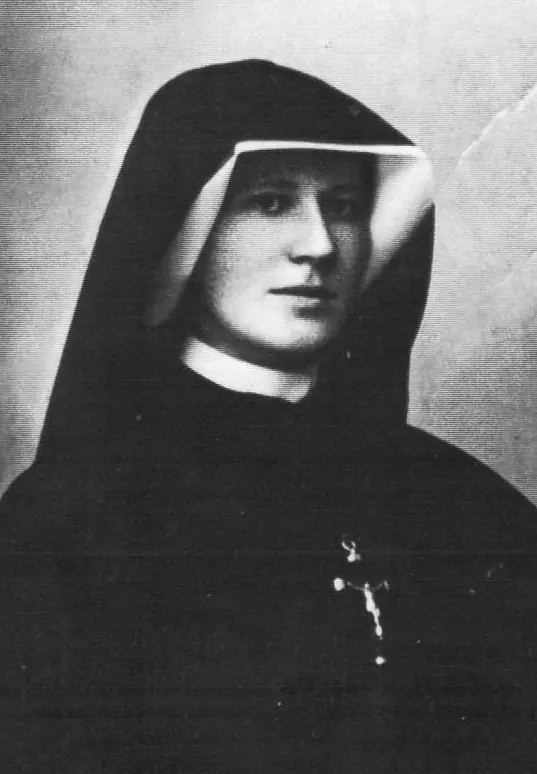
To the right of the high altar is the chapel of St. Faustina, with a bas-relief of her carved by Ferdinando Perathoner, who also carved the apostles. A first-class relic of St. Faustina is set in the kneeler, along with relics of Blessed Michael Sopoćko and of St. Margaret Mary Alacoque, the seventeenth-century apostle of the Sacred Heart. A glass case holds a white zucchetto that St. John Paul II wore in 1980 and gave to the shrine on June 2, 2000, the year he canonized Faustina.
The St. Joseph Chapel
To the left of the altar is the chapel of St. Joseph, a patron of the Marian congregation. It holds a statue of Our Lady of Fatima made in Fatima, with second-class relics of the three shepherd children in its kneeler, and a relief of the Marian martyrs of Rosica, Blessed Anthony Leszczewicz and Blessed George Kaszyra. In February 1943 they refused a chance to escape and died with their parishioners when the Nazis burned their village in Belarus; St. John Paul II beatified them in 1999.
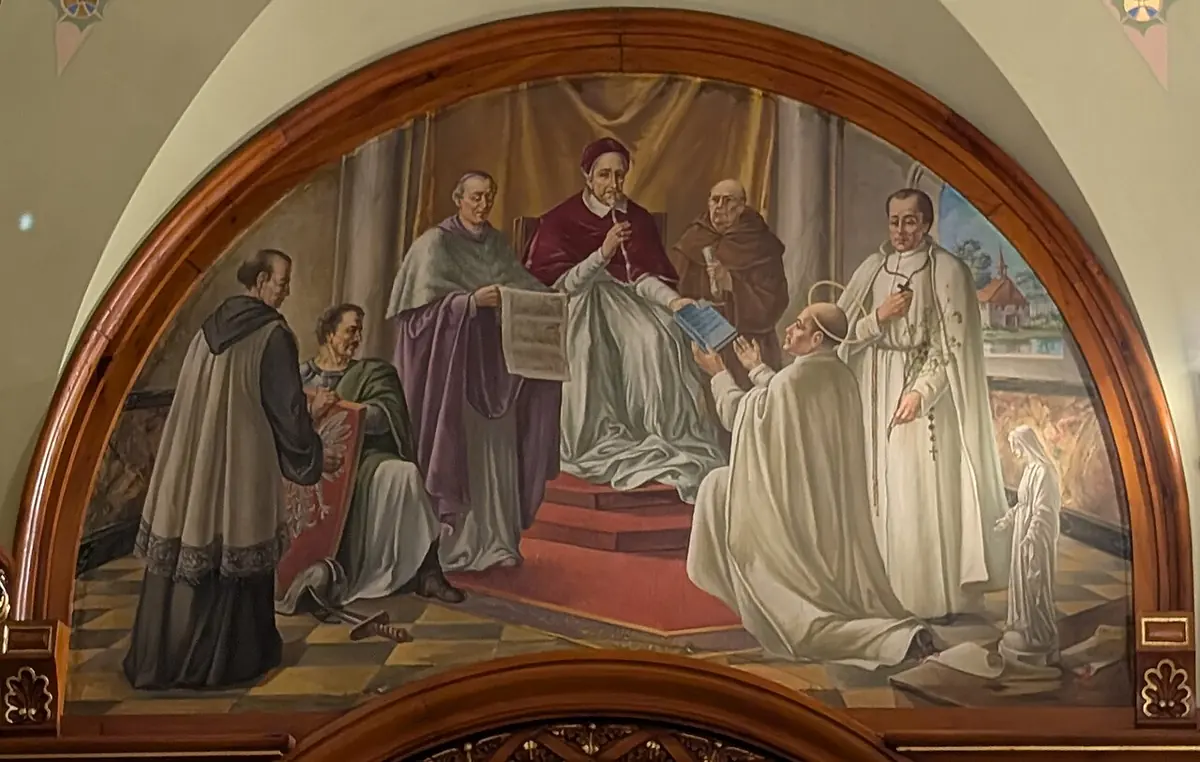
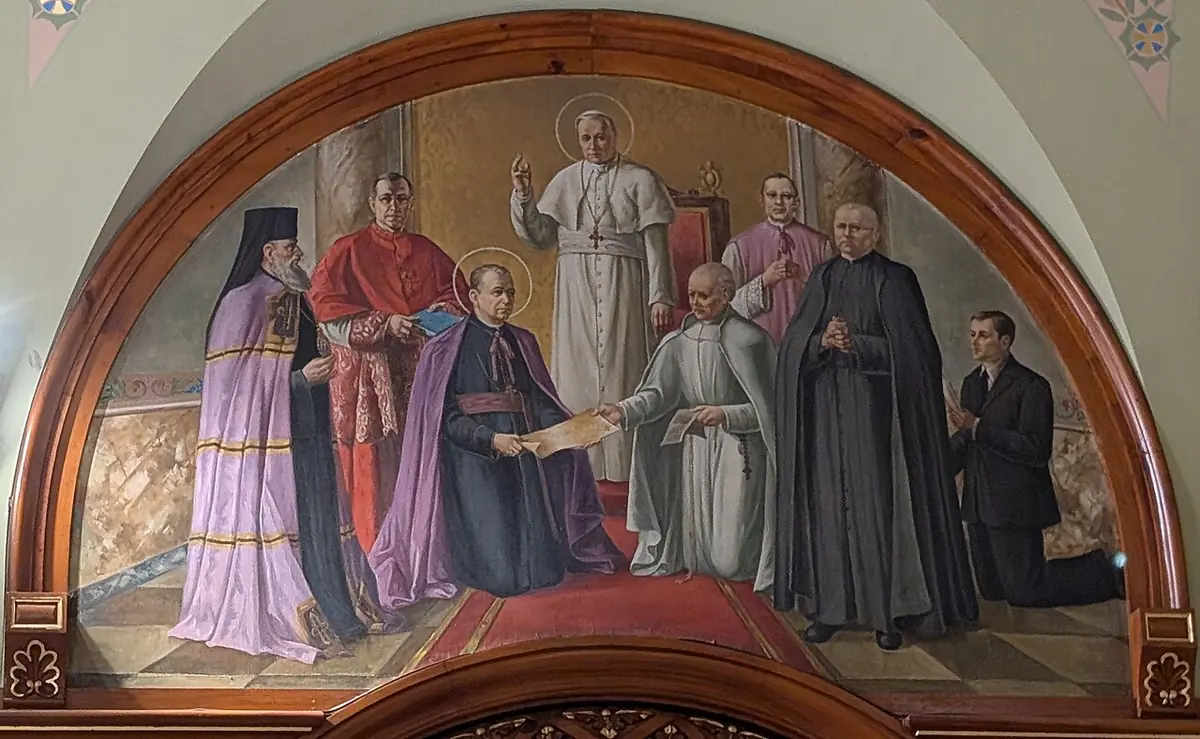
Two murals above the side chapels tell the Marians' own story: their founder kneeling to receive his order's rule from Pope Innocent XII, and the renewal of the community under Blessed George Matulaitis.
Divine Mercy Sunday on Eden Hill
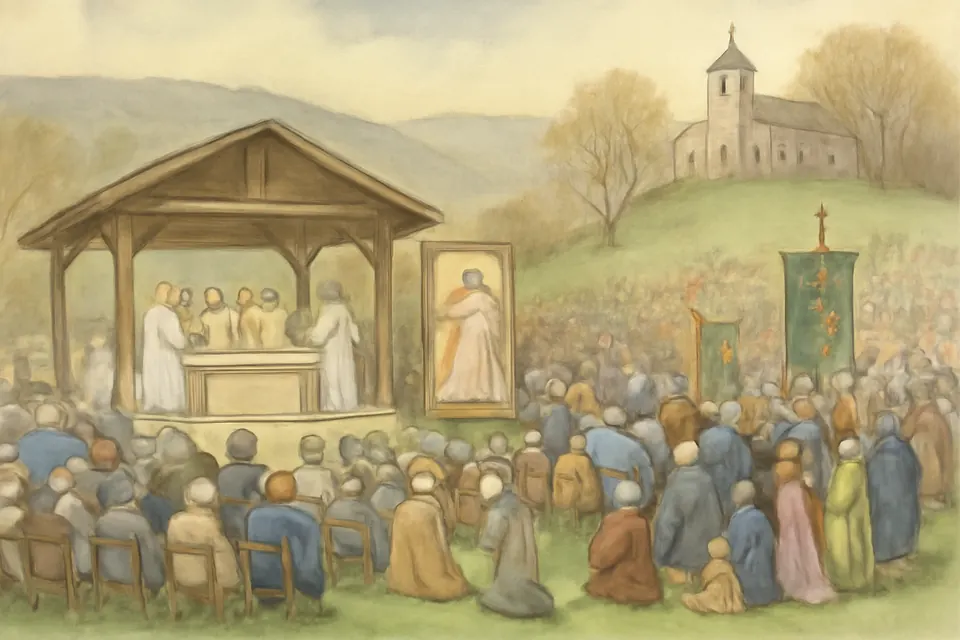
The shrine's great day is Divine Mercy Sunday, the Sunday after Easter, which St. John Paul II extended to the whole Church when he canonized St. Faustina on April 30, 2000. In 2027 it falls on April 4. The Marians call the weekend the biggest event of their year: more than 15,000 pilgrims come, rain or shine, for confession, Mass and prayer. The celebration, the largest in the Northeast, is traditionally televised by EWTN.
The main Mass is celebrated at the Mother of Mercy Outdoor Shrine, an open-air sanctuary built for crowds too big for the church. Confessions are heard for hours. At three o'clock, the Hour of Mercy, pilgrims pray the Divine Mercy chaplet together.
How to prepare
Many pilgrims begin the Divine Mercy novena on Good Friday and pray it through the Saturday before the feast, so that the ninth day ends on the eve of Divine Mercy Sunday. St. Faustina's Diary records Our Lord's promise of "the complete forgiveness of sins and punishment" for those who go to confession and receive Holy Communion on the feast, and the Church attaches a plenary indulgence to the day under the usual conditions. The Divine Mercy Sunday 2027 page gives the dates and conditions.
If you are coming for the weekend, plan ahead. The shrine's guest house is booked for the week before and after, and local inns fill early. The shrine publishes the weekend program in April.
Visiting the shrine the rest of the year
Mass, confession and the chaplet
The church is open daily, and the Marians offer Mass every day, confessions daily, Eucharistic adoration and the rosary. The Chaplet of the Divine Mercy is prayed in the shrine at 3 p.m. every day. Times change with the seasons, so check the shrine's schedule page before you go.
Eden Hill's grounds
About 20 of Eden Hill's 375 acres are landscaped for prayer. You'll find:
- Life-size outdoor Stations of the Cross, one of the most visited spots on the hill.
- The Lourdes Grotto, built by the Marians in the 1950s down a quiet path, and across from it the Immaculate Conception Candle Shrine, dedicated to the holy souls in purgatory.
- The Shrine of the Holy Innocents, a place of prayer for parents and families grieving the death of a child.
- The Holy Family Shrine, and statues of St. Thérèse and St. Francis for quiet prayer.
- The Our Lady of Mercy Candle Shrine and Oratory, one of the largest indoor candle shrines in the country, with more than 2,600 candles burning for intentions. Next to it, volunteers of the Divine Mercy Intercessory Prayer Ministry answer the prayer line and pray for each intention.
Eden Hill is also the home of the Association of Marian Helpers, the Marians' spiritual benefit society, and of Marian Press, which publishes St. Faustina's Diary in English. The Divine Mercy gift shop and bookstore are on the grounds.
Practical notes
- The address is 2 Prospect Hill Road, Stockbridge, Massachusetts 01262. Stockbridge is in the southwest corner of the state, about 15 minutes from the New York and Connecticut lines.
- The shrine asks for modest dress and reverent behavior. Photography is forbidden in the church during Mass, adoration and prayer times, and flash is never allowed.
- Only service animals may enter the shrine buildings; pets may come on the grounds of Eden Hill only.
- The shrine does not celebrate weddings or baptisms, which belong in the parish.
- Winters in the Berkshires are snowy. Spring and fall are the gentlest seasons for a visit, and October, when the hills turn, is lovely.
A prayer for the pilgrim
The prayer on the image says everything the shrine exists for: Jesus, I trust in You. Pray it at the door of the church, and then pray the words Our Lord taught St. Faustina for the Hour of Mercy, as the chaplet begins: Eternal Father, I offer You the Body and Blood, Soul and Divinity of Your dearly beloved Son, Our Lord Jesus Christ, in atonement for our sins and those of the whole world. For His sorrowful Passion, have mercy on us and on the whole world.
Frequently asked questions
Where is the National Shrine of the Divine Mercy?
On Eden Hill, 2 Prospect Hill Road, Stockbridge, Massachusetts 01262, in the Berkshire hills of western Massachusetts, about 15 minutes from both New York State and Connecticut. The grounds cover about 375 acres.
Who runs the National Shrine of the Divine Mercy?
The Congregation of Marian Fathers of the Immaculate Conception of the Most Blessed Virgin Mary, known as the Marians. Their priests and brothers live on Eden Hill and oversee the shrine, which sits in the Diocese of Springfield but is run and funded independently of it.
When is Divine Mercy Sunday at the shrine?
Divine Mercy Sunday is the Sunday after Easter. In 2027 it falls on April 4. It is the shrine's biggest weekend of the year, with an outdoor Mass, confessions, the chaplet at 3 p.m. and more than 15,000 pilgrims; the shrine posts the weekend program in April.
Is there a relic of St. Faustina at the shrine?
Yes. A first-class relic of St. Faustina is encased in the kneeler of her side chapel, beside relics of her spiritual director, Blessed Michael Sopoćko, and of St. Margaret Mary Alacoque. The chapel also keeps a white skullcap that St. John Paul II gave the shrine in 2000.
When is the chaplet prayed at the National Shrine?
The Chaplet of the Divine Mercy is prayed in the shrine every day at 3 p.m., the Hour of Mercy. The shrine lists Mass and confession times on its website.
Is the National Shrine of the Divine Mercy the same as the one in Poland?
No. St. Faustina is buried at the Basilica of Divine Mercy in Kraków-Łagiewniki, Poland, and the first image of the Merciful Jesus hangs in the Divine Mercy Sanctuary in Vilnius, Lithuania. Stockbridge is the national shrine of the United States; the Philippines also has a National Shrine of the Divine Mercy, in Marilao, Bulacan.
Sources
- National Shrine of The Divine Mercy: The History of the National Shrine of The Divine Mercy. Purchase of Eden Hill, Antonio Guerrieri, the 1960 dedication and the 1996 title
- National Shrine of The Divine Mercy: A Tour of the Shrine Church. The side chapels, relics and murals
- National Shrine of The Divine Mercy: Divine Mercy Sunday
- National Shrine of The Divine Mercy: Explore Eden Hill
- Marians of the Immaculate Conception: Fr. Joseph Jarzebowski (1897-1964). His escape and arrival in Washington, D.C., on May 24, 1941
- Sacred Congregation for the Doctrine of the Faith: Notification regarding the devotion to Divine Mercy in the form proposed by Sr. Faustina Kowalska, April 15, 1978