St. Joseph novena

The St. Joseph novena is nine days of prayer for St. Joseph's intercession, most often prayed March 10 to 18 so that it ends on the eve of his solemnity, March 19. The traditional form prays his Seven Sorrows and Seven Joys each day, with the Memorare to St. Joseph and Leo XIII's prayer, "To thee, O blessed Joseph."
Every March, in parishes and kitchens around the world, Catholics count down the nine days before St. Joseph's feast. We bring him the things he knew well in Nazareth: work and the lack of it, rent and roofs, children, illness, and the fear of dying badly. The novena below is the traditional one, built from the prayers the Church indulgenced for exactly this purpose and printed word for word from the 1910 English Raccolta.
The St. Joseph novena prayer
Pray the whole sequence once a day for nine days, keeping one intention in mind. The Seven Sorrows and Seven Joys, the Memorare and the closing prayer are from The Raccolta (London and New York, 1910), nos. 300 and 303; Leo XIII's prayer is the Raccolta's own translation, no. 308. "Pater, Ave, Gloria" means an Our Father, a Hail Mary and a Glory Be.
In the name of the Father, and of the Son, and of the Holy Ghost. Amen.
The Seven Sorrows and Seven Joys of St. Joseph
I. Pure spouse of most holy Mary, glorious St Joseph, the trouble and anguish of thy heart were great when, being in sore perplexity, thou wast minded to put away thy stainless spouse; yet was thy joy inexpressible when the Archangel revealed to thee the sublime mystery of the Incarnation. By this thy sorrow and thy joy, we pray thee comfort our souls now and in their last pains with the consolation of a well-spent life, and a holy death like unto thy own, with Jesus and Mary at our side. Pater, Ave, Gloria.
II. Most blessed Patriarch, glorious St Joseph, chosen to the office of Father of the Word made Man, the pain was keen that thou didst feel when thou didst see the Infant Jesus born in abject poverty; but thy pain was changed into heavenly joy when thou didst hear the harmony of angel-choirs, and behold the glory of that night. By this thy sorrow and thy joy, we pray thee obtain for us that, when the journey of our life is ended, we too may pass to that blessed land where we shall hear the angel-chants, and rejoice in the bright light of heavenly glory. Pater, Ave, Gloria.
III. O Thou who wast ever most obedient in executing the law of God, glorious St Joseph, thy heart was pierced with pain when the precious Blood of the Infant Saviour was shed at his Circumcision; but with the Name of Jesus new life and heavenly joy returned to thee. By this thy sorrow and thy joy, obtain for us that, being freed, while we still live, from every vice, we too may cheerfully die with the sweet Name of Jesus in our hearts and on our lips. Pater, Ave, Gloria.
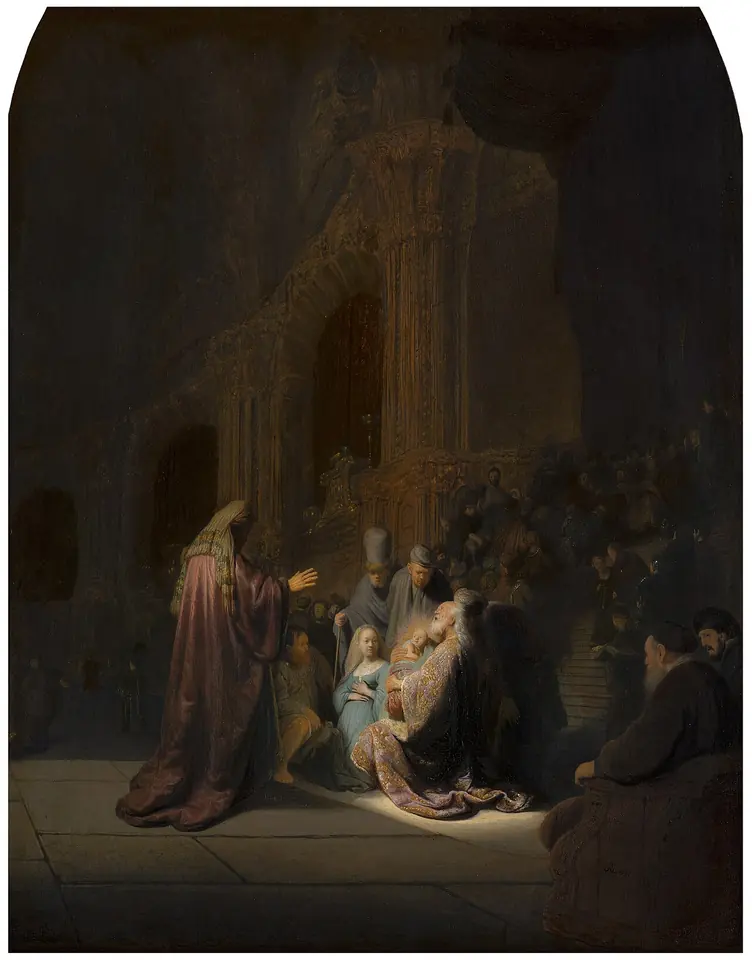
IV. Most faithful Saint, glorious St Joseph, who wast admitted to take part in the redemption of man; the prophecy of Simeon foretelling the sufferings of Jesus and Mary caused thee a pang like that of death, but, at the same time, by his prediction of the salvation and glorious resurrection of innumerable souls, filled thee with great joy. By this thy sorrow and thy joy, help us with thy prayers to be of the number of those who, by the merits of Jesus and the intercession of his Virgin Mother, shall be partakers of the resurrection to glory. Pater, Ave, Gloria.
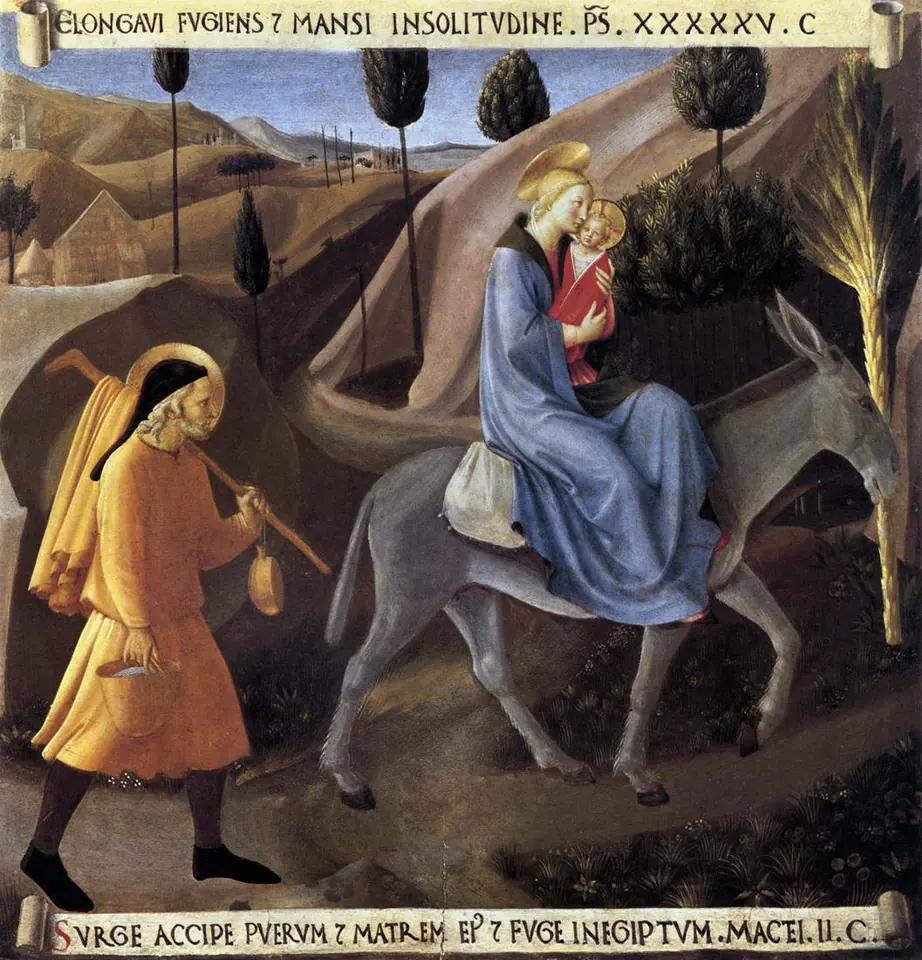
V. Most watchful Guardian, glorious St Joseph, who wast so intimately familiar with the Incarnate Son of God, greatly thou didst toil to nurture and to serve the Son of the Most High, especially in the flight thou madest with Him into Egypt; greatly also didst thou rejoice to have God Himself always with thee, and to see the overthrow of the idols of Egypt. By this thy sorrow and thy joy, obtain for us grace to keep far out of the reach of the enemy of our souls, by quitting all dangerous occasions, that so no idol of earthly affection may any longer occupy a place in our hearts, but that, being entirely devoted to the service of Jesus and Mary, we may live and die for them alone. Pater, Ave, Gloria.
VI. Angel on earth, glorious St Joseph, who didst so wonder to see the King of Heaven obedient to thy bidding, the consolation thou hadst at his return from Egypt was disturbed by the fear of Archelaus, but nevertheless, being reassured by the angel, thou didst go back and dwell happily at Nazareth, in the company of Jesus and Mary. By this thy sorrow and thy joy, obtain for us that, having our hearts freed from idle fears, we may enjoy the peace of a tranquil conscience, dwelling safely with Jesus and Mary, and dying at last in their arms. Pater, Ave, Gloria.
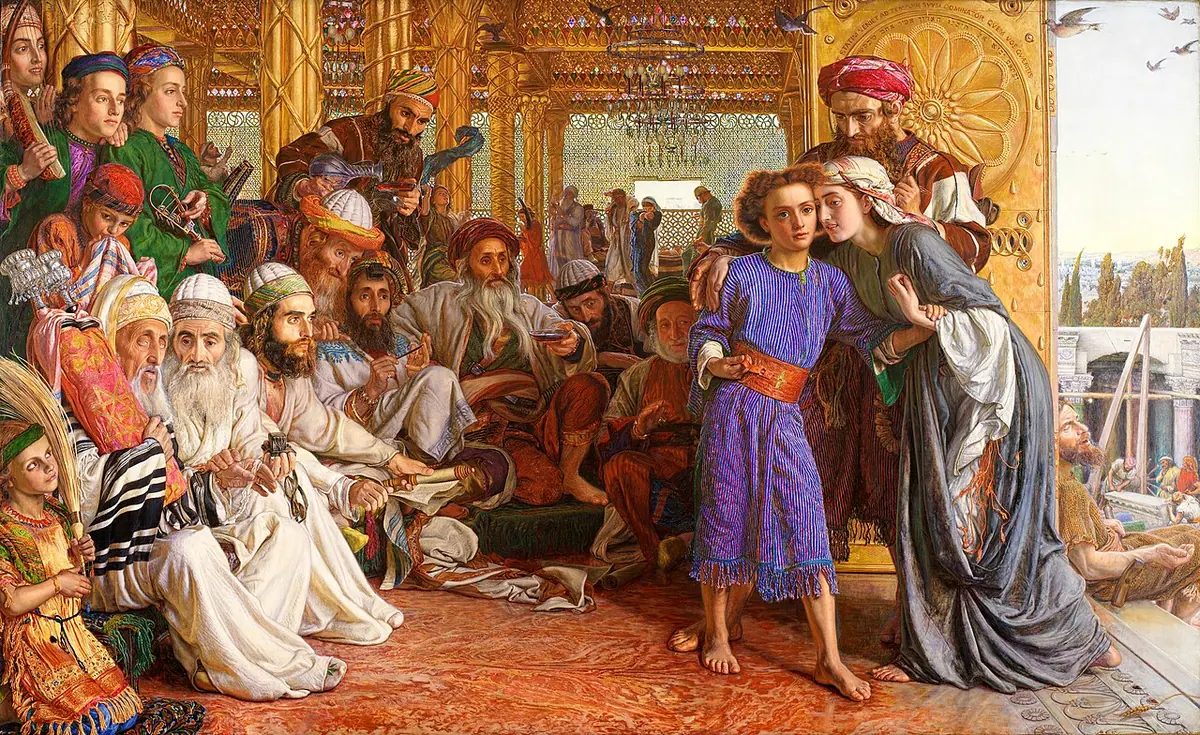
VII. Example of holy living, glorious St Joseph, when through no fault of thine thou didst lose Jesus, the Holy Child, thou didst search for Him with great sorrow for three days, until with joy unspeakable thou didst find Him, who was thy Life, amidst the doctors in the Temple. By this thy sorrow and thy joy, we pray thee with our whole hearts so to interpose always in our behalf, that we may never lose Jesus by mortal sin, and if we are at any time so wretched as to lose Him, then we pray thee to aid us to seek Him with unwearied sorrow until we find Him, particularly in the hour of our death, that we may pass from this life to enjoy Him for ever in heaven, there to sing with thee his divine mercies without end. Pater, Ave, Gloria.
The Memorare to St. Joseph
Here, each day, name the favor you are asking.
Remember, most pure spouse of Mary ever-Virgin, my loving protector, St Joseph, that never has it been heard that anyone ever invoked thy protection, or besought aid of thee, without being consoled. In this confidence I come before thee, I fervently recommend myself to thee. Despise not my prayer, foster-father of our Redeemer, but do thou in thy pity receive it. Amen.
Leo XIII's prayer to St. Joseph
To thee, O blessed Joseph, do we fly in our tribulation, and having implored the help of thy most holy spouse, we confidently crave thy patronage also. Through that charity which bound thee to the Immaculate Virgin Mother of God, and through the paternal love with which thou didst embrace the Child Jesus, we humbly beseech thee graciously to regard the inheritance which Jesus Christ hath purchased by his Blood, and with thy power and strength to aid us in our necessities. O most watchful Guardian of the Divine Family, defend the chosen children of Jesus Christ; O most loving Father, ward off from us every contagion of error and corrupting influence; O our most mighty protector, be propitious to us and from Heaven assist us in this our struggle with the power of darkness; and, as once thou didst rescue the Child Jesus from deadly peril, so now protect God's holy Church from the snares of the enemy and from all adversity: shield, too, each one of us by thy constant protection, so that, supported by thine example and thine aid, we may be able to live piously, to die holily, and to obtain eternal happiness in Heaven. Amen.
Closing prayer
Ant. Jesus Himself was about thirty years old, being, as was supposed, the son of Joseph. V. Pray for us, holy Joseph. R. That we may be made worthy of the promises of Christ. Let us pray. O God, who in thine ineffable providence didst vouchsafe to choose blessed Joseph to be the spouse of thy most holy Mother; grant, we beseech Thee, that we may have him for our intercessor in heaven, whom on earth we venerate as our holy Protector. Who livest and reignest, world without end. Amen.
The Raccolta prints these as separate devotions; putting them together for nine days is the way novena booklets of the period used them. Its note on the novena itself (no. 301) says it "may be made at any time of the year, and with any form of prayer sanctioned by competent ecclesiastical authority," which leaves us free to pray this form, a shorter one, or the Litany of St. Joseph on our St. Joseph prayer page.

When to pray the St. Joseph novena
March 10 to 18, before the solemnity of St. Joseph
The usual novena runs from March 10 to March 18 and ends on the eve of the solemnity of St. Joseph, Husband of the Blessed Virgin Mary, on March 19. In 2027 the novena begins on a Wednesday, the weekday the Church has long given to Joseph, and the feast falls on Friday, March 19. In years when March 19 lands on a Sunday of Lent, the solemnity moves to Monday, and when it falls in Holy Week it moves earlier; shift the nine days to match your diocese's calendar.
March is Joseph's month. In his 1889 encyclical Quamquam pluries, Leo XIII called it "a salutary practice and very praiseworthy" to "consecrate the month of March to the honour of the holy Patriarch by daily exercises of piety," and where that was not possible he asked that each parish at least hold three days of prayer before the feast. The 1910 Raccolta indulgenced the whole month, or "a month terminating on the feast of St Joseph, March 19." The novena is that month's last nine days, when the prayer gathers speed toward the feast. Many Italian, Sicilian and New Orleans families end it at a St. Joseph's Table, the altar of bread, fava beans and flowers described in our St. Joseph entry.

April 22 to 30, before St. Joseph the Worker
A second novena ends on the eve of May 1, the memorial of St. Joseph the Worker. It has an older ancestor. The Discalced Carmelites, St. Teresa's reform, chose Joseph as their patron in 1621 and in 1689 received permission to keep a feast of his Patronage on the third Sunday after Easter; Pius IX extended that feast to the whole Church in 1847, according to the Catholic Encyclopedia. The Raccolta of 1910 grants its indulgence for "every day of the two Novenas preceding the two feasts of St Joseph," March 19 and the Patronage. When Pius XII established St. Joseph the Worker on May 1 in 1955, the spring novena moved with it. It is the novena people pray for work: for a job, for a fair wage, for a business in trouble.
Any time of year
Pius IX approved the novena to St. Joseph for any season on November 26, 1876. We don't have to wait for March when the layoff notice comes or the lease runs out. Begin today, and pray the same prayers for nine days.
Wednesdays and the Seven Sundays
The Directory on Popular Piety and the Liturgy (2001) notes that the custom of reserving Wednesdays for St. Joseph has been popular "at least since the end of the seventeenth century." The Raccolta also describes the Seven Sundays: the Sorrows and Joys prayed on seven Sundays in a row, traditionally the seven before his feast. Both use the prayers above.
The Seven Sorrows and Joys, scene by scene
The heart of this novena is a walk through the Gospels with Joseph. Each of the seven parts names a moment from Matthew or Luke when Joseph suffered, and the joy that came out of it, and then asks for a grace that matches. Pius VII, Gregory XVI and Pius IX each attached indulgences to the devotion between 1819 and 1847, as the Raccolta's footnote records, and the Directory on Popular Piety still lists the "chaplet of St Joseph, recollecting the Seven agonies and seven joys" among the devotions the Church commends. It helps to keep one scene in mind for each part, so here they are with the paintings that show them.
The first sorrow and joy is Joseph's discovery that Mary is with child, his decision to send her away quietly, and the angel's word in a dream: "Joseph, son of David, fear not to take unto thee Mary thy wife" (Matthew 1:20, Douay-Rheims). The petition asks for a well-spent life and a holy death "with Jesus and Mary at our side."
The second is the poverty of the stable and the song of the angels on Christmas night.

The third is the Circumcision on the eighth day, when the Child first shed blood and received the name of Jesus, the name Joseph himself gave him, as the angel had told him to (Matthew 1:21).

The fourth is the presentation in the Temple, when old Simeon took the Child in his arms and told Mary that a sword would pierce her soul, and yet called him "a light to the revelation of the Gentiles" (Luke 2:32).
The fifth is the flight into Egypt by night. The petition here is one of the most practical in the novena: that "no idol of earthly affection may any longer occupy a place in our hearts."
The sixth is the return from Egypt, shadowed by the news that Herod's son Archelaus ruled in Judea, and the angel's direction to settle in Nazareth (Matthew 2:22–23). It asks for a heart "freed from idle fears," which is a good prayer for anyone lying awake over money.
The seventh is the three days of searching for the twelve-year-old Jesus and finding him among the teachers in the Temple. It ends the novena by asking that we never lose Jesus, and that if we do, we search for him the way Joseph did.

Other St. Joseph novena prayers
The "efficacious prayer to St. Joseph"
Many novena leaflets use a short prayer in place of, or alongside, the Sorrows and Joys. This is the text printed in Fr. Joseph McDonnell's St. Joseph: A Novena of Meditations and Prayers (Dublin, 1926), under the heading "Prayers for the Novena of St. Joseph":
O Glorious St. Joseph! faithful follower of Jesus Christ, to thee do we raise our hearts and hands, to implore thy powerful intercession in obtaining from the benign Heart of Jesus all the helps and graces necessary for our spiritual and temporal welfare, particularly the grace of a happy death, and the special favour we now implore [mention it]. (Then say the following Versicle and Response seven times in honour of the seven joys and sorrows of St. Joseph.) V. O Glorious St. Joseph! through the love thou bearest to Jesus Christ, and for the glory of His Name. R. Hear our prayers and obtain our petitions.
"Efficacious" in the title means "effective"; it is the booklet's heading, not a promise from the Church. McDonnell is honest about how St. Joseph often answers. In his meditation on Joseph as the patron of temporal needs he writes: "It is said that he is slow of hearing, that he tries the patience and the perseverance of his clients. If, indeed, he does delay at times, one thing is certain, namely, that he is very sure to answer in the end." His booklet follows the prayer with the Litany of St. Joseph, approved by Pius X on March 18, 1909, the eve of the feast.

The "never known to fail" prayer
A prayer that begins "O St. Joseph, whose protection is so great, so strong, so prompt before the throne of God" circulates widely on cards and online, usually with a note saying it was "found in the fiftieth year of our Lord," that a pope sent it to the Emperor Charles in 1505 as he went into battle, and that whoever reads or carries it will not die a sudden death, drown or be poisoned. The prayer itself asks nothing unworthy of St. Joseph, and many people pray it with real love. The story attached to it is a traditional legend at best. There is no trace of it in the early Church, devotion to Joseph grew slowly and much later, and in 1505 the future Emperor Charles V was five years old; he was elected emperor in 1519. No Church authority has ever confirmed those promises. An imprimatur on a prayer booklet means only that it contains nothing contrary to faith or morals; it doesn't vouch for the stories printed with a prayer.
We don't need guarantees to pray. We pray because Joseph is our father in the household of faith, and because Christ, who obeyed him at Nazareth, hears him now.
What St. Teresa learned from asking St. Joseph
No saint did more to send people to Joseph than St. Teresa of Ávila. In chapter 6 of her Life she tells how he obtained her recovery from a long paralysis, and she adds a line every novena-maker should hear: "It is now some years since I have always on his feast asked him for something, and I always have it. If the petition be in any way amiss, he directs it aright for my greater good." That is the right spirit for a novena that ends on his feast. We ask boldly, and we let him correct the request.
Teresa also wrote, "I cannot call to mind that I have ever asked him at any time for anything which he has not granted," and she named her first reformed convent in Ávila for him; the Carmelite houses she went on to found carried his devotion across Spain. Her advice to anyone who doubts is simple: "make the trial for himself."
How to pray the novena well
- Choose one intention and keep it for all nine days. Write it down if that helps.
- Pray at the same time each day if you can: after morning coffee, on the commute, or as a family after dinner. The whole sequence above takes about fifteen minutes.
- Join it to the sacraments. Many people go to confession during the novena and to Mass on March 19. The old indulgences on these prayers were counted in days; Paul VI dropped those counts in 1967, but the Church still treats prayer, confession and Communion as the way to make a devotion fruitful.
- Pray for others too. Joseph is the patron of the whole Church and of a happy death, so it is fitting to remember the dying and the unemployed alongside our own needs.
- Give thanks when it's over, whatever the answer. Teresa's line about Joseph directing a petition "for my greater good" is worth reading again on the tenth day.
If you are praying for a home, our page on the St. Joseph statue and selling a house explains that popular custom and how to make it a real prayer.
Related saints and pages
- St. Joseph: his life in the Gospels, the legends, his symbols in art and the St. Joseph's Table.
- St. Joseph prayer: Leo XIII's prayer in its other English translation and in Latin, the Litany of St. Joseph, the prayer for work and the sleeping St. Joseph.
- The Blessed Virgin Mary, his wife, whose help the novena asks first.
- St. André Bessette, the Montreal doorkeeper who sent thousands of sick people to St. Joseph.
- St. Jude novena and the Memorare, whose form the Memorare to St. Joseph borrows.
- The feast days calendar for March 19 and May 1.
Frequently asked questions
When do you start the St. Joseph novena?
To end on the eve of his solemnity, begin on March 10 and finish on March 18. In 2027 that runs from Wednesday, March 10, to Thursday, March 18, and the solemnity falls on Friday, March 19. For St. Joseph the Worker on May 1, pray from April 22 to April 30. Pius IX approved a novena to St. Joseph at any time of year, so you can also begin whenever you need his help.
What prayers make up the St. Joseph novena?
There is no single official text. The traditional form in the Raccolta, the Church's old collection of indulgenced prayers, is the Seven Sorrows and Seven Joys of St. Joseph, each followed by an Our Father, Hail Mary and Glory Be. On this page we add the Memorare to St. Joseph and Leo XIII's prayer, both from the same 1910 Raccolta. Any prayer approved by the Church may be used.
Is there a St. Joseph novena that never fails?
No prayer is guaranteed, and the Church has never promised that any novena will produce a particular result. Prayer cards that say a St. Joseph prayer has "never been known to fail," or that it was found in the year 50 and protects its reader from sudden death, carry legends that have no historical support. We ask St. Joseph to pray for us and trust God to answer as is best for us.
What if I miss a day of the St. Joseph novena?
Pick up where you left off and finish the nine days. A novena is a way of persevering in prayer, not a formula that fails on a technicality.
Can I pray the St. Joseph novena for a job or a house?
Yes. St. Joseph is the patron of workers and of families, and Catholics have long brought him their worries about work, money and a home. A 1926 Irish novena booklet calls him "the great patron of all temporal affairs" and promises only that those who persevere will find their trust justified "in the end."
Why is the St. Joseph novena prayed in March?
Because his solemnity falls on March 19. Leo XIII praised the custom of giving the whole month of March to St. Joseph, and the 1910 Raccolta indulgenced a month of prayer ending on his feast. The novena is the last nine days of that month.
Is the St. Joseph novena the same as the Seven Sundays devotion?
They use the same prayers. The Seven Sundays devotion prays the Seven Sorrows and Joys on seven Sundays in a row, traditionally the seven before March 19. The novena prays them on nine consecutive days.
Sources
- Ambrose St. John, trans., The Raccolta, or Collection of Indulgenced Prayers and Good Works, 1910 edition (London: Burns & Oates; New York: Benziger), Internet Archive. Source of the Seven Sorrows and Joys, the Memorare to St. Joseph, the Leo XIII translation and the closing prayer; nos. 300–303 and 308, pp. 274–281
- Joseph McDonnell, S.J., St. Joseph: A Novena of Meditations and Prayers (Dublin: Irish Messenger, 1926), Internet Archive. Source of the efficacious prayer to St. Joseph
- Leo XIII, encyclical Quamquam pluries (August 15, 1889) (Vatican)
- Congregation for Divine Worship, Directory on Popular Piety and the Liturgy (2001), nos. 218–223 (Vatican)
- Charles Souvay, "St. Joseph," Catholic Encyclopedia (1910)
- The Life of St. Teresa of Jesus, trans. David Lewis, chapter 6 (Project Gutenberg)