December 8 holy day of obligation (Immaculate Conception 2026)
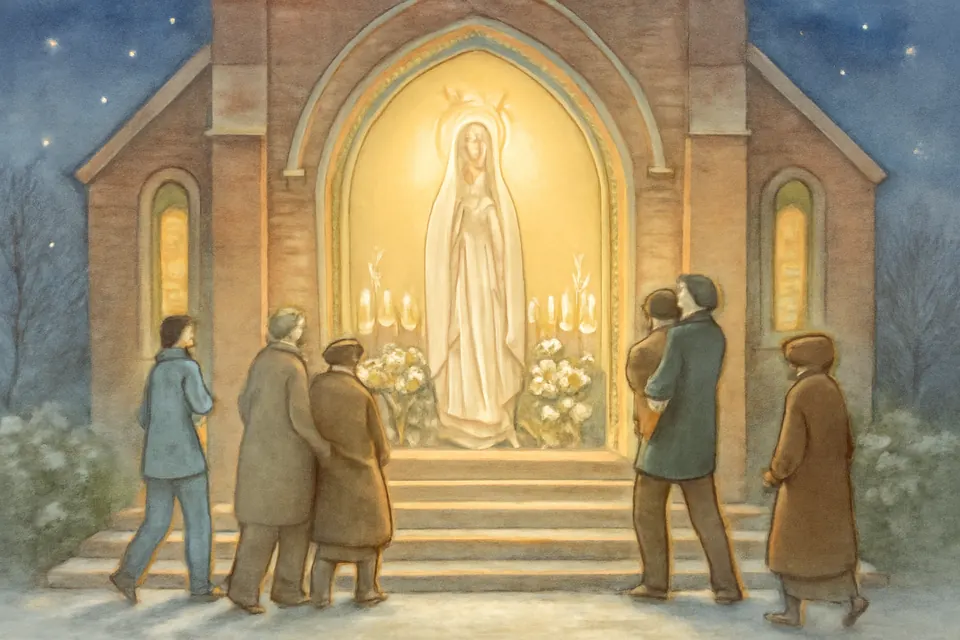
Yes, December 8 is a holy day of obligation in 2026. The Solemnity of the Immaculate Conception falls on Tuesday, December 8, 2026, and Catholics in the United States are bound to attend Mass. A vigil Mass on Monday evening, December 7, also counts. The US exemption for Saturdays and Mondays never applies to this feast.
Yes, December 8 is a holy day of obligation in 2026. The Solemnity of the Immaculate Conception of the Blessed Virgin Mary falls on a Tuesday this year, in the second week of Advent, and Catholics across the United States are bound to go to Mass. Here is the date logic in plain terms, the Mass times that count, what the day celebrates and how to keep it well.
The Immaculate Conception 2026 at a glance
- Date: Tuesday, December 8, 2026.
- Rank: solemnity, and the patronal feast of the United States.
- Holy day of obligation: yes, in every US diocese, Hawaii included.
- Masses that count: any Mass on Tuesday, December 8, or an evening vigil Mass on Monday, December 7.
- Vestments: white, in place of Advent violet.
- Readings: Genesis 3:9-15, 20; Psalm 98; Ephesians 1:3-6, 11-12; Luke 1:26-38 (Lectionary 689).
- Before it: the Immaculate Conception novena, Sunday, November 29, to Monday, December 7.
- After it: St. Juan Diego on Wednesday, December 9, and Our Lady of Guadalupe on Saturday, December 12.
Is December 8 a holy day of obligation in 2026?
Yes. The US bishops' liturgical calendar for 2026 lists Tuesday, December 8, as "Solemnity [Holyday of Obligation]," with the note "Patronal Feastday of the United States of America."
Three rules settle the question.
The universal law. Canon 1246 of the Code of Canon Law names the Immaculate Conception among the ten holy days of obligation of the Latin Church. Canon 1247 states the duty: "On Sundays and other holy days of obligation, the faithful are obliged to participate in the Mass."
The American exception, and why it doesn't reach December 8. In a decree of December 13, 1991, confirmed by the Holy See in 1992, the US bishops kept six holy days and added one exception: "Whenever January 1, the solemnity of Mary, Mother of God, or August 15, the solemnity of the Assumption, or November 1, the solemnity of All Saints, falls on a Saturday or on a Monday, the precept to attend Mass is abrogated." December 8 is not on that list. It keeps its obligation on a Saturday, on a Monday and on any other weekday. In 2026 the question doesn't even arise, because the feast falls on a Tuesday.
The vigil rule. Canon 1248 says the obligation is satisfied by Mass "either on the feast day itself or in the evening of the preceding day," in any Catholic rite. So an evening Mass on Monday, December 7, counts for the Immaculate Conception. Parishes usually announce which Monday Mass is the vigil. One Mass can't do double duty for two obligations, which matters only in years when December 8 sits next to a Sunday.
Hawaii
The 2026 calendar repeats a note from 1992: the Bishop of Honolulu designated Christmas and the Immaculate Conception "as the only two Holydays of Obligation for the State of Hawaii." December 8 is one of those two, so Catholics in Hawaii are bound as well.
When December 8 falls on a Sunday
A Sunday of Advent outranks every solemnity, so when December 8 is a Sunday, the Immaculate Conception moves to Monday, December 9. For years many Americans assumed the obligation was dropped in that case. In 2024, the last time it happened, Bishop Thomas Paprocki, chairman of the USCCB's canonical affairs committee, asked the Holy See. As The Pilot of Boston reported, he relayed the answer of the Dicastery for Legislative Texts in a memo of October 10, 2024: "the feast must be observed as a day of obligation on the day to which it is transferred." Some dioceses granted a one-time dispensation that year because parish schedules were already set, but the rule now stands.
December 8 in the coming years
- 2025: Monday. Obligation held, because a Monday doesn't lift it for this feast.
- 2026: Tuesday. Obligation.
- 2027: Wednesday. Obligation.
- 2028: Friday. Obligation, and Friday abstinence is lifted.
- 2029: Saturday. Obligation, because a Saturday doesn't lift it either.
- 2030: Sunday, the Second Sunday of Advent. The feast moves to Monday, December 9, and the obligation moves with it.
Canon 1251 lifts Friday abstinence when "a solemnity should fall on a Friday," which is why 2028 is a day without the Friday penance. In 2029, Saturday, December 8, has its own obligation, and the Saturday evening Mass that follows belongs to the Second Sunday of Advent. Catholics will need two Masses that weekend.
Who is excused
The Catechism (2181) teaches that the faithful are obliged to take part in Mass on days of obligation "unless excused for a serious reason (for example, illness, the care of infants) or dispensed by their own pastor." A nurse on a double shift, a parent home with a sick child or someone snowed in is excused. A busy Tuesday is not, and most parishes add early-morning, noon and evening Masses on December 8 for exactly that reason. If you can't go, set aside some time to pray at home and ask Our Lady to keep you close to her Son.
What we celebrate on December 8
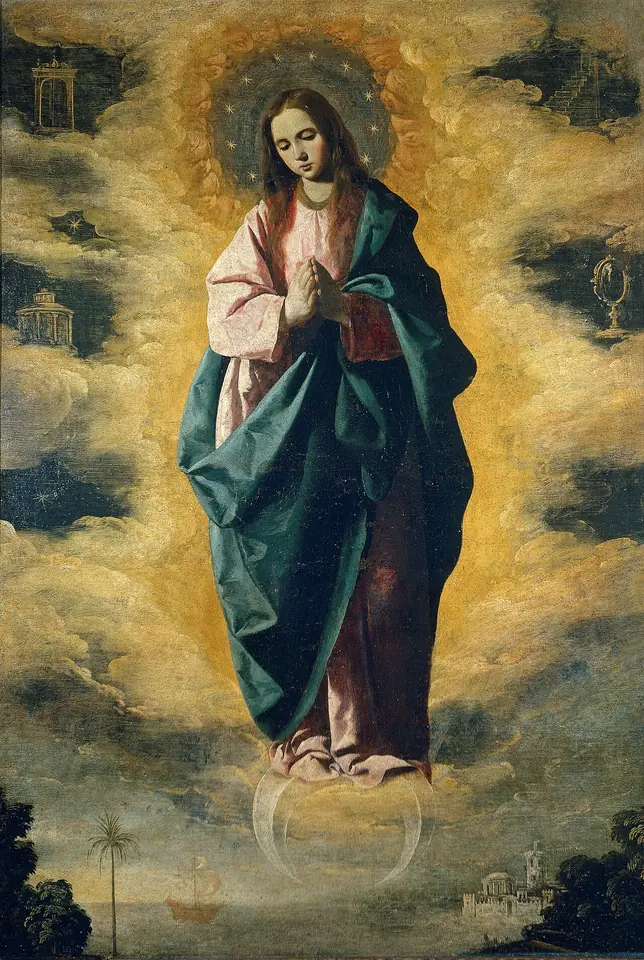
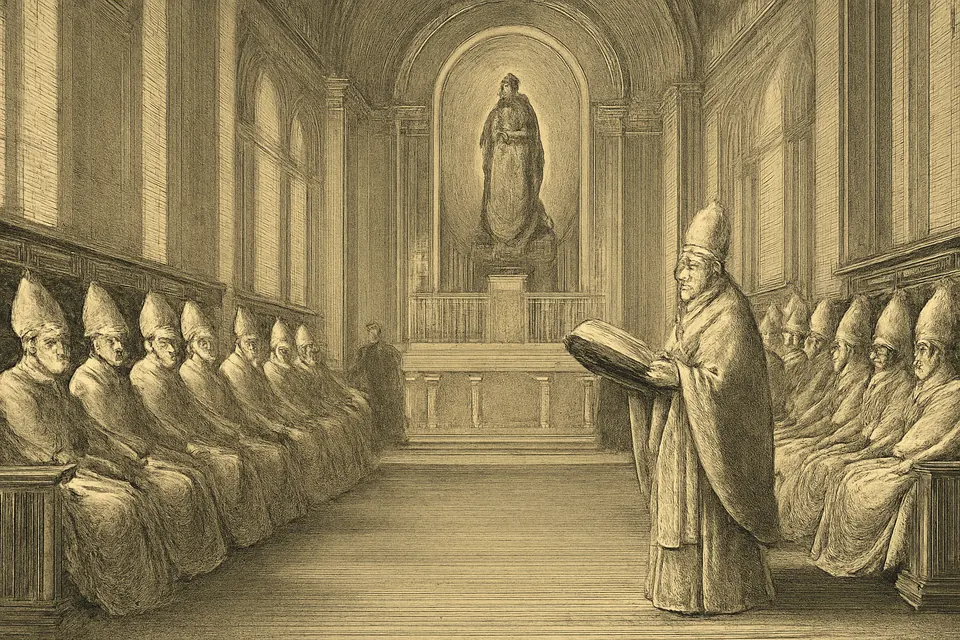
The Immaculate Conception is Mary's own conception, not the conception of Jesus. From the first moment of her life in the womb of her mother, St. Anne, God kept her free from original sin. Blessed Pius IX defined it as dogma on December 8, 1854, in the bull Ineffabilis Deus:
We declare, pronounce, and define that the doctrine which holds that the most Blessed Virgin Mary, in the first instance of her conception, by a singular grace and privilege granted by Almighty God, in view of the merits of Jesus Christ, the Savior of the human race, was preserved free from all stain of original sin, is a doctrine revealed by God and therefore to be believed firmly and constantly by all the faithful.
The phrase "in view of the merits of Jesus Christ" matters. Mary was saved by her Son like the rest of us. She was saved in advance, kept from falling rather than lifted up after the fall. Four years after the definition, at Lourdes, the Lady who appeared to St. Bernadette gave her name as "I am the Immaculate Conception." For the long history of the doctrine, from the Church Fathers through Blessed John Duns Scotus, see the Immaculate Conception.
The Mass of the Immaculate Conception
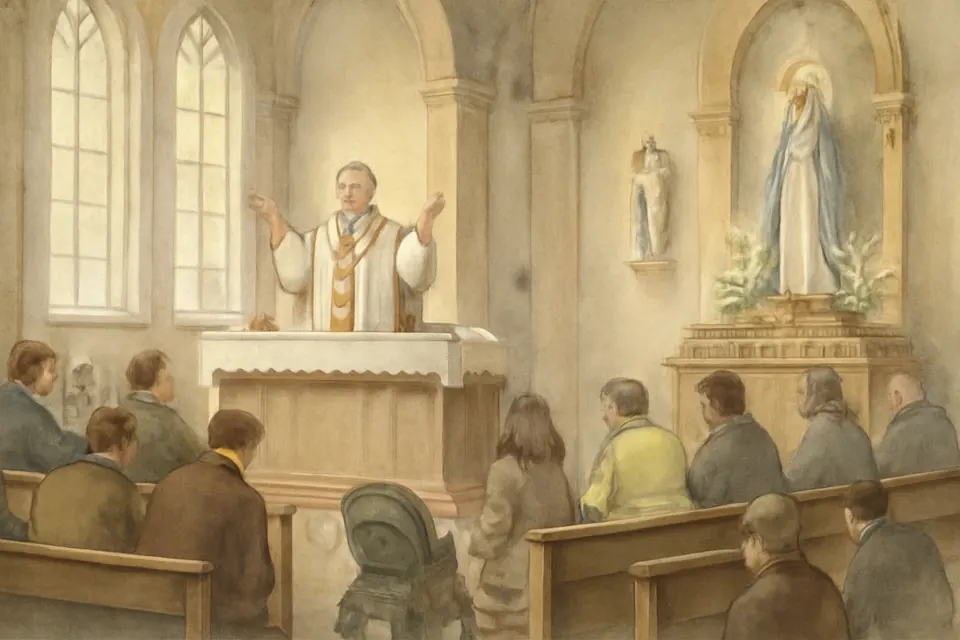
On December 8 the Church sets aside Advent violet for white and sings the Gloria and the Creed. The readings tell the whole story in three steps.
The first reading, Genesis 3, is the fall, and God's promise to the serpent. In the Douay-Rheims: "I will put enmities between thee and the woman, and thy seed and her seed: she shall crush thy head, and thou shalt lie in wait for her heel." The Church has always heard in "the woman" a promise fulfilled in Mary and her Son.
The second reading, from Ephesians 1, says God "chose us in him before the foundation of the world, that we should be holy and unspotted in his sight." What God did for Mary from her first moment, he wants for all of us at the end.
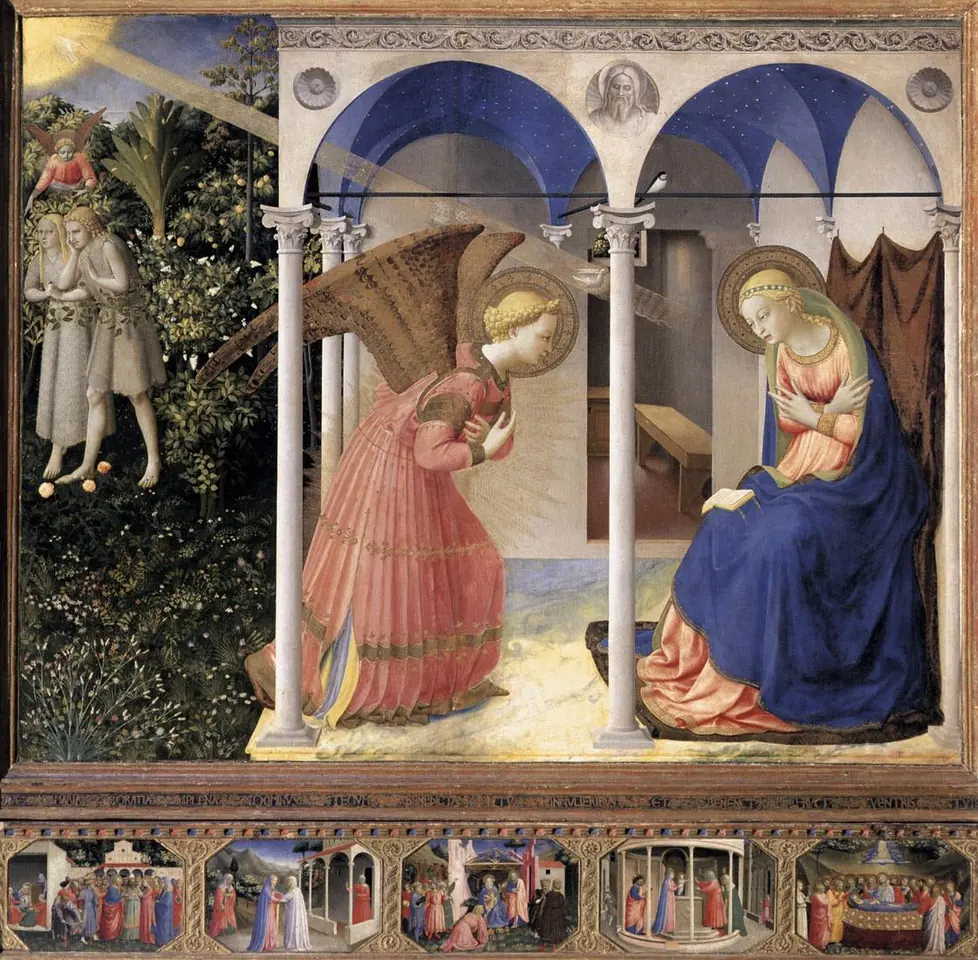
The Gospel is the Annunciation, Luke 1:26-38. The angel greets Mary, "Hail, full of grace, the Lord is with thee," and she answers, "Behold the handmaid of the Lord."
The collect of the Mass is the same Latin prayer the Church has prayed on this day since the time of Pius IX: Deus, qui per immaculatam Virginis Conceptionem dignum Filio tuo habitaculum praeparasti ("O God, who through the immaculate conception of the Virgin didst prepare a worthy dwelling-place for thy divine Son," in the old Raccolta translation). It asks that we, too, may come to God made clean by her intercession.
Patroness of the United States
The Immaculate Conception is the patronal feast of our country. In May 1846 the bishops of the Sixth Provincial Council of Baltimore chose "the Blessed Virgin Mary conceived without sin" as patroness of the United States, and Pius IX confirmed it in 1847, seven years before he defined the dogma. That is why December 8 has a special rank on the American calendar and why many parishes pray for the nation on this day.
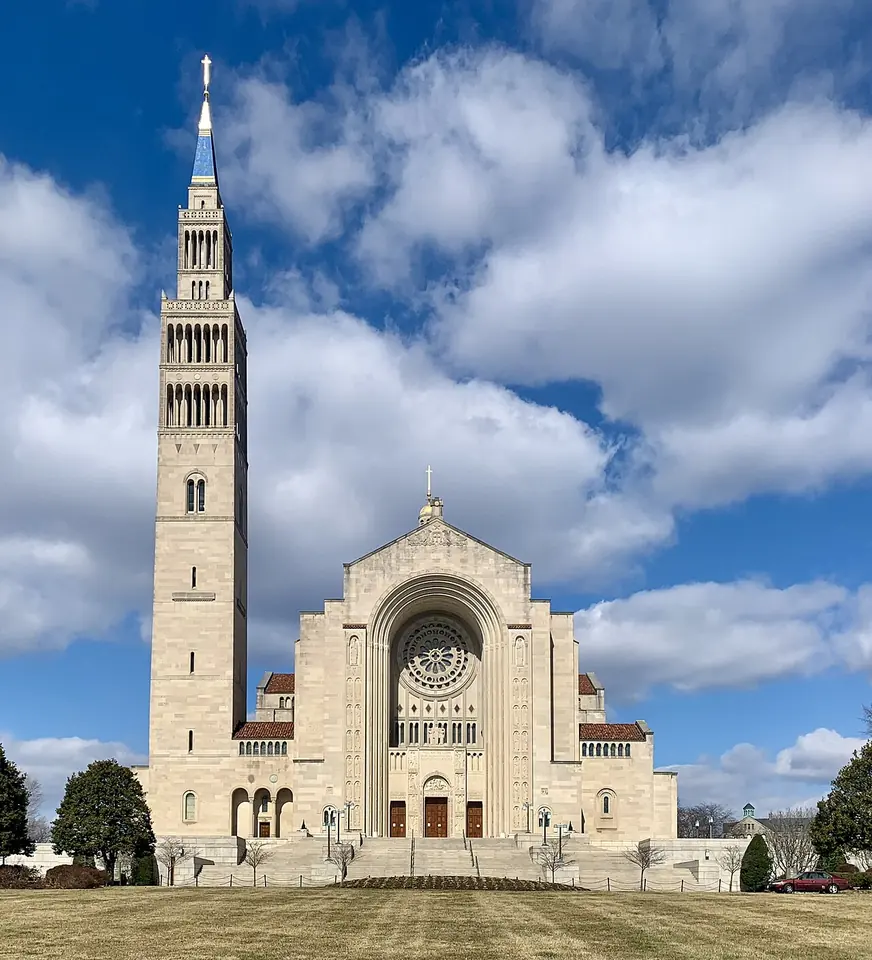
The Basilica of the National Shrine of the Immaculate Conception in Washington, D.C., is the country's great church in her honor. Its foundation stone was laid in 1920 and the upper church was dedicated in 1959. On December 8 it fills with pilgrims, and many Catholics who can't travel there watch its Mass online.
How the world keeps December 8
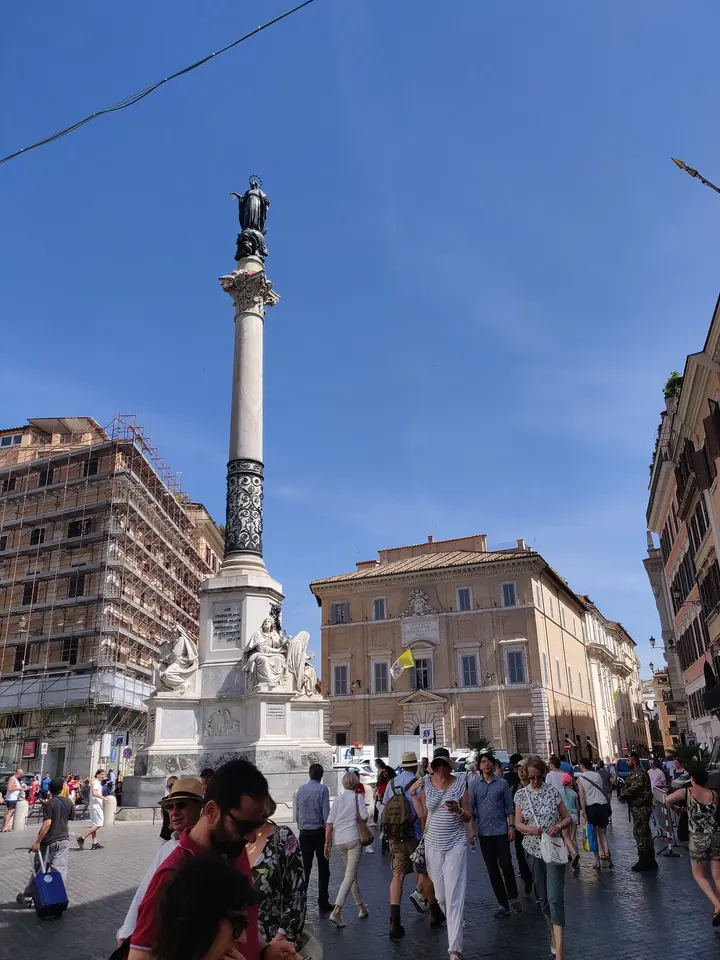
Rome. In 1857 a column topped by a statue of Mary Immaculate was raised in Piazza Mignanelli, by the Spanish Steps, to mark the definition. Since 1953 the popes have gone there on the afternoon of December 8 to pray, and Roman firefighters climb a ladder to hang a wreath of flowers on the statue's arm. In 2026 it will be the second December 8 of Pope Leo XIV.
Public holidays. December 8 is a national holiday in Italy, Spain, Portugal and several Latin American countries, and a special non-working day in the Philippines. In the United States it is an ordinary working day, which is why the obligation asks more of us here.
Nicaragua. On the evening of December 7, Nicaraguans keep La Purísima and La Gritería: crowds go from house altar to house altar shouting "¿Quién causa tanta alegría?" ("Who causes so much joy?"), and the families answer, "¡La Concepción de María!", handing out sweets and fruit.
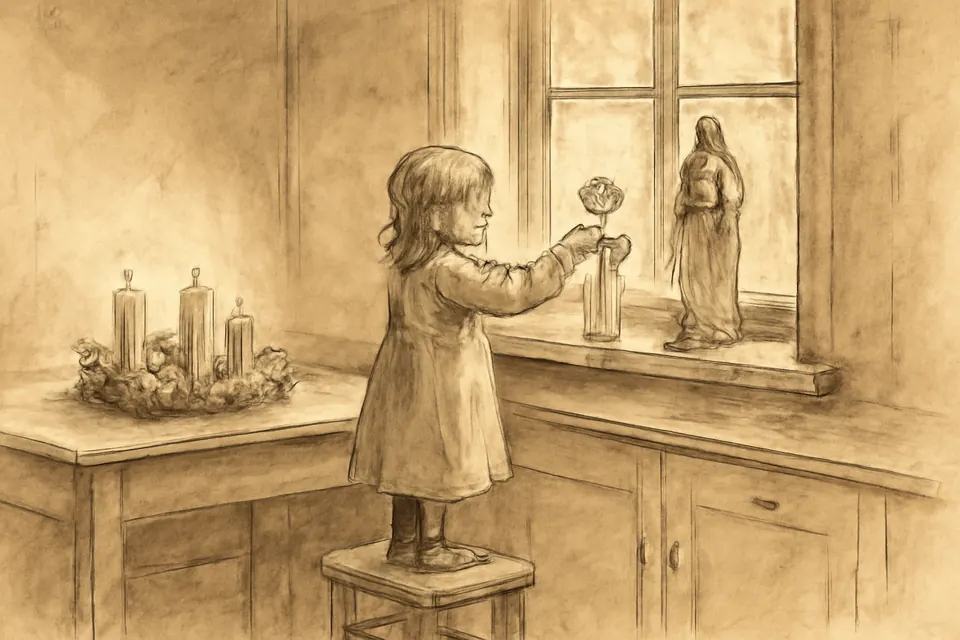
At home. The simplest customs are the old ones. Put white flowers before an image of Mary. Pray the Angelus at noon. Many families say the Litany of Loreto or the Miraculous Medal invocation, "O Mary, conceived without sin, pray for us who have recourse to thee," given to St. Catherine Labouré in 1830.
A prayer for December 8, 2026
Holy Mary, conceived without sin, you were made ready from your first moment to welcome the Son of God. On your feast, in the middle of this Advent, we come to you with our ordinary lives: our work and our worries, our families, our sins and our hopes. Ask your Son to make our hearts clean enough to receive him at Christmas. Watch over the United States, which has taken you as its patroness, and over every home where your name is prayed today. Teach us to say with you, "Be it done to me according to thy word." Amen.
Pastor Lyvers wrote this prayer for this page.
The days around December 8, 2026
- Sunday, November 29: First Sunday of Advent; the Immaculate Conception novena begins. See Advent 2026.
- Thursday, December 3: the novena to Our Lady of Guadalupe begins.
- Sunday, December 6: Second Sunday of Advent. St. Nicholas gives way to the Sunday this year.
- Monday, December 7: St. Ambrose; evening vigil Masses for the Immaculate Conception.
- Tuesday, December 8: the Immaculate Conception, holy day of obligation.
- Wednesday, December 9: St. Juan Diego.
- Saturday, December 12: Our Lady of Guadalupe, a feast but not a day of obligation. Saturday evening Masses that day are already the Third Sunday of Advent.
- Friday, December 25: Christmas, the next holy day of obligation. See holy days of obligation 2026 and Christmas 2026.
Frequently asked questions
Is December 8, 2026, a holy day of obligation?
Yes. The Solemnity of the Immaculate Conception falls on Tuesday, December 8, 2026, and it is a holy day of obligation in every diocese of the United States, Hawaii included. Any Mass on December 8, or a vigil Mass on the evening of Monday, December 7, fulfills it.
Is the Immaculate Conception ever not a holy day of obligation in the US?
Not because of the weekday. The 1991 US decree lifts the obligation on Saturdays and Mondays only for January 1, August 15 and November 1. The Immaculate Conception keeps its obligation on every weekday. When December 8 falls on a Sunday of Advent, the feast moves to Monday, December 9, and the Holy See said in 2024 that the obligation moves with it.
Does a vigil Mass on December 7 count for the Immaculate Conception?
Yes. Canon 1248 says the obligation is satisfied by Mass celebrated 'either on the feast day itself or in the evening of the preceding day.' In 2026, an evening Mass on Monday, December 7, counts. Ask your parish which Mass it is offering that evening.
Is it a sin to miss Mass on December 8?
The Catechism (2181) teaches that the faithful are obliged to take part in Mass on days of obligation 'unless excused for a serious reason (for example, illness, the care of infants) or dispensed by their own pastor,' and that those who deliberately fail in this obligation commit a grave sin. Work that truly can't be moved, sickness and caring for others are real excuses.
Is the Immaculate Conception the conception of Jesus?
No. It celebrates Mary's own conception in the womb of her mother, St. Anne, free from original sin. The conception of Jesus is the Annunciation, March 25. The confusion is understandable, because the Gospel read on December 8 is the Annunciation.
When is the Immaculate Conception in 2027?
Wednesday, December 8, 2027, also a holy day of obligation in the US. In 2028 it falls on a Friday, so the day's Friday abstinence is lifted because it is a solemnity.
Sources
- USCCB: Liturgical Calendar for the Dioceses of the United States of America, 2026 (PDF), December 8 and introduction (Hawaii)
- USCCB: Canon 1246, §2 - Holy Days of Obligation (complementary norm, decree of December 13, 1991)
- Code of Canon Law, Book IV, canons 1244-1253
- Fr. Robert M. O'Grady, "The Solemnity of the Immaculate Conception as a holy day of obligation," The Pilot (Boston), November 1, 2024. Reports the Dicastery for Legislative Texts' answer relayed by Bishop Paprocki on October 10, 2024
- Catechism of the Catholic Church, 2180-2183 (the Sunday obligation)
- Pius IX, Ineffabilis Deus (1854), English translation (Papal Encyclicals Online)
- Douay-Rheims Bible: Genesis 3