Novena to Our Lady of Guadalupe
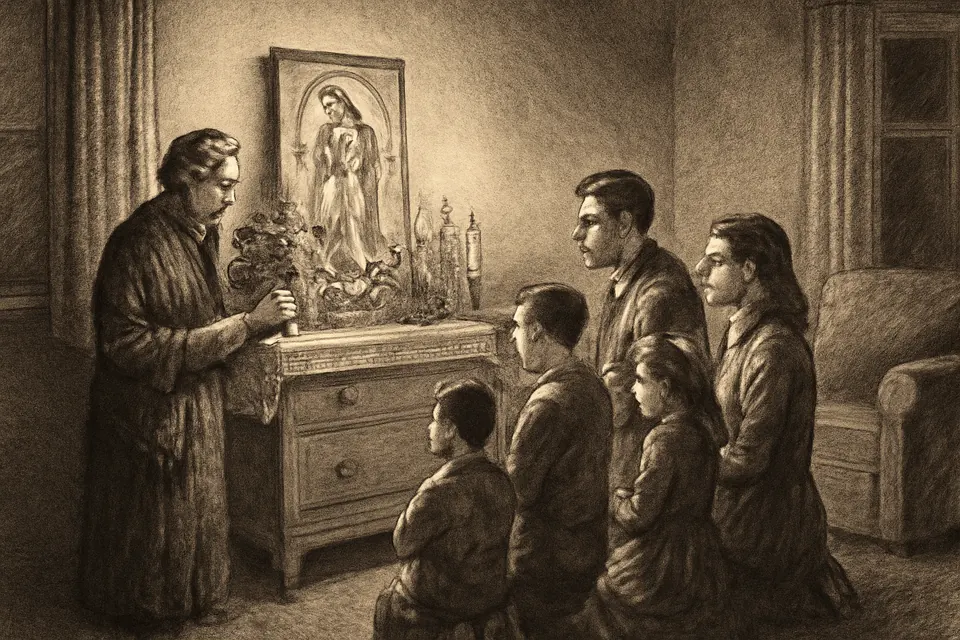
The novena to Our Lady of Guadalupe is nine days of prayer before her feast on December 12. Most parishes pray it from December 3 to 11; in 2026 that is Thursday to Friday, ending the day before the feast. Below is a complete traditional novena printed in Mexico City in 1805, translated into English, with a prayer and a small offering for each day.
The novena to Our Lady of Guadalupe is how families and parishes across Mexico and the Americas prepare for December 12. For nine days we come to the Mother who told Juan Diego, "Am I not here, I, who am your mother?", and we bring her what we can't carry alone. Below is a complete traditional novena, first printed in Mexico City more than two hundred years ago, in our English translation, with the dates for 2026.
The novena to Our Lady of Guadalupe at a glance
- Dates in 2026: Thursday, December 3, to Friday, December 11. The feast is Saturday, December 12, 2026.
- Each day: an act of contrition, an opening prayer, the prayer for the day, seven praises, five Hail Marys and the offering prayer, plus a small act of love for the day.
- Time: about fifteen minutes.
- Source: the Novena a María Santísima de Guadalupe, especial abogada contra la peste ("Novena to Most Holy Mary of Guadalupe, special advocate against the plague"), printed in Mexico City in 1805 and again in 1806.
Where this novena comes from
The text comes from a 24-page pocket booklet by Manuel Antonio Alonso Martínez, a bachelor of theology, printed "with license" by Mariano de Zúñiga y Ontiveros on Calle del Espíritu Santo in Mexico City. The 1805 copy calls itself a reprint, and the press issued it again in 1806, so it was clearly a novena people used. Both editions are in the Wellcome Library in London and can be read in full on the Internet Archive. Our Spanish section prints the original as Novena a la Virgen de Guadalupe. The English below is our own translation, kept close to the Spanish.
Why "special advocate against the plague"? In 1736 and 1737 an epidemic swept New Spain, a fever the Mexicans called matlazáhuatl. Rev. George Lee, writing in Baltimore in 1897, tells how the people of Mexico City turned to Our Lady when every remedy failed, and how on April 27, 1737, the city's clergy and magistrates swore in the archbishop's chapel to hold her as "Principal Patroness of Mexico" and to keep December 12 as a feast forever. Historians of the time, Lee writes, agreed that the plague lifted as the patronage was decreed. We count that as a reported grace: believed by a whole nation, never formally judged by the Church. Novenas like this one put the sick under her mantle from then on.
Guadalupe novenas are older still. Lee notes that when Miguel Sánchez published the first printed account of the apparitions in 1648, it came "enriched with its devout novenas."
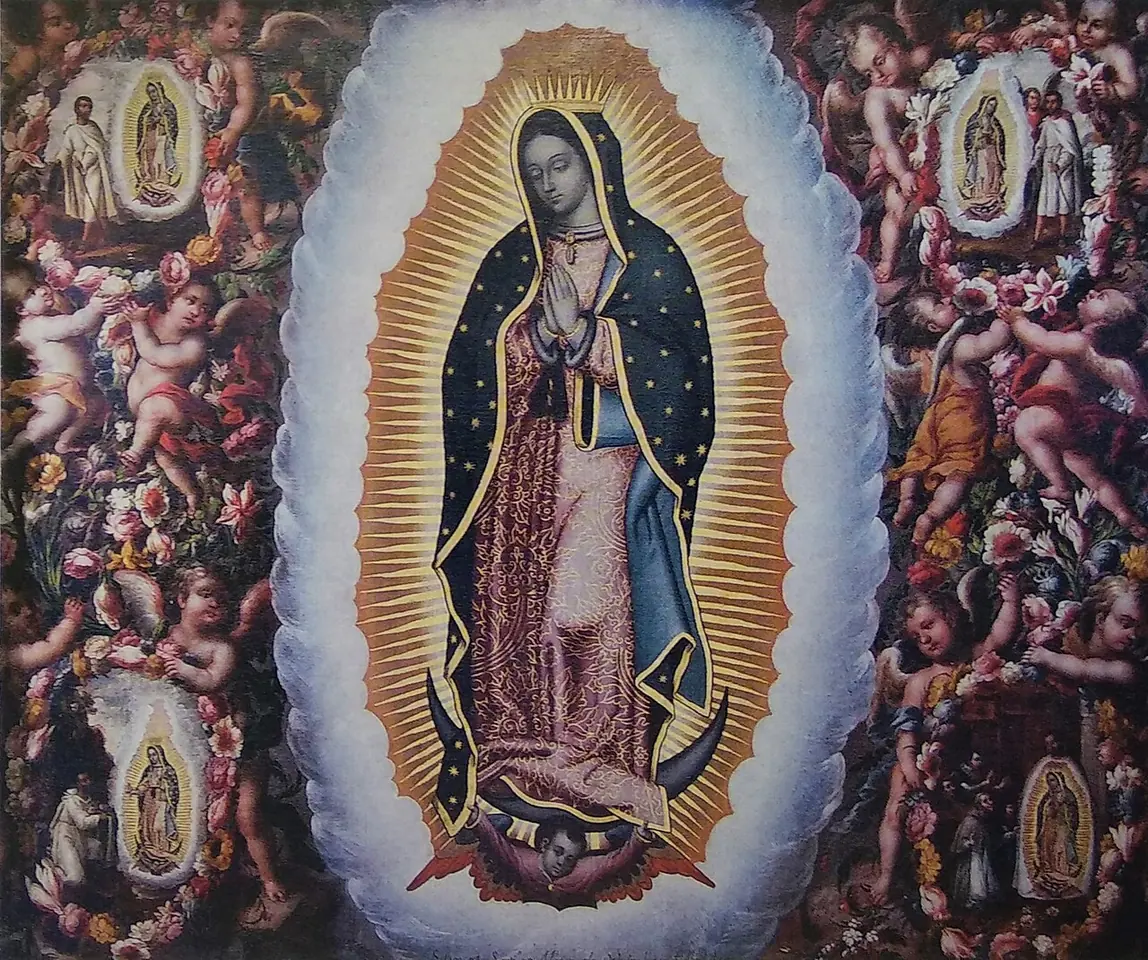
Prayers for every day of the novena
Kneel, if you can, before an image of Our Lady, make the sign of the cross, and pray these in order each day.
Act of contrition
Hail, Most Holy Mary of Guadalupe, most loving Mother of sinners. I am sorry, my Lady, for having offended your Son and my God, because he is who he is, and because he is your Son, and because I love him above all love, and because my sins are offenses against you, whom I ought to love next after his Majesty. I hope, my Mother, through your intercession, to obtain pardon for my sins and grace never to sin again; and I promise, my Lady, to amend my life and to keep this resolution until death. So do not abandon me. Beg Jesus to have mercy on me. I have sinned, my Lady; obtain mercy for me from your Son Jesus. Amen.
Opening prayer
Hail Mary, sea of mercy, dawn and forerunner of grace, herald of the world's salvation, Christ Jesus; Queen of angels and of men, rainbow that turns the severity of an angry God into sweet mercies; joy of heaven and earth, happiness of this kingdom of the Indies: by your name and your holy apparition of Guadalupe we ask you to paint upon our souls, with the brush of your grace, the image of your most beautiful face, giving me the precious jewel of perfect charity toward God and our neighbors; a death of pure love of God and sorrow for our sins, and your help in that hour to obtain pardon; and in life, love for our enemies, a resolve to sin no more, a love for the virtues and for frequent reception of the sacraments, so that we may live in grace and enjoy perfect gladness, which is to enjoy God in your company, loving him in his glory. Amen.
The prayer for the day, the praises and the Hail Marys
Pray the prayer for the day (below). Then say seven times:
Praised be the name of Jesus, and that of Most Holy Mary.
Then pray five Hail Marys "to the name and apparition of my Lady," and close with the offering.
Offering
Hail Mary, crystal fountain from which flow abundant streams of mercy; heaven that shines and glows like sun, moon and stars: burn like the sun in my spirit, that I may love you; banish like the moon the darkness of the sins in my soul, which hold me captive when I try to step toward virtue; pour out like a star upon me and upon all the sweet influences of holiness and grace, so that I may be like another cherub, a throne for your greatness, on whom the lovely footprints of your sacred feet are stamped, as an honored laurel on my brow and a glorious mark upon my heart, by which I confess you as my Mistress and Lady, declaring that I am your slave. And as such I offer, bowed before your majesty, this novena as the tribute I owe you as your slave, praying for our Most Holy Father the Roman Pontiff, for our most illustrious Shepherd [...], for the exaltation of our holy faith, [...] for the conversion of sinners to penance and the freedom of captives; for the preservation of the holy religious orders, the just, and spiritual congregations, preachers and confessors, church and civil judges, fathers of families and all who have souls to govern: grant them wisdom to act justly; for those of us who make this novena, for those in mortal sin, for the benefactors of the shrines and all this city; for the holy souls in purgatory, for whom we apply these poor prayers, united with your merits and with the precious blood of Jesus, that they may be freed from their pains and obtain eternal rest; and that all of us, and the whole world, may obtain your blessings, and after this life kiss your feet in glory. Amen.
What we left out. Where the brackets stand, the 1805 original also prays for "our Catholic King and Christian princes," asking for them "peace and victory against the heretics," and for "the defeat of the Turks." Those were the petitions of a subject of the Spanish crown in 1805. Today we can put in their place those who govern us and peace among nations. Calling oneself Our Lady's "slave" is the classic language of consecration to Mary: whoever gives himself to her gives himself through her to Christ.
The nine days of the novena
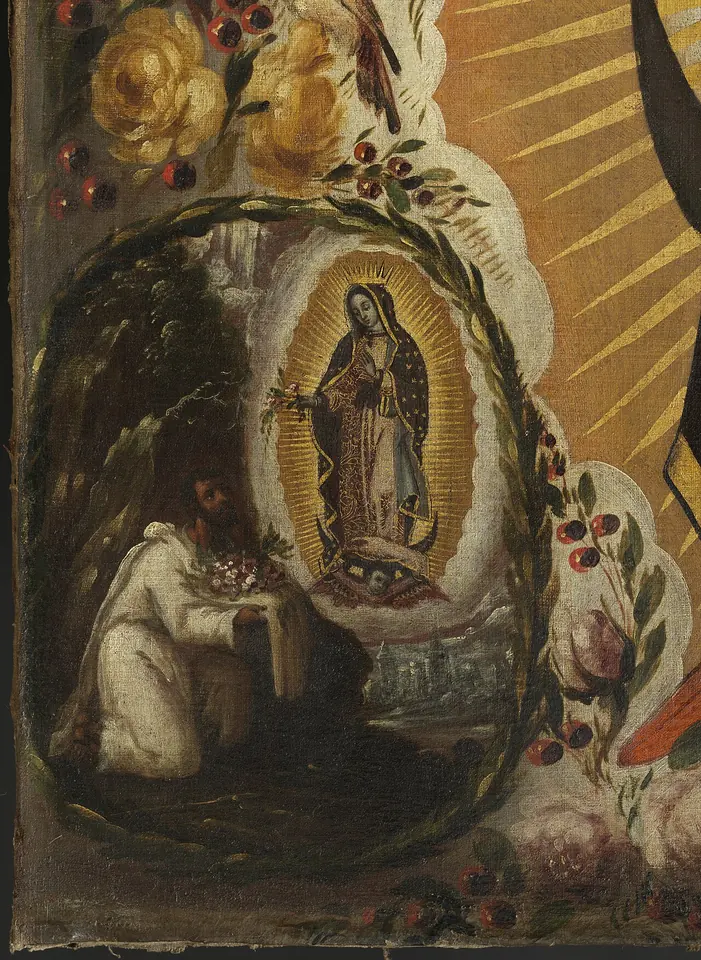
Each day has its own prayer and an obsequio, a small gift of love to offer Our Lady. The author planned them tenderly. Each gift stands in for a part of the image of Guadalupe: the roses, the stars, the tunic, the mantle, the rays, the tilma, the moon, the angel, and last of all the bishop's house where the image appeared. Meanwhile the prayers climb, day by day, through the nine choirs of angels, from the angels up to the seraphim. Over nine days, as the booklet puts it, we "paint" the image of Mary in our souls.
First day: Thursday, December 3, 2026
Hail Mary, glory of the most blessed Trinity, paradise of its delights. Hail, glory and Queen of the Angels: I praise you with these most beautiful spirits, and through their merits I beg you that, under their guard, you keep us from straying from their counsels, and that our glory may be to follow them, keeping the commandments of God, so that we may be faithful servants and enter into the joy of glory. Amen.
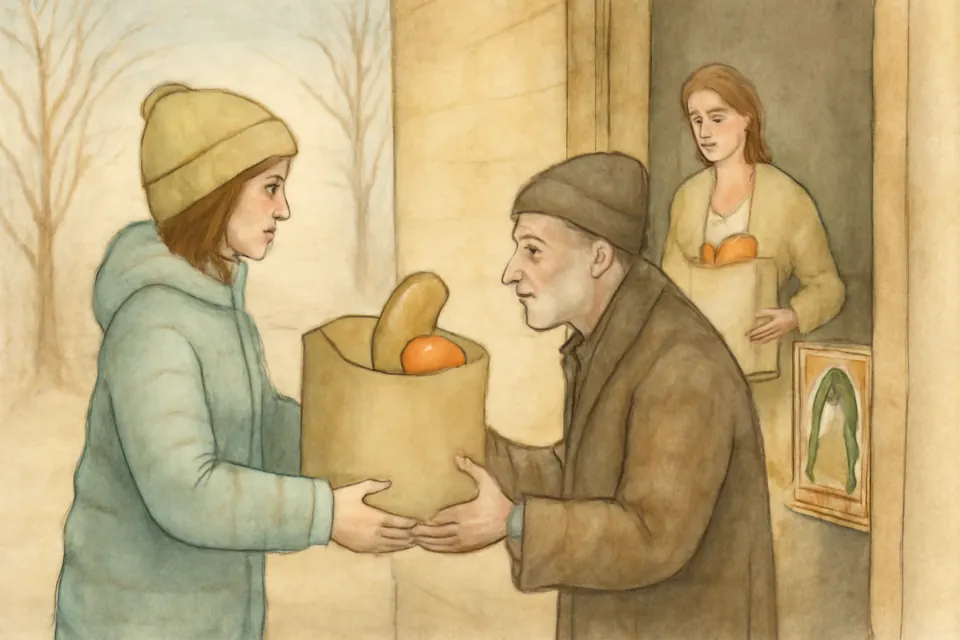
Gift for the day: "These days you will paint in your soul the image of Most Holy Mary by doing some works of virtue; and today, in place of the roses, give some alms, even if only pieces of bread, or spiritual alms, such as praying for the souls in purgatory or for captives."
Second day: Friday, December 4
Hail Mary, flowering rod, from whose root came forth the flower of the field, the divine lily of the valleys, Jesus. Hail, Daughter of the Eternal Father and Empress of the Angels: I praise you with these most obedient spirits, and through them I beg you that, as they watch over popes, kings and princes, you make them help us, through you, to obey faithfully our Most Holy Father the Roman Pontiff; that the heretics who deny it may yield, turned into gentle lambs, and leave their errors; and that we may give our necks to the knife rather than fail in so just an obligation; and that we may obey you, our Lady and Advocate, thanking you for having given us the blessed fruit of your womb, Jesus, for our salvation, and honoring you with devotion, so as to love you forever in glory. Amen.
Gift for the day: "Today, in place of the stars, praise the most sweet names of Jesus and Mary forty-six times, for there are forty-six stars." Tradition counts forty-six stars on the mantle of the image.
Two centuries on, we pray the heart of this day's prayer without its harshness: loyalty to the successor of Peter, and the unity of all Christians in one flock.
Third day: Saturday, December 5
Hail Mary, brightest torch that gives light to men. Hail, Mother of God the Son, Princess of the Principalities: I praise you with these most zealous spirits, and through their merits I beg you, since they are above the angels and archangels in matters of human salvation, that you make them help us do works that lead us to eternal life, so that, finding the way by their grace, we may reach the harbor of glory. Amen.
Gift for the day: "Today, in place of the tunic and sash, strip yourself of the resentments you hold against certain people who naturally rub you the wrong way: speak to them kindly and humbly."
Fourth day: Sunday, December 6
Hail Mary, precious diamond of the heart of God, shining in the holy city. Hail, Spouse of the Holy Divine Spirit, Lady of the Powers: I praise you with these sovereign spirits, and through them I beg you, since they have power to restrain the demons, that you make them subdue those who fight against us, and that with their help we may overcome the temptations with which they test us, practicing the virtues, so as to be crowned in glory. Amen.
Gift for the day: "Today, in place of the mantle, keep modesty of the eyes, and look at nothing but what is needed, and at the images of Jesus and Mary, to praise them."
Fifth day: Monday, December 7
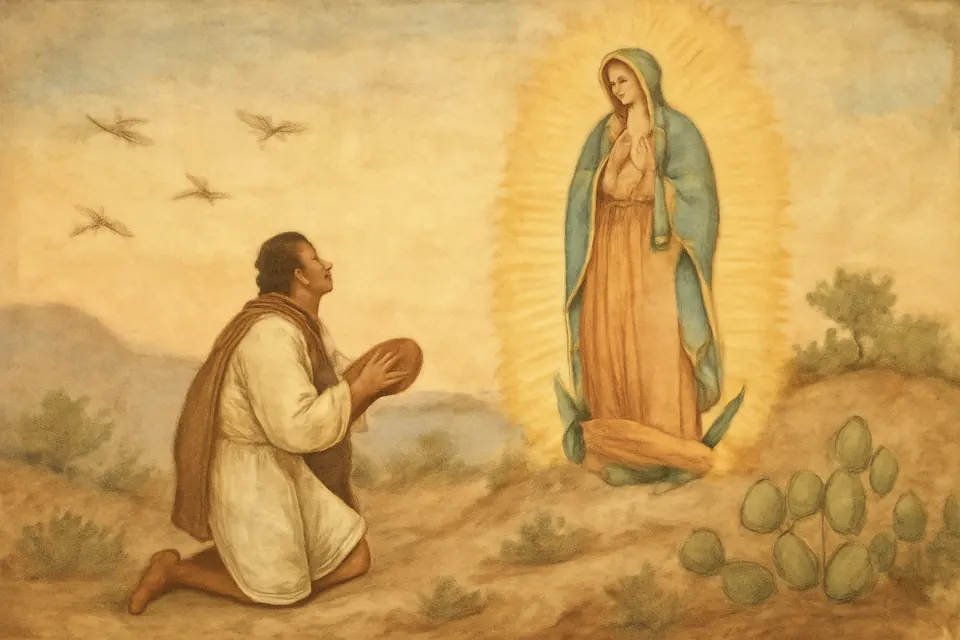
Hail Mary, ark of God himself, little bouquet of roses from the garden of Christ, most pure Spouse of St. Joseph, Queen of the Virtues: I praise you with these wonderful spirits, and through their merits I ask you to help us profit from the miracles God works through them, and from the special favors with which he blesses us each day; and with their help may we recognize the inspirations he sends us to amend our ways, and so enjoy you in glory. Amen.
Gift for the day: "Today, in place of the rays of the sun, prepare your soul with a good confession and Communion, so that you may have the rays of Christ in the Sacrament with the lights of his grace, for it is the day of my Lady's Conception; and make seven acts of contrition."
In the 1805 booklet, which starts on December 4, the fifth day falls on December 8, the Immaculate Conception. When we start on December 3, as most parishes do, this day falls on the eve of the feast. That is a fitting evening for confession, and Monday's vigil Mass fulfills the obligation of December 8. See December 8 holy day of obligation.
Sixth day: Tuesday, December 8 (the Immaculate Conception)
Hail Mary, light that enlightens every mind to know the true path of holiness. Hail, Daughter of that holy and best of couples, St. Joachim and St. Anne, Princess of the Dominations: I praise you with these most provident spirits, and through their merits I beg you, since they rule over the lesser ministers of providence, that in their company I may master my passions, restraining the rebellion of the flesh, so as to live steadfastly, and with a pure spirit enjoy after this life the lights of glory. Amen.
Gift for the day: "Today, in place of the tilma, give her your heart cleansed of all fault, and forgive your enemies, so that my Lady may be imprinted upon it, for the best cloth is a heart without fault."
Seventh day: Wednesday, December 9 (St. Juan Diego)
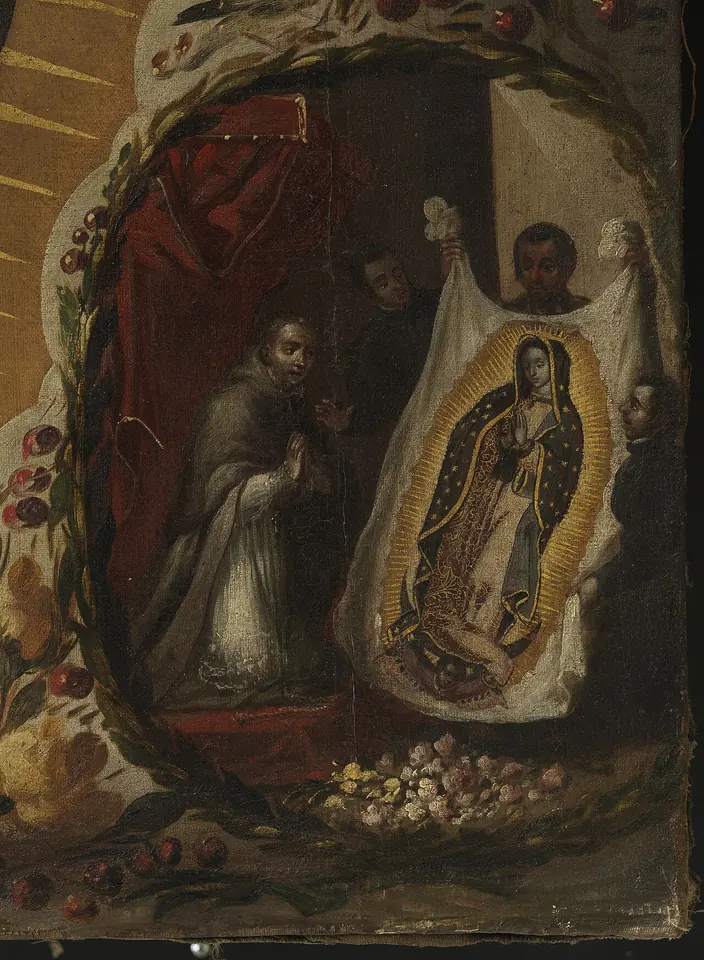
Hail Mary, life of the saints, joy of the angels and terror of the demons. Hail, fruitful vine and sea of virtues. Hail, life and Empress of the Thrones: I praise you with these chosen spirits, and through them I beg you to grant that, in imitation of them, I may be a throne of God, keeping my soul free of the sin that robs it of such glory; that my life may be like the life of the just, a pleasing seat for so great a Majesty, living for the things that are eternal and dying to the world and to myself, so as to live in your company in the happy homeland of glory. Amen.
Gift for the day: "Today, in place of the moon, make seven acts of humility, and look at the waxing and waning of your soul; resolve not to give up the practice of the virtues and devotions you had before, and do not despise the poor."
December 9 is the feast of St. Juan Diego, the day of the first apparition in 1531. Ask him today to teach you his humility: he thought himself the least of men, and Our Lady chose him as her messenger.
Eighth day: Thursday, December 10
Hail Mary, virgin honeycomb, who in mercy sweetens the bitterness of death. Hail, loving turtledove. Hail, Queen of the Cherubim: I praise you with these eminent spirits, and I beg you, by their perfections, to obtain for me perfection in my works, so as to please God, and that they may help me in all of them, so that with you, the most eminent and perfect of all creatures, we may adore your most holy Son in glory. Amen.
Gift for the day: "Today, in place of the cherub, kindle your soul with acts of love of God and of Most Holy Mary, of faith, hope and charity: make each of them seven times."
Ninth day: Friday, December 11
Hail Mary, model of love, who in loving God most perfectly surpass the choirs of angels, the saints of heaven and the just on earth. Hail, temple of purity, whitest dove, most pleasing to God, three and one. Hail, Lady of the Seraphim: I praise you with these most burning spirits, and I beg you by their love to make them help us, so that in imitation of them we may never cease for an instant to love him who, to love us, gave his life on the tree of the cross; that we may live crucified with his love, our life being to love him and our death to offend him; and that we may follow you, loving Mary, who love him so much, dying for love of him and of you, and placing our souls in your hands, may we find in them the treasure of loving him forever in glory. Amen.
Gift for the day: "Today make your soul a temple, and receive Most Holy Mary; venerate her many times, in place of the homage she received in the palace. And give a meal to a poor woman in honor of our Lady."
The "palace" is the house of Bishop Juan de Zumárraga, where the image appeared on the tilma and everyone fell to their knees. The booklet closes by asking two Hail Marys "for the one who printed this novena, and for the one who wrote it." Let us pray them too, for that young theologian and that printer of two centuries ago.
More prayers to Our Lady of Guadalupe
Our Lady's own words
The prayer most of us carry in our hearts isn't a prayer at all, but Our Lady's answer to Juan Diego when he tried to avoid her on his way to find a priest for his dying uncle. In the Nican Mopohua, the Nahuatl account of the apparitions, she says:
Am I not here, I, who am your mother? Are you not under my shadow and protection? Am I not the source of your joy? Are you not in the hollow of my mantle, in the crossing of my arms? Do you need something more?
Many of us simply say these words back to her, slowly, when fear or grief is too heavy for anything longer.
The coronation salutation of 1895
On October 12, 1895, the image of Guadalupe was solemnly crowned by authority of Pope Leo XIII. Lee records that leaflets spread across Mexico asked everyone, "whether they be in the churches, in their houses, or in the streets," to greet Our Lady at the hour of the coronation with this short prayer:
Hail, August Queen of the Mexicans! Most Holy Mary of Guadalupe, hail! Pray for thy Nation, that it may obtain what thou, our Mother, thinkest most fit to ask; and bless thy children who from here below salute thee. Hail! Ave Maria.
It still makes a good daily prayer. Put the name of your own country in place of "the Mexicans" if you like; she is Patroness of all the Americas.
Pope Leo XIII's verses
For the same coronation, Leo XIII, a fine Latin poet, wrote four lines to be set beneath her picture. In H. T. Henry's 1902 translation:
The Mexic people, 'neath this image fair, Utters its heart in prayer. O may it prosper, and the Faith of old Yet more securely hold!
The Latin begins Mexicus heic populus mira sub imagine gaudet / Te colere, alma Parens: "Here the Mexican people rejoice to honor you, loving Mother, beneath this wondrous image."
The prayer of St. John Paul II
For his first pastoral journey as pope, to Mexico in January 1979, St. John Paul II wrote a long prayer to Our Lady of Guadalupe for the Church in the Americas; the Vatican dates it January 25, the eve of his arrival. It begins, "O Immaculate Virgin, Mother of the true God and Mother of the Church!" and asks her to present our prayer "to your Son Jesus, our only Redeemer." The text is copyrighted, so we don't reprint it; you can read it on the Vatican's website (linked in the sources) or in many parish leaflets.
A prayer for the novena
Holy Mary of Guadalupe, Mother of the true God, you came to Juan Diego when he was hurrying past you with a heavy heart, and you told him not to be afraid. Here we are, hurrying and afraid. Stop us on the road, as you stopped him. Take this intention into the hollow of your mantle [name it], and carry it to your Son. Heal our sick, bring home our wanderers, give work to those who need it, and peace to our families. Make us humble messengers like St. Juan Diego, ready to go where you send us. Amen.
Pastor Lyvers wrote this prayer for this page.
How to pray the novena in 2026
The Guadalupe novena overlaps the first half of Advent. In 2026 it begins on the feast of St. Francis Xavier, runs through the Second Sunday of Advent and the Immaculate Conception, and ends the day before the feast.
- Pick your start date. December 3 is the common custom in parishes, ending on December 11. If you want to follow the 1805 booklet exactly, begin on Friday, December 4, and pray the ninth day on the feast itself, Saturday, December 12.
- Set up a small altar. An image of Our Lady of Guadalupe, a candle and, if you can, a few roses: red ones recall the Castilian roses Juan Diego found on the frozen hill.
- Pray with others. The novena is meant for families and parishes as much as for one person alone. Many parishes pray it together before or after the evening Mass, and many families gather each night before the home altar.
- Do the day's gift. The little offerings are the soul of this novena. Some cost money (bread for the poor), most cost pride (a kind word to someone difficult, forgiving an enemy).
- Keep both feasts. Tuesday, December 8, the Immaculate Conception, is a holy day of obligation, so the sixth day of the novena includes Mass. December 12 is a feast, not a day of obligation, but many parishes begin it before dawn with Las Mañanitas, the birthday song for Our Lady, followed by Mass. In 2026 it falls on a Saturday, and the evening Masses that day are already the Third Sunday of Advent, so plan a morning or midday Mass for the feast.
You can also pray this novena any time of year. The author said so himself: "it can be made at any time."
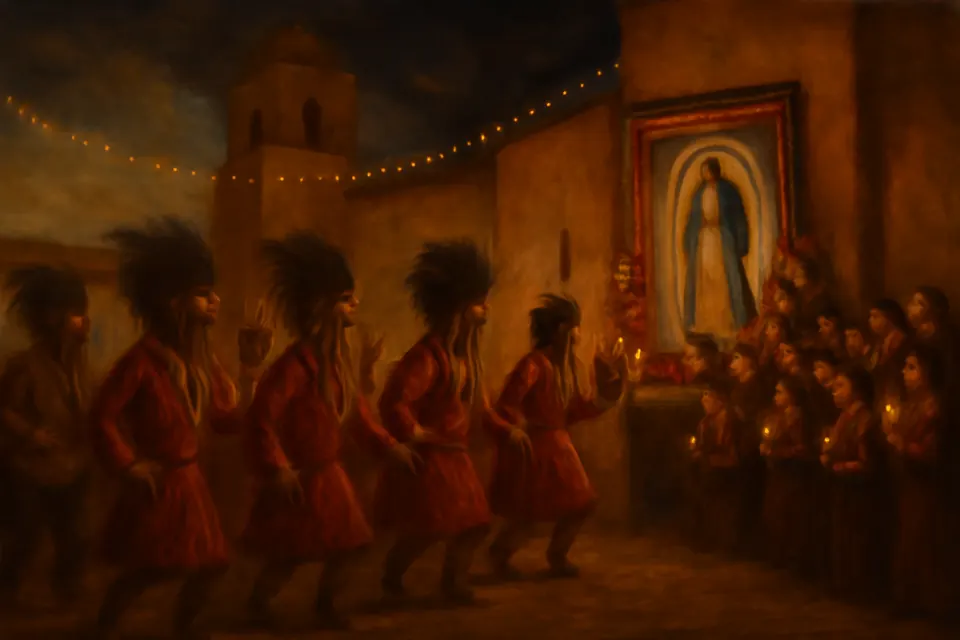
Our Lady of Guadalupe and the Church
The Church has honored the image of Tepeyac for centuries. In 1754 Pope Benedict XIV confirmed Our Lady of Guadalupe as patroness of New Spain and approved a proper Mass and Office for December 12, as Lee records from the papal brief. Leo XIII authorized the crowning of the image in 1895, and St. John Paul II canonized Juan Diego in 2002. For the story of the apparitions, the debate over the sources and the miracles, see Our Lady of Guadalupe and the tilma of Guadalupe.
Related prayers and pages
- The Immaculate Conception novena, November 29 to December 7, which overlaps this one.
- December 8 holy day of obligation (Immaculate Conception 2026).
- Advent 2026, Las Posadas and the Novena de Aguinaldos, the Christmas novenas that follow.
- Marian apparitions and St. María Guadalupe García Zavala.
- All our novenas.
Frequently asked questions
When do you start the novena to Our Lady of Guadalupe?
Most parishes begin on December 3 and end on December 11, the eve of the feast. In 2026 that is Thursday, December 3, through Friday, December 11, with the feast on Saturday, December 12. The 1805 booklet printed here begins on December 4 so that the ninth day falls on December 12 itself. Either way is good.
Can I pray the Guadalupe novena at another time of year?
Yes. The 1805 booklet says it plainly: the novena begins on December 4, but 'it can be made at any time.' Many people pray it for a sick relative, a pregnancy, a child far from home or a family in trouble, in any month.
What is the most famous Our Lady of Guadalupe prayer?
The words most Catholics carry with them are Our Lady's own, from the Nican Mopohua: 'Am I not here, I, who am your mother?' Many repeat them as a prayer of trust. Popular printed prayers include the prayer St. John Paul II wrote for his journey to Mexico in January 1979, which begins 'O Immaculate Virgin, Mother of the true God and Mother of the Church.'
What are the daily 'offerings' in this novena?
For each day the 1805 booklet asks for a small act of love offered to Our Lady: an alms, forty-six praises for the forty-six stars on her mantle, kindness to someone we find difficult, a good confession, forgiveness, acts of humility, a meal for a poor woman. Each one stands in for a part of the image: the roses, the stars, the tunic, the mantle, the rays, the tilma, the moon, the angel.
Is December 12 a holy day of obligation?
No, not in the United States. Our Lady of Guadalupe is a feast on the US calendar, not a holy day of obligation, though many parishes hold Mass, Las Mañanitas and processions. In 2026 it falls on a Saturday. The holy day of obligation that week is the Immaculate Conception on Tuesday, December 8.
What if I miss a day of the novena?
Nothing is spoiled. A novena is persevering prayer, not a formula that stops working when interrupted. Pray the missed day together with the next one, or simply finish a day late.
Is there a Spanish version of this novena?
Yes. The original Spanish text of the 1805 novena, with the gozos (hymn verses) that close it, is on our page Novena a la Virgen de Guadalupe.
Sources
- Manuel Antonio Alonso Martínez, Novena a María Santísima de Guadalupe, especial abogada contra la peste (Mexico City: Mariano de Zúñiga y Ontiveros, 1805), Wellcome Library, Internet Archive. Spanish original of the novena translated on this page (public domain)
- Manuel Antonio Alonso Martínez, Novena a María Santísima de Guadalupe (Mexico City: Mariano de Zúñiga y Ontiveros, 1806), Wellcome Library, Internet Archive
- Rev. George Lee, C.S.Sp., Our Lady of America, Liturgically Known as Holy Mary of Guadalupe (Baltimore: John Murphy, 1897), Internet Archive. The plague and patronage of 1737, the 1754 brief of Benedict XIV, and the coronation prayer of 1895
- H. T. Henry, Poems, Charades, Inscriptions of Pope Leo XIII, with English Translation and Notes (Dolphin Press, 1902), Internet Archive
- Readings in Classical Nahuatl: Nican Mopohua, section 5 (University of California, San Diego)
- John Paul II, Oración a la Virgen de Guadalupe (January 1979), vatican.va
- USCCB: Liturgical Calendar for the Dioceses of the United States of America, 2026 (PDF)
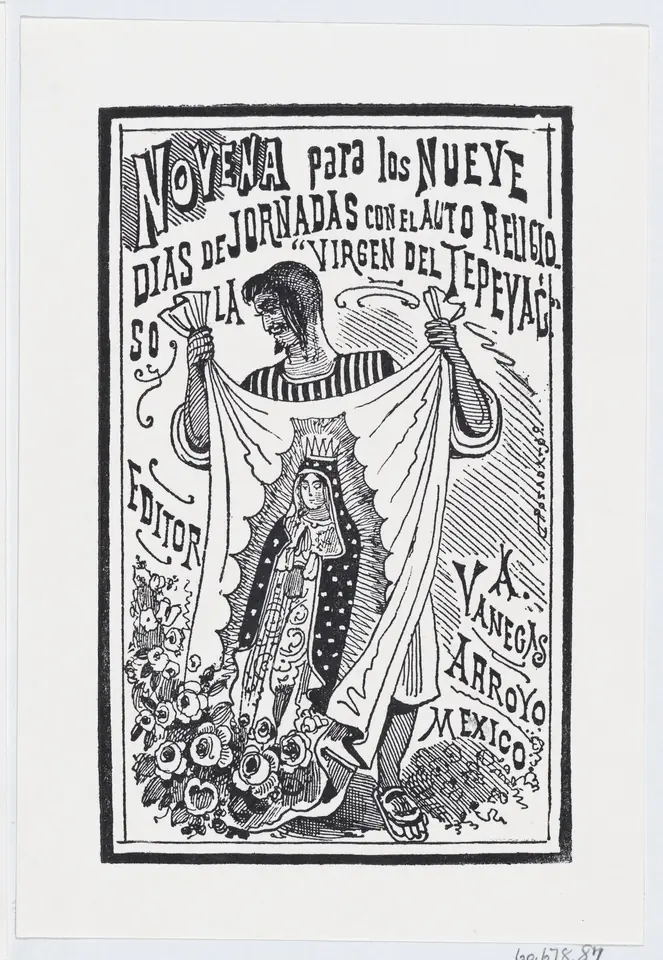
- José Guadalupe Posada, illustration for a novena of the Virgin of Tepeyac (about 1898), Metropolitan Museum of Art