Chaplet of the Holy Wounds

The Chaplet of the Holy Wounds is a prayer said on ordinary rosary beads: "Eternal Father, I offer Thee the Wounds of our Lord Jesus Christ" on the large beads and "My Jesus, pardon and mercy, by the merits of Thy Holy Wounds" on the small ones. It comes from Sr. Mary Martha Chambon (1841–1907), a Visitation nun of Chambéry, France.
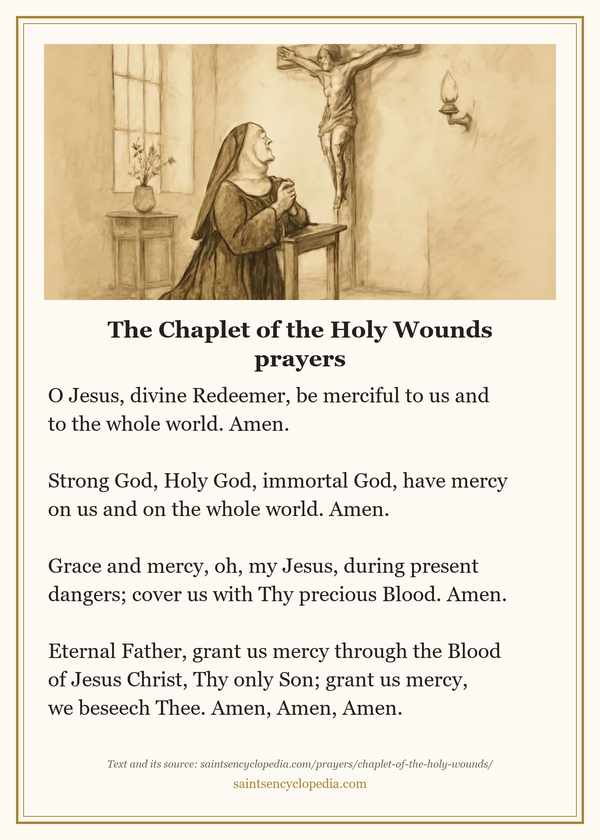 Free printable prayer card 5 × 7 inch PDF, ready to print, frame or tuck in a missal.
The Chaplet of the Holy Wounds is a short, quiet prayer, and it asks for the two things a sinner needs most: pardon and mercy. Its words come from a lay sister of a French convent in the 1860s who could neither read nor write. Below is the full text as printed in the English booklet of 1924, followed by the steps for praying it on your rosary and the story of where it came from.
The Chaplet of the Holy Wounds prayers
This text comes from Sister Mary Martha Chambon and the Holy Wounds of Our Lord Jesus Christ, translated from the booklet of the Visitation monastery of Chambéry and printed in 1924 with the imprimatur of the Archbishop of St. Louis. The booklet says the chaplet was prayed this way "from the beginning." Its wording is kept as printed.
On the crucifix and the first three beads, the opening prayers, which the booklet calls "the beautiful prayer inspired to a priest at Rome":
O Jesus, divine Redeemer, be merciful to us and to the whole world. Amen.
Strong God, Holy God, immortal God, have mercy on us and on the whole world. Amen.
Grace and mercy, oh, my Jesus, during present dangers; cover us with Thy precious Blood. Amen.
Eternal Father, grant us mercy through the Blood of Jesus Christ, Thy only Son; grant us mercy, we beseech Thee. Amen, Amen, Amen.
On each large bead:
V. Eternal Father, I offer Thee the Wounds of our Lord Jesus Christ. R. To heal those of our souls.
On each small bead:
V. My Jesus, pardon and mercy. R. By the merits of Thy Holy Wounds.
The booklet adds: "These last two invocations were those indicated by our Lord Himself." It gives no special closing prayer.
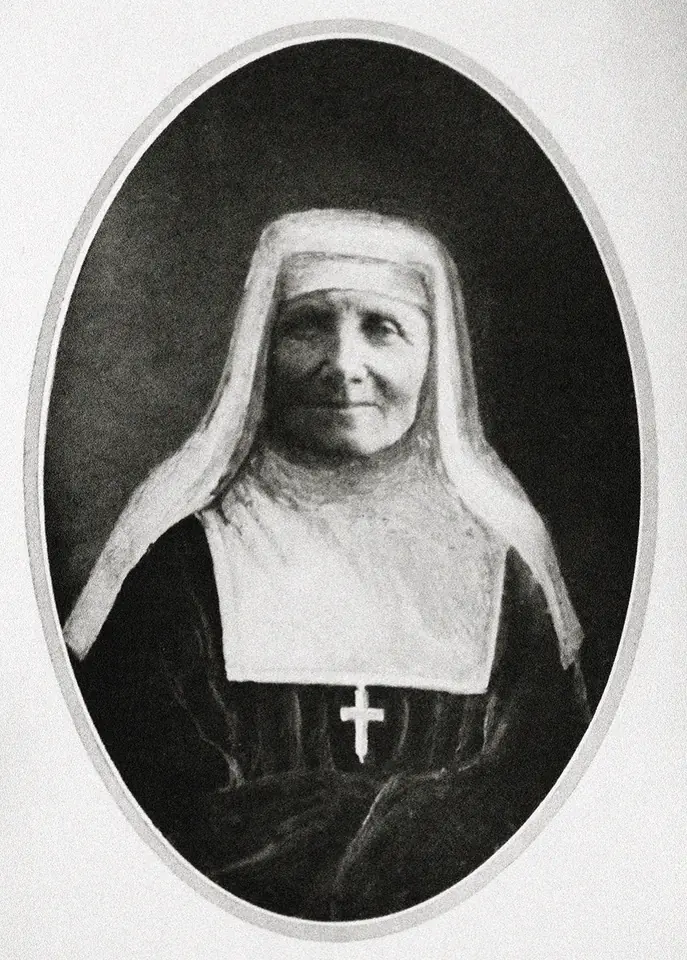
How to pray the Chaplet of the Holy Wounds, bead by bead
You don't need special beads. An ordinary five-decade rosary works, and the Visitation sisters prayed it that way.
- Hold the crucifix and make the Sign of the Cross. Say the first opening prayer, "O Jesus, divine Redeemer."
- On the beads of the pendant, say the other three opening prayers: "Strong God, Holy God," "Grace and mercy," and "Eternal Father, grant us mercy."
- On the large bead before each decade, say "Eternal Father, I offer Thee the Wounds of our Lord Jesus Christ," and answer "To heal those of our souls."
- On each of the ten small beads, say "My Jesus, pardon and mercy," and answer "By the merits of Thy Holy Wounds."
- Repeat for all five decades. You may offer each decade to one wound, in the order Our Lady used in Sr. Mary Martha's account: one foot, then the other, then the side, the left hand and the right hand.
- Close with a Glory Be, or with a Hail Mary to Our Lady of Sorrows, who in Sr. Mary Martha's account taught her to honor the wounds through her own grief.
If you pray it with others, one person leads each invocation and the rest answer, as the sisters did in choir. The whole chaplet takes about fifteen minutes. Alone, the short invocation "My Jesus, pardon and mercy, through the merits of Thy Holy Wounds" can be said anywhere, and the booklet says Christ wished it to be "often repeated near the sick."
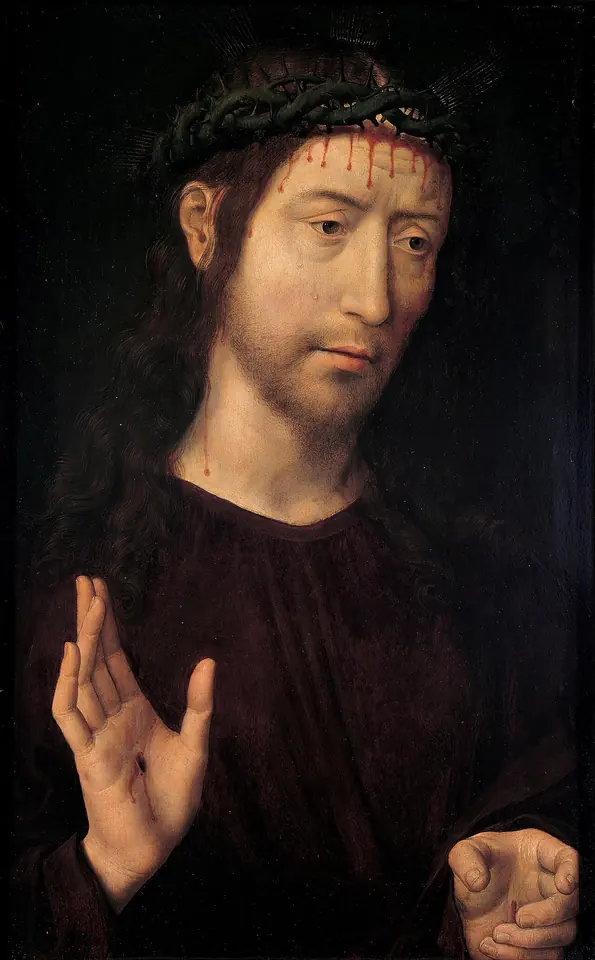
Sr. Mary Martha Chambon
A farm girl from Savoy
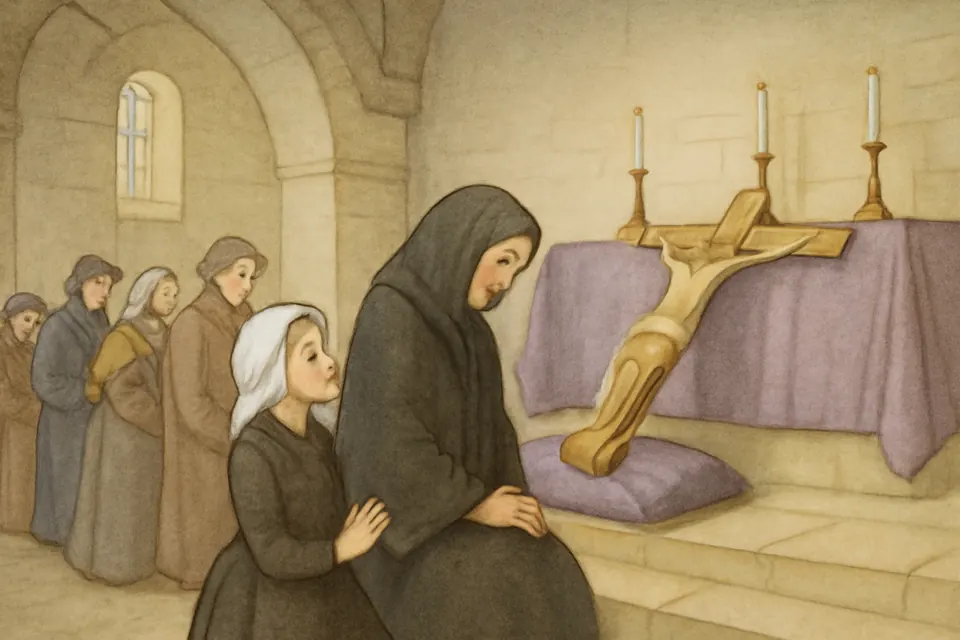
Françoise Chambon was born on March 6, 1841, the child of a farmer in the hamlet of La Croix-Rouge near Chambéry, and baptized the same day in the parish of Saint-Pierre de Lémenc. When she was about nine, an aunt took her to the veneration of the cross on Good Friday. There, the booklet says, Christ showed himself to her "all wounded and covered with blood as on Calvary." Her parish priest noticed her piety and sent her to the Visitation.
She entered the monastery at 21 and made her vows as a lay sister on August 2, 1864, taking the name Mary Martha. The booklet is frank about her: "rustic in manner and speech; entirely illiterate," with a quick temper that made her sisters say, "Oh, what a saint, a true saint, but what a trying saint!" Her superior, Mother Thérèse-Eugénie Revel, saw something else first: "Obedience is everything for her."
The visions, 1866 to 1867
From September 1866, according to Mother Thérèse-Eugénie's account, the young sister began to report visions of Christ showing her his wounds. Mother Thérèse-Eugénie wrote everything down, and the community's archive of those notes is the basis of the booklet. In the visions Christ asked her to make his Holy Wounds known and loved, and he taught her the two invocations: "My Jesus, pardon and mercy" and "Eternal Father, I offer Thee the Wounds." The booklet quotes him: "I desire that Priests give it often to their penitents in the holy Tribunal."
When cholera struck the region of Chambéry in 1867, Christ asked, she said, for a Holy Hour every Friday made by five sisters, each honoring one of his wounds. Between 1868 and 1870 her superiors set up the daily recitation of the chaplet in the community. It met resistance. Some sisters objected that it was not in the Rule, and the booklet admits that "more than one objection was made."

Her death and her cause
Sr. Mary Martha fell ill in early 1907. She received the Last Rites on February 13 and died on March 21 at eight in the evening, at 66, while the community prayed the invocations of the Holy Wounds around her bed. The booklet notes that it was the eve of the old Friday feast of Our Lady's Sorrows in Passiontide.
The French booklet appeared in late 1923. Nearly ten thousand copies went out in six months, and by 1924 the English edition reported that the diocesan inquiry into her life had been closed and sent to the Sacred Congregation of Rites in Rome. She has not been beatified.
What the Church approved, and what it didn't
Here we should be careful, as the Church is. Sr. Mary Martha's visions are private revelation. The Church has never issued a judgment on them, so on this site they are labeled reported. No Catholic is bound to believe them, and the faithful are free to find them helpful.
What the Church did approve is the prayer. In 1912 an indulgence of 300 days, each time the invocations were said, was granted to the Visitation order. On January 16, 1924, the Sacred Penitentiary extended it to all the faithful. The booklet opens with a warm letter from Archbishop Dominique Castellan of Chambéry and carries the imprimatur of the Archbishop of St. Louis, which means only that a bishop found nothing in it contrary to faith or morals. Those grants used the old measure of days and years, which Paul VI abolished in Indulgentiarum doctrina in 1967.
The booklet also reports promises Christ made to her. "At each word of the Chaplet of Mercy that you pronounce," he said, "I allow a drop of My Blood to fall upon the soul of a sinner." A sinner who prayed "Eternal Father, I offer Thee the Wounds" would obtain conversion. These promises are part of the reported revelation. No Church document approves them, and we pray the chaplet for what it is: an act of trust in the merits of Christ's Passion, not a formula with guaranteed results.
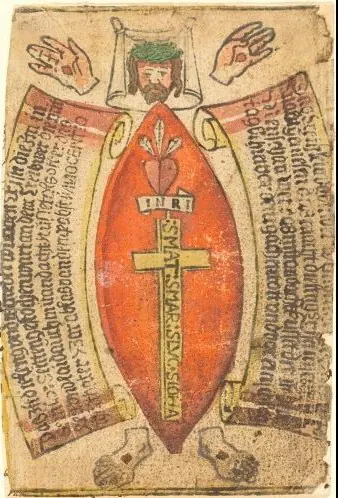
Why pray to the Holy Wounds
The wounds are the marks of our redemption, and the risen Lord kept them. He showed them to the apostles on Easter evening, and a week later he said to Thomas: "Put in thy finger hither, and see my hands; and bring hither thy hand, and put it into my side; and be not faithless, but believing" (John 20:27, Douay-Rheims). The chaplet's prayer, "to heal those of our souls," turns the wounds of Christ toward the wounds of sin in us.
Devotion to the five wounds is far older than Chambéry. The Catholic Encyclopedia traces its growth to St. Bernard, St. Francis of Assisi and the crusaders of the 12th and 13th centuries. St. Gertrude the Great and St. Mechtilde of Helfta were devoted to the wounds, and Gertrude, the encyclopedia says, prayed daily in honor of the 5,466 wounds that a medieval tradition counted in the Passion. Some prayers in honor of the wounds were attributed to St. Clare of Assisi. In southern Germany in the 1300s people prayed fifteen Our Fathers a day for a year, 5,475 in all, in memory of the wounds.

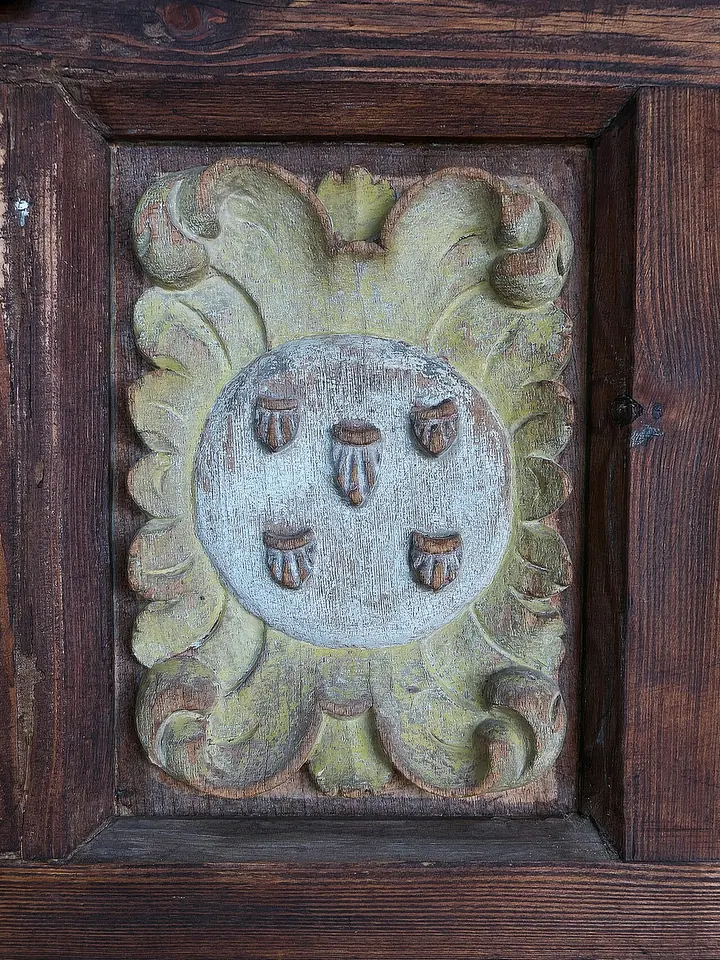
Art kept the devotion before the eyes of the faithful. In the 1650s the Flemish painter Gaspar de Crayer showed the Cistercian mystic St. Lutgarde embraced by Christ from the cross. In Portugal the five wounds are on the national coat of arms, from the tradition of Christ's appearance to King Afonso Henriques before the battle of Ourique in 1139.

The Passionist Chaplet of the Five Wounds
Don't confuse this chaplet with the older Chaplet of the Five Wounds, which belongs to the Passionists, the order founded by St. Paul of the Cross. The 1878 Raccolta describes it as five sets of five beads: a Glory Be on each bead "in memory of the five wounds of our Lord Jesus Christ," and a Hail Mary after each set "in honor of our Lady of Sorrows." Leo XII indulgenced it on December 20, 1823, Pius IX added more indulgences on August 11, 1851, and the beads had to be blessed by a Passionist priest. It is short, and it can be prayed on fingers as easily as on beads.
Related prayers and saints
- The Divine Mercy chaplet, revealed to St. Faustina in 1935, also on rosary beads and also offering Christ to the Father for mercy on the whole world.
- The Chaplet of the Sacred Heart, the Visitation's other great devotion, from Paray-le-Monial.
- St. Margaret Mary Alacoque, a Visitation nun like Sr. Mary Martha, and St. Francis de Sales and St. Jane Frances de Chantal, who founded the order.
- The Stations of the Cross and the Sorrowful Mysteries, for meditating on the Passion.
- Padre Pio, who bore the wounds of Christ in his own body for fifty years.
- Catholic chaplets: every chaplet on the site.
Frequently asked questions
How do you pray the Chaplet of the Holy Wounds?
Use ordinary rosary beads. On the crucifix and the first beads, say the four opening prayers. Then on each large bead say "Eternal Father, I offer Thee the Wounds of our Lord Jesus Christ" with the response "To heal those of our souls," and on each small bead "My Jesus, pardon and mercy" with "By the merits of Thy Holy Wounds." Five decades take about fifteen minutes.
Who was Sr. Mary Martha Chambon?
A lay sister of the Visitation monastery in Chambéry, France, born Françoise Chambon to a farming family on March 6, 1841. She made her vows in 1864 and died on March 21, 1907, at 66. Her superiors recorded the visions she reported, in which Christ asked her to honor his Holy Wounds and taught her the two invocations of the chaplet.
Has the Church approved the Chaplet of the Holy Wounds?
The prayers themselves were approved for use and indulgenced: 300 days for the Visitation order in 1912, extended to all the faithful by the Sacred Penitentiary on January 16, 1924. The booklet carried a letter of praise from the Archbishop of Chambéry and the imprimatur of the Archbishop of St. Louis. The Church has not issued a judgment on Sr. Mary Martha's visions, which remain private revelation, and she has not been beatified.
Is the Chaplet of the Holy Wounds the same as the Chaplet of the Five Wounds?
No. The Chaplet of the Five Wounds is an older Passionist devotion: five groups of five Glory Bes, each followed by a Hail Mary to Our Lady of Sorrows, indulgenced by Leo XII in 1823. The Chaplet of the Holy Wounds uses rosary beads and the two invocations from Chambéry.
What promises are attached to the Chaplet of the Holy Wounds?
The 1924 booklet reports words of Christ to Sr. Mary Martha, among them that at each word of the chaplet he would let a drop of his Blood fall on the soul of a sinner, and that a sinner who offered his Wounds to the Father would obtain conversion. These promises belong to her private revelation. The Church indulgenced the prayers but never approved the promises.
Sources
- Sister Mary Martha Chambon and the Holy Wounds of Our Lord Jesus Christ, translated from the French of the Visitation of Chambéry (imprimatur of the Archbishop of St. Louis, October 13, 1924), Internet Archive. Source of the chaplet text, the dates of her life and the indulgences of 1912 and 1924
- The Raccolta, or Collection of Prayers and Good Works (Woodstock College, 1878), no. 59, Chaplet of the Five Wounds, pp. 119-120
- Frederick Holweck, "The Five Sacred Wounds," Catholic Encyclopedia (1912)
- John 20:27, Douay-Rheims Bible
- Paul VI, Apostolic Constitution Indulgentiarum Doctrina (January 1, 1967)