Catholic morning prayer
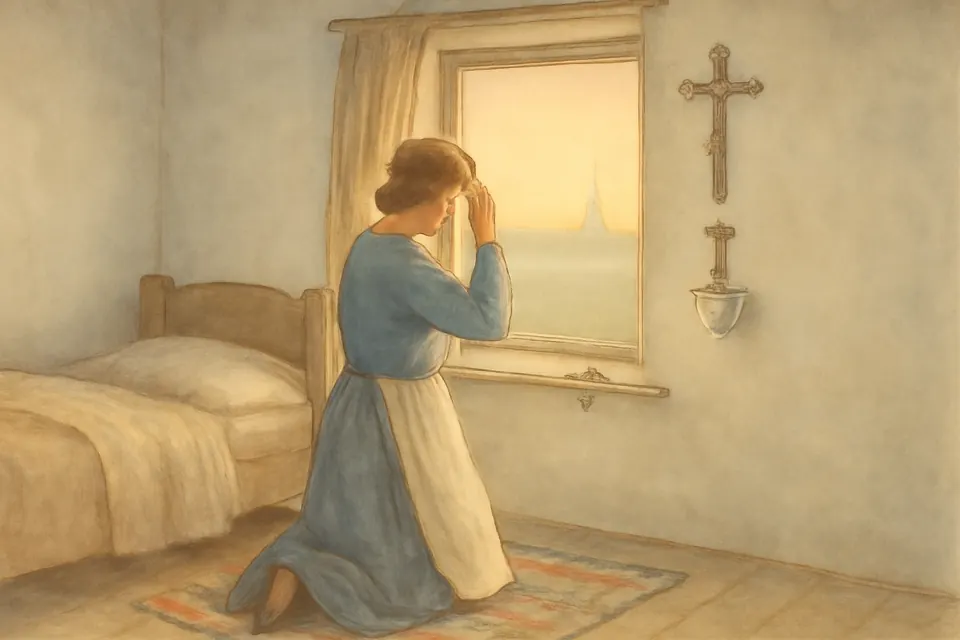
The best-known Catholic morning prayer is the morning offering: "O Jesus, through the Immaculate Heart of Mary, I offer Thee my prayers, works and sufferings of this day." We begin with the Sign of the Cross, thank God for the night, give Him the whole day, and ask Our Lady, our guardian angel and our patron saint to keep us in it.
The first minutes of the day belong to God. For centuries Catholic prayer books have given us the words for them, and they are worth learning by heart: short, sturdy prayers that hand the coming day to the Lord before the day has a chance to grab us. Here they are, word for word, with their sources, followed by the Church's own morning prayer, Lauds, and the saints we can ask to walk with us until evening.
The traditional Catholic morning prayers
The order below follows the Manual of Prayers that the bishops of the Third Plenary Council of Baltimore ordered for American Catholics in 1888, the same council that gave us the Baltimore Catechism. Pray as many of these as your morning allows. On a rushed day, the first two are enough.
1. The Sign of the Cross
Every Catholic prayer begins here. The Manual tells us to make it the moment we open our eyes:
As soon as you are awake, make the sign of the Cross, and say: Holy, Holy, Holy, Lord God of hosts: the earth is full of Thy glory. Glory be to the Father, glory be to the Son, glory be to the Holy Ghost. Amen.
Then, once dressed, we kneel and sign ourselves again with the words every child learns:
In the name of the Father, and of the Son, and of the Holy Ghost. Amen.
The gesture is older than any prayer book. Around the year 200, Tertullian described Christians who signed themselves all day long: "At every forward step and movement, at every going in and out, when we put on our clothes and shoes, when we bathe, when we sit at table, when we light the lamps... we trace upon the forehead the sign." In 1863 Pius IX attached an indulgence to the Sign of the Cross made with the words of the Trinity, and in 1876 a greater one when it is made with holy water. That is why so many Catholic homes keep a little font by the bedroom door or the front door.

2. The morning offering
If you learn only one morning prayer, learn this one. It gives God everything the day will hold, through the Heart of His Mother:
O Jesus, through the Immaculate Heart of Mary, I offer Thee my prayers, works and sufferings of this day for all the intentions of Thy Sacred Heart, in union with the Holy Sacrifice of the Mass throughout the world.
This is the opening of the traditional text of the Apostleship of Prayer, as its Messenger of the Sacred Heart printed it in 1908. Today we add the Holy Father's intention for the month. Its history, the full wording and its older forms are on our page about the morning offering prayer.

3. "O my God, I offer Thee": the old morning prayer of thanks and offering
Before the short morning offering spread, Catholic prayer books carried a longer prayer of adoration, thanks and offering. This is the form in the 1888 Manual of Prayers, said kneeling after the Sign of the Cross and "Come, Holy Ghost":
Most holy and adorable Trinity, one God in three Persons, I believe that Thou art here present; I adore Thee with the deepest humility, and render to Thee, with my whole heart, the homage which is due to Thy sovereign majesty.
O my God, I most humbly thank Thee for all the favors Thou hast bestowed upon me up to the present moment. I give Thee thanks from the bottom of my heart that Thou hast created me after Thine own image and likeness, that Thou hast redeemed me by the precious blood of Thy dear Son, and that Thou hast preserved me and brought me safe to the beginning of another day. I offer to Thee, O Lord, my whole being, and in particular all my thoughts, words, actions, and sufferings of this day. I consecrate them all to the glory of Thy name, beseeching Thee that through the infinite merits of Jesus Christ my Saviour they may all find acceptance in Thy sight. May Thy divine love animate them, and may they all tend to Thy greater glory.
The Manual follows it with a resolution and a plea for grace, which many of us need more than anything else at 6:30 in the morning:
Adorable Jesus, my Saviour and Master, model of all perfection, I resolve and will endeavor this day to imitate Thy example, to be, like Thee, mild, humble, chaste, zealous, charitable, and resigned. I will redouble my efforts that I may not fall this day into any of those sins which I have heretofore committed (here you may name any besetting sin), and which I sincerely desire to forsake.
O my God, Thou knowest my poverty and weakness, and that I am unable to do anything good without Thee; deny me not, O God, the help of Thy grace; proportion it to my necessities; give me strength to avoid everything evil which Thou forbiddest, and to practise the good which Thou hast commanded; and enable me to bear patiently all the trials which it may please Thee to send me.
Then come the Our Father, the Hail Mary, the Apostles' Creed and the Confiteor.
4. The Raccolta's morning offering: "Eternal God, behold me"
The Raccolta, the Holy See's collection of indulgenced prayers, has its own morning offering, enriched with an indulgence by Pius IX in 1867. It is longer and bolder than the familiar one. This is the English text of the 1910 edition (no. 21):
Eternal God, behold me prostrate before the immensity of Thy majesty. I humbly adore Thee, and offer Thee all my thoughts, words, and works of this day. I intend to do everything for love of Thee, for Thy glory, and for the fulfilment of Thy divine will; in order to serve, praise, and bless Thee, to be enlightened in the mysteries of our holy faith, to secure my salvation, and to hope in Thy mercy; to satisfy the divine justice for my many grievous sins, to assist the holy souls in purgatory, and to obtain the grace of a true conversion for all sinners. I desire, in fine, to do everything in union with that most pure intention which Jesus and Mary had during life, and which the saints now have in heaven, and the just on earth. Would that I could write down this intention with my own blood, and repeat it as often as there be moments in eternity! O my God, accept my goodwill; grant me Thy holy blessing and efficacious grace never to commit a mortal sin throughout the course of my life, but particularly on this day, on which I desire and purpose to gain all the indulgences which it is possible for me to gain, and to be present in spirit at all the Masses which will be celebrated to-day in the whole world, that I may apply them to the holy souls in purgatory, and free them from all pain. Amen.
Notice what it does with the day: it sends every indulgence and every Mass said on earth that day to the holy souls. Praying it is a quiet way to keep the souls in purgatory in mind every single morning, as we do in a more solemn way in November with our prayers for the dead.
5. The acts of faith, hope, charity and contrition
These four short acts are the backbone of Catholic morning prayer. The Baltimore Catechism expected every child preparing for First Communion to know them by heart. The texts below are from the 1888 Manual:
An Act of Faith. O my God! I firmly believe that Thou art one God in three Divine Persons, the Father, the Son, and the Holy Ghost; I believe that the Divine Son became man, and died for our sins, and that He will come to judge the living and the dead. I believe these and all the truths which the Holy Catholic Church teaches, because Thou hast revealed them, who canst neither deceive nor be deceived.
An Act of Hope. O my God! relying on Thy infinite goodness and promises, I hope to obtain pardon of my sins, the help of Thy grace, and life everlasting, through the merits of Jesus Christ, my Lord and Redeemer.
An Act of Charity. O my God! I love Thee above all things, with my whole heart and soul, because Thou art all-good and worthy of all love. I love my neighbor as myself for the love of Thee. I forgive all who have injured me, and ask pardon of all whom I have injured.
The Act of Contrition follows. We give its full text on our page of Catholic night prayers, where it belongs at the close of the day's examination of conscience.
6. To Our Lady, St. Joseph, our angel and our patron
The Manual ends morning prayer by placing the day under the protection of heaven. To Our Lady:
O Holy Virgin, Mother of God, my Mother and Patroness, I place myself under thy protection, I throw myself with confidence into the arms of thy compassion. Be to me, O Mother of mercy, my refuge in distress, my consolation under suffering, my advocate with thy adorable Son, now and at the hour of my death. Amen.
Then the guardian angel prayer, "Angel of God, my Guardian dear," and a prayer to the saint whose name we received at baptism:
O great Saint, whose name I bear, protect me, pray for me, that, like thee, I may serve God faithfully on earth, and glorify Him eternally with thee in heaven. Amen.
Last, a blessing of the whole day in the name of the Trinity:
May the power of the Father govern and protect me! May the wisdom of the Son teach and enlighten me! May the influence of the Holy Ghost renew and quicken me! May the blessing of the All-holy Trinity, the Father, the Son, and the Holy Ghost, be with me, now and for evermore. Amen.
For a one-line prayer to Mary that fits in the time it takes to tie your shoes, the Raccolta (1910, no. 276) gives this invocation, indulgenced by Leo XIII in 1900 for saying morning and evening, followed by three Hail Marys: "My Mother, preserve me this day from mortal sin."

Lauds: the Church's own morning prayer
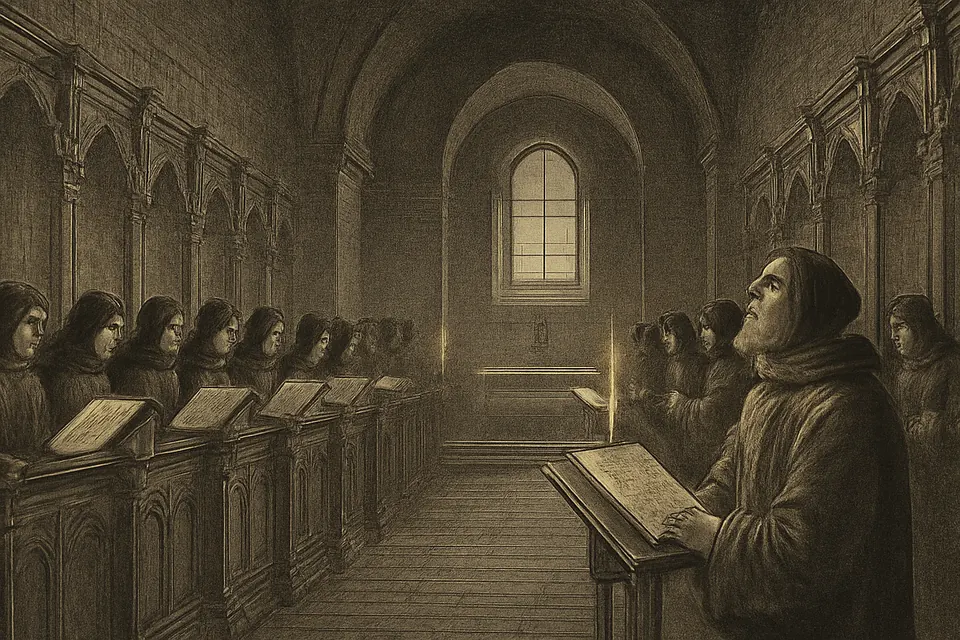
Everything above is private devotion. The Church also has a public morning prayer, prayed every day by priests, religious and many lay people around the world: Lauds, called Morning Prayer in the Liturgy of the Hours.
Its name comes from the "praises," the laudes, of its psalms. The Catholic Encyclopedia (1910) calls it "the office of the dawn (Aurora), the office of sunrise," and explains why the Church prays at first light: "It was at dawn that Christ rose from the tomb, Conqueror of Death and of the Night." Every morning prayer, however small, is a little Easter.
The Second Vatican Council gave Lauds pride of place. "By the venerable tradition of the universal Church," the constitution Sacrosanctum Concilium (1963) says, "Lauds as morning prayer and Vespers as evening prayer are the two hinges on which the daily office turns." The same document asks that the laity be "encouraged to recite the divine office, either with the priests, or among themselves, or even individually."
How Lauds is prayed
Morning Prayer in today's Liturgy of the Hours follows an old shape:
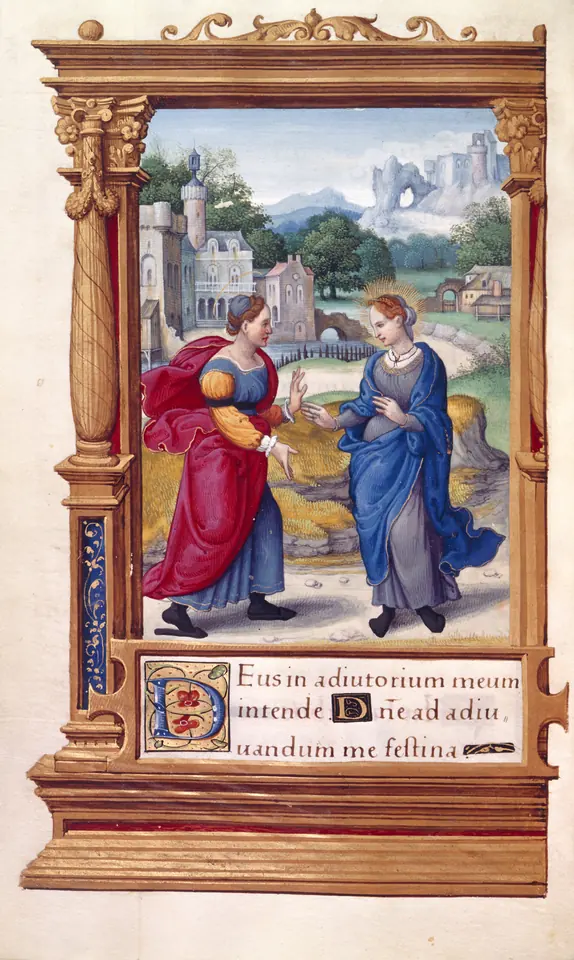
- The opening verse, "O God, come to my assistance; O Lord, make haste to help me," or, for the first Hour of the day, the Invitatory with Psalm 95.
- A morning hymn.
- A psalm, a canticle from the Old Testament, and a psalm of praise, each with its antiphon.
- A short reading from Scripture and a short responsory.
- The Canticle of Zechariah, the Benedictus.
- Intercessions that consecrate the day and its work to God, then the Our Father.
- The closing prayer of the day and the blessing.
The modern English texts of the Liturgy of the Hours are under copyright, so we don't reprint them here. You'll find them in a printed breviary (the four-volume Liturgy of the Hours or the one-volume Christian Prayer), in a monthly missal, or in breviary apps. If your parish prays Morning Prayer before weekday Mass, join it; it is the easiest way to learn.
The Canticle of Zechariah
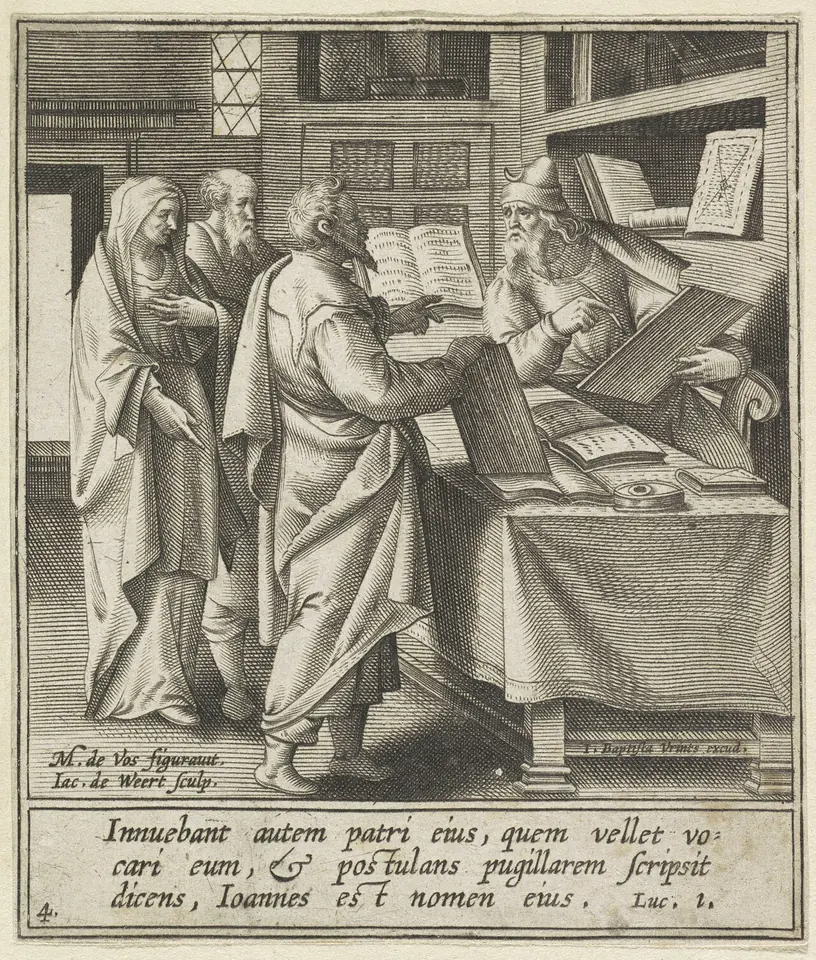
The high point of Lauds is the song old Zechariah sang when his tongue was loosed at the naming of his son, St. John the Baptist. The Church has sung it every morning for some fifteen centuries. Its opening and closing verses in the Douay-Rheims Bible (Luke 1:68, 78–79):
Blessed be the Lord God of Israel; because he hath visited and wrought the redemption of his people: ... Through the bowels of the mercy of our God, in which the Orient from on high hath visited us: To enlighten them that sit in darkness, and in the shadow of death: to direct our feet into the way of peace.
"The Orient from on high" is Christ, the dawn from heaven. We sing it as the sun comes up.
The old hour of Prime
Until the Council, the Divine Office also had a short hour at the start of the working day, Prime, which Sacrosanctum Concilium suppressed in 1963. Its prayers live on in old missals and in the morning prayers of the 1888 Manual, and its collect is still one of the best morning prayers in English:
O Lord, God Almighty, who hast brought us to the beginning of this day: let Thy power so defend us therein, that this day we fall into no sin, but that all our thoughts, words, and works may always tend to what is just in Thy sight. Through our Lord Jesus Christ, Thy Son, who liveth and reigneth with Thee in the unity of the Holy Ghost, one God, world without end. Amen.
The hymn of Prime was the ancient Iam lucis orto sidere. The Manual prints it in a translation by St. John Henry Newman:
The star of morn to night succeeds; We therefore meekly pray, May God, in all our words and deeds, Keep us from harm this day.

Monasteries kept the whole round of the Hours long after the rest of us let them slip. If you ever visit an abbey, rise early for Lauds; you will hear the psalms the way the Church has prayed them for fifteen hundred years.

How to pray in the morning: a simple order
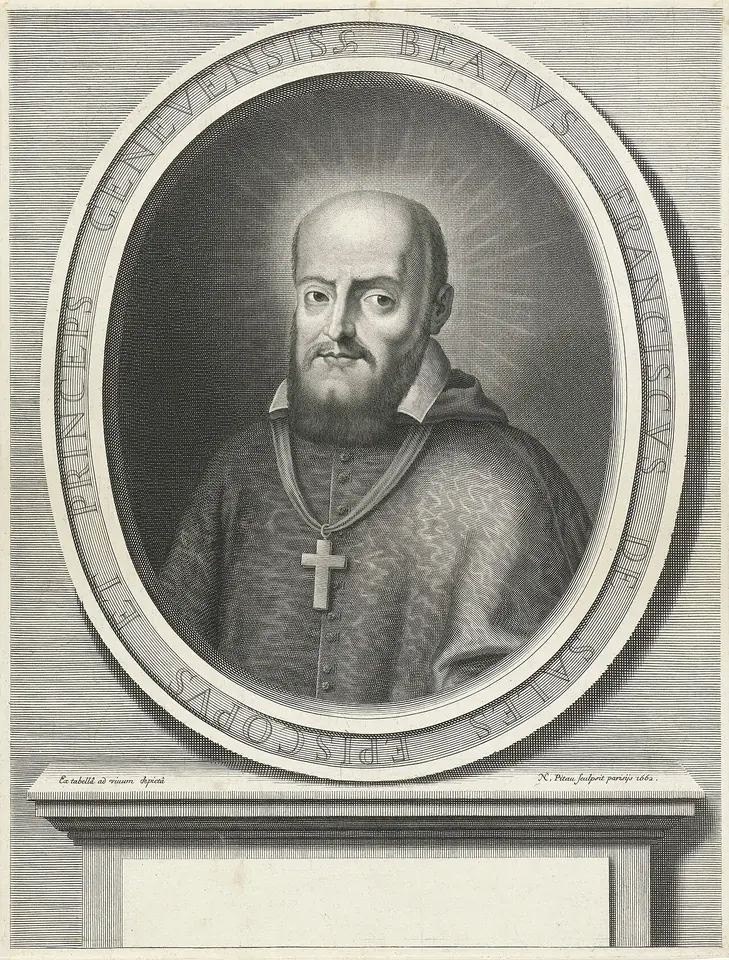
St. Francis de Sales wrote the clearest instructions for morning prayer in his Introduction to the Devout Life (1609). In the old English translation, he asks for four acts:
- "Thank God, and adore Him for His Grace which has kept you safely through the night, and if in anything you have offended against Him, ask forgiveness."
- "Call to mind that the day now beginning is given you in order that you may work for Eternity."
- Look ahead at the day's duties, the chances to serve God and the temptations that may come, and plan for them. If you know you will see a sick person, he says, "consider how best to minister comfort to him."
- Offer God your heart and your good intentions, asking His help through the merits of His Son.
"All these acts should be made briefly and heartily," he writes, "before you leave your room if possible."
Put together with the prayers above, a full Catholic morning prayer looks like this, and it takes about five minutes:
- On waking, the Sign of the Cross and "Holy, Holy, Holy."
- Kneel. "Come, Holy Ghost." The prayer of adoration and thanks.
- The morning offering, with the Holy Father's intention for the month.
- Our Father, Hail Mary, the Creed.
- The acts of faith, hope and charity.
- Mary, St. Joseph, your guardian angel and your patron saint.
- The Sign of the Cross, with holy water if you have it.
At 6 a.m., or whenever the church bell rings, add the Angelus. Many people also pray St. Patrick's Breastplate, the old Irish prayer for arming oneself with Christ at the start of the day, or the Prayer of St. Francis before work.
Scripture for the morning
The psalms are full of morning prayer. Three short passages from the Douay-Rheims Bible are easy to memorize:
For to thee will I pray: O Lord, in the morning thou shalt hear my voice. In the morning I will stand before thee, and will see. (Psalm 5:4–5)
The mercies of the Lord that we are not consumed: because his commiserations have not failed. They are new every morning, great is thy faithfulness. (Lamentations 3:22–23)
This is the day which the Lord hath made: let us be glad and rejoice therein. (Psalm 117:24)
The second is especially good for the mornings we wake up dreading the day. His mercies are new this morning, too.
The saints to ask in the morning
We never begin the day alone. Here are the saints and angels the Church's morning prayers turn to:
- Our Lady. We offer the day "through the Immaculate Heart of Mary." See the Blessed Virgin Mary.
- Our guardian angel, given to us, the Catechism teaches, from the beginning of our life. Read more about guardian angels.
- St. Joseph, patron of workers, for the day's labor. The 1888 Manual includes a morning prayer to him as "Faithful Guardian and Father of virgins."
- Our patron saint, the saint whose name we bear.
- St. Francis de Sales, who taught ordinary people how to pray in the middle of busy lives.
- St. Ignatius of Loyola and St. Thérèse of Lisieux, for offering small, ordinary work to God.
Teaching children their morning prayers
The Baltimore Catechism's edition for First Communion classes gives children instructions simple enough to follow half asleep: "As soon as you awake, think of God. Make the Sign of the Cross," then "dress quickly and kneel down" for the Our Father, Hail Mary, Creed, Confiteor and the four acts. If there is time, it adds short prayers to Mary, St. Joseph and the guardian angel, and this one, which countless children have said with their hands folded:
God bless Papa and Mamma. God bless Brothers and Sisters, and all my friends. God bless me, and make me a good child.
Start small with little ones: the Sign of the Cross, "Angel of God," and "Jesus, I give You my day." Pray it with them at the bedside or the breakfast table until they can say it alone.
Let us begin tomorrow the way the saints began theirs. Before the phone, before the news, make the Sign of the Cross and give the day to God. When it ends, close it with the examen and the Act of Contrition from our page of Catholic night prayers. For more prayers, browse all Catholic prayers and novenas.
Frequently asked questions
What is the traditional Catholic morning prayer?
There is no single required text, but the classic order is the same in old prayer books: the Sign of the Cross on waking, an act of adoration and thanks for the night, an offering of the whole day to God (the morning offering), the Our Father, Hail Mary and Creed, the acts of faith, hope, charity and contrition, and a prayer to Our Lady, St. Joseph and your guardian angel.
What is a good short Catholic morning prayer?
The morning offering is the best short one: "O Jesus, through the Immaculate Heart of Mary, I offer Thee my prayers, works and sufferings of this day for all the intentions of Thy Sacred Heart." If you have even less time, make the Sign of the Cross and say, "My God, I give You this day."
What are morning prayers called in the Catholic Church?
The Church's official morning prayer is Lauds, called Morning Prayer in the Liturgy of the Hours. The Second Vatican Council called Lauds and Vespers "the two hinges on which the daily office turns." Private morning prayers, like the morning offering, are often simply called morning prayers or the daily offering.
Do Catholics have to pray in the morning?
There is no law that binds the faithful to a set morning prayer, but the Church has always urged it. St. Francis de Sales asked his readers never to omit it, because "by your morning prayer you open your soul's windows to the sunshine of Righteousness." Priests are bound to pray the Liturgy of the Hours, including Lauds, every day.
Can lay Catholics pray Lauds?
Yes. The Second Vatican Council's constitution on the liturgy says the laity "are encouraged to recite the divine office, either with the priests, or among themselves, or even individually." Many families and parishes pray Lauds together, and the texts are available in printed breviaries and breviary apps.
Is there an indulgence for making the Sign of the Cross?
Yes. In 1863 Pius IX granted an indulgence to the faithful who make the Sign of the Cross while saying "In the name of the Father, and of the Son, and of the Holy Ghost," and in 1876 a larger one when it is made with holy water. The Church no longer counts indulgences in days, but the Sign of the Cross remains among the pious acts the Church encourages.
What should I pray as soon as I wake up?
The old Manual of Prayers (1888) says: "As soon as you are awake, make the sign of the Cross, and say: Holy, Holy, Holy, Lord God of hosts: the earth is full of Thy glory." Then, once you are dressed, kneel and make your morning offering.
Sources
- A Manual of Prayers for the Use of the Catholic Laity, prepared by order of the Third Plenary Council of Baltimore (1888), Morning Prayers and the Office of Prime, Internet Archive
- The Raccolta, or Collection of Indulgenced Prayers and Good Works (Burns & Oates, 1910), nos. 21 and 276, Internet Archive
- The Raccolta, or Collection of Prayers and Good Works (1878 English edition), no. 5, The Sign of the Cross (Pius IX, 1863 and 1876), Internet Archive
- Tertullian, De Corona, chapter 3 (New Advent)
- A Catechism of Christian Doctrine No. 1, prepared by order of the Third Plenary Council of Baltimore, with prayers (Project Gutenberg)
- St. Francis de Sales, Introduction to the Devout Life, part II, chapter 10: Morning Prayer (CCEL)
- Second Vatican Council, Sacrosanctum Concilium (1963), nos. 89 and 100
- Catholic Encyclopedia (1910): Lauds