Scala Sancta

The Scala Sancta, or Holy Stairs, is a flight of 28 marble steps beside the Basilica of St. John Lateran in Rome that tradition holds Jesus climbed to stand before Pontius Pilate, brought from Jerusalem by St. Helena. Pilgrims climb them only on their knees, and the Church grants a plenary indulgence once a day on the usual conditions.
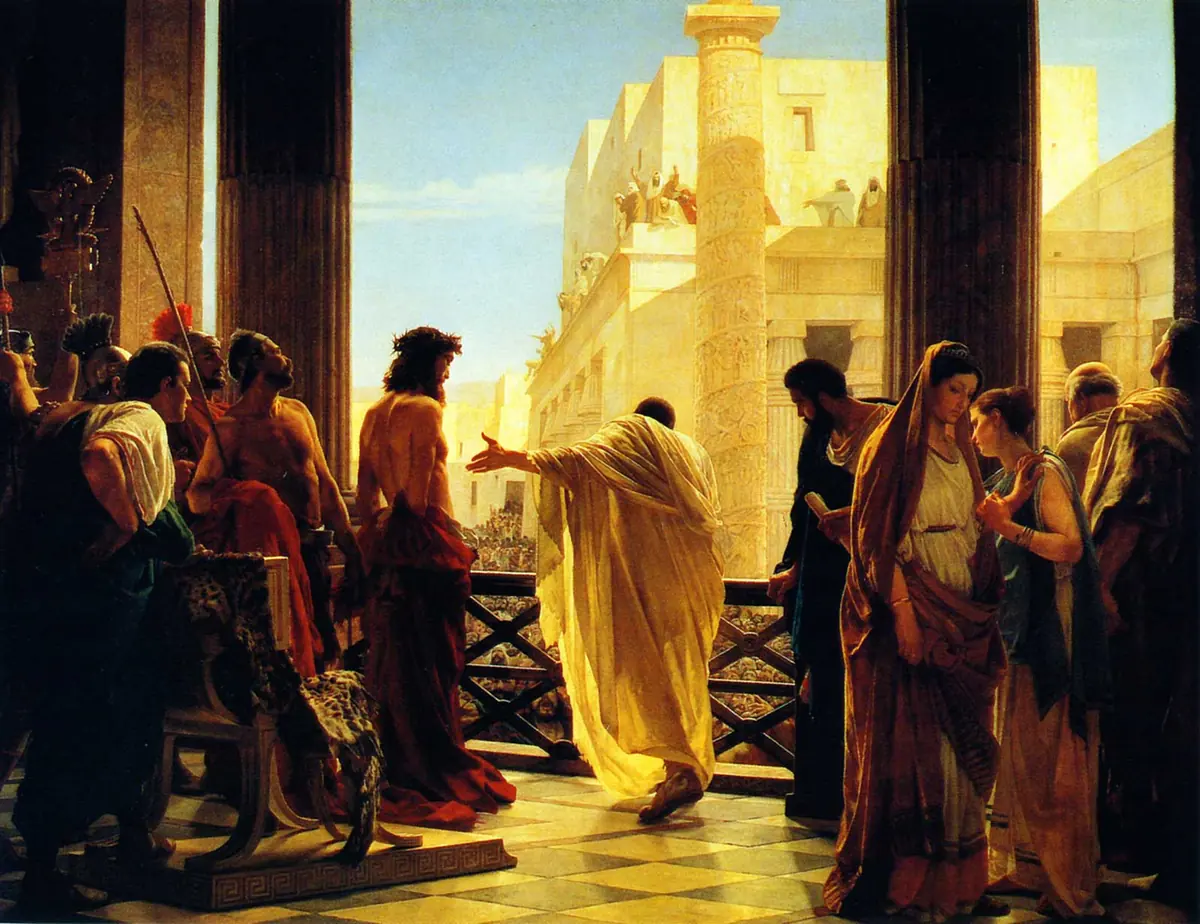
On the morning of Good Friday, Jesus was led bound to the house of the Roman governor. St. John tells us that Pilate "brought Jesus forth, and sat down in the judgment seat, in the place that is called Lithostrotos" (John 19:13, Douay-Rheims), and there the Lord heard himself condemned to death. In Rome, across the square from the Basilica of St. John Lateran, a flight of 28 marble steps has been honored for many centuries as the stairway of that judgment hall. This is the Scala Sancta, the Holy Stairs. Pilgrims climb it on their knees, slowly, one step and one prayer at a time, and many of them say it is the most moving hour they spend in Rome.
The tradition of the Holy Stairs
The tradition is simple. These are the steps of Pilate's palace in Jerusalem. Christ climbed them to stand before Pilate and came down them again after he had been scourged and crowned with thorns. The Pontifical Sanctuary, which keeps the stairs today, says they have come down to us by tradition as the steps of the praetorium, and links their arrival in Rome with St. Helena, mother of Constantine, whose pilgrimage to the Holy Land in 327 to 328 searched out and protected the places of Christ's life. The Catholic Encyclopedia of 1912 gives the date of their transfer as about 326.
No record from Helena's own lifetime mentions the stairs, so this encyclopedia labels the Helena story traditional. It belongs to the same body of tradition that credits her with the True Cross. In the Middle Ages the steps stood in the Lateran palace, the home of the popes, and were known as the Scala Pilati, the Stairs of Pilate.

Tradition also holds that Christ's blood fell on some of the steps as he came down after the scourging. The Sanctuary notes that on the first, the eleventh and the last step, small windows in the wooden covering show brass and marble crosses set into the stone, marking the places those drops were remembered. The stains themselves can no longer be seen, but pilgrims stop and kiss those steps with special devotion.
From the Lateran palace to Fontana's building
For more than a thousand years the Lateran was the popes' residence, and the Holy Stairs led up to the private papal chapel of St. Lawrence, called the Sancta Sanctorum, the "Holy of Holies," because of the relics kept in it. When the popes moved to the Vatican after their return from Avignon, the old palace fell into decay.
In 1589 Pope Sixtus V had most of the medieval palace pulled down. He did not want to lose the stairs or the chapel, so he had the architect Domenico Fontana build a new home for both. The 28 steps were moved, Vatican News reported in 2025, about 150 meters from their old place, and set up in front of the Sancta Sanctorum, where they are now.

Fontana's building is simple from the outside. Inside, the Holy Stairs run up the middle between four other staircases, so that pilgrims climbing on their knees and visitors walking up can both reach the chapels at the top. Painters working under Cesare Nebbia and Giovanni Guerra covered the walls and vaults in Sixtus V's time with frescoes: 33 scenes of the Passion along the Holy Stairs and 75 Bible scenes on the side stairs, a "Bible of the poor" for pilgrims who could not read.
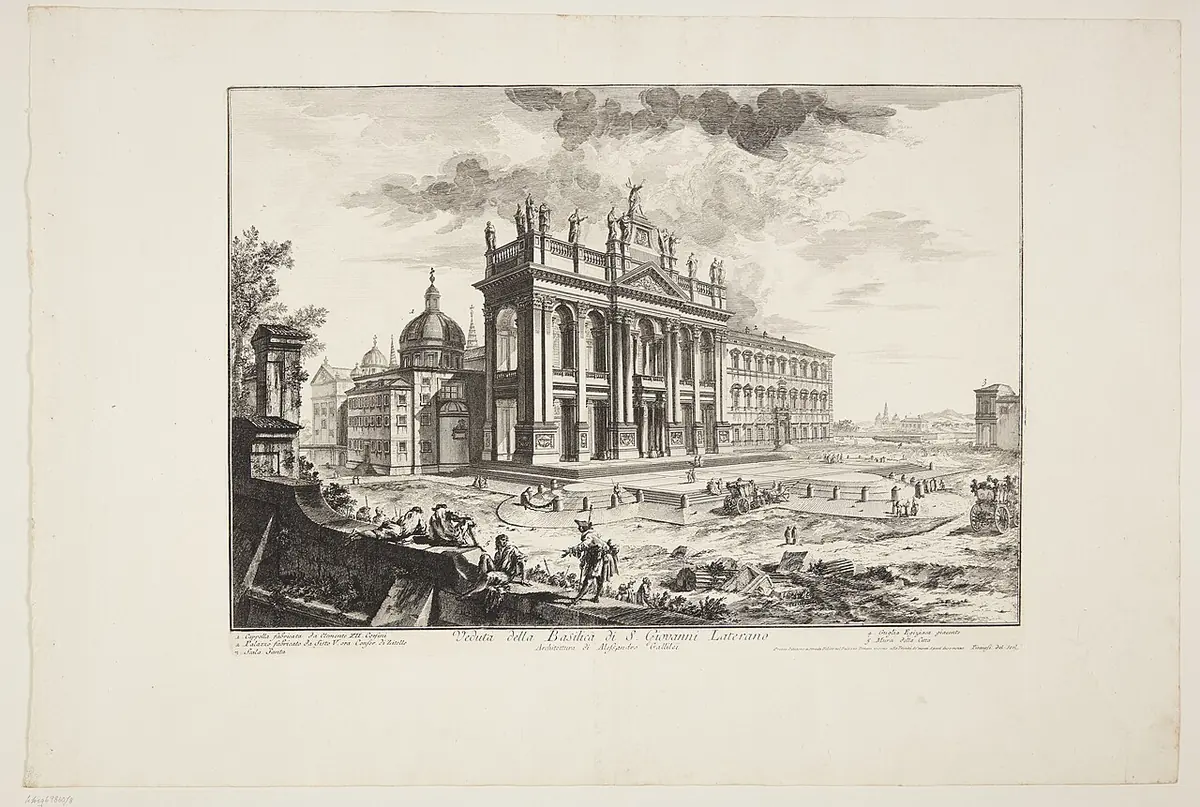
In the 1850s Blessed Pope Pius IX entrusted the sanctuary to the Passionist Fathers, the order founded by St. Paul of the Cross to keep alive the memory of Christ's Passion. They care for it still. Pius IX himself climbed the stairs on his knees on September 19, 1870, the day before the troops of the Kingdom of Italy entered Rome.
Climbing on our knees
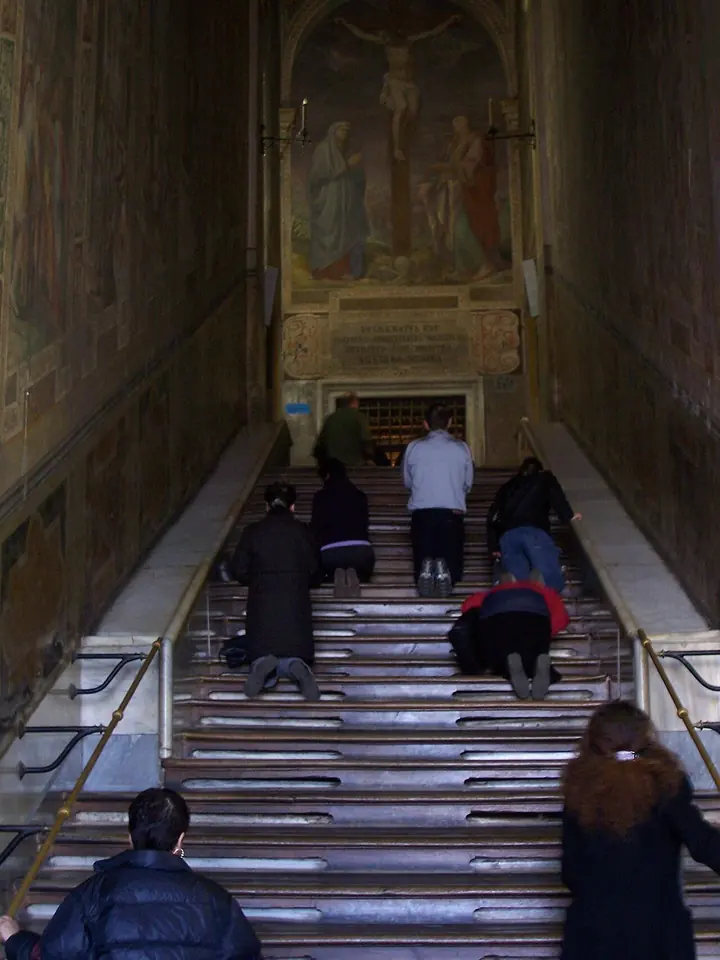
From the start, pilgrims have gone up the Holy Stairs on their knees, and the Sanctuary still allows no other way: the Scala Sancta is climbed "only on the knees and in silence." Kneeling is the posture of humility and of prayer. We climb the stairs Christ climbed to be condemned for us, and each step is a chance to stop and think about one moment of his Passion.

There is no single required prayer. The Sanctuary sells a small booklet, in Italian and eight other languages, that guides pilgrims through the Passion step by step. Many people pray an Our Father, a Hail Mary and a Glory Be on each step. Others pray the Sorrowful Mysteries of the Rosary, meditate on the Stations of the Cross, or say the Anima Christi at the top. Let us climb slowly, without hurrying the person in front of us, and let the ache in our knees join, in a very small way, the sufferings of Christ.
The Romans have a special custom of climbing the Holy Stairs on the Fridays of Lent, and the crowds are largest then and in Holy Week. At the top, pilgrims come to the Sancta Sanctorum, the chapel that holds an ancient image of Christ venerated for well over a thousand years.
The indulgence of the Holy Stairs
Over the centuries the popes have attached indulgences to climbing the Holy Stairs devoutly. The Catholic Encyclopedia records that Pope Pius VII granted, on September 2, 1817, a partial indulgence of nine years for each step, and that Pope St. Pius X granted, on February 26, 1908, a plenary indulgence to those who climb after confession and Communion.
The Church reformed the whole system of indulgences after the Second Vatican Council and no longer counts partial indulgences in days and years. The Sanctuary states the rule that applies today: according to the most recent documents, each of the faithful who climbs the Holy Stairs may gain a plenary indulgence once a day, on the usual conditions:
- Sacramental confession.
- Holy Communion.
- The Creed and a prayer for the intentions of the Holy Father.
As always, a plenary indulgence also asks that we be free of all attachment to sin, even venial sin. The indulgence may be gained for ourselves or applied to one of the faithful departed. It is not a reward for the climb as an athletic feat. It is the Church opening her treasury of grace to a person who comes in repentance and faith, and it removes the temporal punishment due to sins already forgiven.
The uncovering of 2019
Pilgrims had worn the marble down so much by the early 1700s that the steps were covered with walnut boards to protect them. The Vatican Museums date the covering to 1723, under Pope Innocent XIII; the Sanctuary gives 1724, the year his successor Benedict XIII took office. Small openings in the boards still let pilgrims touch the stone.
In 2018 the sanctuary closed for more than a year to restore its frescoes, under the direction of the Vatican Museums. When the restorers lifted the old boards to renew them, they found the marble deeply hollowed in the middle of each step. The head of the restoration, Paolo Violini, told EWTN News that "the furrow in the center was caused by the tip of the shoe" of pilgrims pushing themselves up step after step. Beneath the wood lay notes, prayers, coins and photographs that pilgrims had slipped through the gaps over three centuries.
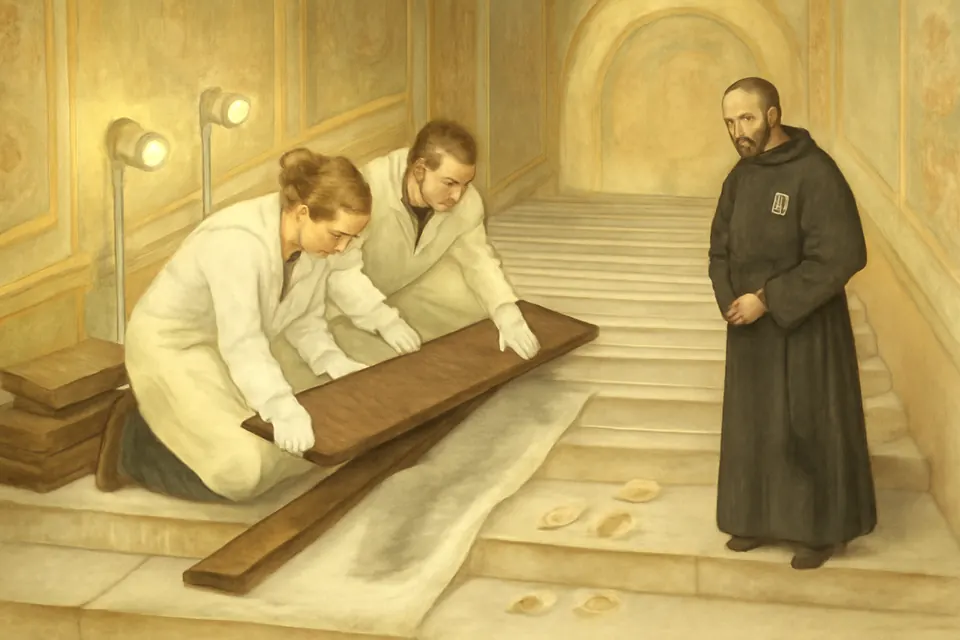
For a short time the Church let pilgrims climb the bare marble. From April 11 to June 9, 2019, Pentecost Sunday, the Holy Stairs were open without their covering for the first time in nearly three hundred years. After Pentecost the restored boards went back on.
Visiting the Scala Sancta
The Pontifical Sanctuary of the Holy Stairs (Scala Santa) stands at Piazza di San Giovanni in Laterano 14, across the square from the Lateran basilica. The Sanctuary lists these hours:
- Climbing the Holy Stairs: Monday to Saturday 6:00 a.m. to 1:30 p.m. and 3:00 to 6:30 p.m.; Sundays and holy days from 7:00 a.m., same afternoon hours. From November to March the afternoon closes at 6:00 p.m.
- Sancta Sanctorum chapel: Monday to Saturday 9:00 a.m. to 1:30 p.m. and 3:00 to 5:15 p.m.; Sundays and religious feasts afternoon only. There is a small ticket charge for the chapel.
- Masses are said in the sanctuary daily, and priests hear confessions morning and afternoon, which makes it easy to fulfill the conditions for the indulgence on the spot.
No booking is needed to climb the stairs. Dress modestly, with shoulders and knees covered. Photos, videos and video calls are not allowed. Groups of more than 50 are asked to write ahead. Hours change from time to time, so check the Sanctuary's website before you go.

The Sancta Sanctorum
At the top of the stairs is the chapel of St. Lawrence in the Palace, the Sancta Sanctorum. The Sanctuary notes that it is first mentioned in the Liber Pontificalis in the 8th century; its present Gothic form dates from Pope Nicholas III, who restored it after an earthquake in 1277. Over the altar runs the Latin inscription Non est in toto sanctior orbe locus, "There is no holier place in all the world."
Behind the altar hangs an ancient icon of Christ enthroned, venerated as the Santissimo Salvatore. The Sanctuary dates it to the late 5th or early 6th century. A pious legend says St. Luke began to paint it and angels finished it, which is why it is called acheropita, "not made by hands." Through the Middle Ages the popes came here on Easter morning to open the doors of its shrine, and on the night before the Assumption it was carried in procession across the Forum to meet the icon of Our Lady, Salus Populi Romani, at St. Mary Major. The altar, at which by old custom only the pope may celebrate, still holds a cypress chest from the time of Pope Leo III (795–816) with relics of early saints.

Holy stairs elsewhere
The devotion spread beyond Rome. The Catholic Encyclopedia notes that imitations of the Scala Sancta were built in many places, including Lourdes and a number of convents, and the shrine of St. Anne at Sainte-Anne-d'Auray in Brittany has its own outdoor holy stairs. They carry no claim to be the stairs of Pilate. They are places to climb in prayer and to remember the Passion.
For the other relics of Christ's Passion, see the True Cross, the Holy Lance, the Veil of Veronica, the Shroud of Turin, the Sudarium of Oviedo and the seamless robe of Jesus. For how the Church honors relics, read relics and incorruptible saints.
Frequently asked questions
What is the Scala Sancta?
The Scala Sancta (Holy Stairs) is a staircase of 28 white marble steps in Rome, across the square from the Basilica of St. John Lateran. By an old tradition they are the steps of Pontius Pilate's praetorium in Jerusalem, which Christ climbed and descended during his Passion. In the Middle Ages they were called the Scala Pilati, the Stairs of Pilate. They lead up to the Sancta Sanctorum, the old private chapel of the popes.
Did St. Helena really bring the Holy Stairs to Rome?
That is the tradition, and the Pontifical Sanctuary itself connects the stairs' arrival with Helena's journey to the Holy Land in 327 to 328. No document from Helena's own time records it, so this encyclopedia labels it traditional. What is certain is that the stairs were venerated at the Lateran palace in the Middle Ages and were moved to their present building by Pope Sixtus V in 1589.
Can you get an indulgence at the Scala Sancta?
Yes. The Sanctuary states that, according to the most recent documents, the faithful who climb the Holy Stairs on their knees can gain a plenary indulgence once a day on the usual conditions: sacramental confession, Holy Communion, the Creed and prayer for the Pope's intentions. The indulgence can be applied to oneself or to a soul in purgatory.
Do you have to climb the Scala Sancta on your knees?
Yes, the Holy Stairs themselves are climbed only on the knees and in silence. Visitors who cannot kneel, or who just want to see the chapels, use the side staircases, which are walked normally. Shoulders and knees must be covered, and photos and video are not allowed.
Why were the Holy Stairs uncovered in 2019?
The marble had been covered with walnut boards since the 1720s to protect it from wear. During a restoration, the boards were taken off and the bare marble was opened to pilgrims from April 11 to June 9, 2019, Pentecost Sunday, for the first time in nearly three hundred years. The boards then went back on.
How long does it take to climb the Scala Sancta?
It depends on the crowd and on how long you pray at each step, so allow plenty of time. On the Fridays of Lent and in Holy Week the line can be long. The sanctuary opens at 6:00 a.m. on weekdays, and early morning is usually the quietest time.
Sources
- Pontifical Sanctuary of the Holy Stairs: La Scala Santa e le indulgenze
- Pontifical Sanctuary of the Holy Stairs: Informazioni (hours and rules)
- Pontifical Sanctuary of the Holy Stairs: Il Sancta Sanctorum
- Catholic Encyclopedia (1912): Scala Sancta
- Vatican Museums: Extraordinary opening of the Scala Santa (2019)
- Vatican News: Giubileo, i pellegrini alla Scala Santa (March 4, 2025)
- EWTN News: Rome's 'Holy Stairs' uncovered for the first time in 300 years (2019)