Simbang Gabi
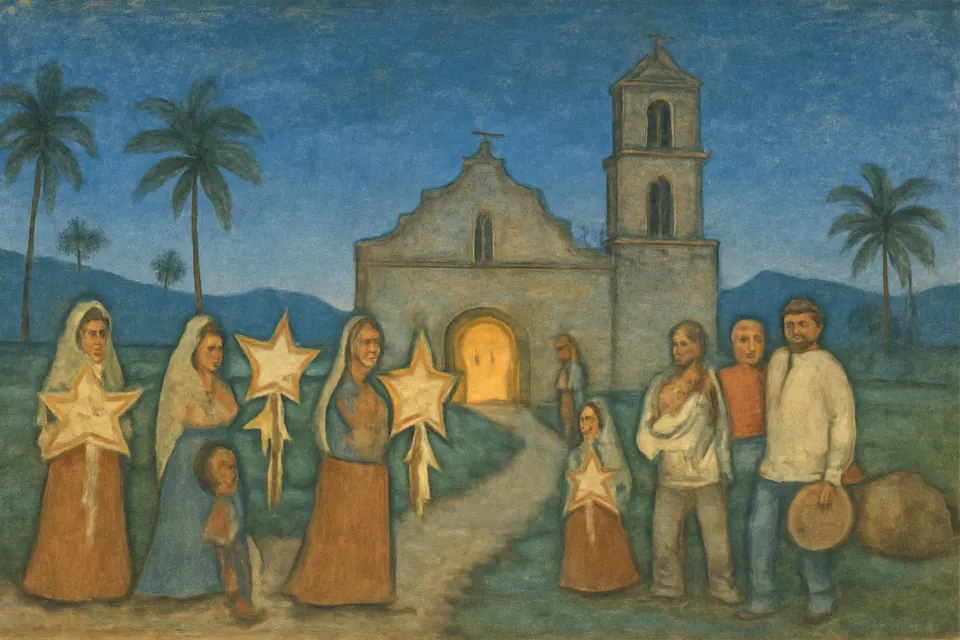
Simbang Gabi ("night Mass") is the Filipino Christmas novena: nine Masses celebrated before dawn from December 16 to December 24, or in the evening from December 15 to 23. The Masses honor the Blessed Virgin Mary as she waits to give birth. The custom came to the Philippines from Mexico under Spanish rule and now fills Filipino parishes around the world.
What is Simbang Gabi?
Simbang Gabi is the Filipino novena of nine Masses before Christmas, from December 16 to December 24. In the Philippines the Masses begin before sunrise, often at four or half past four in the morning, and churches are full to the doors and out into the plaza. The name is Tagalog for "night Mass," because the people walk to church while it is still dark.
Pope Francis described it simply when he celebrated a Simbang Gabi Mass for Filipinos in St. Peter's Basilica in 2019:
For centuries in the Philippines, there has been a novena in preparation for Christmas called Simbang-Gabi (Night Mass). Over the course of nine days, the Filipino faithful meet in their parishes at dawn for a special Eucharistic celebration.
It is a novena with the Blessed Virgin Mary at its center. For nine days we wait with Our Lady in the last days before her Son is born, the way the apostles waited with her for nine days before Pentecost. We give God the first hours of our day, before work and school and traffic, and we ask Him to make room in us for Christ.

When is Simbang Gabi 2026?
The dates never move. Only the days of the week change.
- Dawn Masses: Wednesday, December 16, to Thursday, December 24, 2026
- Evening (anticipated) Masses: Tuesday, December 15, to Wednesday, December 23, 2026
- Fourth Sunday of Advent: December 20, 2026, falls inside the novena. On the Sunday, and at the Saturday evening Mass on December 19, the parish celebrates the Sunday Mass of Advent.
The ninth dawn Mass, on the morning of December 24, leads straight into Christmas Eve. That night comes the Misa de Gallo at midnight (or an evening Mass of the Nativity) and then the Noche Buena, the family feast after Mass. For the whole season, see our Advent 2026 calendar.
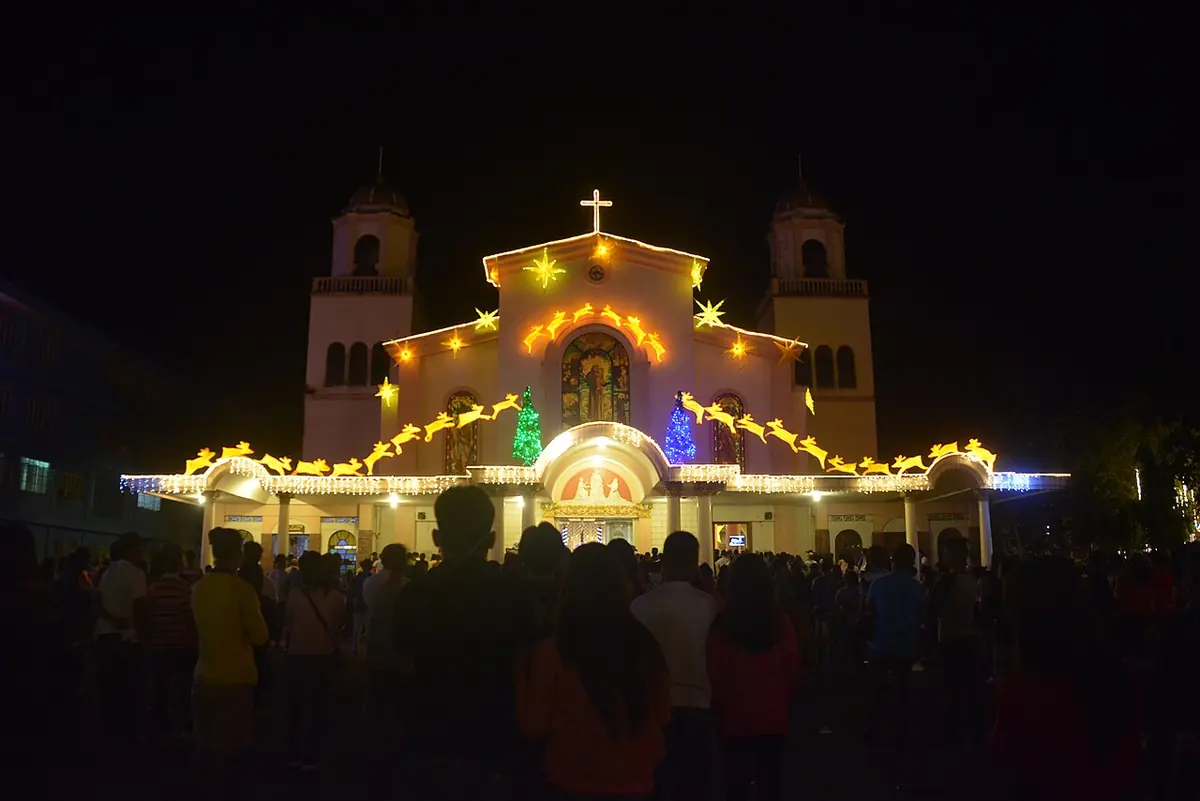
Simbang Gabi, Misa de Aguinaldo and Misa de Gallo
Three names float around December in the Philippines, and people mix them up freely.
Simbang Gabi is the everyday Filipino name for the whole novena, dawn or evening.
Misa de Aguinaldo is the proper Spanish name of the nine Masses. An aguinaldo is a Christmas gift. The University of Santo Tomas paper, The Varsitarian, gives the reading of the Dominican historian Fidel Villarroel: the faithful "offer to God nine Masses as a gift" for the birth of Jesus.
Misa de Gallo, the "Rooster's Mass," is the old Spanish name for the Mass of Christmas night. Many Filipinos use it for the dawn Masses because the rooster is crowing when they set out. Villarroel called that use a mistake, and he was right as far as Spanish custom goes. Still, if a Filipino grandmother tells you she is going to the Misa de Gallo on December 18, you will know exactly where to find her.
The Masses honor Mary, the expectant Mother
The nine Masses look toward the Annunciation and the Visitation and toward Mary carrying the Word made flesh. In Spain this waiting is honored on December 18 as Our Lady of the Expectation, the Virgen de la O, named for the great "O" antiphons sung at Vespers in the last days of Advent. The Filipino novena carries the same devotion across nine days.
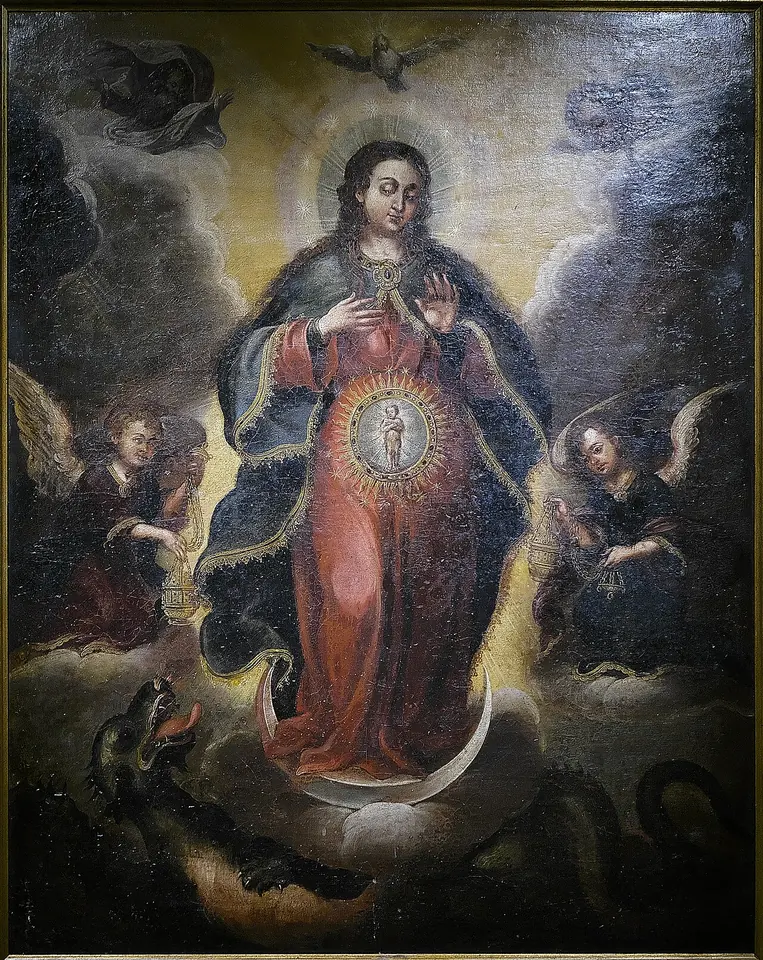
In the Philippines the Masses are celebrated, by a special permission of the Holy See, as votive Masses of the Blessed Virgin Mary. According to the Archdiocese of Los Angeles, the First Plenary Council of the Philippines asked in 1953 that the solemn votive Mass Rorate Caeli, "Drop down dew, ye heavens," be sung on the nine days with great solemnity. The Varsitarian reports that the Holy See granted the indult and extended it for five years in 1961, and the practice has continued with the Church's recognition since.
That is why Filipinos at home see something that surprises visitors: in the middle of violet Advent, the priest wears white, the Gloria is sung, and the church is full of Christmas music. Fr. Gennie Diwa, head of the liturgy office of the Archdiocese of Manila, told the Philippine Daily Inquirer that the privilege belongs to the Philippine Church, "not for the whole church."
In the United States, the Archdiocese of Los Angeles notes, dioceses "ha[ve] not been given the same papal indult." Simbang Gabi Masses there follow the normal Advent rules: violet vestments, no Gloria on weekdays, and the Mass texts of the Advent weekdays from December 17, which are themselves full of Mary and the coming birth. The spirit is the same. The rubrics follow the local Church.

Where Simbang Gabi came from
History and what is uncertain
What is solid: the novena of dawn Masses came to the Philippines from New Spain (Mexico), carried by Spanish missionaries in the colonial period, and it was well rooted in the islands by the 17th century. Fr. Diwa sums it up in the Inquirer: missionaries from Mexico brought it, and Mexican Catholics "began holding early dawn Masses in honor of the Virgin Mary before going out to till their fields at Christmas time."
The Mexican story runs back to the Augustinian friars of San Agustín Acolman, near Mexico City. Tradition holds that Fray Diego de Soria, prior of Acolman, obtained permission from Pope Sixtus V about 1587 to celebrate the misas de aguinaldo outdoors on the nine days before Christmas, because the church could not hold the crowds of native converts. That permission is widely repeated but the papal document itself has not turned up in print, so we treat the date as traditional. Our page on Las Posadas tells the Mexican side of the story, since the posadas grew from the same Masses.
Some Filipino accounts go further and say that Sixtus V decreed the dawn Masses for the Philippines, or name 1669 as the year the custom began. We could not find a primary source for either claim. The Archdiocese of Los Angeles says only that the Holy See permitted the early dawn Masses "in the 1600s."
Why at dawn
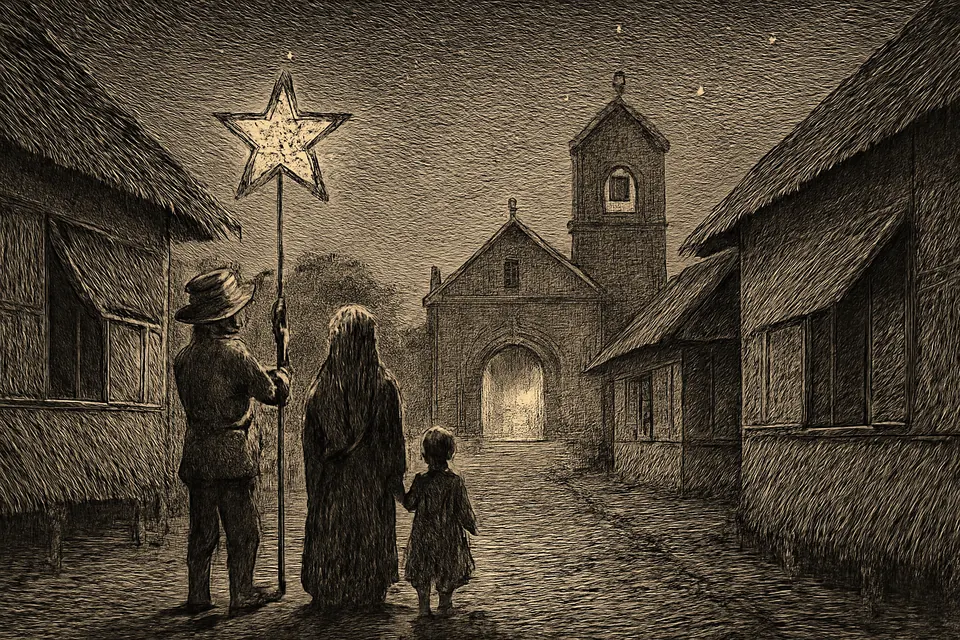
The dawn hour has a plain, practical reason. Most Filipinos were farmers and fishermen who were in the fields or out on the water by sunrise. A Mass at four in the morning let the whole family attend and still work a full day. Church bells rang in the dark, and in some towns, the stories go, the priest or the sacristan went door to door to wake people.

Suppression and restoration
The novena was not always welcome. Fr. Diwa notes that at one point Simbang Gabi "became so festive that the Spanish Archbishop of Manila had to suppress its practice." Music was the one place the people could add their own color to a fixed Latin liturgy, and carols and bands crowded into the church. The custom came back, and in the 20th century the bishops placed it on firm liturgical ground with the 1953 request to Rome.
Is there a wish if you finish all nine Masses?
Ask almost any Filipino and you will hear it: complete all nine Masses of Simbang Gabi and your wish will be granted. The Inquirer reported in 2014 that some of the faithful make it "a personal mission not to miss the nine-day dawn Masses so the petitions and wishes they are praying for would be granted."
This is popular piety, not Church teaching. The Church makes no promise that finishing the novena earns a granted wish, and no bishop or pope has ever attached one. What is true and good underneath it is the Filipino panata, a personal vow freely made and faithfully kept. To offer God nine early mornings for a sick parent, a child abroad or a marriage in trouble is real prayer and real sacrifice. Jesus Himself told us to keep asking, seeking and knocking.
So keep the novena, and bring your intention to every Mass. But let the nine days do what a novena is for. The Church's Directory on Popular Piety and the Liturgy says the Christmas novena "began as a means of communicating the riches of the Liturgy to the faithful." The gift of Simbang Gabi is Christ in the Eucharist nine times before Christmas, and a heart that is ready to receive Him on the tenth.
If you miss a day, don't despair of the whole novena. God is not keeping score against us. Go the next morning.
How Simbang Gabi is kept today
Dawn and evening Masses
In the Philippines the dawn Masses still draw enormous crowds, especially in the provinces and at the big Manila shrines and basilicas. In the cities, many parishes add evening Masses the night before for people who work late or commute far. The Church calls these a "pastoral accommodation," in the words of the Inquirer. Large parishes often hold Masses at both times, sometimes several at dawn.
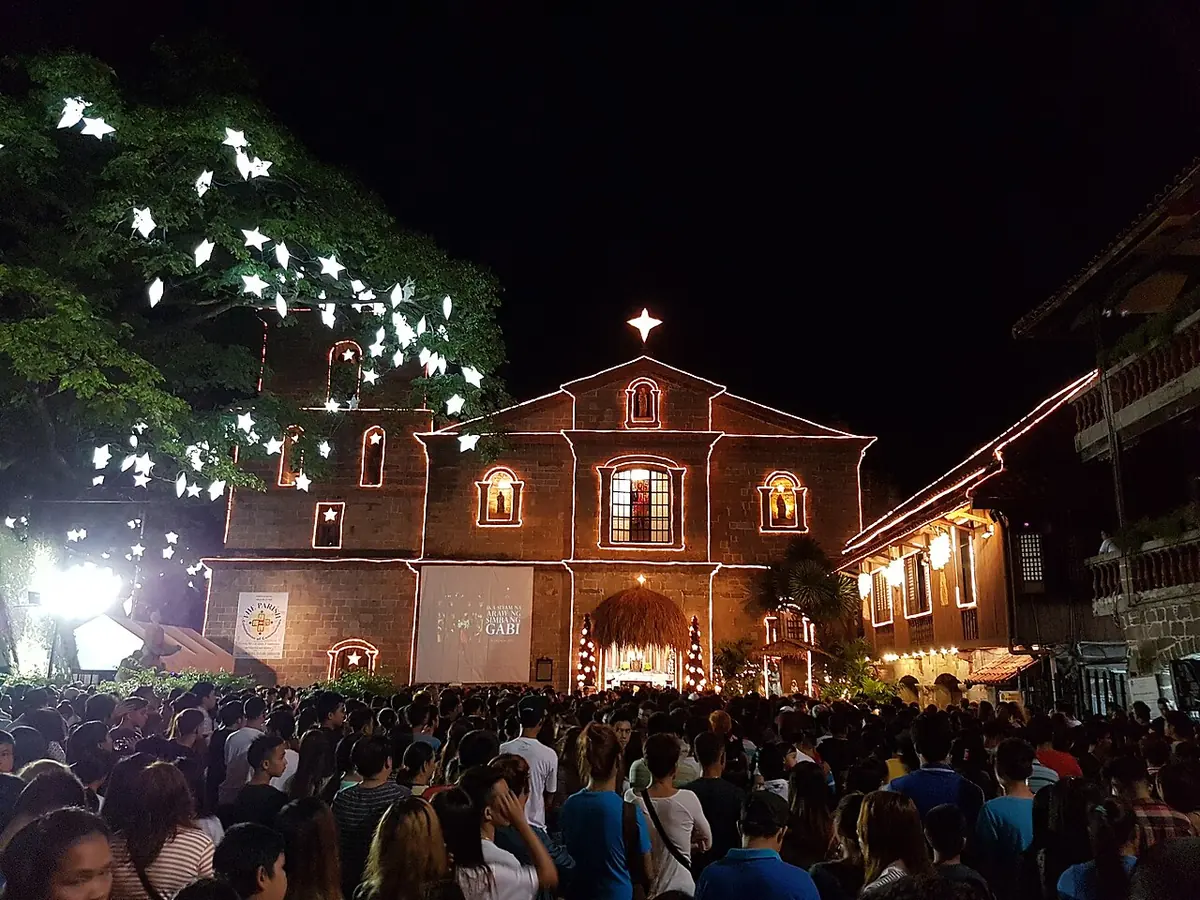
The music is joyful: Filipino Christmas carols like "Pasko na Naman" and "Himig Pasko" are sung before and after Mass, and at home the old villancicos in Spanish and Tagalog. In some towns the novena ends on Christmas Eve with the Panunuluyan, a play of Mary and Joseph searching Bethlehem for an inn, before the night Mass.
The parol: the lantern on the road to Mass
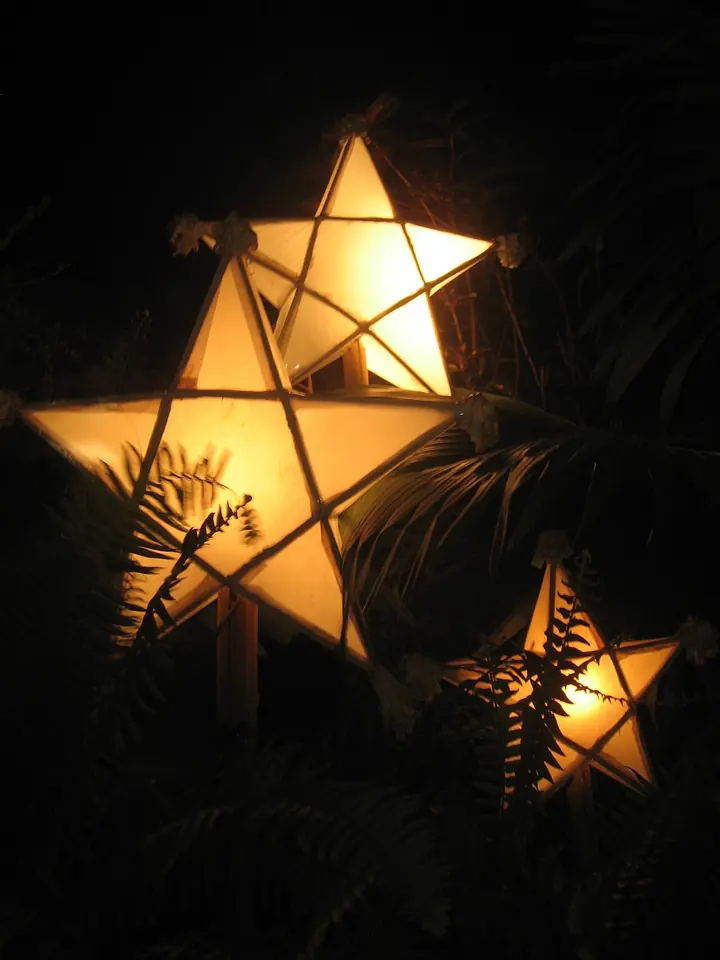
The parol, the Filipino star lantern, belongs to Simbang Gabi. The word comes from the Spanish farol, lantern. Tradition holds that families carried candle-lit lanterns to light their way to the dawn Mass, then hung them at home. The five-pointed star, with its two paper tails, stands for the Star of Bethlehem that led the Magi to Christ (see the Magi).
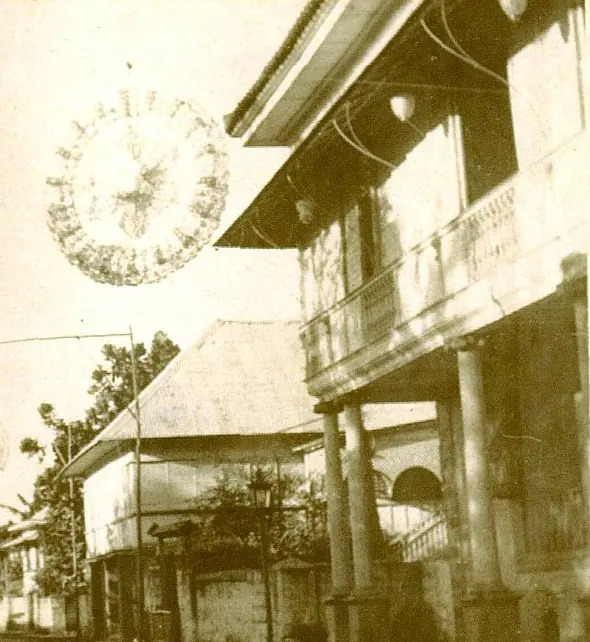
The traditional parol is made of bamboo strips and thin papel de Hapon or crepe paper, with a candle inside. Today most are made of capiz shell, plastic or wire, with electric lights. Parols go up in homes, schools and churches as early as September, and they stay through the Epiphany.
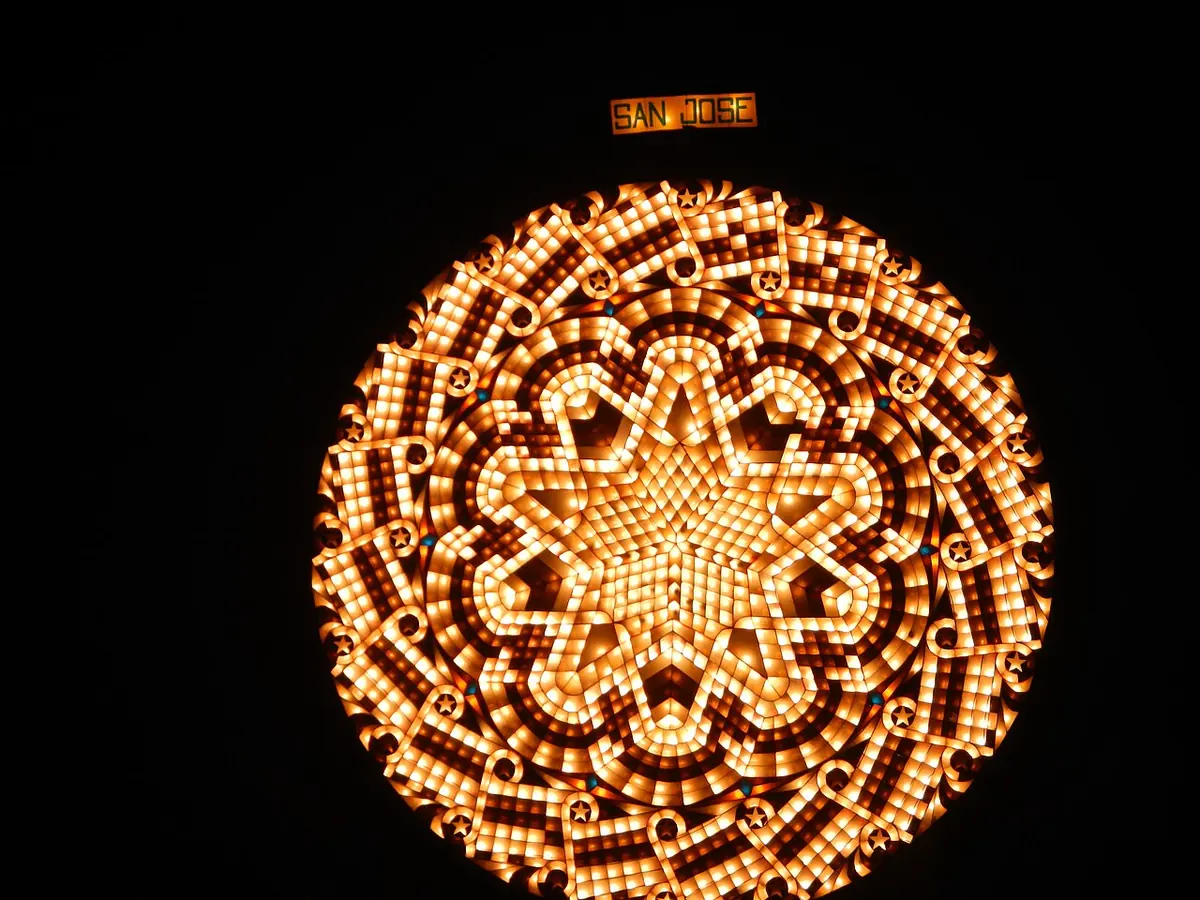
San Fernando in Pampanga is the parol capital. Its Giant Lantern Festival, the Ligligan Parul, held in December, sets enormous lanterns with thousands of bulbs against the night sky, each one programmed to pulse and spin in patterns.
Bibingka and puto bumbong
After Mass, everyone heads for the vendors outside the church. Fr. Diwa counted the food among the "local flavor" Filipinos gave the novena, and it is part of the memory of Simbang Gabi for every Filipino who grew up with it.
- Bibingka: a rice cake of galapong (soaked, ground rice) and coconut milk, baked in a clay pot lined with banana leaf, with hot coals below and on a lid above. It comes topped with sliced salted duck egg, white cheese and butter, sometimes with grated coconut.
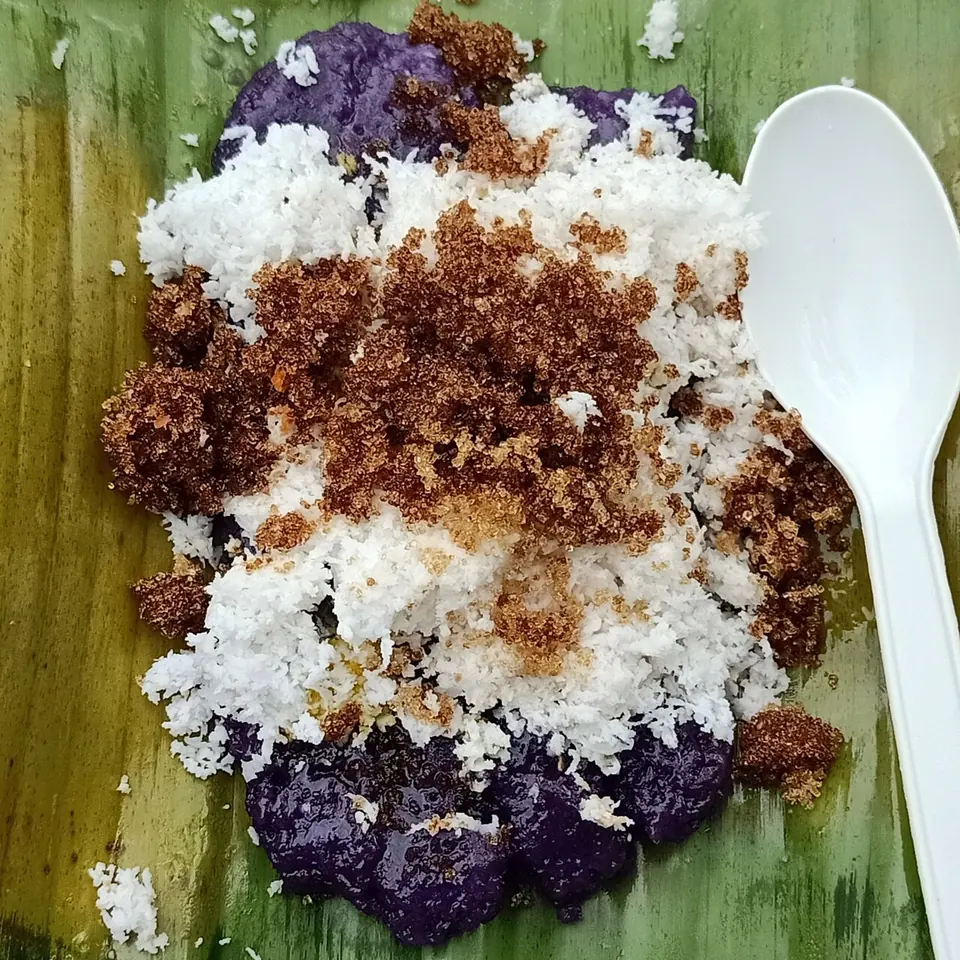
- Puto bumbong: purple glutinous rice (pirurutong) steamed in short bamboo tubes, pushed out onto a banana leaf, then spread with margarine and showered with grated coconut and muscovado sugar.
- Salabat (hot ginger tea) and tsokolate (thick hot chocolate) to drink, since even the tropics are cool at four in the morning.
A parish priest in Bulacan reminded his people in 2014 not to "romanticize this tradition with festivities and native delicacies" instead of reflecting on the Eucharist. It is a fair warning, kindly meant. The rice cakes are a joy, but they come after the Mass, not instead of it.

Simbang Gabi in the United States and around the world
Filipino migrants have carried the novena everywhere they have gone: to the Gulf states, to Hong Kong, Italy and Japan, to Canada and Australia, and above all to the United States. Pope Francis noted in 2019 that Simbang Gabi had been celebrated in the Diocese of Rome for years.
In American dioceses, Simbang Gabi is mostly an evening novena, from December 15 or 16 through December 23 or 24, with churches decorated with parols and the community gathering afterward for food. The Archdiocese of Los Angeles has kept it for "nearly four decades." The Archdiocese of Chicago listed 55 parishes celebrating it in 2024. Clarissa Martinez, who advises the U.S. bishops' subcommittee on Asian and Pacific Island affairs, told OSV News she has watched it become part of the mainstream parish calendar over the past ten years. Some pastors now hold it even in parishes with few Filipinos, as a quiet answer to the rush of the shopping season.
At first, Fr. Diwa remembered, some American clergy were wary of it. Now it is one of the gifts Filipino Catholics have given the American Church, along with their full pews.
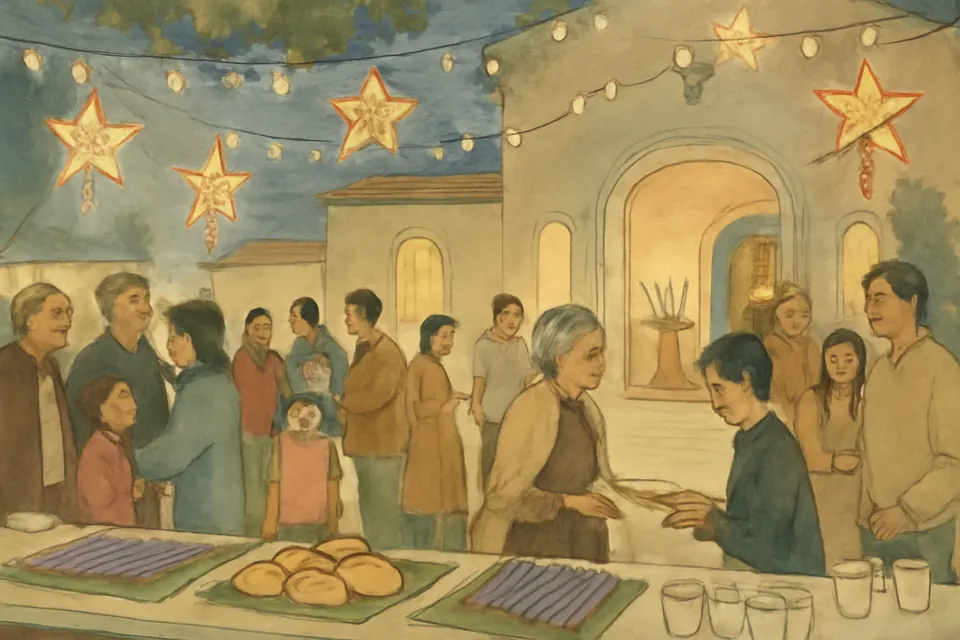
For Filipino-Americans far from home, the nine evenings are a family reunion with God at the center. Grandparents bring grandchildren who have never seen a rice field, and the parol over the parish door says what the season is for.
How to keep Simbang Gabi this year
- Find a schedule. Look on your diocese's or parish's website in early December. Many dioceses publish a list of every parish holding Simbang Gabi, with times.
- Choose an intention. Write it down, and bring it to each Mass. Pray for someone besides yourself, too.
- Go to confession during the novena, so you come to Christmas with a clean heart.
- Make a parol with your children, from bamboo skewers and tissue paper, and hang it in the window on December 16.
- Pray at home on the days you cannot get to Mass: read the Gospel of the day, pray a decade of the rosary, and make a spiritual communion.
- Bring someone. A friend or a neighbor who has drifted from the Church may say yes to nine evenings and bibingka more readily than to anything else you could suggest.
Let us ask Our Lady, who carried Christ in her womb and waited for His birth, to keep us company these nine days. Holy Mary, Mother of God, make room in our hearts for your Son.
Related saints and seasons
Simbang Gabi sits beside the other Christmas novenas: Las Posadas in Mexico, the Colombian Novena de Aguinaldos and the St. Andrew Christmas novena. The O Antiphons of December 17 to 23 are the Church's own Christmas novena at Vespers. For the saints, see the Blessed Virgin Mary, St. Joseph, the first Filipino saint St. Lorenzo Ruiz, St. Francis Xavier, patron of the missions, and Our Lady of Guadalupe, whose feast on December 12 opens the season in Mexico. Our novenas page explains the nine-day prayer itself, and the feast days calendar has every December saint.
Frequently asked questions
When is Simbang Gabi 2026?
The dawn Masses run from Wednesday, December 16, to Thursday, December 24, 2026. Parishes that hold the evening form (the anticipated Simbang Gabi) begin on the evening of Tuesday, December 15, and end on Wednesday, December 23. The dates are the same every year; only the weekdays change.
What does Simbang Gabi mean?
Simbang Gabi is Tagalog for "night Mass" (simba, to go to church or worship; gabi, night). The name fits the old schedule, when the Masses began in the dark around four in the morning. In Spanish the Masses are properly called Misas de Aguinaldo, "Christmas-gift Masses."
Is Simbang Gabi the same as Misa de Gallo?
Filipinos often use the two names for the same nine dawn Masses. Strictly, the Misa de Gallo ("Rooster's Mass") is the Mass of Christmas night, while the nine novena Masses are the Misas de Aguinaldo. The Dominican historian Fidel Villarroel made this point in a 1999 study, and the University of Santo Tomas still teaches it.
Do I get a wish if I complete all nine Masses of Simbang Gabi?
That belief is popular piety, not Church teaching. Many Filipinos make the nine Masses a panata, a personal vow, and offer it for an intention, which is a good and holy thing to do. But the Church attaches no promise of a granted wish. What the novena gives with certainty is the grace of the Masses themselves and a heart made ready for Christmas.
Do evening Simbang Gabi Masses count?
The Church keeps no tally, so there is nothing to "count." Bishops in the Philippines approved evening Masses as a pastoral accommodation for city workers, and Filipino parishes abroad mostly hold them in the evening. Nine evening Masses from December 15 to 23 are a full Simbang Gabi.
Why do priests wear white at Simbang Gabi in the Philippines?
Because the Philippine Church has a special permission from the Holy See, first requested by the bishops in 1953, to celebrate these nine Masses as festive votive Masses of the Blessed Virgin Mary, with white vestments and the Gloria. Dioceses in the United States do not have that indult, so there the Masses follow the ordinary Advent rules, in violet.
What food is eaten after Simbang Gabi?
Bibingka, a rice cake baked in a clay pot over coals and topped with salted egg and cheese; puto bumbong, purple sticky rice steamed in bamboo tubes and served with grated coconut and muscovado sugar; and hot salabat (ginger tea) or tsokolate. Vendors set up outside the church doors before the first Mass ends.
Where can I attend Simbang Gabi in the United States?
In most dioceses with a Filipino community. The Archdiocese of Los Angeles has kept it for nearly forty years, and the Archdiocese of Chicago listed 55 parishes celebrating it in 2024. Check your diocese's website in early December; many publish a full schedule.
Sources
- Pope Francis, Homily at the Holy Mass for the Filipino Community, St. Peter's Basilica (December 15, 2019)
- Archdiocese of Los Angeles, Office for Divine Worship: Simbang Gabi Guidelines 2025. The 1953 request of the First Plenary Council of the Philippines; why U.S. dioceses follow ordinary Advent rules
- The Varsitarian (University of Santo Tomas): What's the difference? Simbang Gabi, Misa de Aguinaldo, Misa de Gallo (December 22, 2025). Fidel Villarroel, O.P., on the names; the 1953 indult and its 1961 extension
- Philippine Daily Inquirer: 'Simbang Gabi' goes global as PH export (December 16, 2012). Fr. Gennie Diwa of the Archdiocese of Manila on the Mexican origin, the suppression by a Spanish archbishop and the white vestments
- Philippine Daily Inquirer: Faithful start 9-day 'Simbang Gabi' Tuesday (December 16, 2014). The evening Masses as a pastoral accommodation; completing the nine for one's petitions
- National Catholic Reporter (OSV News): Filipino Simbang Gabi Masses more and more rooted in the US (December 19, 2024)
- Directory on Popular Piety and the Liturgy (2001), no. 103: The Christmas Novena