Pope Benedict XIII

Pope Benedict XIII (Pietro Francesco Orsini, 1649–1730) was a Dominican friar who led the Catholic Church from 1724 to 1730. He gave up a dukedom to enter religious life, spent 38 years as archbishop of Benevento, and as pope tried to live like a friar. His cause for beatification is open, so the Church calls him Servant of God; he is not Blessed or a saint. He is not the antipope Benedict XIII of the Western Schism.
Who was Pope Benedict XIII?
Pope Benedict XIII was born Pietro Francesco Orsini on February 2, 1649, in Gravina in Puglia, in the heel of Italy. He was the eldest son of the Duke of Gravina, from the great Roman house of Orsini, and heir to a fortune. He gave it all up as a teenager to become a Dominican friar, taking the name Vincenzo Maria, and for the rest of his life he wanted nothing more than to be a friar. The Church made him a cardinal, an archbishop and finally, in 1724, pope. He reigned for six years and died in 1730.
He is remembered two ways. Rome and the Dominicans remember a holy, austere, tireless pastor who heard confessions himself in the Jubilee year and visited every parish of his diocese. Historians also remember the trust he placed in a dishonest aide, Cardinal Niccolò Coscia, who did real harm to the Holy See while the pope did not see it. The Catholic Encyclopedia puts both sides fairly: "full justice can scarcely be done to the virtuous life and the fatherly zeal" of Benedict, yet his reign "lost much of its lustre" because of Coscia.

Today the Church calls him Servant of God, the first title in a cause for beatification. He is not yet Venerable, Blessed or a saint.
Not the antipope Benedict XIII
Searchers often meet two men with this name. The first, Pedro de Luna, was a Spanish cardinal elected in Avignon in 1394 during the Western Schism. He called himself Benedict XIII, refused every effort at reunion, and was deposed by the Council of Constance in 1417. The Church counts him as an antipope. St. Vincent Ferrer served him for years before helping to end the schism.
The second is our Dominican, Pietro Francesco Orsini. According to the Catholic Encyclopedia, when he was elected in 1724 he first took the name Benedict XIV, in honor of the Dominican pope Blessed Benedict XI. He then changed it to Benedict XIII, because Pedro de Luna "was a schismatic" and his number did not count.
A duke's heir who became a friar
The Catholic Encyclopedia tells the story plainly. At sixteen, during a visit to Venice, young Orsini entered the Dominican novitiate against his parents' will. They appealed to Pope Clement IX to send him home. The pope sided with the novice and even shortened his novitiate by half, to free him from his relatives' pressure. At twenty-one he was already teaching, and he was ordained a priest in 1671.
His example won over his own family. In time his mother, his sister and two of his nieces joined the Third Order of St. Dominic.
Cardinal under obedience
On February 22, 1672, his relative Pope Clement X made him a cardinal. Orsini protested "strenuously," and accepted only when the master of the Dominicans ordered him to under his vow of obedience. As a cardinal he kept the Dominican rule and never set aside his habit.
In 1675 he was offered a choice between the archdiocese of Salerno and the poorer see of Manfredonia (Siponto). He chose Manfredonia because it was poor and needed more pastoral work. He visited even its remotest hamlets, repaired churches and held a synod. In 1680 he was moved to Cesena.
Thirty-eight years in Benevento
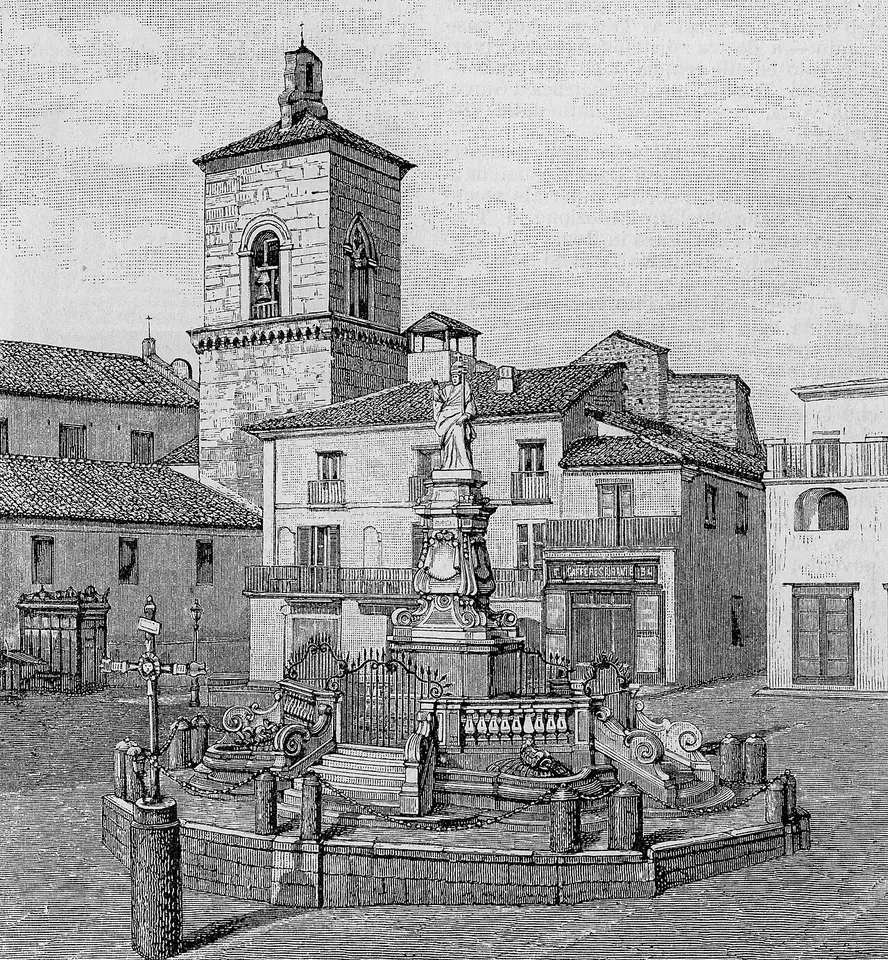
Illness took him in 1686 to Benevento, near Naples, and he stayed for thirty-eight years. He visited every parish of the diocese each year, built and repaired churches, opened hospitals and held two provincial synods, in 1693 and 1698. Avvenire reports that he set up grain banks, the monti frumentari, so poor farmers could borrow seed, and that people called him the "Charles Borromeo of the South."
Earthquakes struck Benevento on June 5, 1688, and March 14, 1702. In 1688 the archbishop's palace collapsed on him. He survived, and he always credited the protection of St. Philip Neri, whom he had loved since his youth. L'Osservatore Romano notes that an inscription in Philip's rooms in Rome still calls the saint liberator suus, "his deliverer." After the rescue, Orsini spread devotion to Philip through his whole province, dedicating churches, chapels and altars to him.
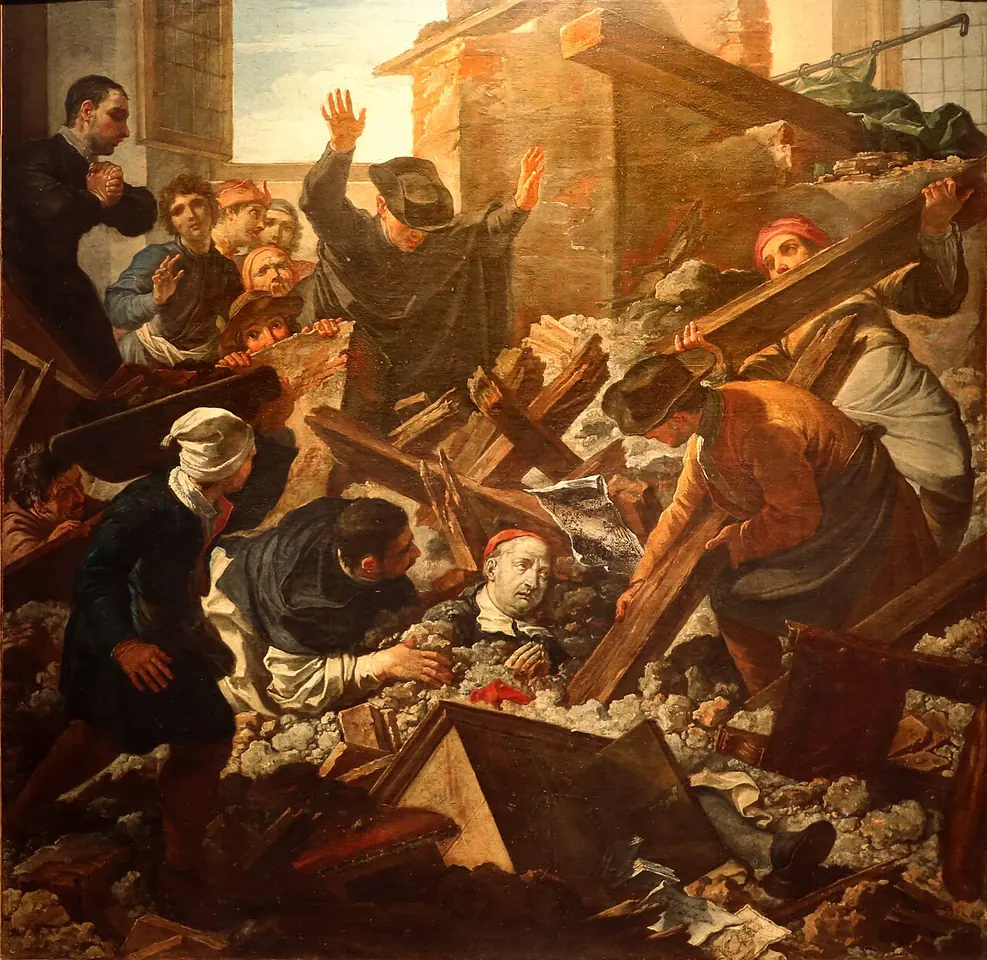
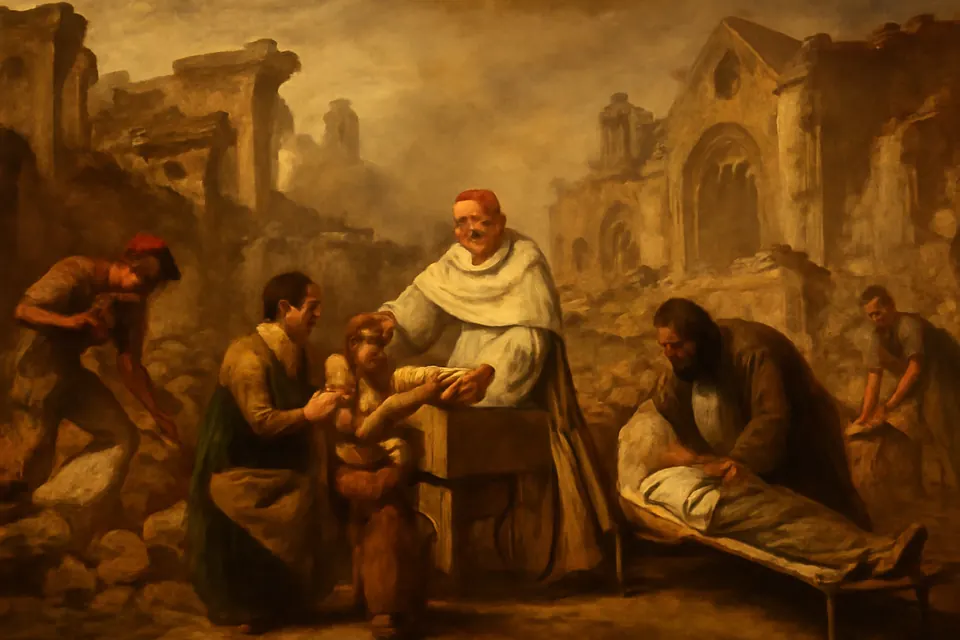
He threw himself into relief and rebuilding after both disasters. The Catholic Encyclopedia says his courage and charity won him the title "Second Founder" of Benevento.
The conclave of 1724
When Innocent XIII died in March 1724, the cardinals could not agree for two months. On May 25 Orsini began a novena to St. Philip Neri, asking that the long delay end. Before the nine days were over, the votes began to gather on him. He did everything he could to refuse, pleading his age, his weakness and a resolution never to become pope. The Catholic Encyclopedia says he yielded only "with tears," when the master of his order commanded him to accept. He was elected on May 29, 1724, at seventy-five.
He began, as he later wrote, by having himself carried to the Pauline Chapel, where he commended himself to "our great protector St. Philip Neri."
Benedict XIII as pope
He tried to rule as he had lived. He enforced clerical discipline, issued decrees on the dress of the clergy and pushed the cardinals to give up luxury. He set up a commission to help bishops found diocesan seminaries. In the Jubilee of 1725 he sat in the confessional himself as Grand Penitentiary, an unusual sight for a pope. At a Roman synod that year he called for full acceptance of the bull Unigenitus against Jansenism, and in 1728 he won over the archbishop of Paris, Cardinal de Noailles. He also kept Benevento, governing it through a vicar and visiting it twice as pope.
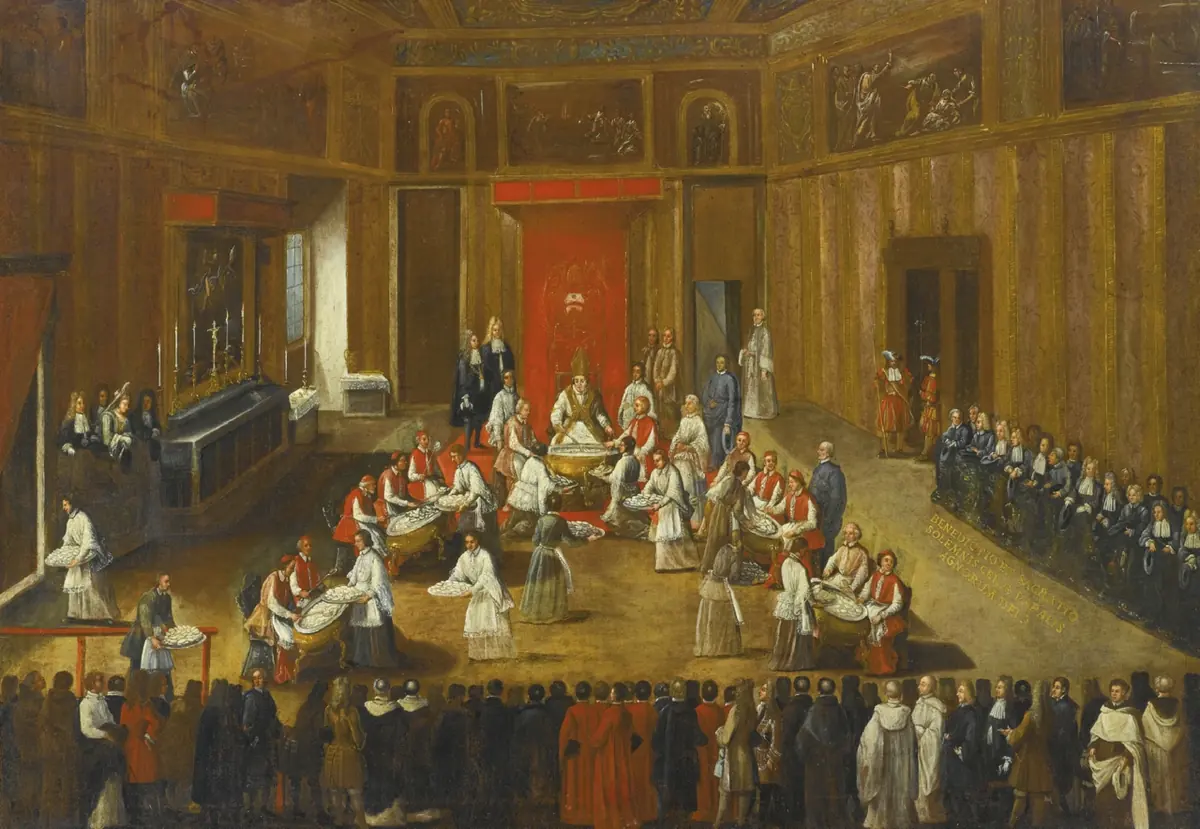
Rome gained lasting works from him. The Spanish Steps, rising from Piazza di Spagna to Trinità dei Monti, were completed in his reign, and he founded the San Gallicano hospital in Trastevere. Avvenire adds that he condemned gambling and the public lottery and improved conditions in the prisons of the Papal States.
The saints he raised to the altars
Benedict XIII canonized a remarkable list of saints whose feasts we still keep. On December 10, 1726, he canonized St. Agnes of Montepulciano, a fellow Dominican, and St. Turibius of Mogrovejo. On December 27 came St. John of the Cross and St. Peregrine, and on December 31 the two young Jesuits St. Aloysius Gonzaga and St. Stanislaus Kostka. St. Margaret of Cortona followed in 1728 and St. John of Nepomuk in 1729. He extended the feast of St. Gregory VII to the whole Church in 1728 and named St. Peter Chrysologus a Doctor of the Church in 1729. He also beatified St. Vincent de Paul in 1729.
The shadow of Cardinal Coscia
Benedict's weakness was trust. Niccolò Coscia had been his assistant in Benevento, and as pope Benedict let him run much of the government. Coscia sold favors and enriched himself, and the Catholic Encyclopedia says the pope "was ignorant of the peculations and venality of his favourite." When Benedict died, a crowd rose against Coscia, and the cardinal was later sentenced to ten years' imprisonment. The fault was a simple man's misplaced confidence, not greed of his own; the pope himself lived poorly to the end.
His death and burial
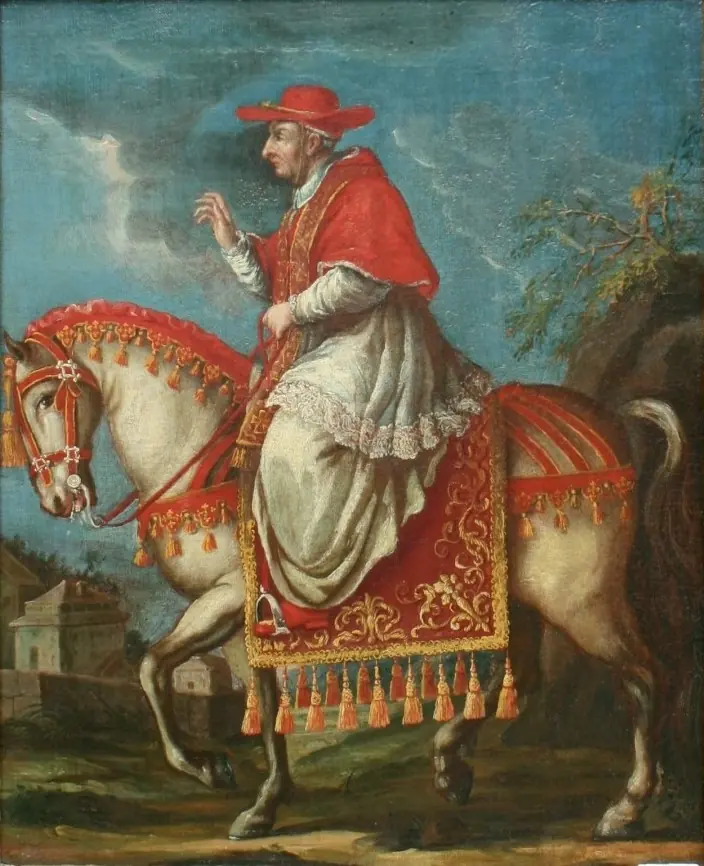
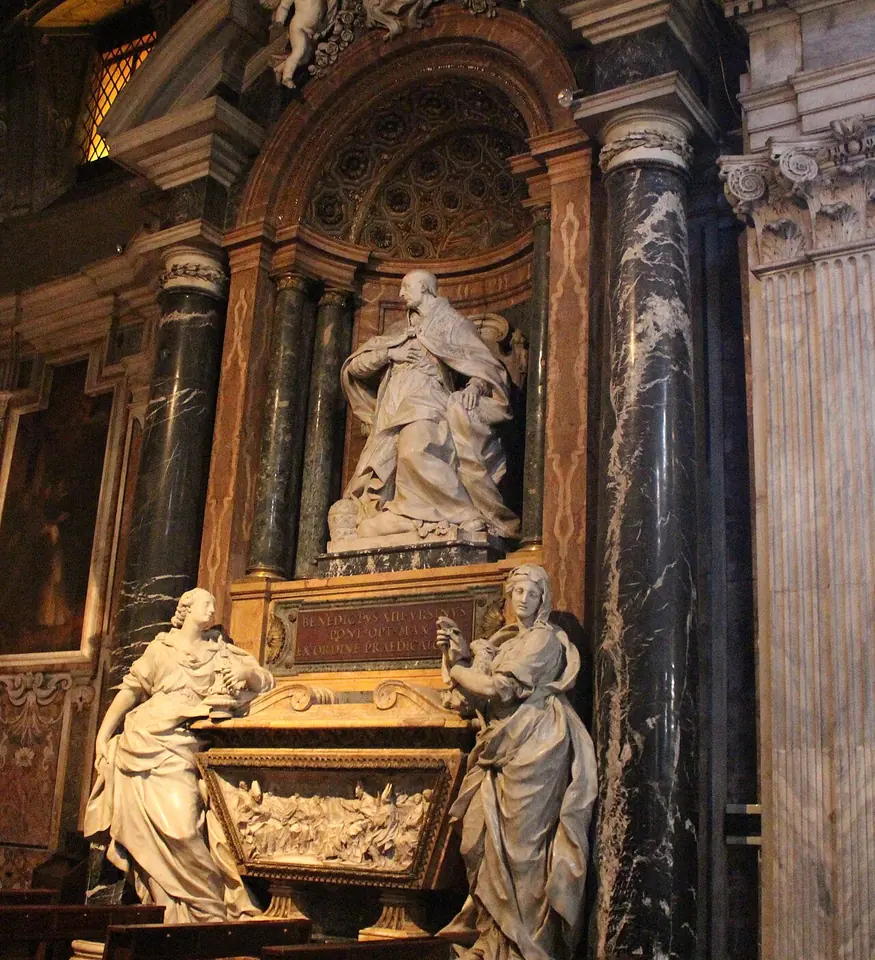
Benedict XIII died in Rome on February 21, 1730, aged 81, after a fever. Avvenire reports that he asked that no funeral bells be rung, so as not to spoil the city's celebrations. His theological writings had been published in three volumes at Ravenna in 1728. Since 1733 his remains have rested in the Dominican basilica of Santa Maria sopra Minerva, near the tomb of St. Catherine of Siena.
Servant of God Benedict XIII: his cause
His cause has had a long, interrupted road. A first effort began in the 18th century and stalled. In 1931 Pope Pius XI, at the urging of the Dominicans, gave him the title Servant of God, according to Avvenire. The cause was taken up again in the 21st century: on February 24, 2012, Cardinal Agostino Vallini, the pope's vicar for Rome, opened the diocesan inquiry in the Lateran Palace. On February 24, 2017, Vallini closed it there, and the acts went to the Congregation (now Dicastery) for the Causes of Saints. Avvenire named the postulator as Paolo Vilotta. In May 2025 the Dominican Historical Institute held a study day on his pontificate at the Pontifical Lateran University.
The next step would be a decree of heroic virtue, which would make him Venerable. Beatification would then need a miracle attributed to his intercession. Until then, his memory is kept above all in Gravina, Benevento and the Dominican houses of Rome.
Praying with Benedict XIII
We may ask a Servant of God to pray for us in private prayer, and we pray for the progress of his cause. Benedict XIII himself shows us how to pray in a crisis: he did not campaign or scheme in the conclave of 1724, but began a novena to a saint he loved and left the outcome to God. Let us ask him to pray for our bishops and priests, that they may be humble pastors who never stop visiting their people, and for all who carry responsibility they did not seek.
Frequently asked questions
Is Pope Benedict XIII a saint?
Not yet. Pius XI gave him the title Servant of God in 1931, after his Dominican brothers pressed for his cause. The diocesan inquiry was reopened in Rome in 2012 and closed on February 24, 2017, and its acts went to Rome for study. He has not been declared Venerable, beatified or canonized.
What is the difference between Pope Benedict XIII and the antipope Benedict XIII?
Two men used the name. Pedro de Luna, a Spanish cardinal, was elected in Avignon in 1394 during the Western Schism and took the name Benedict XIII; the Council of Constance deposed him in 1417, and the Church counts him as an antipope. Pietro Francesco Orsini, the Dominican, was the legitimate pope from 1724 to 1730. He first chose the name Benedict XIV, then changed it to Benedict XIII precisely because de Luna's use of the number didn't count.
When did Benedict XIII die, and where is he buried?
He died in Rome on February 21, 1730, at the age of 81, after a fever. His remains have rested since 1733 in the Dominican basilica of Santa Maria sopra Minerva in Rome. The Catholic Encyclopedia gives February 23 as the date of death; most sources, including the Italian Catholic daily Avvenire, give February 21.
Which saints did Benedict XIII canonize?
Among others, St. Aloysius Gonzaga and St. Stanislaus Kostka (December 31, 1726), St. John of the Cross and St. Peregrine (December 27, 1726), St. Agnes of Montepulciano and St. Turibius of Mogrovejo (December 10, 1726), St. Margaret of Cortona (1728) and St. John of Nepomuk (1729). He also declared St. Peter Chrysologus a Doctor of the Church in 1729.
Did Benedict XIII build the Spanish Steps?
The great stairway from Piazza di Spagna up to the church of Trinità dei Monti was finished and opened during his pontificate, in the Jubilee years after 1725. Avvenire also credits him with founding the San Gallicano hospital in Trastevere.
Can I pray to Benedict XIII?
Yes, privately. The Church does not allow public veneration of a Servant of God, such as a feast day or Masses in his honor, before beatification. The faithful may ask him to pray for them, and favors received should be reported to those promoting his cause, because a miracle would be needed for beatification.
Sources
- Catholic Encyclopedia (1907): Pope Benedict XIII. His Dominican vocation, the cardinalate under obedience, Benevento's earthquakes, the novena before his election and the change of name from Benedict XIV
- Catholic Encyclopedia (1910): Pedro de Luna. The antipope who first used the name Benedict XIII (1394–1417)
- Filippo Rizzi, Benedetto XIII: il Papa che voleva rimanere frate (Avvenire, November 1, 2017). Servant of God in 1931; the close of the diocesan phase on February 24, 2017; date of death and burial; San Gallicano and the Spanish Steps
- L'Osservatore Romano, February 25, 2012, page 6: Troppa grazia Pippo buono (hosted by the Procura of the Oratory). The opening of the diocesan inquiry on February 24, 2012, his rescue in the 1688 earthquake and his devotion to St. Philip Neri
- Institutum Historicum Ordinis Praedicatorum: Benedict XIII Orsini. A Rereading of a Pontificate (conference, May 28, 2025)