St. Gregory VII, Pope and Reformer
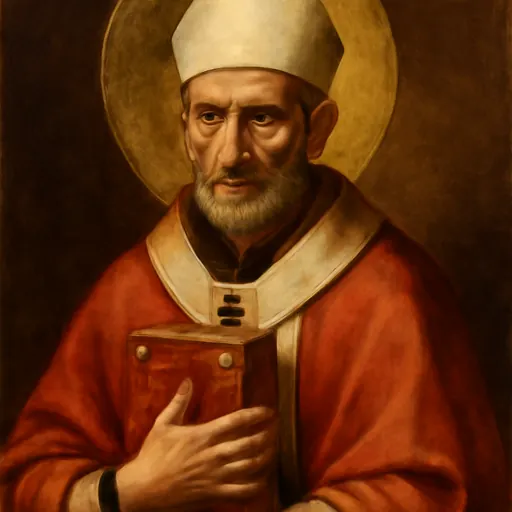
Pope St. Gregory VII (Hildebrand, about 1020–1085) was a Benedictine monk who became pope in 1073 and fought to free the Church from simony, a corrupt clergy and lay control of bishops. He made Emperor Henry IV do penance at Canossa in 1077, but died in exile at Salerno. We keep his feast on May 25.
Who was St. Gregory VII?
Pope St. Gregory VII was the monk Hildebrand, a short, frail-looking Tuscan of humble birth who spent more than thirty years at the center of the Church's government and twelve years as pope, from 1073 to 1085. He set out to cleanse the Church of the sins that were eating it from inside, the buying and selling of church offices and the scandal of clergy who would not keep their vows, and to free it from emperors and kings who treated bishoprics as their own property.
He won that fight in principle and lost it, for a time, in practice. He forced the most powerful ruler in Europe to stand barefoot in the snow, and he died an exile, far from Rome. This is Pope Gregory VII, whose feast we keep on May 25, not Pope St. Gregory the Great, who lived five centuries earlier.

His life
The monk Hildebrand
He was born between 1020 and 1025 at Sovana in Tuscany. The Catholic Encyclopedia calls him "vir de plebe," a man of the people; one chronicle makes his father a carpenter, another a peasant. As a boy he was sent to Rome to the monastery of Santa Maria on the Aventine, where his uncle was abbot, and there he became a Benedictine monk.
His name, the Encyclopedia says, sounded like "a bright flame" to his friends and "a brand of hell" to his enemies. He served Pope Gregory VI as chaplain and followed him into exile in Germany, then went to Cluny, the great reforming abbey of Burgundy.
Thirty years behind the throne
Under Pope Leo IX, from 1049, Hildebrand became a cardinal and the manager of the papal estates. He restored the ruined monastery of St. Paul Outside the Walls, where, the Encyclopedia reports, sheep and cattle had been wandering in and out through the broken doors. Under the next four popes he was their closest adviser. He helped secure the decree of 1059 that gave the election of the pope to the cardinals, and he was made archdeacon of the Roman Church.
"Let Hildebrand be pope!"
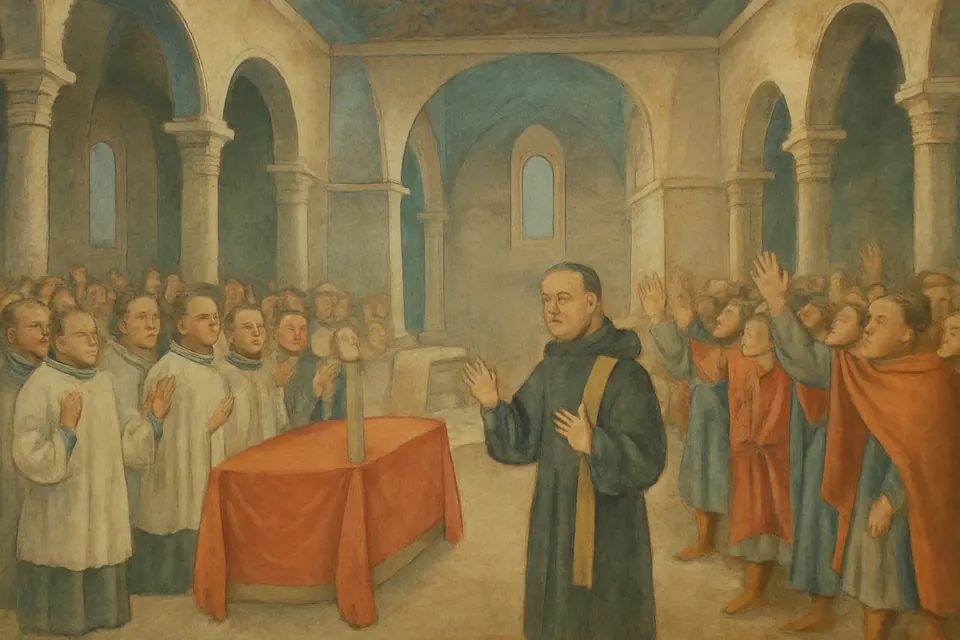
When Pope Alexander II died in April 1073, the crowd at his funeral in the Lateran broke out with a shout: "Let Hildebrand be pope!" He protested in vain. That same day the cardinals elected him, and he took the name Gregory.
The fight for the freedom of the Church
Gregory attacked what he saw as the two great evils of his age: simony and the incontinence of the clergy. He insisted that priests keep celibacy, and he met fierce resistance; the Encyclopedia tells of an archbishop of Rouen stoned out of his own synod for trying to enforce it. He saw that both evils grew from the same root, the power of lay lords to appoint and invest bishops. In 1075 a Roman synod excommunicated anyone, "even if he were emperor or king," who conferred investiture in a church office.
Canossa
The young German king Henry IV answered by calling his bishops together at Worms in January 1076 and declaring the pope deposed. Gregory excommunicated Henry and released his subjects from their oaths. When the German princes threatened to choose a new king, Henry crossed the Alps in a terrible winter to seek absolution.
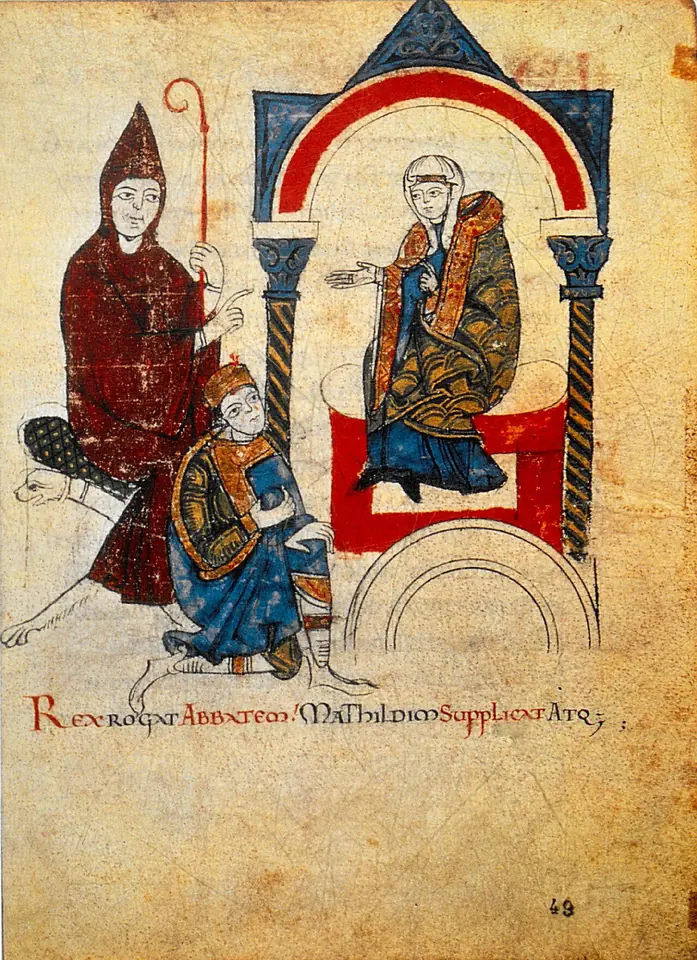
Gregory waited at the castle of Canossa, the fortress of his loyal friend Countess Matilda of Tuscany. For three days, the Encyclopedia says, Henry stood at the gate, barefoot, fasting and dressed as a penitent. On January 28, 1077, the pope received him and lifted the excommunication.
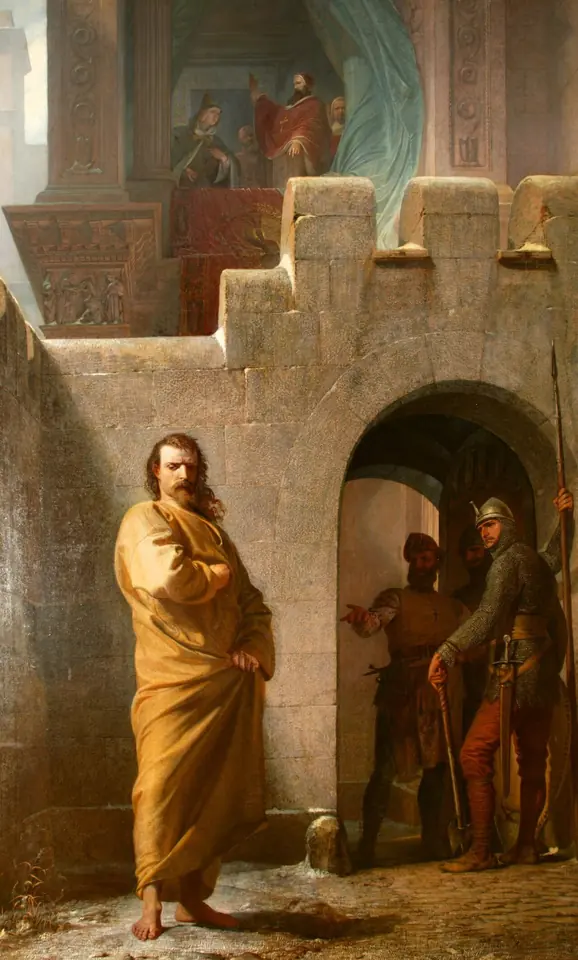
The peace did not last. Henry set up an antipope in 1080, and in 1084 he took Rome. Gregory held out in the Castel Sant'Angelo until his Norman allies under Robert Guiscard drove the emperor away, but the Normans plundered the city, and the Romans blamed the pope. He had to leave.
Exile and death at Salerno
He went first to Monte Cassino and then to Salerno. Three days before he died he lifted all the excommunications he had pronounced, except those against Henry and the antipope. On May 25, 1085, he died, saying: "I have loved justice and hated iniquity, therefore I die in exile." He was buried in the cathedral of St. Matthew at Salerno.

Holiness and cult
No miracles are part of Gregory's story, and none were needed for his memory. His holiness was the stubborn kind: personal austerity, prayer and a refusal to bargain with what belonged to God. The Catholic Encyclopedia records that he was beatified by Gregory XIII in 1584 and canonized by Benedict XIII in 1728. The collect of his memorial asks God to give the Church the "spirit of fortitude and zeal for justice" that shone in him.
Symbols of St. Gregory VII in art
He is shown far less often than Gregory the Great, and usually as a pope in a series. Look for:
- Papal vestments, with an early tall white miter in medieval images like the Exultet roll, and the triple tiara in later ones.
- The pallium over the chasuble.
- A Benedictine habit under the vestments, recalling that he was a monk.
- Canossa scenes: Henry IV in penitent's dress at a castle gate, often with Matilda of Tuscany present.
His tomb at Salerno, a silver shrine with his reclining figure, carries his last words in Latin: Dilexi iustitiam et odivi iniquitatem, propterea morior in exilio.

Prayer to St. Gregory VII
We know of no traditional devotional prayer to St. Gregory VII. The Church's own prayer for his memorial asks that, rejecting evil, she may be free to do whatever is right in charity. Let us pray with it for the Church and the pope, and for every bishop and priest who must stand up to the powerful. St. Gregory VII, pray for us.
Frequently asked questions
What is Pope Gregory VII known for?
For the reform that bears his name, the Gregorian Reform, against simony (buying church offices), clerical incontinence and lay investiture, the practice of kings and nobles naming and installing bishops. It led to his clash with Emperor Henry IV and the famous scene at Canossa in January 1077, when the excommunicated king stood three days in the snow before the pope absolved him.
What were Gregory VII's last words?
"I have loved justice and hated iniquity, therefore I die in exile." He was echoing Psalm 45 (44):7. He spoke them at Salerno, where he had withdrawn after Norman troops sacked Rome while freeing him from the emperor. The words are carved under his tomb in Salerno Cathedral.
When is St. Gregory VII's feast day?
May 25, the day he died in 1085. It is an optional memorial in the General Roman Calendar, shared with St. Bede the Venerable and St. Mary Magdalene de' Pazzi.
Is Pope Gregory VII the same as Gregory the Great?
No. Gregory the Great was Pope Gregory I (died 604), the Doctor of the Church who sent missionaries to England. Gregory VII was Hildebrand, who reigned nearly five centuries later, from 1073 to 1085.
Keep exploring
Sources
- Catholic Encyclopedia (1909): Pope St. Gregory VII. Canossa, his last words, burial at Salerno, beatification in 1584 and canonization in 1728
- Catholic Culture, Liturgical Year: St. Gregory VII, May 25 (collect and Gregorovius quotation)