What is a name day?
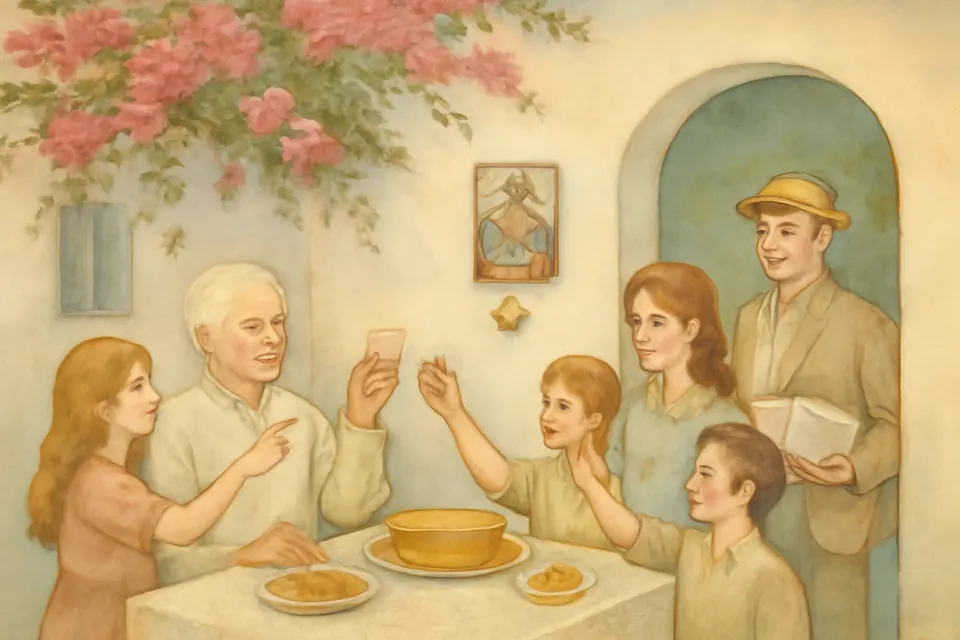
What is a name day? A name day is the feast day of the saint whose name you were given at baptism. In Greece, Poland, Italy, Spain, Hungary and much of Latin America it is kept like a second birthday, with Mass or the Divine Liturgy, a family meal and good wishes. To find yours, look up your patron saint's feast.
A name day is the feast day of the saint whose name you carry. When you were baptized, the Church gave you a name, and if it was a saint's name, a friend in heaven came with it. Once a year the whole Church keeps that saint's feast, and in much of the Christian world that day is your day too: your name day.
What is a name day?
In Greece it is called giorti, in Poland imieniny, in Italy onomastico, in Hungary névnap, in Spain and Latin America simply tu santo, "your saint." The custom goes by many names, but its heart is the same everywhere. On the feast of St. John, every John is congratulated. On the feast of St. Anne, every Anna, Ana and Annie is. You go to Mass or the Divine Liturgy if you can, you are given small gifts, and your family and friends celebrate with you.
The custom grows straight out of baptism. The Catechism teaches that "the Christian receives his name in the Church. This can be the name of a saint, that is, of a disciple who has lived a life of exemplary fidelity to the Lord. The patron saint provides a model of charity; we are assured of his intercession" (no. 2156). It adds a line that explains why a name is worth celebrating at all: "God calls each one by name. Everyone's name is sacred. The name is the icon of the person" (no. 2158). A name day is a yearly thank-you for that name and for the saint who shares it.

Where the custom came from
The first Christians did not always take saints' names. The Catholic Encyclopedia points out that converts in St. Paul's letters kept names like Hermes and Phoebe. But the love of the saints soon showed itself in names. Around 260, St. Dionysius of Alexandria wrote that many Christians took the name of the Apostle John "on account of their love for him," "just as many of the children of the faithful are called Paul or Peter." A century later St. John Chrysostom scolded parents in Antioch who named babies by lighting lamps and choosing the name on the one that burned longest, and urged them instead, as the Catholic Encyclopedia sums up his sermons, to choose "the names of holy men conspicuous for virtue and for their courage before God."
As the calendar of saints filled up, every day of the year came to belong to someone. Once children were regularly named for saints, their saint's feast naturally became a family celebration. In many Catholic and Orthodox lands it mattered more than a birthday, because a birthday celebrates the day you came into the world and a name day celebrates the friend who is helping you toward heaven.
Greek name days
Nowhere is the name day loved more than in Greece and Cyprus. Most Greeks are named after a saint, often after a grandparent, so a family's names are handed down along with its saints. The Church of Greece follows the Orthodox calendar of feasts (the Synaxarion), in which each day honors one or more saints, and the name day is kept on that saint's feast.
Some of the best-loved Greek name days:
- January 1, St. Basil the Great: Vasilis, Vasiliki. (Read about St. Basil the Great.)
- January 7, the Synaxis of St. John the Forerunner: Ioannis, Giannis, Ioanna.
- April 23, St. George: Giorgos, Georgia. (Read about St. George.)
- May 21, Sts. Constantine and Helen: Konstantinos, Kostas, Eleni. (See St. Constantine and St. Helena.)
- August 15, the Dormition of the Theotokos: Maria, Panagiotis, Despina.
- October 26, St. Demetrios: Dimitris, Dimitra. (Read about St. Demetrius.)
- December 6, St. Nicholas: Nikos, Nikoleta. (Read about St. Nicholas.)
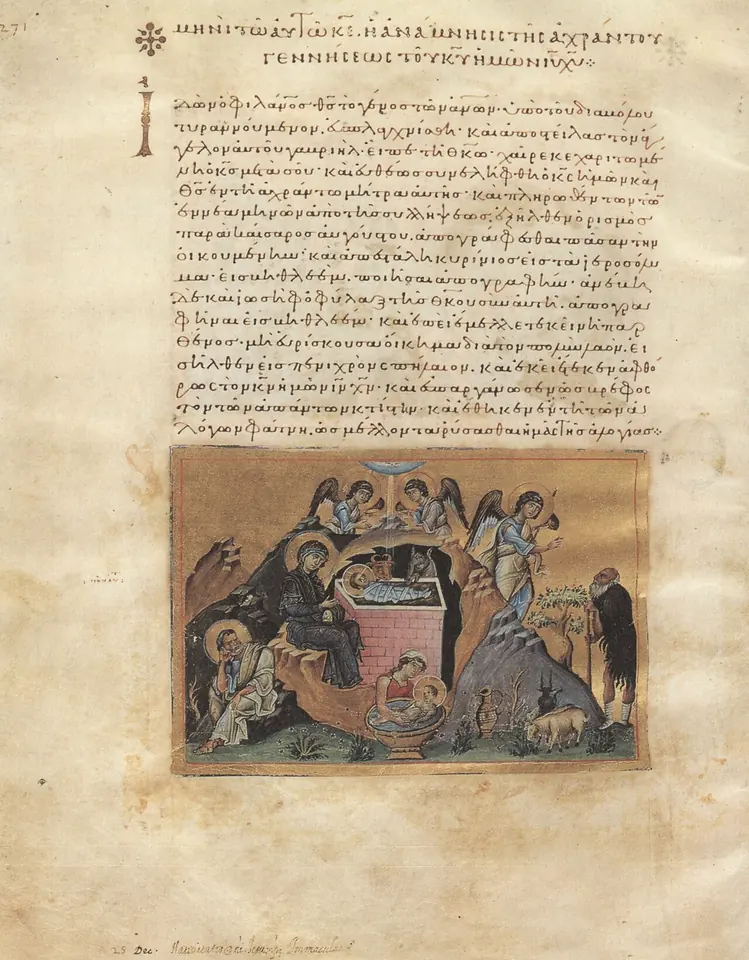
- December 25, the Nativity of Christ: Christos, Christina.
A few name days move with Easter. Anastasios and Anastasia, whose names come from anastasis, resurrection, keep their name day on Pascha itself. St. George's feast falls on April 23, but when Orthodox Easter comes after that date, so that the feast would land in Lent or Holy Week, Greeks keep it on the day after Easter.

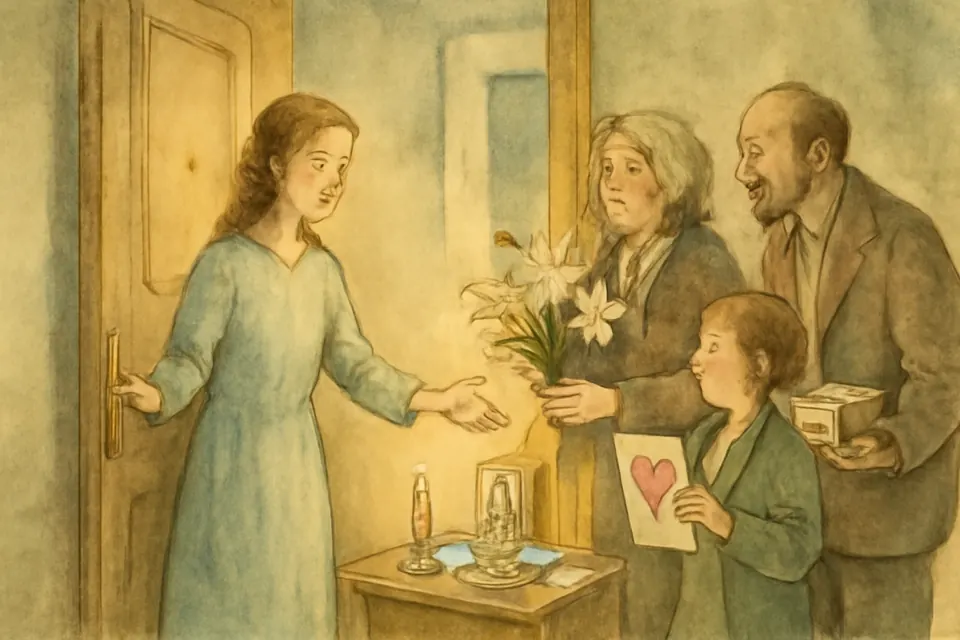
The celebration itself has a shape everyone knows. The person whose name day it is may go to the Divine Liturgy in the morning. Then the door is left open. Friends, neighbors and relatives drop by without being invited, bringing sweets or flowers, and the host serves coffee, pastries and often a full meal. Everyone says Chronia polla, "many years." On the feast of a popular saint whole villages are on the move, and a parish named for the saint holds its panigyri, a festival, with services, music and food.
Name days in Catholic countries
In Poland, imieniny were long more important than birthdays. Coworkers bring flowers to the office, friends sing "Sto lat," "a hundred years," and the calendar printed in Polish newspapers still lists the day's names. In Hungary the névnap is kept with flowers, a kiss on each cheek and a glass raised to the one celebrating. Slovaks and Czechs keep the meniny and svátek, Italians the onomastico, Croats the imendan, French families the fête.
In Spain and Latin America, people ask "¿Cuándo es tu santo?", "when is your saint?" The Catholic Encyclopedia notes that "in Italy and Spain it has always been a tolerably common practice to call a child after the saint upon whose feast he is born," which joins birthday and name day into one. Our page on finding your birthday saint explains that custom.

In Scandinavia the name-day calendar survives in almanacs, though many of the names have long since drifted from their saints. In the United States and Britain the custom faded, but many families are bringing it back, and it is one of the simplest ways to make the saints part of ordinary home life.
How to find your name day today
Finding your name day takes two steps.
- Know your saint. If you were named for a saint, ask which one your parents meant. There are many Johns and Catherines; an Anthony might belong to St. Anthony of Padua or to St. Anthony the Great. Spanish, Italian, Polish and Greek forms count as the same name: Juan, Giovanni, Jan and Ioannis all belong to St. John.
- Look up the feast. Our feast days calendar lists the saints day by day, and the saint of the day page shows whose name day it is today. Saints' entries on this site give the feast date near the top of each page.
Some saints have more than one feast, and Catholic and Orthodox calendars sometimes differ. Orthodox churches that keep the old Julian calendar celebrate thirteen days later on the civil calendar, so St. Nicholas falls on December 19 for them. Choose the feast your family or parish keeps and stay with it.
If your name is not a saint's name, you can still have a name day. The Catechism allows a baptismal name that "can also express a Christian mystery or Christian virtue," so a Grace, a Faith or a Noel can keep a fitting feast. Or choose a patron who draws you; our guide to choosing a patron saint can help. Many Greek families keep the Sunday of All Saints, the Sunday after Pentecost, as the name day of anyone whose name has no saint.
How to celebrate a name day at home
You don't need a party, though a party is a fine thing. Here are some simple ways to keep a name day, taken from the families of many countries:
- Go to Mass that day if you can, or the Divine Liturgy, and receive Holy Communion.
- Read the saint's story aloud at dinner, and talk about one thing in that life worth imitating.
- Light a candle beside a picture or statue of the saint at the family table.
- Give a small gift: flowers, a holy card, a book about the saint, or the child's favorite dessert.
- Pray together. End the meal with the saint's own prayer if there is one, or simply: "St. N., pray for us."
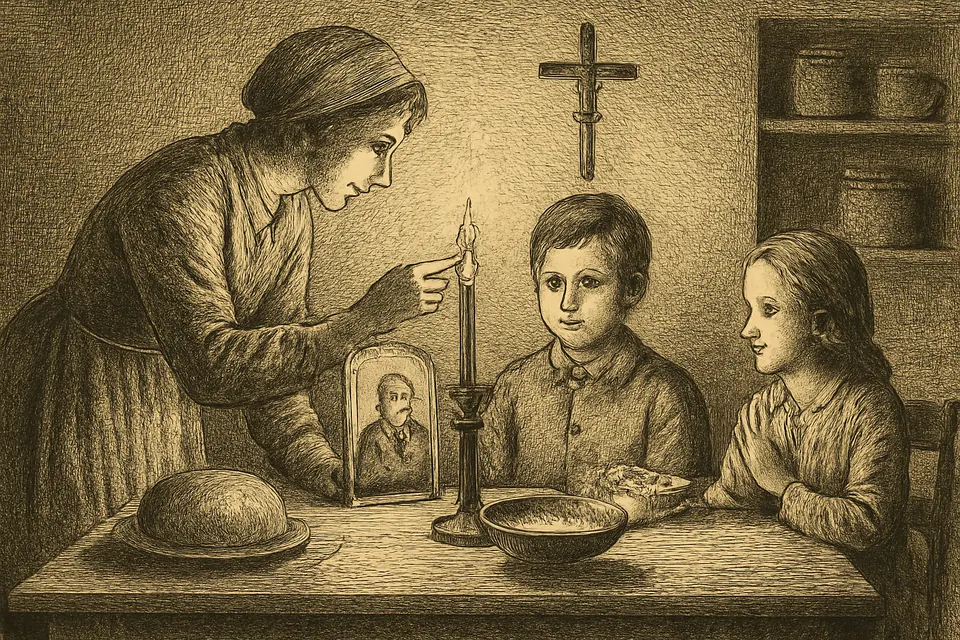
Children who grow up keeping their name day learn that the saints are real people and real friends. So let us thank God for the names he has given us, and ask the saints we are named for to pray for us, that one day we may keep their feast with them in heaven.
Frequently asked questions
What is a name day?
A name day is the feast of the saint whose name you bear, usually the saint you were named for at baptism. In many Catholic and Orthodox countries it is celebrated as much as a birthday, or more.
How do I find my name day?
Find the saint you were named for and look up that saint's feast. Our feast days calendar lists the saints day by day, and the saint of the day page shows today's. If several saints share your name, choose the one your parents had in mind, or the one you love best.
What are Greek name days?
In Greece and Cyprus nearly every Christian name is tied to a saint of the Orthodox calendar, and the name day (giorti) is a bigger celebration than a birthday. Friends call or drop by with "Chronia polla," "many years." George is kept on April 23, Constantine and Helen on May 21, Demetrios on October 26, Nicholas on December 6 and Maria on August 15.
What if my name isn't a saint's name?
You can choose a patron and keep his or her feast as your name day. A girl named Grace might keep a feast of Our Lady; a boy named Noel might keep Christmas. In Greece many families keep the Sunday of All Saints, the Sunday after Pentecost, for names with no saint.
What do you say to someone on their name day?
In English, "happy name day" or "happy feast day"; "Chronia polla" in Greek; "Wszystkiego najlepszego z okazji imienin" in Polish; "Buon onomastico" in Italian; "Feliz día de tu santo" in Spanish. A promise to pray for them is a fine gift.
Is a name day the same as a birthday?
No. A birthday marks the day you were born; a name day marks the feast of your patron saint, which for most saints is the day they died and entered heaven. They fall on the same date only when you were named for the saint of your birthday.
Sources
- Catechism of the Catholic Church, nos. 2156–2159 (the Christian name)
- Catholic Encyclopedia (1911): Christian Names. St. John Chrysostom on naming children after the saints and the lamp custom; St. Dionysius of Alexandria on children called Paul or Peter
- namedays.gr: Calculation of Easter and movable name days (Greek Orthodox). St. George's name day moves to the day after Easter when Orthodox Easter falls after April 23
- OrthodoxWiki: Name day. Orthodox customs; the open house in Greek and Romanian tradition