What saint was born on my birthday?
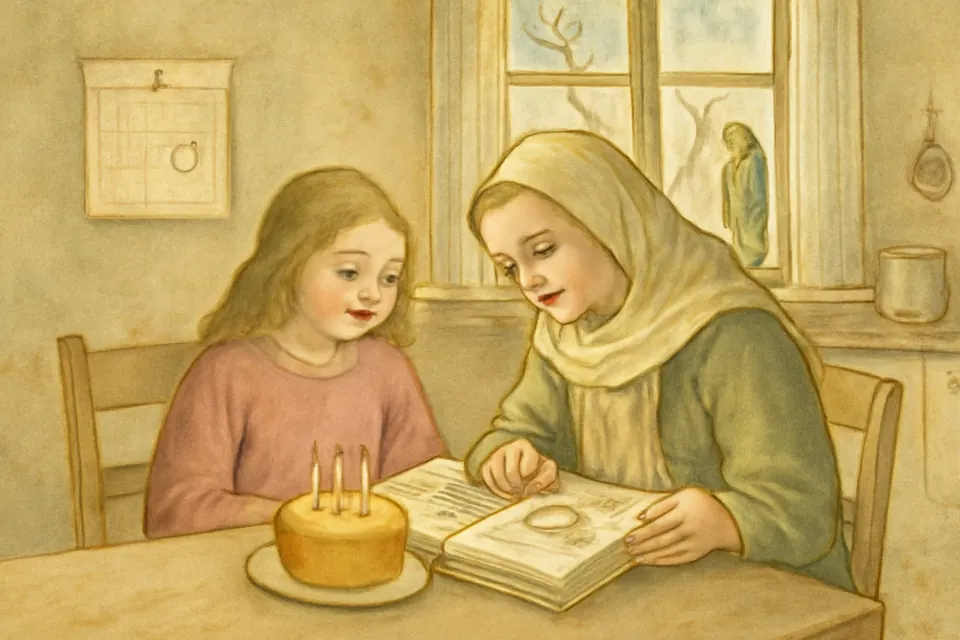
What saint was born on my birthday? Usually the question means which saint's feast falls on your birthday, because the Church keeps most saints' feasts on the day they died and entered heaven, not the day they were born. Look up your birth date on our feast days calendar: that saint is your birthday saint.
"What saint was born on my birthday?" is one of the most common questions people ask about the saints, and the answer has a small surprise in it. Most of the saints we honor on a given day were not born that day. They died that day. The Church keeps their feasts on the day they entered heaven, which the first Christians called their true birthday. So the saint of your birthday is usually the saint whose feast falls on the date you were born, and finding that saint is easy.
Feast days and birthdays: why the Church counts differently
When a family remembers a grandmother, it often keeps the day she was born. The Church, from the very beginning, kept the day her saints died.
The custom began with the martyrs. Around the year 155, the Christians of Smyrna watched their old bishop, St. Polycarp, die for the faith. Afterward they gathered his bones, "more precious than the most exquisite jewels," laid them to rest, and promised to gather there every year "to celebrate the anniversary of his martyrdom." The Greek word they used means, more literally, the birthday of his martyrdom. It is the oldest record we have of Christians keeping a saint's day.

The Latin Church used the same word, natalis, birthday. The Catholic Encyclopedia explains that "the most substantial" element in the making of the Christian calendar "is the record of the birthdays of the saints," and that the word "birthday" had come to mean simply the day of commemoration. The day a saint died was the day he was born into eternal life, and that was worth celebrating. The Roman Martyrology still announces each saint's feast this way, and the old Latin phrase dies natalis, birthday, is still used for a saint's death day.
So when you look at the calendar for your birthday, you are looking at a list of heavenly birthdays.
The three birthdays the Church celebrates
There are three exceptions, and they are the most important people in the story of our salvation.
- Our Lord Jesus Christ, whose birth we keep at Christmas, December 25.
- The Blessed Virgin Mary, whose Nativity we keep on September 8. The Catholic Encyclopedia notes that Rome took the feast from the East in the seventh century.
- St. John the Baptist, whose Nativity we keep on June 24, six months before Christmas, as Luke's Gospel suggests (Luke 1:36).
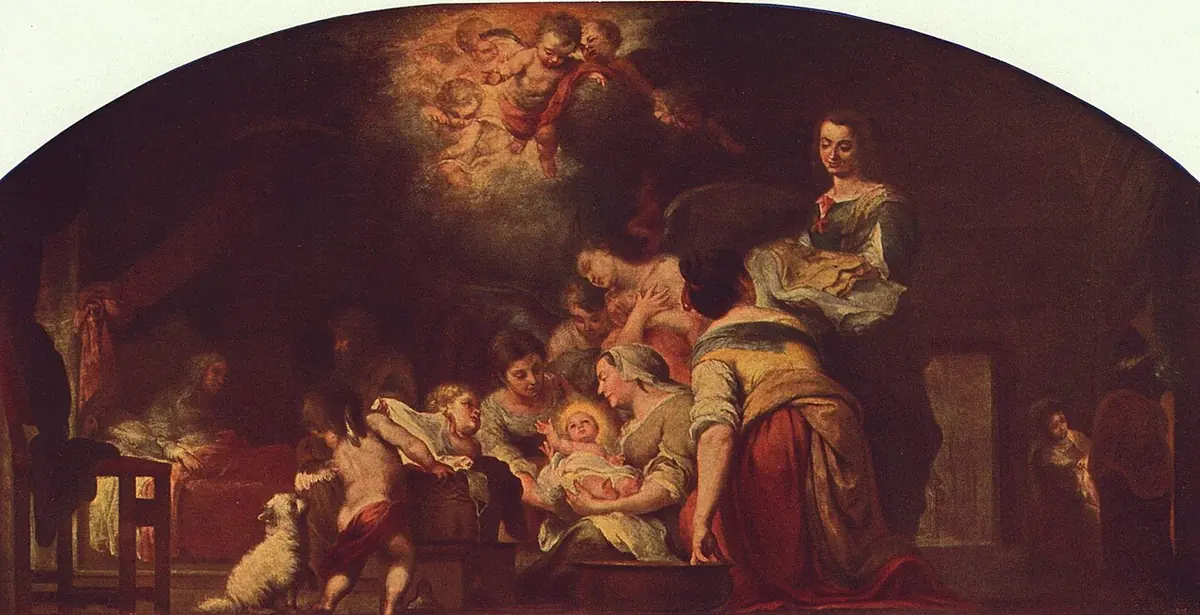
Why John the Baptist? The Catholic Encyclopedia asks the question itself: "why is the feast proper, as it were, of St. John on the day of his nativity, whereas with other saints it is the day of their death?" Because the Gospel says he was "filled with the Holy Ghost, even from his mother's womb" (Luke 1:15, Douay-Rheims), and so his birth was already holy. Mary was conceived without sin, so her birth was holy too. With these three, the Church celebrates a birthday. (John's death is remembered on August 29, the feast of his Passion.)

If you were born on September 8, the Blessed Mother shares your birthday in the fullest sense. If you were born on June 24, so did St. John the Baptist. Born on Christmas Day? You share a birthday with the Lord himself.
How to find your birthday saint
Finding the saint of your birthday takes a minute.
- Open the calendar. Our feast days calendar lists the saints month by month and day by day. Find your birth date.
- See who is there. Most days have a well-known saint on the Church's general calendar, plus others kept in particular countries, religious orders or the Eastern churches. The Roman Martyrology names several saints and martyrs for every day of the year.
- Read their stories. Our saint of the day page shows each day's saints with links to their full entries. Read about each one and see who you want to know better.
- Choose. If more than one saint shares your birthday, there is no rule about which is "yours." Many people take the best-known one; others choose the one whose life speaks to them.

A few cautions. Feast days can move: the 1969 reform of the Roman calendar shifted many saints to new dates, so a grandparent's prayer book may list someone on a different day. Orthodox churches that keep the Julian calendar celebrate the same feasts thirteen days later on the civil calendar. And some days of the year are taken by great feasts of the Lord or of Our Lady rather than by a saint. If your birthday is March 25, the Annunciation, Our Lady and the Archangel Gabriel are a fine pair of patrons.

Saints by birthday: saints who were born in each month
If you would like a saint who was truly born on or near your birthday, the saints of recent centuries are the place to look, because their birth records survive. Here are some saints and blesseds on this site, by the month they were born:
- January: St. Thérèse of Lisieux (January 2, 1873), St. Bernadette (January 7, 1844), St. Maximilian Kolbe (January 8, 1894), St. Josemaría Escrivá (January 9, 1902).
- February: St. Thomas More (February 7, 1478), St. Bartolo Longo (February 10, 1841), St. John Henry Newman (February 21, 1801).
- March: St. Aloysius Gonzaga (March 9, 1568), St. Gemma Galgani (March 12, 1878), St. Catherine of Siena (March 25, 1347), St. Teresa of Ávila (March 28, 1515).
- April: St. Pier Giorgio Frassati (April 6, 1901), St. Francis Xavier (April 7, 1506), St. Rose of Lima (April 20, 1586).
- May: St. Carlo Acutis (May 3, 1991), St. John Vianney (May 8, 1786), St. John Paul II (May 18, 1920), St. Padre Pio (May 25, 1887).
- June: St. Pius X (June 2, 1835), St. Joseph of Cupertino (June 17, 1603), St. John of the Cross (June 24, 1542).
- July: St. Frances Cabrini (July 15, 1850), St. Philip Neri (July 21, 1515), St. Giuseppe Moscati (July 25, 1880).
- August: St. André Bessette (August 9, 1845), St. John Bosco (August 16, 1815), St. Faustina (August 25, 1905), St. Teresa of Calcutta (August 26, 1910), St. Elizabeth Ann Seton (August 28, 1774).
- September: St. Charles de Foucauld (September 15, 1858), St. Paul VI (September 26, 1897), St. Alphonsus Liguori (September 27, 1696).
- October: St. Charles Borromeo (October 2, 1538), St. Gianna Molla (October 4, 1922), St. Edith Stein (October 12, 1891), St. Maria Goretti (October 16, 1890).
- November: St. Junípero Serra (November 24, 1713), St. John XXIII (November 25, 1881), St. Katharine Drexel (November 26, 1858).
- December: St. Martin de Porres (December 9, 1579), St. Anthony Mary Claret (December 23, 1807).
For the saints of the early Church and the Middle Ages, we almost never know the day of birth. We know when they died because their churches kept that day from the start.
The old custom of naming a child for the saint of the day
In Catholic countries the birthday saint was once more than a curiosity. The Catholic Encyclopedia records that "in Italy and Spain it has always been a tolerably common practice to call a child after the saint upon whose feast he is born." In Spain, Mexico and the Philippines, parents opened the santoral, the calendar of saints, on the day the baby arrived, and the saint of the day often gave the child a first or middle name. That child's birthday and name day were then the same feast.
The custom is worth reviving, even without the name. A child who knows the saint of his birthday has a friend to thank on that day.

How to celebrate your birthday saint
- Say a short prayer on your birthday morning: "St. N., pray for me this year."
- Put a holy card of your birthday saint in your wallet or by your bed.
- Read the saint's life once a year, on your birthday, and notice what you understand now that you missed before.
- If your birthday saint is not your patron saint, you may ask him or her to be one. Our guide on how to choose a patron saint explains more.
On your next birthday, then, let us thank God for the gift of life, and ask the saint whose heavenly birthday falls on our earthly one to pray that we may follow him or her home.
Frequently asked questions
What saint was born on my birthday?
Most people asking mean the saint whose feast day falls on their birthday, since feast days usually mark the day a saint died. Look up your birth date on our feast days calendar. If you want a saint who was actually born on your birthday, see the month-by-month list on this page.
Why are saints' feast days on the day they died?
Because the Church sees a holy death as a birth into eternal life. Early Christians called a martyr's death day his natalis, his birthday, and gathered at the grave every year to celebrate it.
Which saints have their birthdays celebrated?
Only three births are on the Church's universal calendar: Our Lord's at Christmas (December 25), the Blessed Virgin Mary's (September 8) and St. John the Baptist's (June 24). Every other saint is honored on the day of death or a related date.
Is my birthday saint my patron saint?
Not automatically. Your patron is usually the saint you were named for. But you are free to take your birthday saint as a patron, and in Spain, Italy and Latin America children were often named for the saint of their birthday, which made the two the same.
What if there are several saints on my birthday?
There almost always are. The Roman Martyrology lists several saints for every day of the year. Read about each one and choose the saint who speaks to you; you can honor more than one.
Sources
- Catholic Encyclopedia (1908): Christian Calendar. The "birthdays" (natales) of the saints as the basis of the calendar; birthday "had come to mean little more than commemoration"
- The Martyrdom of Polycarp, ch. 18 (New Advent translation). Christians of Smyrna plan to keep the anniversary of the bishop's martyrdom at his grave
- Catholic Encyclopedia (1910): St. John the Baptist. Why his feast is kept on his nativity, "whereas with other saints it is the day of their death"
- Catholic Encyclopedia (1911): Feast of the Nativity of the Blessed Virgin Mary
- Catholic Encyclopedia (1911): Christian Names. Italy and Spain, naming a child "after the saint upon whose feast he is born"