Patron saint of jobs and job seekers

The patron saint of jobs is St. Joseph the Worker, the carpenter of Nazareth, whose feast Pope Pius XII set on May 1 in 1955. The patron saint of job seekers and the unemployed is St. Cajetan, honored above all in Argentina as the saint of "bread and work." Many people looking for work ask the prayers of both.
Patron saints of jobs and job seekers
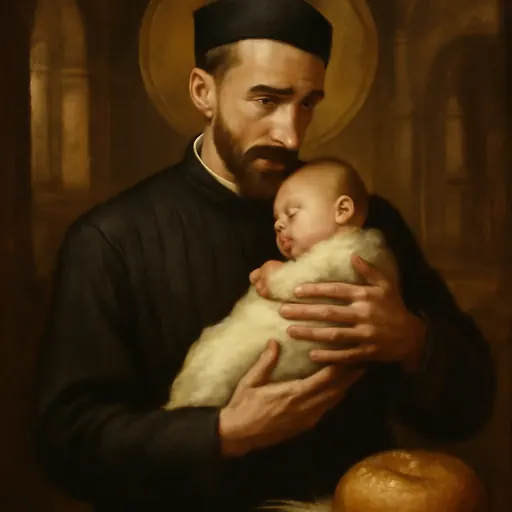 St. Cajetan
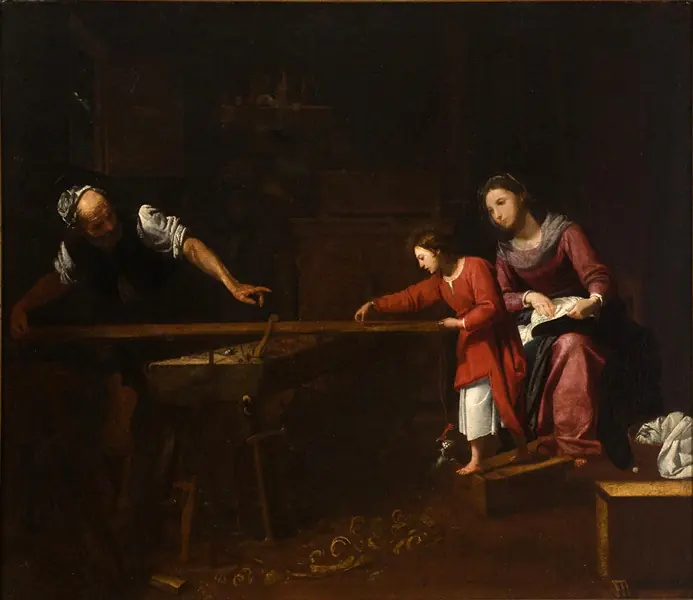
 St. Joseph
Losing a job, or not finding one, can feel like losing a piece of yourself. The bills keep coming, the days lose their shape, and every unanswered application stings. The Church has two patrons for this trial. One worked with his hands all his life to feed his family. The other built his whole life on trusting God for the next day's bread.
St. Joseph the Worker, the patron saint of jobs
St. Joseph earned his family's living as a tekton, the Greek word the Gospels use for a carpenter or builder in wood and stone. The people of Nazareth knew Jesus as "the carpenter's son," which means the Son of God grew up at a workbench, learning a trade from Joseph. St. John Paul II wrote in Redemptoris Custos (1989): "Work was the daily expression of love in the life of the Family of Nazareth." He went on: "Along with the humanity of the Son of God, work too has been taken up in the mystery of the Incarnation, and has also been redeemed in a special way."

The feast of May 1
In the twentieth century, May 1 had become the workers' holiday in much of the world, often with a strong anti-religious edge. Pius XII answered by giving that day to Joseph. On May 1, 1955, in St. Peter's Square, he spoke to the Christian Workers' Associations of Italy (ACLI) on the tenth anniversary of their founding, recalled that he had placed them under St. Joseph's protection from the start, and announced that he was instituting the liturgical feast of St. Joseph the Worker on that very day. The humble artisan of Nazareth, he told them, personifies before God and the Church the dignity of those who work with their hands, and is always the provident guardian of workers and their families. The feast is kept on May 1 to this day, an optional memorial in the Roman calendar.
So when we ask St. Joseph for work, we are asking a man who knew what it was to have a family depending on his hands. He knew uncertain times too: the Gospels show him uprooted twice, to Bethlehem for the census and into Egypt as a refugee, where he had to find work again in a foreign land.
St. Cajetan, the patron saint of job seekers
St. Cajetan (1480–1547) was a priest from Vicenza who gave up a career at the papal court and in 1524 founded the Theatines, priests who would own nothing and not even beg. They lived on whatever Providence sent. When Rome was sacked in 1527, the Catholic Encyclopedia records, the twelve Theatines of the city escaped to Venice "after enduring many outrages," with nothing to their name but their trust in God.
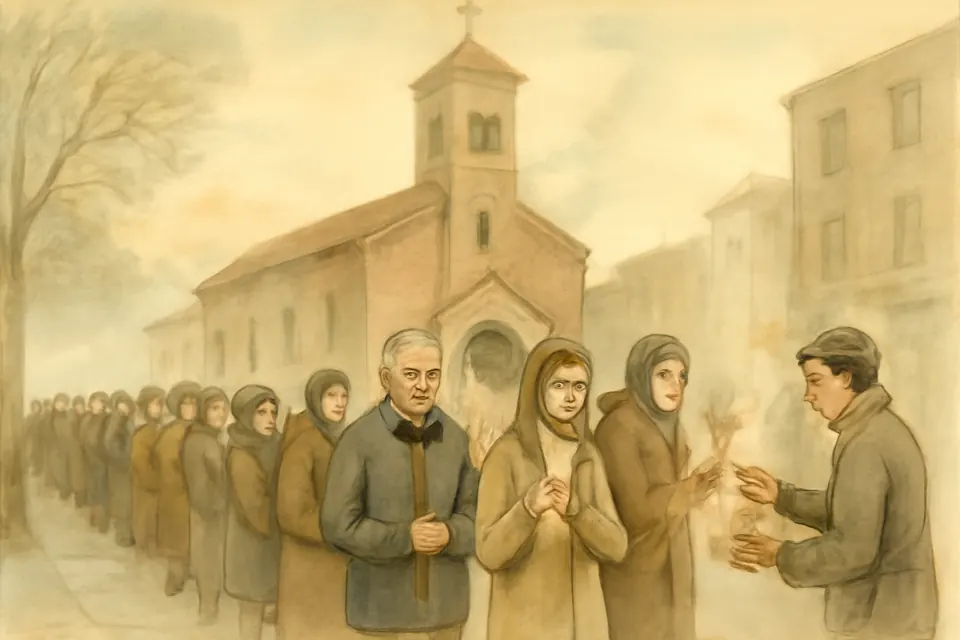
From his rule of absolute trust grew his patronage of the unemployed and of all who don't know where the next day's bread will come from. Today it is strongest in Argentina, where San Cayetano is the saint of pan y trabajo, bread and work. His shrine in Liniers, a neighborhood of Buenos Aires, draws enormous crowds every August 7. Pilgrims wait in line through the night, many holding a sprig of wheat, the sign of bread.
Pope Francis, who as archbishop of Buenos Aires celebrated the feast with these pilgrims, wrote to the Argentine bishops in 2016: "on this feast of San Cajetan, may all the Bishops find ways to accompany our brothers and sisters, who ask for bread and work." Jobs found after praying to Cajetan are reported in countless family stories; none has been formally examined.
Other saints for work and workers
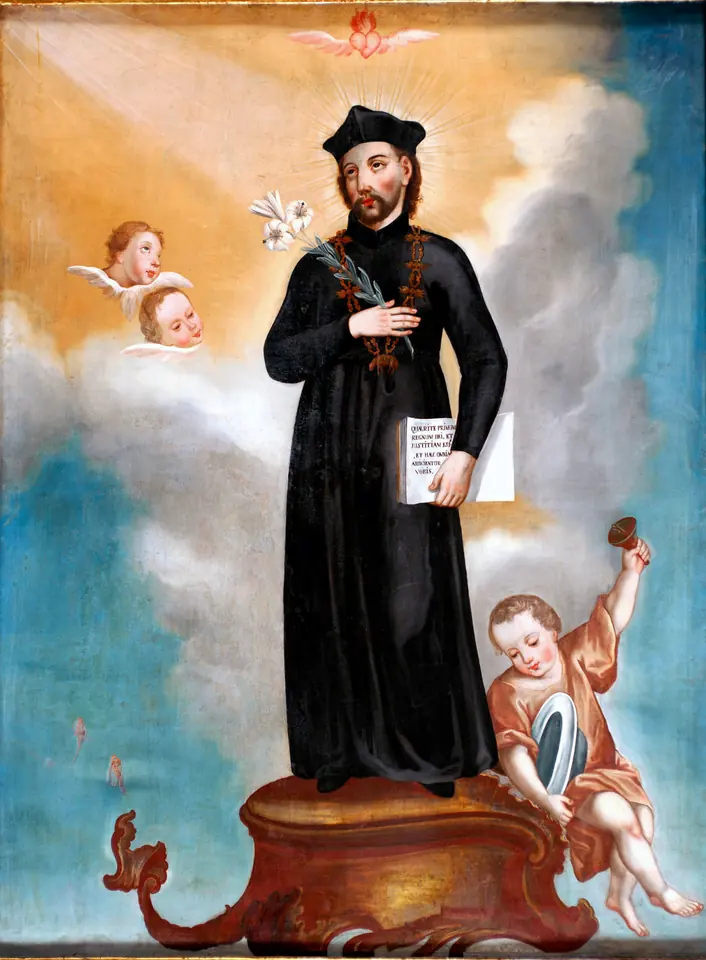
- St. Isidore the Farmer, a day laborer outside Madrid who never missed morning Mass, is the patron of farmers and day laborers.
- Nearly every trade has its own patron, from St. Eligius for metalworkers to St. Crispin for shoemakers. Our patron saints page lists them, and you can ask the patron of the work you hope to do.
Prayer to St. Joseph for work
This is the prayer Catholics most often use while looking for work. The text is from The Young Man's Guide (Benziger, 1910), which records an indulgence granted by Pius X on November 25, 1906:
O glorious St. Joseph! model of all those who are devoted to labor, obtain for me the grace to work in a spirit of penance for the expiation of my many sins; to work conscientiously, setting devotion to duty above my own inclinations; to work with thankfulness and joy, considering it an honor to employ and develop by work the gifts received from God; to work with order, peace, moderation, and patience, never shrinking from weariness and trials; to work especially with pure intention and detachment from self, keeping unceasingly before my eyes death and the account I must give of time lost, talents unused, good omitted, and vain complacency in success, so fatal to the work of God. All for Jesus, all through Mary, all in imitation of thee, O Patriarch Joseph; such shall be my motto in life and in death. Amen.
Notice what it asks for. Not just a paycheck, but the grace to work well once the work comes. More St. Joseph prayers, including his litany, are on our St. Joseph prayer page.
Scripture gives us a short prayer for any morning of job hunting, from Psalm 89:17 in the Douay-Rheims: "direct thou the works of our hands over us; yea, the work of our hands do thou direct."
Let us ask St. Joseph and St. Cajetan to pray for everyone sending out applications today, for those waiting by the phone after an interview, and for the families who depend on them. St. Joseph the Worker, pray for us. St. Cajetan, pray for us.
Frequently asked questions
Who is the patron saint of jobs?
St. Joseph, the carpenter of Nazareth and the patron of workers. Pope Pius XII gave the Church the feast of St. Joseph the Worker on May 1, 1955. People looking for work also turn to St. Cajetan, the patron saint of job seekers and the unemployed.
Who is the patron saint of job seekers?
St. Cajetan (1480–1547), the Italian founder of the Theatines. He is the saint of "bread and work," and every August 7 crowds visit his shrine in Liniers, Buenos Aires, to pray for jobs.
Who is the patron saint of the unemployed?
St. Cajetan. His priests were forbidden to beg or hold income and lived on what Providence sent, so he became the model of trusting God for daily bread.
What is the prayer to St. Joseph for work?
The traditional one begins "O glorious St. Joseph! model of all those who are devoted to labor." Pope Pius X attached an indulgence to it in 1906. The full text is on this page.
When is the feast of St. Joseph the Worker?
May 1. St. Joseph's main feast, the solemnity of St. Joseph, Husband of Mary, is March 19. St. Cajetan's feast is August 7.
Is there a novena for finding a job?
Many Catholics pray a novena to St. Joseph or to St. Cajetan while looking for work, nine days of the same prayer offered with trust. Our St. Joseph novena page has the traditional form.
Sources
- Pius XII, address to the Christian Workers' Associations (ACLI) on the feast of St. Joseph the Worker, May 1, 1955
- John Paul II, Redemptoris Custos (1989)
- The Young Man's Guide (Benziger, 1910), prayer to St. Joseph for work
- Catholic Encyclopedia (1908): St. Cajetan
- Vatican Radio: Pope Francis's message to the Argentine bishops on the feast of San Cayetano (2016)
- Psalm 89, Douay-Rheims (Bible Gateway)