St. Xenia of Saint Petersburg, Fool for Christ

St. Xenia of Saint Petersburg was an 18th-century Russian widow who gave away everything and spent about 45 years as a homeless fool for Christ on the city's streets, praying and helping the poor. The Orthodox Church honors her as a wonderworker, invoked by people looking for work, a home or a spouse. Her feast is February 6.
Who was St. Xenia of Saint Petersburg?
St. Xenia of Saint Petersburg was a young widow of the 18th century who, after her husband died without the sacraments, gave away her house and everything she owned and spent the rest of her life, about forty-five years, as a homeless fool for Christ in the poorer streets of the Russian capital. She prayed through the nights in an open field, gave away whatever small coins people pressed on her, and was mocked as a madwoman before the city came to love her as one who "does not belong to this world, she belongs to God." She is one of the best-loved saints of the Russian Orthodox Church, and she is honored by Eastern Christians all over the world.
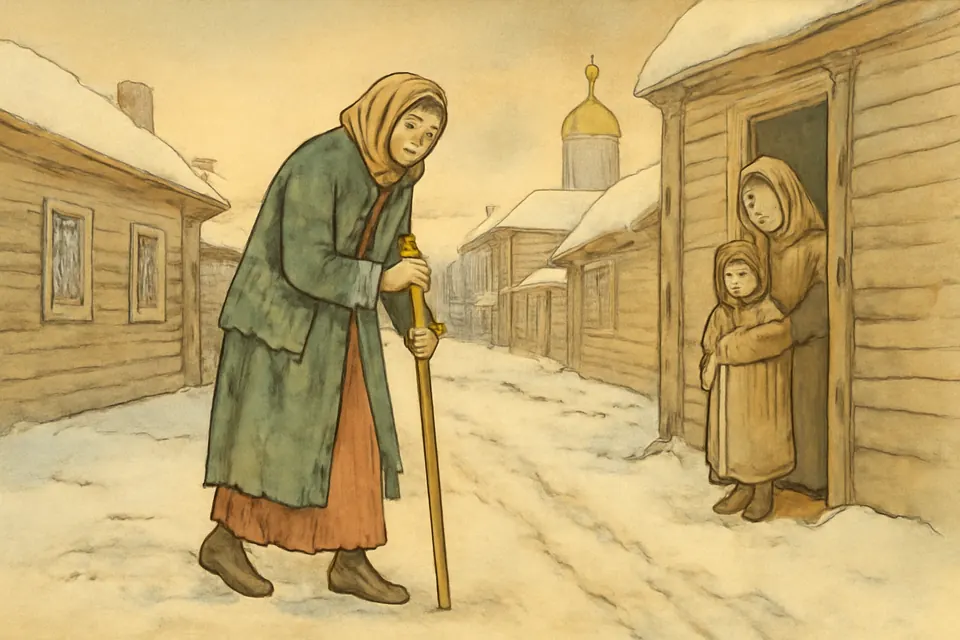
Little is documented about her. The Orthodox Church in America says plainly that "little is known of her life or of her family." What we have is the memory of the city, gathered and written down in the 19th century, and the testimony of the crowds who have prayed at her grave ever since.
The life of St. Xenia
A wife and a sudden death
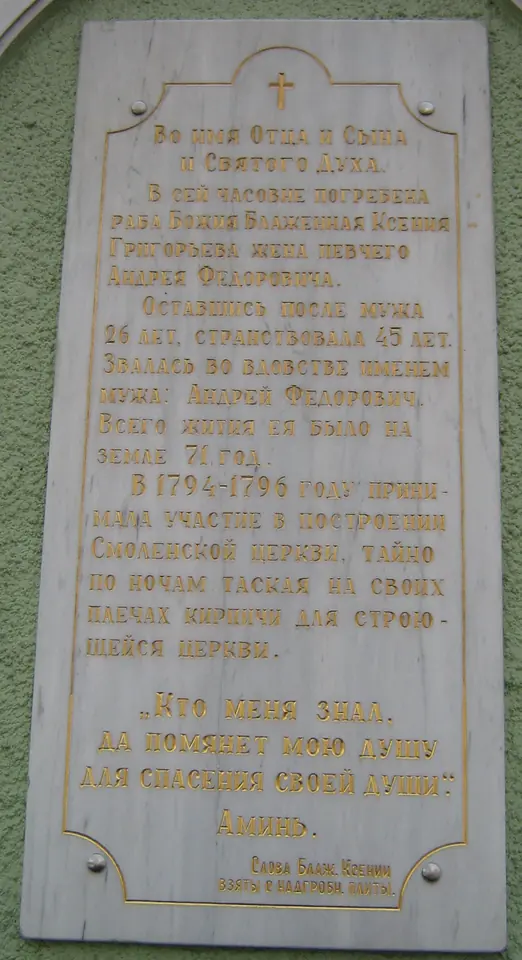
Xenia Grigorievna was married to Andrei Feodorovich Petrov. The Orthodox Church in America calls him an army officer; the marble plaque on her chapel calls him a court singer. They lived in Saint Petersburg in the reign of Empress Elizabeth. When Xenia was twenty-six, Andrei died suddenly at a party, without confession or Holy Communion. Her grief was double: she had lost her husband, and she feared for his soul.
Becoming "Andrei Feodorovich"
From that day she changed her whole life. She put on her husband's uniform and asked to be called by his name, Andrei Feodorovich, saying that it was Xenia who had died. In a sense that was true. She gave her house and belongings to the poor. Her relatives complained to the authorities, but the officials who questioned her found her of sound mind and free to dispose of her property.
When the uniform, red and green, wore out, she dressed in rags of the same colors. Then she disappeared from Petersburg for eight years. Tradition holds that she visited holy elders across Russia. The OCA suggests she may have known St. Theodore of Sanaxar, a former officer whose own conversion followed the death of a young officer at a drinking party; perhaps, it adds, that officer was her husband.

The bricks for the Smolensk church
Back in the poor quarter of the city, she slept little, spending her nights in a field outside town in prayer, in every season. When a stone church dedicated to the Smolensk icon of the Mother of God was being built in the city cemetery, workmen found each morning that bricks had been carried up the scaffolding overnight. It was Xenia, carrying them on her shoulders in secret. The plaque on her chapel dates this to 1794 to 1796.

Loved by the city
Slowly people saw what she was. The OCA says she foretold events in the lives of Petersburg's citizens and even the royal family. People counted it a blessing when she came into their homes or shops, and mothers were glad when she stopped to pray over a baby's cradle or kissed a child. She died at seventy-one, at a date no one recorded, and was buried in the Smolensk cemetery, south of the church she had helped to build.
Miracles of St. Xenia
- Foresight: traditional. Stories of her prophecies, such as foretelling the death of Empress Elizabeth, were told in the city and written down long after her death.
- The earth from her grave: reported. From the 1820s so many pilgrims took a handful of earth from her grave, asking for healing, that it had to be renewed every year. A marker stone was broken up and carried away piece by piece, then a second one, according to the Orthodox magazine Foma.
- Help in daily needs: reported. Countless people tell of finding work, a home, a spouse or healing after asking her prayers. The Russian Church glorified her on the strength of this long, living devotion.
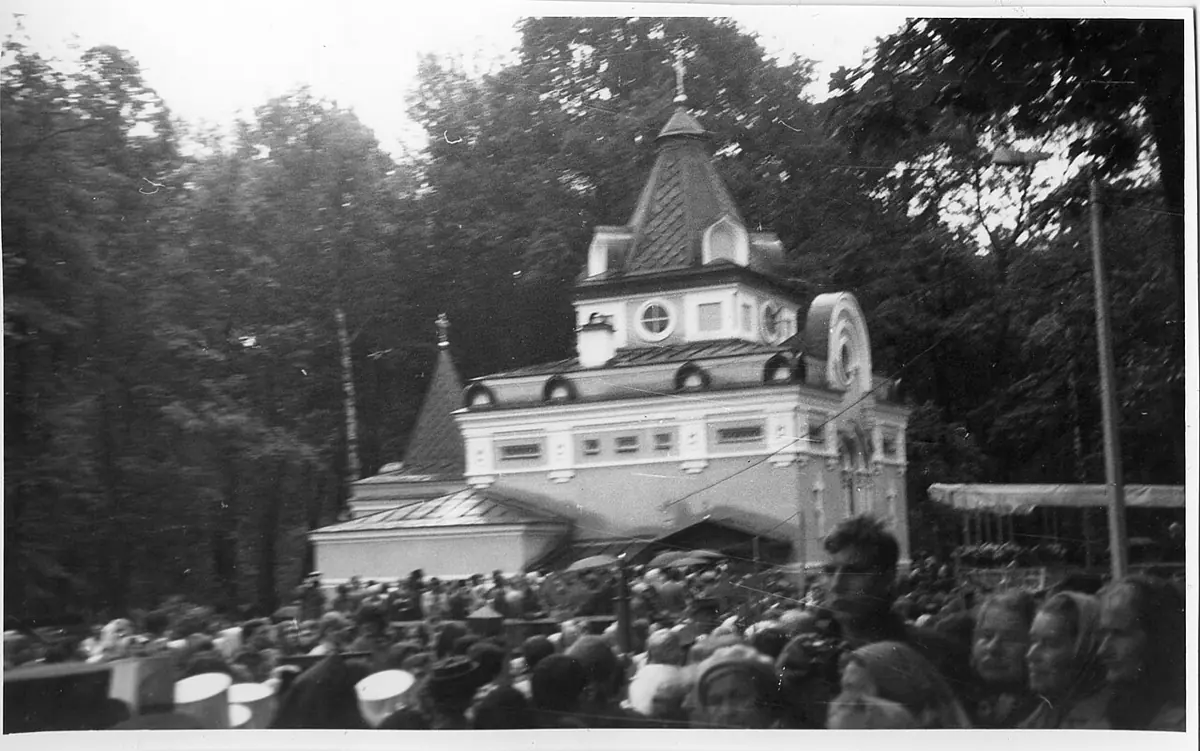
Why St. Xenia is the patron of job seekers and the homeless
She lived without a roof for decades, so the homeless see her as their own. She was a widow who grieved deeply for her husband. Above all, the Orthodox Church in America notes that "she is also known for helping people who seek jobs," and that is how most of her clients come to her now: people out of work, students waiting on results, families in need of a home, young women praying for a good husband. She is the protector of her city, Saint Petersburg. See more on our patron saints page.
Symbols of St. Xenia in art
Icons of St. Xenia are easy to recognize:
- Green coat and red skirt: the colors of her husband's uniform, which she wore until it fell to rags.
- Walking staff: the wanderer who had no home.
- Head scarf: a simple Russian peasant headdress.
- A small church in the background: the Smolensk church she helped build with her bricks.
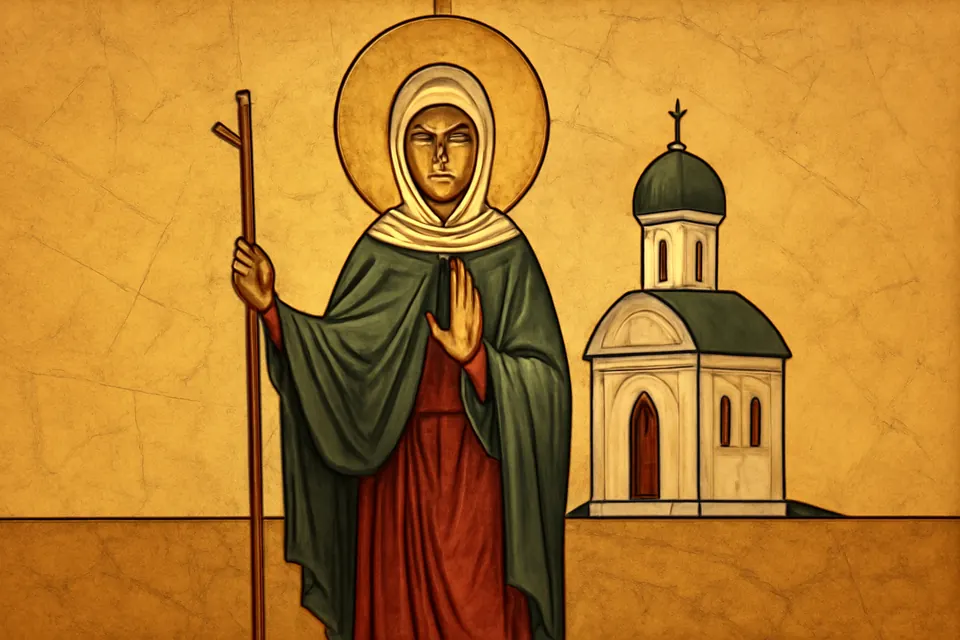
Older icons show her half-length. Newer ones often show her standing full-length in the streets or the cemetery of Petersburg.
Her chapel and feast day
A small chapel was first built over her grave in the 19th century. The present one, in a Russian-Byzantine style, was designed by the architect Alexander Vseslavin and consecrated in October 1902. Soviet authorities closed it in 1940 and again in 1962, using it as a sculptor's workshop. It was returned to the Church in 1983 and reconsecrated on August 10, 1987, by Metropolitan Alexy of Leningrad, the future Patriarch Alexy II.
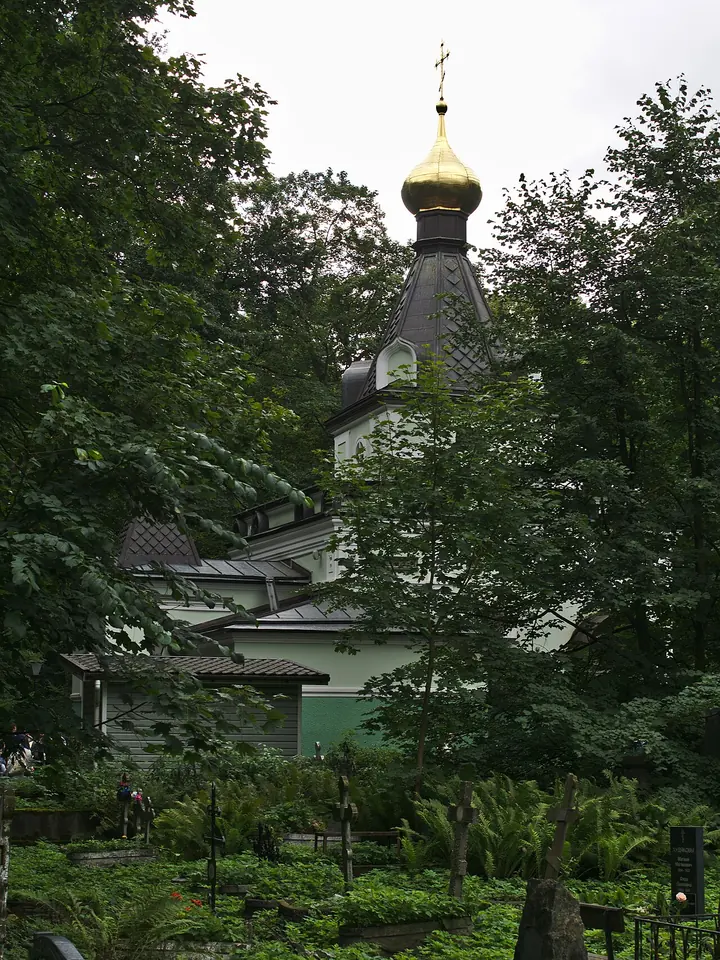
The marble plaque on its wall records her life and ends with her words, as tradition has kept them, here in our translation: "Whoever knew me, let him remember my soul, for the salvation of his own soul."
The Russian Orthodox Church Outside of Russia glorified her on September 24, 1978, in New York. The Russian Church in the homeland followed at its Local Council in June 1988. We keep her feast on February 6, which is January 24 on the Julian calendar. See the saints around her on our feast days page.

Prayer to St. Xenia of Saint Petersburg
The Church sings her troparion, the short hymn for her feast, which can be prayed at any time. It praises her as a stranger in this world who outwitted the evil one through her holy foolishness and received the gift of foreseeing things to come; the OCA prints the full text on its website.
Let us ask her, in her own simple way, to remember us: for those looking for work, for the homeless, for widows, and for anyone who has lost someone suddenly. Holy Xenia, pray to God for us.
Frequently asked questions
What is St. Xenia of Saint Petersburg the patron saint of?
Of her city, Saint Petersburg, and of people in need of the ordinary things of life. The Orthodox Church in America notes that she is known for helping people who seek jobs, and she is also invoked by the homeless, by widows and by young women hoping to marry.
When is the feast of St. Xenia?
January 24 on the Julian calendar, which is February 6 on the civil calendar. That is when the Russian Orthodox Church celebrates her. Orthodox churches that follow the Revised Julian calendar, like the Orthodox Church in America, keep her on January 24.
What does "fool for Christ" mean?
A holy fool is someone who takes on the appearance of madness for the sake of Christ, giving up home, reputation and comfort so as to live for God alone. The way of life is rooted in St. Paul's words that "the foolishness of God is wiser than men" (1 Corinthians 1:25, Douay-Rheims). Russia has honored many holy fools, such as St. Basil of Moscow.
When was St. Xenia canonized?
The Russian Orthodox Church Outside of Russia glorified her in New York on September 24, 1978. The Russian Orthodox Church in Russia did so at its Local Council in June 1988, during the celebrations of the millennium of the baptism of Rus'.
Keep exploring
- Patron saint pages
- Jobs and job seekers
- Appears in
- Female saintsSaint names for girls
- Feast-day calendar
- Saints remembered in FebruarySaint of the dayWhat saint is my birthday?
- Relics
- Where the relics are kept (map)
- More
- Saints A to ZPatron saints A to ZExplore every section
Sources
- Orthodox Church in America: Blessed Xenia of St. Petersburg (Lives of the Saints, January 24). Her widowhood at 26, the 45 years of foolishness, the bricks, St. Theodore of Sanaxar, earth taken from her grave from the 1820s, help for job seekers
- Orthodox Church in America: Blessed Xenia of St. Petersburg, Troparion and Kontakion
- Foma: Часовня блаженной Ксении (The Chapel of Blessed Xenia). The Smolensk church begun in 1794, the 1902 chapel by Alexander Vseslavin, closures in 1940 and 1962, its return in 1983 and reconsecration on August 10, 1987, canonization in 1988
- Pravmir: The 35th Anniversary of the Canonization of St Xenia the Blessed (2013). Glorification by the Russian Orthodox Church Outside of Russia in 1978, led by Metropolitan Philaret