The Lord bless you and keep you
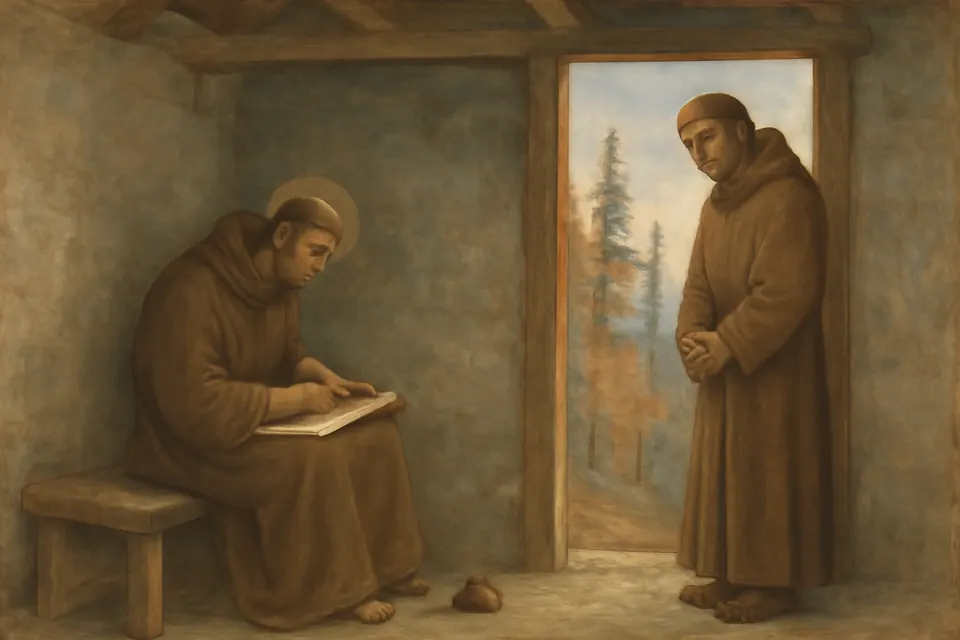
"The Lord bless you and keep you" is the first line of the priestly blessing God gave to Aaron in Numbers 6:24-26. The Church reads it at Mass every New Year's Day and uses it as a solemn blessing. St. Francis of Assisi wrote it out by hand for Brother Leo in 1224, and that parchment survives in Assisi.
"The Lord bless you and keep you" are the first words of the oldest blessing in the Bible that is still prayed every day. God gave it to Aaron and his sons, the priests of Israel, and told them exactly what to say over his people. The Church reads it to us at Mass on the first day of every year, and St. Francis of Assisi loved it enough to write it out with his own wounded hands for a friend in trouble. Here it is in full, with its history and some simple ways to pray it.
The Lord bless you and keep you: the priestly blessing
This is the passage from the Book of Numbers in the Douay-Rheims Bible, the classic English Catholic translation of the Latin Vulgate:
And the Lord spoke to Moses, saying: Say to Aaron and his sons: Thus shall you bless the children of Israel, and you shall say to them: The Lord bless thee, and keep thee. The Lord shew his face to thee, and have mercy on thee. The Lord turn his countenance to thee, and give thee peace. And they shall invoke my name upon the children of Israel, and I will bless them.
(Numbers 6:22-27)
Most of us know it in modern words: "The Lord bless you and keep you. The Lord make his face shine upon you and be gracious to you. The Lord lift up his countenance upon you and give you peace." The modern versions follow the Hebrew more closely; the Douay-Rheims follows St. Jerome's Latin. The meaning is the same.
In Latin
St. Jerome's Vulgate, the Bible of the Latin Church for more than a thousand years, renders the three lines this way:
Benedicat tibi Dominus, et custodiat te. Ostendat Dominus faciem suam tibi, et misereatur tui. Convertat Dominus vultum suum ad te, et det tibi pacem.
This is the Latin St. Francis knew, and the text he copied for Brother Leo follows it almost word for word.
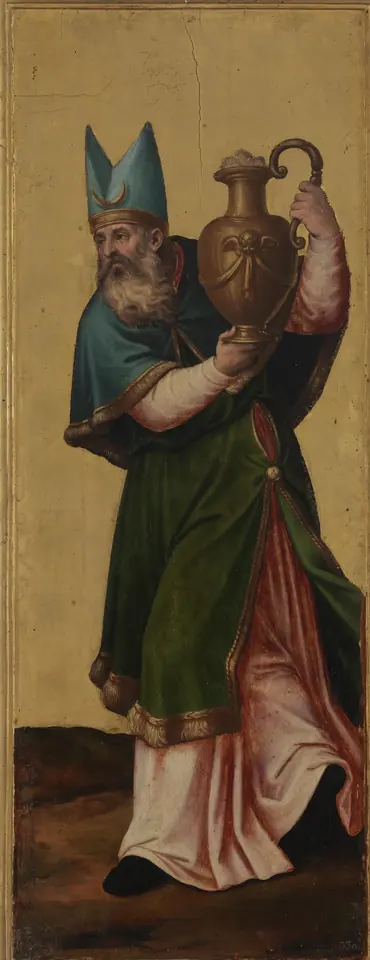
What the blessing means, line by line
The blessing has three lines, and each one begins with the holy name of God. In the Hebrew the lines grow longer as they go, from three words to five to seven. The Jewish Encyclopedia notes that synagogue chant draws out "each of the fifteen words of the benediction." The shape is part of the prayer: it opens like a door.
"The Lord bless thee, and keep thee." To bless is to give life and good things; to keep is to guard them. The first line asks God for what we need and for protection over it, the way a shepherd keeps his flock.
"The Lord shew his face to thee, and have mercy on thee." In Scripture, God's face turned toward someone means his favor and his presence. When he hides his face, his people are lost (Psalm 29:8 in the Douay-Rheims: "Thou turnedst away thy face from me, and I became troubled"). To ask that he show his face is to ask for the one thing the psalmists wanted most.
"The Lord turn his countenance to thee, and give thee peace." The last line ends on shalom, peace, which in Hebrew means far more than quiet. It is wholeness, everything as God meant it to be. The whole blessing climbs toward that word.
Then comes God's own promise, and it is the heart of the passage: "they shall invoke my name upon the children of Israel, and I will bless them." The priests speak, but God blesses. A blessing is not a wish; it is God's name placed on his people.
The Lord is named three times, and Christians have long heard in this a quiet foreshadowing of the Holy Trinity. We don't need to press the point to feel it when we pray the words: Father, Son and Holy Spirit bless us, keep us, look on us and give us peace.
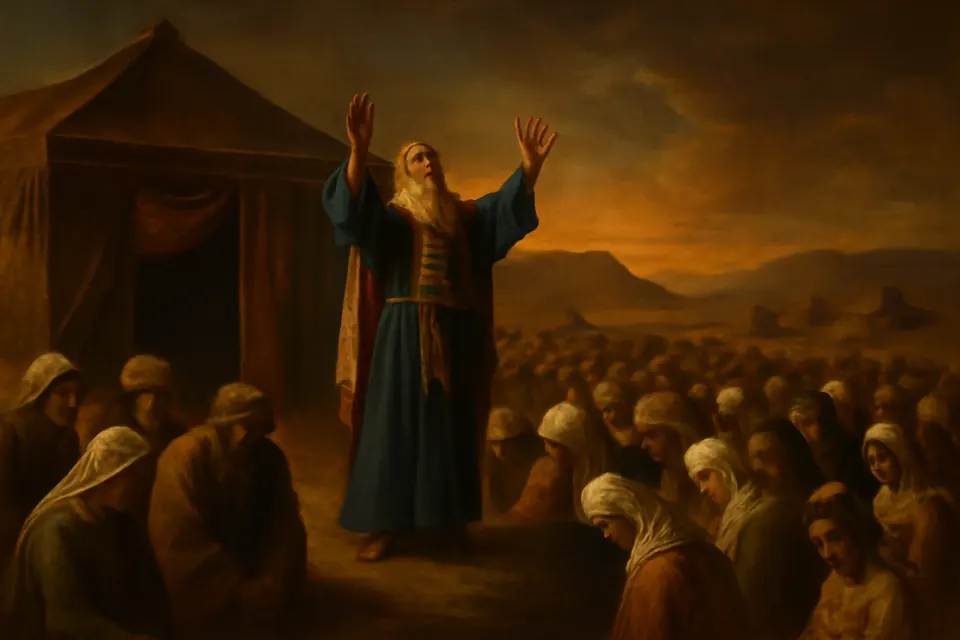
The Hebrew background: the Birkat Kohanim
In Hebrew the blessing is called the Birkat Kohanim, the blessing of the priests. In the Temple in Jerusalem the priests gave it from the steps after the daily sacrifice. The Jewish Encyclopedia records that in the Temple they "raised their hands above their heads" and spoke the divine name as it is written, while outside the Temple they raised their hands only to their shoulders and said Adonai, "Lord," instead. The people were not to look at the priests while the blessing was spoken, so that nothing would distract them from the God who was blessing them.
The Bible gives us a picture of that moment. The Book of Ecclesiasticus describes the high priest Simon, son of Onias, finishing the Temple service: "Then coming down, he lifted up his hands over all the congregation of the children of Israel, to give glory to God with his lips, and to glory in his name" (Ecclesiasticus 50:22).
Jewish priests of Aaron's line, the kohanim, still give the blessing in synagogues today, with their prayer shawls over their heads and their fingers spread in a particular way. It is one of the most moving things a Christian can witness: words that have not changed in three thousand years, prayed by the descendants of the men who first received them.
The Christian story carries the gesture on. St. Luke ends his Gospel with Jesus leading the apostles out to Bethany: "and lifting up his hands, he blessed them" (Luke 24:50). It is the last thing he does before he ascends, and it is the gesture of a priest.
The oldest Bible verse ever found
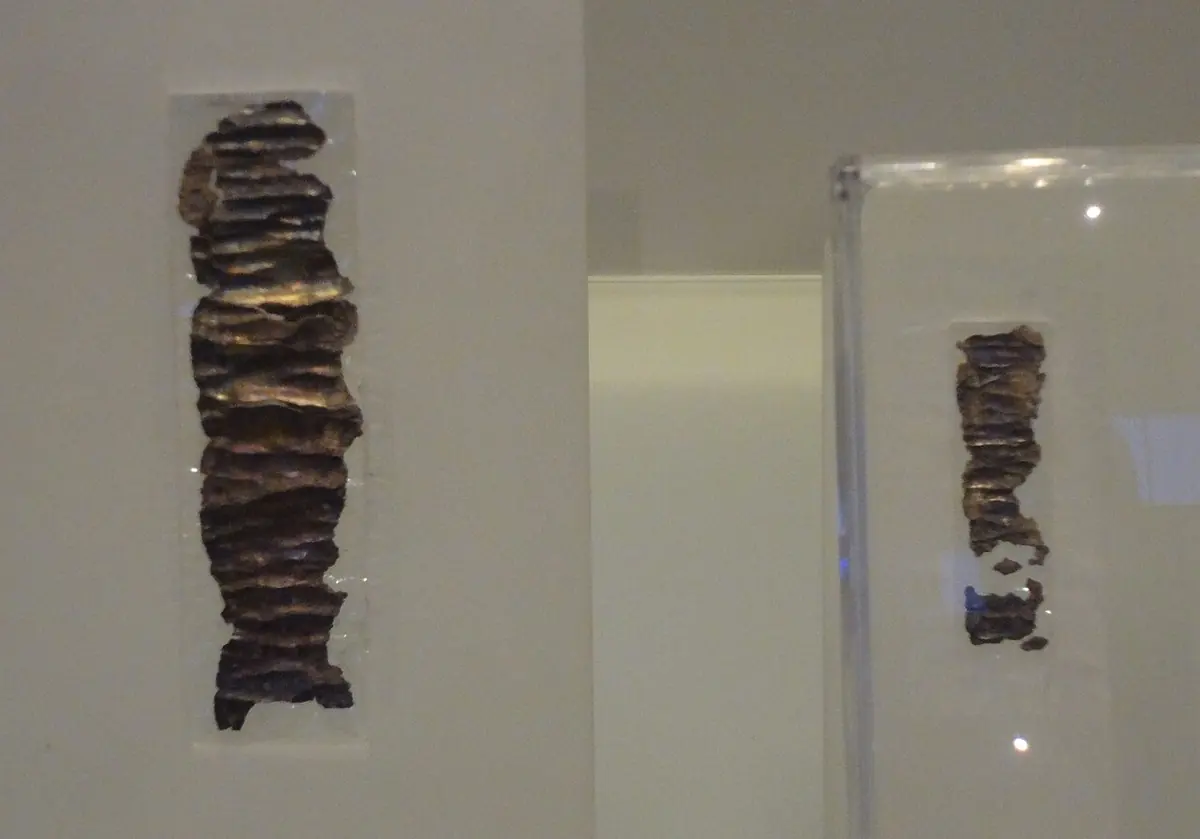
In 1979 the archaeologist Gabriel Barkay was excavating burial caves at Ketef Hinnom, just outside the walls of Jerusalem's Old City, when his team found two tiny rolled-up strips of silver. They were amulets, meant to be worn around the neck. When conservators unrolled them, they found the priestly blessing scratched into the metal.
The Center for Online Judaic Studies dates the scrolls to around 600 BC, "hundreds of years before the oldest known copy of any biblical manuscript," including the Dead Sea Scrolls. Scholars still discuss the exact date, and whether the amulets quote Numbers or the blessing was a well-known prayer in its own right before it was written down there. Either way, these are the oldest surviving words of Scripture, and they are the words of this blessing. Someone in Jerusalem, before the Babylonian exile, wanted to carry them close to the heart.
The priestly blessing in the Catholic liturgy
The Church has kept this blessing at the center of her own prayer.
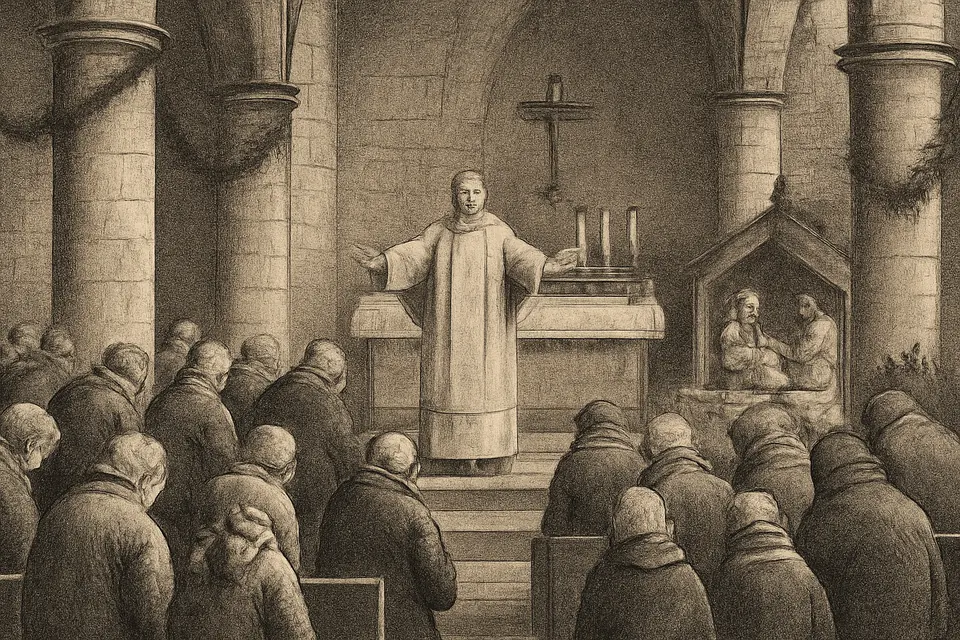
- January 1, the Solemnity of Mary, Mother of God. Every year the first reading at Mass is Numbers 6:22-27. Pope Leo XIV opened his homily on January 1, 2026, with it, noting that "at the beginning of the new civil year, the Liturgy offers us the text of a beautiful blessing." The Church begins each year by asking God to show us his face, on the day she honors the Mother who first looked on the face of God made man. The 2027 date and readings are on our page for Mary, Mother of God 2027.
- The solemn blessing at Mass. The Roman Missal gives a set of solemn blessings a priest may use at the end of Mass, with the people answering "Amen" after each part. The first of the blessings for Ordinary Time is the priestly blessing of Numbers 6, divided into its three lines. The English wording belongs to the official translation of the Missal, so we don't reprint it here, but you will recognize it when you hear it.
- Other blessings. Priests and deacons often use it at weddings, at the end of retreats and over the sick, and many religious communities sing it.
For a prayer of our own at the turn of the year, see our New Year prayer.
The Blessing of St. Francis for Brother Leo
The most famous Christian copy of this blessing is a small, crumpled piece of parchment in the hand of St. Francis of Assisi.
La Verna, 1224
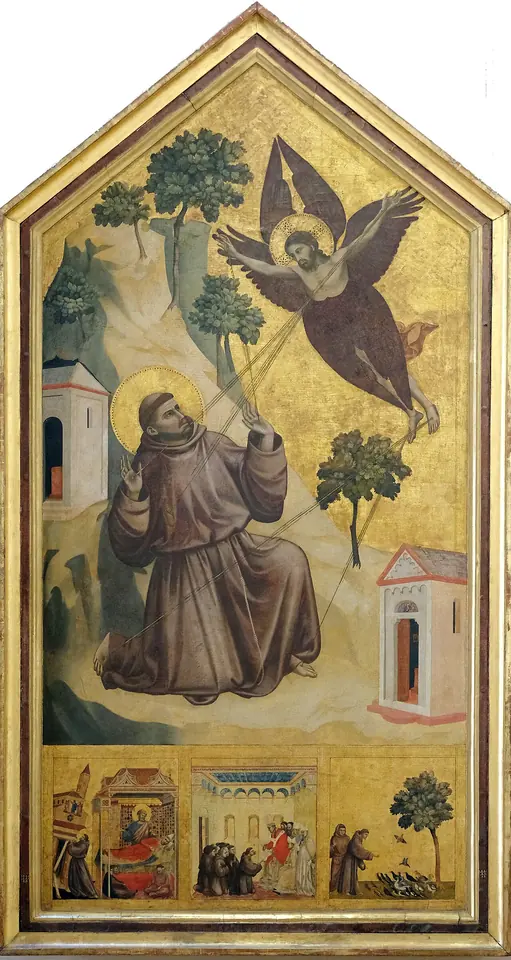
In the late summer of 1224, two years before his death, Francis went up Mount La Verna in Tuscany with a few companions to keep a forty-day fast in honor of the Virgin Mary and St. Michael. Brother Leo, his confessor and secretary, was with him. Around the feast of the Holy Cross on September 14, Francis saw a seraph in the form of the Crucified and received the wounds of Christ in his hands, feet and side. The story is on our page about the stigmata.
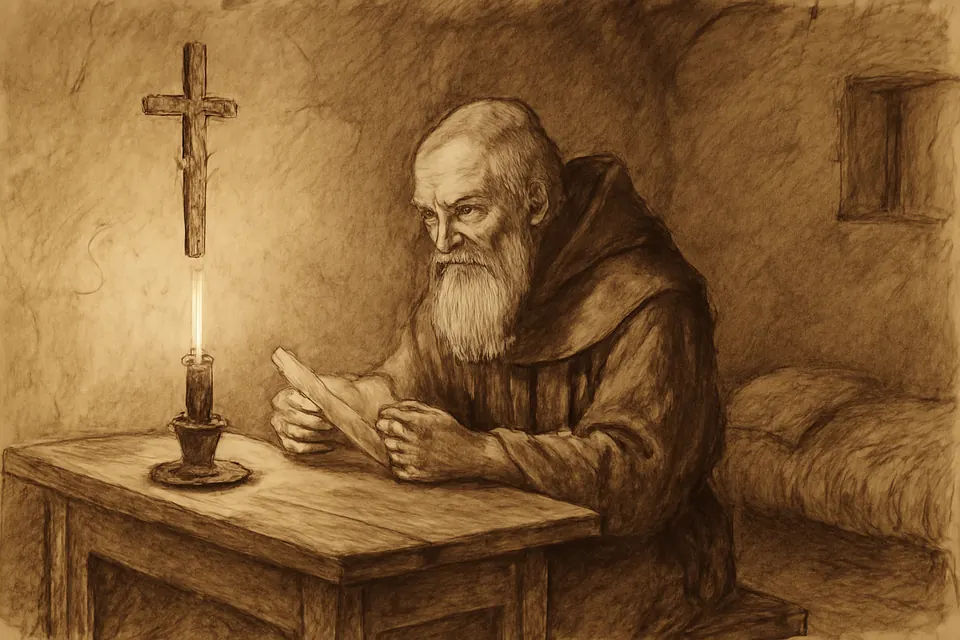
Leo was struggling in those weeks. Brother Thomas of Celano, writing his Second Life of Francis around 1247, says that one of the companions, troubled by a temptation of the spirit, longed to have "some memorial from words of the Lord written by the hand of St. Francis." One day Francis called him and said, in Paschal Robinson's 1906 translation, "Bring me paper and ink, for I wish to write the words of God and His praises which I have been meditating in my heart." He wrote, gave Leo the sheet and told him: "Take this sheet for thyself and until the day of thy death guard it carefully." Celano adds that the temptation left Leo at once.
What is written on the chartula
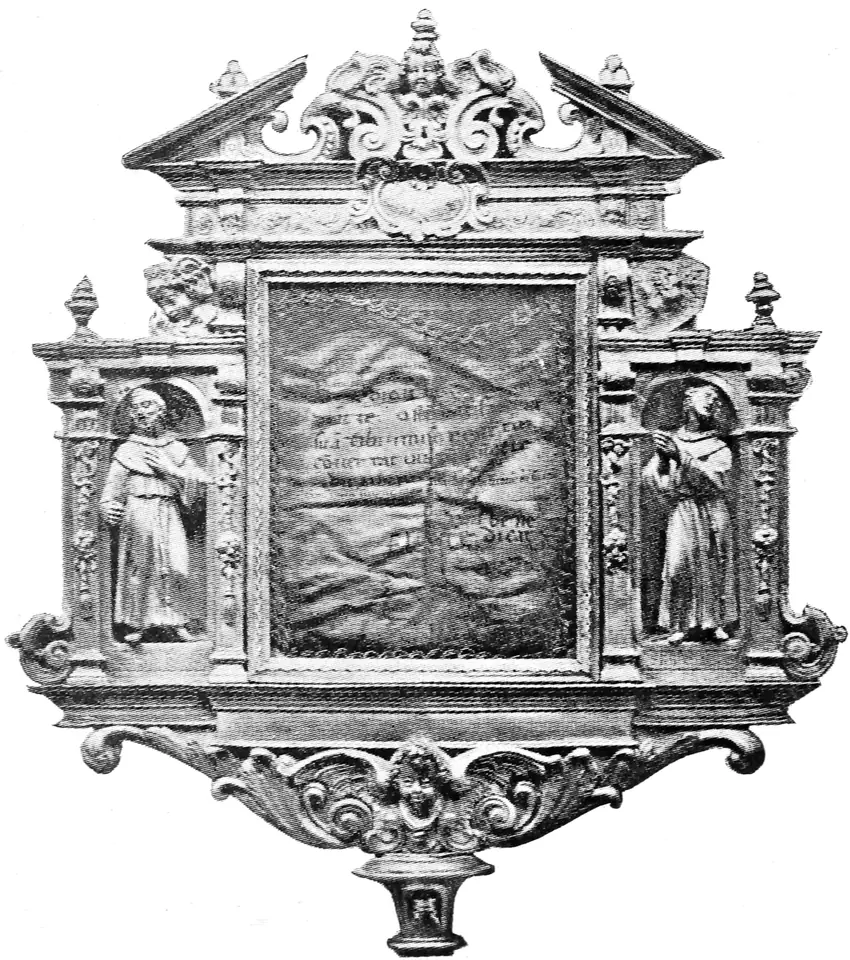
The little sheet, called the chartula (Latin for "small paper"), has two sides. On one, Francis wrote his Praises of God, which begin "Thou art holy, Lord God, who alone workest wonders." On the other is the blessing. Robinson's translation of it reads:
May the Lord bless thee and keep thee. May He shew His face to thee and have mercy on thee. May He turn His countenance to thee and give thee peace. Brother Leo, may the Lord bless thee.
Beneath the words Francis drew his favorite sign, the Tau, the Greek letter T in the shape of a cross, rising from a small drawing of a head. Celano says the Tau was the sign Francis used to sign his letters, and that he painted it on the walls of the cells where he stayed. Robinson, following Reginald Balfour, points out that the Tau is placed so that it divides Leo's name, the way a cross of blessing divides the name of the person blessed in old missals.
Leo kept the sheet for the rest of his long life, folded small, which is why it is so creased. He also wrote three notes on it in red ink so that no one could doubt it. The first says, "Blessed Francis wrote with his own hand this blessing for me, Brother Leo." The second: "In like manner he made this sign thau together with the head with his own hand." The third dates the Praises to the Lent on La Verna "after the vision and speech of the Seraph and the impression of the Stigmata of Christ in his body."
Where it is kept today
After Leo's death the parchment passed to the friars of the Sacro Convento, the friary beside the Basilica of St. Francis in Assisi. Robinson notes that it appears in the convent's records from 1348, and that in his day it was carried in procession every year for the feast of the Portiuncula Pardon. It is one of only two writings in Francis's own hand known to survive; the other is a short letter to Brother Leo kept in the cathedral of Spoleto.
That is the real "Blessing of St. Francis." It is easy to confuse it with the well-loved peace prayer, "Lord, make me an instrument of your peace," which is often called the Prayer of St. Francis but was first printed in France in 1912. The blessing for Leo is the one Francis wrote himself.
How to pray the priestly blessing
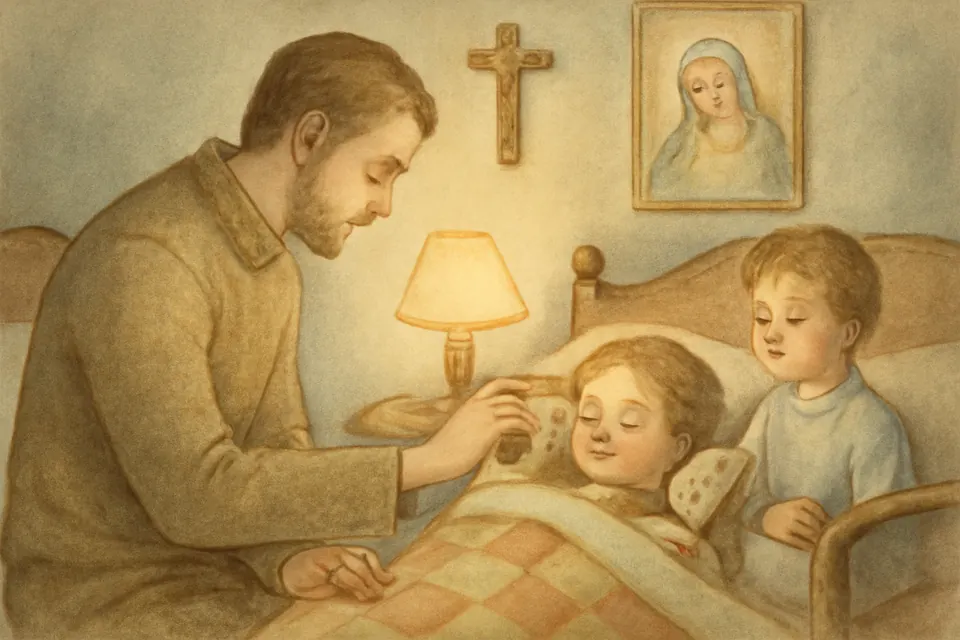
Over your children. Parents have blessed their children since the time of the patriarchs, and the Church encourages it. The Catechism (1669) teaches that "every baptized person is called to be a 'blessing,' and to bless," and that "lay people may preside at certain blessings." A simple way: at bedtime or before a child leaves the house, lay your hand on the child's head or trace a small cross on the forehead and say, "The Lord bless you and keep you. The Lord show his face to you and have mercy on you. The Lord turn his face toward you and give you peace." Then add the child's name, as Francis did: "N., may the Lord bless you."
Over a friend in trouble. Do what Francis did for Leo. Write the blessing out by hand on a card, add your friend's name and a small cross, and give it to them to keep. Many people tuck such a card in a wallet or a Bible for years.
For yourself. Pray it in the morning, changing the words to "bless me and keep me," or as the last prayer of the day after the Our Father.
At the start of the year. Pray it as a family on New Year's Day, the day the Church reads it at Mass, and ask the Mother of God to pray for every member of the household through the year.
A prayer before giving a blessing
This short prayer is by Pastor Lyvers, for parents and godparents who want to begin with a moment of quiet before they bless:
Lord God, you told Aaron to put your name upon your people, and you promised that you yourself would bless them. I am not worthy to speak your blessing, but I ask you to speak it through me. Keep this child of yours, show your face to her, and give her your peace, through Jesus Christ our Lord, who lifted up his hands and blessed his disciples. Amen.
Related prayers and saints
St. Francis's own prayers, the Canticle of the Creatures and the Praises of God, are told in his entry, St. Francis of Assisi, along with the life of his first follower among women, St. Clare, and the great Franciscan teacher St. Bonaventure, who retold the story of La Verna in his life of Francis. For more prayers asking God's peace on our homes and our world, see the prayer for peace.
The Lord bless you and keep you.
Frequently asked questions
Where in the Bible is "The Lord bless you and keep you"?
In the Book of Numbers, chapter 6, verses 24 to 26. God tells Moses to teach Aaron and his sons, the priests, to bless the people with these words. In the Douay-Rheims Bible it reads: "The Lord bless thee, and keep thee. The Lord shew his face to thee, and have mercy on thee. The Lord turn his countenance to thee, and give thee peace."
What is the Aaronic blessing?
It is another name for the priestly blessing of Numbers 6:24-26, called Aaronic because God gave it to Aaron, the first high priest, and his sons. In Hebrew it is the Birkat Kohanim, the blessing of the priests, and Jewish priests of Aaron's line still give it in synagogues today.
Is the priestly blessing used at Catholic Mass?
Yes, in two ways. Numbers 6:22-27 is the first reading every year on January 1, the Solemnity of Mary, Mother of God. The Roman Missal also includes it among the solemn blessings a priest may give at the end of Mass, the first of the blessings for Ordinary Time.
What is the Blessing of St. Francis?
It is the priestly blessing of Numbers 6 that St. Francis wrote out by hand for his companion Brother Leo on Mount La Verna in 1224, adding "Brother Leo, may the Lord bless thee" and his Tau cross. The parchment, called the chartula, is kept by the friars in Assisi and is one of only two surviving autographs of the saint.
Can a layperson say "The Lord bless you and keep you" over someone?
Yes, as a prayer asking God to bless them. The Catechism (1669) teaches that every baptized person is called to be a blessing and to bless, and that lay people may preside at certain blessings. Parents blessing their children is the oldest example. The solemn blessing at Mass belongs to the priest.
What does "make his face shine upon you" mean?
In Scripture, God's face turned toward someone means his favor and presence; a hidden face means displeasure. The Douay-Rheims follows the Latin, "shew his face to thee," while many modern translations follow the Hebrew image of a face that shines. Both ask that God look on us with love.
Why does the blessing name the Lord three times?
Each line begins with God's name, and Christians have long heard in that threefold naming a hint of the Holy Trinity. In the Hebrew the lines also grow, from three words to five to seven, fifteen words in all, so that the blessing widens as it goes, from protection to mercy to peace.
Sources
- Douay-Rheims Bible, Numbers 6 (DRBO.org)
- Kaufmann Kohler, David Philipson and Francis L. Cohen, "Blessing, Priestly," The Jewish Encyclopedia (1906)
- Center for Online Judaic Studies: Silver Scroll Amulets from Ketef Hinnom, c. 600 BCE
- Paschal Robinson, O.F.M., The Writings of Saint Francis of Assisi (Philadelphia, 1906), pp. 146–149: The Sheet which St. Francis gave Brother Leo. Celano's account, Brother Leo's three notes and the translation of the blessing printed on this page.
- Pope Leo XIV, Homily for the Solemnity of Mary, Mother of God (January 1, 2026)
- Catechism of the Catholic Church, no. 1669