Catholic Prayer for Peace
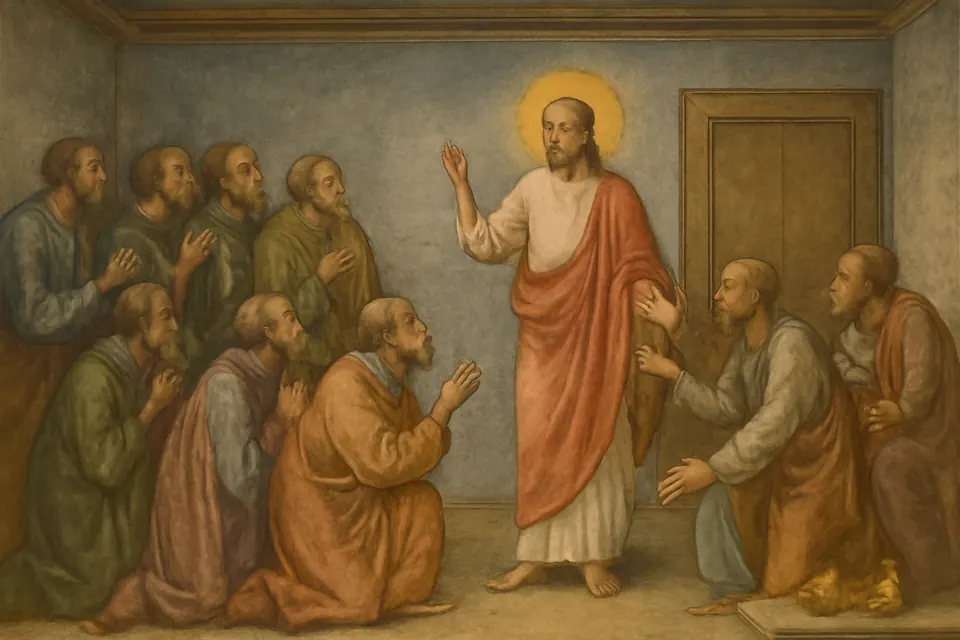
The Church's own Catholic prayer for peace is the ancient antiphon "Give peace, O Lord, in our days" with its collect, "O God, from whom come all holy desires." Pope Benedict XV wrote a prayer for peace in 1915, during the First World War, and we ask Our Lady, Queen of Peace, and St. Francis to pray with us.
 Free printable prayer card 5 × 7 inch PDF, ready to print, frame or tuck in a missal.
We all want peace: peace in the world, peace in our homes, peace in our own hearts. The Church has prayed for it from the beginning, because peace is the first gift the risen Christ gave His apostles: "Peace be to you." Here is the Church's own prayer for peace, Pope Benedict XV's prayer from the First World War, the Mass prayer for peace, prayers to Our Lady, Queen of Peace, and prayers for peace of heart, each with its source.
The Church's prayer for peace
This is the oldest Catholic prayer for peace still in common use: an antiphon and a collect, the Church's short formal prayer. The New Raccolta (1903) prints them under "Prayers to Implore Peace," with the Latin, and records that Pius IX indulgenced them in 1848:
Ant. Give peace, O Lord! in our days; for there is none other that fighteth for us, but only Thou, our God. V. Peace be in Thy strength, O Lord! R. And plenty in Thy strong places. Let us pray. O God, from whom come all holy desires, all right counsels and just works: grant unto us, Thy servants, that peace which the world cannot give, that our hearts may be devoted to Thy service, and that, delivered from the terror of our enemies, we may pass our time in peace under Thy protection. Through Christ our Lord. Amen.
The collect is far older than the Raccolta; it is found in the early medieval sacramentaries, the Mass books of the Roman Church, and it was the "Mass for Peace" collect of the Roman Missal for centuries. The versicle comes from Psalm 121, "Let peace be in thy strength: and abundance in thy towers." In Latin the antiphon begins Da pacem, Domine, in diebus nostris, and composers from the Middle Ages to Arvo Pärt have set it to music.
The prayer asks for "that peace which the world cannot give," echoing Jesus at the Last Supper. It asks first for hearts given to God, and only then for freedom from fear. That is the right order.
Pope Benedict XV's prayer for peace (1915)
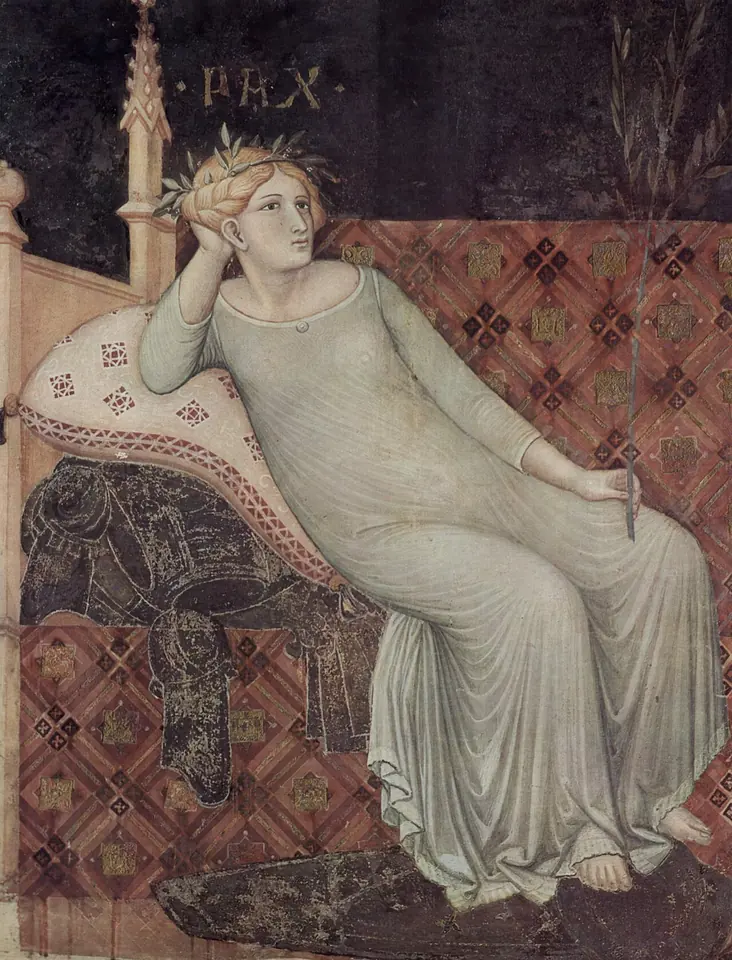
Five months after the First World War began, Pope Benedict XV ordered a day of prayer for peace throughout the Catholic world. His decree of January 10, 1915, set Sunday, February 7, for the churches of Europe and Passion Sunday, March 21, for the rest of the world. In every cathedral, parish and religious church the Blessed Sacrament was to be exposed all day. The morning service included Psalm 50, the Miserere, and the prayer above; in the evening the people prayed the Rosary and then a new prayer the Pope had written himself. The Vatican's official journal, the Acta Apostolicae Sedis, printed it in Italian with "authentic versions" in five languages. This is the official English:
Dismayed by the horrors of a war which is bringing ruin to peoples and nations, we turn, O Jesus, to Thy most loving Heart as to our last hope. O God of Mercy, with tears we invoke Thee to end this fearful scourge; O King of Peace, we humbly implore the peace for which we long. From Thy sacred Heart Thou didst shed forth over the world divine Charity, so that discord might end and love alone might reign among men. During Thy life on earth Thy Heart beat with tender compassion for the sorrows of men; in this hour made terrible with burning hate, with bloodshed and with slaughter, once more may Thy divine Heart be moved to pity. Pity the countless mothers in anguish for the fate of their sons; pity the numberless families now bereaved of their fathers; pity Europe over which broods such havoc and disaster. Do Thou inspire rulers and peoples with counsels of meekness, do Thou heal the discords that tear the nations asunder; Thou Who didst shed Thy Precious Blood that they might live as brothers, bring men together once more in loving harmony. And as once before to the cry of the Apostle Peter: Save us, Lord, we perish, Thou didst answer with words of mercy and didst still the raging waves, so now deign to hear our trustful prayer, and give back to the world peace and tranquillity. And do thou, O most holy Virgin, as in other times of sore distress, be now our help, our protection and our safeguard. Amen.
More than a century later the prayer still fits. Change "Europe" to the name of any country at war, and every line holds. Benedict XV spent his whole pontificate pleading for peace; in August 1917 he sent the warring governments a detailed peace proposal, and most of them ignored it.
The Prayer of St. Francis
The prayer most people mean by "prayer for peace" is the one that begins:
Lord, make me an instrument of your peace. Where there is hatred, let me sow love; where there is injury, pardon...
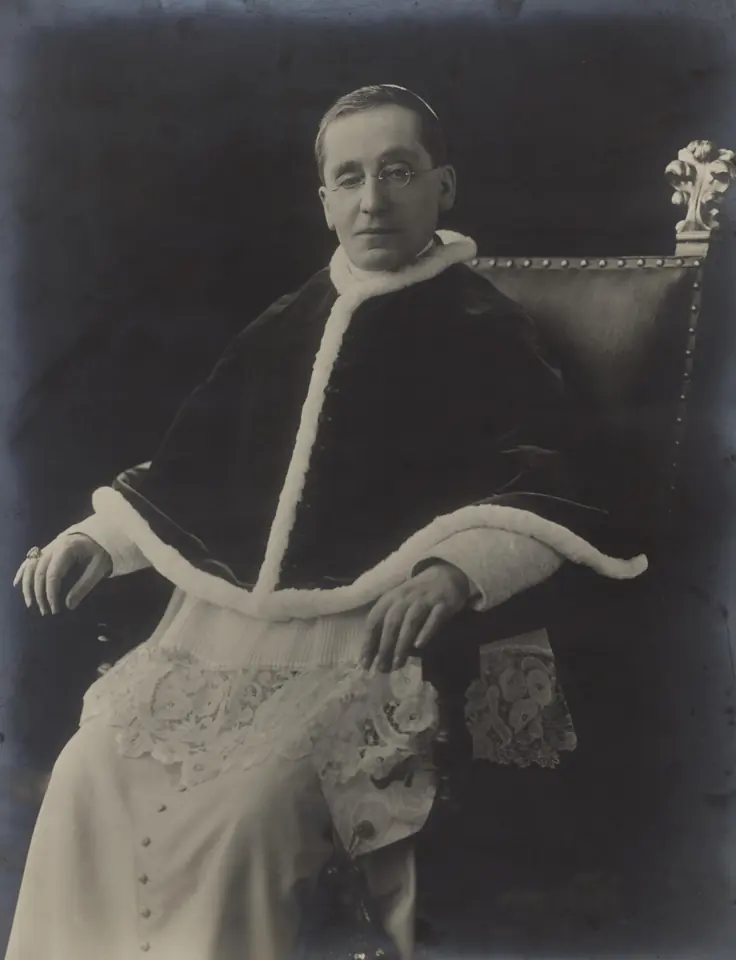
St. Francis didn't write it; it first appeared, without an author's name, in a small French Catholic magazine in 1912. By a lovely coincidence it reached Benedict XV in 1915, and in 1916 the Vatican's newspaper, L'Osservatore Romano, printed it in Italian while he was pleading for an end to the war. It is a true prayer in the spirit of St. Francis of Assisi, who greeted everyone with "The Lord give you peace." The full text, the French original and the whole story are on our Prayer of St. Francis page.
The prayer for peace at Mass
Every Mass has a prayer for peace, said just before Communion. In the traditional Latin Mass the priest says it quietly, bowing over the altar; in the Mass of today he says it aloud. This translation is from a Mass book published in London in 1925 by Burns Oates & Washbourne:
Lord Jesus Christ, who saidst unto thine apostles, Peace I leave with you, my peace I give unto you; look not upon my sins but upon the faith of thy church; and vouchsafe to grant her peace and unity according to thy will: who livest and reignest God for ever and ever. Amen.
The Latin begins Domine Jesu Christe, qui dixisti Apostolis tuis. It is worth learning by heart. It asks Christ not to judge the Church by the sins of the one praying, and to give her the peace He promised. Right after it come the sign of peace and the Agnus Dei: "O Lamb of God, who takest away the sins of the world, grant us peace."

Our Lady, Queen of Peace
In the darkest years of the First World War, Benedict XV turned to Mary. In November 1915 he allowed bishops to add a new invocation to the Litany of Loreto: "Queen of Peace, pray for us." In a letter of May 5, 1917, he made it part of the litany for the whole Church from June 1. Eight days later, on May 13, 1917, Our Lady first appeared to three shepherd children at Fátima, and she asked them to pray the Rosary every day for peace in the world and the end of the war.
So the simplest Catholic prayer for peace is also one of the oldest: the Rosary, with the short invocation added at the end:
Queen of Peace, pray for us.
The title Queen of Peace is also the name under which Our Lady is honored at Medjugorje. There the Church has given a nihil obstat (2024) to the spiritual experience and its fruits, without declaring the reported apparitions supernatural. The title itself belongs to the whole Church, in the Litany of Loreto.

Prayers for peace of heart
Wars begin in hearts, and so does peace. St. Augustine wrote at the start of his Confessions, in E. B. Pusey's translation: "Thou madest us for Thyself, and our heart is restless, until it repose in Thee." No prayer for inner peace says it better.
St. Paul gives the way to that peace in his letter to the Philippians, in the Douay-Rheims:
Be nothing solicitous; but in every thing, by prayer and supplication, with thanksgiving, let your petitions be made known to God. And the peace of God, which surpasseth all understanding, keep your hearts and minds in Christ Jesus.
When anxiety won't let us sleep, the short prayers serve best: the Jesus Prayer ("Lord Jesus Christ, Son of God, have mercy on me, a sinner"), St. Teresa of Ávila's "Let nothing disturb thee," and the Holy Name said slowly. Confession brings a peace nothing else does. Our pages on the patron saints of anxiety and the Surrender Novena have more.

The saints to ask for peace
- St. Francis of Assisi crossed the battle lines at Damietta in 1219 to preach to the sultan, and made peace between the bishop and the mayor of Assisi near the end of his life.
- St. Elizabeth of Portugal, patron of peacemakers, rode between the armies of her husband, King Denis, and their son in 1323 and reconciled them.
- St. Catherine of Siena worked to make peace between Florence and the Pope and between the warring cities of Italy.
- St. Barnabas, "son of consolation," who brought the newly converted Paul to the frightened apostles, is a patron of peacemakers.
- St. John XXIII wrote the encyclical Pacem in Terris (1963), addressed to "all men of good will," weeks before he died.
- St. John Paul II invited leaders of the world's religions to Assisi in 1986 to pray for peace.
- St. Michael the Archangel, protector of the Church, for the spiritual battle that lies behind every war.
Scripture: the peace Christ gives
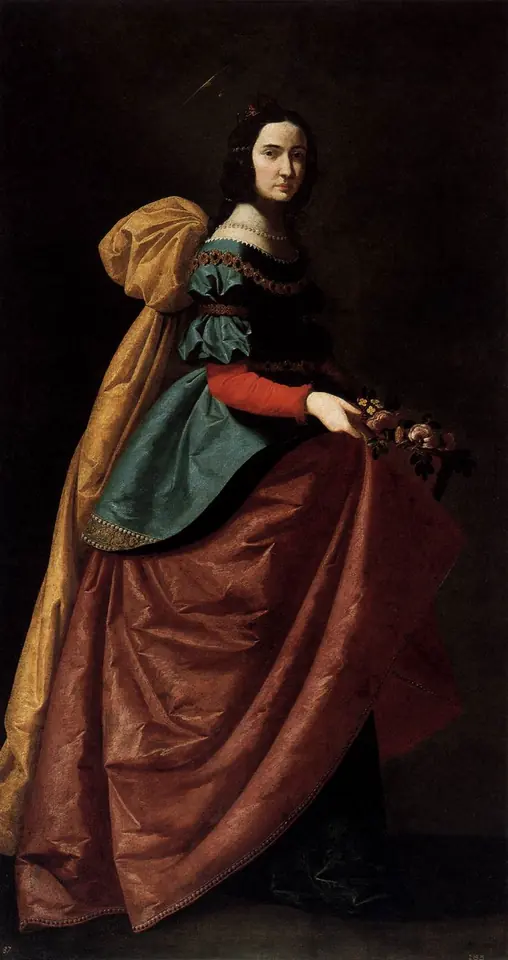
At the Last Supper, on the night before He died, Jesus left His apostles His peace. From John 14:27 in the Douay-Rheims:
Peace I leave with you, my peace I give unto you: not as the world giveth, do I give unto you. Let not your heart be troubled, nor let it be afraid.
And on the mountain He promised: "Blessed are the peacemakers: for they shall be called children of God" (Matthew 5:9).
Let us pray, then, for every place where there is war today, by name, and for the peace of our own homes and hearts. Give peace, O Lord, in our days. Queen of Peace, pray for us.
Frequently asked questions
What is the Catholic prayer for peace?
The Church's traditional prayer for peace is the antiphon "Give peace, O Lord, in our days; for there is none other that fighteth for us, but only Thou, our God," followed by the collect for peace: "O God, from whom come all holy desires, all right counsels and just works: grant unto us, Thy servants, that peace which the world cannot give." Both go back to the early Middle Ages and are still in the Roman Missal's Masses for peace.
What was Pope Benedict XV's prayer for peace?
In January 1915, during the First World War, Benedict XV ordered a day of prayer for peace in every Catholic church and wrote a prayer for it, beginning "Dismayed by the horrors of a war which is bringing ruin to peoples and nations, we turn, O Jesus, to Thy most loving Heart as to our last hope." The Vatican published it in Italian with official English, French, German, Spanish and Portuguese versions.
Who is the patron saint of peace?
Our Lady, Queen of Peace, under whose title Benedict XV placed the world in 1917, is the first patron of peace. St. Francis of Assisi is the saint most linked with peace. St. Elizabeth of Portugal and St. Barnabas are patrons of peacemakers, and St. Catherine of Siena worked tirelessly for peace among the cities of Italy.
Did St. Francis write the Prayer for Peace (\"Make me an instrument of your peace\")?
No. It first appeared, unsigned, in a French Catholic magazine in 1912 and was credited to St. Francis only in the 1920s. It is a beautiful prayer in his spirit; the full story is on our Prayer of St. Francis page.
What is a Catholic prayer for peace of mind?
St. Paul's words are the place to start: "Be nothing solicitous; but in every thing, by prayer and supplication, with thanksgiving, let your petitions be made known to God. And the peace of God, which surpasseth all understanding, keep your hearts and minds in Christ Jesus" (Philippians 4:6–7, Douay-Rheims). Many Catholics also pray St. Teresa's "Let nothing disturb thee" and the Jesus Prayer.
When was \"Queen of Peace\" added to the Litany of Loreto?
Benedict XV allowed bishops to add the invocation "Queen of Peace, pray for us" in November 1915, during the First World War, and made it permanent for the whole Church in a letter of May 5, 1917.
Sources
- The New Raccolta (Philadelphia, 1903), Internet Archive. "Prayers to implore peace," the Da pacem and collect, Latin and English (pp. 52–53)
- Acta Apostolicae Sedis 7 (1915): Benedict XV's decree and prayer for peace, with the authentic English version (Vatican). Decree of January 10, 1915, and the prayer, pp. 8–14
- Benedict XV, Letter to Cardinal Gasparri adding "Regina pacis" to the Litany of Loreto (May 5, 1917)
- The Rite of Marriage, the Nuptial Mass and the Form of Blessing Without the Mass (Burns Oates & Washbourne, London, 1925), Internet Archive. The Mass prayer for peace before Communion, Latin and English
- The Confessions of St. Augustine, translated by E. B. Pusey (Project Gutenberg)