Angels in the Bible
Angels in the Bible appear from the first book to the last. Cherubim guard Eden, St. Raphael guides Tobias, St. Gabriel announces the births of John the Baptist and of Jesus, angels serve Christ in the desert and roll back the stone, and St. Michael fights the dragon in Revelation. They come as God's messengers, guardians and worshipers.
Angels in the Bible are not decoration at the edges of the story. They stand at its turning points: at the gate of Eden, beside Abraham on the mountain, in the furnace in Babylon, at Nazareth, at Bethlehem, at the empty tomb. The Catechism puts it simply: "Angels have been present since creation and throughout the history of salvation" (CCC 332). Here is that history, book by book, in the words of the Douay-Rheims Bible. (The Douay uses older names for some books; the familiar names follow in parentheses.)
What the Bible means by "angel"
The Hebrew mal'akh and the Greek angelos both mean "messenger." The word names what an angel does, not what he is. What he is, Scripture tells us in the Letter to the Hebrews: "Are they not all ministering spirits, sent to minister for them, who shall receive the inheritance of salvation?" (Hebrews 1:14). For the ranks of angels, from seraphim to guardian angels, see the nine choirs of angels; for their names, names of angels.
Angels in Genesis
The first angels in Scripture keep a door shut. After the Fall, God "placed before the paradise of pleasure Cherubims, and a flaming sword, turning every way, to keep the way of the tree of life" (Genesis 3:24).
The first angel to speak comes to a woman in trouble. Hagar, Sarai's servant, has fled into the desert, pregnant and alone, and "the angel of the Lord having found her, by a fountain of water in the wilderness" tells her to return and promises her a son, Ismael, "because the Lord hath heard thy affliction" (Genesis 16:7–11). Years later, when she and the boy are dying of thirst, "an angel of God called to Agar from heaven" and shows her a well (Genesis 21:17).

At Mambre "three men" stand before Abraham's tent, and he runs to meet them and serves them a meal (Genesis 18:2). Two of them go on to Sodom, where the text calls them angels: "And the two angels came to Sodom in the evening" (Genesis 19:1). At dawn they take Lot, his wife and his daughters by the hand and lead them out of the city, "because the Lord spared him" (Genesis 19:16).
On the mountain in the land of vision, as Abraham raises the knife over Isaac, "behold an angel of the Lord from heaven called to him, saying: Abraham, Abraham. And he answered: Here I am" (Genesis 22:11).
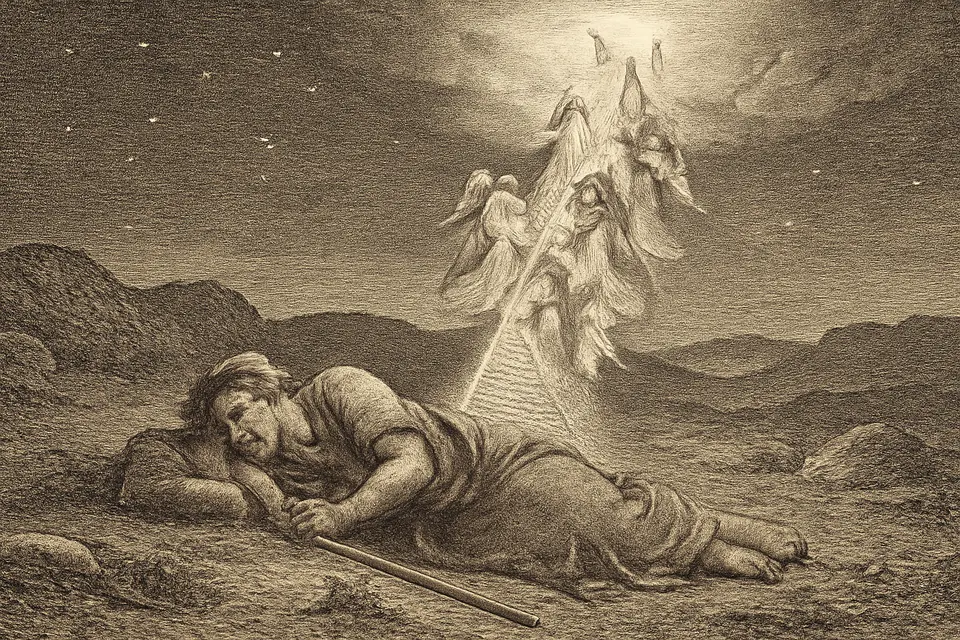
Jacob sees the angels twice. Fleeing his brother, he dreams of "a ladder standing upon the earth, and the top thereof touching heaven: the angels also of God ascending and descending by it" (Genesis 28:12). Coming home, "the angels of God met him," and he names the place Mahanaim, "Camps" (Genesis 32:1–2). That night "a man wrestled with him till morning" (Genesis 32:24); the prophet Hosea later says Jacob "prevailed over the angel" (Osee 12:4).
Angels from Moses to the kings
At the burning bush, the Douay, following the Latin Vulgate, says "the Lord appeared" to Moses in the flame (Exodus 3:2). The Greek Septuagint calls him "the angel of the Lord," and so does St. Stephen in Acts: "there appeared to him in the desert of mount Sina, an angel in a flame of fire in a bush" (Acts 7:30). The Catholic Encyclopedia traces how the Fathers read such passages. Tertullian saw in them the Son of God foreshadowing the Incarnation; St. Jerome, St. Augustine and St. Gregory the Great held that a created angel spoke in God's name.
In the Exodus an angel goes before the people with the pillar of cloud (Exodus 14:19), and God promises: "Behold I will send my angel, who shall go before thee, and keep thee in thy journey" (Exodus 23:20). The Church reads those words on the feast of the Guardian Angels.
The prophet Balaam does not see the angel blocking his road until his donkey has balked three times; then "the Lord opened the eyes of Balaam, and he saw the angel standing in the way with a drawn sword" (Numbers 22:31). Before Jericho, Josue meets a man with a drawn sword who says, "I am prince of the host of the Lord" (Josue 5:13–14).
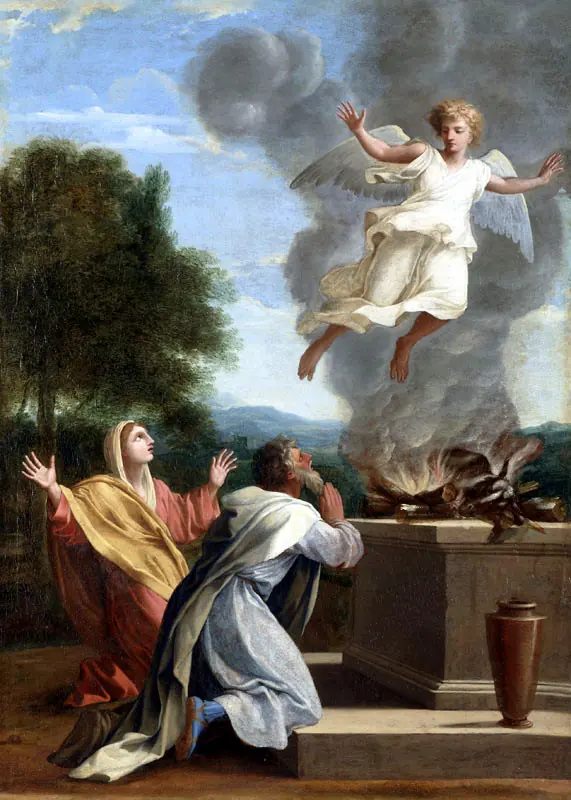
In the time of the Judges, the angel of the Lord greets the frightened farmer Gideon, "The Lord is with thee, O most valiant of men" (Judges 6:12), and announces Samson's birth to a barren woman (Judges 13:3). Asked his name, the angel answers, "Why askest thou my name, which is wonderful?" Then, as Manoah's offering burns, "the angel of the lord ascended also in the flame" (Judges 13:18–20).
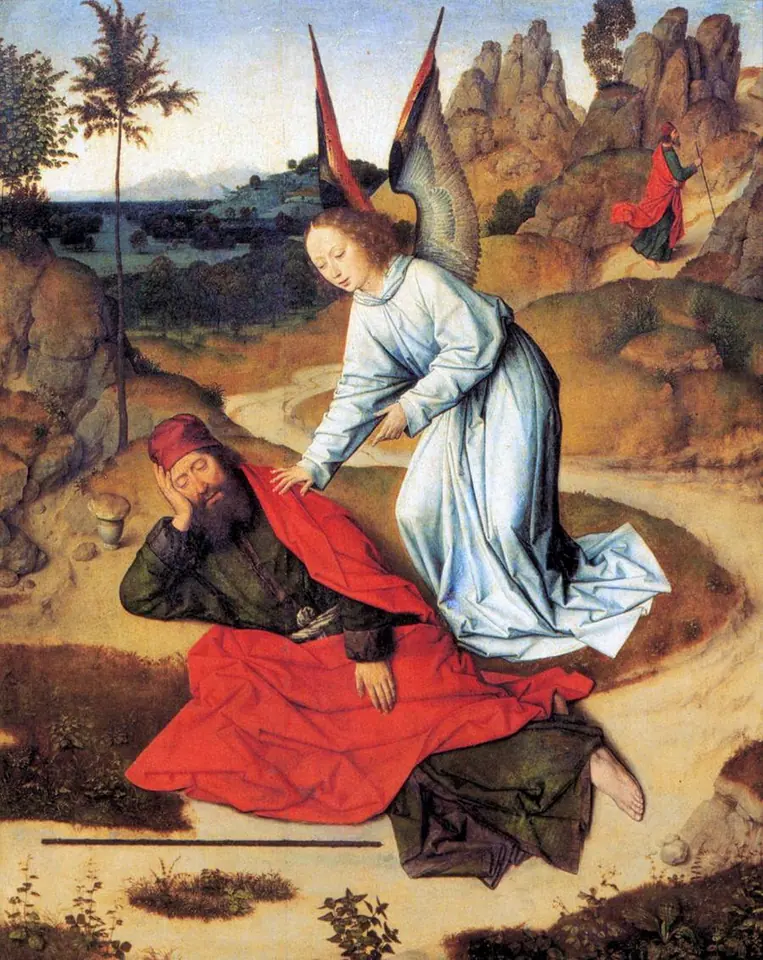
Under King David an angel brings a plague on Jerusalem, and God stops him at the threshing floor of Areuna (2 Kings 24:16; 1 Paralipomenon 21:16). An angel feeds the prophet Elijah, worn out and wishing to die under a juniper tree: "Arise, eat: for thou hast yet a great way to go" (3 Kings 19:5–7). When Eliseus is surrounded by a Syrian army, he prays that his servant's eyes be opened, "and behold the mountain was full of horses, and chariots of fire round about Eliseus" (4 Kings 6:17). And when the Assyrians besiege Jerusalem, "an angel of the Lord came, and slew in the camp of the Assyrians a hundred and eighty-five thousand" (4 Kings 19:35).
Angels in the Psalms and the prophets
The Psalms sing of the angels' care: "The angel of the Lord shall encamp round about them that fear him: and shall deliver them" (Psalm 33:8), and "he hath given his angels charge over thee; to keep thee in all thy ways" (Psalm 90:11).
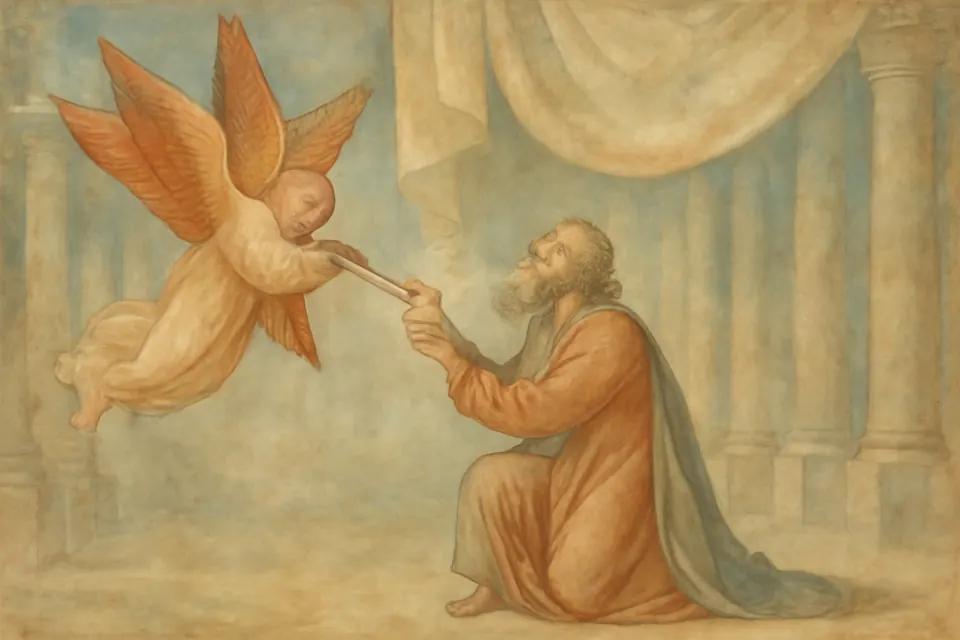
Isaiah sees the seraphim above the throne: "the one had six wings, and the other had six wings: with two they covered his face, and with two they covered his feet, and with two they flew. And they cried one to another, and said: Holy, holy, holy, the Lord God of hosts" (Isaias 6:2–3). One of them touches his lips with a live coal from the altar to cleanse him (Isaias 6:6–7). Ezekiel sees the cherubim as "four living creatures," each with four faces and four wings (Ezechiel 1:5–6). In Zechariah an angel explains the prophet's night visions to him (Zacharias 1:9).
Angels in Daniel and Tobit
The Book of Daniel is the first to give angels names. In the furnace, "the angel of the Lord went down with Azarias and his companions" and "made the midst of the furnace like the blowing of a wind bringing dew" (Daniel 3:49–50). In the lions' den Daniel tells the king, "My God hath sent his angel, and hath shut up the mouths of the lions" (Daniel 6:22). St. Gabriel is sent to explain Daniel's visions (Daniel 8:16; 9:21), and St. Michael appears as "one of the chief princes" and "the great prince, who standeth for the children of thy people" (Daniel 10:13; 12:1).
The Book of Tobias (Tobit) tells the longest angel story in the Old Testament. Young Tobias finds "a beautiful young man, standing girded," not knowing he is an angel, and travels with him (Tobias 5:5–6). At the end the companion reveals himself: "For I am the angel Raphael, one of the seven, who stand before the Lord" (Tobias 12:15). The whole story is told in our entry on St. Raphael.
Angels in the Maccabees
When Heliodorus comes to rob the Temple treasury, "there appeared to them a horse with a terrible rider upon him," with two young men "bright and glorious" who scourge him (2 Machabees 3:25–26). Later, as Judas Machabeus marches out to fight, "there appeared at Jerusalem a horseman going before them in white clothing, with golden armour" (2 Machabees 11:8).

Angels in the Gospels
From the Incarnation to the Resurrection, angels surround the life of Christ. St. Gabriel appears to St. Zachary at the altar of incense: "I am Gabriel, who stand before God" (Luke 1:19). Six months later "the angel Gabriel was sent from God into a city of Galilee, called Nazareth," to the Blessed Virgin Mary, and greets her, "Hail, full of grace, the Lord is with thee: blessed art thou among women" (Luke 1:26–28).
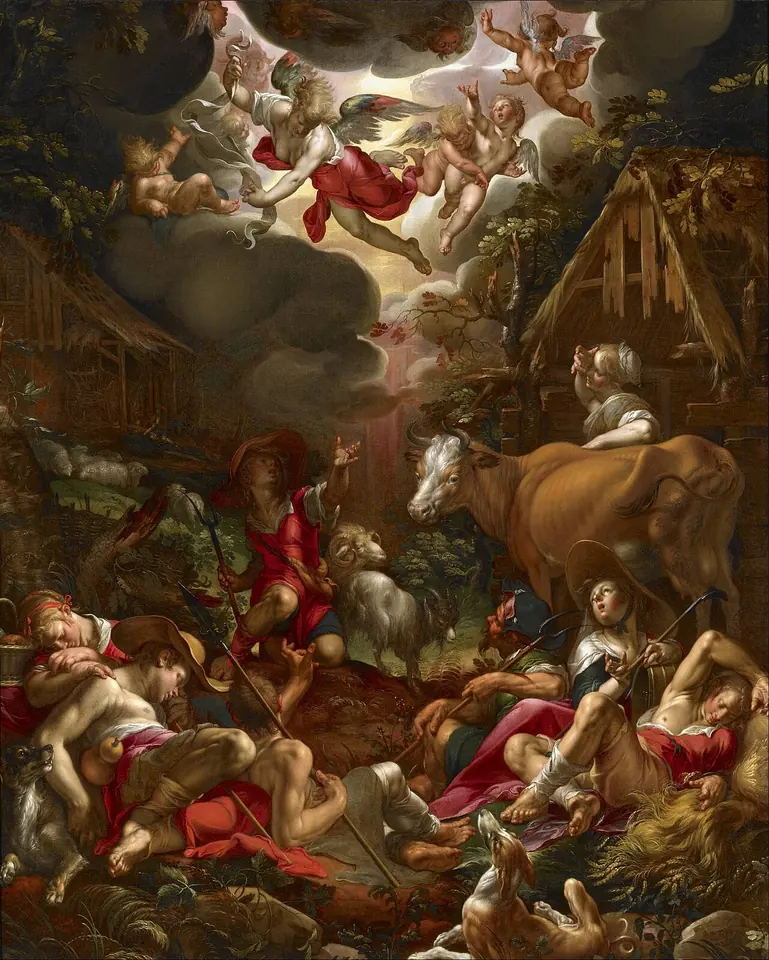
An angel speaks to St. Joseph in his sleep three times: to take Mary as his wife (Matthew 1:20), to flee into Egypt (Matthew 2:13) and to return to Israel (Matthew 2:19–20). At Bethlehem an angel appears to the shepherds, "and suddenly there was with the angel a multitude of the heavenly army, praising God, and saying: Glory to God in the highest; and on earth peace to men of good will" (Luke 2:13–14).
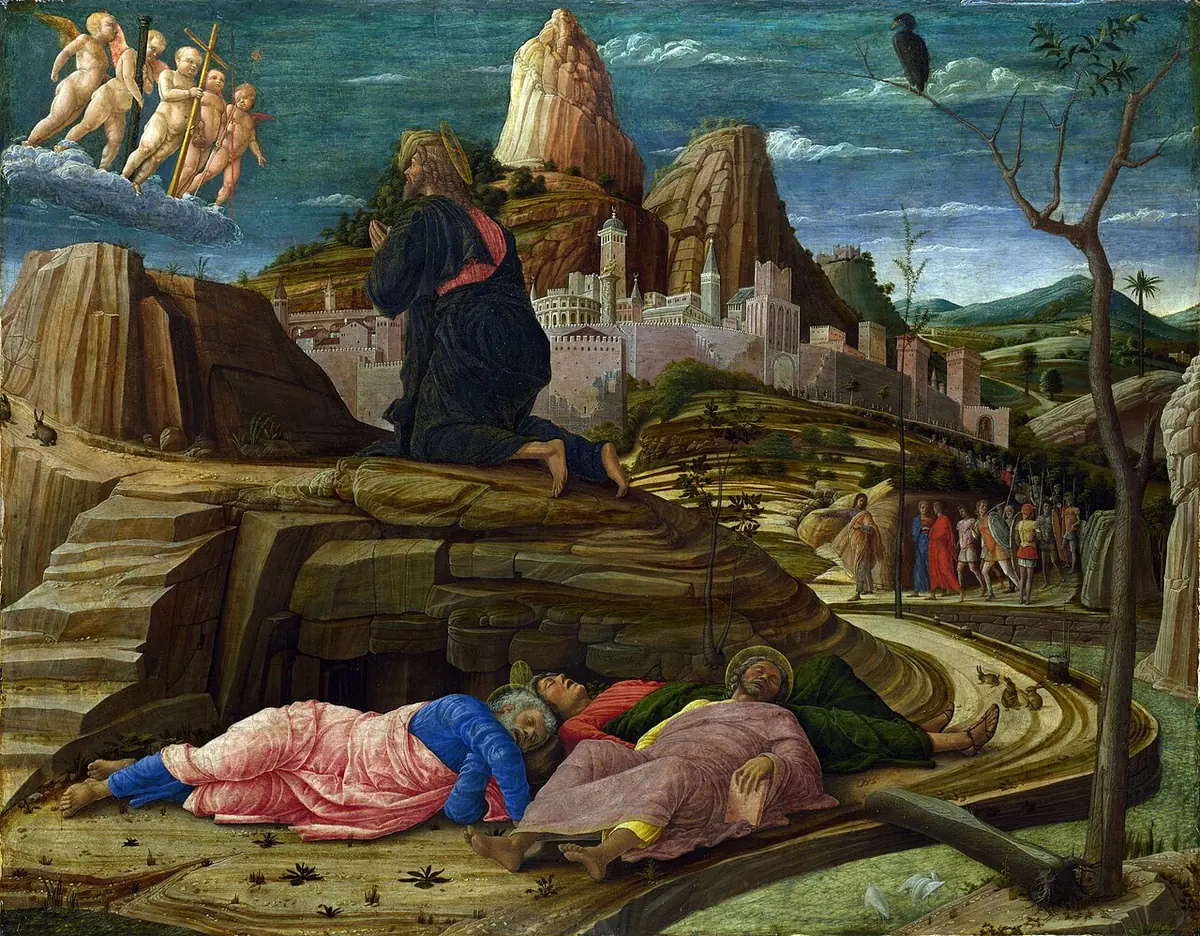
After the temptation in the desert, "angels came and ministered to him" (Matthew 4:11). Jesus speaks of the angels often: the angels of the little ones who "always see the face of my Father" (Matthew 18:10), the joy "before the angels of God upon one sinner doing penance" (Luke 15:10), the angels who will come with the Son of Man at the judgment (Matthew 25:31). In Gethsemane "there appeared to him an angel from heaven, strengthening him" (Luke 22:43). And when Peter draws his sword, Jesus says he could ask his Father for "more than twelve legions of angels" (Matthew 26:53).
On Easter morning "an angel of the Lord descended from heaven, and coming, rolled back the stone, and sat upon it. And his countenance was as lightning, and his raiment as snow" (Matthew 28:2–3). He tells the women, "He is not here, for he is risen" (Matthew 28:6). St. Mary Magdalene sees "two angels in white, sitting, one at the head, and one at the feet, where the body of Jesus had been laid" (John 20:12).
Angels in Acts and the letters
At the Ascension "two men stood by them in white garments" and promise that Jesus will come again (Acts 1:10–11). An angel opens the prison doors for the apostles (Acts 5:19), sends Philip the deacon to the road to Gaza (Acts 8:26), and comes to the centurion Cornelius to say, "Thy prayers and thy alms are ascended for a memorial in the sight of God" (Acts 10:4).

The most vivid rescue is St. Peter's. In Herod's prison, chained between two soldiers, "behold an angel of the Lord stood by him: and a light shined in the room: and he striking Peter on the side, raised him up, saying: Arise quickly. And the chains fell off from his hands" (Acts 12:7). Peter thinks he is dreaming until he is in the street. In a storm at sea, an angel stands by St. Paul and promises that no one aboard will be lost (Acts 27:23–24).
The letters add a few lines we never forget: "And hospitality do not forget; for by this some, being not aware of it, have entertained angels" (Hebrews 13:2). St. Jude tells how "Michael the archangel, disputing with the devil, contended about the body of Moses" (Jude 9), and St. Paul says the Lord will come again "with the voice of an archangel, and with the trumpet of God" (1 Thessalonians 4:15).
Angels in Revelation
The Apocalypse has more angels than any other book. St. John hears "the voice of many angels round about the throne," numbering "thousands of thousands" (Apocalypse 5:11). An angel offers the prayers of the saints with incense at the golden altar (Apocalypse 8:3–4), the image behind the Church's belief that the angels carry our prayers to God. Angels blow the seven trumpets and pour out the seven bowls. And "there was a great battle in heaven, Michael and his angels fought with the dragon," until "that old serpent, who is called the devil and Satan" was cast down (Apocalypse 12:7–9).
The last angel in the Bible teaches a lesson on worship. When John falls down before him, the angel says, "See thou do it not: for I am thy fellow servant... Adore God" (Apocalypse 22:8–9). We honor the angels and ask their help, but we worship God alone, with them.
Praying with the angels of Scripture
Every Mass joins the song of Isaiah's seraphim in the Sanctus, and every Hail Mary begins with St. Gabriel's greeting. We can go further. Let us thank God for the angel he has given each of us, pray the Guardian Angel Prayer, and ask St. Michael, St. Gabriel and St. Raphael, whom the Church honors together at Michaelmas, to defend, enlighten and heal us. For the Church's teaching on our own angels, see guardian angels.
Frequently asked questions
How many times are angels mentioned in the Bible?
Angels appear from Genesis to Revelation, in the Law, the histories, the Psalms, the prophets, the Gospels, Acts and the letters. Exact counts differ by translation and by whether the deuterocanonical books (Tobit, the Maccabees) are included. Revelation mentions angels more often than any other book.
Which angels are named in the Bible?
Three. St. Michael (Daniel 10 and 12, Jude 9, Revelation 12), St. Gabriel (Daniel 8 and 9, Luke 1) and St. Raphael (Tobit 12). Names such as Uriel come from books outside the Bible, and the Church asks us not to use them in prayer.
Who was the first angel to appear in the Bible?
The first angels in Scripture are the cherubim God placed at the gate of Eden after the Fall, "to keep the way of the tree of life" (Genesis 3:24). The first angel who speaks to a person is the angel of the Lord who finds Hagar by a spring in the desert (Genesis 16).
Do angels in the Bible have wings?
Some do. The seraphim in Isaiah 6 have six wings and the cherubim in Ezekiel have four. But most angels who visit people in Scripture look like men, often young men in white or shining garments, and are sometimes not recognized at all. That is why Hebrews says some "have entertained angels" without knowing it.
Who is "the angel of the Lord" in the Old Testament?
Sometimes this angel speaks as God himself. Some early writers, such as Tertullian, saw these appearances as the Son of God foreshadowing the Incarnation. St. Jerome, St. Augustine and St. Gregory the Great held that they were created angels speaking in God's name, and the Scholastics followed them.
Sources
- Douay-Rheims Bible (Challoner revision), online text at drbo.org. All Scripture quotations on this page
- Catechism of the Catholic Church, nos. 328–336 (The angels)
- Catholic Encyclopedia (1907): Angels. The Septuagint reading of Exodus 3, and the Fathers on "the angel of the Lord"
- Catholic Encyclopedia (1910): Feast of Guardian Angels