Santa Muerte: meaning, history and what the Church teaches
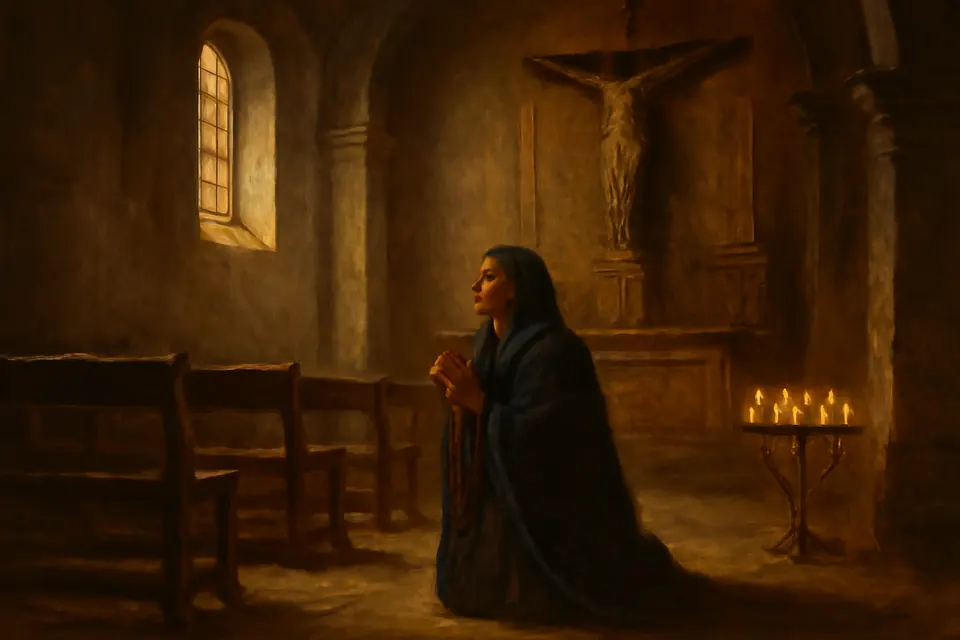
Santa Muerte ("Holy Death") is a skeletal figure of death, usually robed and holding a scythe, to whom millions in Mexico and the United States now pray for protection, love, money and justice. She is not a saint and not a real person. The Catholic Church does not approve the devotion: a Vatican cardinal called it "a blasphemy against religion," and the Mexican bishops have repeatedly rejected it.
Santa Muerte means "Holy Death." The name belongs to a skeleton figure in a long robe, often holding a scythe and a globe, whose statues now stand in markets, botánicas and home altars from Mexico City to Los Angeles. Millions of people pray to her. Many of them grew up Catholic and think of her as one more saint. She is not a saint, and the Church has never approved praying to her. This page explains what Santa Muerte is, where she came from, what her colors and symbols mean, and why the Church says no. It also tells you where to turn instead, because most people who light a candle to her are asking for something good: safety, work, love, a way out of trouble.
If that is you, or someone you love, read on without fear. Nobody here is going to mock you. We want to point you to the One who has already conquered death.
What is Santa Muerte?
Santa Muerte is death itself, imagined as a woman. She has no life story, because she was never a person. Her devotees call her by tender or familiar names: la Niña Blanca (the White Girl), la Flaca (the Skinny One), la Huesuda (the Bony One), la Santísima Muerte (Most Holy Death). They ask her for the same things people ask of the saints: healing, protection on dangerous streets, the return of a husband who left, money for rent, a good outcome in court, the release of a son from prison.
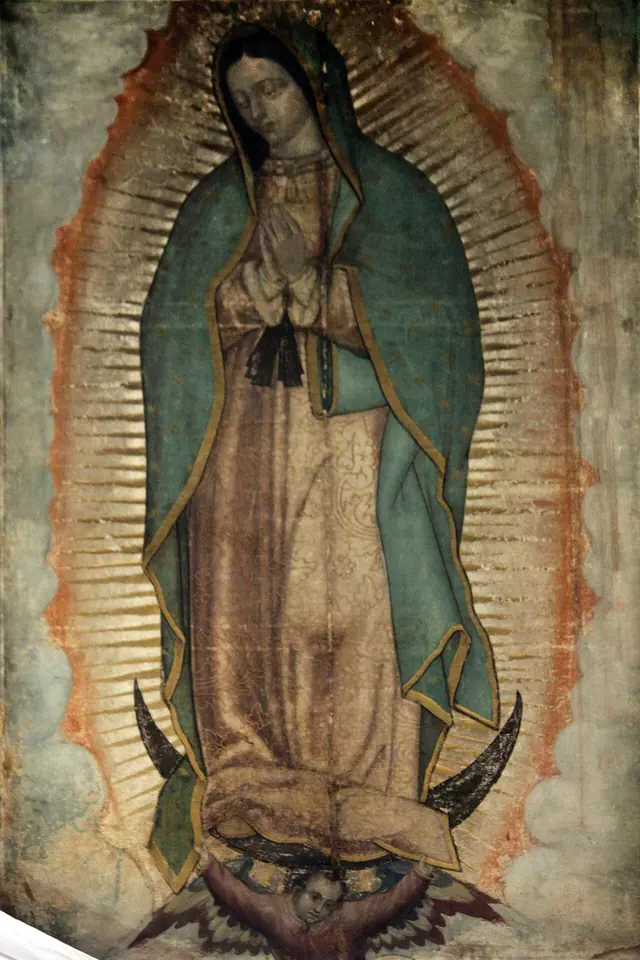
Her statues borrow heavily from Catholic images. She often wears a long mantle and veil like the Virgin Mary, sometimes even a crown. Devotees light colored candles to her, pray rosaries and novenas adapted to her, and keep her feast on days taken from the Church calendar. That borrowing explains much of the confusion. A grandmother sees a robed figure next to the image of Our Lady of Guadalupe in a market stall and assumes it belongs to the same faith.
The numbers have grown fast. Andrew Chesnut of Virginia Commonwealth University, author of the main scholarly book on the subject, told Catholic News Agency in 2016 that she "was unknown to 99 percent of Mexicans before 2001," and estimated 10 to 12 million devotees, mostly in Mexico but also in the United States and Central America. That is an estimate, not a census, but every observer agrees the devotion has spread quickly in this century.

Santa Muerte meaning: what the name says
In Spanish, santa means both "holy" and "saint" (as in Santa María), and muerte means "death." So Santa Muerte can be read as Holy Death or as Saint Death. The second reading is where the misunderstanding starts.
For the Church, a saint is a real man or woman who lived and died in friendship with God and now shares His life in heaven. We honor saints because Christ's grace worked in them, and we ask them to pray for us the way we ask a friend to pray. (We explain this more fully in What is a saint? and Why Catholics pray to the saints.) Every canonized saint has a name, a birthplace, a grave, people who knew them. Santa Muerte has none of these. Death is not a person who can be holy. In Christian teaching it is the result of sin, and the enemy Christ came to defeat.
Where Santa Muerte came from: her history
Aztec goddess or Spanish Grim Reaper?
Many popular pages say Santa Muerte is the Aztec lord of the dead, Mictlantecuhtli, or his wife Mictecacíhuatl, living on in disguise. The truth is less tidy. The Mexica (Aztecs) and Maya did have gods of death and the underworld, and those beliefs may have shaped how some indigenous communities received Christian images of death. But the figure people pray to today looks European. She is the Grim Reaper of late medieval art, the skeleton with a scythe that preachers and painters used to remind Christians that life is short. Spanish missionaries brought those images to New Spain as teaching tools about death and judgment, not as objects of prayer.
Chesnut describes Santa Muerte as a blend of the two: the Spanish image of death joined to older native ideas about death deities. We can say plainly that she is not a Catholic saint who was forgotten, and not simply an Aztec goddess who survived. She is something newer.
The Inquisition files of the 1790s
The first written records come from the Mexican Inquisition at the end of the colonial period. A Spanish review of Chesnut's book points to a 1790 file on "superstitions" among indigenous people in San Luis de la Paz, Guanajuato, and a 1793 report by a friar from what is now Querétaro, who found a full skeleton holding a bow and arrow set on a Catholic altar. Other summaries of the book date a key report to 1797. Either way, Church authorities in central Mexico found people treating a skeleton figure as a saint and put a stop to it.
Silence, then love charms
After that, the record goes quiet for about a century and a half. Anthropologists in the 1940s and 1950s noted prayers to Santa Muerte, almost always by women asking her to bring back an unfaithful husband or lover. Chesnut told CNA that "from the 1940s to 1980s, researchers exclusively report Santa Muerte (being invoked) for love miracles." The devotion stayed private, kept on altars at home.
2001: the shrine in Tepito
Everything changed in 2001. Enriqueta Romero, a woman of Tepito, a poor and tough neighborhood of Mexico City, set up a life-size image of Santa Muerte in a public shrine outside her home. Crowds came. A monthly gathering at that shrine became the public face of the movement, and similar street shrines appeared across Mexico.
2005: the government withdraws a church's registration
Around the same years, a man named David Romo set up a group called the Iglesia Católica Tradicional México-Estados Unidos, which promoted Santa Muerte and presented itself as Catholic. It was never in communion with Rome. In 2005 Mexico's Interior Ministry (Secretaría de Gobernación), which registers religious associations, withdrew the group's legal registration. Chesnut's book tells the story.
Growth in the United States
Migration carried the devotion north. Statues and candles are now sold in Texas, California, Arizona, Chicago and New York, and pastors in border dioceses have warned their people about it. Most American devotees met her through family, a botánica or social media, not through any organized church.
Santa Muerte colors and symbols
People searching for the meaning of Santa Muerte usually want to know about her colors. We describe them here only so you can recognize what you are seeing. Chesnut built his book around the colored candles devotees light, and a review of the Spanish edition lists the meanings they assign:
- White: protection, health and purity of intention.
- Red: love and passion.
- Gold: money, prosperity and abundance.
- Green: the law, court cases and justice.
- Black: protection against grave harm, and also the darker requests devotees make.
- Purple: healing.
- Blue: understanding and concentration, often asked by students.
- Brown: wisdom and discernment.
Her symbols also have stated meanings. The scythe cuts the thread of life and is taken straight from the Grim Reaper. The globe stands for her claimed power over the whole world, copied from images of Christ holding the world. The scales stand for justice, borrowed from paintings of St. Michael weighing souls. The hourglass marks the time of life running out, and the owl, a bird of the night, is said to be her messenger. The lamp is light in the darkness.
Look closely and almost everything comes from Christian art. The mantle is Mary's. The globe is Christ's. The scales are St. Michael's. Even the custom of colored candles copies the candles Latin American Catholics light to the saints. The Church's verdict starts here: Santa Muerte takes the outward forms of Catholic devotion and empties them of Christ.
Is Santa Muerte Catholic?
No. The answer is clear, and the reasons are worth knowing.
She is not a person, so she cannot be a saint
The Church canonizes people. Before anyone is declared a saint, the Church studies their life, their writings and their reputation for holiness, and (outside of martyrdom) asks for miracles worked through their intercession. You can read how that works in How to become a saint. None of this can apply to death.
What the Vatican said
On May 8, 2013, Cardinal Gianfranco Ravasi, then president of the Pontifical Council for Culture, spoke in Mexico City during the Vatican's "Courtyard of the Gentiles," a meeting between believers and nonbelievers. Of the Santa Muerte cult he said: "It's not religion just because it's dressed up like religion; it's a blasphemy against religion." National Geographic called it the Church's first public statement from Rome on the subject. CNA reported that he also described the devotion as "the celebration of devastation and of hell." His words were not a formal decree, but they came from a senior official of the Holy See, and no Vatican voice has ever said otherwise.
What the Mexican bishops said
Mexico's bishops have warned against the devotion for years. On April 24, 2024, the Conferencia del Episcopado Mexicano issued a message against the "narco culture" spreading through social media, "violent images, distorted cults like that of Santa Muerte, and digital intimidation" (our translation). They called Mexicans to "a profound conversion of hearts," moving "from a culture of death" to "the Civilization of Love."
What Pope Francis said in Mexico
When Pope Francis visited Mexico in February 2016, he spoke to the country's bishops in the cathedral of Mexico City. He did not name Santa Muerte, but many listeners heard her in these words:
I am concerned about those many persons who, seduced by the empty power of the world, praise illusions and embrace their macabre symbols to commercialize death in exchange for money which, in the end, "moth and rust consume" and "thieves break in and steal".
What the Catechism teaches
The Catechism of the Catholic Church explains why this is serious. "Idolatry consists in divinizing what is not God," it says, and "man commits idolatry whenever he honors and reveres a creature in place of God" (no. 2113). It also warns against seeking "the protection of hidden powers" through divination and against "conjuring up the dead" (no. 2116), and against magic, by which people try "to tame occult powers" for their own ends (no. 2117). Praying to death for favors falls under these warnings. An exorcist priest in California told CNA that people have come to him troubled after keeping the devotion. We don't say this to frighten anyone. We say it because the Church loves her children and wants them safe.
Why Christians do not venerate death
Here is the heart of the matter. A Christian cannot honor death as holy, because the whole Gospel is the story of death defeated.
The Catechism teaches that death "entered the world on account of man's sin" and was "contrary to the plans of God the Creator" (no. 1008). St. Paul calls it the last enemy:
And the enemy death shall be destroyed last.
Jesus did not make a bargain with death. He went down into it and broke it from inside. The Letter to the Hebrews says He shared our flesh and blood
that, through death, he might destroy him who had the empire of death, that is to say, the devil: And might deliver them, who through the fear of death were all their lifetime subject to servitude.
That last line is a description of what Santa Muerte offers: a way to live with the fear of death by keeping death on your side. Christ offers freedom from that fear. "Death is transformed by Christ," the Catechism says; "the obedience of Jesus has transformed the curse of death into a blessing" (no. 1009).
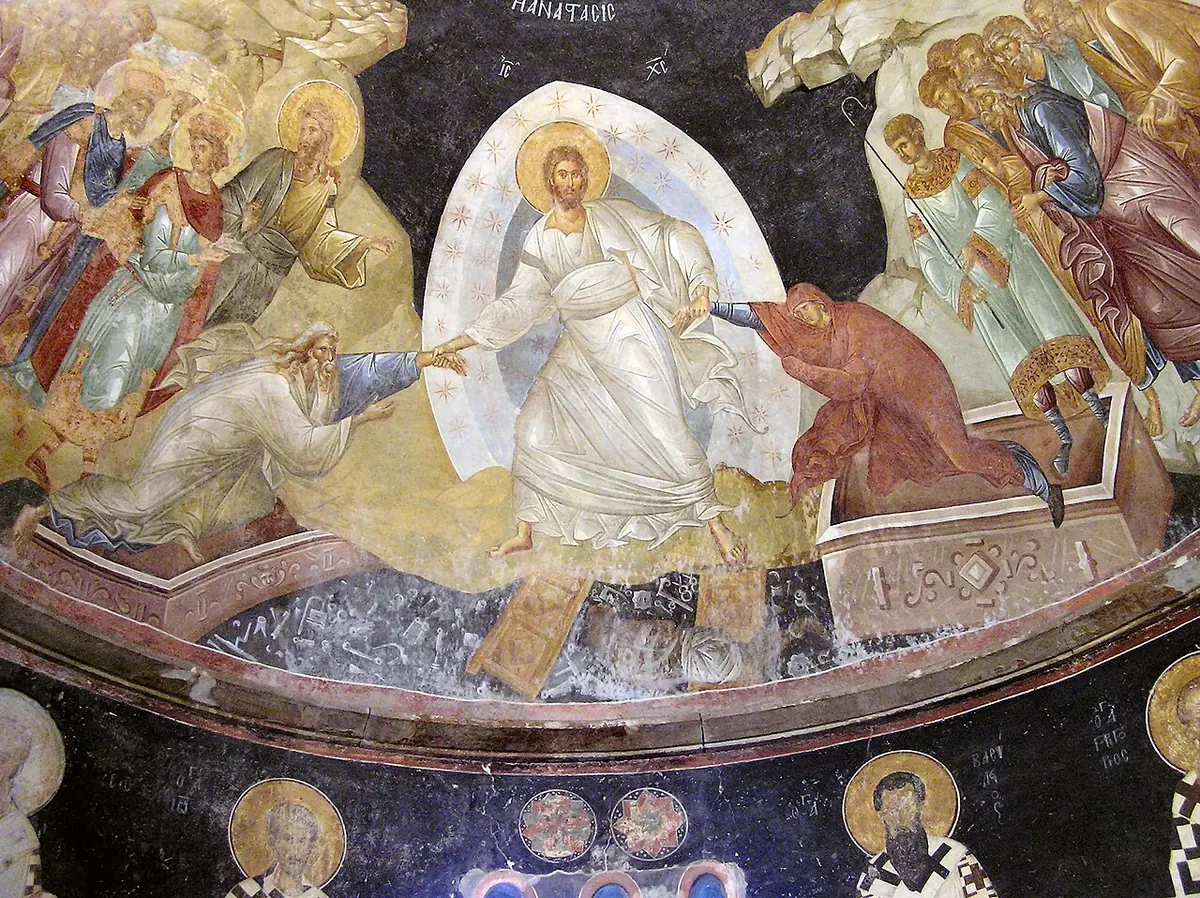
The Eastern churches paint Easter this way, as in the great fresco of the Chora Church in Istanbul: Christ standing on the shattered doors of the underworld, the locks and bolts scattered, lifting our first parents out of their graves by the wrist. We do not light candles to death. We sing, with St. Paul, "O death, where is thy victory? O death, where is thy sting?" (1 Corinthians 15:55).
Is Santa Muerte in the Bible?
No. The Bible never mentions a Santa Muerte or any holy figure of death. What it does say about death is plain:
- Death is an enemy that Christ destroys (1 Corinthians 15:26).
- Christ freed us from the devil, "who had the empire of death," and from lifelong fear of dying (Hebrews 2:14–15).
- In the end, "God shall wipe away all tears from their eyes: and death shall be no more, nor mourning, nor crying, nor sorrow shall be any more" (Apocalypse 21:4).
- God "is not the God of the dead, but of the living" (Mark 12:27).
- God's people must not consult spirits or anyone "that seeketh the truth from the dead," for "the Lord abhorreth all these things" (Deuteronomy 18:11–12).
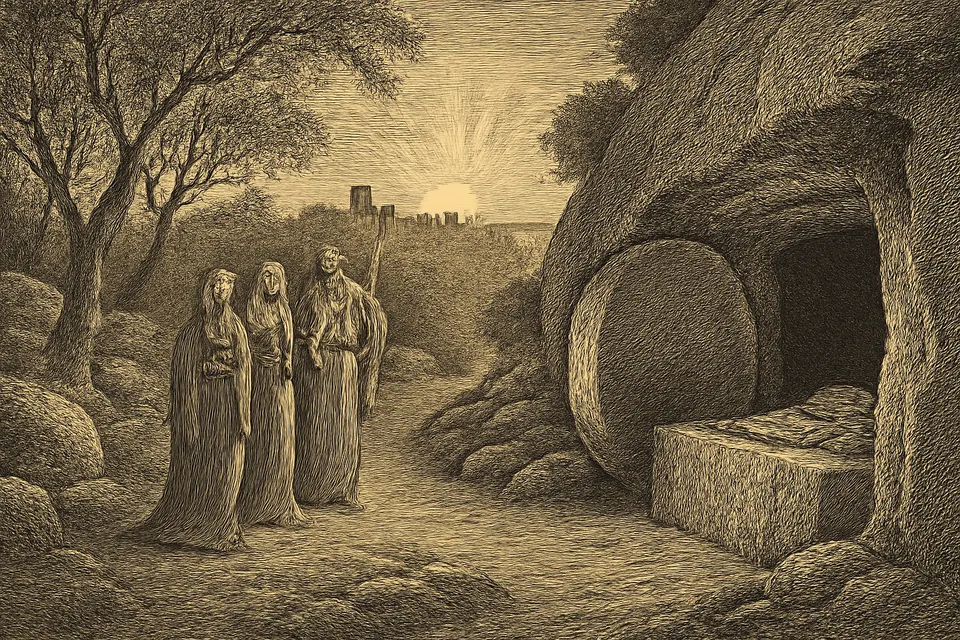
Jesus said at the tomb of Lazarus, "I am the resurrection and the life" (John 11:25). That is the Christian answer to death: not a figure to appease, but a Person who rose.
Santa Muerte, the Day of the Dead and La Catrina
These three get confused online, and Mexican Catholics are often hurt by the mix-up.
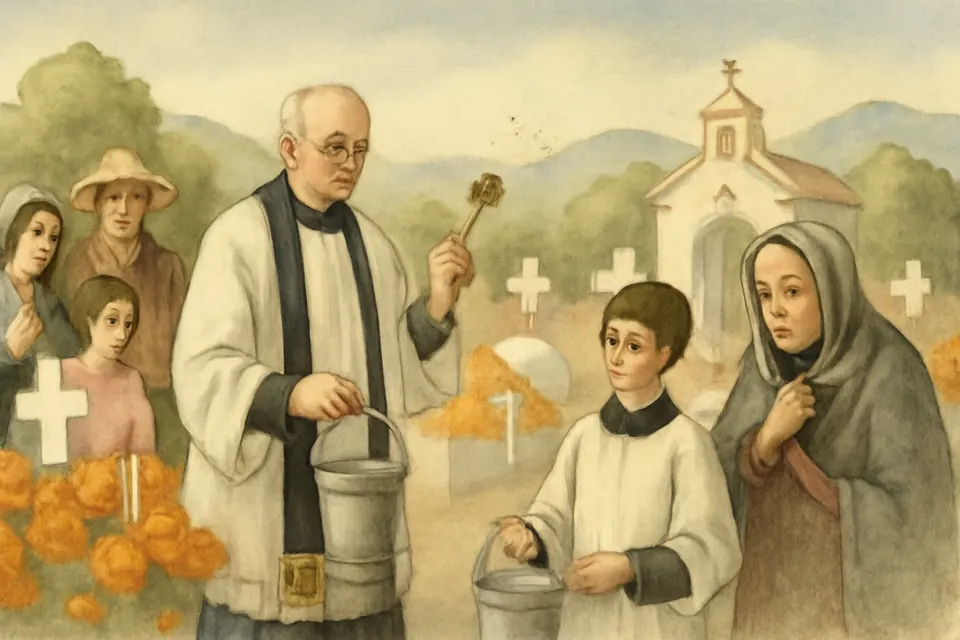
Día de Muertos, on November 1 and 2, is a family feast for remembering loved ones who have died. It grew up around All Saints' Day and All Souls' Day. Families clean and decorate graves with orange cempasúchil (marigolds), set out photographs and favorite foods, go to Mass and pray for their dead. Nobody prays to death on the Day of the Dead. They pray to God for the dead. The Church encourages the prayer and asks that the customs be lived with faith.
La Catrina is the elegant skeleton lady in a big feathered hat drawn by the engraver José Guadalupe Posada in the early 20th century to poke fun at Mexicans who put on European airs. Diego Rivera later painted her in a famous mural. She is satire and folk art, a reminder that death comes for rich and poor alike. No one prays to La Catrina.
Santa Muerte is something else: a figure people pray to and make promises to. She is not part of the Day of the Dead, even though her statues show up in the same markets in late October.
Santa Muerte and the drug cartels
News stories often call her the "narco saint," and some drug traffickers and other criminals do keep her altars, asking her for protection from police and rivals. Chesnut has called her "the poster girl of narco-satanic spirituality." Some devotees ask her for things they would never dare ask of God, including revenge, and part of her appeal, he says, is that she is thought not to judge.
But it is unfair to treat every devotee as a criminal. CNA's reporting describes her following as criminals and people on the edges of society, and also many "cultural Catholics who maybe don't know (or care) that she is condemned by the Church." Many are poor workers, mothers, security guards, taxi drivers and people in neighborhoods where violence is close. The Mexican bishops have tied the cult to the "culture of death" of the drug trade, and they are right to. They have also always spoken of devotees as people to be brought home, not written off.
San Pascualito: the skeleton king of Guatemala and Chiapas
There is an older skeleton figure in the region, and it is connected to a real saint. In highland Guatemala and in Chiapas, Mexico, people venerate San Pascualito or Rey San Pascual, a crowned skeleton often seated on a throne or in a cart.
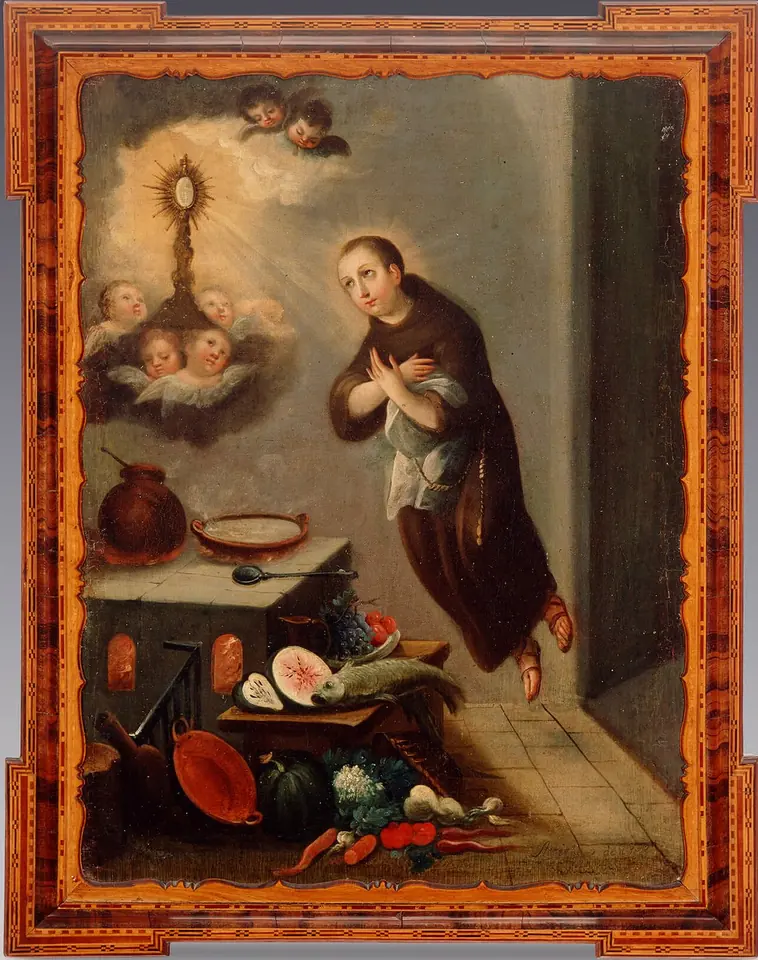
The real St. Paschal Baylon was a Spanish Franciscan lay brother (1540–1592), a shepherd turned porter, famous for his love of the Eucharist. He was beatified in 1618 and canonized in 1690, and he is the patron of Eucharistic congresses and of cooks. He never went to the Americas.
According to a legend recorded by the Guatemalan chronicler Francisco Antonio de Fuentes y Guzmán, in 1650, during an epidemic in the town of San Antonio Aguacaliente, St. Paschal appeared to a dying Kaqchikel Maya man as a tall skeleton in shining robes, and the plague ended. In a 2024 study, Chesnut traces how this local devotion turned the Franciscan saint into a figure of death, mixing in the European Grim Reaper and native death deities. This is a traditional story, not an investigated apparition.
The Church has never approved the skeleton cult of San Pascualito. St. Paschal himself is a true saint, and you can honor him the way the Church does: as a humble friar on his knees before the Blessed Sacrament.
"Santa Muerte prayer": what you should know
Thousands of people search for a Santa Muerte prayer every month. We will not print one. Prayers to her are usually written in the shape of Catholic prayers: a novena, a chaplet, a rosary, an Our Father and Hail Mary added at the end. That shape can make them look harmless. But a prayer is an act of worship and trust, and the Catechism is clear that such honor belongs to God alone (no. 2113). The Our Father prayed in front of an image of death does not belong there.
If you were about to pray to her because you are desperate, pray this instead, in your own words: Lord Jesus, You conquered death. I am afraid and I need help. Mary, my Mother, pray for me. God hears that prayer. Then look at the prayers below, which the Church has prayed for centuries.
Why people turn to Santa Muerte, and where to turn instead
Let us be honest about why people go to her. Some live where death is close every day. Some have a son in prison. Some feel judged at church, or were turned away, or never learned their faith. Some are grieving. Some need money by Friday. Santa Muerte is often described as the saint who accepts everyone and asks no questions.
The Church's answer is not to wag a finger. It is to say: the mercy you are looking for is real, and it is in Christ. Every need people bring to Santa Muerte has a true home in Catholic prayer.
For desperate and hopeless cases: St. Jude
St. Jude Thaddeus, the apostle, is the patron of hopeless causes, and in Mexico his feast on October 28 draws enormous crowds of exactly the people Santa Muerte attracts: young people, workers, families in trouble. Pray the St. Jude prayer or the St. Jude novena.

For a mother's protection: Our Lady of Guadalupe
At Tepeyac in 1531 the Mother of God came to a poor indigenous man, St. Juan Diego, and said she was his mother. Our Lady of Guadalupe is the Mother of the Americas. The robed woman Santa Muerte imitates is Mary, and Mary is alive, close and full of tenderness.
For a good death: St. Joseph
If your fear is of dying, or of a loved one dying badly, the Church gives you St. Joseph. The Catechism encourages us "to entrust ourselves to St. Joseph, the patron of a happy death" (no. 1014), because tradition holds that he died in the arms of Jesus and Mary. Pray the prayer to St. Joseph, and in the Hail Mary ask Our Lady to pray for us "at the hour of our death."

For protection from violence and evil: St. Michael
The archangel St. Michael is the Church's defender against evil. Pray the St. Michael prayer or a prayer for protection.
For prisoners and those in trouble with the law: St. Dismas
St. Dismas, the Good Thief, was a criminal dying on a cross beside Jesus, and he heard: "This day thou shalt be with me in paradise." No one is beyond that mercy. Pray for prisoners, and if you are one, pray with him.
For those you have lost: prayer for the dead
Many people first turn to Santa Muerte in grief. The Church gives us a better way to stay close to our dead: we pray for them. See our prayers for the dead and What is purgatory?
For mercy: the Divine Mercy Chaplet
If you feel too far gone for God, pray the Divine Mercy Chaplet. Jesus asked that it be prayed especially for sinners and for the dying.
If someone in your family keeps the devotion
Many Catholic families now have a relative with a Santa Muerte statue in the bedroom. How should you respond?
Start with love, not an argument. Ask why. Usually there is a fear or a need underneath: a dangerous job, a son in trouble, a past wound with the Church. Listen to that first.
Then speak simply and without contempt. You might say that you love them, that you believe Jesus has already beaten death, and that you would like to pray together to Our Lady or St. Jude for what they need. Offer to go to Mass with them, or to visit the priest together. Pray for them every day, by name.
Don't destroy their statue behind their back. It usually hardens hearts. Don't call them satanic or tell them they are going to hell. Do keep the door open. Many people come back to the sacraments through the patient witness of a mother or grandmother.
What to do with a Santa Muerte statue
If you have decided to leave the devotion behind, thank God for that grace. Here is our pastoral advice; your own parish priest is the best guide.
- Don't sell it or give it away. Passing it to someone else passes on the problem.
- Talk to a priest. Many will pray with you and help you get rid of the statue, candles and printed prayers respectfully. Burning what can be burned and breaking and burying what cannot are common ways of doing this; ask what your parish does.
- Go to confession. If you prayed to her, made promises or asked her for favors, bring it to the sacrament of Penance. The examination of conscience can help you prepare. Whatever you asked for, God's mercy is greater.
- Put something holy in its place. A crucifix, an image of Our Lady of Guadalupe or of St. Jude, a bottle of holy water, and a daily habit of prayer.
Death will come for each of us, and the Church does not pretend otherwise. But we go to meet it holding the hand of the One who walked out of His tomb on the third day.
Frequently asked questions
What is Santa Muerte?
Santa Muerte, "Holy Death," is death itself pictured as a robed female skeleton, usually holding a scythe and a globe. Devotees in Mexico, Central America and the United States pray to her for protection, love, money, health and justice. She is not a historical person and not a saint, and the Catholic Church does not approve the devotion.
What does Santa Muerte mean?
In Spanish, santa means "holy" or "saint" and muerte means "death," so the name means Holy Death or Saint Death. Devotees also call her la Niña Blanca (the White Girl), la Flaca (the Skinny One) and la Santísima Muerte. The holy-sounding name is part of why many people assume she is a Catholic saint. She is not.
Is Santa Muerte Catholic?
No. The Church canonizes only real men and women who lived holy lives and are with God in heaven; death is not a person. In 2013 Cardinal Gianfranco Ravasi of the Vatican's Pontifical Council for Culture called the cult "a blasphemy against religion," and in 2024 the Mexican bishops' conference named it among the "distorted cults" Mexicans should reject.
Is there a Santa Muerte prayer a Catholic can say?
No. A Catholic cannot pray to Santa Muerte, because prayer to her honors a creature, death, in the place of God, which the Catechism calls idolatry (no. 2113). What people seek from her, protection, help in desperate cases, a good death, can be asked of God through Our Lady and the saints, for example the St. Jude prayer or the Divine Mercy Chaplet.
What do Santa Muerte's colors mean?
Devotees give each robe and candle color a purpose: white for protection and health, red for love, gold for money, green for legal troubles, black for protection from harm, purple for healing, blue for concentration and brown for wisdom, according to Andrew Chesnut's study. The colors copy the way Catholic candles are used, but they are not a Church practice.
Is Santa Muerte in the Bible?
No. The Bible never speaks of a Santa Muerte. It calls death "the enemy" that Christ destroys (1 Corinthians 15:26), and it forbids seeking help from the dead or from spirits (Deuteronomy 18:10–12).
Is Santa Muerte the same as the Day of the Dead or La Catrina?
No. Día de Muertos (November 1–2) is a family feast for remembering and praying for loved ones who have died, joined to All Saints' Day and All Souls' Day. La Catrina is a satirical skeleton drawn by José Guadalupe Posada. Neither is a figure anyone prays to. Santa Muerte is a separate, recent devotion.
What should I do with a Santa Muerte statue?
Don't sell it or give it to someone else. Talk to your parish priest, who can pray with you and help you dispose of it respectfully, and bring the matter to confession if you prayed to her. Then put an image of Christ, Our Lady or a saint in its place and begin praying to God again.
Sources
- Pope Francis, Meeting with the Bishops of Mexico, Mexico City Cathedral (February 13, 2016), vatican.va. The warning about those who "embrace their macabre symbols to commercialize death"
- Catechism of the Catholic Church, nos. 2110–2128 (superstition, idolatry, divination and magic)
- Catechism of the Catholic Church, nos. 1005–1014 (dying in Christ Jesus)
- National Geographic, "Vatican Declares Mexican Death Saint Blasphemous" (May 2013). Cardinal Ravasi's words, "a blasphemy against religion"
- EWTN News / Catholic News Agency, "Have you heard of Saint Death? Don't pray to her" (first published October 30, 2016). Andrew Chesnut's estimate of 10 to 12 million devotees; the 1940s to 1980s love petitions
- EWTN News (ACI Prensa), "México: Obispos piden rechazar la 'narco cultura' y el culto a la Santa Muerte" (April 25, 2024), in Spanish. The Mexican bishops' conference message of April 24, 2024
- R. Andrew Chesnut, Devoted to Death: Santa Muerte, the Skeleton Saint (New York: Oxford University Press, 2012). History, the 2001 Tepito shrine, the 2005 loss of registration of the Iglesia Católica Tradicional México-Estados Unidos, colors and symbols
- Review of Chesnut, Santa Muerte. La segadora segura (Paidós, 2013), Cuadernos Fronterizos, Universidad Autónoma de Ciudad Juárez, in Spanish. The Inquisition files of 1790 (San Luis de la Paz) and 1793 (Querétaro); the color meanings
- R. Andrew Chesnut, "King Death: The Origins and Identity of Guatemalan and Mexican Skeleton Saint, Rey Pascual," International Journal of Latin American Religions (2024). San Pascualito and the 1650 Guatemalan legend
- Douay-Rheims Bible (drbo.org). Text of 1 Corinthians 15:26 and 15:55, Hebrews 2:14–15, Apocalypse 21:4, Deuteronomy 18:10–12 and Mark 12:27