The Beatitudes
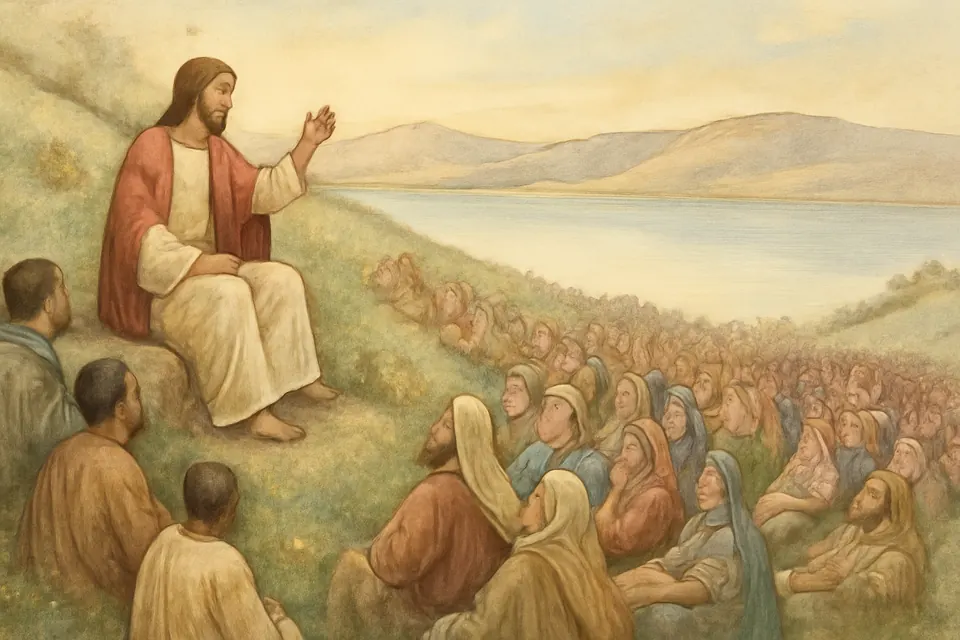
The Beatitudes are the eight blessings Jesus gave at the start of the Sermon on the Mount (Matthew 5:3–12), beginning "Blessed are the poor in spirit." The Catechism calls them the heart of Jesus' preaching: they describe the happiness of the kingdom of heaven and the way the saints have lived it.
The Beatitudes are the eight blessings Our Lord spoke when he sat down on a hillside in Galilee and opened the Sermon on the Mount. In a few lines he turned the world's idea of happiness upside down: blessed are the poor, the meek, the mourning, the persecuted. The Catechism of the Catholic Church (1716) says they "are at the heart of Jesus' preaching." It adds that they "depict the countenance of Jesus Christ" and that they "have begun in the lives of the Virgin Mary and all the saints" (1717).
That last line is the plan of this page. Below you will find the Beatitudes in full, what each one means, and a saint who lived it so completely that we can see in their life what Jesus was describing.

The Beatitudes: Matthew 5:3–12
The text below is from the Douay-Rheims Bible (Challoner revision), Matthew 5:1–12. Notice that in this translation, which follows the Latin Vulgate, "the meek" come before "they that mourn."
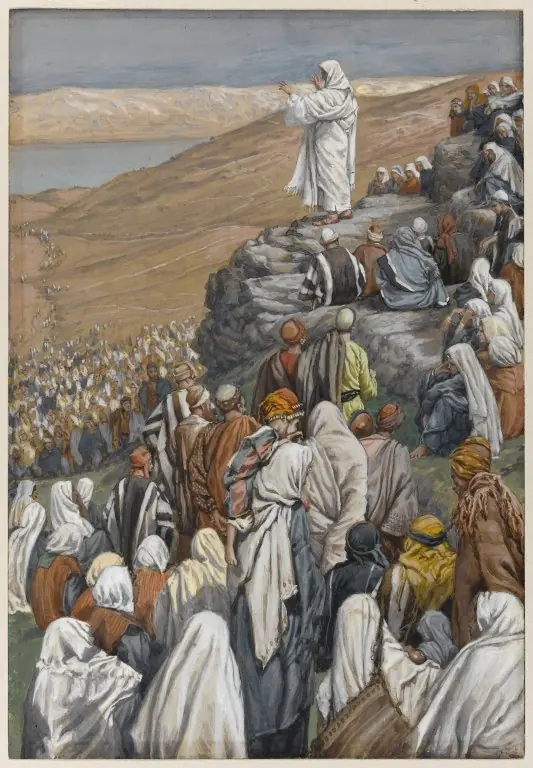
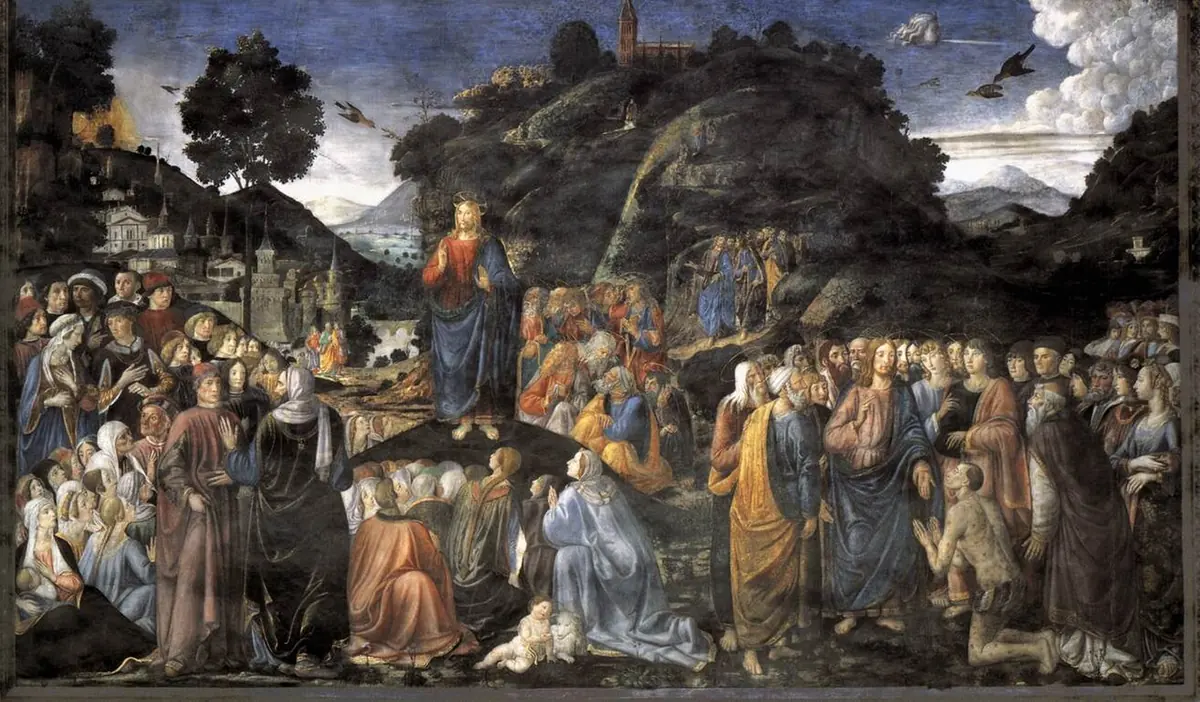
And seeing the multitudes, he went up into a mountain, and when he was set down, his disciples came unto him. And opening his mouth, he taught them, saying: Blessed are the poor in spirit: for theirs is the kingdom of heaven. Blessed are the meek: for they shall possess the land. Blessed are they that mourn: for they shall be comforted. Blessed are they that hunger and thirst after justice: for they shall have their fill. Blessed are the merciful: for they shall obtain mercy. Blessed are the clean of heart: for they shall see God. Blessed are the peacemakers: for they shall be called children of God. Blessed are they that suffer persecution for justice' sake: for theirs is the kingdom of heaven. Blessed are ye when they shall revile you, and persecute you, and speak all that is evil against you, untruly, for my sake: Be glad and rejoice, for your reward is very great in heaven. For so they persecuted the prophets that were before you.
St. Luke gives a shorter version, the Sermon on the Plain (Luke 6:20–23), with four blessings followed by four woes: "Woe to you that are rich." We hear Matthew's Beatitudes at Mass every year on the Solemnity of All Saints, which says everything about how the Church reads them.
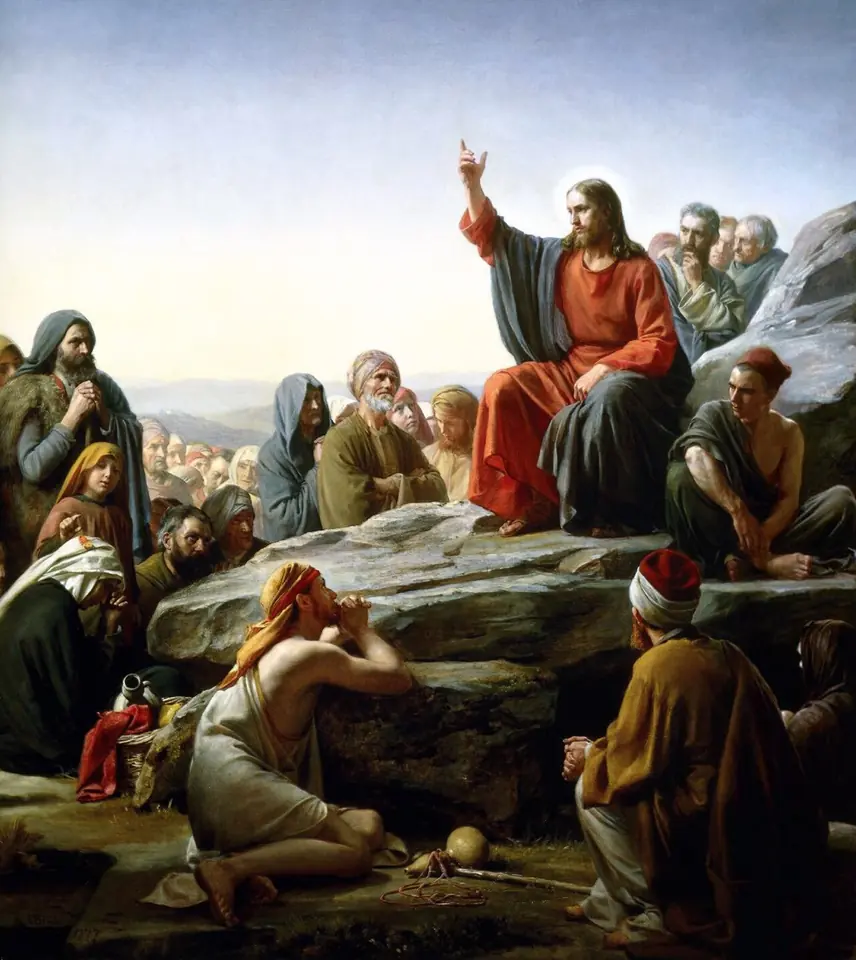
What the Beatitudes mean
Beatitude comes from the Latin beatus, blessed or happy. Each Beatitude has two halves: a condition ("Blessed are the merciful") and a promise ("for they shall obtain mercy"). The Baltimore Catechism (Q. 709) explains that they "are so called because each of them holds out a promised reward to those who practice the virtues they recommend."
Three things help us read them as the Church does.
They are a portrait of Christ. Before they are a program for us, they describe Jesus himself: poor, meek, weeping over Jerusalem, hungry for his Father's will, merciful, pure, making peace by the blood of his cross, persecuted unto death. To live the Beatitudes is to let his life take shape in ours.
They are promises, not just demands. The Catechism (1717) calls them "paradoxical promises that sustain hope in the midst of tribulations." Some of the blessing is already given now; the fullness is heaven.
They are a ladder. St. Augustine, in his commentary Our Lord's Sermon on the Mount, read the Beatitudes as seven steps of the soul's climb to God, with the eighth returning to the first: "in the first and in the eighth the kingdom of heaven is named." He matched each step to one of the seven gifts of the Holy Spirit from Isaiah 11: fear of the Lord to the poor in spirit, piety to the meek, knowledge to those who mourn, fortitude to those who hunger for justice, counsel to the merciful, understanding to the clean of heart, and wisdom to the peacemakers. St. Thomas Aquinas took up this teaching in the Summa Theologiae (I-II, q. 69). (See our page on the gifts of the Holy Spirit.)
St. Ambrose, comparing Matthew's eight with Luke's four, linked Luke's four Beatitudes to the four virtues he called "cardinal," which is the earliest known use of that word for prudence, justice, fortitude and temperance. Our page on the seven virtues tells that story.
Each Beatitude and a saint who lived it
1. Blessed are the poor in spirit: St. Francis of Assisi
The poor in spirit are the humble, those who know they have nothing they did not receive. The Baltimore Catechism (Q. 712) says they are "all persons, rich or poor, who would not offend God to possess or retain anything that this world can give." St. Augustine reads it as "those not puffed up." It is the opposite of pride, the first of the seven deadly sins.
No one shows it more clearly than St. Francis of Assisi. When his father dragged him before the bishop of Assisi to demand back his money, the young Francis took off even his clothes and handed them over, saying that from now on he would call only God his Father. The bishop covered him with his own cloak. Francis spent the rest of his life owning nothing and calling poverty his lady, and the kingdom of heaven was his.

2. Blessed are the meek: St. Francis de Sales
Meekness is strength under control. The Baltimore Catechism (Q. 714) says "the meek suppress all feelings of anger and humbly submit to whatever befalls them by the Will of God; and they never desire to do evil for evil." It is the remedy for wrath. Augustine links it with piety: the meek are teachable before God.
St. Francis de Sales, bishop of Geneva, was so gentle that people called him the gentleman saint, yet it did not come naturally; he worked for years to master a quick temper. His Introduction to the Devout Life gives a whole chapter to gentleness toward others and remedies against anger, and his patience with hostile listeners in the Chablais won back thousands to the faith.
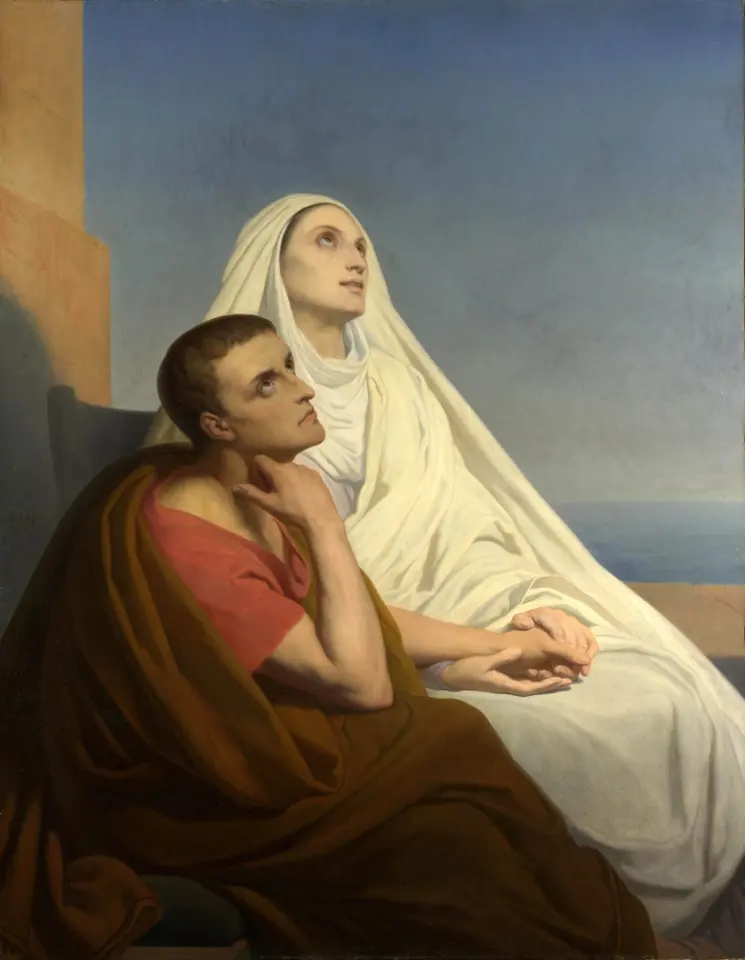
3. Blessed are they that mourn: St. Monica
The mourners Jesus blesses are not simply the sad. The Baltimore Catechism (Q. 713) says they are those "who, out of love for God, bewail their own sins and those of the world; and they who patiently endure all trials that come from God or for His sake." Augustine connects this Beatitude with the gift of knowledge: we weep because we finally see what sin has cost.
St. Monica wept for her son for years. A bishop told her, as Augustine records in his Confessions (Book III), "it is not possible that the son of these tears should perish." Augustine was baptized by St. Ambrose in 387, and Monica died at Ostia soon afterward, comforted. Her son became St. Augustine. She is the patron of every mother and father praying for a child who has wandered (see our prayer to St. Monica).
4. Blessed are they that hunger and thirst after justice: St. Peter Claver
Justice here means more than fairness in court. The Baltimore Catechism says "the justice after which we should seek is every Christian virtue included under that name": being made right with God, and setting things right among people. Augustine gives this step the gift of fortitude, because it takes courage to want holiness that badly.
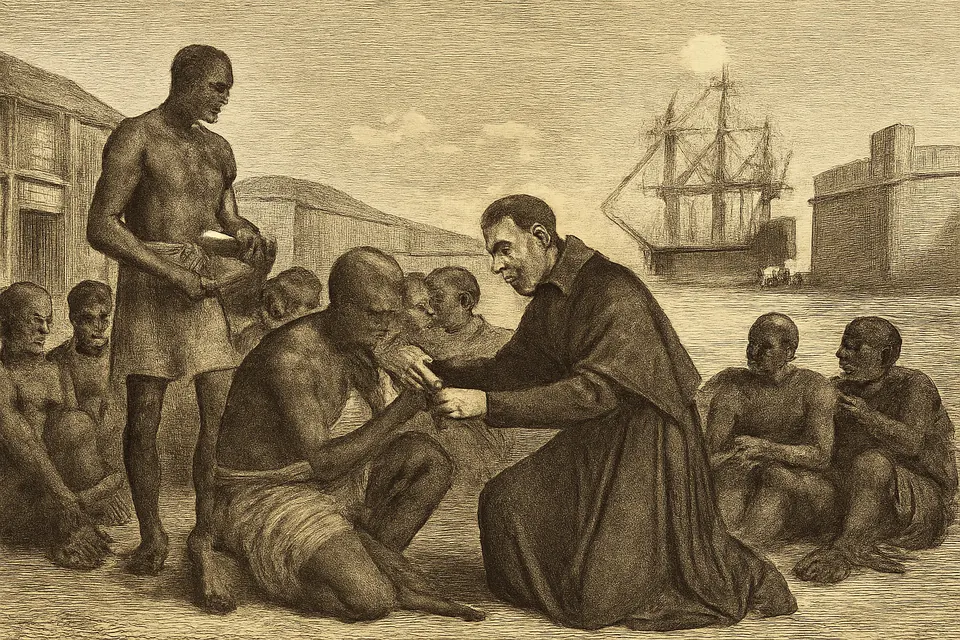
St. Peter Claver, a Spanish Jesuit, spent nearly forty years at the port of Cartagena, in what is now Colombia, meeting the slave ships as they docked. He went down into the holds with food, water, medicine and interpreters, nursed the sick, taught the faith and baptized thousands. At his final vows he signed himself the slave of the Africans forever. His hunger for justice was not an abstraction; it smelled of the ships.
5. Blessed are the merciful: St. Vincent de Paul
The Baltimore Catechism (Q. 715) answers simply: the merciful "are they who practice the corporal and spiritual works of mercy, and who aid by word or deed those who need their help for soul or body." The promise is exact: as we treat others, God treats us, the same truth we pray in the Our Father.
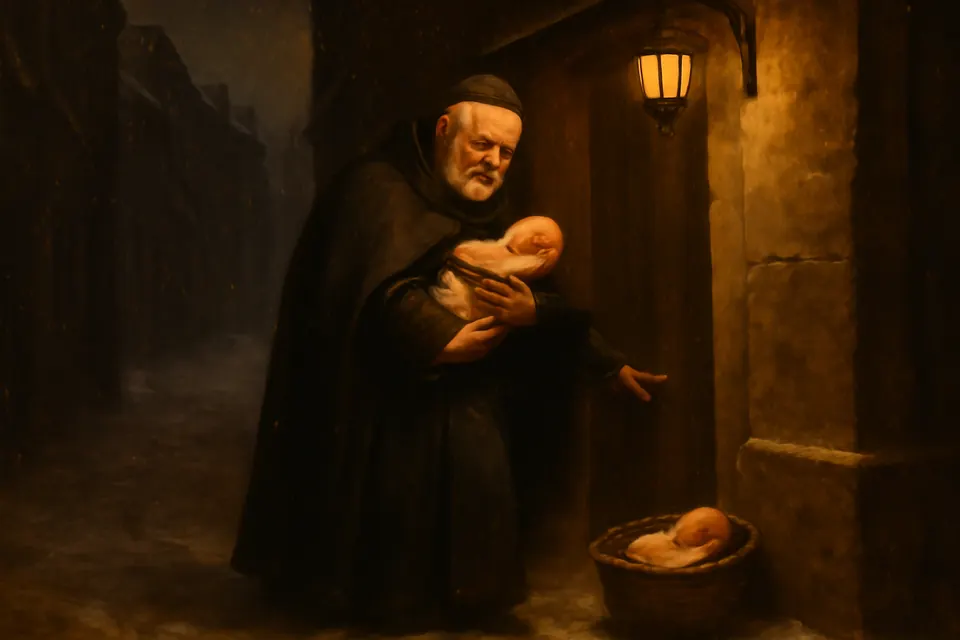
St. Vincent de Paul built mercy into institutions that still serve the poor today. With St. Louise de Marillac he founded the Daughters of Charity, organized the women of Paris to visit the sick poor, cared for galley slaves, and took up the cause of the abandoned infants of Paris. Tradition remembers him going out himself at night to gather foundlings.
6. Blessed are the clean of heart: St. Maria Goretti
Clean of heart means an undivided heart: chaste in body, sincere in intention, wanting God above all. The promise is the greatest of all: "they shall see God." Augustine pairs it with the gift of understanding, the purified eye that can see what "eye has not seen."
St. Maria Goretti was an Italian farm girl of eleven who in 1902 refused the advances of a young neighbor, Alessandro Serenelli, and was stabbed to death for it. Before she died she forgave him. Years later in prison he repented, and he lived out his life as a lay brother with the Capuchins. Her purity and her mercy came from the same clean heart. (Our page on young saints tells of others like her.)
7. Blessed are the peacemakers: St. Elizabeth of Portugal
Peacemakers do not just avoid conflict; they make peace, often at a cost to themselves. "They shall be called children of God," because they act as the Father acts, reconciling the world to himself in Christ. Augustine gives them the highest gift, wisdom.
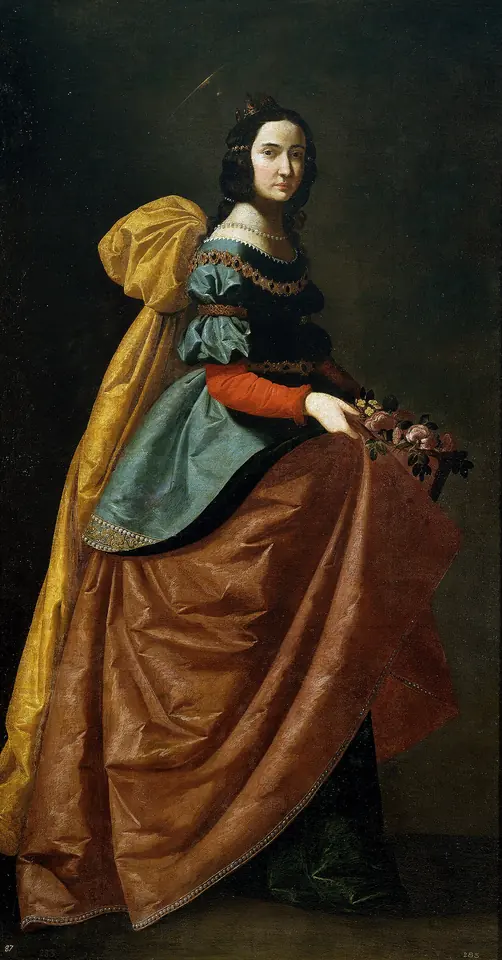
St. Elizabeth of Portugal, queen to King Denis, spent her life reconciling her own family. In 1323, when her husband and her son Afonso had brought their armies face to face near Alvalade, she rode out between the lines, and the battle did not happen. Years later, as a widow, she made a last journey to reconcile two kings. The Church honors her as a patron of peacemakers.
8. Blessed are they that suffer persecution for justice' sake: St. Thomas More
The eighth Beatitude repeats the promise of the first, "theirs is the kingdom of heaven." Augustine saw in that a sign that it gathers all the others: whoever has climbed the seven steps will suffer for it, and will be crowned for it. The Baltimore Catechism says the persecuted for justice' sake "are they who will not abandon their faith or virtue for any cause."
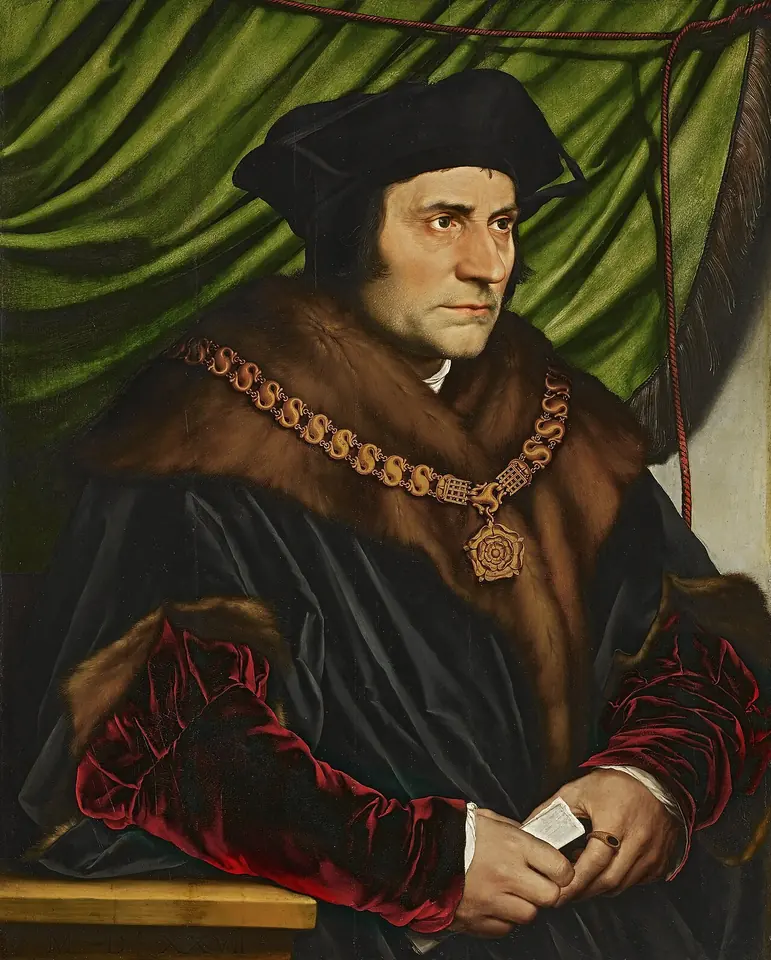
St. Thomas More, Lord Chancellor of England, would not swear the oath that recognized the king's break with Rome. He lost his office, his income and finally his head in 1535. A Paris newsletter written within weeks of his death reports that he died "his good servant, and God's first." Holbein painted him eight years earlier at the height of his career, wearing the chain of office he would give up.
"Blessed are ye when they shall revile you": St. Stephen
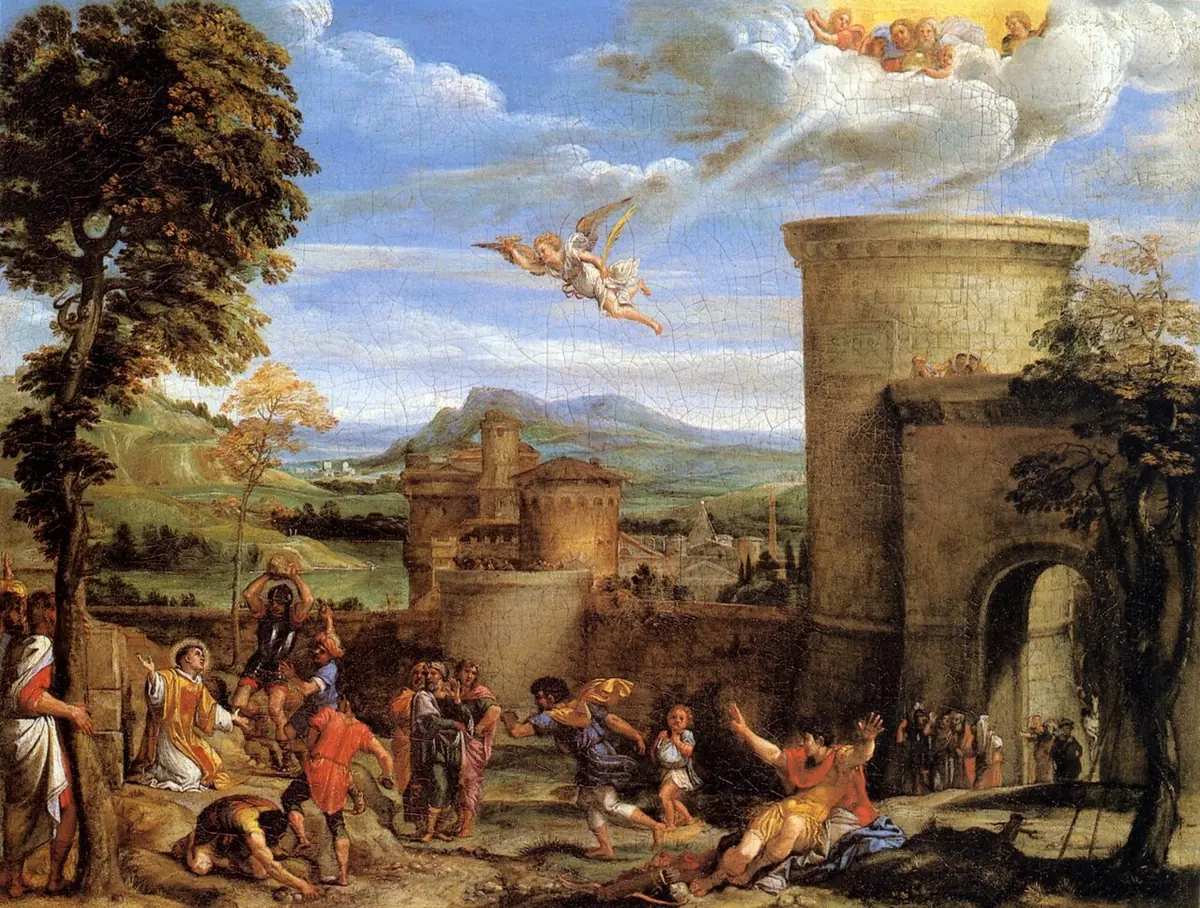
Verses 11 and 12 speak the eighth Beatitude directly to the disciples: "Blessed are ye... for my sake. Be glad and rejoice." The first to live it was St. Stephen, the deacon stoned outside Jerusalem. The Acts of the Apostles says that as the stones fell he saw the heavens opened and prayed, "Lord, lay not this sin to their charge" (Acts 7:59). Persecution that is borne with love turns into joy, as countless martyrs have shown since.
The Beatitudes and the Christian life
The Beatitudes do not replace the Ten Commandments; they crown them. The Commandments, which form the backbone of a good examination of conscience, mark the boundary we must never cross. The Beatitudes show where the road goes when we keep walking. Pope Francis wrote in Gaudete et exsultate (63) that "the Beatitudes are like a Christian's identity card": if anyone asks what it means to be a good Christian, the answer is to do, each in our own way, what Jesus says in the Sermon on the Mount.
They also map neatly onto the fight against sin. The poor in spirit fight pride, the meek fight wrath, the clean of heart fight lust, the merciful fight greed and envy, and those who hunger for justice fight sloth. If the seven deadly sins show where we are sick, the Beatitudes show what health looks like. Faith, hope and charity, which we put into words in the Acts of Faith, Hope and Love, are the life that runs beneath all eight.
The Mount of Beatitudes
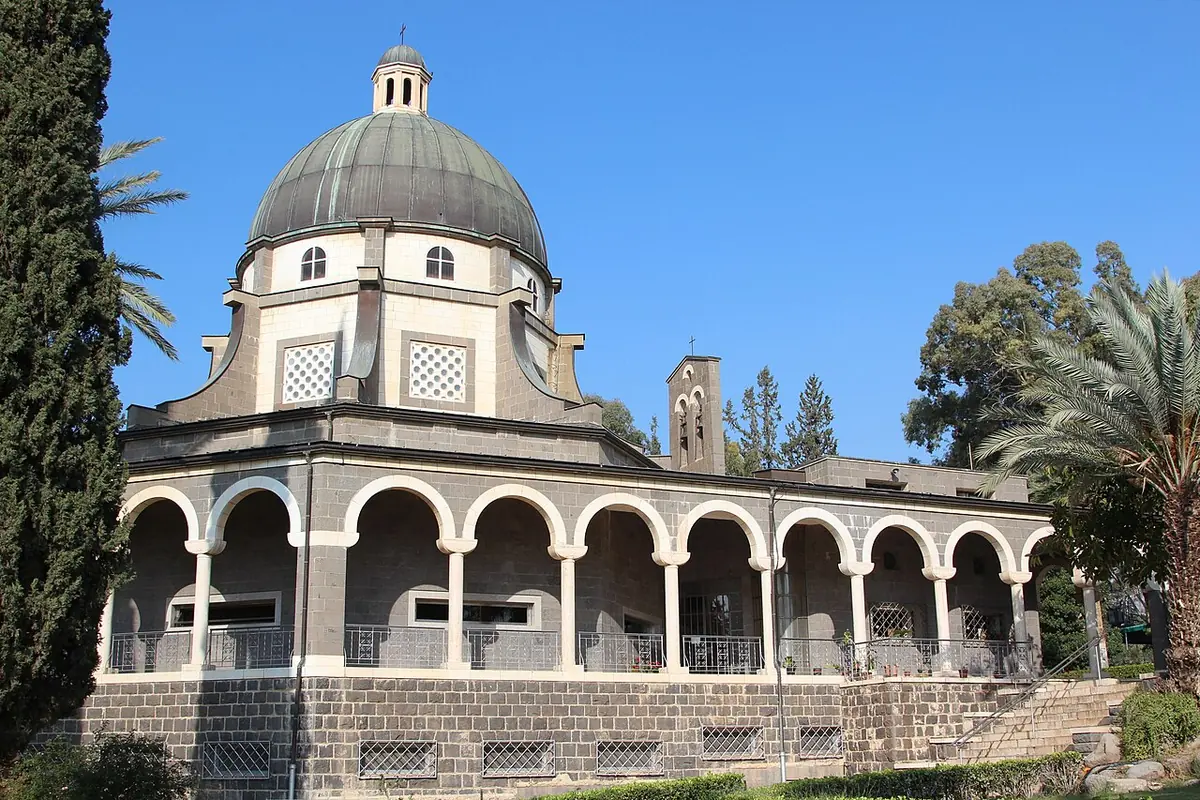
Tradition places the Sermon on the Mount on a low hill on the northwest shore of the Sea of Galilee, near Capernaum and Tabgha. Pilgrims have come there since the early centuries. Today the site is crowned by the Church of the Beatitudes, built in 1938 to a design by the architect Antonio Barluzzi; its eight sides recall the eight Beatitudes. Our guide to Catholic pilgrimage sites covers the other shrines of the Holy Land.
Praying with the Beatitudes
A simple way to pray them is to take one Beatitude a day for eight days, read it slowly, ask the saint who lived it to pray for you, and choose one small act. The following prayer is written for this page and offered by Pastor Lyvers.
Lord Jesus, you are the poor one, the meek one, the one who wept; you hungered for your Father's will, you showed mercy, your heart was clean, you made peace by your cross, and you were persecuted for our sake. Make my heart like yours. Where I am proud, make me poor in spirit; where I am angry, make me meek; where I am hard, make me merciful; where I am divided, make me clean of heart. Holy Mary, in whom the Beatitudes first came true, and all you saints of God, pray for me. Amen.
For more ways to pray, see our prayers hub and the Litany of the Saints.
Frequently asked questions
What are the 8 Beatitudes?
In the Douay-Rheims Bible: Blessed are the poor in spirit; the meek; they that mourn; they that hunger and thirst after justice; the merciful; the clean of heart; the peacemakers; and they that suffer persecution for justice' sake. Each comes with a promise, from the kingdom of heaven to seeing God (Matthew 5:3–10).
What is the meaning of the Beatitudes?
The Catechism (1717) says the Beatitudes "depict the countenance of Jesus Christ and portray his charity." They describe the happiness God promises and the kind of heart that receives it. Pope Francis calls them "a Christian's identity card" (Gaudete et exsultate, 63). They are not rules so much as a portrait of Christ that we are called to grow into.
Are there 8 or 9 Beatitudes?
The Catholic tradition counts eight, as the Baltimore Catechism does. Verses 11–12, "Blessed are ye when they shall revile you," turn the eighth Beatitude toward the disciples directly, so some Bibles and teachers count nine. The difference is only in counting; the text is the same.
Where are the Beatitudes in the Bible?
In Matthew 5:3–12, at the opening of the Sermon on the Mount, and in a shorter form in Luke 6:20–23, the Sermon on the Plain, where four blessings are followed by four woes. The Sunday Gospel at Mass reads Matthew's Beatitudes on the Solemnity of All Saints.
What does \"poor in spirit\" mean?
It means the humble, those who depend on God rather than on themselves or their possessions. The Baltimore Catechism says the poor in spirit are "all persons, rich or poor, who would not offend God to possess or retain anything that this world can give." St. Augustine reads it as "those not puffed up."
How do the Beatitudes differ from the Ten Commandments?
The Commandments mark the boundaries we must not cross; the Beatitudes point to the summit. The Catechism places the Beatitudes "at the heart of Jesus' preaching" and says they fulfill the promises God made from Abraham on. A good confession uses both.
Who lived the Beatitudes best?
Our Lord himself, and after him the Blessed Virgin Mary. The Catechism (1717) says the Beatitudes "have begun in the lives of the Virgin Mary and all the saints." Every canonized saint is someone in whom the Church recognizes these blessings fully at work.
Sources
- Catechism of the Catholic Church, nos. 1716–1717 (The Beatitudes)
- Douay-Rheims Bible (Challoner revision), Matthew chapter 5, DRBO.org
- St. Augustine, Our Lord's Sermon on the Mount, Book I, New Advent
- St. Thomas Aquinas, Summa Theologiae I-II, q. 69: The Beatitudes
- A Catechism of Christian Doctrine No. 3 (Baltimore Catechism, 1891), Q. 708–716 on the Beatitudes, Project Gutenberg
- Pope Francis, Gaudete et exsultate (2018), ch. 3, nos. 63–94
- St. Augustine, Confessions, Book III, ch. 12 ("the son of these tears"), New Advent
- Catholic Encyclopedia (1907), "The Eight Beatitudes"