The seven virtues
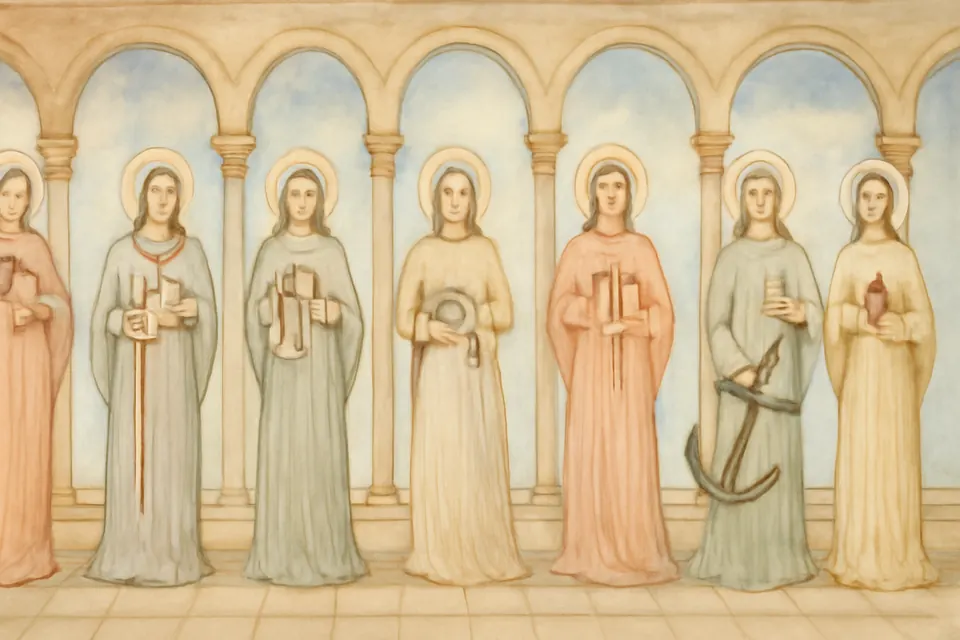
The seven virtues of Catholic teaching are the four cardinal virtues, prudence, justice, fortitude and temperance, and the three theological virtues, faith, hope and charity. A different list, the seven heavenly or contrary virtues (humility, generosity, brotherly love, meekness, chastity, temperance, diligence), opposes the seven deadly sins.
The seven virtues are the four cardinal virtues, prudence, justice, fortitude and temperance, and the three theological virtues, faith, hope and charity. Together they are the shape of a good life in Christ. The Catechism defines a virtue as "an habitual and firm disposition to do the good," something that lets a person "not only to perform good acts, but to give the best of himself." Virtue is what grace looks like when it has become a habit.
People also search for the "seven heavenly virtues," which usually means a different list: the seven virtues that oppose the seven deadly sins. Both lists are explained below, honestly, along with where each came from and a saint who lived every one.
The seven virtues at a glance
The four cardinal virtues:
- Prudence: right reason in action; knowing the true good and the right way to reach it.
- Justice: the firm will to give God and neighbor what is their due.
- Fortitude: courage and steadiness in doing good when it is hard.
- Temperance: moderation in pleasures and balance in the use of created things.
The three theological virtues:
- Faith: believing God and all he has revealed, because he is truth itself.
- Hope: trusting God for heaven and for the grace to get there.
- Charity: loving God above all things and our neighbor as ourselves for love of him.
The Baltimore Catechism (Q. 469–470) puts the difference in one line: faith, hope and charity are "infused," that is "poured into our souls, because they are strictly gifts of God," while the four moral virtues, "though also gifts of God, may, as natural virtues, be acquired by our own efforts."
The four cardinal virtues
The Catechism (1805) says that four virtues "play a pivotal role and accordingly are called 'cardinal'; all the others are grouped around them." The word comes from the Latin cardo, a hinge. Patience, honesty, modesty, gratitude and dozens of other virtues all swing on these four.
The four were known before Christ. Plato grouped them in the Republic, and the Book of Wisdom names all four in one verse: "for she teacheth temperance, and prudence, and justice, and fortitude, which are such things as men can have nothing more profitable in life" (Wisdom 8:7, Douay-Rheims). The Catholic Encyclopedia traces the word "cardinal" for them to St. Ambrose, who used it while comparing the eight Beatitudes of St. Matthew with the four of St. Luke. St. Thomas Aquinas built his whole treatment of the moral life on them in the Summa Theologiae (I-II, q. 61).
Prudence
The Catechism (1806) calls prudence "the virtue that disposes practical reason to discern our true good in every circumstance and to choose the right means of achieving it." It quotes St. Thomas: prudence is "right reason in action." It is also called auriga virtutum, "the charioteer of the virtues," because it guides the others. Prudence is not timidity. A prudent person can be bold; he simply sees clearly before he acts.
A saint of prudence: St. Thomas More, the lawyer and Lord Chancellor who weighed every word under questioning, kept silent where silence was lawful, and gave his life only when there was no honest way left.
Justice
Justice, says the Catechism (1807), is "the constant and firm will to give their due to God and neighbor." Justice toward God is called the virtue of religion: worship, prayer, keeping the Lord's Day. Justice toward others means honesty, fair wages, keeping promises, respect for every person's rights and care for the common good.
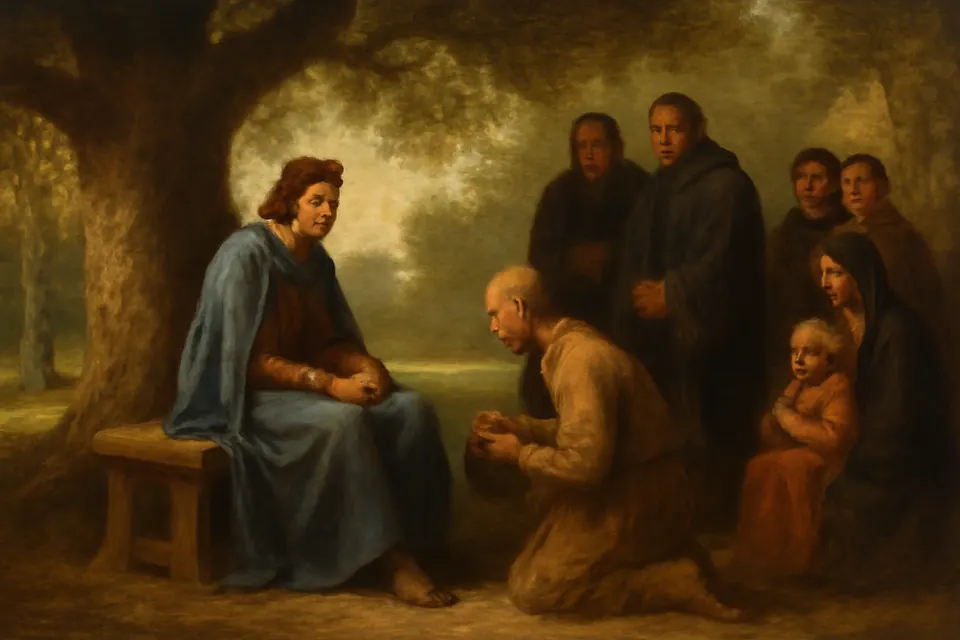
A saint of justice: St. Louis IX, king of France. His friend and biographer Jean de Joinville describes him sitting beneath an oak in the wood of Vincennes after Mass, letting anyone with a grievance come to him without an usher in the way, and judging the case himself.

Fortitude
Fortitude, the Catechism (1808) says, "ensures firmness in difficulties and constancy in the pursuit of the good." It lets us "conquer fear, even fear of death, and to face trials and persecutions." Fortitude is the virtue of the martyrs, but it is also the virtue of the mother who gets up again at three in the morning and of the man who stays sober one day at a time.
A saint of fortitude: St. Maximilian Kolbe, who stepped out of line at Auschwitz in 1941 to take the place of a stranger condemned to the starvation bunker. Our prayer for courage asks for this virtue.

Temperance
Temperance, in the Catechism's words (1809), "moderates the attraction of pleasures and provides balance in the use of created goods." It is the virtue that keeps food, drink, sleep, entertainment, comfort and sexuality in their right place, so that we enjoy God's gifts without being ruled by them. The New Testament calls it moderation or sobriety.
A saint of temperance: St. Monica. Her son St. Augustine tells in the Confessions (Book IX) that as a girl, sent down to draw wine from the cask, she began taking little sips that grew into whole cupfuls, until a servant girl, quarreling with her, threw the name "wine-bibber" at her. Monica was stung, saw the truth of it, and stopped at once.

The three theological virtues
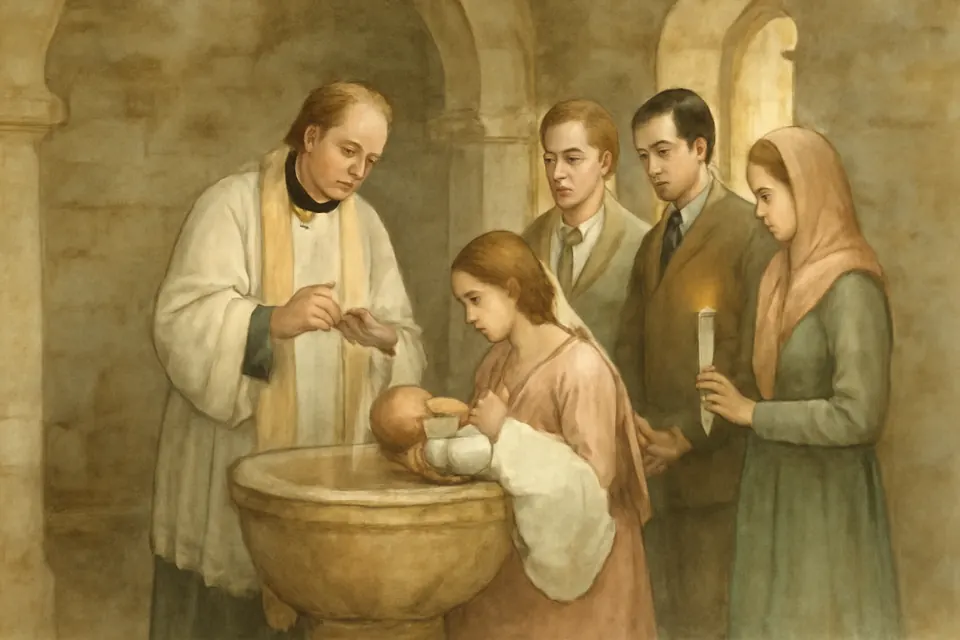
"The human virtues are rooted in the theological virtues," says the Catechism (1812), which relate "directly to God" and "have the One and Triune God for their origin, motive, and object." They are called theological, from the Greek theos, God, because God is what they reach for. They are given first at baptism, when the Holy Spirit makes his home in the soul. St. Paul names all three: "And now there remain faith, hope, and charity, these three: but the greatest of these is charity" (1 Corinthians 13:13).
The Church gives us short prayers to exercise each one, the Act of Faith, Act of Hope and Act of Love, with the full texts from the Baltimore Catechism.
Faith
Faith is the virtue by which we believe God and everything he has revealed, not because we have checked it ourselves but because he "can neither deceive nor be deceived." Faith is a gift, but it must be used: read about it, prayed, professed and defended.
A saint of faith: St. Joseph, who believed the angel's word in his dreams and rose at once to do what God asked, without a single recorded word of complaint.
Hope
Hope is the virtue by which we trust God to give us heaven and the grace to reach it. It is the opposite of both despair and presumption. In Spe salvi (2007), Pope Benedict XVI chose one saint to show what Christian hope is: St. Josephine Bakhita, kidnapped as a child in Sudan, "beaten till she bled, and sold five times in the slave-markets," who came to know in Italy that there is a "Paron," a master above all masters, who "actually loved her." Our prayer for hope is a good place to begin.
Charity
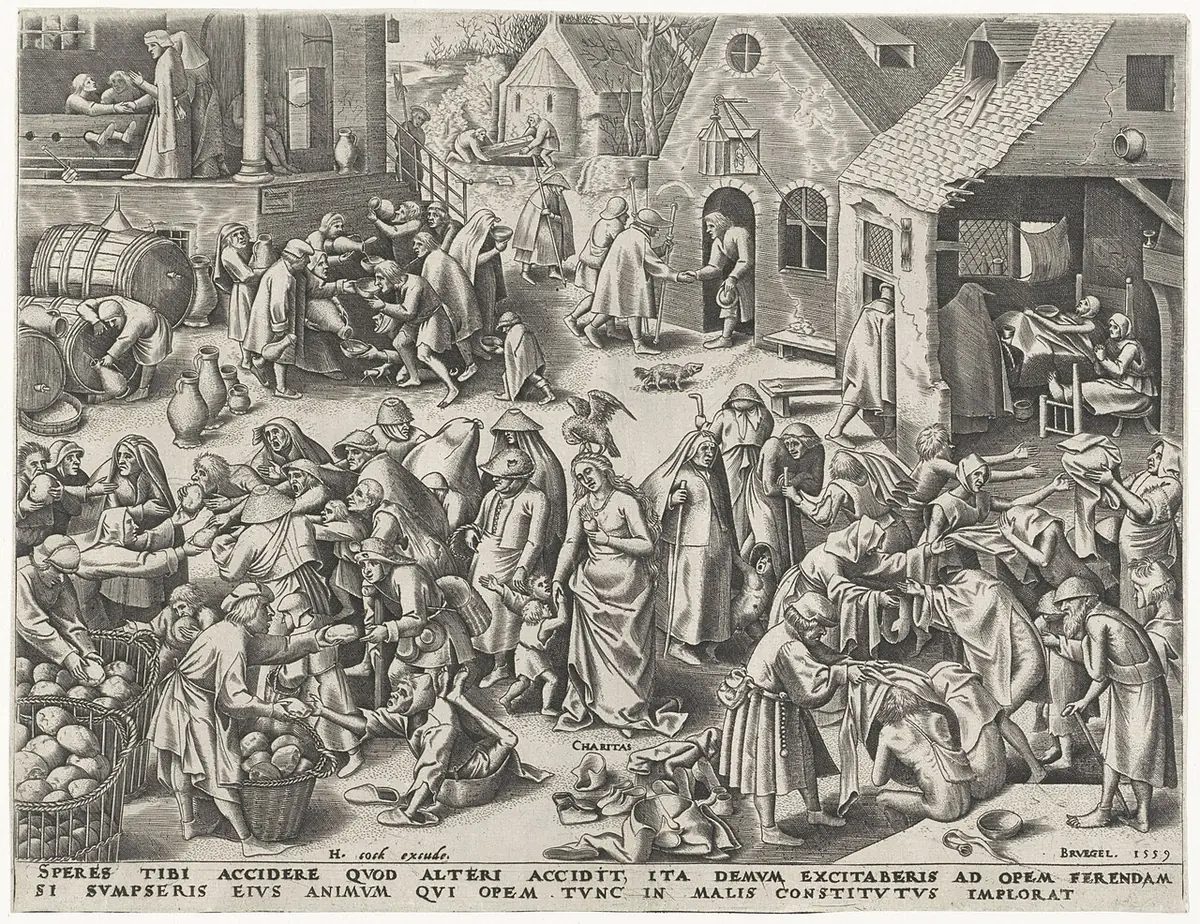
Charity is the virtue by which we love God above all things for his own sake, and our neighbor as ourselves for love of God. It is the greatest of the virtues, the one that lasts into heaven when faith gives way to sight and hope to possession. Every other virtue without charity is, in St. Paul's words, a "sounding brass."
A saint of charity: St. Vincent de Paul, who organized the women of Paris to visit the sick poor, founded the Daughters of Charity with St. Louise de Marillac, and turned France's attention to foundlings, galley slaves and the victims of war.
The seven heavenly virtues
If you have seen a list of "seven heavenly virtues" that pairs each virtue with one of the deadly sins, that is a different grouping, and it is worth knowing where it really comes from.
The best-known form is the list of virtues opposed to the capital sins. The Baltimore Catechism (No. 3, Q. 317) gives it this way: "Humility is opposed to pride; generosity to covetousness; chastity to lust; meekness to anger; temperance to gluttony; brotherly love to envy, and diligence to sloth." Popular versions swap in kindness for brotherly love, patience for meekness, or charity for generosity. These are the virtues to work on once you know which capital sin is your ruling passion.
Three honest notes about this list:
- It is not a rival to the cardinal and theological virtues. It is a practical teaching aid: one medicine for each disease. Humility, generosity, meekness and the rest all belong under the four cardinal virtues and are given life by charity.
- Gregory the Great did not write it. You will often read that Pope St. Gregory "enumerated" the seven heavenly virtues. What Gregory wrote, in his Morals on the Book of Job, is a list of seven principal vices springing from pride. He did not compose a matching list of seven virtues.
- Prudentius's battle was different. Around 405 the Spanish Christian poet Prudentius wrote the Psychomachia, "the battle for the soul," in which virtues fight vices in single combat. His pairs are Faith against the worship of the old gods, Chastity against Lust, Patience against Wrath, Humble Mind (with Hope) against Pride, Sobriety against Self-Indulgence, Good Works against Avarice, and Concord against Discord. The poem was copied and illustrated all through the Middle Ages and gave Christian art its image of virtues as armed women, but it is not the source of the modern list.

The seven virtues in Christian art
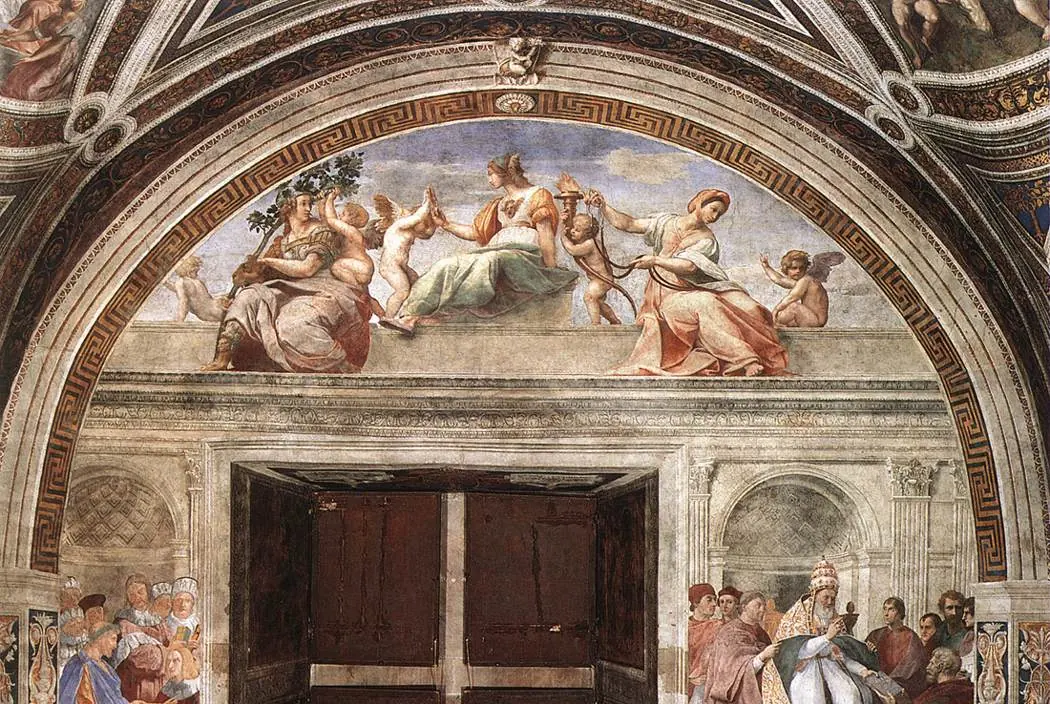
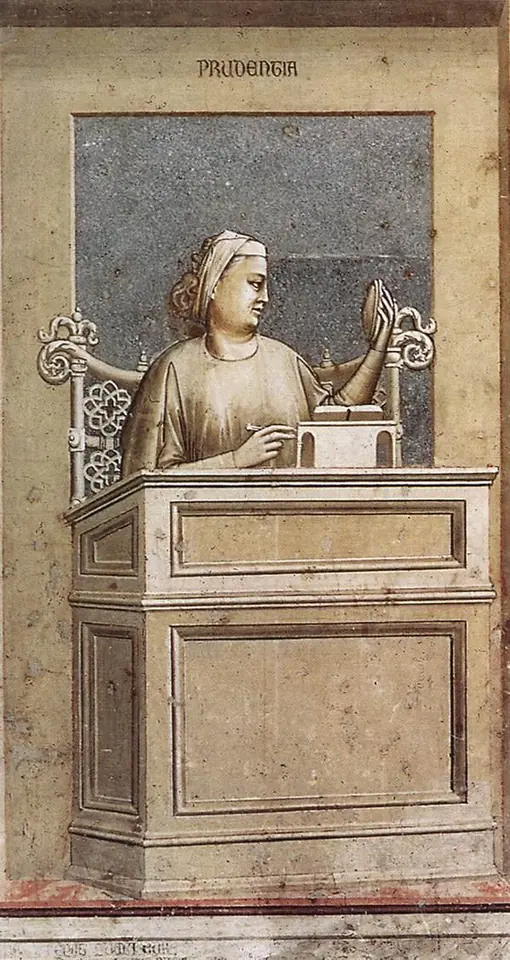
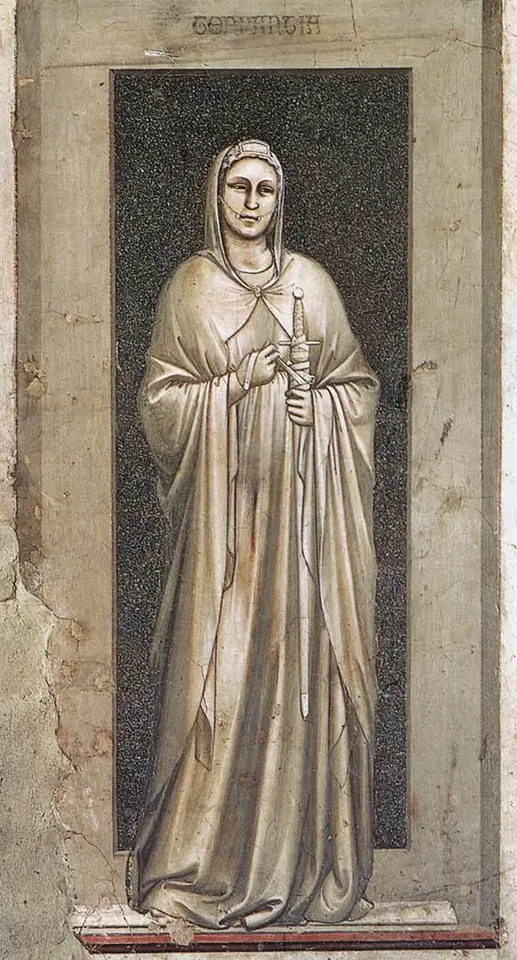
Painters loved the seven virtues because each one could be shown as a woman with an emblem. Giotto painted all seven around 1306 on the lower walls of the Scrovegni Chapel in Padua, facing seven vices across the nave: the four cardinal virtues and the three theological virtues, opposite Folly, Inconstancy, Wrath, Injustice, Infidelity, Envy and Despair. Prudence gazes into a mirror, Fortitude stands in armor behind a great shield, Temperance has a bridle on her lips and a sword bound shut in its sheath, Justice holds the balance.
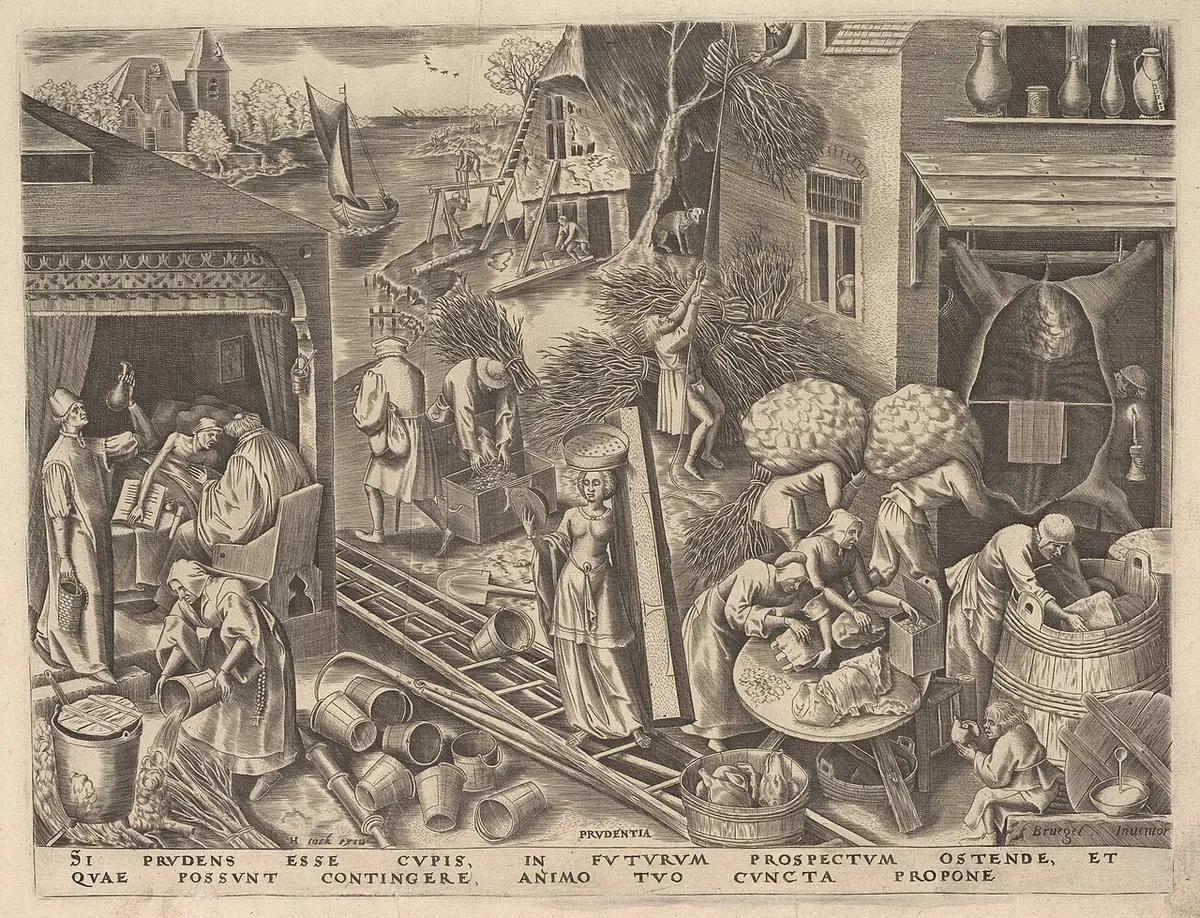
Raphael painted Fortitude, Prudence and Temperance in the Vatican's Stanza della Segnatura in 1511, with small winged children standing for faith, hope and charity. Botticelli's first documented public work, about 1470, was his Fortitude for the merchants' court of Florence, part of a set of virtues mostly painted by Piero del Pollaiolo. In 1559 and 1560 Philip Galle engraved a series of the seven virtues after Pieter Bruegel the Elder, setting each virtue among ordinary Flemish people practicing it. In his Prudence the townspeople salt meat and stack firewood before the winter.

Learn how to read these emblems on our guide to saints' symbols in art.
Virtues, gifts and the Beatitudes
The virtues are the foundation, but God gives more. The gifts of the Holy Spirit (wisdom, understanding, counsel, fortitude, knowledge, piety and fear of the Lord) make us docile to the Spirit's promptings; the Catechism (1831) says they "complete and perfect the virtues." The Beatitudes describe what a life of virtue and gifts looks like when it is lived to the full. St. Augustine, in his commentary on the Sermon on the Mount, matched the seven gifts to the Beatitudes one by one.
How to grow, in practice:
- Pray for it. The theological virtues can only be received. Ask, every day, with the Acts of Faith, Hope and Love.
- Practice it. The cardinal virtues grow like muscles: by small, repeated acts. One honest answer, one fast, one patient silence at a time.
- Go to the sacraments. The Catechism (1811) tells us to "frequent the sacraments" and "cooperate with the Holy Spirit." Confession heals the vices; the Eucharist feeds charity.
- Know your weakness. Use the examination of conscience to find the capital sin that trips you most, then choose its opposing virtue as your project.
- Find a saint. Every virtue has a saint who wore it well. Ask that saint to pray for you.
A prayer for the seven virtues
This prayer is written for this page and offered by Pastor Lyvers.
Holy Spirit, Giver of every good gift, give me prudence to see the good, and justice to do it; fortitude when it is hard, and temperance when it is pleasant. Increase in me the faith that believes you, the hope that waits for you, and the charity that loves you above all things, and my neighbor for your sake. Mary, Seat of Wisdom, pray for me. Amen.
For particular needs, see our prayers for patience, for humility and for wisdom.
Frequently asked questions
What are the seven virtues?
In Catholic teaching the seven virtues are the four cardinal virtues (prudence, justice, fortitude and temperance) and the three theological virtues (faith, hope and charity). The Catechism of the Catholic Church explains them in nos. 1803–1829. They are the seven virtues Giotto and Raphael painted.
What are the 4 cardinal virtues?
Prudence, justice, fortitude and temperance. The Catechism (1805) says that these four "play a pivotal role and accordingly are called 'cardinal'; all the others are grouped around them." Cardo is Latin for hinge: every other moral virtue turns on these four.
What are the three theological virtues?
Faith, hope and charity. They are called theological because they come from God and lead straight to him. The Catechism (1813) says they "are infused by God into the souls of the faithful," given first at baptism. St. Paul names them together in 1 Corinthians 13:13.
What are the seven heavenly virtues?
The name usually means the virtues that oppose the seven deadly sins: humility (against pride), generosity (against greed), brotherly love or kindness (against envy), meekness or patience (against wrath), chastity (against lust), temperance (against gluttony) and diligence (against sloth). The Baltimore Catechism lists these pairs. It is a teaching aid, not an official list of seven.
Did Pope Gregory the Great create the seven heavenly virtues?
No. This claim is repeated widely, but Gregory's Morals on the Book of Job lists seven principal vices with pride as their root. He did not draw up a matching list of seven virtues. The idea of virtues battling vices goes back to the poet Prudentius around 400, whose pairs were different.
What is the difference between cardinal and theological virtues?
The cardinal virtues govern how we live well as human beings and can be grown by practice, education and effort, helped by grace. The theological virtues have God himself as their object and are pure gifts: the Baltimore Catechism says they are "poured into our souls" and "do not depend upon our efforts to obtain them."
Which is the greatest virtue?
Charity. St. Paul says, "And now there remain faith, hope, and charity, these three: but the greatest of these is charity" (1 Corinthians 13:13, Douay-Rheims). Among the cardinal virtues, prudence comes first, because it guides the others; the Catechism calls it "the charioteer of the virtues."
How do I grow in the virtues?
By repeated good acts, by prayer and by the sacraments. The Catechism (1810–1811) says human virtues grow by education, deliberate acts and perseverance, and that we should ask for grace, frequent the sacraments and cooperate with the Holy Spirit. Pick one virtue, one small daily act, and one saint to ask for help.
Sources
- Catechism of the Catholic Church, nos. 1803–1811 (The Virtues; the Human Virtues)
- Catechism of the Catholic Church, nos. 1812–1829 (The Theological Virtues)
- Catholic Encyclopedia (1908), "Cardinal Virtues": St. Ambrose's use of the word cardinal; Plato and the Book of Wisdom
- A Catechism of Christian Doctrine No. 3 (Baltimore Catechism, 1891), Q. 317 and Q. 469–470, Project Gutenberg
- Prudentius, Psychomachia (Latin text), The Latin Library
- Pope Benedict XVI, Spe salvi (2007), nos. 3–5, on St. Josephine Bakhita
- St. Thomas Aquinas, Summa Theologiae I-II, q. 61: The cardinal virtues
- St. Augustine, Confessions, Book IX, ch. 8 (St. Monica and the wine cellar), New Advent