Our Lady of Zeitoun
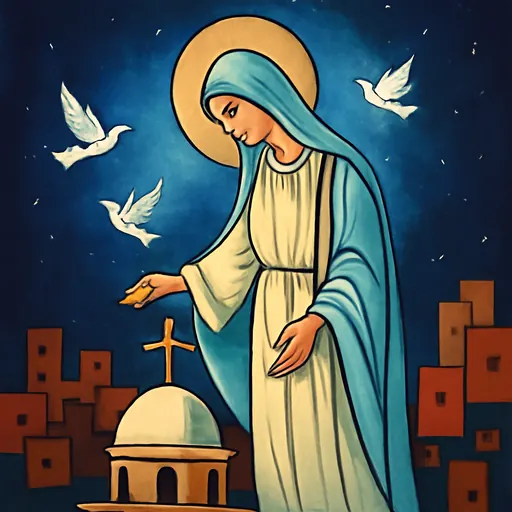
Our Lady of Zeitoun is the title given to the apparitions of the Virgin Mary reported over the Coptic Orthodox Church of St. Mary in Zeitoun, Cairo, from April 2, 1968, until 1971. Huge crowds, Muslims as well as Christians, saw a figure of light on the church domes, often with doves of light. The Coptic Orthodox Patriarchate under Pope Kyrillos VI declared in May 1968 that the Virgin had truly appeared. The Catholic Church has made no formal judgment.
Who is Our Lady of Zeitoun?
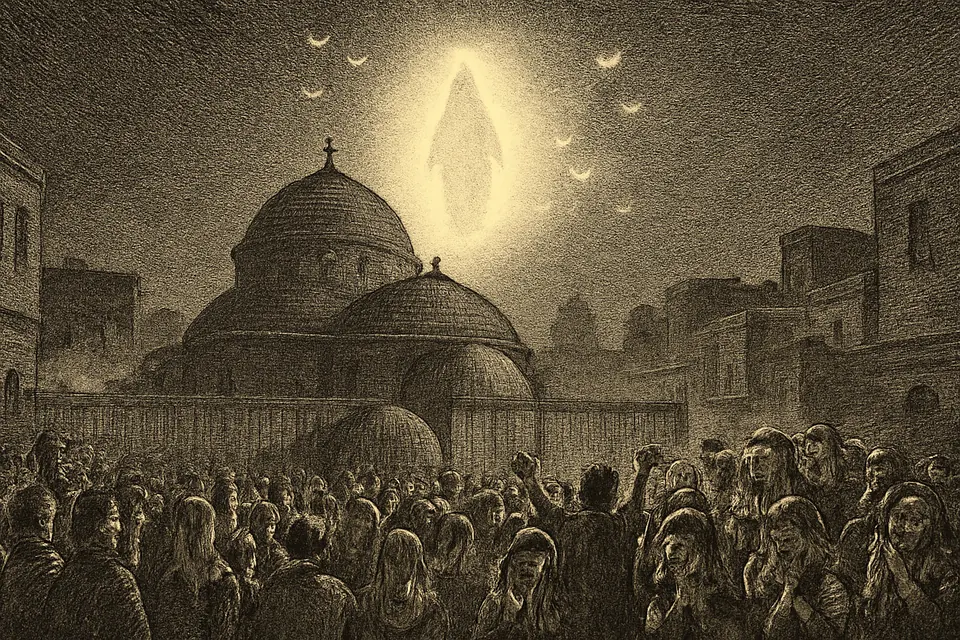
Our Lady of Zeitoun is the title given to the apparitions of the Blessed Virgin Mary reported over the Coptic Orthodox Church of St. Mary in Zeitoun, a district of Cairo, from April 2, 1968, into 1971. On many nights, crowds gathered in the streets around the church saw a figure of light on its domes, sometimes for minutes, sometimes for hours, often with shapes like doves flying around it. Witnesses included Muslims as well as Christians, and Egyptian newspapers printed photographs.
The Coptic Orthodox Church, under Pope Kyrillos VI, declared that the Virgin had truly appeared. Our Coptic Orthodox brothers and sisters honor her there as the Mother of Light. The Catholic Church has made no formal judgment on Zeitoun, neither approving nor rejecting it, and it is right to say so plainly. What follows describes the apparitions as the Coptic Church has received them.

The church and the first night
The Church of the Virgin Mary stands on Tomanbay Street in Zeitoun. According to the account Catholic World Report gives, a Coptic landowner, Khalil Ibrahim, said that in 1918 the Virgin asked him in a dream to build a church on his land, and the church was completed in 1924.
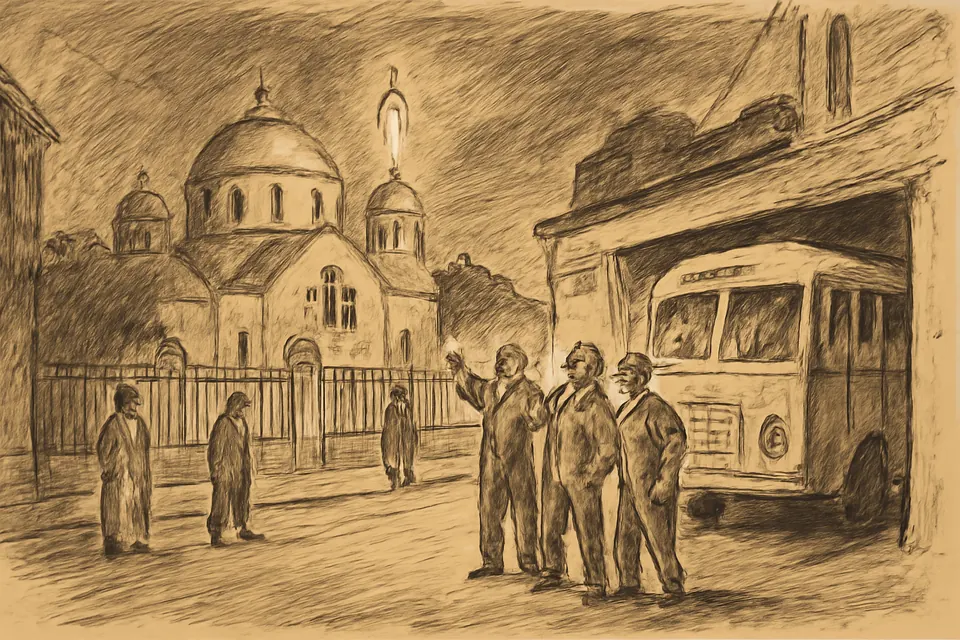
On the evening of Tuesday, April 2, 1968 (24 Baramhat in the Coptic calendar), workmen at a city bus garage across the street saw a woman in white on the edge of the central dome. One of them, a Muslim mechanic named Farouk Mohammed Atwa, thought she was about to jump and ran for help. A crowd gathered. Someone said it was the Virgin Mary. The figure was seen again on April 9, and then, for a long time, two or three times a week.
What the crowds saw
The witness accounts gathered by the Coptic weekly Watani in May 1968 describe the Virgin seen full-length or half-length, surrounded by light, sometimes on the domes and sometimes among them. Anba Athanasius, the Coptic bishop of Beni Suef, said he watched her for two hours and fifteen minutes; she was life-sized, he said, in a soft light-blue color, with a halo around her. Others saw her walk along the roof, bow before the cross on the dome and stretch out her hands to bless the people. Some described a luminous cloud, and white forms like doves flying before her. On the first night, one account says, she held an olive branch.
The crowds grew to enormous size. Catholic World Report gives an estimate of 250,000 people on a single night, and a total of at least a million who saw something over the three years. Healings were reported, among them a retinal detachment healed, according to one witness quoted in Watani. Egypt had lost the Six-Day War ten months earlier, and the anthropologist Cynthia Nelson, who studied the events in 1973, noted how many Egyptians of every faith and class came to Zeitoun in those months.
Not everyone saw a clear figure; some visitors saw only flashes of light. Skeptics have proposed explanations from crowd expectation to lights produced by tectonic strain, and some published photographs may have been retouched. The Coptic Church, after its own inquiry, judged otherwise.
The Coptic Church's recognition
Pope Kyrillos VI, the Coptic patriarch, had the reports examined by clergy, among them bishops who watched the apparitions themselves. In early May 1968 the Patriarchate issued a statement to the press, radio and television. It declared that the Virgin Mary, "Mother of Light, has appeared repeatedly" at the church bearing her name in Zeitoun, and that the Patriarchate, "with full faith and profound gratitude to Divine Providence," affirms that she "has indeed appeared repeatedly and clearly in her church at Zeitoun, Cairo." The statement named two signs: a revival of faith and healings. The pope ordered hymns of praise to the Virgin sung in all churches.
The apparitions came at a moment of great feeling for the Copts. That June the relics of St. Mark, founder of the Church of Alexandria, were returned from Venice to Cairo for the new cathedral of St. Mark in Abbasiya.
The Catholic position
Because the apparitions took place at a Coptic Orthodox church, judging them belongs to the Coptic Orthodox Church, and the Catholic Church has made no formal judgment of its own. Cardinal Stephanos I, the Coptic Catholic patriarch, was quoted in the Egyptian press relaying the testimony of a nun, but no Catholic bishop has issued a decree. Catholics may honor the Virgin under this title as a private devotion, and we can rejoice with our Coptic brothers and sisters in a sign that drew so many people to prayer.
Symbols of Our Lady of Zeitoun in art
Coptic icons of Zeitoun show what the crowds described:
- A figure of light on the dome: the Virgin stands above the small domes of the church, her body glowing white or pale blue.
- Doves of light: white doves fly around her, recalling the luminous birds witnesses reported.
- The olive branch: a sign of peace, from the first night's accounts.
- Bowing before the cross: some icons show her inclined toward the cross on the dome.
- The church itself: the domed building on Tomanbay Street fills the lower part of the icon, often with crowds in the street.
The church still draws pilgrims from Egypt and abroad, especially around the anniversary.

Feast and devotion
The Coptic Orthodox Church keeps the anniversary on April 2 (24 Baramhat), and the golden jubilee was celebrated at Zeitoun in May 2018. There is no feast of Our Lady of Zeitoun in the Catholic calendar. See the feast day calendar.
No traditional Catholic prayer to Our Lady of Zeitoun exists. Copts honor her with the hymns of praise their Church sings to the Theotokos. We can pray in the words the whole Church shares, "Holy Mary, Mother of God, pray for us sinners," and ask her to pray for the Christians of Egypt.
Frequently asked questions
What happened at Zeitoun in 1968?
On the evening of April 2, 1968, Muslim workmen at a garage across the street saw a figure in white on the dome of St. Mary's Coptic Orthodox Church in Zeitoun, a district of Cairo. Over the next three years, crowds that sometimes numbered in the hundreds of thousands reported seeing the Virgin Mary in light on the domes, often with luminous doves.
Is Our Lady of Zeitoun approved by the Catholic Church?
No formal judgment has been made. The apparitions took place at a Coptic Orthodox church, and the Coptic Orthodox Patriarchate, which has authority there, recognized them in May 1968. The Catholic Church has neither approved nor rejected them. Catholics are free to honor the Virgin Mary under this title as a private devotion while respecting that judgment belongs to the Church.
Did Our Lady say anything at Zeitoun?
No. Like Knock in Ireland, Zeitoun was a silent apparition. Witnesses described the Virgin moving along the roof, bowing before the cross and raising her hands to bless the crowd, but no message was reported.