Catholic prayer for financial help

A Catholic prayer for financial help asks God, our Father, for what we truly need and for the trust not to be crushed by worry. Pray the Our Father's "give us this day our daily bread," ask St. Joseph, who supported the Holy Family by his work, and St. Cajetan, patron of the unemployed, and pray to Our Lady, Mother of Divine Providence.
Money trouble reaches into everything: sleep, marriage, a parent's sense that he has failed his children. A layoff, a medical bill, a car that won't start, rent that went up again. If that's where you are tonight, you're in good company. The Holy Family were poor, and the saints have prayed through empty pantries for centuries. Here are the traditional Catholic prayers for financial help, word for word and with their sources, along with what Christ and His Church say about money and worry, and where to turn for practical help.
Give us this day our daily bread
The first prayer for financial help is the one Our Lord gave us. "Give us this day our daily bread" is a real request for real needs. The Catechism of the Catholic Church (no. 2830) explains:
The Father who gives us life cannot not but give us the nourishment life requires - all appropriate goods and blessings, both material and spiritual.
It goes on to say that in the Sermon on the Mount Jesus "is not inviting us to idleness, but wants to relieve us from nagging worry and preoccupation." And it quotes a well-known saying (no. 2834): "Pray as if everything depended on God and work as if everything depended on you."
So we pray, and we also send the résumés, make the budget and call the creditor. Both are acts of faith. When the Our Father feels too familiar to mean anything, pray it slowly, one line at a time, and stop at "daily bread."

A prayer to St. Joseph in financial need
St. Joseph was a working man who kept a family through poverty, exile and the uncertainty of starting over in Egypt. Pope Leo XIII wrote in Quamquam Pluries (1889) that Joseph "passed his life in labour, and won by the toil of the artisan the needful support of his family," and that "Joseph, content with his slight possessions, bore the trials consequent on a fortune so slender, with greatness of soul."
The Raccolta of 1910 (no. 300) gives the old devotion of the Seven Sorrows and Seven Joys of St. Joseph. Its second part remembers the poverty of Bethlehem:
Most blessed Patriarch, glorious St Joseph, chosen to the office of Father of the Word made Man, the pain was keen that thou didst feel when thou didst see the Infant Jesus born in abject poverty; but thy pain was changed into heavenly joy when thou didst hear the harmony of angel-choirs, and behold the glory of that night.
Its sixth part asks for exactly what money worries take away:
By this thy sorrow and thy joy, obtain for us that, having our hearts freed from idle fears, we may enjoy the peace of a tranquil conscience, dwelling safely with Jesus and Mary, and dying at last in their arms.
The devotion closes with this collect:
O God, who in thine ineffable providence didst vouchsafe to choose blessed Joseph to be the spouse of thy most holy Mother; grant, we beseech Thee, that we may have him for our intercessor in heaven, whom on earth we venerate as our holy Protector. Who livest and reignest, world without end. Amen.
Leo XIII also saw St. Joseph foreshadowed in Joseph of Egypt, who "in a time when the harvests failed ... provided for all the needs of the Egyptians." When Egypt went hungry, Pharao told the people, "Go to Joseph: and do all that he shall say to you" (Genesis 41:55, Douay-Rheims). Catholics have repeated those three words, Ite ad Joseph, ever since. For Leo XIII's own prayer, which asks St. Joseph to "succor us in our need by thy power and strength," the Memorare to St. Joseph and the prayer for workers, see our St. Joseph prayer page and the St. Joseph novena.

A prayer to Our Lady, Mother of Divine Providence
The Raccolta (no. 271) prints this prayer to Mary under her title of Mother of Divine Providence. It asks her to guide a whole life, not just a month's budget:
Immaculate Virgin Mary, Mother of Divine Providence, take possession of my soul with all the fullness of thy favour and protection. Govern thou my life, and direct it along the way of virtue to the fulfilment of the divine will. Do thou obtain for me the pardon of my sins; be my refuge, my protection, my defence, my guide in the pilgrimage of this life; console me in afflictions, sustain me in dangers, and in the storms of adversity afford me the security of thy guardianship. Obtain for me, O Mary, the renewal of my heart within me, so that it may become the holy dwelling place of thy divine Son Jesus; remove far from me, weak and miserable as I am, every kind of sin, negligence, sloth, timidity and human respect; entirely expel from me pride, vain glory, self-love, and all other earthly affections which hinder the efficacy of thy patronage. O sweetest Mother of Providence, turn thy maternal regard upon me, and if through frailty or malice I have provoked the menaces of the eternal Judge and embittered the most Sacred Heart of my loving Jesus, do thou throw over me the mantle of thy protection, and I shall be safe. Thou art the watchful Mother, the Virgin of forgiveness, and my hope on earth; oh, grant that I may have thee for the Mother of Glory in Heaven.
The Raccolta directs three Hail Marys after it. Another of its prayers to Our Lady (no. 228) asks for something every household with a tight budget could use: "Obtain for me holy prudence, and graces in all my spiritual needs, and also that temporal prudence necessary for spending my days in this vale of tears."
A prayer to St. Cajetan for work and bread
St. Cajetan (1480–1547) gave up a career at the papal court and in 1524 founded the Theatines, priests who were forbidden to beg and lived on whatever Providence sent them. He is the patron of the unemployed, and in Argentina crowds visit his shrine in Buenos Aires every August 7 to ask for "bread and work." In the old Roman Missal, as an American missal of 1916 translates it, the Church prays on his feast:
O God, who didst grant to thy blessed Confessor Cajetan to follow the Apostolic manner of life grant us through his intercession and example always to put our trust in thee and to desire only heavenly things. Through Jesus Christ, thy Son our Lord, who liveth and reigneth with thee in the unity of the Holy Ghost, God world without end. Amen.
It's a striking prayer for someone who needs money. It doesn't ask for wealth; it asks for trust. For more on St. Cajetan and St. Joseph the Worker, see our patron saint of jobs.
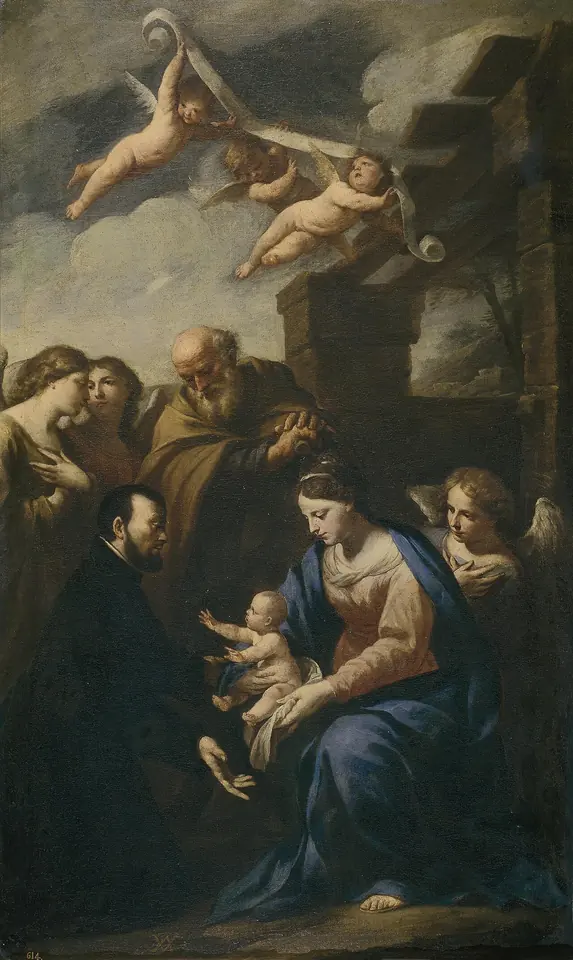
A prayer against worry and greed
Money trouble can tempt us two ways: to despair, or to grasp. The 1888 Manual of Prayers, "prepared and published by order of the Third Plenary Council of Baltimore," has a prayer against covetousness that also makes a good household prayer for spending wisely:
O Lord Jesus Christ, who though Thou wast rich yet for our sakes didst become poor, grant that all over-eagerness and covetousness of earthly goods may die in us, and the desire of heavenly things may live and grow in us: keep us from all idle and vain expenditures, that we may always have to give to him that needeth, and that giving not grudgingly nor of necessity, but cheerfully, we may be loved of Thee, and be made through Thy merits partakers of the riches of Thy heavenly treasure. Amen.
"That we may always have to give to him that needeth." The Church has always taught that giving, even from little, opens the heart to God's providence. The widow in the Gospel gave two mites, "all she had, even her whole living" (Mark 12:44), and Our Lord praised her above all the rich.
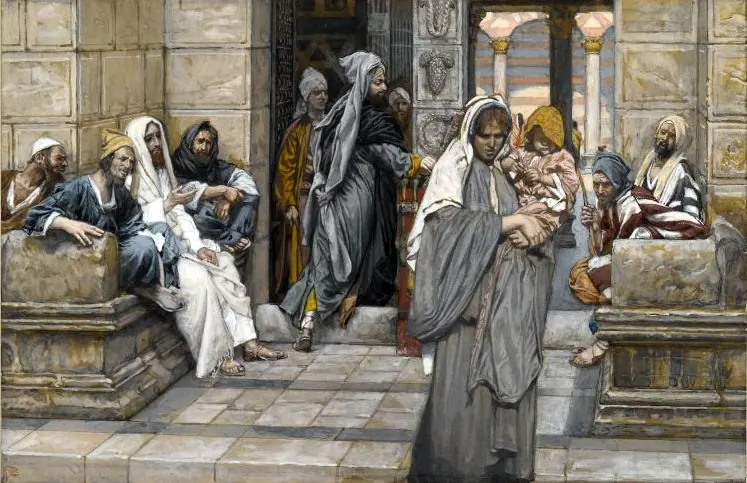
St. Anthony's Bread and St. Expedite
St. Anthony's Bread is a custom of promising alms for the poor when we ask St. Anthony of Padua to pray for a need. It took its name in Toulon, France, in 1890, and many churches still keep a box for it. Even when money is short, a small gift for someone poorer is a powerful prayer.

Many people also turn to St. Expedite for money that's needed fast. We should be honest about him. His name appears among early martyrs of Melitene in the ancient martyrologies, and almost nothing else is known; his fame as the saint of urgent causes grows largely from his name. There is no traditional or liturgical prayer to him, and the ones sold with candles were written anonymously in modern times. We may ask his prayers in our own words, but the Church's firmer path runs through St. Joseph, Our Lady and the saints whose lives we know.
What Scripture says about money and worry
Christ's own words, from the Douay-Rheims (Matthew 6:31–33):
Be not solicitous therefore, saying, What shall we eat: or what shall we drink, or wherewith shall we be clothed? For after all these things do the heathens seek. For your Father knoweth that you have need of all these things. Seek ye therefore first the kingdom of God, and his justice, and all these things shall be added unto you.
Just before that, He points to the birds of the air: "your heavenly Father feedeth them. Are not you of much more value than they?" (Matthew 6:26).
And the wise prayer of Agur in Proverbs 30:8–9, which asks neither for poverty nor for riches:
Give me neither beggary, nor riches: give me only the necessaries of life: Lest perhaps being filled, I should be tempted to deny, and say: Who is the Lord? or being compelled by poverty, I should steal, and forswear the name of my God.
St. Paul adds the remedy for sleepless nights (Philippians 4:6–7): "Be nothing solicitous; but in every thing, by prayer and supplication, with thanksgiving, let your petitions be made known to God. And the peace of God, which surpasseth all understanding, keep your hearts and minds in Christ Jesus."
Ask for help, and let others help you
God often answers prayers for financial help through other people. Asking is not a failure of faith.
- Talk to your parish. Many parishes have a St. Vincent de Paul Society conference that quietly helps with rent, utilities and groceries. Most dioceses run Catholic Charities.
- Use the food pantry if you need it. It exists for you.
- Make a plan. Sit down with your spouse, list what comes in and what goes out, and pray before you start. Free credit counseling can help with debt.
- Keep giving something, even a little, as the widow did.
- Thank God for what you do have, every day. Gratitude is the enemy of panic; see our thanksgiving prayer.

Let us ask St. Joseph tonight to look after our families as he looked after his own. When the worry won't lift, our prayer for anxiety and prayer for peace may help, and for desperate cases, the St. Jude prayer. Browse all our Catholic prayers and novenas.
Frequently asked questions
What is a Catholic prayer for financial help?
Begin with the Our Father: "Give us this day our daily bread." Then pray to St. Joseph, who earned the Holy Family's living with his hands, and to Our Lady, Mother of Divine Providence, whose 1910 Raccolta prayer asks her to "sustain me in dangers, and in the storms of adversity afford me the security of thy guardianship." Both are printed in full above.
Who is the patron saint of financial help?
St. Joseph is the saint most families ask when money is short, since he supported Jesus and Mary by his work. St. Cajetan is the patron of the unemployed and of bread and work, especially in Argentina. Many also give St. Anthony's Bread, alms for the poor, when they ask St. Anthony's help.
Is it wrong to pray for money?
No. Jesus taught us to ask for our daily bread, and the Catechism (no. 2830) says the Father gives us "all appropriate goods and blessings, both material and spiritual." What the Church warns against is greed and worry. Pray for what you need, work honestly, and trust God with the outcome.
Is St. Expedite a real saint?
His name appears among early martyrs in the ancient lists, but almost nothing is known of him, and his reputation for quick help comes largely from his name. No traditional or liturgical prayer to him exists. We can ask his prayers in our own words, but St. Joseph and St. Cajetan have far firmer roots in the Church's life.
Where can Catholics get help with bills?
Start with your parish. Many parishes have a St. Vincent de Paul Society conference that helps neighbors with rent, utilities and food, and most dioceses run Catholic Charities. Asking for help is not a failure of faith; often it is how God answers the prayer.
Sources
- The Raccolta, or Collection of Indulgenced Prayers and Good Works (Burns & Oates, 1910), nos. 228, 271 and 300, Internet Archive
- The Mass Every Day of the Year: The Roman Missal (New York: Home Press, 1916), August 7, St. Cajetan, Internet Archive
- A Manual of Prayers for the Use of the Catholic Laity (1888): Against Covetousness, Internet Archive
- Leo XIII, Quamquam Pluries, encyclical on devotion to St. Joseph (August 15, 1889) (Vatican)
- Catechism of the Catholic Church, nos. 2828-2837: Give us this day our daily bread
- Matthew 6:25-34, Douay-Rheims (Bible Gateway)