What is the Eucharist?
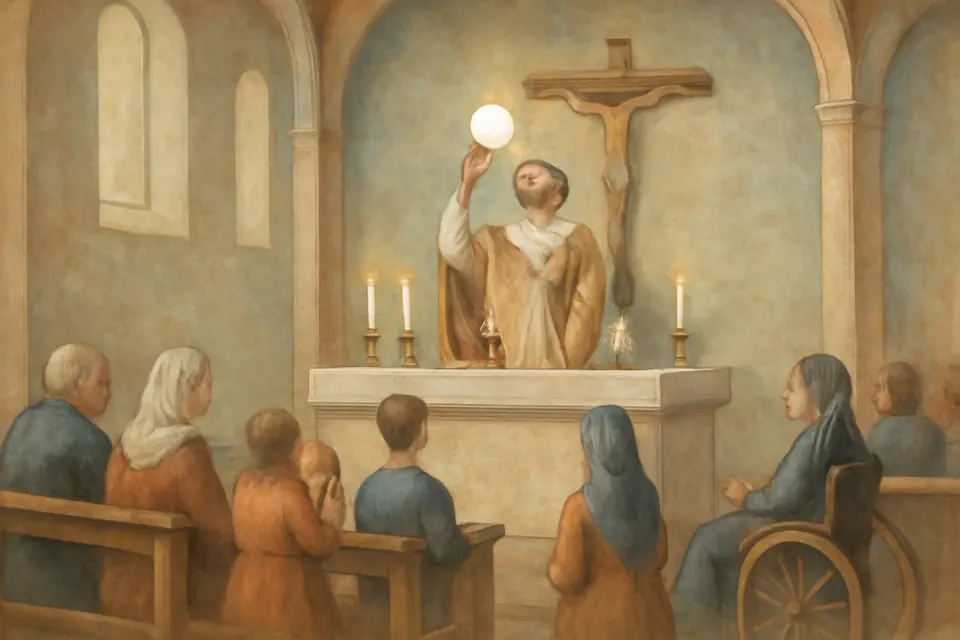
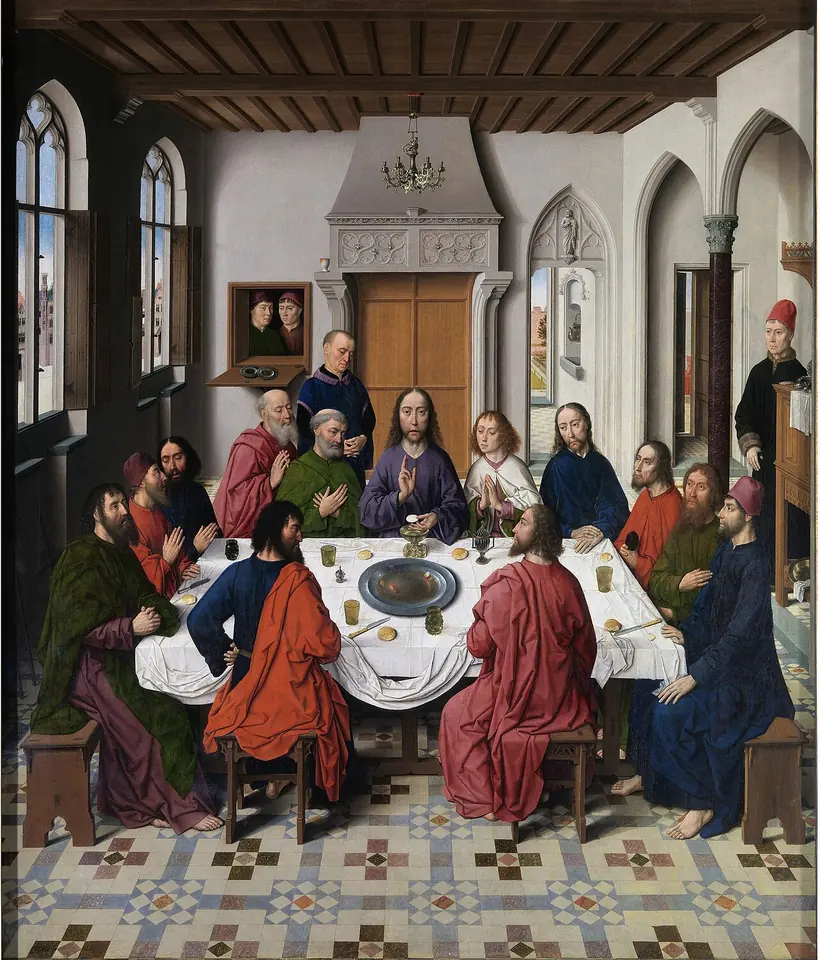
The Eucharist is the sacrament in which Jesus Christ gives us his own Body and Blood under the appearances of bread and wine. He gave it to the Church at the Last Supper, and it is made present at every Mass. The word means "thanksgiving." The Church calls it "the source and summit of the Christian life."
The Eucharist is the sacrament of the Body and Blood of Jesus Christ. On the night before he died, Jesus took bread and said, "This is my body," took the cup and said, "This is my blood," and told the apostles to do the same in memory of him. Ever since, at every Mass, the Church has done what he asked, and he has kept his word. Under what still looks like bread and wine, the risen Lord is truly present, offers himself to the Father for us, and gives himself to us as food. This page explains what the Eucharist is, where it comes from in Scripture, what the Church believes about it, how the first Christians celebrated it, and how we receive it today.
What is the Eucharist?
The Eucharist is one of the seven sacraments, and with Baptism and Confirmation it completes Christian initiation. But it is not one sacrament among others in the way a book is one among others on a shelf. The Second Vatican Council called it "the source and summit of the Christian life," and the Catechism explains why: "in the blessed Eucharist is contained the whole spiritual good of the Church, namely Christ himself, our Pasch." The other sacraments give us Christ's grace. The Eucharist gives us Christ.
That is why the Catechism can say, with St. Irenaeus, that "the Eucharist is the sum and summary of our faith." Everything the Church believes, about creation, sin, the Cross, the Resurrection and the life of the world to come, is present in what happens on the altar.
What does Eucharist mean?
The word comes from the Greek eucharistia, "thanksgiving." The Catechism explains that the Greek words used in the Gospels for Jesus' blessing over the bread and cup "recall the Jewish blessings that proclaim - especially during a meal - God's works: creation, redemption, and sanctification." The Eucharist is first of all the Church's great act of thanks to the Father.
The sacrament has many other names, and the Catechism lists them because each one shows a different side of the mystery:
- The Lord's Supper, because Jesus gave it at the supper on the eve of his Passion, and because it looks ahead to the wedding feast of the Lamb in heaven.
- The Breaking of Bread, the name the first Christians used (Acts 2:42), and the gesture by which the disciples at Emmaus recognized the risen Lord.
- The Holy Sacrifice, because it makes present the one sacrifice of Christ the Savior.
- The Holy and Divine Liturgy, the name used in the Eastern churches.
- The Most Blessed Sacrament, "because it is the Sacrament of sacraments." The Hosts reserved in the tabernacle are called by this name too.
- Holy Communion, because by it we are united to Christ and, in him, to one another.
- Holy Mass, from the Latin missa, because the liturgy ends with the sending forth of the faithful into the world.
It is also called the bread of angels, bread from heaven, and, when it is given to the dying, Viaticum, "food for the journey." St. Ignatius of Antioch, about AD 107, called the one bread "the medicine of immortality, and the antidote to prevent us from dying, but [which causes] that we should live for ever in Jesus Christ."
The Eucharist foreshadowed in the Old Testament
God prepared his people for this gift for centuries. When Abraham returned from battle, "Melchisedech the king of Salem, bringing forth bread and wine, for he was the priest of the most high God, blessed him" (Genesis 14:18). The Letter to the Hebrews calls Christ "a priest for ever according to the order of Melchisedech," and the Roman Canon, the oldest Eucharistic Prayer of the Mass, still asks God to accept our offering as he accepted the gifts of Abel, Abraham and Melchizedek.

At the first Passover, each family of Israel sacrificed a lamb, marked its doors with the blood and ate the lamb in haste, and the angel of death passed over them. Jesus chose the Passover to give the Eucharist, and St. Paul writes, "Christ our pasch is sacrificed" (1 Corinthians 5:7). In the desert God fed his people with manna, bread from heaven, every morning for forty years.
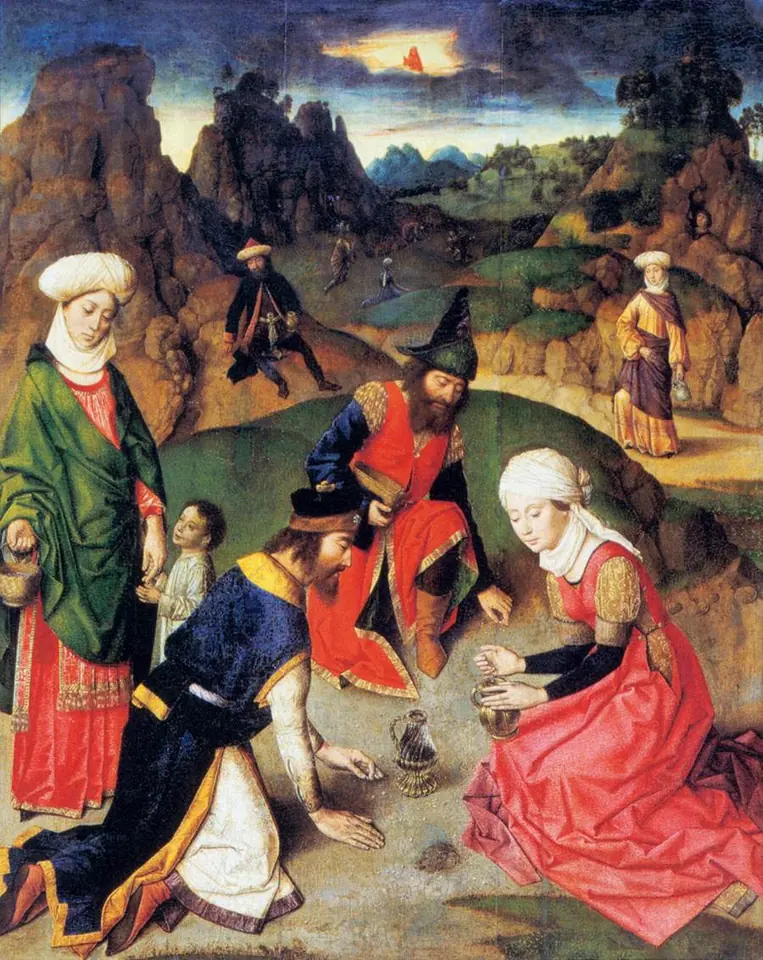
Jesus himself made the connection: "Your fathers did eat manna in the desert, and are dead. This is the bread which cometh down from heaven; that if any man eat of it, he may not die. I am the living bread which came down from heaven" (John 6:49–51).
Jesus gives us the Eucharist
The promise at Capernaum
A year before the Last Supper, after feeding five thousand people with five loaves, Jesus taught in the synagogue at Capernaum. His words were so strong that many disciples left him that day (John 6:52, 54–57, Douay-Rheims):
If any man eat of this bread, he shall live for ever; and the bread that I will give, is my flesh, for the life of the world. ... Amen, amen I say unto you: Except you eat the flesh of the Son of man, and drink his blood, you shall not have life in you. He that eateth my flesh, and drinketh my blood, hath everlasting life: and I will raise him up in the last day. For my flesh is meat indeed: and my blood is drink indeed. He that eateth my flesh, and drinketh my blood, abideth in me, and I in him.
He did not call them back to explain that he had spoken only in symbols. He turned to the Twelve and asked, "Will you also go away?" St. Peter answered for them, and for us: "Lord, to whom shall we go? thou hast the words of eternal life."
The Last Supper
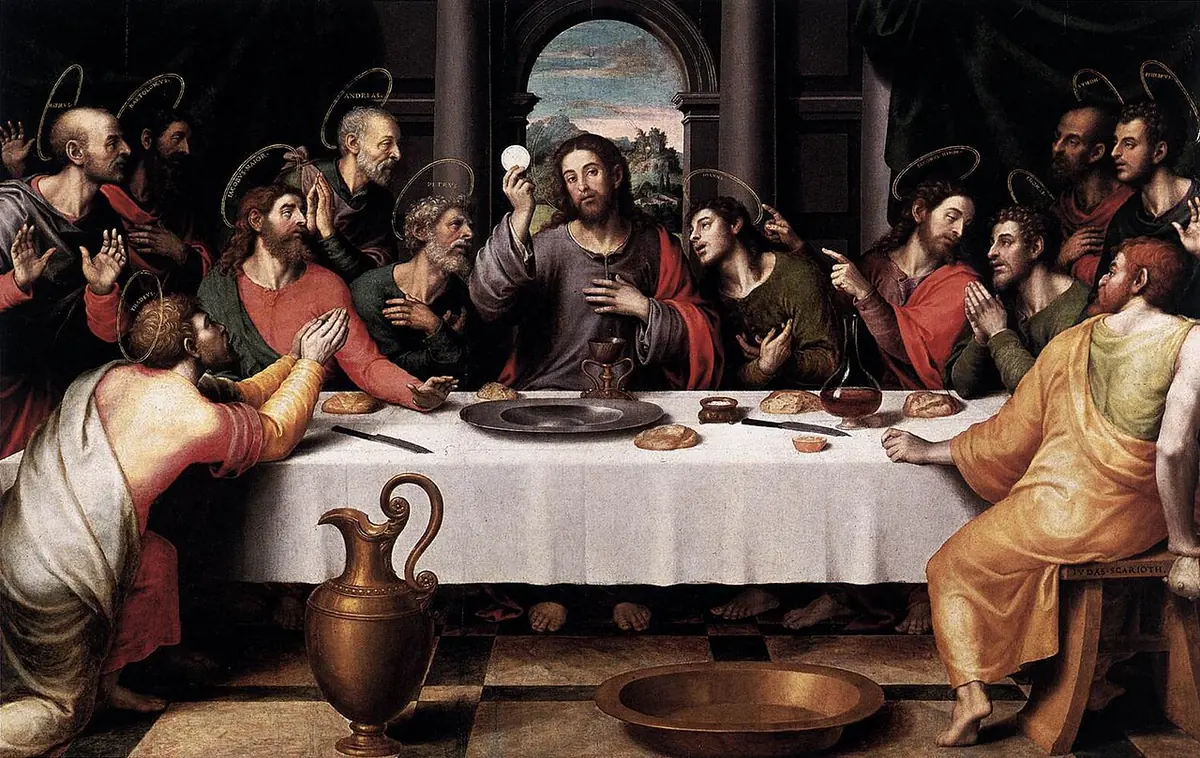
On the night he was betrayed, at the Passover meal with the apostles, Jesus kept that promise. St. Paul hands on the account he received (1 Corinthians 11:23–25): "the Lord Jesus, the same night in which he was betrayed, took bread. And giving thanks, broke, and said: Take ye, and eat: this is my body, which shall be delivered for you: this do for the commemoration of me. In like manner also the chalice, after he had supped, saying: This chalice is the new testament in my blood: this do ye, as often as you shall drink, for the commemoration of me."
With the words "Do this," the Church understands, Jesus also made the apostles priests of the New Covenant, so that the Eucharist would be celebrated until he comes again. We keep the memory of that night every year on Holy Thursday.

At Emmaus and in the first Church
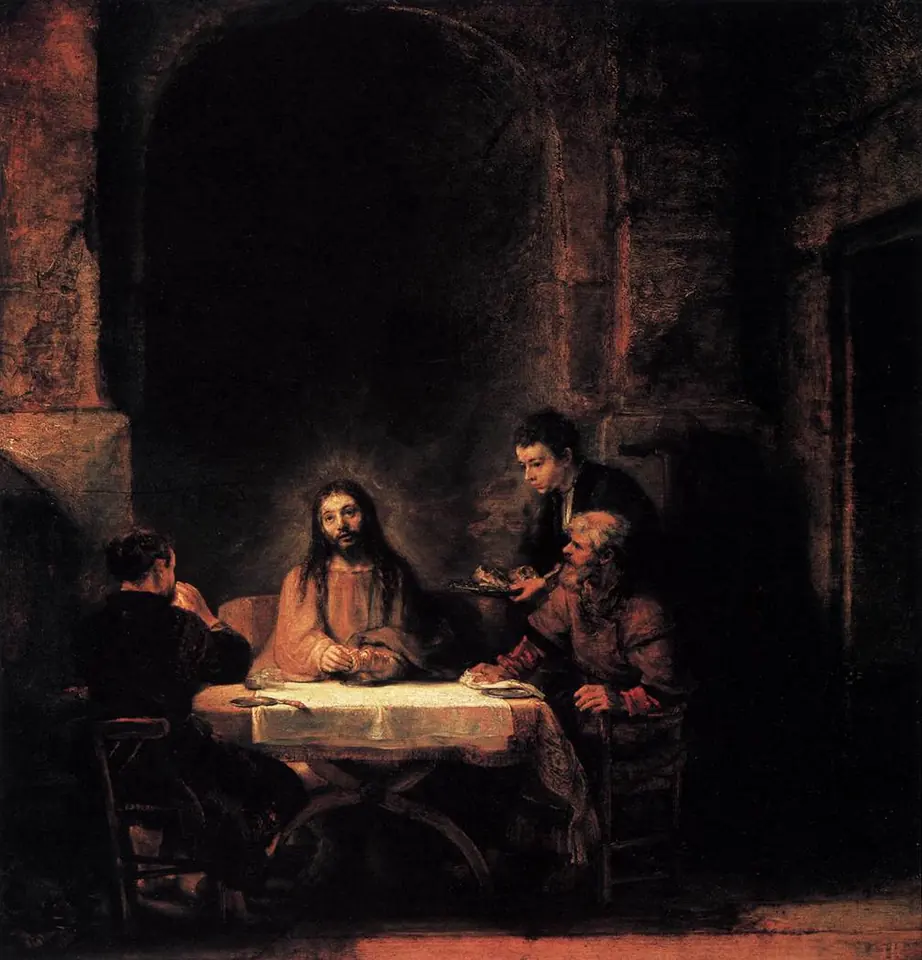
On Easter Sunday evening two disciples walked to Emmaus with a stranger who explained the Scriptures to them. At table, "he took bread, and blessed, and brake, and gave to them," and "their eyes were opened, and they knew him." They hurried back to Jerusalem to tell how "they knew him in the breaking of bread" (Luke 24:30–35). From Pentecost on, the first Christians "were persevering in the doctrine of the apostles, and in the communication of the breaking of bread, and in prayers" (Acts 2:42).
What the Church believes about the Eucharist
The Catechism gathers the faith into three truths. We must consider the Eucharist as "thanksgiving and praise to the Father; the sacrificial memorial of Christ and his Body; the presence of Christ by the power of his word and of his Spirit."
A sacrifice
The Mass is not a new sacrifice, as if Calvary were not enough. It makes the one sacrifice of the Cross present. In the biblical sense, a memorial is "not merely the recollection of past events but the proclamation of the mighty works wrought by God for men," which become "in a certain way present and real." The Catechism quotes the Council of Trent: "The victim is one and the same: the same now offers through the ministry of priests, who then offered himself on the cross; only the manner of offering is different." At Mass we stand with Mary at the foot of the Cross, and we offer our own lives, our work, prayers and sufferings, with Christ to the Father.
A presence
The bread and wine do not merely remind us of Jesus. They become Jesus. The Church teaches that in the Eucharist "the body and blood, together with the soul and divinity, of our Lord Jesus Christ and, therefore, the whole Christ is truly, really, and substantially contained." This is the Real Presence. The change of the bread and wine into his Body and Blood is called transubstantiation: what we see, touch and taste stays the same, but what is there is the Lord. The presence lasts as long as the appearances of bread and wine remain, which is why we keep the Blessed Sacrament in the tabernacle and adore it.
A communion
The sacrifice is "wholly directed toward the intimate union of the faithful with Christ through communion." The Lord who offers himself on the altar gives himself to us as food. "To receive communion is to receive Christ himself who has offered himself for us." And because we all receive the one Christ, the Eucharist makes the Church one body. As St. Paul says, "we, being many, are one bread, one body, all that partake of one bread" (1 Corinthians 10:17).
How the first Christians celebrated the Eucharist
About AD 155 St. Justin Martyr wrote to the Roman emperor to explain what Christians did on Sundays. His description could be read aloud at any Mass today:
And on the day called Sunday, all who live in cities or in the country gather together to one place, and the memoirs of the apostles or the writings of the prophets are read, as long as time permits; then, when the reader has ceased, the president verbally instructs, and exhorts to the imitation of these good things. Then we all rise together and pray, and, as we before said, when our prayer is ended, bread and wine and water are brought, and the president in like manner offers prayers and thanksgivings, according to his ability, and the people assent, saying Amen; and there is a distribution to each, and a participation of that over which thanks have been given, and to those who are absent a portion is sent by the deacons.
Justin was just as clear about what they received: "not as common bread and common drink do we receive these," but "the flesh and blood of that Jesus who was made flesh." He adds that no one may share in it except one who believes, has been baptized "and who is so living as Christ has enjoined." Read the Church Fathers and you will find the same faith in every century.
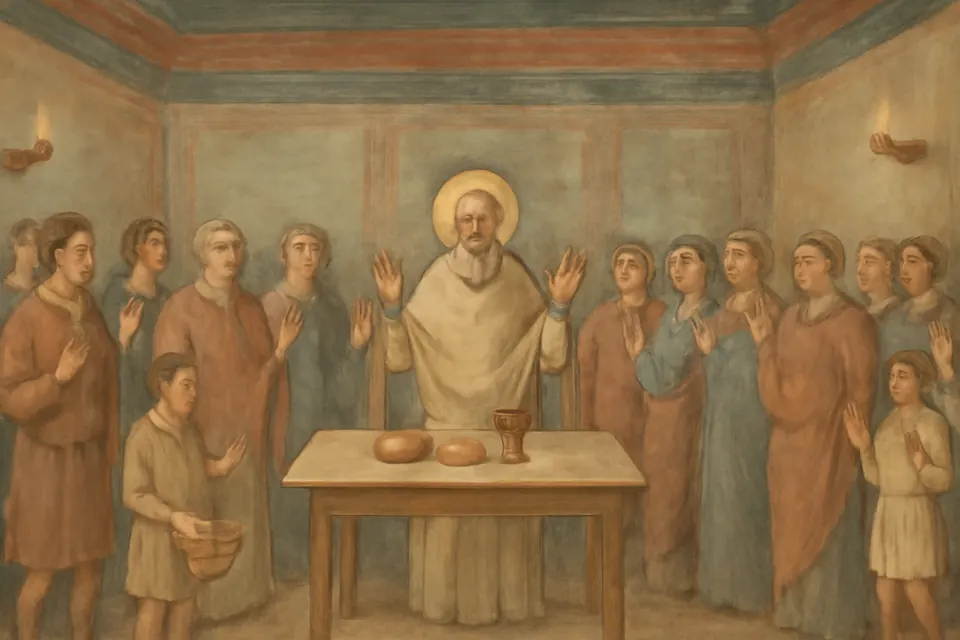
The shape Justin describes, readings and preaching, then the offering, the great prayer of thanksgiving and Communion, is still the shape of the Mass. Our page on the parts of the Mass walks through it step by step, from the Liturgy of the Word to the Liturgy of the Eucharist.
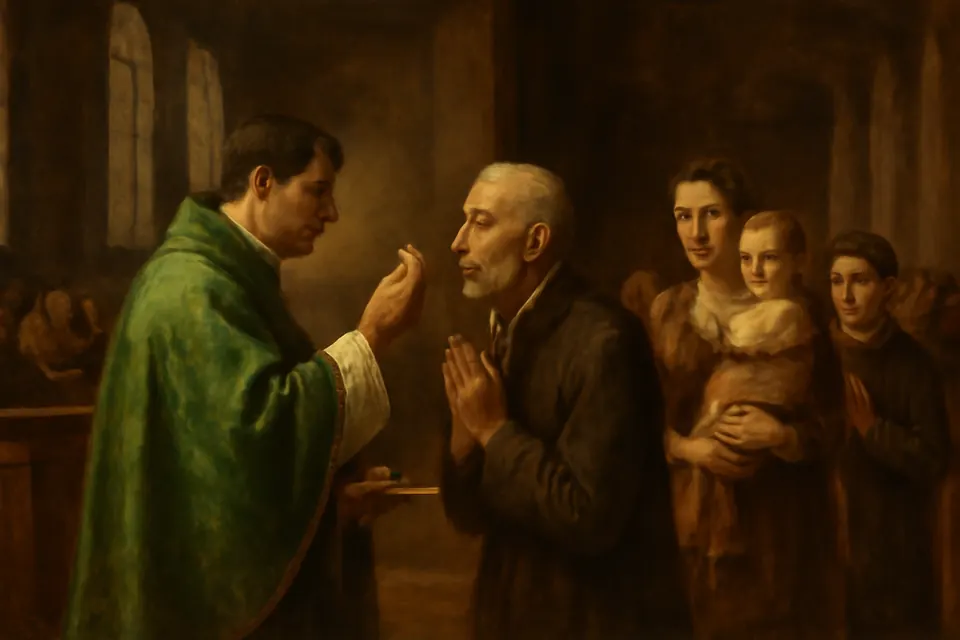
Receiving Holy Communion
The Lord invites us to his table, and the Church helps us come well prepared.
- Be in a state of grace. Canon law asks that anyone "conscious of grave sin" go to confession before receiving. St. Paul warned that whoever receives "unworthily, shall be guilty of the body and of the blood of the Lord" (1 Corinthians 11:27). An examination of conscience helps.
- Keep the Eucharistic fast. Abstain from food and drink, except water and medicine, for at least one hour before Communion. The sick and elderly are excused.
- Come with reverence. Make a sign of reverence (usually a bow) before receiving. When the priest or minister says "The Body of Christ," answer "Amen," which is an act of faith. You may receive on the tongue or, where the bishops permit, in the hand.
- Receive often. The Church obliges every Catholic to receive at least once a year, during the Easter season, and encourages us to receive at every Mass we attend, even daily.
Children usually make their First Communion around the age of seven, after preparation and their first confession. The Catechism teaches that Christ is whole and entire under either species, so receiving the Host alone is receiving the whole Christ, though "the sign of communion is more complete when given under both kinds." Before Mass and after Communion, the Church's traditional prayers help us prepare and give thanks: see prayer before Mass, prayer after Communion and the Anima Christi. When we cannot receive, we can make a spiritual communion.
The fruits of Holy Communion
What ordinary food does for the body, the Catechism teaches, Holy Communion does for the soul. It names the fruits of a good Communion:
- It unites us more closely to Christ: "He that eateth my flesh, and drinketh my blood, abideth in me, and I in him."
- It preserves, increases and renews the life of grace received at Baptism.
- It separates us from sin: it strengthens charity, and "this living charity wipes away venial sins."
- It preserves us from future mortal sin, the more we share in Christ's life.
- It makes the Church one, binding us to every other member of Christ's Body.
- It commits us to the poor, in whom we meet the same Christ we receive.
- It is a pledge of future glory, a foretaste of the banquet of heaven.
The Church sums this up in an ancient antiphon attributed to St. Thomas Aquinas, O sacrum convivium, which the Catechism quotes: "O sacred banquet in which Christ is received as food, the memory of his Passion is renewed, the soul is filled with grace and a pledge of the life to come is given to us."
The Eucharist outside of Mass
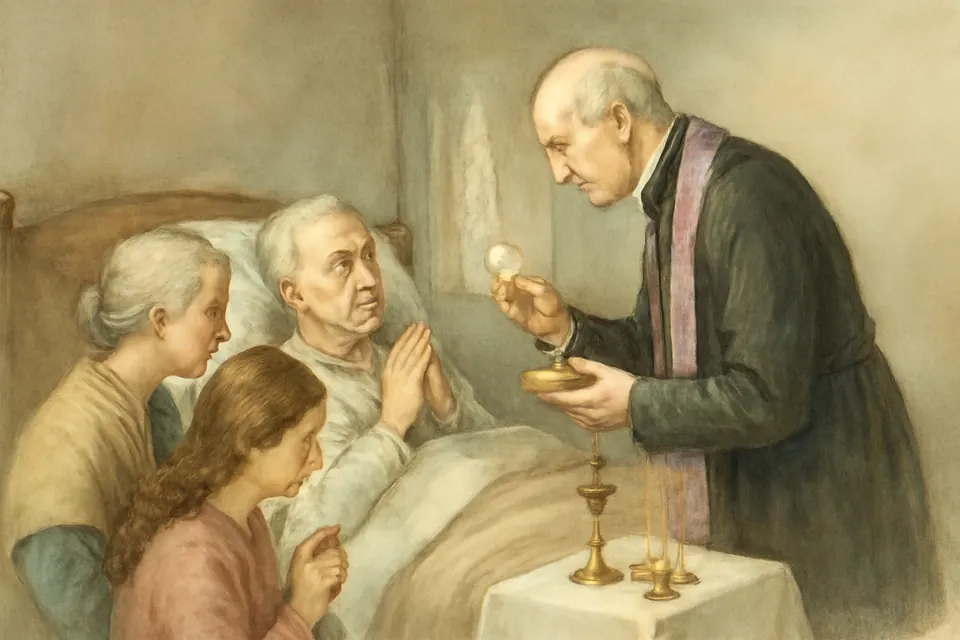
Because Christ remains present in the consecrated Host, the Church keeps the Blessed Sacrament in the tabernacle, with a lamp burning beside it. The Catechism explains that the tabernacle was first meant to keep the Eucharist "so that it could be brought to the sick and those absent outside of Mass." A priest, deacon or extraordinary minister brings Communion to the homebound, and to the dying the Church gives the Eucharist as Viaticum, the last and greatest help for the journey home.
As faith in the Real Presence deepened, the Church also came to adore the Lord outside Mass. The Catechism, quoting St. Paul VI, says the Church "has always offered and still offers to the sacrament of the Eucharist the cult of adoration, not only during Mass, but also outside of it." That is the meaning of a visit to the Blessed Sacrament, of a holy hour, of exposition in the monstrance, of Benediction and of the Eucharistic adoration chapels where the Lord is adored day and night. Once a year, on Corpus Christi, we carry him through the streets.
At times God has also given visible signs of this hidden presence. The Church weighs such cases carefully, and our page on Eucharistic miracles tells the best-known ones, from Lanciano to Buenos Aires, each with its honest status. Our faith never rests on them. It rests on the word of Christ.
Saints of the Eucharist
The saints show us what it looks like to believe this with your whole life.
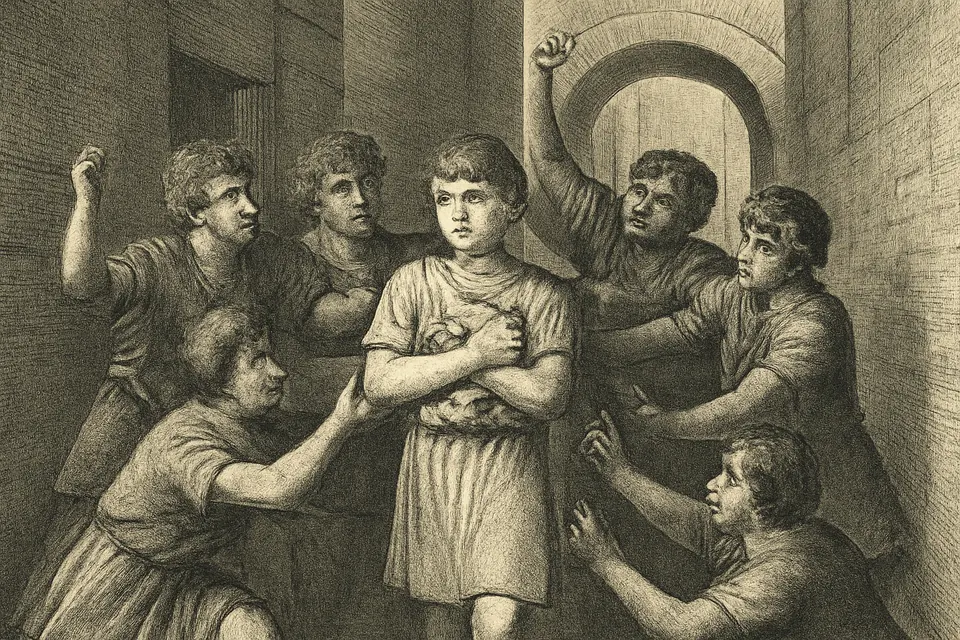
- St. Tarcisius, a young Christian of Rome in the 3rd century, was beaten to death by a mob rather than hand over the Eucharist he was carrying to prisoners. He is the patron of altar servers and first communicants.
- Blessed Imelda Lambertini, a girl of Bologna in the 14th century, longed to receive Communion before the age then allowed. Tradition holds that a Host appeared above her, the priest gave her her first Communion, and she died in prayer soon after. The account is traditional; she is the patron of first communicants.
- St. Juliana of Liège gave the Church the feast of Corpus Christi.
- St. Thomas Aquinas wrote the Mass and hymns of Corpus Christi, the Pange lingua, Tantum ergo and Adoro te devote among them.
- St. Paschal Baylon, a Spanish Franciscan lay brother, spent every spare moment before the tabernacle; Leo XIII named him patron of Eucharistic congresses.
- St. Peter Julian Eymard founded the Congregation of the Blessed Sacrament for perpetual adoration.
- St. Katharine Drexel founded the Sisters of the Blessed Sacrament and gave her fortune to Native American and Black children.
- St. Manuel González García, "the Bishop of the Abandoned Tabernacle," spent his priesthood bringing people back to Jesus in the Eucharist.
- St. Carlo Acutis, the teenager who catalogued Eucharistic miracles online, went to Mass every day and called the Eucharist "my highway to heaven."
A prayer of thanksgiving for the Eucharist
Written for this page by Pastor Lyvers:
Lord Jesus Christ, on the night you were betrayed you took bread and gave thanks, and you gave us yourself. We thank you for every Mass, for every altar in the world where your sacrifice is made present, and for every tabernacle where you wait for us. Give us faith to see you under the veil of bread, hunger to receive you worthily, and love to carry you to the people we meet. Make us one in you, and bring us at last to the banquet of heaven, where we will see you face to face. Amen.
Frequently asked questions
What is the Eucharist in simple terms?
The Eucharist is Jesus himself, truly present under the appearances of bread and wine. At Mass, by the words of Christ spoken by the priest and the power of the Holy Spirit, the bread and wine become his Body and Blood. We offer him to the Father in thanksgiving and receive him in Holy Communion.
What does the word Eucharist mean?
It comes from the Greek eucharistia, "thanksgiving." The Catechism explains that it recalls the Jewish blessings that thank God for his works of creation, redemption and sanctification, and the thanks Jesus gave over the bread and cup at the Last Supper.
Is the Eucharist really the Body and Blood of Christ?
Yes. The Church teaches that in the Eucharist "the body and blood, together with the soul and divinity, of our Lord Jesus Christ and, therefore, the whole Christ is truly, really, and substantially contained." The change of the bread and wine is called transubstantiation. It is not a symbol, though the appearances of bread and wine remain.
What is the difference between the Eucharist and Holy Communion?
The Eucharist is the whole sacrament: the sacrifice offered at Mass and Christ's presence in the consecrated bread and wine. Holy Communion is the act of receiving the Eucharist. We also say "Holy Communion" for the consecrated Host itself.
Who can receive the Eucharist?
Catholics who have made their First Communion, are in a state of grace (with no unconfessed grave sin) and have fasted for one hour beforehand from food and drink other than water and medicine. Catholics must receive at least once a year, during the Easter season, and the Church encourages us to receive at every Mass when we are rightly disposed.
Why is the Eucharist called the source and summit of the Christian life?
Because, as the Catechism says, "in the blessed Eucharist is contained the whole spiritual good of the Church, namely Christ himself." Everything in the Church flows from it and leads back to it: the other sacraments, prayer, works of mercy and mission.
Is the Eucharist a sacrifice?
Yes. The Mass is not a new sacrifice but makes present the one sacrifice of the Cross. The Catechism, quoting the Council of Trent, says: "The victim is one and the same: the same now offers through the ministry of priests, who then offered himself on the cross; only the manner of offering is different."
When did Jesus institute the Eucharist?
At the Last Supper, on the night before he died, which the Church remembers every year on Holy Thursday. He took bread, gave thanks and said, "This is my body," then took the chalice and said, "This is my blood," and commanded the apostles, "Do this in commemoration of me."
Sources
- Catechism of the Catholic Church, 1322–1419: the Sacrament of the Eucharist. Source and summit (1324); the names of the sacrament are at __P3Y.HTM; sacrifice and presence at __P41.HTM; communion and its fruits at __P42.HTM
- Catechism of the Catholic Church, 1356–1381: sacrifice, memorial and presence
- Catechism of the Catholic Church, 1382–1401: the Paschal banquet and the fruits of Holy Communion
- St. Justin Martyr, First Apology, chapters 66–67
- St. Ignatius of Antioch, Epistle to the Ephesians, 20
- Code of Canon Law, canons 897–958: the Most Holy Eucharist. State of grace (916), the one-hour fast (919), the annual Easter Communion (920)
- Douay-Rheims Bible: John 6