The 7 sacraments
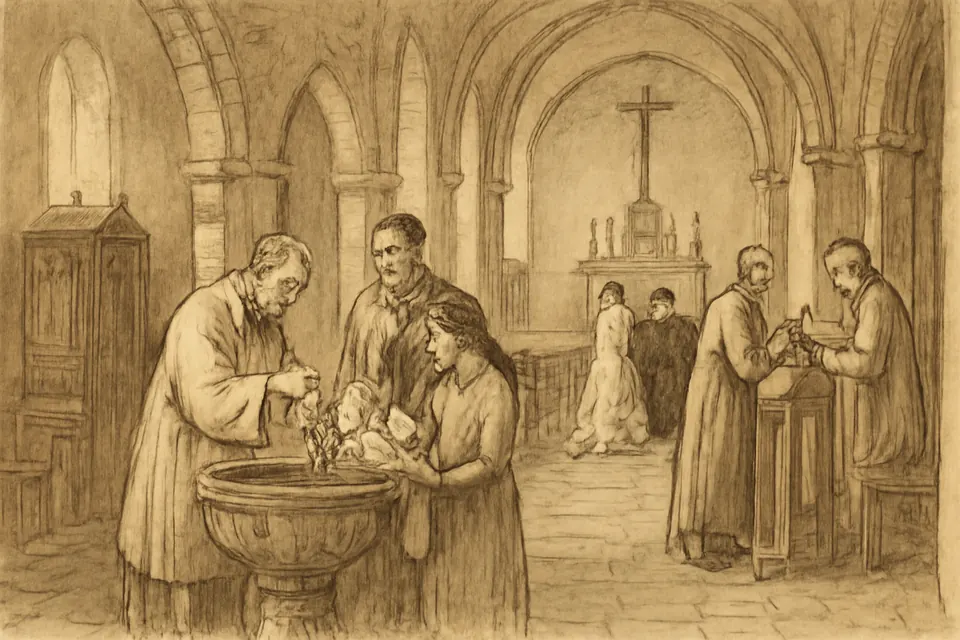
The 7 sacraments of the Catholic Church are Baptism, Confirmation, the Eucharist, Penance (Confession), the Anointing of the Sick, Holy Orders and Matrimony. Christ instituted them as signs that really give the grace they signify. They form three groups: initiation, healing, and service of communion. Baptism, Confirmation and Holy Orders are received only once.
A child is carried to the font. A teenager feels the bishop's thumb trace a cross of oil on her forehead. A grandmother opens her hand for the Host on a weekday morning. A man kneels in a confessional after twenty years away. A priest anoints a dying friend. A deacon lies face down on the floor of the cathedral. Two young people say "I do." Every one of these moments is a meeting with Christ, and the Church has a name for them: the seven sacraments.
What are the 7 sacraments?
The seven sacraments of the Catholic Church are:
- Baptism
- Confirmation (called Chrismation in the East)
- The Eucharist (Holy Communion)
- Penance (also called Confession or Reconciliation)
- The Anointing of the Sick
- Holy Orders
- Matrimony
That is also the order in which the Church lists them. The Catechism puts it this way: "Christ instituted the sacraments of the new law. There are seven," and they "touch all the stages and all the important moments of Christian life: they give birth and increase, healing and mission to the Christian's life of faith" (no. 1210). There is, it adds, "a certain resemblance between the stages of natural life and the stages of the spiritual life." We are born, we grow, we eat, we fall sick and need healing, and we give our lives to others. Christ meets us at each of these points with a sacrament.
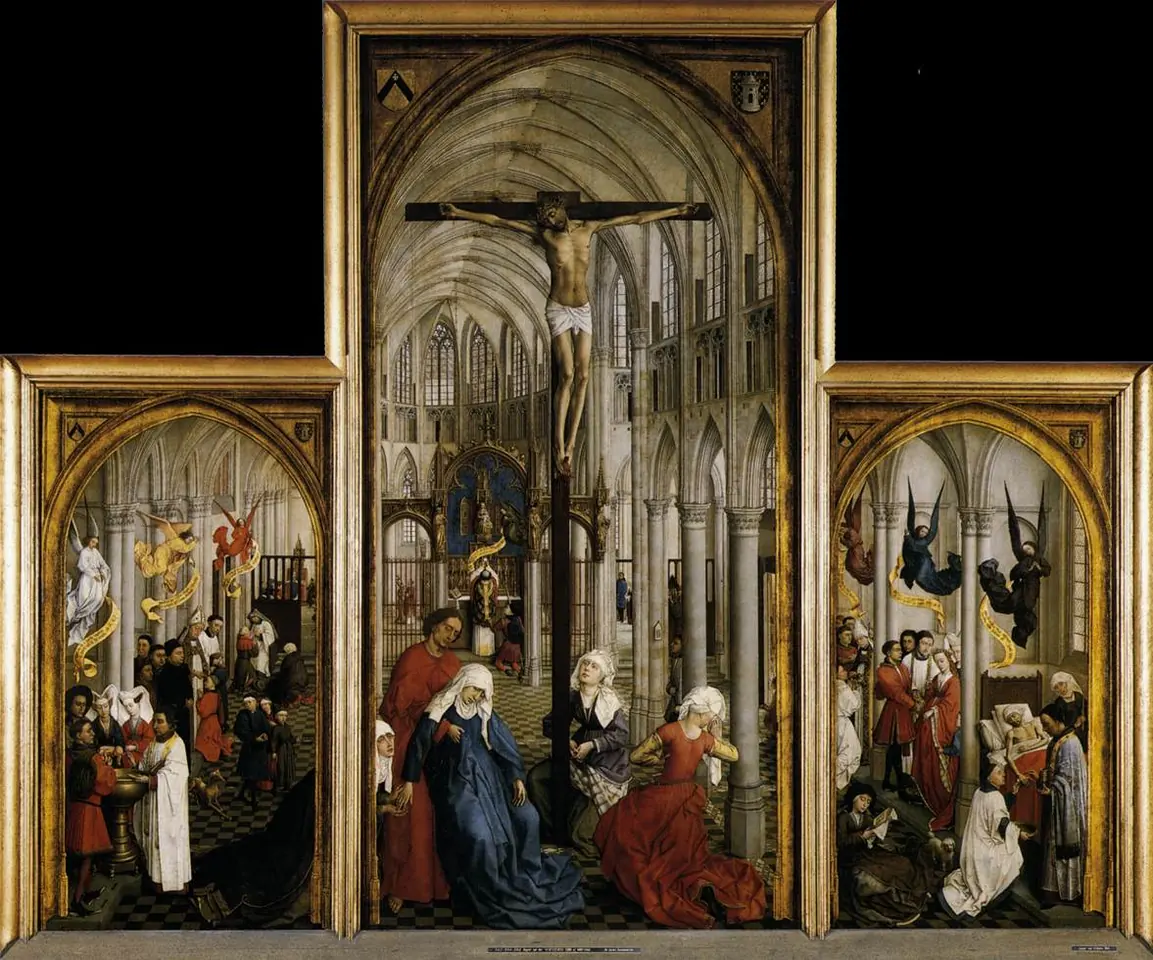
What is a sacrament?
The shortest definition is the one many of us learned as children: a sacrament is an outward sign, instituted by Christ, to give grace. The Catechism says the same thing more fully:
The sacraments are efficacious signs of grace, instituted by Christ and entrusted to the Church, by which divine life is dispensed to us. The visible rites by which the sacraments are celebrated signify and make present the graces proper to each sacrament.
That is no. 1131. Each part matters.
A sign. Every sacrament uses something we can see, hear and touch: water, oil, bread and wine, words, the laying on of hands, the joined right hands of a bride and groom. God made us body and soul, and he reaches the soul through the body.
Instituted by Christ. The Church did not invent the sacraments. The Catechism teaches that "the mysteries of Christ's life are the foundations of what he would henceforth dispense in the sacraments" (no. 1115). Jesus touched lepers, put mud on a blind man's eyes, broke bread and breathed on his apostles. In the sacraments, he keeps doing it.
That really gives grace. This is what sets the sacraments apart from every other holy sign. They don't only remind us of grace; "celebrated worthily in faith, the sacraments confer the grace that they signify" (no. 1127). The Church's old phrase for this is ex opere operato, "by the very fact of the action's being performed." It means that Christ acts in the sacrament whatever the personal holiness of the priest. A sinful priest still truly absolves and truly consecrates. St. Thomas Aquinas, quoted in the Catechism, says the sacrament "is not wrought by the righteousness of either the celebrant or the recipient, but by the power of God" (no. 1128).
The fruit we receive does depend on us, though. The same paragraph adds that "the fruits of the sacraments also depend on the disposition of the one who receives them." A sacrament received with faith and love changes a life. One received carelessly bears little fruit.
The 7 sacraments in order, by group
The Catechism sorts the seven into three families. It says this order is "not the only one possible," but it shows that "the sacraments form an organic whole," with the Eucharist at the center as "the Sacrament of sacraments" (no. 1211).
The sacraments of Christian initiation
Baptism, Confirmation and the Eucharist make a person a Christian. Pope St. Paul VI described them in words the Catechism repeats: "The faithful are born anew by Baptism, strengthened by the sacrament of Confirmation, and receive in the Eucharist the food of eternal life" (no. 1212). An adult who enters the Church at the Easter Vigil receives all three on the same night, in that order. Our guide to how to become Catholic walks through that journey.
1. Baptism. The sign is water, poured three times or by immersion, with the words "I baptize you in the name of the Father, and of the Son, and of the Holy Spirit." Baptism washes away original sin and all personal sin, makes us children of God and members of the Church, and opens the door to every other sacrament. The ordinary ministers are a bishop, priest or deacon, but in an emergency anyone can baptize, "even someone not baptized," if he intends to do what the Church does and uses the Trinitarian words (no. 1256). See our page on Catholic baptism, and the feast of the Baptism of the Lord.
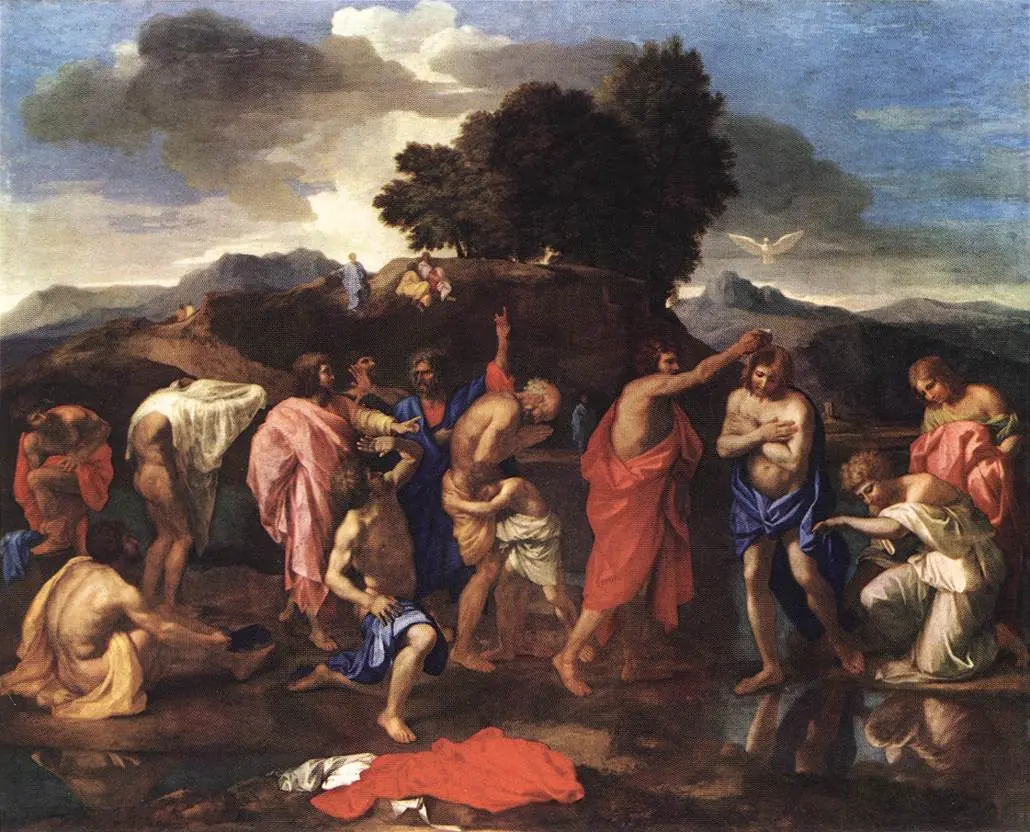
2. Confirmation. The sign is anointing with sacred chrism on the forehead with the laying on of the hand, and the words "Be sealed with the Gift of the Holy Spirit" (no. 1300). Confirmation completes the grace of Baptism and pours out the Holy Spirit as at Pentecost, to make us witnesses of Christ. In the Latin Church the bishop is the ordinary minister; in the Eastern Churches the priest confirms (chrismates) infants right after Baptism. Read more on our page on the sacrament of Confirmation, and see confirmation saints for choosing a patron.
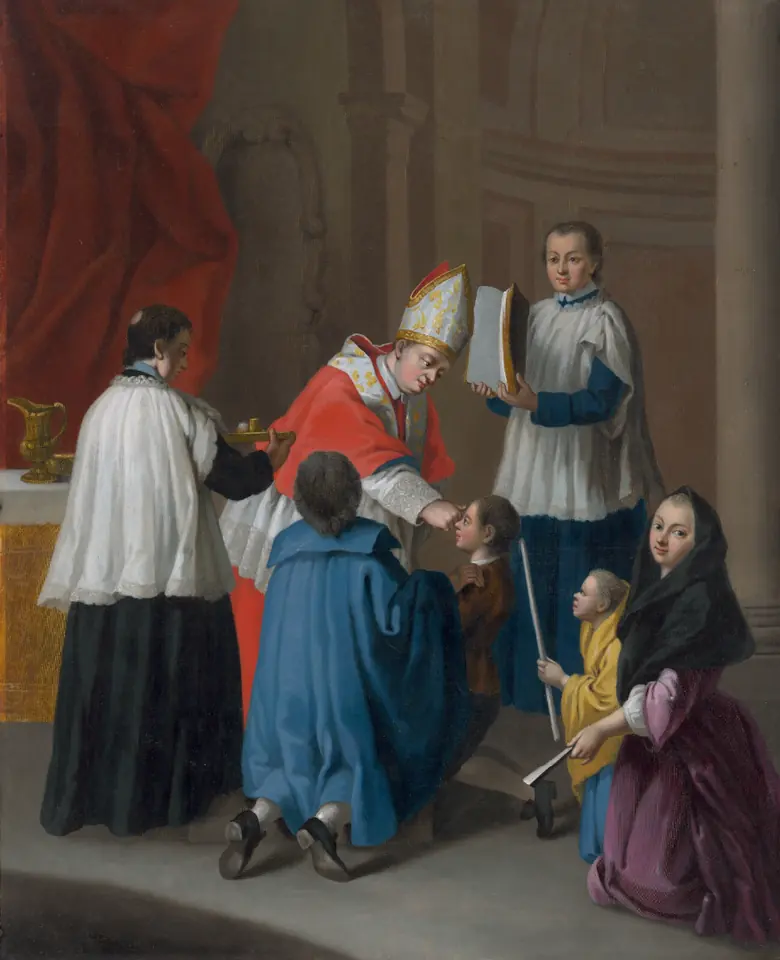
3. The Eucharist. The sign is bread of wheat and wine of grapes, with the words of Christ at the Last Supper spoken by a priest. In the Eucharist, bread and wine become the Body and Blood of Christ, and the one sacrifice of the Cross is made present on the altar. The Second Vatican Council called it "the source and summit of the Christian life." It is the one sacrament we can receive every day, and twice on the same day if we take part in a second Mass (canon 917). Our page what is the Eucharist explains the Real Presence and the Mass, and First Communion covers a child's first reception.
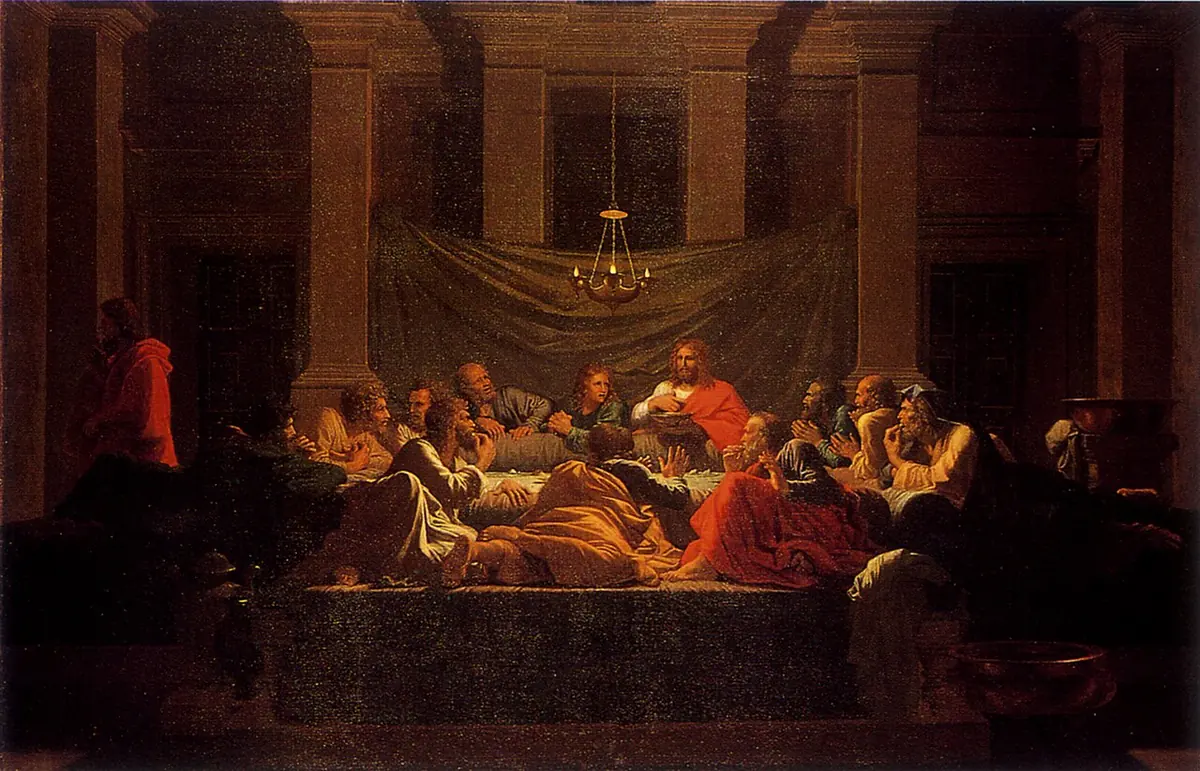
The sacraments of healing
Baptism makes us new, but we still carry our weakness, and we still sin and get sick. Christ, the physician of souls and bodies, gave the Church two sacraments of healing.
4. Penance (Confession, Reconciliation). The signs are the acts of the penitent, sorrow for sin, confession of sins to a priest and the penance he gives, together with the priest's words of absolution. Penance forgives the sins committed after Baptism and reconciles us with God and the Church. Only a priest can absolve. We are bound to confess grave sins at least once a year, and the Church warmly encourages frequent confession of lesser sins as well. See how to go to confession, our examination of conscience and the Act of Contrition.
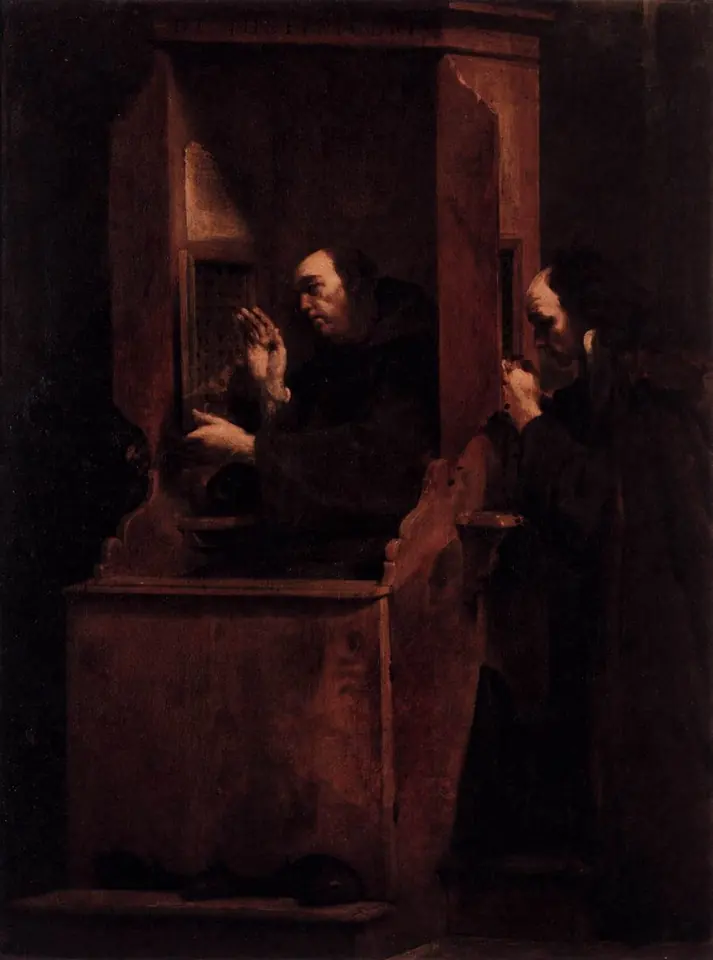
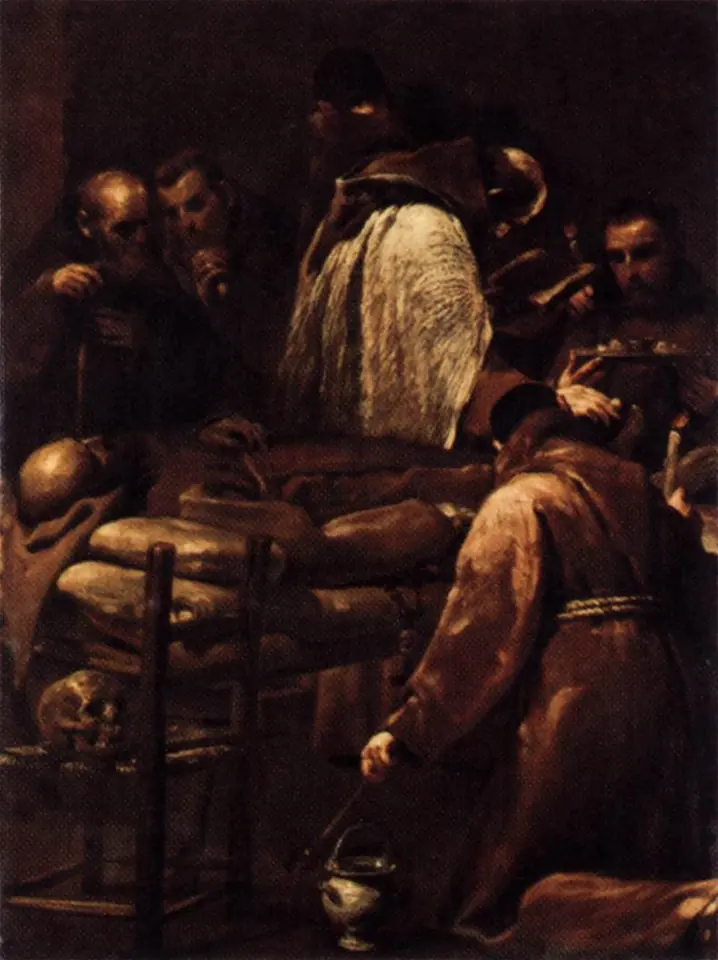
5. The Anointing of the Sick. The sign is the laying on of hands and the anointing of the forehead and hands with the oil of the sick, with the priest's prayer. Following St. James ("Is any man sick among you? Let him bring in the priests of the church, and let them pray over him, anointing him with oil in the name of the Lord," James 5:14, Douay-Rheims), the Church anoints those in danger from illness or old age, not only the dying. It strengthens, gives peace and courage, forgives sins if the sick person cannot confess, and sometimes restores bodily health. "Only priests (bishops and presbyters) are ministers" of this sacrament (no. 1516). It can be repeated in a new serious illness or if the same illness worsens, and it is "fitting to receive the Anointing of the Sick just prior to a serious operation" (no. 1515). Our page on the Anointing of the Sick has more.
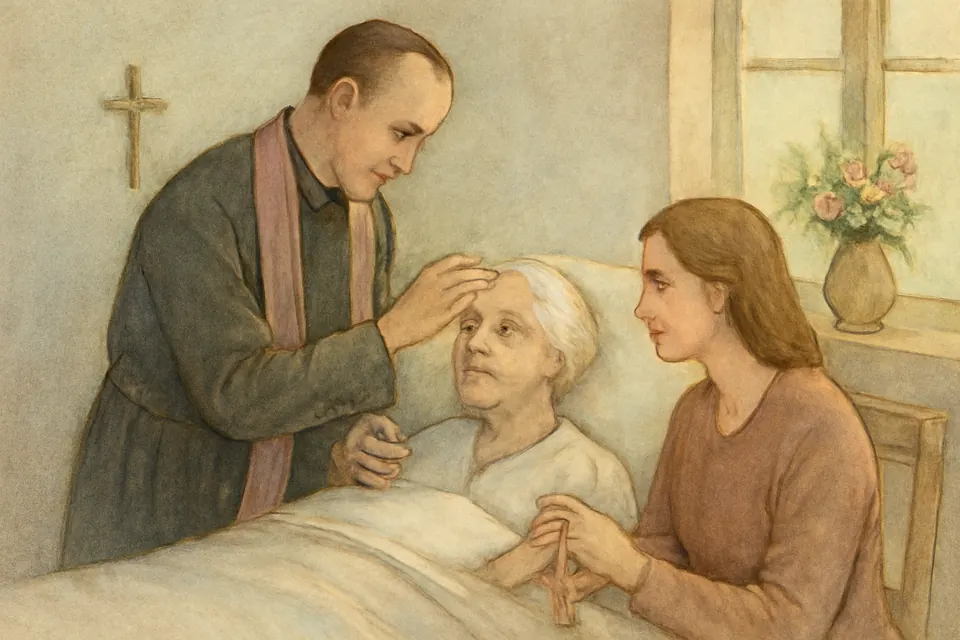
For the dying, the Church gives what were once called the "last rites": Confession, the Anointing and Holy Communion as viaticum, food for the journey. The Catechism says the Eucharist "should always be the last sacrament of the earthly journey" (no. 1517).
The sacraments at the service of communion
The last two sacraments are given mainly for the sake of others. The Catechism says they "are directed towards the salvation of others; if they contribute as well to personal salvation, it is through service to others that they do so" (no. 1534).
6. Holy Orders. The sign is the bishop's laying on of hands and the prayer of consecration. Holy Orders has three degrees: bishop, priest and deacon. Through it the mission Christ gave his apostles continues in the Church until the end of time. Only a bishop can ordain, and a man is ordained to each degree only once. Our page on Holy Orders explains the three degrees.
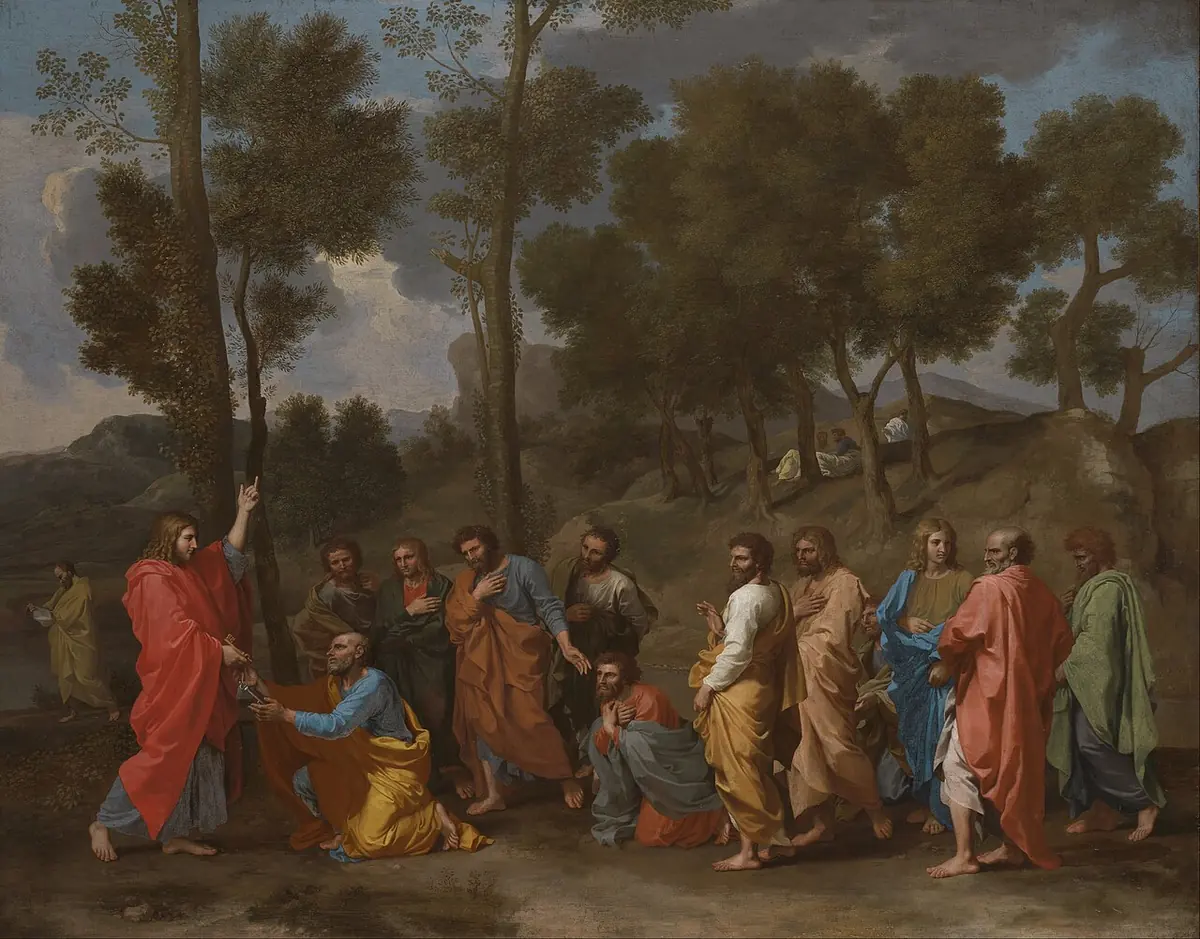
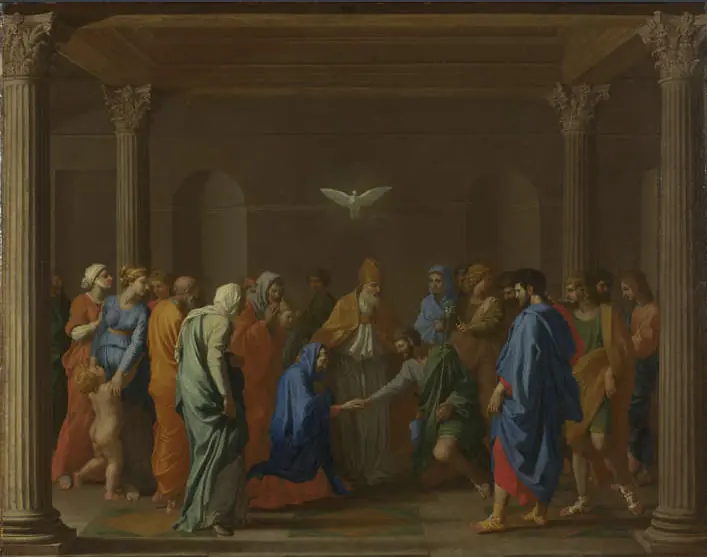
7. Matrimony. The sign is the free consent of a baptized man and a baptized woman, given before the Church. In the Latin Church "the spouses, as ministers of Christ's grace, mutually confer upon each other the sacrament" (no. 1623). In the Eastern liturgies, where the rite is called the Crowning, the priest or bishop is the minister and crowns the bride and groom. A sacramental marriage is a sign of Christ's own love for the Church, and its bond lasts until death. See Catholic marriage, the prayer for marriage and the patron saints of marriage.
The 7 sacraments at a glance
- Baptism: water and the Trinitarian words; ordinarily a bishop, priest or deacon, anyone in an emergency; once.
- Confirmation: chrism on the forehead with the laying on of the hand; a bishop (or a priest with the faculty); once.
- Eucharist: bread and wine and the words of consecration; a priest; often, even daily.
- Penance: sorrow, confession and penance, with absolution; a priest; as often as needed.
- Anointing of the Sick: the oil of the sick and the priest's prayer; a priest; repeatable in serious illness.
- Holy Orders: the bishop's laying on of hands and prayer of consecration; a bishop; once for each degree.
- Matrimony: the consent of the spouses before the Church; the spouses themselves in the Latin Church; once for each marriage.
Why three of them can never be repeated
Baptism, Confirmation and Holy Orders leave something behind that nothing can erase. The Catechism calls it a "sacramental character" or "seal," by which "the Christian shares in Christ's priesthood and is made a member of the Church according to different states and functions." This seal "is indelible, it remains for ever in the Christian as a positive disposition for grace," and "therefore these sacraments can never be repeated" (no. 1121).
So a person who drifts away for decades and comes back is not baptized again. He is still a child of God; what he needs is Confession. A priest who leaves ministry is still a priest. The mark stays because God does not take back his gifts.
How the Church came to count seven
All seven appear in the New Testament and in the Fathers, but for centuries Christians used the word "sacrament" loosely for many holy signs. The Catholic Encyclopedia explains that the theologian Peter Lombard, who died in 1164, gave the exact definition, a sacred sign that both signifies and causes grace, and then listed the seven. His list "was at once universally accepted," which shows "that he did not introduce a new doctrine, but merely expressed in a convenient and precise formula what had always been held in the Church."
The same seven were professed at the Second Council of Lyons in 1274 and in the Council of Florence's Decree for the Armenians in 1439. When the Reformers denied that some of them were sacraments, the Council of Trent answered in its seventh session on March 3, 1547:
If any one saith, that the sacraments of the New Law were not all instituted by Jesus Christ, our Lord; or, that they are more, or less, than seven, to wit, Baptism, Confirmation, the Eucharist, Penance, Extreme Unction, Order, and Matrimony; or even that any one of these seven is not truly and properly a sacrament; let him be anathema.
That is the 1848 Waterworth translation. "Extreme Unction" is the older name for the Anointing of the Sick, and "Order" for Holy Orders.
The Eastern Churches agree. The Catholic Encyclopedia tells how, around 1576, Lutheran theologians in Wittenberg sent a Greek translation of the Augsburg Confession to Patriarch Jeremias II of Constantinople. His reply defended the seven mysteries of the Church, "just seven and no more." The Orthodox and the Eastern Catholic Churches still celebrate the same seven, often in a different order: an infant there is baptized, chrismated and given Communion in one celebration.
Which sacraments are necessary?
The Church teaches that "for believers the sacraments of the New Covenant are necessary for salvation" (no. 1129). That does not mean every Catholic receives all seven. No one receives both Holy Orders and Matrimony in the ordinary course, though a married man may be ordained a deacon, and the Eastern Churches ordain married men as priests. Many people never need the Anointing of the Sick.
Baptism is the gate; Christ said, "Unless a man be born again of water and the Holy Ghost, he cannot enter into the kingdom of God" (John 3:5, Douay-Rheims). Confirmation and the Eucharist complete Christian initiation, and the Church obliges us to receive Communion at least once a year, during the Easter season if possible. Confession is necessary for anyone conscious of grave sin. And the Eucharist is the center of it all: St. Thomas Aquinas, quoted by the Catechism, says that "all the other sacraments are ordered to it as to their end" (no. 1211).
A saint for every sacrament
The saints show us what the sacraments look like when they bear fruit. A few patrons for each:
- Baptism: St. John the Baptist, who baptized Christ in the Jordan.
- Confirmation: St. Cyril of Jerusalem, whose talks to the newly baptized explain the anointing with chrism, and St. Ambrose, who told the newly confirmed, "God the Father sealed you, Christ the Lord strengthened you."
- The Eucharist: St. Tarcisius, who died protecting the Blessed Sacrament; St. Juliana of Liège, behind the feast of Corpus Christi; St. Pius X, the pope of early First Communion; and St. Carlo Acutis, who called the Eucharist his highway to heaven.
- Penance: St. John Vianney, who heard confessions up to sixteen hours a day, and St. Padre Pio.
- Anointing of the Sick: St. Camillus de Lellis, patron of the sick and of nurses, and St. Joseph, patron of a happy death.
- Holy Orders: St. John Vianney again, patron of parish priests, and St. Charles Borromeo, who founded seminaries after the Council of Trent.
- Matrimony: Sts. Louis and Zélie Martin, the parents of St. Thérèse and the first married couple canonized together.
Behind them all stands St. Thomas Aquinas, whose theology of the sacraments the Church still teaches, and St. Augustine, whose teaching stands behind the Catechism's line that "the sacraments make the Church" (no. 1118).
Sacraments and sacramentals
The seven sacraments are not the only holy signs in Catholic life. Holy water, blessed candles, ashes, palms, the rosary, scapulars and medals are sacramentals. The Church instituted them, not Christ directly, and they work through the Church's prayer rather than in the way the sacraments do. Most of them point back to a sacrament: holy water to Baptism, the blessed candle to the light of Christ given at the font, ashes to Penance. The holy oils used in three of the seven sacraments are blessed and consecrated by the bishop at the Chrism Mass of Holy Thursday.
A prayer of thanks for the sacraments
Lord Jesus Christ, you did not leave us orphans.
You washed us in Baptism, sealed us with your Spirit and feed us with your own Body and Blood. When we fall, you lift us up in Confession; when we are sick, you come to us with oil and prayer. You give your Church shepherds, and you bless husbands and wives with your own faithful love.
Make us grateful for every sacrament we have received. Bring back to them all who have wandered away, and lead those who do not yet know you to the waters of Baptism. Mary, Mother of the Church, and all you saints, pray for us. Amen.
Pastor Lyvers wrote this prayer for this page.
Frequently asked questions
What are the 7 sacraments in order?
The usual order is Baptism, Confirmation, the Eucharist, Penance (also called Confession or Reconciliation), the Anointing of the Sick, Holy Orders and Matrimony. The Catechism follows this order and groups them as the sacraments of initiation (the first three), of healing (the next two) and at the service of communion (the last two).
What are the 3 groups of sacraments?
The sacraments of Christian initiation (Baptism, Confirmation, Eucharist) lay the foundation of the Christian life. The sacraments of healing (Penance and the Anointing of the Sick) restore and strengthen us when sin or illness wounds us. The sacraments at the service of communion (Holy Orders and Matrimony) are given for the salvation of others and build up the Church (CCC 1211, 1534).
Which sacraments can only be received once?
Baptism, Confirmation and Holy Orders. They imprint a permanent spiritual seal, or character, and so can never be repeated (CCC 1121). Matrimony is received once for each marriage and lasts until the death of a spouse. The Eucharist and Penance can be received again and again, and the Anointing of the Sick can be repeated in a new serious illness or when the same illness grows worse.
Who instituted the seven sacraments?
Christ himself. The Council of Trent taught in 1547 that the sacraments of the New Law were 'all instituted by Jesus Christ, our Lord,' and that there are neither more nor fewer than seven. The Church does not invent sacraments; over the centuries she recognized which of her rites are sacraments in the strict sense (CCC 1114, 1117).
What is the difference between a sacrament and a sacramental?
Christ instituted the seven sacraments, and in them he himself acts to give grace. The Church instituted the sacramentals, such as holy water, blessings, rosaries and medals; through the Church's prayer they prepare us to receive grace and help us cooperate with it. Our page on sacramentals explains the difference in detail.
Which sacraments can a lay person give?
In an emergency anyone, even a person who is not baptized, can baptize, by pouring water and saying the Trinitarian words with the intention of doing what the Church does (CCC 1256). In the Latin Church the bride and groom are themselves the ministers of Matrimony (CCC 1623). The other five need an ordained minister.
Do Orthodox Christians have seven sacraments?
Yes. The Orthodox and the Eastern Catholic Churches keep the same seven, which they usually call the holy mysteries. When Lutheran theologians wrote to Patriarch Jeremias II of Constantinople around 1576, he answered that the mysteries of the Church are seven, 'just seven and no more,' as the Catholic Encyclopedia records.
Is marriage a sacrament?
Yes. Marriage between two baptized persons is one of the seven sacraments. Christ raised the natural bond of husband and wife to a sacrament that signifies his own love for the Church, and the bond of a valid sacramental marriage lasts until death.
Sources
- Catechism of the Catholic Church, nos. 1113–1121: The sacraments of Christ and of the Church. The sacramental character of Baptism, Confirmation and Holy Orders (1121)
- Catechism of the Catholic Church, nos. 1127–1129: The sacraments of salvation. Ex opere operato; the sacraments necessary for salvation
- Catechism of the Catholic Church, nos. 1210–1211: The seven sacraments of the Church
- Council of Trent, Seventh Session (March 3, 1547), canons on the sacraments in general, trans. J. Waterworth (1848)
- Catholic Encyclopedia (1912): Sacraments. Peter Lombard's enumeration; Lyons (1274), Florence (1439); Patriarch Jeremias II's reply (about 1576)
- Catechism of the Catholic Church, nos. 1514–1516: Who receives and who administers the Anointing of the Sick
- Catechism of the Catholic Church, nos. 1621–1624: The celebration of Marriage. The spouses as ministers in the Latin Church; the priest as minister of the Eastern "Crowning"