Catholic confession: how to go to confession
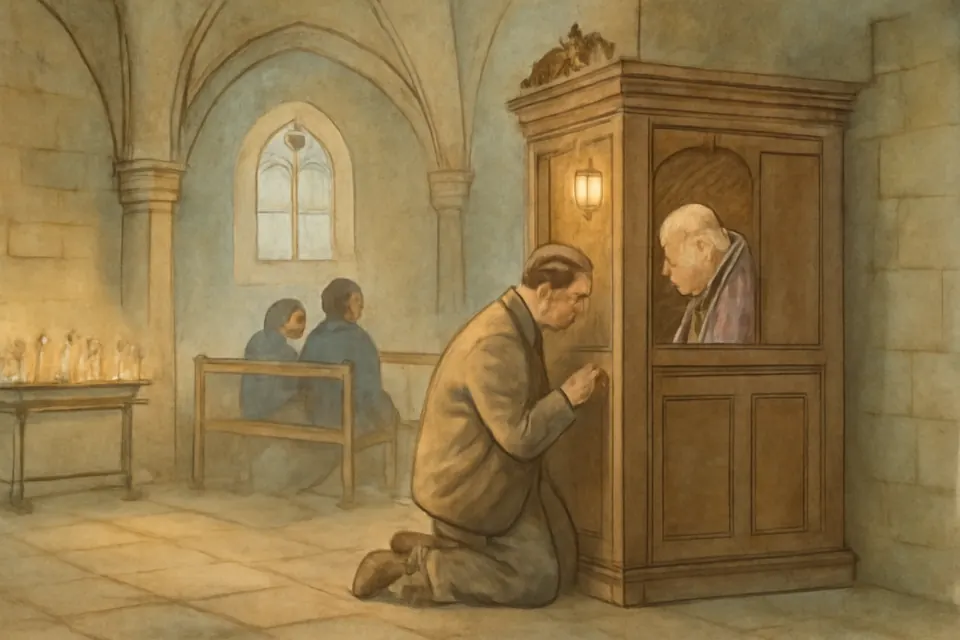
Catholic confession, the sacrament of Penance and Reconciliation, is how Christ forgives the sins we commit after Baptism through the ministry of a priest. We examine our conscience, tell our sins with sorrow, accept a penance, pray the Act of Contrition and receive absolution. It takes a few minutes, and the priest will help you through it.
Catholic confession is the sacrament where Jesus Christ meets us in our sins and sends us home forgiven. The Church calls it by several names: the sacrament of Penance, the sacrament of Reconciliation, the sacrament of conversion, and simply confession. Whatever we call it, the heart of it is the same. We tell God, through His priest, what we have done, we are sorry, and we hear the words that only He can make true: our sins are absolved.
If you are nervous, you are in good company. Most people feel a knot in the stomach before confession, especially the first time or after a long absence. This page walks through Catholic confession step by step: how to prepare, what to say, which sins to confess, what the priest does, the Act of Contrition, and honest answers to the fears that keep people away. If you want a detailed list of questions to examine your conscience, our examination of conscience is the companion to this page; print it and bring it along.
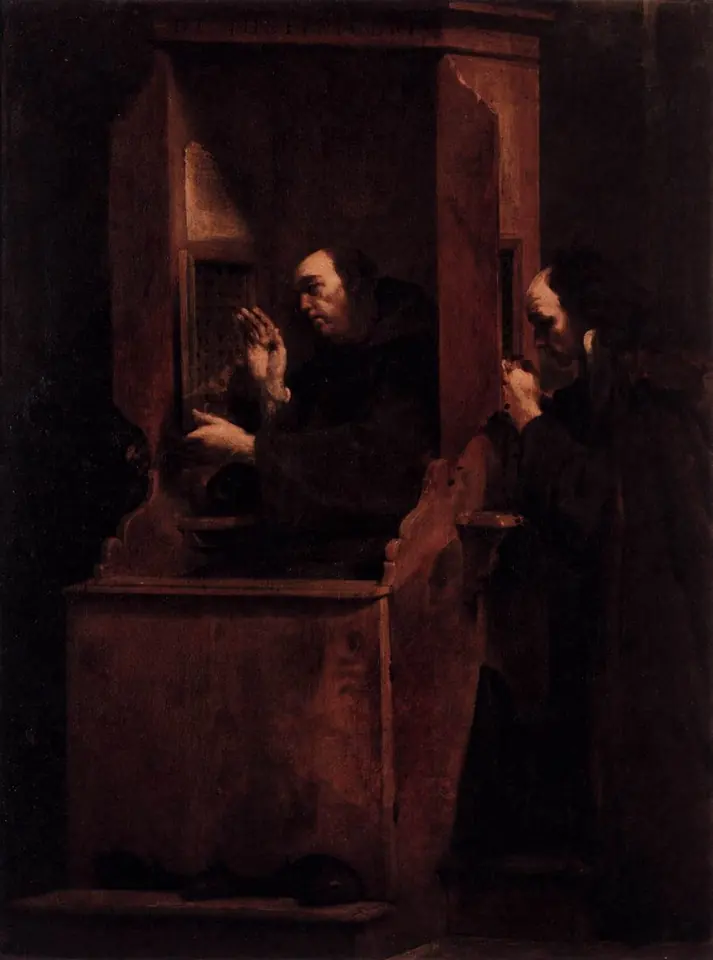
What Catholic confession is
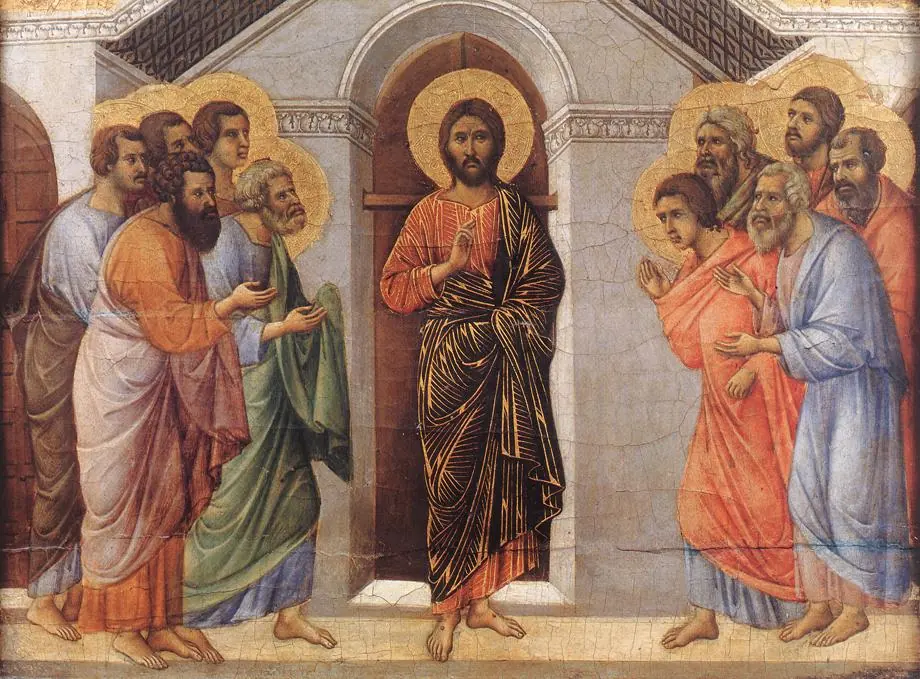
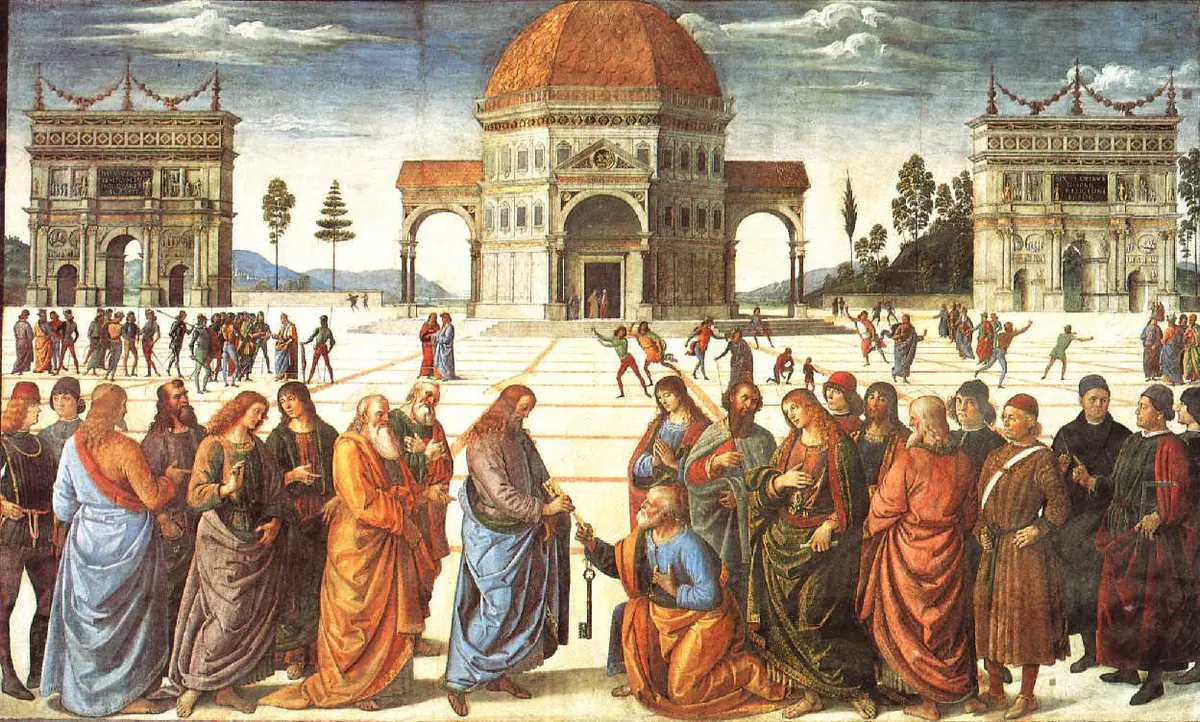
The sacrament of Reconciliation comes from the lips of the risen Christ. On the evening of Easter Sunday He stood among the apostles behind locked doors, breathed on them and said, in the words of the Douay-Rheims Bible: "Receive ye the Holy Ghost. Whose sins you shall forgive, they are forgiven them; and whose sins you shall retain, they are retained" (John 20:22–23). Earlier He had given Peter the keys of the kingdom and the power to bind and loose (Matthew 16:19).
"Only God forgives sins," the Catechism of the Catholic Church says plainly (1441). But Christ chose to share that work with men. He "entrusted the exercise of the power of absolution to the apostolic ministry" (1442), so that we could hear His forgiveness with our own ears, from a human voice, and know it was real. The priest is not a judge who stands over us on his own authority. He acts in the person of Christ, the Good Shepherd who goes out after the lost sheep.
Why do we need it, if we were forgiven at Baptism? Because we keep falling. The Fathers of the Church called this sacrament "the second plank [of salvation] after the shipwreck which is the loss of grace," a phrase the Catechism takes up (1446). Baptism was the first rescue. Confession is the hand God holds out every time we go under again.
The sacrament has two parts that belong together (1448). On our side are three acts: contrition (sorrow for sin with the resolve not to sin again), confession (telling our sins to the priest) and satisfaction (doing the penance he gives). On God's side is absolution, given through the Church. The Baltimore Catechism of 1885 put the whole thing in five steps that generations of American children memorized: "We must examine our conscience. We must have sorrow for our sins. We must make a firm resolution never more to offend God. We must confess our sins to the priest. We must accept the penance which the priest gives us."
Before you go: preparing for confession
Find a time
Most parishes hear confessions on Saturday afternoon, and many add a weekday evening or a time before Sunday Mass. Look in the parish bulletin or on the parish website. If no time suits you, call the parish office and ask for an appointment; priests are glad to make one. During Advent and Lent many parishes hold penance services where several priests hear confessions one after another, which is a good time to come back if it has been a while (see Lent 2027).
Pray first
Before anything else, ask God for light. A short prayer to the Holy Spirit is the classic way to begin (see our prayer to the Holy Spirit). Many people also pray the opening of Psalm 50 (Psalm 51 in newer Bibles), the psalm King David prayed after the prophet Nathan confronted him with his sin. This is the Douay-Rheims translation:
Have mercy on me, O God, according to thy great mercy. And according to the multitude of thy tender mercies blot out my iniquity. Wash me yet more from my iniquity, and cleanse me from my sin. For I know my iniquity, and my sin is always before me. Create a clean heart in me, O God: and renew a right spirit within my bowels. Cast me not away from thy face; and take not thy holy spirit from me. Restore unto me the joy of thy salvation, and strengthen me with a perfect spirit.
Examine your conscience
Next, look honestly at your life since your last good confession. The usual guide is the Ten Commandments, along with the precepts of the Church and the seven deadly sins. Our examination of conscience has full questions for adults and a simpler set for children, so we won't repeat them here. Ten or fifteen minutes is usually enough. Don't try to dig up every small thing; ask where you have really turned away from God and from the people He gave you.
Be sorry
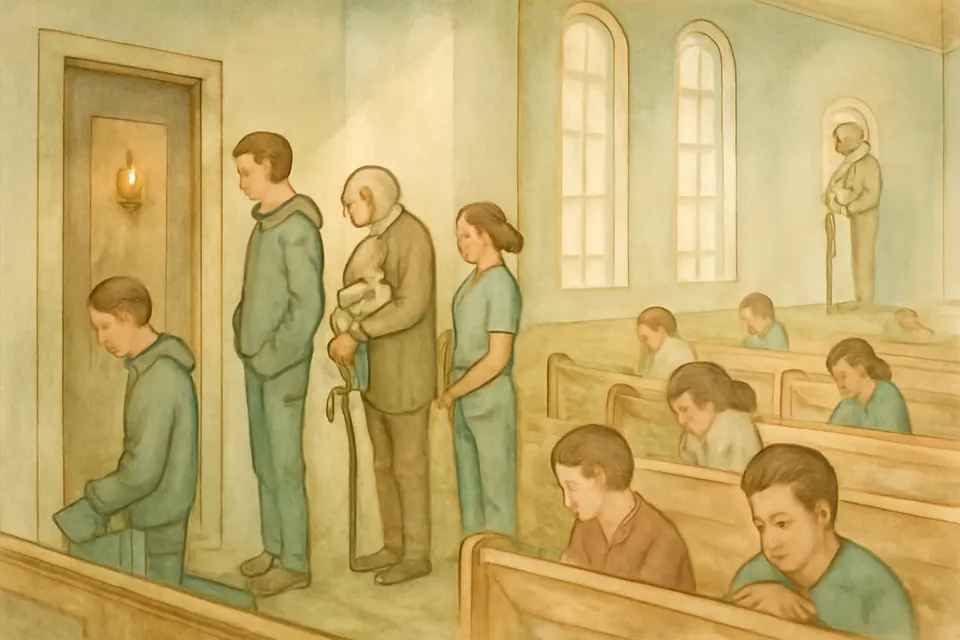
Contrition is the most important thing we bring. The Council of Trent, quoted in the Catechism (1451), defines it as "sorrow of the soul and detestation for the sin committed, together with the resolution not to sin again." You don't have to feel waves of emotion. Sorrow is in the will: I wish I had not done it, I don't want to do it again, and I'm asking God's help to change. Sorrow born of love for God is called perfect contrition. Sorrow born mainly of fear of hell is imperfect contrition, and the Catechism (1453) calls even that "a gift of God," enough for the sacrament to complete.
Catholic confession step by step
Here is what happens in the confessional. The words vary a little from parish to parish, and the priest will gently lead you if you lose your place.
- Choose screen or face to face. Church law asks every parish to keep confessionals "with a fixed grate between the penitent and the confessor" so that anyone who wishes can confess anonymously (Canon 964). Many churches also have a chair facing the priest. Either is fine.
- Make the sign of the cross. The priest may greet you, offer a short blessing or read a line of Scripture.
- Begin. The traditional words are: "Bless me, Father, for I have sinned. It has been (two months, five years) since my last confession." If it's your first confession in a long time, or your first ever as an adult convert, say so.
- Say who you are, briefly, if it helps. "I'm married with three kids." "I'm a college student." "I'm a nurse." A word about your state in life helps the priest give useful advice.
- Confess your sins. Name them simply and honestly. Mortal sins must be named by kind and, as best you can, by number ("I missed Mass on Sunday about six times"). Add the venial sins that trouble you most. You don't need to tell a long story.
- Close. Say something like "For these and all the sins of my past life, I am sorry."
- Listen. The priest may give a word of counsel or ask a question to understand. Then he gives you a penance, usually a few prayers or an act of charity.
- Pray the Act of Contrition (below). If you forget the words, tell him; he will help.
- Receive absolution. The priest extends his hand over you and prays the prayer of absolution. Answer "Amen."
- Go in peace. The priest may dismiss you with a short word of thanks to God. Then go and do your penance.
The Baltimore Catechism adds three marks of a good confession, which are still a wise guide: it must be "humble, sincere, and entire." Humble, because we accuse ourselves, not others. Sincere, telling our sins "honestly and truthfully, neither exaggerating nor excusing them." Entire, telling "the number and kinds of our sins and the circumstances which change their nature."
The words of absolution
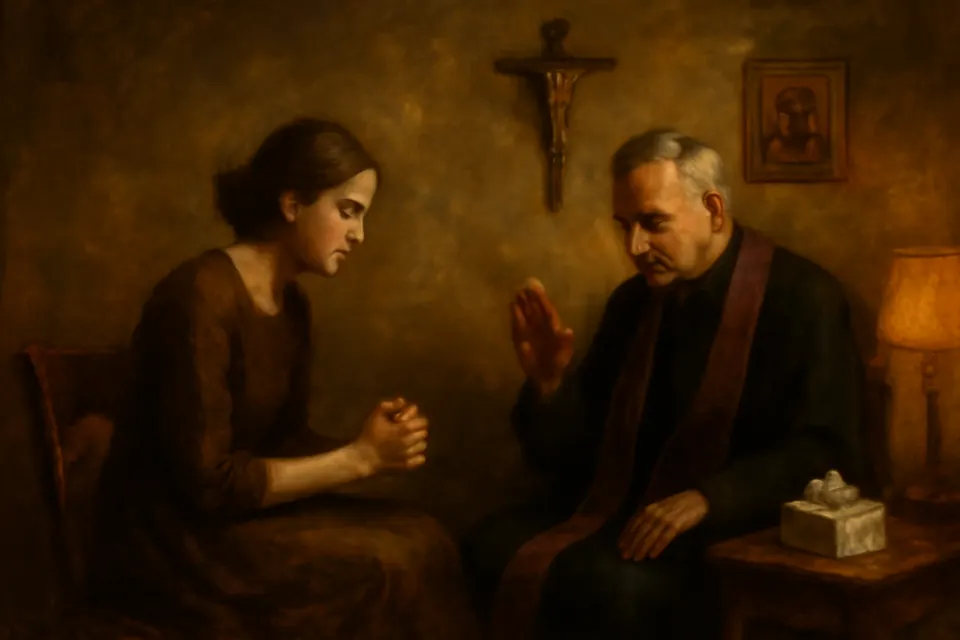
The prayer of absolution in the Latin Church begins by naming God as "the Father of mercies," recalls that He reconciled the world to Himself through the death and resurrection of His Son, and sent the Holy Spirit for the forgiveness of sins. It asks that through the ministry of the Church God grant us pardon and peace, and it ends with the words that do what they say. The Catechism (1449) prints the English text in full and explains how it holds the whole mystery of the sacrament. The modern English wording belongs to the official liturgical translation, so we describe it here rather than reprint it.
The essential words are ancient. In Latin, the priest says: Ego te absolvo a peccatis tuis in nomine Patris, et Filii, et Spiritus Sancti. "I absolve you from your sins in the name of the Father, and of the Son, and of the Holy Spirit." When you hear them, your sins are gone. Not covered over, not filed away for later. Gone.
What sins to confess
People often search for a "list of sins for confession," and it's a fair question. The rule the Church gives is short. Canon 988 says we are "obliged to confess in kind and number all grave sins committed after baptism" that we know of after "diligent examination of conscience." The Catechism adds that "without being strictly necessary, confession of everyday faults (venial sins) is nevertheless strongly recommended" (1458).
So the first thing to confess is any mortal sin: a sin in a serious matter, done with full knowledge and deliberate consent. Common examples people bring to confession are deliberately missing Sunday Mass, serious sins against chastity such as pornography or sex outside marriage, getting drunk or using drugs, serious theft or fraud, abortion, hatred and a refusal to forgive, and lies or gossip that seriously harm someone's good name. Our page on mortal sin explains what makes a sin mortal and lists the grave matters the Catechism names, with references.
After that come the venial sins you notice most: impatience, small lies, unkind words, laziness in prayer, envy, grumbling, wasted time. You don't need to recite a catalog. Many confessors suggest naming the one or two faults you most want to overcome, so that the grace of the sacrament goes to work exactly there.
Two cautions. Don't confess other people's sins ("my husband makes me so angry") except as far as you need to explain your own. And if you truly can't tell whether something was a mortal sin, mention it and ask. The priest is there to help you, not to trip you up.
The Act of Contrition
This is the traditional Act of Contrition as printed in the Baltimore Catechism No. 2 (1885), the form most American Catholics learned as children:
O my God! I am heartily sorry for having offended Thee, and I detest all my sins, because I dread the loss of heaven and the pains of hell, but most of all because they offend Thee, my God, who art all-good and deserving of all my love. I firmly resolve, with the help of Thy grace, to confess my sins, to do penance, and to amend my life. Amen.
Notice how the prayer climbs. It starts with fear of losing heaven and ends with love: "most of all because they offend Thee." That is the path of contrition the Catechism describes, from fear toward love. Your parish may use a newer wording, and the priest will accept any sincere words of sorrow and resolve. For the older and shorter forms, the Latin, and how to teach it to children, see our full page on the Act of Contrition.
Fears that keep people away
"I'm embarrassed."
Of course you are. Shame is a sign that your conscience is alive. But the priest has heard it before, almost certainly many times, and he is a sinner who goes to confession himself. Many priests say that hearing a hard confession makes them respect the penitent more, not less. The Catechism (1455) notes that confession "frees us," because "man looks squarely at the sins he is guilty of, takes responsibility for them, and thereby opens himself again to God."
"The priest will remember, or tell someone."
He won't tell, ever. Canon 983 says: "The sacramental seal is inviolable; therefore it is absolutely forbidden for a confessor to betray in any way a penitent in words or in any manner and for any reason." A priest who directly breaks the seal is automatically excommunicated. Priests have gone to prison, and some have died, rather than break it. Tradition honors St. John of Nepomuk, drowned in Prague in 1393, as the martyr of the seal of confession. If anonymity matters to you, use the screen, or go to a parish where nobody knows you.
"It's been too long. My sins are too big."
There is no sin God will not forgive to a person who is truly sorry. Think of St. Peter, who denied Christ three times and was made shepherd of the Church. Think of St. Mary Magdalene, of St. Augustine, of St. Moses the Black, the robber chief who became a desert monk, and of St. Dismas, the thief who asked Jesus to remember him and heard "today you will be with me in Paradise." Christ told the parable of the prodigal son for exactly this moment. The father saw his son "a great way off" and ran to meet him.

If it has been years, tell the priest at the start: "It's been about fifteen years, Father, and I'd like your help." He will be glad, and he may walk you through it with questions. You don't need a perfect accounting of every year. Name the serious sins you remember and roughly how often. The Baltimore Catechism's advice still holds: if you can't remember the number, tell "the number as nearly as possible," and "how long the habit or practice has lasted."
"I'll forget something."
If you honestly forget a sin, it's forgiven with the rest. The Catechism (1456) says that when we "strive to confess all the sins that they can remember," we "undoubtedly place all of them before the divine mercy for pardon." If a forgotten mortal sin comes back to you later, mention it next time. Deliberately hiding a mortal sin is different: that would make the confession invalid and add the sin of sacrilege. If you ever did that, simply tell the priest next time, and confess the hidden sin too.
"I'll just commit the same sins again."
Probably. Most of us confess the same sins for years. That's not hypocrisy; it's the honest life of a sinner who keeps getting up. What matters is a real intention, right now, to avoid the sin and the situations that lead to it. Grace works slowly, the way water wears down stone.
"I'm going to cry."
Then cry. Priests keep tissues for a reason. Many people find that tears come with the relief of finally saying it out loud.
After confession: penance and thanksgiving
Do your penance as soon as you can, ideally before you leave the church. The Catechism (1460) explains that the penance "must seek [the penitent's] spiritual good" and "can consist of prayer, an offering, works of mercy, service of neighbor, voluntary self-denial, sacrifices." It doesn't pay for the sin; Christ has done that. It helps heal the damage sin left in us and begins to set things right. If your sin harmed someone, make amends where you can: return what was taken, repair the reputation you hurt.
Then thank God. The Catechism (1468) quotes the Roman Catechism: "The whole power of the sacrament of Penance consists in restoring us to God's grace and joining us with him in an intimate friendship." If you had been in mortal sin, you are back in the state of grace and can receive Holy Communion again.
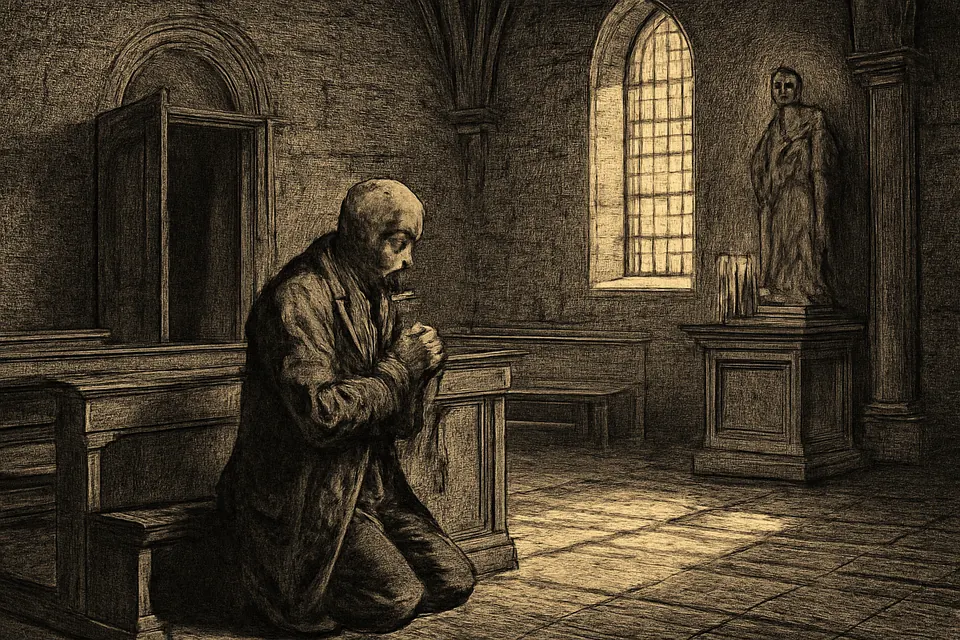
Here is a short prayer of thanksgiving, written for this page by Pastor Lyvers, that you may pray after confession:
Lord Jesus, thank You. You have heard me, forgiven me and sent me home in peace. Keep me close to You this week. When I am tempted, remind me of this hour, and when I fall, bring me back quickly. Mary, refuge of sinners, pray for me. Amen. (Pastor Lyvers)
How often to go, and other rules
- At least once a year. The Catechism (1457), quoting Church law, says that every Catholic who has reached the age of reason "is bound by an obligation faithfully to confess serious sins at least once a year." It is one of the precepts of the Church.
- Before Communion after a mortal sin. Anyone aware of a mortal sin must not receive Holy Communion without first going to confession, unless there is a grave reason and no possibility of confession; then they must make an act of perfect contrition and go to confession as soon as possible (1457, 1452).
- Individual confession is the ordinary way. Canon 960 calls individual and integral confession and absolution "the only ordinary means" by which someone conscious of grave sin is reconciled with God and the Church. General absolution without individual confession is allowed only in grave emergencies such as imminent danger of death.
- Monthly is a good rhythm. Not required, but recommended by many saints and spiritual directors, especially for those fighting a habitual sin.
- Children make their first confession before First Communion, usually around age seven or eight.
- Non-Catholics cannot receive absolution, but anyone may talk to a priest, and those preparing to enter the Church make their first confession before being received.
The saints and the confessional
The saints loved this sacrament. St. John Vianney, the Curé of Ars, spent so many hours a day in his confessional that pilgrims came from all over France and waited for days to reach him. St. Padre Pio heard confessions for hours daily at San Giovanni Rotondo for half a century. St. Leopold Mandić, a tiny Capuchin in Padua, spent more than thirty years in a cramped confessional cell and was known for his gentleness with sinners. St. Alphonsus Liguori, the great moral theologian, taught confessors to receive penitents with the tenderness of a father. St. Francis de Sales advised his readers to go to confession often and humbly, and to choose a good confessor and stay with him.
Ask them to pray for you before you go. Ask especially St. Peter, who knew what it was to fail Jesus and to be forgiven by Him on a beach in Galilee. And ask Our Lady, refuge of sinners, whom the Hail, Holy Queen calls "our life, our sweetness and our hope."
For the next step after confession, see our pages on the seven sacraments, the Divine Mercy chaplet and indulgences, which build on the grace of confession.
Frequently asked questions
What do you say at Catholic confession?
Make the sign of the cross and say, "Bless me, Father, for I have sinned. It has been (how long) since my last confession." Then tell your sins plainly, the serious ones by kind and about how often, and end with "For these and all my sins, I am sorry." Listen to the priest, accept your penance, pray the Act of Contrition and receive absolution.
What sins do I have to confess?
Every mortal sin you remember since your last good confession, by kind and, as best you can, by number (Canon 988). Confessing venial sins is not required, but the Church strongly recommends it (Catechism 1458). If you are unsure whether something was serious, mention it; the priest will help.
Can I bring a list of sins to confession?
Yes. Many people jot a few words on a slip of paper so nerves don't wipe their memory. Read from it if you like, then tear it up or throw it away afterward.
What if I haven't been to confession in years?
Tell the priest right away: "It has been about twenty years," or "I don't remember my last confession." He hears this often and will gladly help you. Name the serious sins you remember as well as you can; you don't need a perfect record of every year.
Will the priest tell anyone what I confessed?
Never. Canon 983 calls the sacramental seal "inviolable" and forbids a confessor to betray a penitent "in any way" and "for any reason." A priest who directly violates it incurs automatic excommunication.
Do I have to confess face to face?
No. Canon 964 asks every church to keep confessionals with a fixed screen so that anyone who wishes can confess anonymously. You may also sit face to face if you prefer. Choose whichever helps you speak honestly.
How often should a Catholic go to confession?
At least once a year if you are aware of serious sin, and before receiving Holy Communion after any mortal sin. Many Catholics go monthly; regular confession heals small faults before they become habits.
What if I forget the Act of Contrition?
Tell the priest. He may lead you line by line, or you may say a short prayer of sorrow in your own words, such as "My God, I am sorry for my sins with all my heart." Many people bring a card with the prayer on it.
Sources
- Catechism of the Catholic Church, nos. 1440–1449 (The Sacrament of Penance and Reconciliation)
- Catechism of the Catholic Church, nos. 1450–1460 (The Acts of the Penitent)
- Code of Canon Law, canons 959–997 (The Sacrament of Penance), esp. cann. 960, 964, 983, 988–989
- Council of Trent, Session XIV (1551): Doctrine on the Sacrament of Penance
- A Catechism of Christian Doctrine No. 2 (the Baltimore Catechism, 1885): Act of Contrition and lessons on Penance and Confession (Project Gutenberg)
- Douay-Rheims Bible, Psalm 50 (51), the Miserere
- Catholic Encyclopedia (1911): The Seal of Confession