St. Leopold Mandić (1866–1942): The Capuchin Confessor of Padua

St. Leopold Mandić (1866–1942) was a Croatian Capuchin who spent more than thirty years hearing confessions in a tiny cell in Padua. John Paul II canonized him in 1983 as a model of confessors. His feast is May 12, and since 2020 the Church in Italy has honored him as patron of people with cancer, the illness he died of.
Who was St. Leopold Mandić?
St. Leopold Mandić was a Capuchin friar so small and frail that he could not preach, could not go to the missions he dreamed of, and could barely stand up straight. What he could do was hear confessions, and he did it for most of every day for more than thirty years in a cell about the size of a closet in Padua. People came to him from every walk of life: farm families, university professors, priests and bishops. When Pope John Paul II canonized him in 1983, he said that if you wanted to sum him up in one word, as his penitents did, he was simply "the confessor."
We ask his prayers when we are afraid to go to confession, and when we or someone we love is facing cancer.
The life of St. Leopold
A boy from the Bay of Kotor
He was born Bogdan Ivan Mandić on May 12, 1866, in Castelnuovo (today Herceg Novi, in Montenegro), on the Bay of Kotor. He was the second-youngest of sixteen children in a Croatian Catholic family. Capuchin friars from Venice had worked in the town since 1688, and the boy who hung around their friary wanted to become one of them.
He went to the Capuchin seminary in Udine at sixteen and entered the novitiate at Bassano del Grappa on May 2, 1884, taking the name Leopold. He was ordained a priest in Venice, in the basilica of Santa Maria della Salute, on September 20, 1890.
The mission he never reached
From 1887 he felt called to work for the reunion of the Orthodox churches of the East with the Catholic Church. He learned several Slavic languages and some modern Greek and asked to be sent east. His superiors said no. He was fragile, and a speech defect kept him from preaching. Instead he was moved from friary to friary: Venice, Zadar, Bassano, Koper, Thiene.
He came to Padua in 1909 to teach patrology to the young friars, and was removed in 1914, partly because some thought him too gentle with them. From that autumn his only work was the confessional.
In 1917 he was sent away to southern Italy because he had kept his Austrian citizenship, in the hope it would one day let him go home as a missionary. He came back to Padua in 1919 and, apart from a few weeks in 1923, never left again. In 1941 he wrote down a vow to give his whole life for the unity of the Eastern Christians with the Church, adding that in the meantime "every soul that needs my ministry will be, for me, an East" (our translation).
The confessor of Padua
His penitents remembered his patience above all. Some fellow priests complained that he absolved too easily. He told one of them, Professor Ezio Franceschini, as the shrine records it: "Look at me, sir. Do you think a sinner who comes to kneel before me does it for me, and not for the Lord God?" (our translation). He would often say, "Leave it all on my shoulders; I'll take care of it" (our translation), and then do penance for his penitents himself.
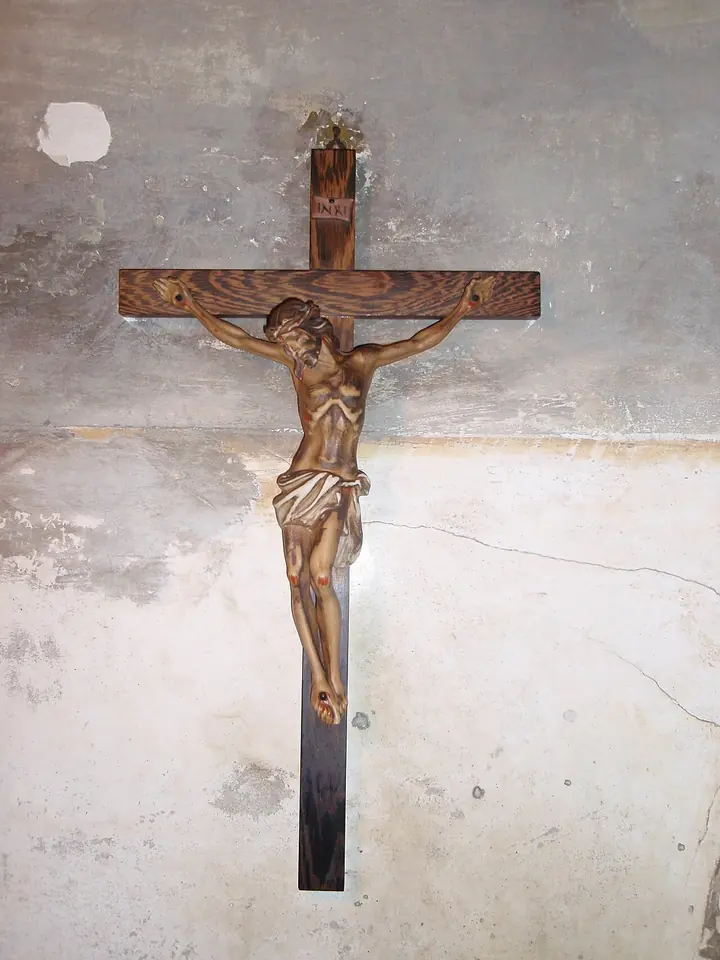
The crucifix on the wall above his kneeler mattered most to him. "He is the one who forgives, he is the one who absolves," John Paul II quoted him in the canonization homily (our translation).
His death
In April 1942 he was taken to the hospital and learned he had cancer of the esophagus. He went back to the confessional anyway. On the morning of July 30, 1942, he fainted while preparing for Mass, received the anointing of the sick, and died a few minutes later while praying the last words of the Salve Regina. Crowds filed past his body for two days. He was buried in Padua's main cemetery and moved to a chapel at the friary in 1963.
The miracles of St. Leopold Mandić
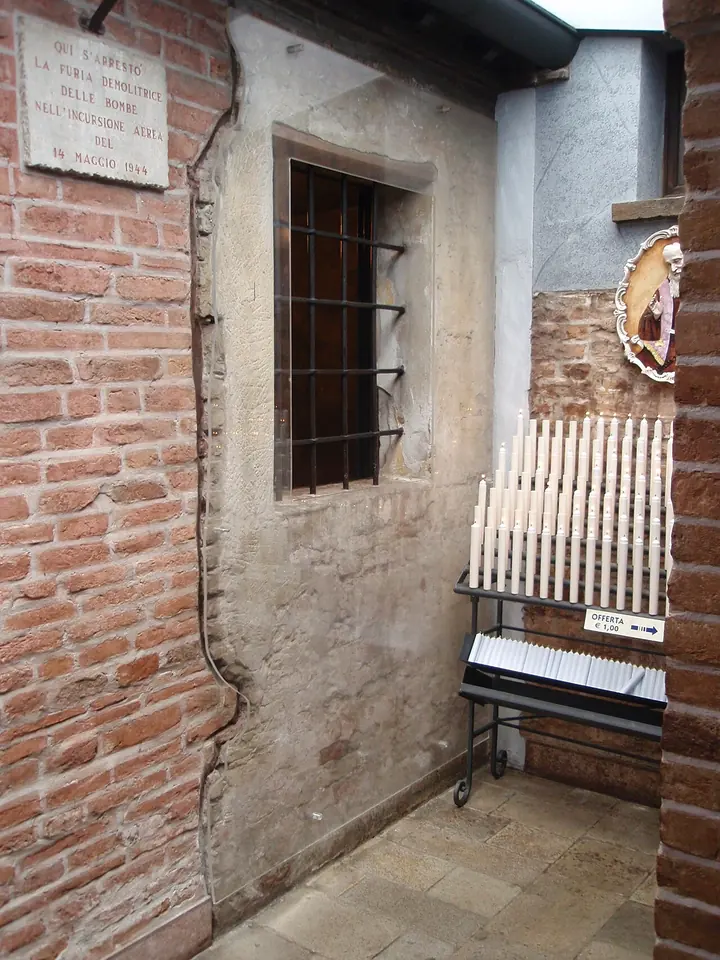
- The cell that survived (reported). During the war he told a penitent that Padua would be bombed, and the friary church with it, but not his cell, because God had shown so much mercy there. On May 14, 1944, bombs destroyed most of the church and friary. The cell and a statue of Our Lady were left standing. The friary chronicle records the bombing; a plaque on the cell recalls the prophecy.
- Three healings (approved). The Church examined and approved three healings for his beatification and canonization, as his shrine lists them. Elsa Raimondi was cured of tubercular peritonitis on September 12, 1946, after a novena. Paolo Castelli recovered in 1962 from a massive infarction of the bowel after surgeons had given up. Elisabetta Ponzolotto, whose leg was turning gangrenous in 1977, saw a small bearded Capuchin at her bedside the night before a planned amputation; by morning the leg was warm and pink, and her doctors found it fully healed.
Why St. Leopold is the patron of cancer patients
Leopold carried his own cancer quietly to the end. Sick people had prayed to him for decades, and in 2016 a group of doctors in Padua began collecting signatures asking that he be named their patron. The Italian bishops approved, and on January 6, 2020, the Congregation for Divine Worship confirmed him as patron of the sick in Italy who suffer from cancer. His shrine holds a Mass for the sick on the 12th of every month. Many Catholics outside Italy now ask his help too, alongside St. Peregrine.
Symbols of St. Leopold Mandić in art
Because photographs of him exist, statues and holy cards keep close to his real looks:
- A tiny, bent Capuchin with a long white beard and a black skullcap.
- The brown habit and white cord of the Capuchin Franciscans.
- A purple stole around his neck, the vestment a priest wears to hear confessions.
- A crucifix in his hand, like the one in his cell.
- His right hand raised, in blessing or in absolution.
In Croatia he is honored as Sveti Leopold Bogdan Mandić, and many churches there carry his name.
Feast day, shrine and prayer
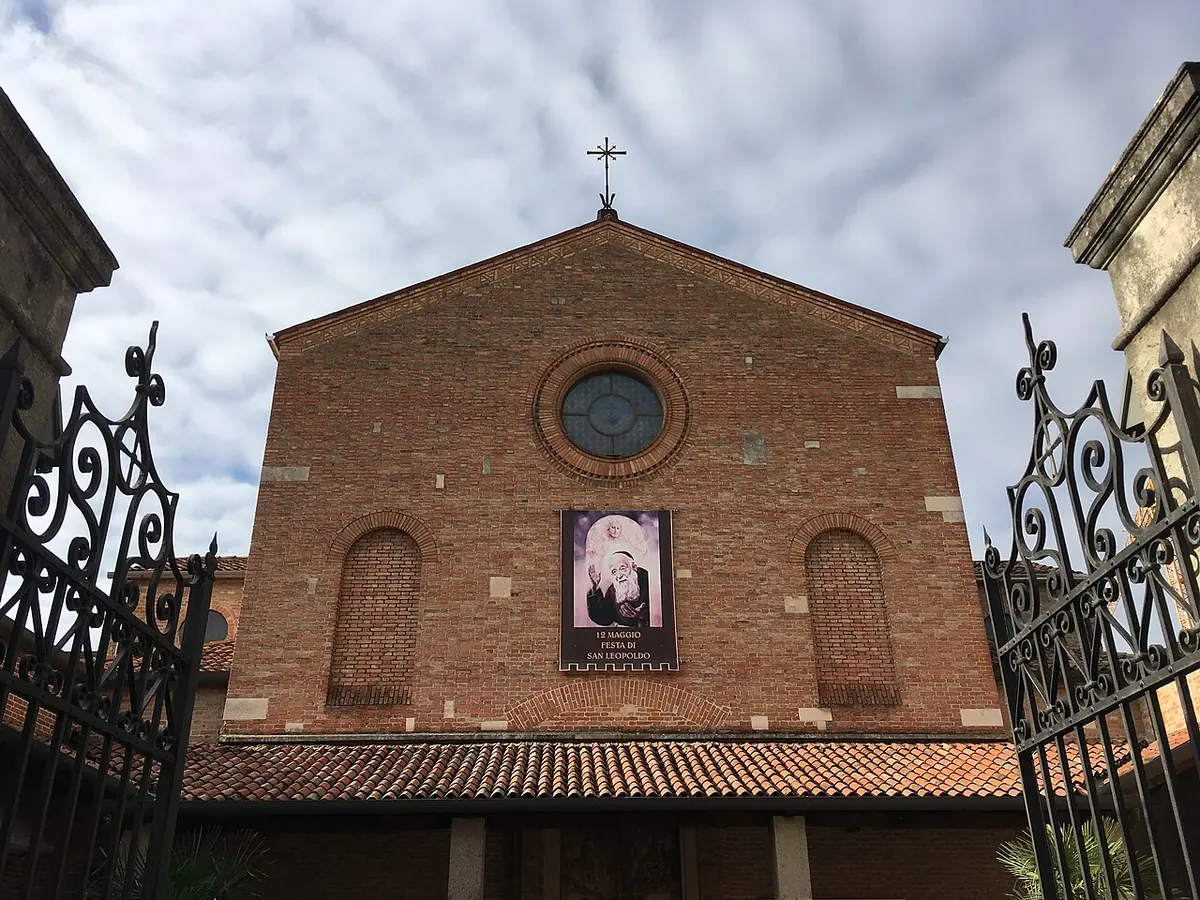
His feast is May 12. His body rests at the Sanctuary of St. Leopold in Padua, where his cell can be visited. In 2016, for the Jubilee of Mercy, Pope Francis had his body brought to St. Peter's Basilica with that of St. Padre Pio. For other saints and their days, see our feast days and patron saints pages.
His shrine in Padua publishes a prayer for people with cancer. Its closing lines read, in our translation from the Italian:
Support my faith, strengthen my hope, obtain for me the grace to face the suffering and the treatment of my illness, overcoming this trial well. Intercede with the Father that my heart may find true peace and serenity.
Let us ask him for the courage to confess our sins and for strength in sickness: St. Leopold, pray for us.
Frequently asked questions
When is the feast of St. Leopold Mandić?
May 12, the day he was born in 1866. His shrine in Padua prepares for it with a novena. The Roman Martyrology also remembers him on July 30, the day he died in 1942.
Why is St. Leopold Mandić the patron of cancer patients?
He died of cancer of the esophagus and kept hearing confessions while it was killing him. Sick people were already asking his prayers, and after a petition of about 70,000 signatures and the request of the Italian bishops, the Holy See confirmed him on January 6, 2020, as patron of the sick in Italy who suffer from cancer.
What miracles were approved for St. Leopold Mandić?
His shrine names three healings recognized by the Church for his beatification and canonization: Elsa Raimondi, cured of tubercular peritonitis in 1946; Paolo Castelli, cured of a massive intestinal infarction in 1962; and Elisabetta Ponzolotto, whose gangrenous leg recovered overnight in 1977 when doctors had ordered amputation.
Where is St. Leopold Mandić buried?
In a chapel at the Capuchin friary of Santa Croce in Padua, now his sanctuary. His small confessional cell is next to it. It survived the bombing of May 14, 1944, which destroyed the church, just as he had said it would.
Keep exploring
- Patron saint pages
- Cancer
- Feast-day calendar
- Saints remembered in MaySaint of the dayWhat saint is my birthday?
- Relics
- Where the relics are kept (map)
- More
- Saints A to ZPatron saints A to ZExplore every section
Sources
- John Paul II, Homily for the Canonization of Fr. Leopold of Castelnovo, October 16, 1983 (Italian). "The confessor"; 52 years of priesthood; his speech defect and failed hopes for the missions; quotations
- Santuario di San Leopoldo Mandić: La vita. Birth, sixteen children, Austrian citizenship and confinement in 1917, death during the Salve Regina, the 2016 journey of his body to Rome
- Santuario di San Leopoldo Mandić: La Santità e il culto. Decrees of 1974 and 1976, beatification and canonization dates, the three approved healings, the May 12 feast
- Santuario di San Leopoldo Mandić: Il messaggio spirituale. His 1941 vow for the East, his sayings, and the 2020 decree naming him patron of cancer patients in Italy
- Santuario di San Leopoldo Mandić: Storia (the bombing of May 14, 1944)