OCIA: how to become Catholic
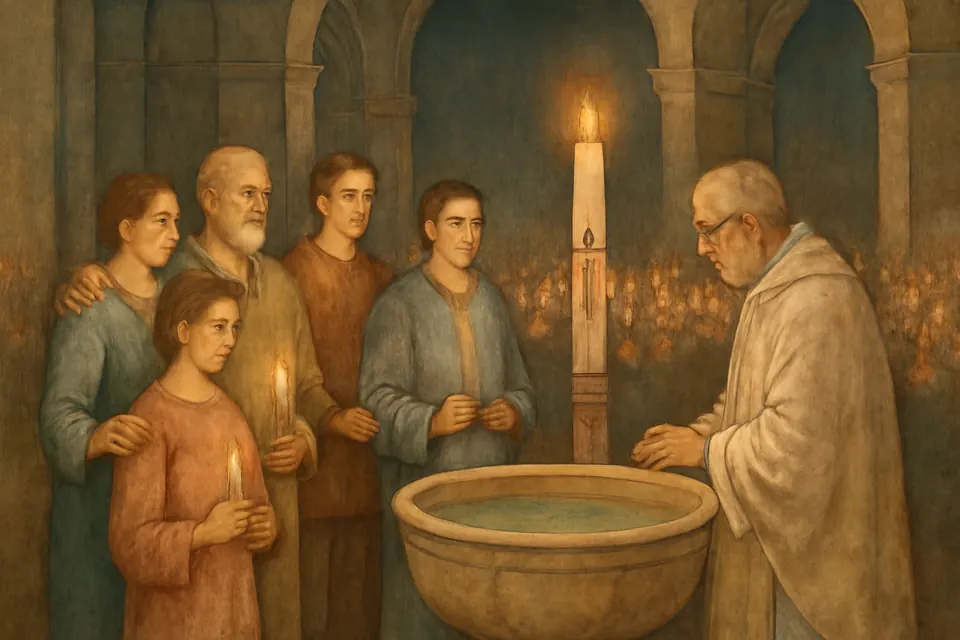
OCIA, the Order of Christian Initiation of Adults, is how adults become Catholic; it is the new name for RCIA. It moves through inquiry, the catechumenate, Lenten preparation and the Easter season. The unbaptized receive Baptism, Confirmation and First Communion, usually at the Easter Vigil, March 27, 2027. To begin, call your parish.
OCIA, the Order of Christian Initiation of Adults, is the way an adult becomes Catholic. If you have been feeling drawn to the Catholic Church, whether you have never been baptized, were raised in another Christian church, or were baptized Catholic but never finished the sacraments, this is the road the Church has prepared for you. It used to be called RCIA. The name changed; the welcome did not. This page walks through what OCIA is, which path fits you, every step from the first conversation to the Easter Vigil on March 27, 2027, and how to take the first step this week.
OCIA at a glance
- What it is: the Church's process of formation, prayer and rites by which adults are prepared for and receive the sacraments of initiation
- Old name: RCIA, the Rite of Christian Initiation of Adults
- Who it is for: adults and children of catechetical age (about 7 and older) who were never baptized; baptized Christians of other churches seeking full communion; and baptized Catholics who still need Confirmation or First Communion
- The shape: four periods, three great rites, ending in the Easter season
- How long: for the unbaptized, ordinarily at least a year as a catechumen; for others, it depends on their formation
- When the sacraments are celebrated: usually at the Easter Vigil, which in 2027 is Saturday night, March 27
- Cost: none for the sacraments
- How to start: call or email your parish office and ask about OCIA
Why RCIA became OCIA
The rite itself is not new. After the Second Vatican Council asked that "the catechumenate for adults, comprising several distinct steps," be restored (Sacrosanctum Concilium 64), the Holy See published the Ordo initiationis christianae adultorum in 1972. For decades English-speaking Catholics knew its translation as the RCIA.
The US bishops approved a new English translation in 2021, and the Holy See confirmed it on February 14, 2024. Its title translates the Latin Ordo as Order rather than Rite, and so RCIA became OCIA. In the United States the new book could be used from the First Sunday of Advent, December 1, 2024, and has been mandatory since Ash Wednesday, March 5, 2025. New national statutes took effect on the same Advent Sunday. Spanish-speaking parishes use the matching Ritual de la Iniciación cristiana de adultos, or RICA.
If your parish bulletin still says RCIA, that is the same program. Search for either name.
Which path is yours?
The first thing a priest or OCIA coordinator will ask is about Baptism, because it decides your path. Baptism comes only once, and the Church honors every valid Baptism.
If you have never been baptized
You will become a catechumen, someone preparing for Baptism. The US norms reserve that word strictly for the unbaptized, and they give catechumens a real place in the Church before Baptism: they may receive the Church's blessings, have a Catholic funeral and be buried in a Catholic cemetery. At the Easter Vigil you will receive all three sacraments of initiation in a single celebration: Baptism, Confirmation and the Eucharist. The Catechism describes this as the pattern in "all the rites, Latin and Eastern" (CCC 1233). Baptism washes away every sin, so you do not make a confession first.
If you were baptized in another Christian church
Welcome home. You are already a Christian, and the Catechism says so warmly: those "properly baptized" in other communities "are incorporated into Christ; they therefore have a right to be called Christians, and with good reason are accepted as brothers by the children of the Catholic Church" (CCC 1271). You will not be baptized again. Canon 869 forbids even a conditional Baptism unless a serious reason remains to doubt the first one.
You will be a candidate for reception into full communion. The US norms are careful here: the word "convert" is "reserved strictly for those converted to Christian belief and never used of those baptized Christians who are received into the full communion of the Catholic Church." Your formation is adapted to what you already know and live. When you are ready you make your first confession, profess the Catholic faith, are confirmed and receive Communion. This can happen at the Easter Vigil or at another Mass when the pastor judges you ready. Orthodox Christians, whose sacraments the Church fully recognizes, follow a simpler path; talk with the priest.
If you were baptized Catholic but never confirmed
Maybe you were baptized as a baby and the family stopped going to church, or you made your First Communion and never got to Confirmation. You are already Catholic. The parish will help you prepare for the sacraments you still need, often alongside the OCIA group but in your own way. Our guides to the sacrament of Confirmation and to Catholic confession are good places to start.
Children and families
Children who have reached the age of reason follow an adapted form of the same order, usually with their parents closely involved. Babies and little ones are simply baptized, with their parents' promise to raise them in the faith.
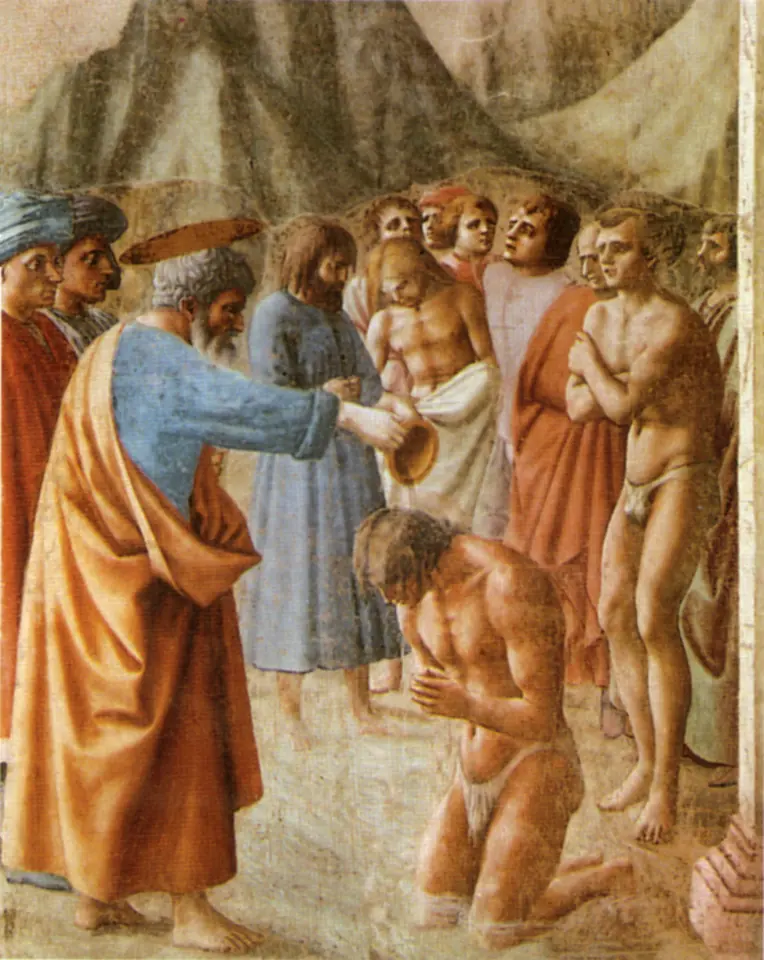
The OCIA steps: four periods and three rites
The order unfolds like a journey with four stretches of road and three doors. The periods are times of growth; the rites are celebrations in front of the parish that mark each threshold. Every rite has its own words and prayers in the ritual book, and your parish will walk you through them.
1. Inquiry: the Period of Evangelization and Precatechumenate
This is the "come and see" stage. You ask your questions, hear the Gospel, learn to pray and get to know Catholics. There is no set length and no commitment yet. The US norms ask that early on a priest or minister meet each inquirer personally to hear the story of their faith and to talk through "any issues (e.g., an irregular marriage)" that could affect their path. Do not be afraid of that conversation. It exists so that nothing surprises you later.
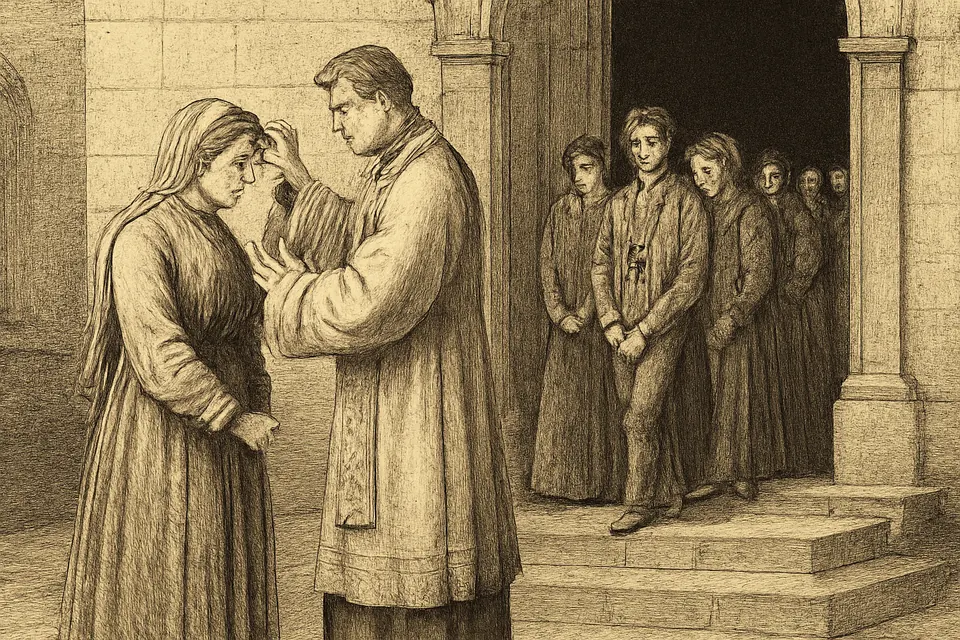
First rite: the Rite of Acceptance (or Welcoming)
When you and the parish agree that you are ready, the unbaptized celebrate the Rite of Acceptance into the Order of Catechumens, usually at a Sunday Mass. You state before the community that you want to follow Christ, and your sponsor and the priest trace the sign of the cross on your forehead, and often on your ears, eyes, lips, heart, shoulders, hands and feet, claiming all of you for Christ. Baptized candidates celebrate a parallel Rite of Welcoming, which honors the Baptism they already have.
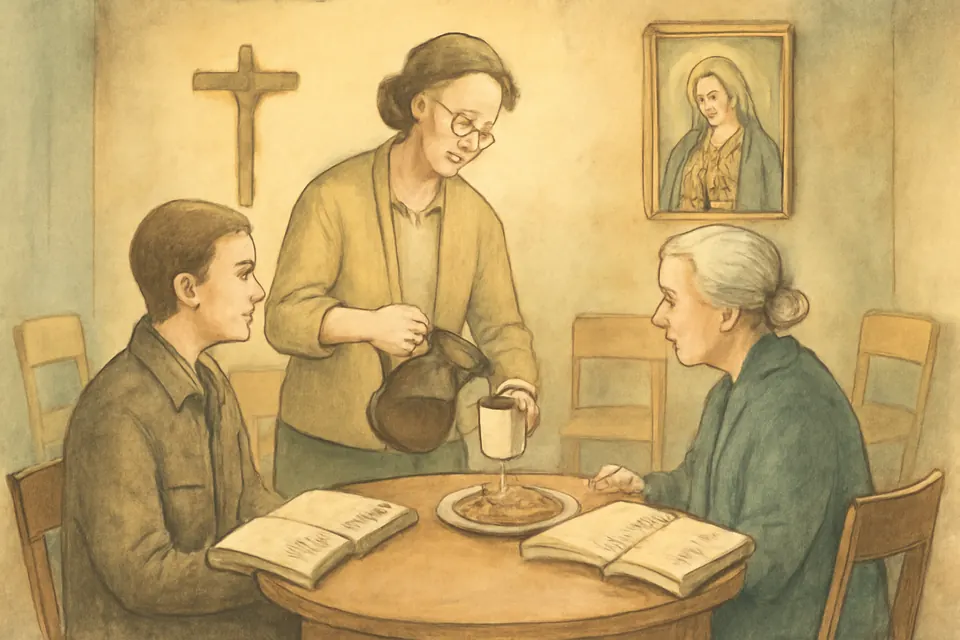
2. The Period of the Catechumenate
Now the real formation begins. The US norms ask that it be "comprehensive": "suited to the liturgical year," "rooted in Sacred Scripture, the truths of Catholic doctrine and the moral life," and "exercised in works of service and charity." In practice that means weekly sessions on the Creed, the sacraments, the moral life and prayer, the four parts of the Catechism, together with Sunday Mass and real service in the parish.
Many parishes send the catechumens out after the homily on Sundays to reflect together on the readings; the norms call this practice "praiseworthy." It is not exclusion. It is the Church feeding you with the Word while you wait for the Bread.
For the unbaptized this period is the longest. The norms say a catechumen should ordinarily remain in it "from at least the Easter Time of one year until the beginning of the Easter Time of the next year; preferably it should begin before Lent in one year and extend until Easter of the following year."
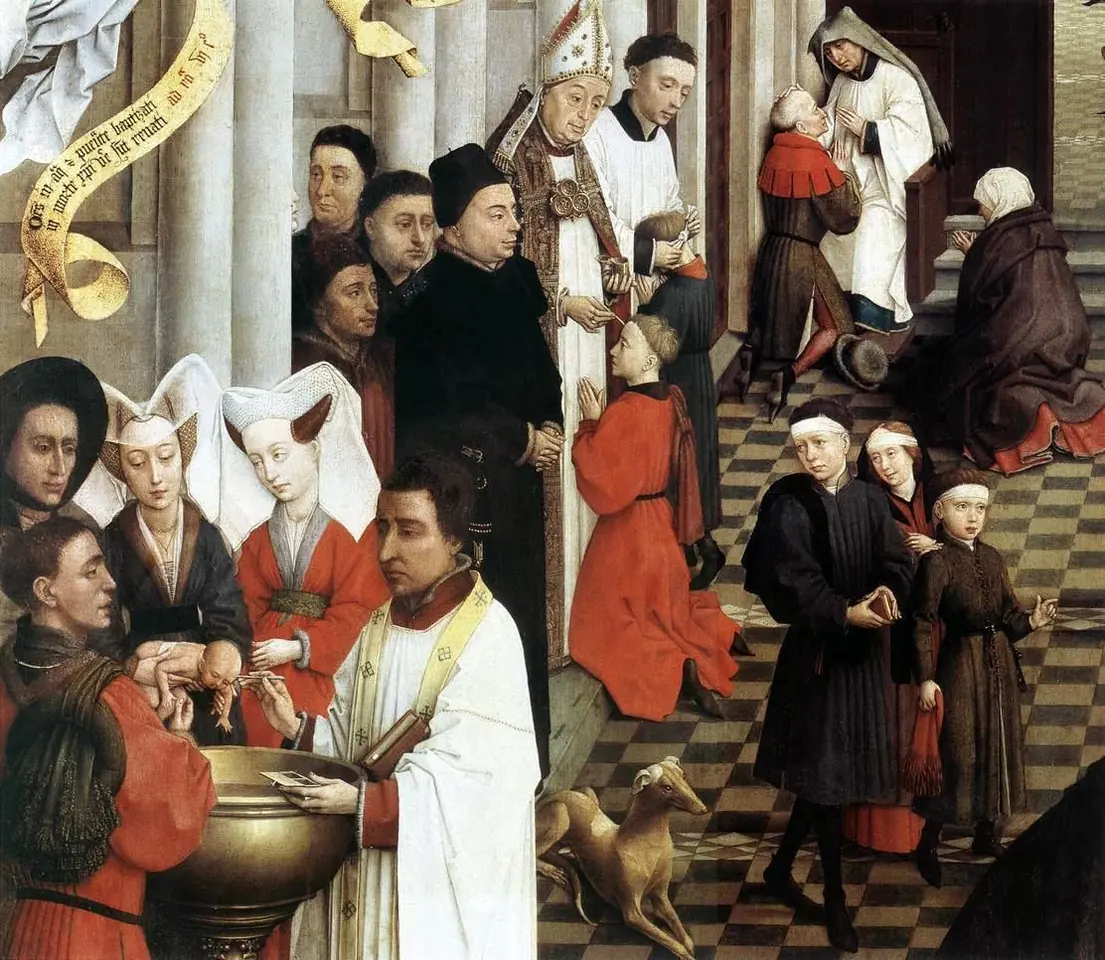
Second rite: the Rite of Election
At the start of Lent, the catechumens go with their godparents to the bishop, usually at the cathedral, and the Church chooses them, or "elects" them, for the sacraments at Easter. Their names are written in the Book of the Elect. From that day they are called the Elect. Baptized candidates usually take part in a related call to continuing conversion. In 2027, Lent begins on Ash Wednesday, February 10, and the Rite of Election is usually celebrated on or around the First Sunday of Lent, February 14.
3. The Period of Purification and Enlightenment
Lent is a forty-day retreat for the Elect. On the Third, Fourth and Fifth Sundays of Lent, February 28, March 7 and March 14, 2027, the parish celebrates the scrutinies: prayers over the Elect asking God to heal what is weak and strengthen what is good. Those Masses use the great Gospels of St. John: the woman at the well, the man born blind and the raising of Lazarus. During these weeks the Church also "hands over" the Creed and the Lord's Prayer to the Elect. See our Lent 2027 guide for the whole season.
The US norms encourage the Elect, and everyone who will celebrate the Vigil with them, to keep the paschal fast of Good Friday through Holy Saturday until the Vigil itself. It is a beautiful way to arrive hungry for the sacraments.
Third rite: the Sacraments of Initiation at the Easter Vigil
On the night of Saturday, March 27, 2027, the Church keeps the Easter Vigil, the mother of all vigils. The new fire is lit, the Exsultet is sung, and the long readings tell the story of salvation. Then the Elect come to the font. They are baptized, by immersion or by the pouring of water, and clothed in white. They are confirmed right away by the priest, who has the faculty to do so by canon 883. And they come to the altar for their First Holy Communion. Baptized candidates make their profession of faith and are confirmed and receive Communion in the same celebration. Our Holy Saturday 2027 and Easter 2027 pages describe the night in full.

4. Mystagogy: the Easter season
The newly baptized, called neophytes, "new plants," spend the fifty days of Easter reflecting on the mysteries they have received. In 2027 that season runs to Pentecost on May 16. The norms hope that afterward neophytes keep meeting from time to time, so that they grow into the ordinary life of the parish rather than drift away once the excitement fades.

How long does OCIA take? A realistic timeline
The honest answer is "as long as you need, and usually about a year or more." Here is what that looks like for someone reading this in the fall of 2026.
- If you are already baptized and have lived as a Christian, you may be ready to be received at the Easter Vigil 2027 or even sooner. The priest will discern this with you.
- If you are not baptized and begin inquiring now, the norms point toward a full year as a catechumen. That usually means celebrating the Rite of Acceptance in the coming months and receiving the sacraments at the Easter Vigil of 2028, Saturday, April 15. Some parishes and dioceses apply the norm differently, so ask.
- If you were baptized Catholic and need Confirmation or First Communion, your parish will set a time that fits your preparation.
No one is rushed, and no one is held back for no reason. The Church is in no hurry because she wants your yes to be firm and free.
How to start OCIA at a parish
- Find a parish. Your territorial parish is the one you live within, but you may join any parish where you feel at home. Every parish website or bulletin lists a phone number and an email.
- Ask for OCIA (or RCIA). Say, "I'm interested in becoming Catholic." The office will connect you with the priest or the OCIA coordinator. Most groups start in late summer or early fall, but many parishes welcome inquirers all year.
- Go to Mass. Sit anywhere, watch, and pray what you can. You are not expected to know when to sit and kneel. Our prayer before Mass is a good companion.
- Gather your papers. If you were baptized, look for your baptismal certificate. If you have been married, be ready to talk about it.
- Think about a sponsor. A sponsor, or godparent if you are being baptized, walks with you, prays for you and stands with you at the rites. The Code of Canon Law asks that he or she be at least 16, a confirmed Catholic who has received the Eucharist and leads a life of faith (canon 874). If no one comes to mind, the parish will help.
- Start praying. You do not need fancy words. The Our Father, the Hail Mary, or simply "Lord, show me the way" will do.
You will also choose a saint's name for Baptism or Confirmation, if you wish. Our guides to confirmation saints and how to choose a patron saint can help, and what is a saint explains why Catholics love these friends of God so much.
An ancient road
The OCIA is not a modern program. It is the Church's oldest way of making Christians, rediscovered. The Catholic Encyclopedia describes how in the early centuries an inquirer was "allowed to be present at the first part of the Mass, but he was dismissed immediately after the sermon." Catechumens were tested for a long time; the Council of Elvira, early in the fourth century, "alludes to the custom of making it last two years." In Lent the candidates prepared through instruction, prayer and fasting, and "the actual initiation (baptism, confirmation, and Communion) took place at the Paschal Mass."
On the Easter Vigil of 387, in Milan, St. Ambrose baptized a 32-year-old professor of rhetoric named Augustine, along with his son Adeodatus and his friend Alypius. Augustine had spent years searching and stalling. His mother, St. Monica, had spent those same years praying for him. When you walk to the font at the Vigil, you walk the road he walked.

Saints who became Catholic as adults
You are in good company. Some of the Church's greatest saints came to her as adults.
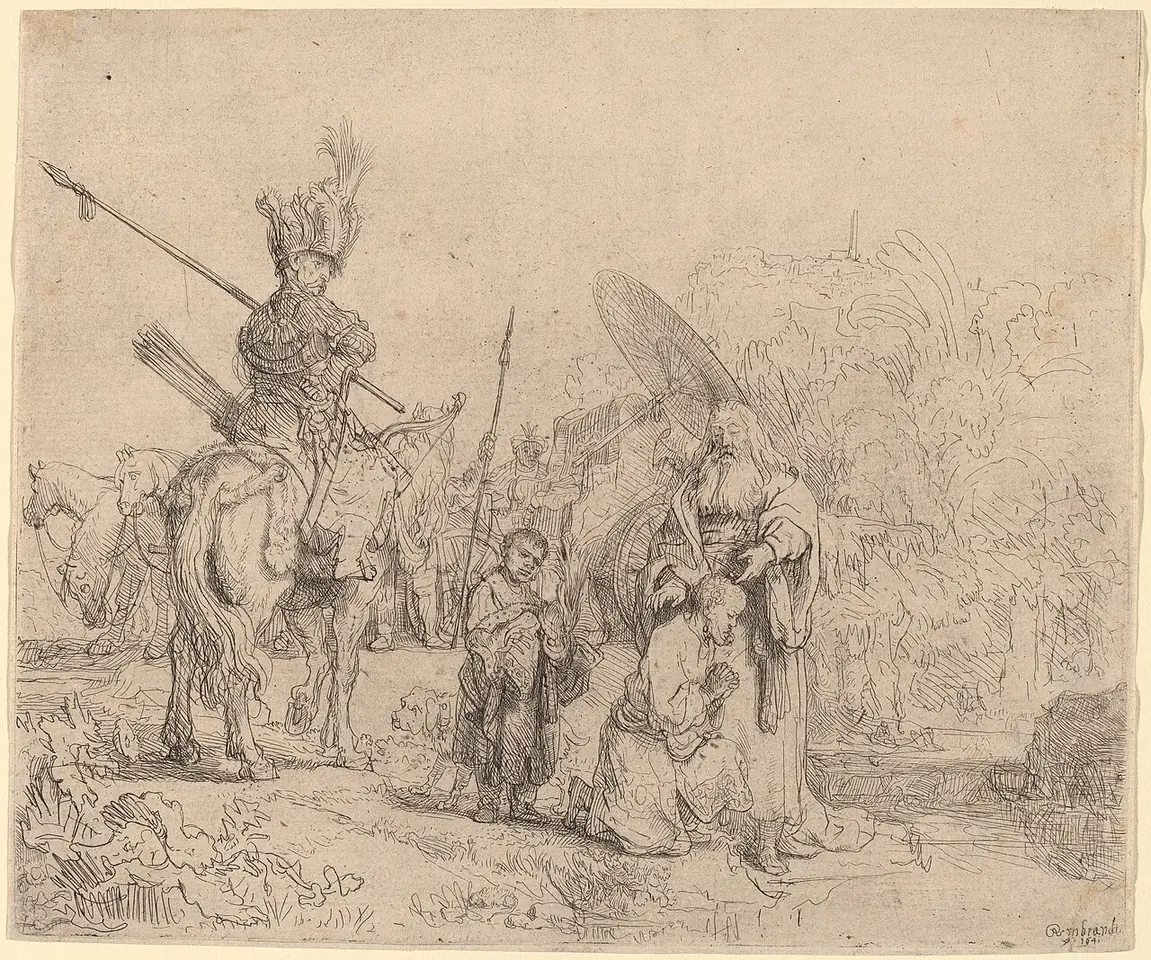
- The Ethiopian official in Acts 8 heard the deacon Philip explain Isaiah on the road to Gaza and asked, "See, here is water: what doth hinder me from being baptized?"
- St. Paul was baptized in Damascus after meeting the risen Christ.
- St. Justin Martyr, a philosopher, searched through the schools of Greece before finding Christ.
- St. Josephine Bakhita, once enslaved in Sudan, was baptized in Venice in 1890.
- St. Elizabeth Ann Seton, a young Episcopalian widow in New York, was received into the Catholic Church in 1805 and went on to found the Sisters of Charity.
- St. John Henry Newman, the most famous Anglican of his day, was received in 1845.
- St. Edith Stein, a Jewish philosopher, was baptized on January 1, 1922, after reading the life of St. Teresa of Ávila through one night.
Each of them found what you are looking for. Let us ask them to pray for every inquirer, catechumen and candidate this year.
If you are Eastern or drawn to the East
The Catholic Church is a communion of churches. Besides the Latin Church, there are more than twenty Eastern Catholic churches, such as the Ukrainian Greek Catholic, Maronite, Melkite, Chaldean and Ruthenian churches, all in full communion with the Pope. In those churches, as the Catechism notes, Baptism, Chrismation (Confirmation) and the Eucharist are given together even to infants (CCC 1233). If you are drawn to the Byzantine liturgy and icons, you may ask to be received into an Eastern Catholic parish; its priest will guide you through that church's own practice. Our page on the Theotokos gives a taste of that tradition.
A prayer for those preparing to become Catholic
Lord Jesus, you called fishermen by the lake and a tax collector at his table, and you are calling me. Thank you for bringing me this far. Give me courage to knock on the door, patience with the questions I cannot yet answer, and friends to walk with me. Make me ready for the water of Baptism, the seal of the Spirit and the Bread of Life, or, if I am already baptized, for the full communion of your Church. Let your Mother and all your saints pray for me. Amen.
Pastor Lyvers wrote this prayer for this page.
For the sacraments themselves, see our guide to the seven sacraments. Whatever your story, there is a place for you at the font and at the table. Make the call.
Frequently asked questions
Is OCIA the same as RCIA?
Yes. OCIA, the Order of Christian Initiation of Adults, is the new English translation of the same Latin rite, the Ordo initiationis christianae adultorum of 1972. In the United States it could be used from December 1, 2024, and became mandatory on Ash Wednesday, March 5, 2025. Many parishes still say RCIA; it is the same process.
How long does OCIA take?
It depends on where you are starting. The US bishops' norms ask that the unbaptized ordinarily spend at least a year as catechumens, from one Easter season to the next, after an inquiry period of whatever length they need. Baptized Christians who were well formed in their own churches may need much less time, and the priest discerns each case.
Do I have to be rebaptized to become Catholic?
No, not if you were validly baptized in another Christian church, with water and in the name of the Father, and of the Son, and of the Holy Spirit. Baptism can be received only once. Canon 869 forbids conditional baptism unless a serious reason remains to doubt the first one. Bring proof of your baptism if you can.
Is there a cost to join OCIA?
Parishes do not charge for the sacraments. Some ask a small amount for books or a retreat and gladly waive it. Never let money keep you from calling.
Can I become Catholic if I am divorced and remarried?
Yes, you can begin, and you are welcome. Early in the process the priest will talk with you about your marriage history. For the unbaptized, the US norms say you may enter the catechumenate but not celebrate the Rite of Election until you are free to marry in the Church. Many people work through this, often with a declaration of nullity, while they go on with their formation.
Can I receive Communion before I become Catholic?
Not yet. Until the day of your Baptism or reception, come to Mass, join in the prayers and, if you wish, come forward with arms crossed for a blessing where that is the custom. The first time you receive the Eucharist will be all the more joyful for the wait.
Do I need a sponsor or godparent?
Yes. Canon 872 asks that, as far as possible, everyone baptized have a sponsor. A sponsor must be at least 16, a confirmed Catholic who has received the Eucharist and lives the faith (canon 874). If you do not know anyone, the parish will find someone to walk with you.
Can I do OCIA online?
Formation happens in a parish community. The US norms say preparation takes place 'in a parochial setting or its equivalent,' because you are joining a family, not passing a course. Online resources can help, but start with your local parish.
Sources
- USCCB, Newsletter of the Committee on Divine Worship, March–April 2024 (implementation dates for the OCIA)
- USCCB, National Statutes for the Christian Initiation of Adults, with the decree of promulgation (April 25, 2024). Norms 2, 4, 5, 7, 9, 10, 12, 13, 15 and 18, effective December 1, 2024
- Code of Canon Law, Book IV, canons 834–878 (Baptism: canons 851, 865, 869, 872–874)
- Code of Canon Law, Book IV, canons 879–958 (canon 883 on the priest who confirms)
- Catechism of the Catholic Church, 1229–1233 (Christian initiation)
- Catechism of the Catholic Church, 1271 (Baptism and Christians not in full communion)
- Second Vatican Council, Sacrosanctum Concilium (1963), no. 64
- Catholic Encyclopedia (1908): Catechumen. The ancient catechumenate, the dismissal after the sermon, and the two years mentioned at Elvira