St. Philip the Evangelist, One of the Seven Deacons
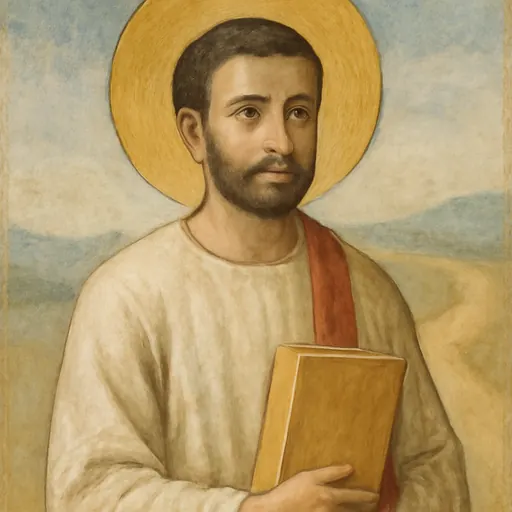
St. Philip the Evangelist, also called Philip the Deacon, was one of the seven chosen to serve the Church in Jerusalem (Acts 6), not the Apostle Philip. He preached in Samaria, baptized the Ethiopian eunuch and welcomed St. Paul in Caesarea. The Byzantine churches keep his feast on October 11; the Roman Martyrology on June 6.
Who was St. Philip the Evangelist?
St. Philip the Evangelist was one of the seven deacons of the first Church in Jerusalem and one of the first Christians to carry the Gospel beyond the Jewish people. The Acts of the Apostles tells three things about him: he preached in Samaria with great signs, he baptized an Ethiopian official on a desert road, and years later he received St. Paul in his house at Caesarea. Luke, who was with Paul, gives him the title that has stayed with him: "Philip the evangelist, one of the seven."
He is easily confused with St. Philip the Apostle, one of the Twelve. They are two different men, and the Church keeps their feasts on different days.
The Byzantine churches honor him on October 11, and the Roman Martyrology on June 6.
The life of St. Philip the Evangelist
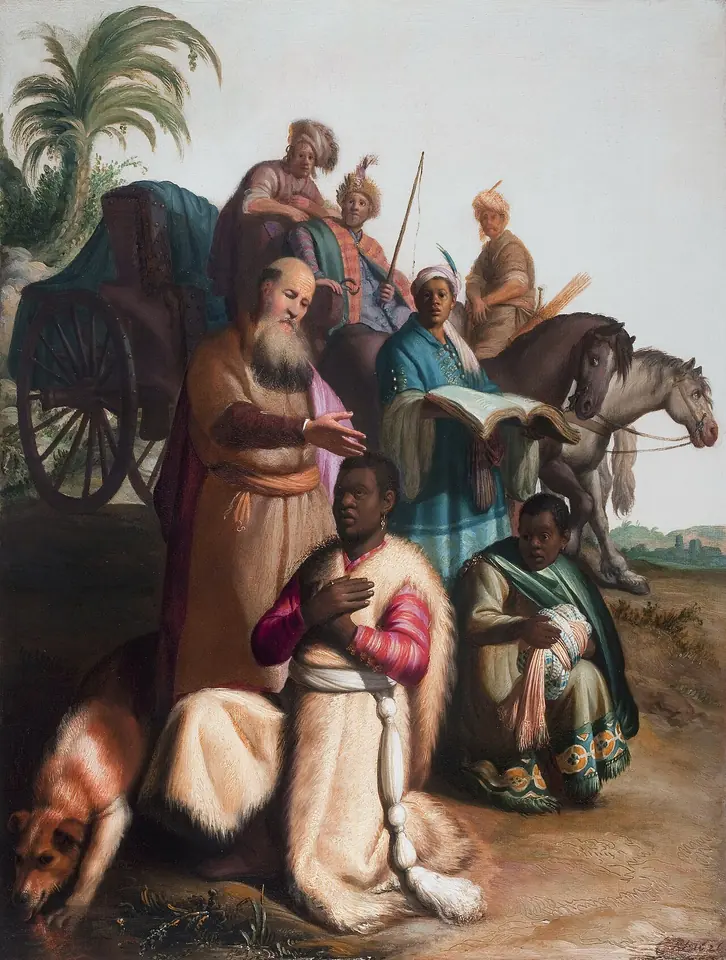
One of the Seven
In the early days of the Church in Jerusalem, the Greek-speaking believers complained that their widows were being overlooked in the daily distribution of food. The apostles asked the community to choose seven men "full of the Holy Spirit and of wisdom" to take charge of this work, so that they could give themselves to prayer and preaching. The community chose Stephen, Philip, Prochorus, Nicanor, Timon, Parmenas and Nicolas, and the apostles laid hands on them with prayer (Acts 6:1–6). The Church has seen in this the beginning of the order of deacons.
Philip's name is Greek, and like the other six he was probably a Greek-speaking Jew.
The Gospel in Samaria
After Stephen was stoned, persecution scattered the believers. Philip went down to a city of Samaria, the land of the people Jews of that time avoided, and preached Christ there. Acts says the crowds listened to him with one mind as they saw the signs he did: unclean spirits came out of many people, and many who were paralyzed or lame were healed. "There was great rejoicing in that city." Many were baptized, including a magician named Simon, who stayed close to Philip. The apostles sent Peter and John from Jerusalem to pray for the new believers to receive the Holy Spirit.
The Ethiopian on the road to Gaza
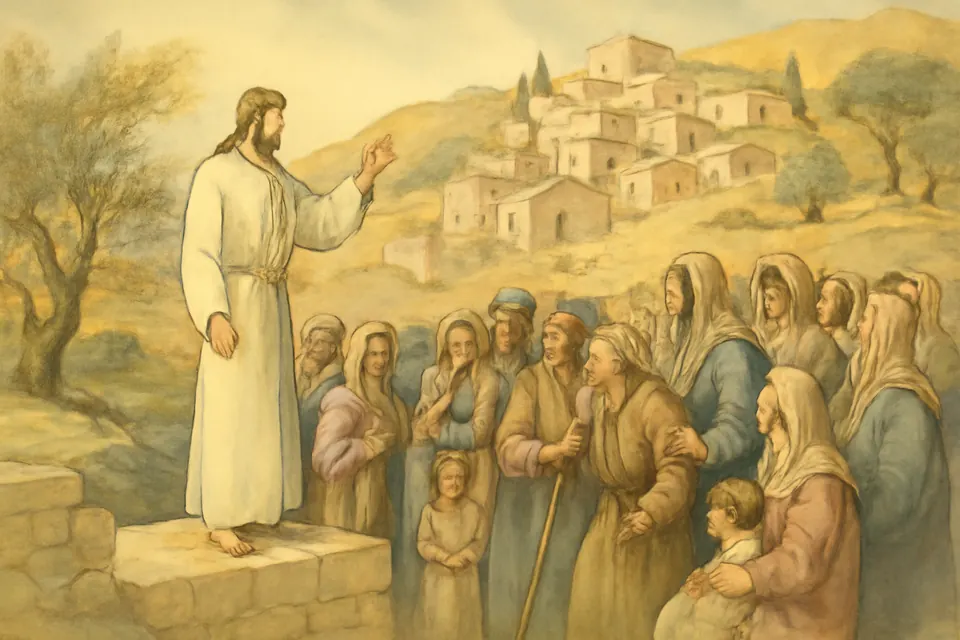
Then an angel of the Lord sent Philip south to the desert road from Jerusalem to Gaza. There he met an Ethiopian, a eunuch in charge of the treasury of Candace, queen of Ethiopia, returning from worship in Jerusalem and reading the prophet Isaiah in his chariot. In the Knox translation:
And Philip, as he ran up, heard him reading the prophet Isaias, and asked, Canst thou understand what thou art reading? How could I, said he, without someone to guide me? And he entreated Philip to come up and sit beside him.
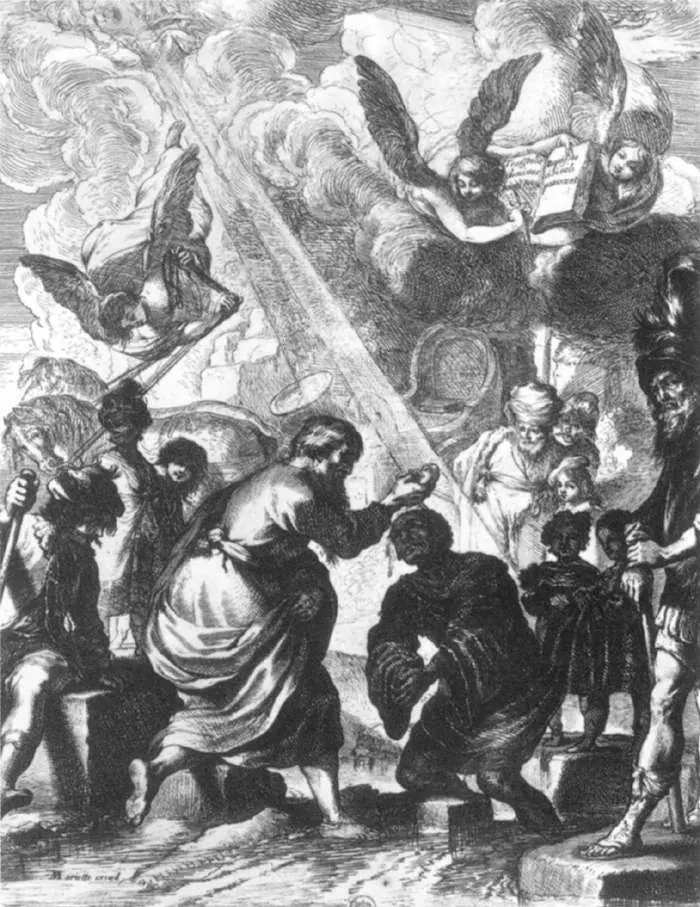
The passage was Isaiah's song of the servant led like a lamb to the slaughter. Starting from it, Philip told him the good news of Jesus. When they came to some water the official asked, "See, there is water here; why may I not be baptized?" He stopped the chariot, and Philip baptized him. When they came up out of the water, "Philip was carried off by the spirit of the Lord," and the Ethiopian "went on his way rejoicing" (Acts 8:26–39). Philip turned up next at Azotus and preached in every town along the coast until he came to Caesarea.

At home in Caesarea
Philip made his home in Caesarea, the Roman capital of Judea. About twenty years later Paul, Luke and their companions stayed several days in his house on their way to Jerusalem. Acts adds a detail found nowhere else: "He had four daughters, unwedded maids, who possessed the gift of prophecy" (Acts 21:8–9).

His later years
Here Scripture falls silent. The Roman Martyrology says he died in peace at Caesarea, with three of his daughters buried near him, and that the fourth died at Ephesus. The Orthodox tradition holds that the apostles made him bishop of Tralles in Asia Minor and that he died there in old age. An early tradition reported by Eusebius places "Philip and his daughters" at Hierapolis in Asia, but already in the 2nd century writers were blending this Philip with the Apostle, and it is not certain which Philip was buried there.
The miracles of St. Philip the Evangelist
The healings and deliverances in Samaria and Philip's sudden departure after the baptism on the Gaza road are told in Scripture itself, and the Church receives them as part of the inspired word. Later traditions, such as his years as bishop of Tralles, are traditional and cannot be checked against early sources.
Symbols of St. Philip the Evangelist in art
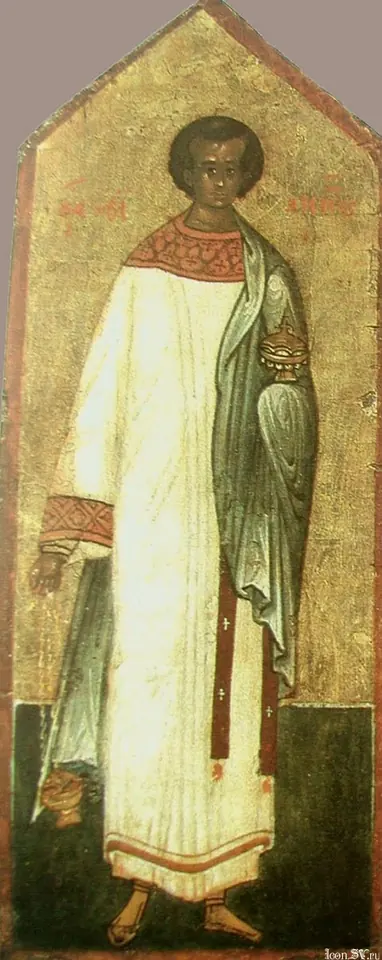
In icons Philip is a young deacon in a long white tunic with the deacon's stole, the orarion, often holding a censer, as in the 16th-century Moscow icon on this page. Western art almost always shows him in one scene: baptizing the Ethiopian, usually kneeling in a stream, with a chariot, horses and a royal parasol nearby. Rembrandt, Claude Vignon and Jan Both all painted it. If you see a saint baptizing an African nobleman beside a chariot, it is Philip the Evangelist, not the Apostle.
Feast day and prayer
The Orthodox and Byzantine Catholic churches keep his feast on October 11 as "Apostle Philip of the Seventy." The Roman Martyrology lists him on June 6. See other saints of these days on our feast days calendar.
On his feast the Orthodox Church sings a troparion that honors him as a deacon filled with grace whose miracles and signs enlightened the people of Samaria; the OCA prints the full text on its website.
Let us ask St. Philip to pray for deacons, for catechists, and for everyone who helps another person understand the Scriptures. St. Philip the Evangelist, pray for us.
Frequently asked questions
Who was St. Philip the Evangelist?
One of the seven deacons chosen in Acts 6. After Stephen's martyrdom he preached in Samaria, baptized an Ethiopian court official, and settled at Caesarea, where Acts 21 calls him "Philip the evangelist, one of the seven." He had four unmarried daughters who prophesied.
Is Philip the Evangelist the same as Philip the Apostle?
No. Philip the Apostle was one of the Twelve, called by Jesus at Bethsaida. Philip the Evangelist was chosen later as one of the seven deacons. Writers as early as the 2nd century mixed them up, and some stories told of one are really about the other.
When is the feast of St. Philip the Evangelist?
October 11 in the Orthodox and Byzantine Catholic calendars and June 6 in the Roman Martyrology. St. Philip the Apostle is celebrated on May 3 in the Roman calendar.
Why is Philip called the Evangelist?
Because Acts gives him that title, meaning "one who announces the Good News." It refers to his preaching, not to writing a Gospel.
Keep exploring
Sources
- Acts of the Apostles, chapter 8 (Knox translation, New Advent). Samaria and the Ethiopian; the passage quoted on this page
- Acts of the Apostles, chapter 21 (Knox translation, New Advent). Paul at the house of Philip the evangelist in Caesarea; the four daughters
- Eusebius, Church History, Book III, chapter 31 (New Advent). The early confusion of the two Philips and the tomb at Hierapolis
- Apostle Philip of the Seventy, One of the Seven Deacons, Orthodox Church in America. The Orthodox tradition that he became bishop of Tralles
- Apostle Philip of the Seventy: Troparion and Kontakion, Orthodox Church in America. Full text of the troparion
- The Roman Martyrology (Baltimore: John Murphy, 1897), Internet Archive. June 6: his death at Caesarea and the burial of his daughters