Holy Name of Jesus
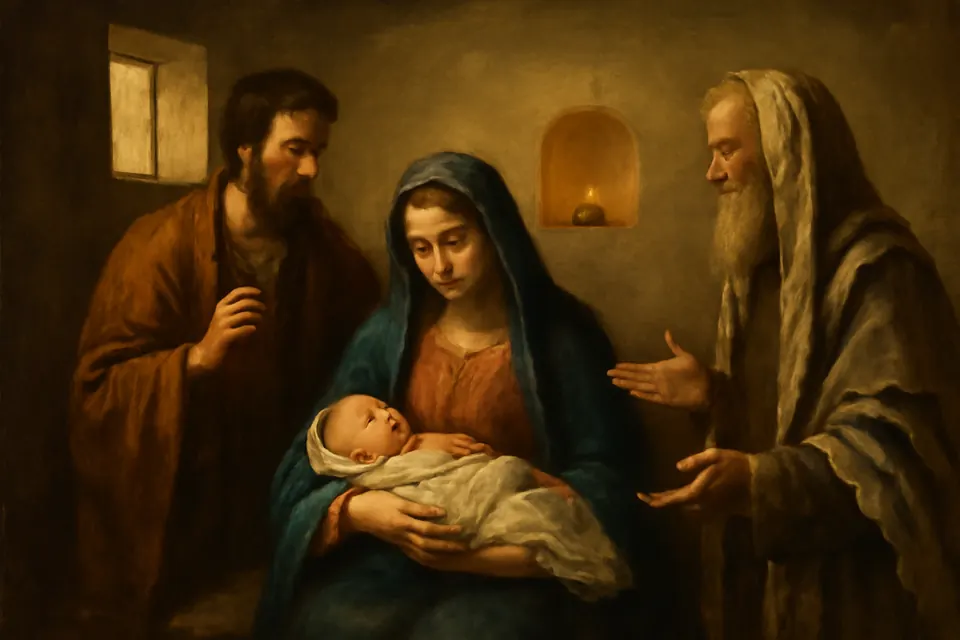
The Holy Name of Jesus is the name the angel gave our Lord before his conception, meaning "God saves." The Church honors it with an optional memorial on January 3, restored to the Roman calendar in 2002, and has long given the whole month of January to it. Its best-known emblem is the monogram IHS, spread by St. Bernardine of Siena.
The Holy Name of Jesus is the name the angel Gabriel gave our Lord before he was conceived, the name Mary and Joseph spoke over him on the eighth day, and the name we pray at the center of every Hail Mary. It means "God saves." The Church honors it with an optional memorial on January 3, and Catholic tradition gives the whole month of January to it. Here is what the feast is, how its date wandered for five hundred years, what the letters IHS mean, and how we can honor the Name at home.
Why we honor the Holy Name of Jesus
St. Luke tells the moment plainly: "after eight days were accomplished, that the child should be circumcised, his name was called JESUS, which was called by the angel, before he was conceived in the womb" (Luke 2:21, Douay-Rheims). The angel had told Joseph why: "thou shalt call his name JESUS. For he shall save his people from their sins" (Matthew 1:21). The name, Yeshua in Hebrew, is a short form of Joshua, "the Lord is salvation." God himself chose it, and it says what the Child came to do.
The apostles worked in that name from the first days. Peter told the lame man at the Beautiful Gate, "In the name of Jesus Christ of Nazareth, arise, and walk" (Acts 3:6), and told the rulers in Jerusalem that "there is no other name under heaven given to men, whereby we must be saved" (Acts 4:12). St. Paul wrote that God gave him "a name which is above all names: that in the name of Jesus every knee should bow" (Philippians 2:9-10).
The Catholic Encyclopedia (1910) puts the reason for the devotion carefully. We honor the Name "not because we believe that there is any intrinsic power hidden in the letters composing it, but because the Name of Jesus reminds us of all the blessings we receive through our Holy Redeemer." It is the same reason we kiss a crucifix. And so the Church ends nearly all her prayers "through our Lord Jesus Christ," and the second commandment guards God's name from careless use.
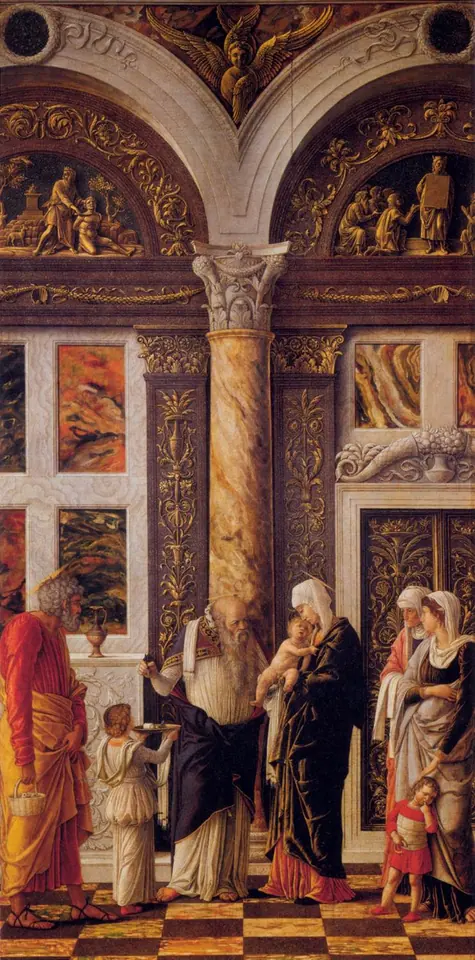
The feast of the Holy Name of Jesus on January 3
Today the Holy Name of Jesus is an optional memorial on January 3 in the General Roman Calendar. "Optional" means a priest may celebrate its Mass on that day when no higher feast takes the place; it is not a holy day of obligation. The Mass opens with St. Paul's words from Philippians, "At the name of Jesus every knee should bend," and the collect asks that all may know there is no other name to be invoked.
The Holy Name of Jesus in 2027
In 2027, January 3 falls on a Sunday. In the United States that Sunday is the Epiphany of the Lord, which the US bishops keep on the Sunday between January 2 and 8; the USCCB's 2027 calendar lists January 3 as the Epiphany. In countries that keep the Epiphany on January 6, the same day is the Second Sunday after Christmas. Either way, a Sunday outranks an optional memorial, so the Mass of the Holy Name is not celebrated on January 3, 2027.
That doesn't take the Name away from us. The Epiphany itself is a feast of the Name made known to the nations, and the whole of January remains the month of the Holy Name. The memorial returns to the calendar on Monday, January 3, 2028, a Christmas weekday. (In 2026 it fell on a Saturday and was kept in many parishes.)
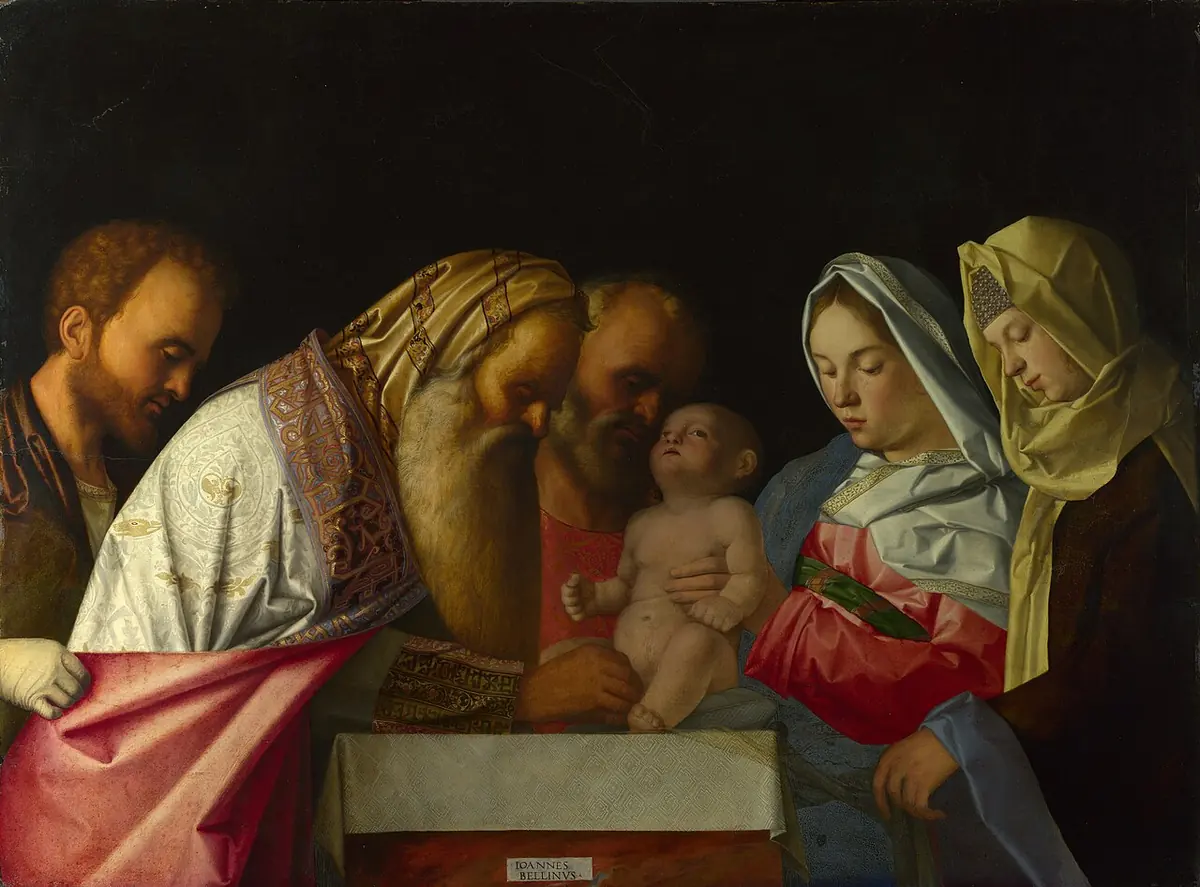
How the date moved
Few feasts have traveled as much as this one.
- The 15th century. The Catholic Encyclopedia says the feast began toward the end of the 1400s, set up by individual bishops in Germany, Scotland, England, Spain and Belgium. An Office and Mass written by the Franciscan Bernardine dei Busti (d. 1500) were approved by Pope Sixtus IV. Dates differed from place to place: August 7 at Salisbury, York and Durham, January 31 at Liège, January 8 at Compostela.
- 1530. Pope Clement VII granted the feast to the Franciscans on February 25, 1530. They, the Carmelites and the Augustinians kept it on January 14; the Dominicans on January 15.
- 1721. The Carthusians had obtained it for the second Sunday after Epiphany around 1643, and on December 20, 1721, Pope Innocent XIII extended it on that Sunday to the whole Church.
- The 20th century. The feast moved again, to the Sunday between January 1 and January 6, or January 2 when no Sunday falls between them. That is where the 1962 calendar has it.
- 1969. The reform of the calendar after the Second Vatican Council removed the feast, since the Gospel of January 1, the octave day of Christmas, already tells of the naming (Luke 2:16-21). A votive Mass of the Holy Name was kept.
- 2002. St. John Paul II restored it. With the revised Roman Missal published in March 2002, the Most Holy Name of Jesus returned as an optional memorial on January 3.
So a Catholic who prays with the older calendar keeps it near January 2, and one who prays with the current calendar keeps it on January 3. Both honor the same Name in the same week.
St. Bernardine of Siena and the IHS tablets
Devotion to the Holy Name is far older than its feast. St. Bernard of Clairvaux preached on it in the 12th century, and in 1274 the Second Council of Lyons asked the faithful for a special devotion to the Name of Jesus in reparation for blasphemy. Pope Gregory X gave the task of preaching it to the Dominicans, writing to their master general, Blessed John of Vercelli, on September 20, 1274. The Catholic Encyclopedia names St. Peter of Verona and later Blessed Henry Suso among its great promoters.
The preacher who made the Name a sign everyone could see was St. Bernardine of Siena (1380–1444). He walked the quarreling towns of Italy preaching peace and penance, and he carried a wooden tablet painted with the letters IHS in gold inside a blazing sun. At the end of a sermon he held it up and asked the crowd to kneel and adore the Redeemer. He urged people to paint the monogram over their city gates and the doors of their houses, and many did; it still shines on the front of Siena's town hall.
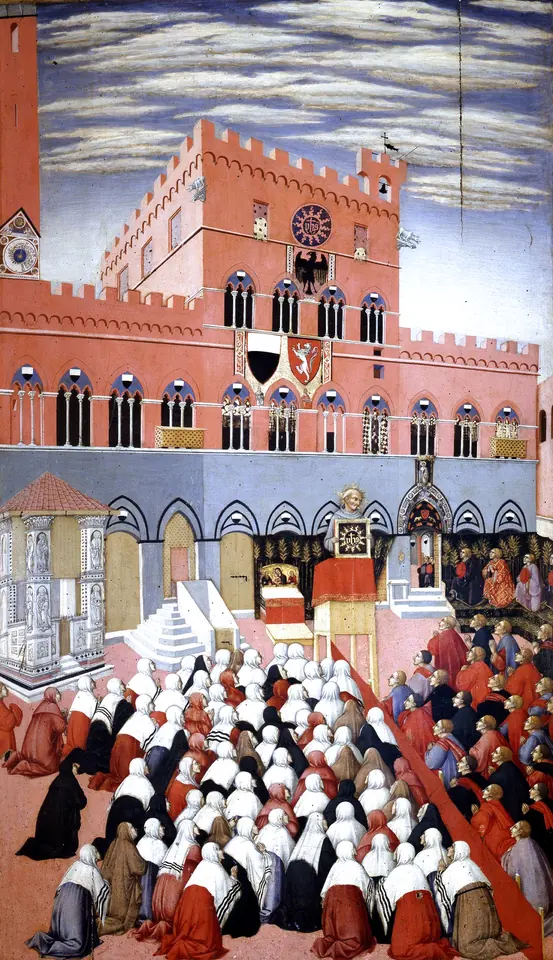
Something so new drew suspicion. Bernardine's enemies accused him before Pope Martin V of spreading a dangerous novelty, almost a superstition. His disciple St. John of Capistrano defended him, and the Catholic Encyclopedia records that the pope not only allowed the devotion but walked in a procession behind the monogram. Fr. William Saunders dates the approval to 1427 and notes that Martin V asked for a cross to be added to the monogram. The tablet Bernardine used is venerated at Santa Maria in Aracoeli in Rome.
Bernardine also spread a small change we now take for granted. According to the Catholic Encyclopedia, it was largely through his preaching that the name "Jesus" was added to the Hail Mary, "blessed is the fruit of thy womb, Jesus," first in Italy and then through the whole Church. Every time we pray the Hail Mary, we say the Name at the very heart of it.
What IHS means, and other christograms
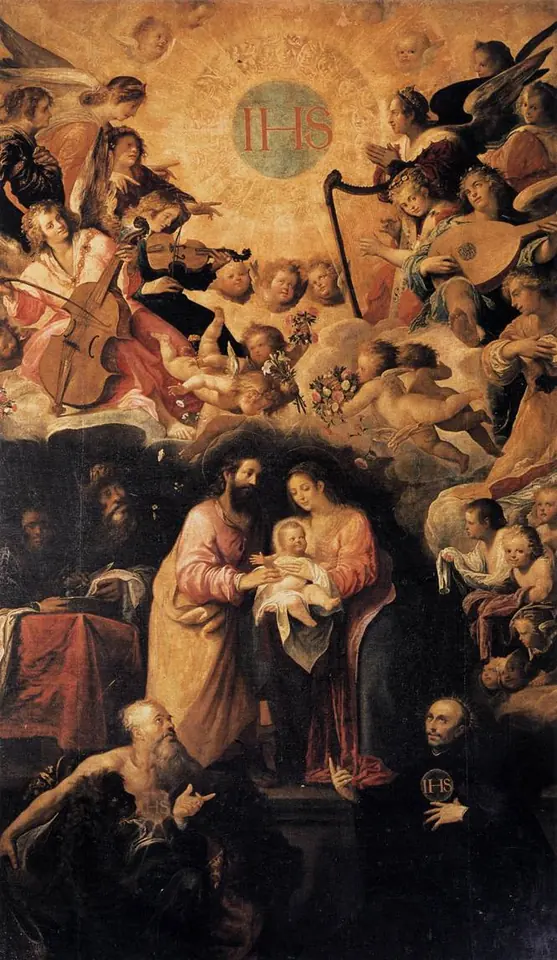
IHS is an abbreviation of the name Jesus in Greek, ΙΗΣΟΥΣ (Iēsous). The Greek capital eta looks like a Latin H, and the sigma was later written as an S, so the first three letters came down to us as IHS. The Catholic Encyclopedia explains that early Christians shortened the holy names in inscriptions from the third century on, and that medieval scribes, forgetting the Greek, sometimes even spelled the name "Jhesus" because of it. It appears on a gold coin of the eighth century: DN IHS CHS REX REGNANTIUM, "The Lord Jesus Christ, King of Kings."
Two popular explanations came later and aren't the original meaning, though both say true things about our Lord:
- "Iesus Hominum Salvator," Jesus, Savior of men. The Catholic Encyclopedia calls this an erroneous reading of the letters.
- "In Hoc Signo (Vinces)," in this sign you will conquer, the words Constantine is said to have seen in the sky. This reading grew up after the Jesuits put three nails under the H, which some took for a V.
IHS belongs to a family of christograms, monograms for the name of Christ:
- IHC or IHS: the Greek "Jesus," in Latin letters.
- IC XC: the first and last letters of Iēsous Christos. Look for it on almost every Eastern icon of our Lord, to the left and right of his head.
- Chi-Rho (☧): the first two Greek letters of Christos, X and P laid over each other, the emblem Constantine painted on his soldiers' shields.
- XP and XPS: Christos, often seen in medieval manuscripts.
In Western art the IHS is often crowned with a cross rising from the H, set over three nails, and wrapped in a ring of rays. The Catholic Encyclopedia notes that by the end of the Middle Ages it was the attribute by which painters identified St. Bernardine and St. Vincent Ferrer.
The Jesuits and the IHS
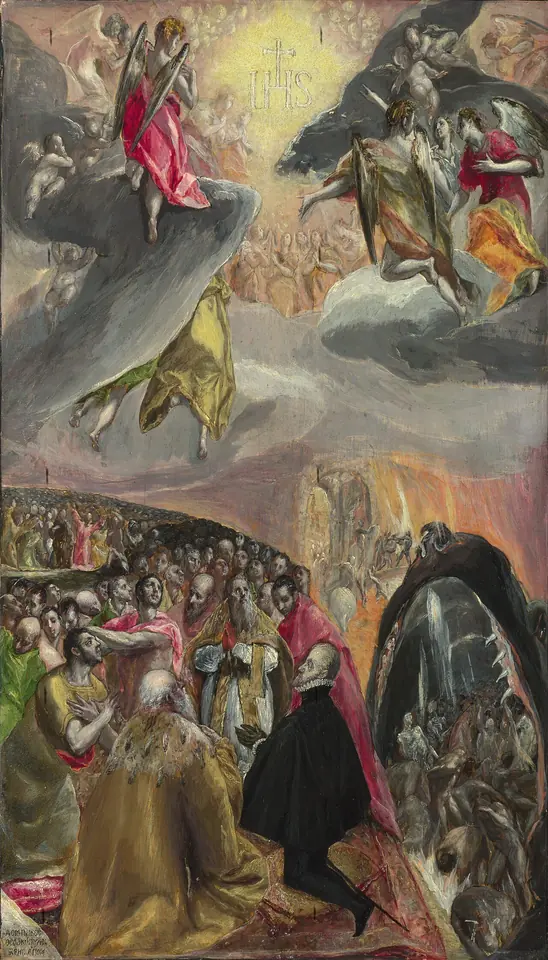
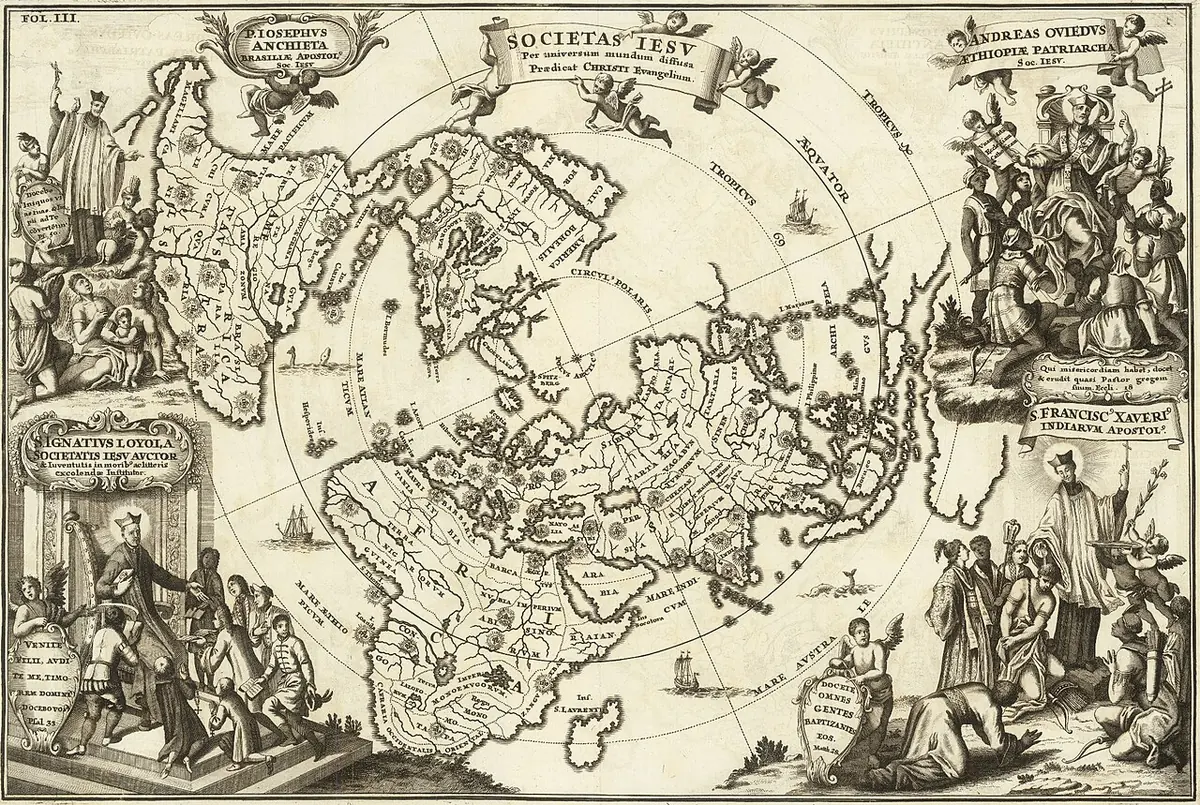
When St. Ignatius of Loyola became the first superior general of the Society of Jesus, he took the IHS as his seal in 1541, and it became the emblem of the order. The Jesuits carried it to every continent, painted it on their churches, and in Rome they dedicated their mother church, the Gesù, to the Most Holy Name. Their missionaries, from St. Francis Xavier in Asia to the North American martyrs, preached the Name where it had never been heard.
Customs of the Holy Name
Bowing the head
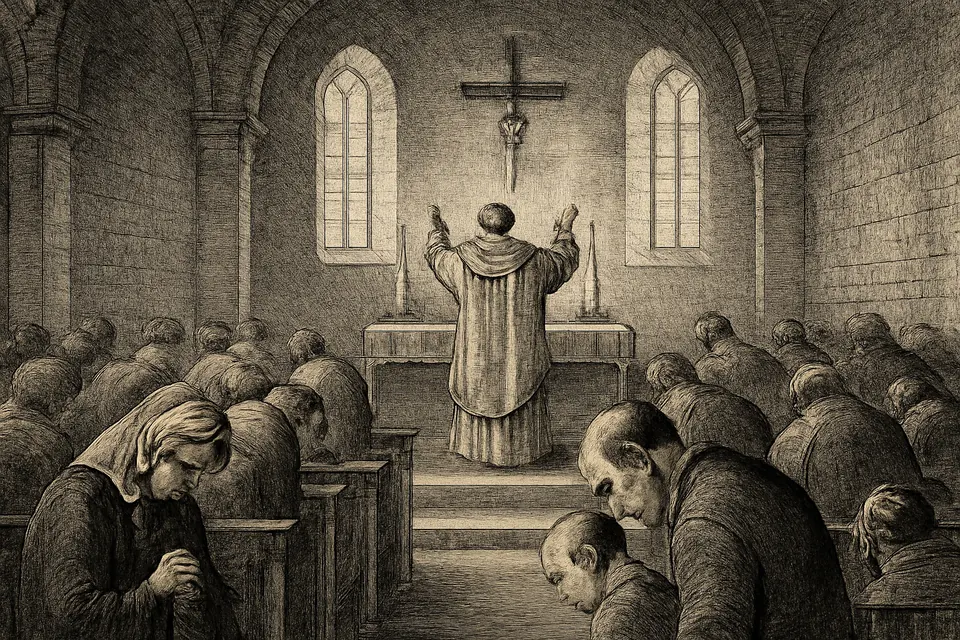
The oldest custom of all is the simplest. The Catholic Encyclopedia says plainly: "At the Holy Name of Jesus we uncover our heads, and we bend our knees." Many Catholics still bow their heads whenever the name of Jesus is spoken at Mass, in the Gloria and the Creed, and at home in grace before meals. Children learn it quickly when they see their parents do it.
Reparation for careless speech
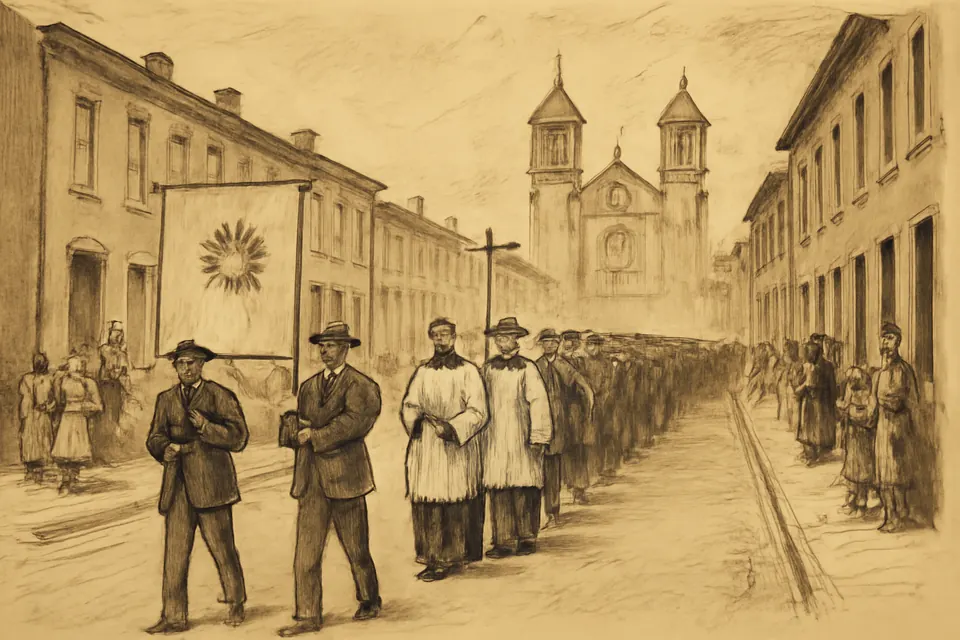
Devotion to the Holy Name has always gone together with care for how we speak. The confraternity the Dominicans founded after 1274, the Society of the Holy Name, had as its second purpose, in the words of the Catholic Encyclopedia, to "suppress blasphemy, perjury, oaths of any character that are forbidden, profanity, unlawful swearing improper language." In American parishes of the early 20th century the Holy Name Society became the great men's organization: monthly Communion together, a pledge against profanity and huge public parades through city streets. Many parishes still have one.
A quiet way to keep the custom: when we hear the Lord's name used as a curse, we answer it silently with a short prayer, such as "Blessed be the name of Jesus," the line from the Divine Praises prayed at Benediction.
The old indulgences
Popes encouraged the habit of invoking the Name with indulgences. The Catholic Encyclopedia lists several, including Sixtus V's grant in 1587 for the greeting "Praise be to Jesus Christ!" answered by "For evermore," still heard among Catholics in southern Germany and Poland. It also notes the old teaching that to gain the plenary indulgence at the hour of death, one should say the name of Jesus, at least in the heart. That is why so many Catholics have hoped to die with "Jesus, Mary and Joseph" on their lips.
The hymn of the Name
The great hymn of the feast is Jesu dulcis memoria, long credited to St. Bernard of Clairvaux. Since the work of the Benedictine scholar Dom André Wilmart, it has been thought the work of an unknown English Cistercian instead. The Roman Breviary divided it among the hours of the feast. Edward Caswall's translation appeared in his Lyra Catholica in 1849 under the heading "Feast of the Most Holy Name of Jesus, Second Sunday after Epiphany":
Jesu! the very thought of Thee With sweetness fills my breast; But sweeter far thy face to see, And in thy presence rest.
Nor voice can sing, nor heart can frame, Nor can the memory find, A sweeter sound than thy blest name, O Saviour of mankind!
O hope of every contrite heart, O joy of all the meek, To those who fall, how kind Thou art! How good to those who seek!
But what to those who find? ah! this Nor tongue nor pen can shew: The love of Jesus, what it is, None but his lov'd ones know.
Sung to the tune St. Agnes, it is still one of the most loved hymns in English.
How to honor the Holy Name of Jesus in January
The memorial is optional and, in 2027, hidden behind a Sunday, but nothing stops a family or a parish from giving January to the Name. Some simple ways:
- Pray the litany. The Litany of the Holy Name of Jesus, approved for the whole Church by Leo XIII in 1886, is the prayer of the day. Our page gives the full text and the meaning of its titles.
- Pray the Jesus Prayer. "Lord Jesus Christ, Son of God, have mercy on me, a sinner." The Jesus Prayer of the Eastern Church is built around the Name and can be prayed on any walk or drive.
- Bow and teach the bow. Make a family practice of bowing the head at the Name in the Creed and at grace.
- Mark the door. Bernardine asked people to put the monogram over their doors. If you chalk your door for the Epiphany house blessing, the Name is already there in the C+M+B, Christus mansionem benedicat.
- Pray the luminous mysteries. The first, the Baptism in the Jordan, is the feast that closes the Christmas season; see the luminous mysteries.
- Make amends. Each time we catch ourselves or others misusing the Name, we answer with "Blessed be the name of Jesus."
A prayer to the Holy Name of Jesus
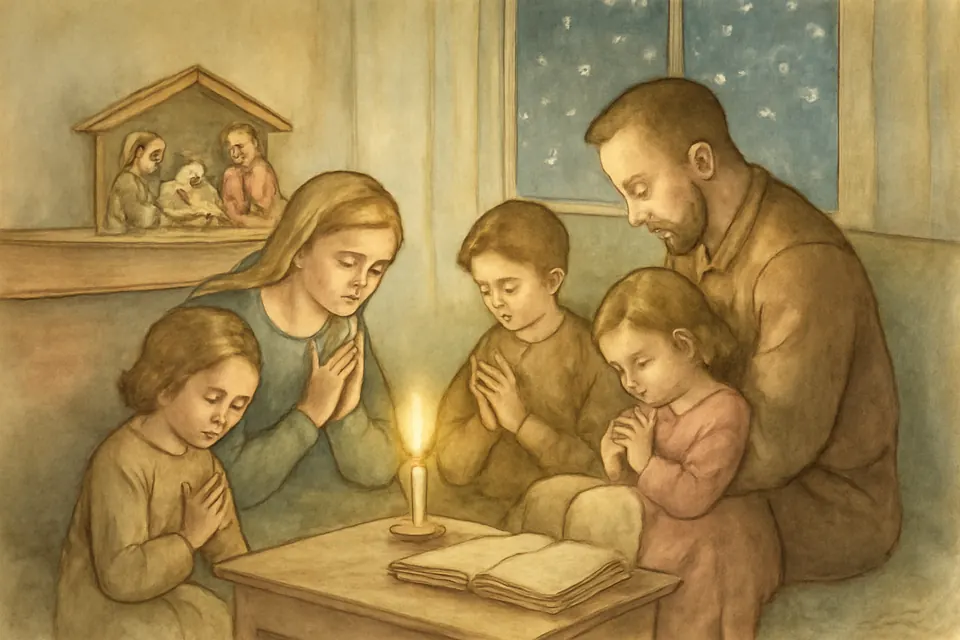
Lord Jesus Christ, the angel named You before You were born, and Your name means that God saves. Let Your name be the first word of our day and the last word of our night. Teach our lips to speak it with love and never in anger or carelessness. When we are afraid, let us call on it; when we are tempted, let us hide in it; and at the hour of our death, let it be on our lips and in our hearts. With Mary and Joseph, who first spoke Your name over You, we bow before it now. Blessed be the name of Jesus, now and forever. Amen.
Pastor Lyvers wrote this prayer for this page.
The days around the Holy Name
The memorial sits in the middle of the Christmas season. It comes two days after the Solemnity of Mary, Mother of God on January 1, the octave day of Christmas, when the Gospel tells of the naming, and the day after the memorial of St. Basil the Great and St. Gregory of Nazianzus on January 2. In the United States, St. Elizabeth Ann Seton follows on January 4 and St. John Neumann on January 5. The season closes with the Baptism of the Lord on Sunday, January 10, 2027, when the Father's voice names the same Jesus "my beloved Son."
For the whole year, see the Catholic calendar 2027 and our guide to feast days and the Church calendar.
Frequently asked questions
When is the feast of the Holy Name of Jesus?
January 3, as an optional memorial in the General Roman Calendar. In 2027, January 3 is a Sunday, the Epiphany in the United States and the Second Sunday after Christmas in many other countries, so the memorial isn't kept at Mass that year; it returns on Monday, January 3, 2028. Many families honor the Name all through January.
What does IHS mean?
IHS is a shortened form of the name Jesus in Greek, IHΣΟΥΣ, written in Latin letters: the first two letters and the last (or the first three). The Catholic Encyclopedia (1910) calls the readings "Jesus Hominum Salvator" (Jesus, Savior of men) and "In Hoc Signo" later explanations, not the original meaning.
What is a christogram?
A christogram is a monogram for the name of Jesus Christ. The best known are IHS, IC XC (the first and last letters of Jesus and Christ in Greek, used on Eastern icons) and the Chi-Rho, the first two Greek letters of Christos. Christians were already abbreviating the holy names in inscriptions by the third century.
Is the Holy Name of Jesus a holy day of obligation?
No. It is an optional memorial, the lowest rank of celebration, so a priest may choose to celebrate it on a free weekday. The obligation for January falls on the Solemnity of Mary, Mother of God, on January 1.
Why is January the month of the Holy Name?
Our Lord received his name on the eighth day after his birth, at his circumcision (Luke 2:21), which falls on January 1. The feast of the Holy Name was later fixed in the first weeks of January, and Catholic prayer books came to give the whole month to the Name of Jesus.
Who spread devotion to the Holy Name of Jesus?
St. Bernard of Clairvaux preached on it in the 12th century, Pope Gregory X asked the Dominicans to promote it in 1274, and St. Bernardine of Siena and St. John of Capistrano carried it across Italy in the 15th century with painted tablets of the IHS. St. Ignatius of Loyola later made the IHS the seal of the Society of Jesus.
Why do Catholics bow their heads at the name of Jesus?
Because St. Paul wrote that "in the name of Jesus every knee should bow" (Philippians 2:10). The Catholic Encyclopedia notes that we honor the Name not for any power in its letters but because it calls to mind everything our Redeemer has done for us.
What is the difference between the Holy Name of Jesus and the Holy Name of Mary?
The Holy Name of Jesus honors our Lord's own name, on January 3. The Holy Name of Mary is a separate optional memorial on September 12, honoring the name of his Mother, kept since the victory at Vienna in 1683.
Sources
- Catholic Encyclopedia (1910): Feast of the Holy Name. Origins in the late 15th century, Bernardine dei Busti's Office, the grant to the Franciscans on February 25, 1530, extension to the whole Church on December 20, 1721
- Catholic Encyclopedia (1910): IHS Monogram
- Catholic Encyclopedia (1910): Holy Name of Jesus. St. Bernardine and St. John Capistran, the trial before Martin V, the tablet at Santa Maria in Aracoeli, adding Jesus to the Hail Mary
- Catholic Encyclopedia (1910): Society of the Holy Name
- Fr. William Saunders, "The Feast of the Holy Name of Jesus," Arlington Catholic Herald (2006), via Catholic Culture. Martin V's approval in 1427, the 1969 removal and John Paul II's restoration on January 3
- Catholic Culture, Liturgical Year: Optional Memorial of the Most Holy Name of Jesus, January 3. January 2 in the 1962 calendar; restored as an optional memorial on January 3 with the revised Roman Missal of March 2002
- Edward Caswall, Lyra Catholica (London: James Burns, 1849), "Jesu! the very thought of Thee," pp. 56–57 (Internet Archive)
- USCCB: Liturgical Calendar for the Dioceses of the United States of America, 2027 (PDF). January 3, 2027: USA, the Epiphany of the Lord